

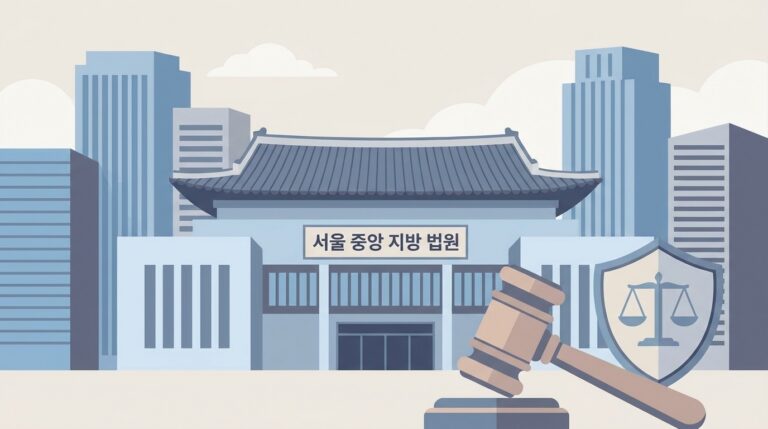
Mastering Korean Corporate Restructuring: How Court Stays Halt Creditor Seizures
Phase 1: 공감 (Empathetic Story-Driven Opening)
안녕하세요! 매일한글 에디터입니다. Have you ever watched a high-stakes K-Drama like Queen of Tears or Reborn Rich and felt your heart race during that quintessential boardroom catastrophe scene? You know the one: panicked executives pacing back and forth, phones ringing off the hook, and furious suppliers banging on the frosted glass doors ready to slap bright red seizure stickers (빨간 딱지) onto every piece of manufacturing equipment in sight. In the middle of this chaos, the general counsel strides in, slams a legal dossier onto the mahogany table, and utters the magic phrase that freezes the room: the court has issued a comprehensive stay.
Navigating corporate insolvency under the Korean Debtor Rehabilitation and Bankruptcy Act (채무자 회생 및 파산에 관한 법률) represents one of the steepest summits in Korean language acquisition. When foreign legal advisors, cross-border restructuring specialists, or advanced professionals interact with Korean courts and creditors, textbook Korean instantly crumbles. The stakes are immense: misinterpreting the difference between an individual stay and a comprehensive preservation order can cost billions of won or paralyze a company’s going-concern value. Based on real-world mentoring sessions with multinational legal analysts, this guide bridges the gap between dry statutory jargon and dynamic, C2-level professional Korean that commands absolute authority in the courtroom and boardroom alike.
Phase 2: 핵심 표현 3선 심층 분석 (Top 3 Key Expressions)
1. 포괄적 금지명령이 발령되었습니다. (Pogwaljeok geumjimyeongnyeongi ballyeongdoe-eotsseumnida.)
- Pronunciation: [Poh-gwahl-jeok geum-ji-myeong-nyeong-i bal-ryeong-dwe-eot-seum-ni-da] (Think of pogwal flowing like “poh-gwahl” followed by the authoritative snap of “ballyeong”).
- Meaning: Literally “A comprehensive prohibition order has been issued.” In practice, it signifies: “The court has officially frozen all individual creditor enforcement actions across the board.”
- K-Culture Moment: Used by top-tier legal counsels in legal thrillers when halting aggressive loan sharks or institutional creditors from liquidating the debtor’s assembly lines.
- Editor’s Insight: Under Article 45 of the Debtor Rehabilitation and Bankruptcy Act, this order is the debtor’s ultimate defensive shield. While a provisional disposition (보전처분) restricts the debtor’s own unauthorized asset transfers, the pogwaljeok geumjimyeongnyeong paralyzes the creditors’ ability to initiate auctions, foreclosures, or asset attachments.
- Situation Spectrum: Casual 🚫 | Semi-formal ⚠️ | Formal ✅
- 🤔 Think About It: Why does Korean administrative and insolvency law prefer passive Sino-Korean verbal constructions like 발령되다 (to be issued/promulgated) over active voice? How does this establish institutional neutrality compared to common law jurisdictions?
2. 개별적인 강제집행을 즉각 동결해야 합니다. (Gaebyeoljeogin gangjejiphaengeul jeukgak donggyeolhaeya hamnida.)
- Pronunciation: [Gae-byeol-jeo-gin gang-je-jip-haeng-eul jeuk-gak dong-gyeol-hae-ya ham-ni-da] (Sharp cadence on gang-je, meaning coercion, and dong-gyeol, metaphorically freezing ice).
- Meaning: Literally “We must immediately freeze individual compulsory executions.” Nuance: “All disparate creditor collection attempts must be brought to an absolute standstill to preserve the collective pool.”
- K-Culture Moment: The urgent command delivered by a turnaround manager into a smartphone while walking through a chaotic factory lobby crowded with auction marshals.
- Editor’s Insight: The term 동결 (freezing) originates from thermal physics but serves as standard high-register financial parlance. Pairing it with 개별적 (individual/disparate) highlights the foundational principle of insolvency: preventing a chaotic “run on the debtor” to ensure equal distribution.
- Situation Spectrum: Casual 🚫 | Semi-formal ⚠️ | Formal ✅
- 🤔 Think About It: In English, we often say “put a halt to claims.” In Korean, using “freezing” (동결) emphasizes absolute immobility. What does this reveal about Korean legal metaphors regarding preserving commercial status quo?
3. 기업의 계속가치를 보전하기 위해 보전처분을 신청했습니다. (Gieobui gyesokgachireul bojeonhagi wihae bojeoncheobuneul sincheonghaetseumnida.)
- Pronunciation: [Gi-eob-ui gye-sok-ga-chi-reul bo-jeon-ha-gi wi-hae bo-jeon-cheo-bu-neul sin-cheong-haet-seum-ni-da] (Smooth transition over gye-sok-ga-chi with resolute ending on sincheong).
- Meaning: Literally “We applied for a preservation order to preserve the enterprise’s going-concern value.” Nuance: “We invoked protective measures to ensure this company survives as an operating business rather than being torn apart for scrap.”
- K-Culture Moment: A calm, decisive statement made before flashing cameras during a press conference outside the Seoul Bankruptcy Court (서울회생법원).
- Editor’s Insight: Notice the subtle distinction between 보전 (保全, preservation/protection) and 계속가치 (going-concern value). The core doctrine here is that the business as an operating whole is worth far more than its liquidation value (청산가치).
- Situation Spectrum: Casual 🚫 | Semi-formal ⚠️ | Formal ✅
- 🤔 Think About It: Consider how the balance between liquidation value (청산가치) and going-concern value (계속가치) reflects broader economic philosophies in Korea’s post-developmental state economy.
Phase 3: 교과서 한국어 vs 진짜 한국어 (Textbook vs. Real-World Korean)
Situation 1: Ordering an aggressive creditor representative to halt immediate on-site equipment seizure
- 📖 교과서 한국어: 법원의 결정에 따라 채권 추심 행위를 중단하여 주시기 바랍니다. (Beobwonui gyeoljeonge ttara chaegwon chusim haengwireul jungdanhayeo jusigi baramnida. – Please cease debt collection activities in accordance with the court’s decision.)
- 🗣️ 진짜 한국어: 포괄적 금지명령 떨어졌으니까 모든 강제집행 즉시 스톱해 주세요. (Pogwaljeok geumjimyeongnyeong tteoreojyeosseunikka modeun gangjejiphaeng jeuksi seutop-hae juseyo. – The comprehensive stay has dropped from the bench, so halt every enforcement action immediately.)
- 💡 왜 다를까?: In tense legal standoffs, lawyers and corporate officers use dynamic idioms like “명령이 떨어지다” (an order has dropped/been handed down) coupled with decisive English loanwords like “스톱하다” to convey undeniable urgency and finality.
Situation 2: Informing the board that unauthorized payments to favored suppliers will trigger clawback litigation
- 📖 교과서 한국어: 편파적인 변제는 추후 부인권 행사의 대상이 될 수 있습니다. (Pyeonpajeogin byeonjeneun chuhu buinkwon haengsaui daesangi doel su itseumnida. – Discriminatory repayment may become subject to the exercise of avoidance powers later.)
- 🗣️ 진짜 한국어: 특정 채권자만 챙겨주시면 나중에 관리인이 부인권으로 전부 뱉어내게 만듭니다. (Teukjeong chaegwonjaman chaenggyeojusimyeon najunge gwalli-ini buinkwoneuro jeonbu baeteonaege mandeumnida. – If you favor specific creditors now, the custodian will use avoidance powers to force them to cough it all back up.)
- 💡 왜 다를까?: In internal crisis strategy sessions, high-ranking executives cut through passive legal Latinisms. The colloquial verb “뱉어내다” (literally: to spit out; commercially: to disgorge/claw back funds) illustrates the brutal reality of bankruptcy trustee avoidance actions.
Phase 4: K-Culture 딥다이브 & 비언어적 매너 (Deep Dive & Non-Verbal Nuance)
4-1. 눈치 (Nunchi) & Corporate Body Language During Insolvency Crises
In a Korean corporate crisis, non-verbal posture communicates legal solidity. When addressing distressed creditors or announcing a stay order, never raise your voice or make frantic hand motions—erratic movements signal internal insolvency panic, which accelerates creditor runs. Maintain an unyielding upright posture with hands resting flat on the conference table or clasped loosely at waist level (공수 자세). Make steady, deliberate eye contact with the lead creditor while speaking in a measured, low pitch. A slight, respectful downward nod when acknowledging creditor grievances—paired with an unshakeable vocal register when stating the statutory boundaries—signals that the company is legally fortified and managed by seasoned professionals.
4-2. The Cultural Symbolism of “빨간 딱지” (Red Tags) and Chaebol Workouts
In popular Korean consciousness, corporate insolvency is deeply tied to collective cultural memories of the 1997 IMF Crisis. Dramas like Midas or corporate webtoons frequently feature the dreaded 빨간 딱지 (provisional attachment labels). When court bailiffs enter premises to tag assets, it signifies social and commercial demise. Consequently, obtaining a 포괄적 금지명령 (comprehensive stay) is not merely a technical procedural milestone; it is a dramatic psychological turning point that repels the “red tags” and maintains the dignity and moral authority of the enterprise before the public eye.
Phase 5: 실전 롤플레이 시나리오 (High-Stakes Legal Roleplay)
Setting: The executive conference room of Taesan Heavy Industries in Yeouido. Outside, representatives of subcontracted parts suppliers are clamoring for immediate equipment seizures. General Counsel Attorney Min (민 변호사) briefs the distressed CEO (강 대표).
- 강 대표: 민 변호사, 공장 정문에 협력업체 채권자들이 몰려와서 사출기를 전부 뜯어가겠다고 난리입니다! (Min byeonhosa, gongjang jeongmune hyeomnyeogeopche chaegwonjadeuri mollyeowaseo sachulgireul jeonbu tteudeogagetdago nalliyimnida!)
🎭 [Pacing the floor frantically, clutching a stack of warehouse inventory reports] -
민 변호사: 대표님, 진정하십시오. 서울회생법원에 접수한 포괄적 금지명령 신청 건이 방금 인용 결정되었습니다. (Daepyonim, jinjeonghasipsio. Seoulhoesaengbeobwone jeopsuhan pogwaljeok geumjimyeongnyeong sincheong geoni banggeum inyong gyeoljeongdoe-eotsseumnida.)
🎭 [Opening a leather tablet case and presenting a certified electronic court transmission] -
강 대표: 인용이요? 그럼 개별적인 압류나 경매 절차가 지금 당장 올스톱되는 겁니까? (Inyong-iyo? Geureom gaebyeoljeogin amnyuna gyeongmae jeolchaga jigeum dangjang olseutopdoeneun geomnikka?)
🎭 [Halting in his tracks, eyes wide with desperate anticipation] -
민 변호사: 그렇습니다. 법원의 명령서가 송달되는 즉시 채권자들의 모든 강제집행은 법적으로 효력이 정지됩니다. (Geureotseumnida. Beobwonui myeongnyeongseoga songdaldoeneun jeuksi chaegwonjadeurui modeun gangjejiphaengeun beopjeogeuro hyoryeogi jeongjidoemnida.)
🎭 [Speaking in a low, steely tone, adjusting his glasses] -
강 대표: 다행이긴 한데… 오랫동안 거래해 온 박 사장 설비만이라도 따로 먼저 빼돌려서 변제해 주면 안 됩니까? (Dahaeng-igin hande… Oraedong-an georaehae on Bak sajang seolbimanimanirado ttaro meonjeo ppaedollyeoseo byeonjehae jumyeon an doemnikka?)
🎭 [Leaning in conspiratorially, lowering his voice] -
민 변호사: 절대 안 됩니다. 보전처분 위반일 뿐 아니라 향후 선임될 관리인에 의해 부인권 행사의 표적이 됩니다. (Jeoldae an doemnida. Bojeoncheobun wibanil ppun anira hyanghu seonimdoel gwalli-ine uihae buinkwon haengsaui pyojeogi doemnida.)
🎭 [Shaking his head with resolute gravity] -
강 대표: 부인권이라… 법적으로 무효화되고 형사 책임까지 번질 수 있다는 뜻이군요. (Buinkwon-ira… Beopjeogeuro muhyohwadoego hyeongsa chaegimkkaji beonjil su itdaneun tteusigunyo.)
🎭 [Sinking heavily into the executive armchair, letting out a deep sigh] -
민 변호사: 맞습니다. 기업의 청산가치보다 계속가치를 높여 인가 결정을 받아내는 것만이 모두가 사는 유일한 길입니다. (Matseumnida. Gieobui cheongsangachiboda gyesokgachireul nopyeo inga gyeoljeongeul badanaeneun geommani moduga saneun yuilhan girimnida.)
🎭 [Closing the tablet with a definitive click]
🔀 Interactive Decision Point: What should Attorney Min say to the creditors outside?
- Option A (The Statutory Shield): “법원의 포괄적 금지명령이 발령되었으므로, 무단 압류 시 형법상 공무상표시무효죄 및 업무방해죄가 성립함을 경고합니다.” (Since the court’s stay has been issued, unauthorized seizures will trigger criminal obstruction charges.)
- Option B (The Empathetic Placation): “저희 사정이 너무 딱하니 일주일만 집행을 늦춰주시면 사비로라도 챙겨드리겠습니다.” (Our situation is pitiful, please delay execution for one week and I will pay you out of pocket.)
- Option C (The Evasive Stall): “대표님이 지금 안 계시니 나중에 법원 서류 오면 다시 얘기합시다.” (The CEO is not here, let’s talk later when court papers arrive.)
Strategic Feedback:
- Option A (Best): Flawless C2 executive posture. Cites objective legal consequences while upholding absolute neutrality under criminal and insolvency statutes.
- Option B (Bad – High Risk): Catastrophic. Promising individual payouts violates equal treatment rules and constitutes voidable transactions subject to avoidance powers (부인권).
- Option C (Risk): Ambiguous and provocative. Evasive tactics often spur enraged creditors to physically breach facilities before official marshals arrive.
Phase 6: 10초 감정 섀도잉 드릴 (10-Second Emotional Shadowing Drill)
Practice matching both the rhythmic pauses (/) and emotional gravity of these professional lines:
[⚖️ 차분하고 단호하게 - Calm and Unshakeable Authority]
포괄적 금지명령이 발령되었으므로, / 모든 개별 채권자의 강제집행은 / 즉시 중단되어야 합니다.
(Pogwaljeok geumjimyeongnyeongi ballyeongdoe-eosseumeuro, / modeun gaebyeol chaegwonjaui gangjejiphaengeun / jeuksi jungdandoeeoya hamnida.)-
[🛡️ 엄중하게 경고하며 - Grave and Uncompromising Warning]
임의로 자산을 반출하실 경우, / 회생법상 보전처분 위반으로 / 민형사상 엄중한 책임을 지게 됩니다.
(Im-uiro jasaneul banchulhasil gyeong-u, / hoesaengbeopsang bojeoncheobun wiban-euro / minhyeongasasang eomjunghan chaegimeul jige doemnida.) -
[💼 설득력 있는 비즈니스 톤 - Persuasive Strategic Alignment]
회사의 계속기업가치가 / 청산가치를 상회해야만 / 채권자 여러분의 회수율도 극대화될 수 있습니다.
(Hoesaui gyesokgieopgachiga / cheongsangachireul sanghoehaeyaman / chaegwonja yeoreobunui hoesuyuldo geukdaehwadoel su itseumnida.)
Phase 7: K-Culture 미니 사전 (Core Legal Glossary)
-
포괄적 금지명령 (Pogwaljeok geumjimyeongnyeong) | Comprehensive Stay Order
Usage: The umbrella court decree that prevents unsecured and secured rehabilitation creditors from enforcing liens, attachments, or auctions until the rehabilitation petition is formally determined. -
보전처분 (Bojeoncheobun) | Provisional Preservation Order
Usage: Court-ordered restrictions directed specifically at the debtor company, forbidding asset disposals, debt repayments, or borrowing without judicial authorization. -
청산가치 보장의 원칙 (Cheongsangachi bojang-ui wonchik) | Principle of Guaranteeing Liquidation Value
Usage: The fundamental insolvency benchmark requiring that creditors receive under the rehabilitation plan at least as much as they would receive if the company were broken up and liquidated immediately. -
부인권 (Buinkwon) | Right of Avoidance / Clawback Power
Usage: The statutory right granted to the court-appointed trustee/custodian to void preferential repayments, fraudulent transfers, or asset dissipation executed by the debtor prior to filing.
Phase 8: 여행자를 위한 생존 키트 (Professional Navigator’s Survival Kit)
Corporate Traveler TOP 3 Essential Phrases
- “회생법원 종합민원실이 어디입니까?” (Hoesaengbeobwon jonghamminwonsiri eodi-imnikka?)
Pro Tip: Used when navigating the specialized Seoul Bankruptcy Court in Seocho-dong to file urgent petitions or verify stay dockets. - “사건번호로 사건 검색 및 인용 여부 확인 부탁드립니다.” (Sageonbeonhoro sageon geomsaek mit inyong yeobu hwag-in butakdeurimnida.)
Pro Tip: Use this at court clerk windows when checking whether a stay docket has officially passed judicial review. - “대표자 심문 기일이 언제로 지정되었습니까?” (Daepyojo simmun gi-iri eonjero jijeongdoe-eotsseumnida?)
Pro Tip: Critical phrase for scheduling the mandatory formal court interrogation of the distressed debtor’s CEO.
Editor’s Travel Note: Navigating Legal Seoul
When conducting corporate restructuring in Korea, you will spend substantial time in Seocho-dong (the judicial cluster) or Yeouido (the financial district). Download the official 대한민국 법원 대법원 전자의결 포털 모바일 앱 to track docket entries in real time. Rather than hailing street taxis during critical filings, utilize the TADA or Kakao T VIP corporate dispatch services to guarantee quiet, confidential mobile spaces for high-stakes calls.
Phase 9: “한 발 더 깊이” (Philosophical Insight: Individual Rights vs. Collective Harmony)
In Western common law traditions, bankruptcy often emphasizes an adversarial contest between creditor property rights and debtor discharge. In contrast, Korean insolvency law reflects a communal corporate philosophy rooted in Article 119 of the Korean Constitution and the preservation of societal industrial capacity. A corporation in Korea is viewed not solely as private capital belonging to shareholders, but as an employer of citizens, an ecosystem for small subcontractors, and an engine of regional economic stability. When a Korean court grants a 포괄적 금지명령 (comprehensive stay), it temporarily suspends sacrosanct private property claims to protect the wider socioeconomic fabric—a vivid demonstration of the Korean principle of 공동체적 조화 (communal harmony) superintending unrestrained commercial individualism.
💬 Your Turn: How does the insolvency system in your home country handle the tension between aggressive individual creditors and the preservation of a company’s going-concern value? Share your comparative perspective in the comments below!
Phase 10: FAQ & 오해 방지 (FAQ Schema & Pitfall Warnings)
Q: Does a 포괄적 금지명령 (comprehensive stay) forgive or eliminate the debtor’s underlying debt?
A: Absolutely not. It merely acts as a procedural suspension that stops creditors from executing private liens, foreclosures, or asset seizures until the court decides whether to commence formal rehabilitation proceedings. The debt remains intact.
Q: What is the difference between 보전처분 (preservation order) and 포괄적 금지명령 (comprehensive stay)?
A: A 보전처분 primarily binds the debtor company, forbidding it from selling off assets or making unauthorized payments. A 포괄적 금지명령 binds the creditors, barring them from seizing debtor property or proceeding with court auctions.
Q: Can a company pay its payroll taxes or employee wages during a stay order?
A: Yes. Wages and severance payments are classified as 공익채권 (public interest claims). They enjoy preferential status under Korean insolvency law and are not extinguished or paralyzed by stay orders.
🚨 흔한 실수 (Common Mistakes) Warning Board
- Mistake: Confusing 파산 (Bankruptcy/Liquidation) with 회생 (Rehabilitation/Reorganization).
Correct Action: Always state 회생절차 (Rehabilitation Procedure) when your goal is business continuation. Mentioning 파산 will panic suppliers into assuming the business is permanently dead. - Mistake: Paying off close suppliers quietly to keep relations warm after filing.
Correct Action: Never execute preferential transfers. The custodian will aggressively apply 부인권 (avoidance powers) to nullify the payment, which can also expose executives to 배임죄 (criminal breach of trust). - Mistake: Using casual imperative forms with aggressive creditors.
Correct Action: Maintain impeccably formal, statutory phrasing (e.g., “~금지되어 있습니다” rather than “~하지 마세요”). Procedural detachment defuses physical tension far more effectively than personal pleas.
Phase 11: 액션 미션 & 참여 유도 (Action Missions)
- 🥉 Bronze Mission (Solo Shadowing): Read Attorney Min’s authoritative lines from Phase 6 aloud three times, emphasizing the rhythmic pauses and solemn legal intonation.
- 🥈 Silver Mission (Vocabulary Integration): Write a 3-sentence simulated boardroom memo in Korean utilizing the terms 포괄적 금지명령, 보전처분, and 계속가치.
- 🥇 Gold Mission (Real-World Analysis): Search Korean news portals (such as Naver News) for the phrase “포괄적 금지명령 인용” and analyze a real-life corporate restructuring case study currently making headlines in South Korea.
- 🎮 K-Culture Mission: Watch an episode of a Korean legal/corporate drama (e.g., Reborn Rich, Vincenzo, or Hyena) and spot the exact scene where court preservation orders or corporate debts are contested. Note the body language of the lawyers involved!
Phase 12: 인터랙티브 퀴즈 챌린지 (Interactive Quiz Challenge)
1. Situational Judgment
Your Korean supplier is threatening to repossess manufacturing molds immediately due to overdue invoices. You have just confirmed that the Seoul Bankruptcy Court issued a comprehensive stay. What is the most legally sound and authoritative statement to make?
A) 저희가 돈이 없으니 그냥 법원에 가서 따지십시오.
B) 포괄적 금지명령이 발령되었으므로 자산을 임의 반출하시면 법적 처벌을 받게 됩니다.
C) 사장님 계좌로 따로 분할 입금해 드릴 테니 제발 참아주세요.
2. Fill-in-the-Blank
채무자 회생절차에서 기업을 해체하여 처분할 때의 가치를 ( [ 1 ] )(이)라고 하며, 회사를 유지하여 얻는 사업 가치를 ( [ 2 ] )(이)라고 부릅니다. 인가를 받으려면 반드시 후자가 전자보다 높아야 합니다.
3. True / False Cultural Legal Quiz
Under Korean law, if an executive secretly repays a favored vendor right before a comprehensive stay is ordered, the newly appointed trustee cannot undo the payment because private commercial contracts override insolvency decrees. (True / False)
Reveal Answer & Detailed Analysis (클릭하여 정답 및 해설 확인)
1. Correct Answer: B
Analysis: Option B uses precise, professional C2 terminology indicating that individual asset seizures are statutorily prohibited following the issuance of a stay order. Option A is unnecessarily confrontational and unprofessional, while Option C proposes a criminal breach of trust and a voidable preferential payment.
2. Correct Answer: [ 1 ] 청산가치 (Liquidation Value) / [ 2 ] 계속가치 (Going-Concern Value)
Analysis: This embodies the core doctrine known as 청산가치 보장의 원칙 (Principle of Guaranteeing Liquidation Value). The ongoing business value must unequivocally exceed the liquidation value for the court to permit restructuring.
3. Correct Answer: False
Analysis: False! Under Korean insolvency law, the custodian possesses robust 부인권 (avoidance powers/clawback rights). Even if a commercial repayment was executed, preferential transfers intended to favor specific creditors over others can be retroactively invalidated and clawed back into the estate.
🎬 Watch Our Daily Videos! (Daily Hangul Official Instagram)
Review the expressions you learned in this article with our fun daily short videos! Check out native pronunciation and real-life nuances in action.
- Instagram @dailyhangul_en







