

Phase 1: Why You Can’t Just ‘Push Through’ Everything
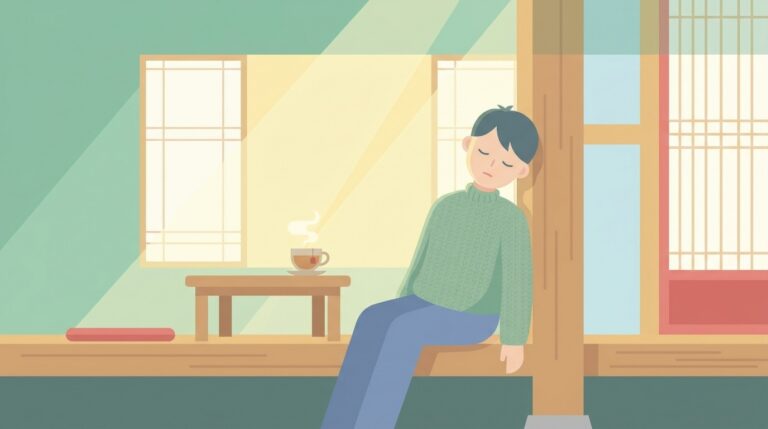
안녕하세요! 매일한글 에디터입니다. (Annyeonghaseyo! This is your Daily Hangul editor.) Picture this: it is 11 PM in a quiet Hongdae cafe, your iced Americano has completely melted, and your brain feels like a phone stuck at 1% battery. Just like those relatable moments in K-dramas like My Liberation Notes, burnout hits when we push ourselves nonstop. When your Korean friend asks how you are, textbook phrases feel way too stiff to express that heavy lethargy. Built on real feedback from intermediate learners, this guide gives you the exact heartfelt Korean phrases to admit you are exhausted, validate your hard work, and finally take a guilt-free breath.
Phase 2: Deep Dive into Top 3 Key Expressions
1. 나를 몰아세우다 (nareul moraseuda)
- Pronunciation: na-reul mo-ra-se-u-da (Sounds like “nah-rul moh-rah-seh-oo-dah” — let mo-ra glide smoothly like “mora” in Spanish, without a harsh break.)
- Meaning: Literally “to drive or corner oneself.” In real life, it means relentlessly pressuring yourself with guilt, perfectionism, or impossible standards.
- K-Culture Moment: You will hear this constantly in emotionally charged K-dramas like Itaewon Class or Twenty-Five Twenty-One, usually when an exhausted character breaks down and a mentor gently tells them to stop cornering themselves.
- Editor’s Insight: Intermediate learners often say 너무 열심히 했어요 (neomu yeolsimhi haesseoyo – I worked too hard), which sounds proud rather than drained. Using 몰아세우다 (moraseuda) adds emotional depth, signaling that your effort crossed into unhealthy self-pressure. In our context, you can conjugate it as 나를 몰아세우는 것을 멈췄어요 (nareul moraseuneun geoseul meomchwosseoyo – I stopped pushing myself).
- Situation Spectrum: Casual ✅ / Semi-formal ✅ / Formal ✅ (Just adjust the ending, like 몰아세웠어요 [morasewosseoyo] or 몰아세웠습니다 [morasewotseumnida].)
- 🤔 Think About It: In English, “pushing yourself” almost sounds athletic or motivational. In Korean, 몰아세우다 (moraseuda) paints a picture of herding someone into a tight corner. How does that mental image change the way you view overworking?
2. 그동안 정말 애썼구나 (geudongan jeongmal aesseotguna)
- Pronunciation: geu-dong-an jeong-mal ae-sseot-gu-na (Sounds like “guh-dong-ahn jung-mahl eh-ssuht-goo-nah” — the tense double ㅆ in aesseot snaps sharply, like holding the ‘s’ in “bus stop” for a split second.)
- Meaning: Literally “you put in great effort during all that time.” The true nuance is a tear-inducing, warm wave of self-compassion—like giving your tired soul a big hug.
- K-Culture Moment: Think of heartfelt healing shows like You Quiz on the Block or comforting K-pop ballads by IU, where people look in the mirror and finally acknowledge how hard they have been fighting silently.
- Editor’s Insight: The magic lies in two parts: 애쓰다 (aesseuda – to strive hard/struggle earnestly) feels much more emotional than 일하다 (ilhada – to work), and the ending -구나 (-guna) expresses gentle self-realization. You are talking to yourself as if comforting a dear friend!
- Situation Spectrum: Casual (Self-talk / Close younger friends) ✅ / Semi-formal (To peers/elders) 🚫 / Formal 🚫 (Never attach -구나 [-guna] when speaking directly to a boss or older person!)
- 🤔 Think About It: Korean grammar gives you -구나 (-guna) specifically to voice warm, inward realizations. Does your native language have a special grammatical ending just for gentle self-talk?
3. 쉬어 가라는 신호 (swieo garaneun sinho)
- Pronunciation: swi-eo ga-ra-neun sin-ho (Sounds like “shwee-uh gah-rah-nun sheen-ho” — keep swi light and airy, just like “shwee”.)
- Meaning: Literally “a signal telling you to rest and then go.” The nuance is huge: resting is not quitting or failing; it is simply a pit stop before your journey continues.
- K-Culture Moment: This exact phrasing pops up everywhere in Korean healing essays (like I Decided to Live as Me) and when K-pop idols write sincere letters on Weverse explaining why they need a short break to recharge.
- Editor’s Insight: Notice the difference between 쉬다 (swida – to rest) and 쉬어 가다 (swieo gada – to rest and keep going). Adding -어 가다 (-eo gada) softens the guilt of stopping because it implies momentum will naturally return once you heal.
- Situation Spectrum: Casual ✅ / Semi-formal ✅ / Formal ✅
- 🤔 Think About It: Why do you think Koreans prefer the phrase 쉬어 가다 (swieo gada – rest and go) over 멈추다 (meomchuda – stop) when talking about burnout?
Phase 3: Textbook Korean vs. Real Korean
Situation 1: Admitting you are completely burned out
- 📖 Textbook Korean (교과서 한국어): 스트레스가 너무 많아서 쉬어야겠어요. (Seuteureseuga neomu manaseo swieoyagesseoyo. – I have too much stress, so I should rest.)
- 🗣️ Real Korean (진짜 한국어): 번아웃이 와서 좀 내려놓기로 했어요. (Beonaushi waseo jom naeryeonokiro haesseoyo. – Burnout hit, so I decided to let go of some pressure.) / 완전 방전돼서 충전 중이에요. (Wanjeon bangjeondwaeseo chungjeon jungieyo. – My battery is completely dead, so I am recharging.)
- 💡 Why the difference? Textbooks stick to stiff medical or literal terms like 스트레스 (seuteureseu). In real Seoul cafes, friends use vivid metaphors like 방전되다 (bangjeondoeda – battery drained) and 내려놓다 (naeryeonota – put down heavy burdens) to make emotional exhaustion feel relatable and human.
Situation 2: Describing how you comforted yourself
- 📖 Textbook Korean (교과서 한국어): 저는 그동안 열심히 노력했다고 생각했어요. (Jeoneun geudongan yeolsimhi noryeokhaetdago saenggakhaesseoyo. – I thought that I had tried hard all this time.)
- 🗣️ Real Korean (진짜 한국어): ‘나 진짜 고생 많았구나’ 하고 토닥토닥해 줬어요. (‘Na jinjja gosaeng manatguna’ hago todaktodakhae jwosseoyo. – I patted myself on the back, thinking, ‘You really went through a lot.’)
- 💡 Why the difference? Korean thrives on mimetic words (의태어 [uitaeeo]). Saying 토닥토닥 (todaktodak – gentle pat-pat) instantly conveys warmth and physical comfort that standard textbook verbs simply cannot match.
Phase 4: K-Culture Deep Dive & Non-Verbal Manners
4-1. Nunchi (눈치) & Gestures
When Koreans open up about burnout and lethargy, their body language shifts from energetic to grounded and reflective. You will often see someone lightly place a palm over their chest (가슴을 쓸어내리다 [gaseumeul sseureonaerida]) or gently massage the back of their neck, lowering their gaze slightly while speaking softly. When you deliver the comforting punchline—지금은 쉬어 가라는 신호구나 (jigeumeun swieo garaneun sinhoguna – this is a signal to rest)—a small, relieved exhale and a gentle smile signal to your listener that you are okay now and no longer spiraling.
4-2. Cultural Code Analysis: From Ppalli-Ppalli to Healing
For decades, Korea’s rapid growth was powered by 빨리빨리 (ppalli-ppalli – hurry, hurry) culture, where slowing down felt almost taboo. Today, K-Culture is leading a massive counter-wave! Just look at K-pop reality shows like BTS’s In the SOOP or Seventeen’s Nana Tour, where top stars simply cook, nap, and stare at trees. Even Korea’s quirky annual Space-Out Competition (멍때리기 대회 [meongttaerigi daehoe]) celebrates doing absolutely nothing. Telling a Korean friend that you stopped pushing yourself and acknowledged your need to rest will earn you genuine respect, not judgment.
Phase 5: Real-Life Roleplay Scenario
Setting: A rainy Friday evening inside a cozy, wood-toned tea house in Yeonnam-dong. Jazz music hums softly from a vinyl record player.
Character: Minji (민지) — your perceptive Korean coworker-turned-bestie who always knows when you are hiding exhaustion behind a polite smile.
- Minji: 요즘 얼굴이 좀 안 좋아 보이는데, 무슨 일 있어요? (Yojeum eolguri jom an joa boineunde, museun il isseoyo? – You look a bit pale lately; is everything okay?) 🎭 Tilts her head gently, sliding a warm cup of chamomile tea toward you.
- You: 사실 요즘 번아웃이 온 것 같아서 너무 무기력했어요. (Sasil yojeum beonaushi on geot gataseo neomu mugiryeokhaesseoyo. – Honestly, I think I hit burnout lately, so I have been feeling really lethargic.) 🎭 Wraps both hands around the warm mug and lets out a quiet breath.
- Minji: 아이고, 그동안 혼자서 얼마나 힘들었을까요. (Aigo, geudongan honjaseo eolmana himdeureosseulkkayo. – Oh no, how hard must it have been carrying that alone?) 🎭 Places a comforting hand lightly on the table.
- You: 맨날 잘해야 된다고 생각해서 저를 너무 몰아세웠거든요. (Maennal jalhaeya doendago saenggakhaeseo jeoreul neomu morasewotgeodeunyo. – Because I thought I always had to do well, I pushed myself way too hard.) 🎭 Looks down at the steaming tea with a rueful smile.
- Minji: 그래서 지금은 마음이 좀 어때요? (Geuraeseo jigeumeun maeumi jom eottaeyo? – So how is your heart feeling right now?)
- You: 그래서 일단 나를 몰아세우는 것을 멈췄어요. (Geuraeseo ildan nareul moraseuneun geoseul meomchwosseoyo. – So first, I stopped pushing myself.) 🎭 Meets Minji’s eyes calmly.
- You: ‘그동안 정말 애썼구나, 지금은 쉬어 가라는 신호구나’라고 인정해 주었어요. (‘Geudongan jeongmal aesseotguna, jigeumeun swieo garaneun sinhoguna’rago injeonghae jueosseoyo. – I acknowledged to myself, ‘You’ve worked so hard; this is a signal that it’s time to rest.’) 🎭 Smiles softly, visibly lighter.
- Minji: 정말 잘했어요! 우리 당분간 아무 생각 말고 맛있는 거 먹으면서 푹 쉬어요. (Jeongmal jalhaesseoyo! Uri dangbunggan amu saenggak malgo masinneun geo meogeumyeonseo puk swieoyo. – You did so well! For a while, let’s not think about anything, eat delicious food, and rest deeply.)
🔀 Interactive Branching Point
Minji asks: “오늘 밤에는 집에 가서 뭐 할 거예요? (Oneul bameneun jibe gaseo mwo hal geoyeyo? – What are you going to do when you get home tonight?)” How do you reply?
* A) 오늘 밤은 알람 다 끄고, 그냥 아무것도 안 하면서 푹 쉴래요! (Oneul bameun allam da kkeugo, geunyang amugeotdo an hamyeonseo puk swillaeyo! – Tonight I am turning off all my alarms and resting deeply while doing nothing!) -> ✅ Best! Natural, warm, and matches the healing vibe of your conversation.
* B) 오늘 밤은 생산성을 높이기 위해 내일 업무 계획을 세울 거예요. (Oneul bameun saengsanseongeul nopigi wihae naeil eommu gyehoegeul seul geoyeyo. – Tonight I will make tomorrow’s work plan to boost productivity.) -> ❌ Bad! After saying you stopped pushing yourself, jumping right back into productivity talk feels contradictory and stiff.
* C) 오늘 밤은 그냥 인생 로그아웃 할래요! (Oneul bameun geunyang insaeng rogeuaut hallaeyo! – Tonight I’m just gonna log out of life!) -> ⚠️ Risk! While young Koreans sometimes joke about “logging out” (로그아웃) to mean sleeping deeply, it can sound alarming if said too seriously right after discussing burnout.
Phase 6: 10-Second Emotion Shadowing Drill
Read these aloud, pausing briefly at every / mark and stepping right into the emotion!
[😔 Quietly reflecting]
그래서 일단 / 나를 몰아세우는 것을 / 멈췄어요.
(Geuraeseo ildan / nareul moraseuneun geoseul / meomchwosseoyo. – So first, I stopped pushing myself.)[🥹 Soft & self-compassionate]
‘그동안 정말 애썼구나’ / 하고 / 나한테 말해 줬어요.
(‘Geudongan jeongmal aesseotguna’ / hago / nahante malhae jwosseoyo. – I told myself, ‘You really worked so hard all this time.’)[😌 Relieved & warm]
지금은 / 잠깐 쉬어 가라는 / 신호구나 / 싶었어요.
(Jigeumeun / jamkkan swieo garaneun / sinhoguna / sipeosseoyo. – I realized, ‘This is a signal to take a quick break and keep going.’)
Phase 7: K-Culture Mini Dictionary
- 번아웃 (beonaut) | Burnout | Used constantly by office workers, students, and creators in everyday chats and interviews to describe total mental exhaustion.
- 무기력증 (mugiryeokjeung) | Lethargy / Apathy | Slightly more descriptive than “tired”; appears in lifestyle articles, mental health vlogs, and honest heart-to-hearts.
- 소확행 (sohwakhaeng) | Small but certain happiness | Short for 소소하지만 확실한 행복 (sosohajiman hwaksilhan haengbok); describes tiny joys like warm bread or a quiet walk that cure burnout.
- 힐링 (hilling) | Healing / De-stressing | Not just medical! Koreans use 힐링하다 (hillinghada) for visiting a scenic cafe, watching a cozy drama, or eating comfort food.
Phase 8: Survival Kit for Travelers
If burnout hits while traveling or living in Korea, use these three lifesavers to claim your peace:
- 조용한 자리 있나요? (Joyonghan jari innayo?) — Is there a quiet seat? (Pro Tip: Great in bustling Seoul cafes when you just want a corner away from the crowd.)
- 디카페인으로 변경 가능해요? (Dikapeineuro byeongyeong ganeunghaeyo?) — Can I switch this to decaf? (Pro Tip: Korea’s cafe culture is intense; switch to decaf or herbal tea like 캐모마일 [kaemomail] when your nerves need a break.)
- 천천히 둘러볼게요. (Cheoncheonhi dulleobolgeyo.) — I will take my time looking around. (Pro Tip: Handy in boutiques or skincare shops when attentive staff approach, letting you browse peacefully at your own pace.)
Editor’s Travel Note: Whenever you need an instant energy reset in Korea, skip the crowded tourist spots and search for a quiet Hanok tea house using the Naver Map App for finding peaceful Seoul tea houses. Need a late-night ride back to your hotel without stressing over buses? Use the Kakao T App for effortless taxi booking, and keep a loaded T-money card in your wallet so hopping onto a scenic Han River bus feels effortless.
Phase 9: One Step Deeper
In Korean society, people constantly greet departing coworkers or tired friends with 수고했어요 (sugohaesseoyo – thank you for your hard work) or 고생했어요 (gosaenghaesseoyo – you went through a lot). Historically, this shared language of struggle helped Koreans endure tough times together as a tight-knit 우리 (uri – we/our) community. Yet for a long time, people forgot to direct that exact same tenderness toward themselves. Learning to say 그동안 정말 애썼구나 (geudongan jeongmal aesseotguna) is powerful because it turns Korea’s communal empathy inward, giving you permission to be your own kindest friend.
💬 Your Turn: Have you ever caught yourself pushing way too hard? Leave a comment below telling us one small way you “rest and keep going” (쉬어 가다) when life feels overwhelming!
Phase 10: FAQ & Myth-Busting
Q: What is the difference between 애쓰다 (aesseuda) and 노력하다 (noryeokhada)?
A: While 노력하다 (noryeokhada) simply means “to make an effort” (often objectively, like studying for a test), 애쓰다 (aesseuda) carries deep emotional weight. It implies pouring your heart and sweat into something, often while struggling—which is why 애썼구나 (aesseotguna) hits straight to the heart.
Q: Can I say 그동안 애썼구나 (geudongan aesseotguna) to my Korean teacher or boss?
A: Definitely not! The ending -구나 (-guna) is strictly informal and used for self-talk or toward someone younger/very close. To praise or comfort a senior or colleague politely, use 정말 고생 많으셨어요 (jeongmal gosaeng maneusyeosseoyo – you truly went through a lot) instead.
Q: Is it awkward to mention burnout to Korean coworkers?
A: Not anymore! While you might phrase it politely with a supervisor—for instance, 잠시 재충전의 시간이 필요할 것 같아요 (jamsi jaechungjeonui sigani piryohal geot gatayo – I think I need a brief time to recharge)—younger colleagues openly discuss 번아웃 (beonaut) over coffee.
🚨 Common Mistakes TOP 3
- Using “수고하세요” (sugohaseyo) to elders: Learners often say this thinking it means “good job,” but it actually sounds like you are ordering a superior to work harder. Correct Action: Use 감사했습니다 (gamsahaetseumnida – thank you) or 고생 많으셨습니다 (gosaeng maneusyeotseumnida) for elders.
- Translating “push myself” literally as 밀다 (milda): 밀다 means physically pushing a door or cart! Correct Action: Always use 나를 몰아세우다 (nareul moraseuda) or 나를 다그치다 (nareul dageuchida) for emotional/mental pressure.
- Stopping mid-sentence with -구나 (-guna) in polite conversation: Saying 애썼구나 to a new friend your age sounds condescending. Correct Action: Add -요 or use -군요 (-gunyo) when speaking to others, e.g., 정말 애쓰셨군요 (jeongmal aesseusyeotgunyo).
Phase 11: Action Mission & Engagement
- 🥉 Bronze Mission (Solo Practice): Look in the mirror tonight before bed and say out loud three times: 오늘도 정말 애썼구나 (Oneuldo jeongmal aesseotguna – You really worked hard today too).
- 🥈 Silver Mission (Social Share): Post a photo of your favorite cozy drink or resting spot on social media with the Korean caption: 잠시 쉬어 가는 시간 (Jamsi swieo ganeun sigan – Time to rest and keep going).
- 🥇 Gold Mission (Real Conversation): Next time you chat with a Korean language partner or friend, share one recent moment you stopped pushing yourself using 나를 몰아세우지 않기로 했어요 (Nareul moraseuji ankiro haesseoyo – I decided not to push myself).
- 🎮 K-Culture Mission: Listen to a comforting Korean song (like Lee Hi’s Breathe or IU’s Knees) or watch a healing K-drama episode, and see if you can spot the words 애쓰다 (aesseuda) or 쉬어 가다 (swieo gada) in the lyrics or subtitles!
Phase 12: Interactive Quiz Challenge
1. Situation Judgment: Your close Korean friend (same age, using 반말 [banmal]) tells you they have been working 12-hour days for two months and finally collapsed on their sofa. Which response sounds the warmest and most natural?
* A) 그동안 정말 애썼구나. 이제 좀 쉬어 가. (Geudongan jeongmal aesseotguna. Ije jom swieo ga.)
* B) 왜 그렇게 몰아세웠습니까? (Wae geureoke morasewotseumnikka?)
* C) 당신은 무기력증입니다. (Dangsineun mugiryeokjeungimnida.)
Check Answer & Explanation
Correct Answer: A! Using 애썼구나 (aesseotguna) validates their struggle with warmth among close friends. Option B sounds like an angry interrogation in formal speech, and Option C sounds like a robotic medical diagnosis.
2. Fill in the Blank: Complete the sentence meaning “I realized this is a signal to rest for a bit.”
지금은 잠깐 ( ______ ) 신호구나 싶었어요. (Jigeumeun jamkkan ______ sinhoguna sipeosseoyo.)
Check Answer & Explanation
Correct Answer: 쉬어 가라는 (swieo garaneun). Together, 쉬어 가라는 신호 (swieo garaneun sinho) means “a signal telling me to take a break and keep going.”
3. True or False Culture Quiz: In Korean, saying 쉬어 가다 (swieo gada) implies that you are permanently quitting your goal because you failed.
Check Answer & Explanation
Correct Answer: False! 쉬어 가다 literally combines “rest” (쉬다) and “go” (가다), emphasizing that taking a break is just a healthy pause before you continue your journey.
🎬 Watch Our Daily Videos! (Daily Hangul Official Instagram)
Review the expressions you learned in this article with our fun daily short videos! Check out native pronunciation and real-life nuances in action.
- Instagram @dailyhangul_en







