

Never Freeze at the Register: How to Confidently Say “One-Time Payment” in Korea
Phase 1: Empathy (Story-Driven Opening)
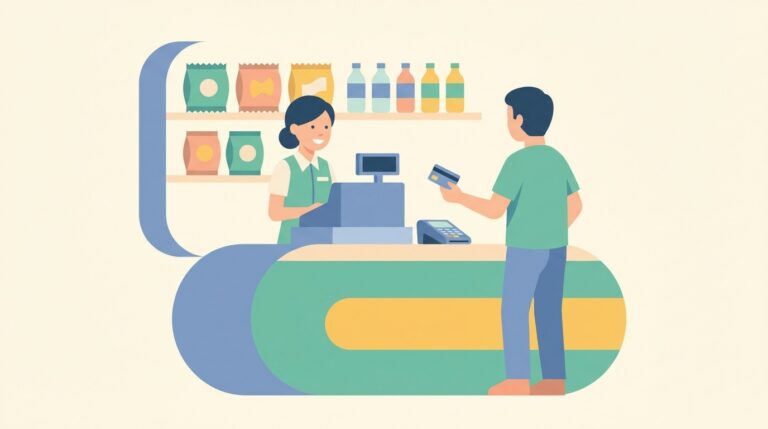
안녕하세요! This is your Daily Hangul editor, your personal cultural navigator! Imagine this scene: you are standing at a trendy cosmetic shop in Hongdae. Your shopping basket is packed with hydrating sheet masks and trending serums. Smiling, you step up to the counter and hand over your credit card. The cashier looks up, taps the screen, and asks at lightning speed: “할부로 해 드릴까요, 일시불로 해 드릴까요?”
Your mind goes completely blank. Your palms sweat, the line behind you is getting longer, and you wonder if you just agreed to a ten-year loan. Don’t panic! Thousands of travelers and beginner Korean learners freeze at this exact moment. Today, based on real student feedback and years of living in Seoul, we will unlock the single magic phrase you need so you can pay like a true local anywhere in South Korea!
Phase 2: Core Expressions Deep Dive
1. 일시불로 해 주세요 (Ilsibullo hae juseyo)
- Pronunciation: Il-si-bul-lo hae ju-se-yo (Sounds like: Ill-see-bool-low hae joo-say-yo — imagine saying “ill sea bull” smoothly!)
- Meaning: Literal: “Please do it as a lump sum.” / Natural nuance: “One-time payment, please / Charge it in full, please.”
- K-Culture Moment: Seen in nearly every K-Drama shopping montage—from Crash Landing on You to Business Proposal—whenever someone confidently pays for an expensive designer outfit without blinking.
- Editor’s Insight: In Korea, any transaction over 50,000 KRW (roughly $38 USD) automatically prompts the terminal to ask if you want monthly installments (halbu). If you don’t have a Korean credit card, you cannot do installments anyway! Saying this phrase immediately puts the cashier at ease.
- Situation Spectrum: Casual ⚠️ (Too formal for close friends, but okay in shops) | Semi-formal ✅ (Perfect for stores and cafes) | Formal ✅ (Completely polite)
- 🤔 Think About It: In many Western countries, “charge it once” is the unspoken default. Why do you think Korean payment systems explicitly prompt installment options at every checkout?
2. 카드로 계산할게요 (Kadeuro gyesanhalgeyo)
- Pronunciation: Ka-deu-ro gye-san-hal-ge-yo (Think of “card” said with two syllables: Kah-deu, then gyae-sahn-hahl-geh-yo).
- Meaning: Literal: “I will calculate with a card.” / Natural nuance: “I’ll pay by card.”
- K-Culture Moment: You hear this at small neighborhood bunsik (snack) restaurants when customers walk up to the counter after finishing a bowl of spicy tteokbokki.
- Editor’s Insight: While young Koreans often shorten this to just “카드로 할게요” (Kadeuro halgeyo), adding gyesan (calculation/payment) is exceptionally clear and polite for beginners.
- Situation Spectrum: Casual ⚠️ | Semi-formal ✅ | Formal ✅
- 🤔 Think About It: How does declaring your payment method in advance reflect Korea’s fast-paced service culture?
3. 영수증은 버려주세요 (Yeongsujeungeun beoryeojuseyo)
- Pronunciation: Yeong-su-jeung-eun beo-ryeo-ju-se-yo (Young-soo-jung-eun buh-ryuh-joo-say-yo).
- Meaning: Literal: “As for the receipt, please throw it away.” / Natural nuance: “No receipt needed, thank you!”
- K-Culture Moment: At bustling convenience stores like CU or GS25, customers grab their iced pouch coffee and drop this sentence while walking out the door.
- Editor’s Insight: Korea is moving paperless rapidly. Cashiers will often hold the receipt over a small recycling bin and ask, “영수증 필요하세요?” (Do you need a receipt?). This sentence saves time for everyone.
- Situation Spectrum: Casual ⚠️ | Semi-formal ✅ | Formal ✅
- 🤔 Think About It: Notice how even when declining something, Koreans use the polite ending ~해 주세요 (“please do for me”). Courtesy remains constant.
Phase 3: Textbook Korean vs. Real Korean
Situation 1: Telling the cashier you want to pay in a single lump sum
- 📖 교과서 한국어 (Textbook): 저는 신용카드 일시불 결제를 원합니다. (Jeoneun sin-yong-kadeu il-si-bul gyeol-je-reul won-ham-ni-da. – “I desire a credit card one-time payment.”)
- 🗣️ 진짜 한국어 (Real-Life): 일시불이요! (Il-si-bul-i-yo! – “One-time, please!”)
- 💡 Why is it different? Textbook phrases sound like an official banking contract. In real life, Korean shopkeepers value speed and clarity. Shortening with the polite ending -i-yo is both respectful and efficient.
Situation 2: Choosing card over cash
- 📖 교과서 한국어 (Textbook): 신용카드로 결제해 주시겠습니까? (Sin-yong-ka-deu-ro gyeol-je-hae ju-si-get-seum-ni-kka? – “Would you please execute payment via credit card?”)
- 🗣️ 진짜 한국어 (Real-Life): 카드로 할게요. (Ka-deu-ro hal-ge-yo. – “I’ll do card.”)
- 💡 Why is it different? Korean society is practically cashless. Card payment is expected, so a light, friendly notification is all that’s necessary.
Phase 4: K-Culture Deep Dive & Non-Verbal Manners
4-1. Nunchi (눈치) & Two-Hand Etiquette
In Korea, respect is communicated physically long before words are spoken. When handing your card to the clerk or receiving it back:
* The Two-Hand Rule: Hold your card with both hands, or hold it with your right hand while lightly resting your left hand under your right wrist or forearm.
* The Gentle Nod: Make gentle eye contact, offer a subtle 15-degree bow of the head, and say your phrase. Tossing or sliding the card across the counter with one hand is seen as rude, even in ultra-modern Seoul.
4-2. The “Cashless Nation” Code
South Korea is one of the most cashless societies on earth. From street food stalls in Myeongdong to late-night taxis, plastic cards and mobile pay (Samsung Pay, Apple Pay, Kakao Pay) rule supreme.
* By Korean financial regulations, credit card readers automatically trigger an installment prompt when any total crosses 50,000 KRW.
* Cashiers will reflexively look at you and ask: “할부 몇 개월로 해 드릴까요?” (How many months of installment would you like?). Knowing that this question is automated removes the panic—all you need to reply is: “일시불로 해 주세요!”
Phase 5: Real-Life Roleplay Scenario
- Setting: An aesthetic skincare boutique in Seongsu-dong. Soft K-indie music plays in the background.
- Characters:
- Clerk Minji (민지): Friendly, swift, checking out your items with practiced speed.
- You (Traveler / Student): Holding a sleek moisturiser and a basket of masks, ready to shine.
Dialogue:
1. Minji: 어서 오세요! 봉투 필요하세요? (Eoseo oseyo! Bongtu piryohaseyo?)
🎭 Smiles warmly while scanning the barcode of your moisturiser.
“Welcome! Do you need a shopping bag?”
2. You: 아니요, 괜찮아요. (Aniyo, gwaenchanayo.)
🎭 Shakes head gently with a warm smile.
“No, I’m okay without one.”
3. Minji: 총 육만 오천 원입니다. (Chong yuk-man o-cheon won-imnida.)
🎭 Points politely to the glowing register display showing 65,000 KRW.
“The total is 65,000 won.”
4. You: 카드로 계산할게요. (Kadeuro gyesanhalgeyo.)
🎭 Holds out your card using both hands.
“I will pay by card.”
5. Minji: 네, 오만 원 이상이셔서요. 할부로 해 드릴까요, 일시불로 해 드릴까요? (Ne, o-man won i-sang-i-syeo-seo-yo. Hal-bu-ro hae deu-ril-kka-yo, il-si-bul-lo hae deu-ril-kka-yo?)
🎭 Inserts the chip into the terminal and looks up inquiringly.
“Sure, since it is over 50,000 won: would you like installments or a one-time payment?”
6. You: 일시불로 해 주세요. (Ilsibullo hae juseyo.)
🎭 Replies clearly without hesitation, giving a slight nod.
“One-time payment, please.”
7. Minji: 결제 완료되셨습니다. 영수증 드릴까요? (Gyeolje wanryo-doe-syeot-seumnida. Yeongsujeung deurilkkayo?)
🎭 Returns your card with two hands alongside a printed slip.
“Payment is complete. Would you like your receipt?”
8. You: 영수증은 버려주세요. 감사합니다! (Yeongsujeungeun beoryeojuseyo. Gamsahamnida!)
🎭 Receives the card with both hands and bows slightly.
“Please discard the receipt. Thank you!”
🔀 Interactive Decision Point
When Minji asks: “할부로 해 드릴까요, 일시불로 해 드릴까요?”, what do you say?
- Option A: “일시불이요!” (Ilsibul-i-yo!)
Feedback: [BEST] Crisp, 100% natural, and polite. Minji presses the button immediately and completes your payment in two seconds. - Option B: Stare silently and show your card again.
Feedback: [RISK] Minji will assume you don’t speak Korean, start pointing to numbers on a keypad, or repeatedly ask “Months? How many months?” creating awkward delays. - Option C: “한 개요!” (Han gae-yo! – Meaning ‘One physical item, please’)
Feedback: [BAD] Gae (개) counts objects, not payment cycles. Minji might think you want to cancel the rest of your items and buy only one item!
Phase 6: 10-Second Emotion Shadowing Drill
Practice matching the cadence and emotion of a native speaker. The slash (/) marks a natural breath pause.
[💳 Crisp & Confident]
카드로 / 계산할게요.
(Ka-deu-ro / gye-san-hal-ge-yo.)-
[✨ Calm & Decisive]
일시불로 / 해 주세요.
(Il-si-bul-lo / hae ju-se-yo.) -
[😊 Light & Cheerful]
일시불이요!
(Il-si-bul-i-yo!) -
[👋 Polite & Breezy]
영수증은 / 버려주세요!
(Yeong-su-jeung-eun / beo-ryeo-ju-se-yo!)
Phase 7: K-Culture Mini Dictionary
- 일시불 (Ilsibul) | One-time payment / Lump sum
The standard banking term used across all stores in Korea to indicate that you will pay the entire balance at once. - 할부 (Halbu) | Installment plan
Monthly split payments (e.g., 3 months, 6 months) popular among locals for high-ticket items like winter puffer coats or electronics. Note: foreign tourist credit cards generally cannot process Korean halbu. - 영수증 (Yeongsujeung) | Receipt
The printed paper proof of purchase. Essential if you want to claim your duty-free tax refund at the airport. - 결제 (Gyeolje) | Payment / Settlement
The business term for processing payment. You will often hear “결제 도와드리겠습니다” (“I will assist with your payment”).
Phase 8: Survival Kit for Travelers
Top 3 Survival Phrases
- 1. 카드로 할게요. (Kadeuro halgeyo.)
Pro Tip: Use this anytime you walk up to a checkout. It tells the cashier to ready the card slot instead of opening the cash drawer. - 2. 일시불이요. (Ilsibul-i-yo.)
Pro Tip: The ultra-short, polite shortcut for when purchases exceed 50,000 KRW. - 3. 영수증 주세요. (Yeongsujeung juseyo.)
Pro Tip: If you are shopping in tourist hubs, you need receipts for the immediate tax refund machine! Say this instead of throwing it away.
Editor’s Travel Note
- While almost everything in Korea runs on cards, public transit requires cash to reload! If you buy a physical transit card, remember that convenience stores and subway kiosks only accept cash for transit top-ups.
- Make your navigation painless: download the Naver Map app for mobile transit navigation to find local cashless cafes, and check the official Visit Korea tourism portal guide for up-to-date duty-free refund rules.
Phase 9: Thinking Deeper (Cultural Reflection)
In South Korea, payment is not merely a financial transaction; it is a ritual of community rhythm known as Ppalri-ppalri (빨리빨리 – “quick, quick”) culture combined with deep-rooted etiquette. Cashiers work at astonishing speeds to respect your time, and in return, buyers prepare their payment methods in advance. Even in this rapid-fire exchange, both parties bow and hand the card back with two hands. Efficiency never replaces respect in Korea—they exist in complete harmony.
💬 Your Turn: In your home country, is it standard to split transactions into monthly installments at ordinary retail stores, or is everything paid in full by default? Share your local shopping customs in the comments below!
Phase 10: FAQ & Avoiding Misunderstandings
Q: Can I use my foreign Visa or Mastercard to pay in installments (할부) in Korea?
A: No. Even if the Korean clerk selects 3 or 6 months at your request, foreign-issued credit cards do not support the domestic Korean payment gateway installment system. Your home bank will almost certainly process the total as a single one-time payment. Always request 일시불 (ilsibul) to avoid terminal errors.
Q: What should I say if the payment doesn’t go through?
A: You can politely ask: “다른 카드로 해 볼게요” (Dareun kadeuro hae bolgeyo – “I will try with a different card”). Foreign cards occasionally get flagged by security algorithms on Korean terminals.
Q: Why does the cashier ask for my signature sometimes, but not always?
A: For transactions under 50,000 KRW, no signature is required nationwide. For amounts above 50,000 KRW, the small electronic signature pad will light up with a chime. You can simply sign your name with the attached stylus.
🚨 Common Mistakes Warning Board
- Mistake 1: Confusing 일시불 (Ilsibul) with 현금 (Hyeongeum – Cash).
Correction: Some learners think ilsibul means “paying cash immediately.” It strictly refers to paying your card balance in one lump sum! - Mistake 2: Handing over your card like a poker card flick.
Correction: Always present your card with both hands or with your right hand supported by your left arm. It makes a lasting good impression. - Mistake 3: Saying “한 번” (Han beon – One time) instead of “일시불” (Ilsibul).
Correction: While literal translation might suggest han beon, financial terminals require the specific term ilsibul.
Phase 11: Action Missions
- 🥉 Bronze Level Mission (Solo Practice): Stand before a mirror with a credit card. Practice handing it out with two hands while saying: “카드로 계산할게요. 일시불로 해 주세요!” repeat 5 times until fluent.
- 🥈 Silver Level Mission (Community Connect): Record a 5-second voice clip of yourself pronouncing “일시불로 해 주세요” and post it to your study group or Instagram story tagging
@DailyHangul. - 🥇 Gold Level Mission (Real-World Test): Walk into a local Korean supermarket or your next shop in Seoul, make a purchase, and cleanly decline the receipt with: “영수증은 버려주세요!”
🎮 K-Culture Mission: Watch any modern K-Drama checkout scene (e.g., King the Land or Itaewon Class). Listen closely when characters swipe a card—can you catch the word 결제 or 영수증?
Phase 12: Interactive Quiz Challenge
Question 1: Situation Decision
You buy K-pop albums totaling 78,000 KRW in Myeongdong. The clerk asks: “할부로 해 드릴까요, 일시불로 해 드릴까요?” What is the best response for an overseas cardholder?
* A) 현금으로 해 주세요. (Hyeongeumeuro hae juseyo.)
* B) 일시불로 해 주세요. (Ilsibullo hae juseyo.)
* C) 삼 개월로 해 주세요. (Sam gaewolleo hae juseyo.)
Question 2: Fill in the Blank
When you don’t need the paper receipt, you tell the cashier:
“영수증은 ___________.” (Please discard it.)
Question 3: Cultural True or False
In Korea, it is polite to toss your card directly onto the counter so the cashier can pick it up without touching your hands. (True / False)
👉 Click to reveal answers & explanations!
- Answer 1: B) 일시불로 해 주세요.
Explanation: Overseas cards cannot process installments (halbu). Saying ilsibul ensures your transaction goes through smoothly without system errors. - Answer 2: 버려주세요 (beoryeojuseyo)
Explanation: From the verb beorida (to throw away/discard) + ~hae juseyo (please do for me). - Answer 3: False!
Explanation: Sliding or throwing a card is considered very disrespectful. Always pass the card directly into the clerk’s hands or place it gently on the small card pad using both hands!







