

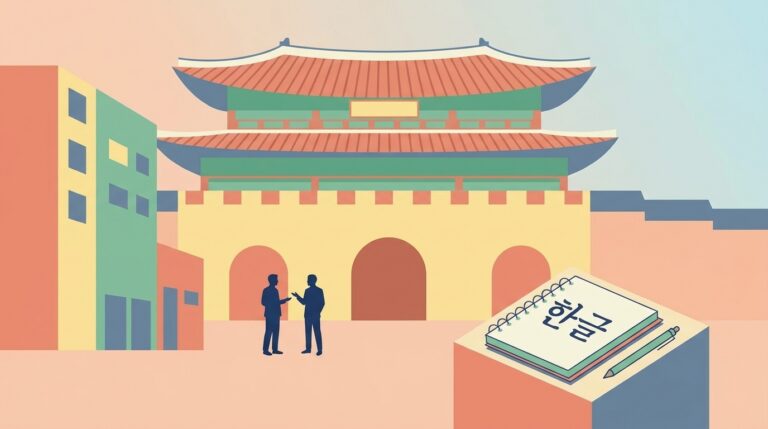
Everyday Citizen Diplomacy: Elevating Korean Soft Power with Grace
Phase 1: Empathy & Immersion (Opening)
안녕하세요! 매일한글 에디터입니다. (Hello! This is your Daily Hangul editor.)
Imagine this: You are attending an international academic symposium, an indie film showcase in Berlin, or a global networking gala in Seoul. The room is buzzing with conversations about contemporary Korean cinema, culinary arts, and literary triumphs. A colleague turns to you and remarks, “Korean culture seems to dominate the global conversation right now. As someone deeply engaged with Korea, how do you see your role in this cultural wave?” You want to articulate something far more profound than “I just love K-dramas” or a dry, textbook-style declaration like “I want to introduce Korean culture to the world.” You want to convey that whether you are an international scholar, an artist, a foreign professional, or a diaspora Korean, your presence acts as an informal bridge of cultural refinement—a Track-2 everyday diplomat.
Many of our advanced C2 learners tell us that while they have mastered complex grammatical syntax, expressing subtle national prestige (gukgyeok) and nuanced soft power without sounding overly nationalistic or pedantic remains elusive. This masterclass draws directly from field experiences of bilingual cultural curators and international liaisons. By the end of this guide, you will master the understated, philosophical, and sophisticated Korean lexicon necessary to represent Korea’s soft power with authenticity and charm.
Phase 2: Top 3 Core Expressions (In-Depth Analysis)
1. 문화적 가교 역할을 하다 (Munhwajeok gagyo yeokhareul hada)
- Pronunciation: [Mun-hwa-jeok ga-gyo yeok-hal-eul ha-da] (Think: Moon-hwa-jeok gah-gyo yuck-hahl-ul ha-da)
- Meaning: Literal: “To play the role of a cultural bridge.” | Nuanced: To facilitate deep, reciprocal mutual understanding between cultures rather than one-way promotion.
- K-Culture Moment: Heard frequently in interviews with bilingual film directors, literary translators (such as those bringing Korean novels to international acclaim), and international festival curators.
- Editor’s Insight: In high-level Korean discourse, avoid using ‘선전하다’ (to propagate/publicize), which can sound propagandistic. ‘가교’ (suspension bridge) conveys reciprocal traffic, humility, and philosophical weight.
- Situation Spectrum: Casual ⚠️ | Semi-formal ✅ | Formal ✅
- 🤔 Think About It: In English, we often say “building bridges.” How does the Korean focus on “acting as the bridge itself” (가교 역할을 하다) reflect the personal responsibility of the individual in Track-2 diplomacy?
2. 한국의 품격을 드높이다 (Hangugui pumgyeogeul deunop-ida)
- Pronunciation: [Han-guk-ui pum-gyeok-eul deu-nop-i-da] (Think: Hahn-gook-ee poom-gyuck-ul doo-nop-ee-dah)
- Meaning: Literal: “To elevate the class/dignity of Korea.” | Nuanced: To conduct oneself with such personal grace and professional excellence that it naturally enhances Korea’s moral and aesthetic standing abroad.
- K-Culture Moment: Used by arts commentators and public diplomacy strategists when discussing how figures like BTS addressing the UN or Han Kang’s Nobel laureate speeches elevate the nation’s ethical ethos.
- Editor’s Insight: ‘품격’ (dignity, refinement, depth) is vastly superior to ‘이미지’ (superficial image). It emphasizes character, quiet confidence, and enduring aesthetic value over fleeting trends.
- Situation Spectrum: Casual 🚫 | Semi-formal ⚠️ | Formal ✅
- 🤔 Think About It: Why does Korean culture tie individual behavior (품격) directly to collective reputation, whereas Western diplomacy often views individual artistry as strictly separate from the state?
3. 선한 영향력을 전하다 (Seonhan yeonghyangnyeogeul jeonhada)
- Pronunciation: [Seon-han yeong-hyang-ryeok-eul jeon-ha-da] (Think: Sun-hahn young-hyahng-ryuck-ul jun-hah-dah)
- Meaning: Literal: “To deliver benevolent influence.” | Nuanced: To spread ethical, uplifting soft power that fosters community solidarity, charity, and constructive global dialogue.
- K-Culture Moment: The definitive modern mantra among top-tier creators, diaspora philanthropists, and global cultural foundations when describing their social mission.
- Editor’s Insight: ‘선한 영향력’ shifts soft power away from hegemonic dominance toward constructive goodwill. It is modest, unpretentious, yet profoundly respected in contemporary Korean society.
- Situation Spectrum: Casual ✅ | Semi-formal ✅ | Formal ✅
- 🤔 Think About It: How does framing soft power as ‘선한 영향력’ neutralize skepticism surrounding cultural imperialism?
Phase 3: Textbook Korean vs. Real Korean
Situation 1: Explaining your mission in cross-cultural work
- 📖 교과서 한국어 (Textbook Korean): 저는 한국 문화를 세계에 널리 알리고 싶습니다. (Jeoneun hanguk munhwareul segye-e neolli alligo sipseumnida. / “I want to widely publicize Korean culture to the world.”)
- 🗣️ 진짜 한국어 (Real Korean): 작게나마 한국의 고유한 매력을 나누는 가교가 되고 싶어요. (Jakgenama hangugui goyuhan maeryeogeul nanuneun gagyoga doego sipeoyo. / “In my own humble way, I wish to serve as a bridge sharing Korea’s distinctive charm.”)
- 💡 왜 다를까? (Why the difference?): The textbook phrase sounds like an archaic government proclamation from the 1980s. Real C2 Korean leverages humble cushions like ‘작게나마’ (in a small way) and replaces forceful verbs like ‘알리다’ (proclaim) with relational words like ‘나누다’ (share).
Situation 2: Speaking about citizen representation abroad
- 📖 교과서 한국어 (Textbook Korean): 민간 외교관의 임무를 성실히 수행하겠습니다. (Mingan oegyogwanui immureul seongsilhi suhaenghagessumnida. / “I will diligently execute the duties of a civilian diplomat.”)
- 🗣️ 진짜 한국어 (Real Korean): 일상 속에서 한국의 결을 지키며 선한 울림을 전하고 싶습니다. (Ilsang sogeseo hangugui gyeoreul jikimyeo seonhan ullimeul jeonhago sipeoyo. / “I aspire to preserve the genuine texture of Korean sensibilities in daily life while delivering a positive resonance.”)
- 💡 왜 다를까? (Why the difference?): High-level Korean uses poetic vocabulary like ‘결’ (inner texture, grain) and ‘울림’ (reverberation/resonance) rather than rigid bureaucratic expressions like ‘임무를 수행하다’ (carry out tasks).
Phase 4: K-Culture Deep Dive & Non-Verbal Manners
4-1. 눈치 (Nunchi) & Diplomatic Decorum
When serving as an informal ambassador (Track-2/3 citizen diplomacy), non-verbal posture carries equal weight to language:
* The Two-Handed Reciprocity (양손 예절): When handing over name cards, publications, or gifts at cultural roundtables, lightly support your right forearm with your left hand while executing a slight, poised tilt of the head (15 degrees). This indicates modesty (겸양) rather than subordination.
* Gaze Management: Avoid aggressive, unblinking eye contact during reflective discussions. Slightly lower your gaze when listening intently to demonstrate philosophical contemplation, signaling that you are digesting the depth of their words.
4-2. Cultural Code Analysis: The Transition from ‘Gukppong’ to Mature Soft Power
In early 2000s Korean media, the focus was often on nationalistic validation—colloquially termed ‘국뽕’ (uncritical patriotic pride). However, contemporary Korea’s cultural diplomacy has matured into Track-3 citizen-driven cultural confidence. When figures like Bong Joon-ho refer to the Oscars as a “local film festival” with humor, or Han Kang addresses universal human trauma through a distinctly Korean historical lens, soft power transforms from aggressive salesmanship into universal empathy. As an everyday diplomat, articulating Korean values through shared human emotion is the pinnacle of sophistication.
Phase 5: Real-World Roleplay Scenario
Setting: A private reception after the opening of an international contemporary art exhibit in Insa-dong, Seoul.
Characters:
* Min-woo (민우): A senior Korean arts curator representing a prominent cultural foundation.
* Alex (알렉스): An international scholar and cultural strategist (The Learner).
Alex: 민우 큐레이터님, 오늘 기획하신 전시 정말 인상 깊었습니다. (Min-u kyureiteonim, oneul gihoekhasin jeonsi jeongmal insang gipeosseumnida. / Curator Min-woo, the exhibition you curated today was truly impressive.) [🎭 두 손으로 따뜻하게 와인잔을 받쳐 들며 잔잔한 미소를 짓는다]
Min-woo: 과찬이십니다, 알렉스 님. 해외 기관과의 협업 과정에서 조율할 부분이 많았는데 잘 마무리되어 다행입니다. (Gwachanisimnida, Alex-nim. Hae-oe gigwan-gwaui hyeobeop gwajeong-eseo joyulhal bubuni mananneunde jal mamurideoeo dahaeng-imnida. / You flatter me, Alex. There were many details to reconcile with overseas institutions, so I’m relieved it concluded well.) [🎭 겸손하게 고개를 숙이며 마주 눈을 맞춘다]
Alex: 단순한 교류를 넘어, 양국의 정서를 잇는 진정한 문화적 가교를 놓으셨더군요. (Dansunhan gyoryureul neomeo, yanggugui jeongseoreul inneun jinjeonghan munhwajeok gagyoreul no-eusyeotdeogunyo. / Beyond a mere exchange, you laid a genuine cultural bridge connecting the sensibilities of both nations.) [🎭 진지하고 격조 있는 어조로 고개를 끄덕인다]
Min-woo: 그렇게 봐주시니 보람을 느낍니다. 사실 요즘 K-컬처에 대한 관심이 뜨겁지만, 자칫 피상적인 소비로 끝나지 않을까 하는 고민도 있거든요. (Geureoke bwajusini borameul neukkipnida. Sasil yojeum K-keolcheo-e daehan gwansimi tteugeopjiman, jachit pisangjeogin sobiro kkeutnaji aneulkka haneun gomin-do itgeodeunyo. / Hearing you say so makes it worthwhile. Honestly, while interest in K-culture is fervent, there is concern it might remain superficial consumption.) [🎭 깊은 생각에 잠긴 표정을 짓는다]
Alex: 공감합니다. 그래서 민간 차원에서 한국의 품격을 깊이 있게 대변하는 역할이 더 중요해진 것 같습니다. (Gonggamhamnida. Geuraeseo mingan chawoneseo hangugui pumgyeogeul gipi itge daebyeonhaneun yeokhali deo jung-yohaejin geot gateumnida. / I fully resonate. That is why articulating Korea’s dignity at the civilian level has become even more crucial.) [🎭 신중하게 잔을 내려놓으며 경청하는 자세를 취한다]
Min-woo: 맞습니다. 거창한 정책보다도 현장에서 활동하시는 분들의 태도가 곧 국가의 얼굴이니까요. (Matseumnida. Geochanghan jeongchaekbodado hyeonjang-eseo hwaldonghasineun bundeorui taedoga got gukgawi eolgurinikkayo. / Exactly. Rather than grandiose policies, the attitude of individuals active in the field is the true face of the nation.) [🎭 따뜻한 공감의 눈빛을 보낸다]
Alex: 네, 저 역시 일상 속에서 선한 영향력을 전할 수 있도록 늘 유념하고 있습니다. (Ne, jeo yeoksi ilsang sogeseo seonhan yeonghyangnyeogeul jeonhal su itdorok neul yunyeomhago isseumnida. / Indeed, I always keep in mind to deliver positive, benevolent influence in my daily sphere.) [🎭 부드러우면서도 확신에 찬 목소리로 답한다]
Min-woo: 알렉스 님 같은 분이 계셔서 든든합니다. 앞으로도 훌륭한 파트너로 함께해 주시길 기대하겠습니다. (Alex-nim gateun buni gyesyeoseo deondeunhamnida. Aporodo hullyunghan pateuneoro hamkkehae jusigil gidaehaegesseumnida. / Having someone like you gives me great reassurance. I look forward to working together as exceptional partners.) [🎭 잔을 살짝 들어 경의를 표한다]
🔀 Interactive Choice Point
How would you conclude your conversation with Curator Min-woo to leave a lasting Track-2 diplomatic impression?
- Option A: “한국 문화가 세계 최고니까 당연히 더 널리 알려야죠!” (Hanguk munhwaga segye choegonikka dang-yeonhi deo neolli allyeoyajyo! / “Since Korean culture is the best in the world, of course we must spread it more widely!”)
- Option B: “형식적인 수식어보다는, 삶의 태도로서 한국의 결을 전하는 사람이 되겠습니다.” (Hyeongsikjeogin susik-eobodaneun, salmui taedoroseo hangugui gyeoreul jeonhaneun sarami doegesseumnida. / “Rather than using formal rhetorical flourishes, I will strive to be someone who conveys the authentic texture of Korea through my way of life.”)
- Option C: “민간 외교관으로서 정부 지원 사업을 대폭 늘려달라고 건의하겠습니다.” (Mingan oegyogwaneuroseo jeongbu jiwon sa-eobeul daepok neullyeodallago geon-uihagessumnida. / “As a citizen diplomat, I will petition the government to drastically increase funding programs.”)
Analysis & Feedback:
* Option A (Bad): 🚫 Overly chauvinistic and tone-deaf. High-level public diplomacy rejects supremacy (‘세계 최고’) in favor of reciprocal mutual enrichment.
* Option B (Best): ✅ Elegantly philosophical. Utilizing ‘한국의 결’ (Korea’s authentic grain) captures profound cultural nuance and showcases true C2 mastery.
* Option C (Risk): ⚠️ Shifts an inspiring cultural discourse into an awkward bureaucratic funding demand.
Phase 6: 10-Second Emotion Shadowing Drill
Practice these lines aloud, pausing precisely at the / marks to mirror native cadence:
[🤝 온화하고 격조 높게 - Warm & Dignified]
“단순한 문화 소비를 넘어서, / 양국 간의 깊은 정서적 교감을 / 이끌어내고 싶습니다.”
(Dansunhan munhwa sobireul neomeoseo, / yangguk ganui gipeun jeongseojeok gyogameul / ikkeureonaego sipseumnida. / Beyond simple cultural consumption, / I wish to foster / deep emotional resonance between our nations.)-
[🧐 진중하고 차분하게 - Deliberate & Reflective]
“우리가 나누는 작은 대화 하나에도 / 국가의 품격과 결이 / 고스란히 담겨 있다고 믿어요.”
(Uriga nanuneun jageun daehwa hanaedo / gukgawi pumgyeokgwa gyeori / goseuranhi damgyeo itdago mideoyo. / I believe even in a single brief exchange, / the dignity and true essence of a nation / are seamlessly embedded.) -
[😊 겸허하면서도 확신 있게 - Modest yet Confident]
“거창한 타이틀보다는, / 일상 속에서 선한 영향력을 실천하는 / 시민 외교관으로 남고 싶습니다.”
(Geochanghan taiteulbodaneun, / ilsang sogeseo seonhan yeonghyangnyeogeul silcheonhaneun / simin oegyogwaneuro namgo sipseumnida. / Rather than grandiose titles, / I wish to remain an everyday diplomat / practicing positive influence in daily life.)
Phase 7: K-Culture Mini Dictionary
- 국격 (Gukgyeok) | National Dignity & Standing
A combination of ‘국가’ (nation) and ‘품격’ (dignity). Used in international relations to describe a country’s intangible moral authority, social etiquette, and cultural caliber rather than military or economic strength alone. - 민간 외교 (Mingan oegyo) | Track-2 / Citizen Diplomacy
Diplomatic interaction driven by private citizens, artists, exchange students, and businesses rather than formal state diplomats. Critical in grassroots relationship building. - 가교 (Gagyo) | Cultural Bridge / Conduit
A metaphor referring to a bridge spanning deep chasms. In professional settings, individuals who bridge linguistic and cultural barriers are revered as ‘소통의 가교’ (bridges of communication). - 결 (Gyeol) | Inherent Texture, Grain, or Essence
Originally referring to the grain of wood or fabric, modern cultural thinkers use ‘결’ to express the subtle, harmonious, and unhurried aesthetic essence of Korean mannerisms and thought.
Phase 8: Traveler’s Survival Kit
Survival Expressions TOP 3
- “의미 있는 행사에 함께하게 되어 영광입니다.”
(Uimi inneun haengsa-e hamkkehage doe-eo yeong-gwang-imnida.)
Pro Tip: The quintessential formal greeting when attending embassy galas, film festivals, or academic seminars. - “한국의 정취를 깊이 느낄 수 있어 무척 뜻깊습니다.”
(Hangugui jeongchwireul gipi neukkil su isseo mucheok tteutgipseumnida.)
Pro Tip: Use this during heritage visits or traditional cultural dinners to compliment the host’s refined curation. - “좋은 인연이 지속되기를 진심으로 바랍니다.”
(Joeun in-yeon-i jisokdoegireul jinsimeuro baramnida.)
Pro Tip: Closes business and cultural meetings by invoking the sacred Korean concept of ‘인연’ (destined relationship).
Editor’s Travel Note
When navigating high-profile cultural venues in Seoul (such as the National Museum of Modern and Contemporary Art or DDP), stay updated using the official Visit Korea mobile application for verified cultural schedules. If traveling between regional cultural sites, skip generic search engines and navigate using the Naver Map app download to find historic artisan workshops and cultural salons tucked inside historic Hanok districts.
Phase 9: “한 발 더 깊이” (A Step Deeper)
In traditional Korean thought, dignity (품격) is not demonstrated through loud self-assertion, but through 수양 (cultivated self-restraint) and 조화 (harmony with the surrounding environment). When an individual steps abroad, the collective gaze views them not as an isolated entity, but as a mirror reflecting the community’s shared values. This is why citizen diplomacy in Korea is seen as an ethical duty: your poise, your hospitality, and your linguistic refinement become the living canvas upon which the world paints its impression of Korea.
💬 Your Turn: Have you ever felt like an unofficial ambassador for your home country or for Korea in daily life? How did that experience shift your language and demeanor? Share your thoughts below in the comments!
Phase 10: FAQ & Common Pitfalls
Q: Can foreign nationals realistically refer to themselves as ‘민간 외교관’ (citizen diplomats) for Korea?
A: Absolutely! When non-Koreans champion Korean arts, literature, or cross-cultural dialogue with nuance and respect, Korean institutions frequently honor them as ‘명예 시민 외교관’ (honorary citizen diplomats). It demonstrates deep cultural solidarity.
Q: What is the subtle difference between ‘국위선양’ and ‘공공외교’?
A: ‘국위선양’ (guk-wiseon-yang) is an older, nationalistic term meaning “raising national prestige,” often associated with winning Olympic gold medals or export trophies. ‘공공외교’ (public diplomacy) is modern, reciprocal, and focuses on mutual empathy, dialogue, and collaborative values.
Q: How do I respond when someone credits me with “elevating cultural relations”?
A: Stay humble yet graceful. You can say: “과찬이십니다. 저는 그저 작은 가교 역할만 했을 뿐인데요.” (You flatter me. I merely acted as a modest bridge.)
🚨 Common Mistakes Alert
- Overusing Aggressive Promotion Terms: Avoid saying “한국 문화를 홍보/선전하러 왔습니다” (I came to promote/propagandize Korean culture). Correct Action: Use “한국의 결을 나누다” (to share the essence of Korea) or “문화적 가교가 되다” (to become a cultural bridge).
- Confusing Formal Respect with Aloofness: Speaking formally does not mean speaking coldly. Always soften high honorifics with warm connective phrases like ‘덕분에’ (thanks to you) or ‘함께 나누다’ (to share together).
- Equating Soft Power Only with Pop Trends: Reducing Korean soft power strictly to viral idol choreography in formal discussions can undermine seriousness. Anchor your reflections in human stories, resilience, and literary aesthetics.
Phase 11: Action Missions
- 🥉 Bronze Mission (Solo Shadowing): Record yourself delivering Alex’s lines from Phase 5 using the voice memo app. Focus specifically on your breathing pauses at the
/markers. - 🥈 Silver Mission (Social Reflection): Post a short reflection on social media about a Korean book, film, or art piece that moved you, incorporating the phrase: “작게나마 한국의 결을 느낄 수 있었던 뜻깊은 시간이었습니다.” (It was a meaningful time where I could sense the authentic texture of Korea in my own small way.)
- 🥇 Gold Mission (Real-World Engagement): At your next multicultural seminar, meetup, or dinner, introduce yourself as someone aspiring to serve as a ‘문화적 가교’ (cultural bridge) and observe the enthusiastic response from your Korean peers!
- 🎮 K-Culture Mission: Watch an acceptance speech by an acclaimed Korean artist (such as Youn Yuh-jung or Han Kang) and spot how they utilize humility and ‘선한 영향력’ to capture international respect.
Phase 12: Interactive Quiz Challenge
1. Contextual Selection
Which sentence is most appropriate when introducing your work at a Korea Foundation banquet?
* A) 한국 문화를 전 세계에 지배적으로 알리고 싶습니다.
* B) 일상 속에서 양국을 잇는 문화적 가교 역할을 감당하고 싶습니다.
* C) 외국인들에게 한국의 우월함을 증명하러 왔습니다.
2. Fill in the Blank
우리가 보여주는 일상의 배려와 품격 있는 태도가 곧 국가의 ( )을/를 결정짓는 바탕이 됩니다.
Hint: The word for intangible national dignity/standing (2 syllables).
3. True / False Cultural Check
- Modern public diplomacy focuses on one-way dissemination of pop music rather than reciprocal understanding. (True / False)
👉 Click to reveal answers & explanations
-
Correct Answer: B
Explanation: Option B balances humility and high-level vocabulary (‘가교 역할을 감당하다’). Options A and C are inappropriately aggressive and chauvinistic. -
Correct Answer: 국격 (Gukgyeok)
Explanation: ‘국격’ signifies national dignity derived from collective civility and cultural depth. -
Correct Answer: False
Explanation: Mature Track-2 and Track-3 public diplomacy is founded entirely on bidirectional, empathetic exchange rather than unilateral marketing.







