

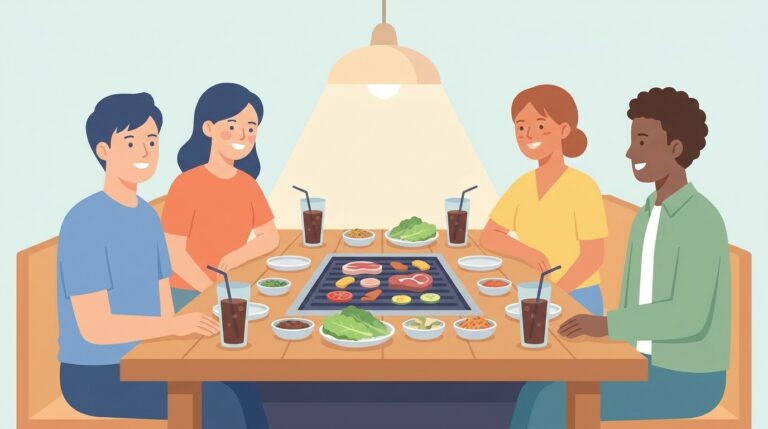
Phase 1: Welcome to the New Era of Korean Company Dinners
안녕하세요! (Annyeonghaseyo!) Hello, I’m your Daily Hangul editor! Have you ever watched a K-drama and felt nervous seeing workers forced to chug endless glasses at a hoesik (company dinner)? Good news: times have changed! Today in Korea, company dinners rarely force alcohol. Instead, teams gather to eat delicious BBQ, share stories, and relax together. Still, knowing how to decline a drink politely or say goodbye warmly can feel tricky for beginners. Based on real feedback from our Korean learners, this Level 2 guide gives you the exact phrases and cultural tips to enjoy modern Korean dinners stress-free!
Phase 2: Top 3 Must-Know Expressions for Modern Hoesik
1. 저는 콜라 마실게요 (Jeoneun kolla masilgeyo)
- Pronunciation: Jeoneun kolla masilgeyo (Sounds like: Juh-nun coal-lah mah-shil-geh-yo — think of “coal” + “la” for cola!)
- Meaning: Literally “I will drink cola.” The real nuance is a friendly, natural way to say, “I’m good with soda instead of alcohol!”
- K-Culture Moment: In modern office K-dramas like Extraordinary Attorney Woo or Business Proposal, younger employees casually grab a bottle of soda or sparkling water during team dinners without awkwardness.
- Editor’s Insight: Saying “I can’t drink” directly can sound a bit stiff. Instead, naming the non-alcoholic drink you want keeps the mood bright and shows you still want to join the toast!
- Situation Spectrum: Casual ✅ | Semi-formal ✅ | Formal ⚠️ (Use “저는 콜라로 하겠습니다 (Jeoneun kollaro hagetseumnida)” with top executives)
- 🤔 Think About It: In your country, do people usually just say “No, thanks” to alcohol, or do they suggest a substitute drink right away to keep the social flow going?
2. 잘 먹겠습니다! (Jal meokgetseumnida!)
- Pronunciation: Jal meokgetseumnida (Sounds like: Jahl muk-get-sum-nee-dah — “muk” rhymes with “book” mixed with “up”)
- Meaning: Literally “I will eat well.” The real nuance is “Thank you so much for this delicious meal!”
- K-Culture Moment: Right before the first bite of sizzling samgyeopsal (pork belly) in variety shows like I Live Alone, everyone puts their hands together or picks up their chopsticks and cheerfully says this line.
- Editor’s Insight: In Korean hoesik, the company or senior colleague usually pays. Saying this bright phrase before eating is the golden rule of gratitude!
- Situation Spectrum: Casual ⚠️ (Use “잘 먹을게! (Jal meogeulge!)” with close friends) | Semi-formal ✅ | Formal ✅
- 🤔 Think About It: Why do you think Korean culture puts so much emphasis on thanking someone before eating, not just after?
3. 먼저 들어가 보겠습니다 (Meonjeo deureoga bogesseumnida)
- Pronunciation: Meonjeo deureoga bogesseumnida (Sounds like: Mun-juh duh-ruh-gah bo-get-sum-nee-dah)
- Meaning: Literally “I will try going inside first.” The real nuance is “Please excuse me, I’ll head home first!”
- K-Culture Moment: When a dinner wraps up around 9 PM and some coworkers head to a cafe while others go home to rest, people stand up, bow slightly, and use this polite exit line.
- Editor’s Insight: Notice the word deureoga (go inside). Koreans think of going home as entering their safe, cozy nest. It sounds much softer and more polite than bluntly saying “I’m leaving.”
- Situation Spectrum: Casual 🚫 (Too stiff for best friends) | Semi-formal ✅ | Formal ✅
- 🤔 Think About It: Does your native language have a soft expression for leaving a gathering early so nobody feels offended?
Phase 3: Textbook Korean vs. Real Korean
Situation 1: Choosing a Soft Drink Instead of Alcohol
- 📖 Textbook Korean: 술을 마실 수 없습니다. (Sureul masil su eopseumnida.) — “I cannot drink alcohol.”
- 🗣️ Real Korean: 오늘은 술 대신 사이다 마실게요! (Oneureun sul daesin saida masilgeyo!) — “Today I’ll have lemon-lime soda instead of alcohol!”
- 💡 Why the difference? Textbooks focus on literal grammar, which can sound like a medical report at a fun dinner. Real Koreans focus on keeping the vibe warm and upbeat.
Situation 2: Saying Goodbye After Dinner
- 📖 Textbook Korean: 안녕히 계세요. (Annyeonghi gyeseyo.) — “Goodbye (stay peacefully).”
- 🗣️ Real Korean: 오늘 너무 즐거웠습니다! 조심히 들어가세요! (Oneul neomu jeulgeowotseumnida! Josimhi deureogaseyo!) — “I had so much fun today! Get home safely!”
- 💡 Why the difference? Saying only “Goodbye” feels abrupt after sharing a meal. Adding that you enjoyed the time and wishing everyone a safe trip home shows jeong (warm affection).
Phase 4: K-Culture Deep Dive & Non-Verbal Manners
4-1. Nunchi (눈치) & Dining Gestures
Even if your glass is filled with cola or barley tea, Korean table manners still shine! When someone pours a drink for you—even water or soda—hold your glass with two hands (or support your right wrist lightly with your left hand). During a group toast, clink your glass slightly lower than your boss’s or older colleague’s glass as a cute sign of respect. Most importantly, put your phone face down and lean in with a warm smile when others speak—that is peak nunchi (social awareness)!
4-2. Cultural Code Analysis: The MZ Generation Hoesik Revolution
K-Food and K-Dramas have changed fast! In the past, hoesik meant late-night drinking rounds. Today, driven by young MZ generation workers, companies love “Lunch Hoesik” (eating high-end steak or sushi at noon) or “Gourmet Hoesik” where the star of the night is the food, not the soju. Coworkers chat about Netflix shows, travel plans, and trendy cafes while grilling meat together.
Phase 5: Real-Life Roleplay Scenario
Setting: A cozy, smoky Korean BBQ restaurant in Gangnam. Fairy lights glow above wooden tables, and samgyeopsal is sizzling on the grill. Team Leader Minho (friendly, 30s, loves good food) is hosting dinner for you and two teammates.
- Minho: 오늘 고기 진짜 맛있어 보이죠? 다들 편하게 마실 거 골라요! (Oneul gogi jinjja masisseo boijyo? Dadeul pyeonhage masil geo gollayo!) — “The meat looks amazing today, right? Everyone, feel free to pick whatever you want to drink!” 🎭 Points cheerfully at the drink menu.
- You: 네! 저는 콜라 마실게요. (Ne! Jeoneun kolla masilgeyo.) — “Yes! I’ll have a cola.” 🎭 Smiles brightly and raises a hand slightly.
- Minho: 좋아요! 콜라 여기 하나요! 자, 다 같이 건배할까요? (Joayo! Kolla yeogi hanayo! Ja, da gachi geonbaehalkkayo?) — “Great! One cola here, please! Now, shall we all do a toast?” 🎭 Pours soda into your glass while you hold it with two hands.
- You: 잘 먹겠습니다! (Jal meokgetseumnida!) — “Thank you for the meal!” 🎭 Clinks your cola glass slightly below Minho’s glass.
- Minho: 맛있게 드세요! 요즘 한국 생활은 어때요? (Masitge deuseyo! Yojeum hanguk saenghwareun eottaeyo?) — “Enjoy the food! How is life in Korea these days?” 🎭 Places a grilled piece of pork on your plate.
- You: 너무 좋아요! 특히 한국 음식이 최고예요. (Neomu joayo! Teukhi hanguk eumsigi choegoyeyo.) — “It’s awesome! Especially Korean food—it’s the best.” 🎭 Gives a happy thumbs-up.
- Minho: 하하, 다행이네요! 벌써 9시네. 오늘 회식은 여기서 마칠까요? (Haha, dahaeng-ineyo! Beolsseo ahopsine. Oneul hoesigeun yeogiseo machilkkayo?) — “Haha, I’m glad! It’s already 9 PM. Shall we wrap up tonight’s dinner here?” 🎭 Checks his watch and smiles warmly.
- You: (Time to say goodbye! Choose your response below!)
🔀 Interactive Branching Point
- Option A: “오늘 너무 즐거웠습니다! 먼저 들어가 보겠습니다. 조심히 들어가세요!” (Oneul neomu jeulgeowotseumnida! Meonjeo deureoga bogesseumnida. Josimhi deureogaseyo!) — “I had so much fun today! I’ll head home first. Get home safely!”
- Option B: “잘 자요! 내일 봐요!” (Jal jayo! Naeil bwayo!) — “Sleep well! See you tomorrow!”
- Option C: “배불러서 집에 가고 싶어요. 안녕!” (Baebulleoseo jibe gago sipeoyo. Annyeong!) — “I’m full so I want to go home. Bye!”
Feedback:
* Option A (Best! ✅): Absolute perfection! You expressed gratitude, used the polite leaving phrase, and wished everyone a safe trip home.
* Option B (Risk ⚠️): Cute and friendly, “Jal jayo” is casual (banmal), so only use it with peers of the same age—not with Team Leader Minho!
* Option C (Bad 🚫): Way too blunt and casual! Ending with “Annyeong” to a boss sounds rude in Korean.
Phase 6: 10-Second Emotion Shadowing Drill
Read aloud using the / marks for natural pauses and match the emotion!
[😊 Cheerful & Warm]저는 / 콜라 / 마실게요! (Jeoneun / kolla / masilgeyo!)[🥳 Grateful & Excited]잘 / 먹겠습니다! (Jal / meokgetseumnida!)[🙏 Polite & Gentle]오늘 / 너무 즐거웠습니다! / 조심히 들어가세요! (Oneul / neomu jeulgeowotseumnida! / Josimhi deureogaseyo!)
Phase 7: K-Culture Mini Dictionary
- 회식 (Hoesik) | Company dinner | A team meal hosted by a company to bond and eat delicious food together.
- 건배 (Geonbae) | Cheers / Toast | Shouted when clinking glasses (even with soda or juice!) to celebrate together.
- 눈치 (Nunchi) | Social awareness | The ability to read the room and notice others’ feelings without words.
- 이차 / 2차 (Icha) | Second round | Moving to a second spot after dinner—these days, often a dessert cafe or bowling alley instead of a bar!
Phase 8: Survival Kit for Dinners & Getting Home
Top 3 Dining Survival Phrases
- 물 좀 주세요 (Mul jom juseyo) — “Please give me some water.” (Pro Tip: In many Korean restaurants, water is self-service from a fridge marked “물 (셀프)”!)
- 진짜 맛있어요! (Jinjja masisseoyo!) — “It’s really delicious!” (Pro Tip: Complimenting the food makes the host super happy.)
- 잘 먹었습니다! (Jal meogeotseumnida!) — “I ate really well / Thank you for the meal!” (Pro Tip: Say this to both your host and the restaurant staff when leaving!)
Editor’s Travel & Night-Out Note
After a great dinner, getting home smoothly is easy if you prepare! Be sure to Download the Naver Map App for Korean Transit to check the exact time of the last subway train (usually around 11:30 PM to midnight) and find bus routes in English. If you stay out late chatting at a cafe, you can also Get the Kakao T App for Easy Korean Taxis to hail a cab safely with upfront fare estimates and zero address confusion.
Phase 9: One Step Deeper
In Korea, sharing food from the same grill or stew pot represents uri (우리, “we/us”). Even though modern hoesik no longer forces anyone to drink alcohol, the heart of the gathering hasn’t changed: it is a moment to drop stiff office titles for an hour, laugh together, and feel like a team. Learning how to decline a drink gently while still clinking your glass of soda shows deep respect for both yourself and Korean community culture. Language isn’t just grammar—it’s how you build warmth across cultures.
💬 Your Turn: Have you ever been to a Korean-style dinner, or which Korean food would you love to eat at your dream hoesik? Share in the comments below!
Phase 10: FAQ & Common Mistakes
Q: Is it rude to refuse alcohol at a Korean company dinner today?
A: Not at all! Modern Korean workplaces respect personal health, religion, and preferences. Politely ordering a soda or juice keeps everyone comfortable.
Q: Do I still have to clink glasses if I’m only drinking water or cola?
A: Yes, joining the toast with your non-alcoholic drink is the best way! It shows you are happy to be part of the team moment.
Q: Who pays for the company dinner in Korea?
A: Usually the company pays using a corporate card (법인카드, beobinkadeu), or the most senior manager treats the team. Never forget to say “잘 먹었습니다! (Jal meogeotseumnida!)”
🚨 Common Mistakes Warning Board
- Mistake: Quietly slipping out the door without telling anyone.
- Correct Action: Always smile and say “먼저 들어가 보겠습니다 (Meonjeo deureoga bogesseumnida)” before leaving.
- Mistake: Holding your glass with one hand while someone pours your soda.
- Correct Action: Hold your glass with two hands as a polite gesture.
- Mistake: Saying “잘 먹었습니다” before eating.
- Correct Action: Remember the tense! Say “잘 먹겠습니다” (future) before eating, and “잘 먹었습니다” (past) after finishing.
Phase 11: Action Mission & Engagement
- 🥉 Bronze Mission: Practice our 3 key expressions in front of a mirror 3 times using the emotion shadowing rhythm.
- 🥈 Silver Mission: Share your favorite modern Korean dinner food on Instagram or X and tag
@DailyHangul! - 🥇 Gold Mission: Next time you eat with a Korean friend or coworker, surprise them by saying “잘 먹겠습니다! (Jal meokgetseumnida!)” before your first bite.
- 🎮 K-Culture Mission: Watch an episode of a recent Korean office drama (like Business Proposal or King the Land) and spot one dining scene where characters say “건배! (Geonbae!)” or eat together.
Phase 12: Interactive Quiz Challenge
1. Situational Judgment: Your boss offers you a drink, and you want a lemon-lime soda (saida) instead. What is the smoothest response?
* A) 술 싫어요! (Sul sireoyo!)
* B) 저는 사이다 마실게요! (Jeoneun saida masilgeyo!)
* C) 안 마셔! (An masyeo!)
Click to see Answer & Explanation for Quiz 1
Answer: B! Saying “저는 사이다 마실게요! (Jeoneun saida masilgeyo!)” is polite, positive, and natural. (A) “I hate alcohol!” and (C) “I won’t drink!” sound too blunt and informal.
2. Fill in the Blank: You finished your delicious dinner and are heading home. Fill in the blank: “오늘 너무 즐거웠습니다! 조심히 ______!” (Get home safely!)
Click to see Answer & Explanation for Quiz 2
Answer: 들어가세요 (deureogaseyo)! Full phrase: “조심히 들어가세요! (Josimhi deureogaseyo!)” — Wishing someone a safe trip back inside their home is a classic warm Korean goodbye.
3. True or False: At modern Korean company dinners, you cannot join the group toast if you have cola in your glass.
Click to see Answer & Explanation for Quiz 3
Answer: False! You are always welcome to clink glasses and shout “건배! (Geonbae!)” with soda, juice, or water!
🎬 Watch Our Daily Videos! (Daily Hangul Official Instagram)
Review the expressions you learned in this article with our fun daily short videos! Check out native pronunciation and real-life nuances in action.
- Instagram @dailyhangul_en







