

Talk Like a Local: How to Say You Like Responsible People in Korean
Phase 1: Empathy (Story-Immersive Opening)
안녕하세요! 매일한글 에디터입니다. (An-nyeong-ha-se-yo! Mae-il Han-geul e-di-teo-im-ni-da. / Hello! I’m your Daily Hangul editor.)
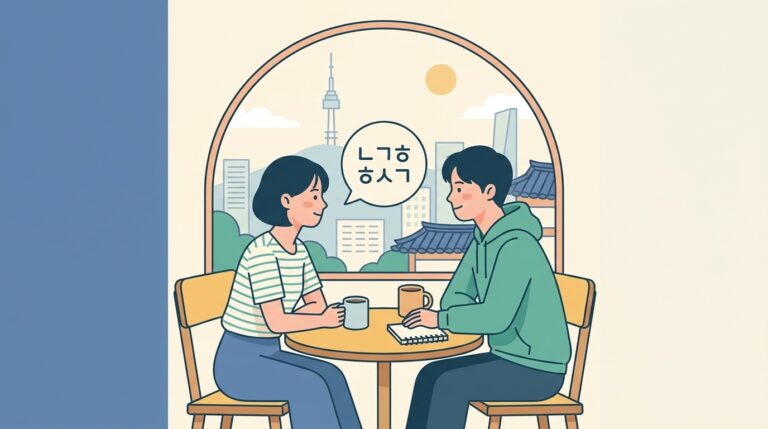
Picture this: You are sitting with your Korean coworkers or language-exchange buddies at a cozy pocha in Hongdae. The grilled pork belly is sizzling, soju glasses are clinking, and the conversation inevitably steers toward that legendary K-Drama topic: “What is your ideal type?” (이상형이 뭐예요? / I-sang-hyeong-i mwo-ye-yo?).
You want to express that you don’t just care about looks; you admire someone who keeps their promises, finishes what they start, and stands firm when things get tough. In English, you’d casually say, “I love someone responsible.” But when you search your mental dictionary, you freeze. Do you say 착한 사람 (chak-han sa-ram – nice person)? No, that sounds like a kindergarten teacher describing a well-behaved child. Do you say 일을 열심히 하는 사람 (ir-eul yeol-sim-hi ha-neun sa-ram – person who works hard)? That sounds like a job performance review!
I have mentored hundreds of intermediate Korean learners who hit this exact wall during B1 level conversations. You know basic adjectives, but you lack the precise emotional vocabulary that natives use when discussing character traits and romance. In Korean culture, describing someone as having a “strong sense of responsibility” is one of the highest compliments you can ever bestow—both in romance and in professional life. Let’s unlock the exact phrasing, cultural mindset, and natural expressions that will make native speakers nod in deep agreement.
Phase 2: Core Expressions Deep Dive
1. 책임감이 강하다 (Chaegim-gam-i gang-ha-da)
- Pronunciation: [Chaegim-gam-i gang-ha-da] (Sounds like “cheh-geem-gahm-ee gahng-hah-dah”. The ‘gang’ resonates like the gong of a bell, signaling inner power.)
- Meaning: Literal: “Sense of responsibility is strong.” | Real Nuance: To be deeply accountable, someone who never shifts blame onto others.
- K-Culture Moment: Think of Chief Hong in Hometown Cha-Cha-Cha or the reliable team leader in an office K-Drama who stays late to protect their junior colleagues.
- Editor’s Insight: In Korean, responsibility isn’t something you simply have (있다); it’s something that is strong (강하다). Saying “책임감이 강한 사람을 좋아해요” (Chaegim-gam-i gang-han sa-ram-eul jo-a-hae-yo) immediately conveys emotional maturity.
- Situation Spectrum: Casual: ✅ | Semi-formal: ✅ | Formal: ✅
- 🤔 Think About It: In English, we say “responsible person.” Why do Koreans conceptualize responsibility as an internal muscle with “strength” (강하다)?
2. 믿음직스럽다 (Mideum-jik-seu-reop-da)
- Pronunciation: [Mi-deum-jik-seu-reop-da] (Sounds like “mee-deum-jeek-seu-ruhp-dah”. The ‘mideum’ feels soft yet firm, like sinking into a sturdy armchair.)
- Meaning: Literal: “Giving off trustworthy vibes.” | Real Nuance: Dependable, solid, someone whose mere presence makes you exhale with relief.
- K-Culture Moment: When the male or female lead in a melodrama silently shows up with an umbrella during a sudden downpour, viewers whisper: “진짜 믿음직스럽다” (Jin-jja mi-deum-jik-seu-reop-da).
- Editor’s Insight: While 믿다 (mit-da) means simply “to believe,” adding -직스럽다 transforms it into an aura. It describes someone whose everyday demeanor screams dependability.
- Situation Spectrum: Casual: ✅ | Semi-formal: ✅ | Formal: ⚠️
- 🤔 Think About It: How does perceiving someone as “dependable” change dating dynamics compared to just finding them “fun” or “charming”?
3. 맡은 일을 끝까지 해내다 (Mateun ir-eul kkeut-kkaji hae-nae-da)
- Pronunciation: [Ma-teun ir-eul kkeut-kka-ji hae-nae-da] (Sounds like “mah-teun eel-eul kkeut-kkah-jee heh-neh-dah”. Crisp ‘kk’ sound provides a sense of finality.)
- Meaning: Literal: “To complete assigned work until the very end.” | Real Nuance: Having grit, follow-through, and zero excuses.
- K-Culture Moment: Reality survival shows like Physical: 100 or K-Pop trainee documentaries where team captains refuse to give up despite injuries.
- Editor’s Insight: Use this phrase when someone asks why you admire someone: “그 사람은 자기가 맡은 일은 끝까지 해내요” (Geu sa-ram-eun ja-gi-ga ma-teun ir-eun kkeut-kka-ji hae-nae-yo – That person always sees their tasks through to the finish).
- Situation Spectrum: Casual: ✅ | Semi-formal: ✅ | Formal: ✅
- 🤔 Think About It: Why does Korean workplace culture prize completion (해내다) over mere effort (노력하다)?
Phase 3: Textbook Korean vs. Real Korean
Situation 1: Explaining your dating preferences on a blind date (소개팅 – So-gae-ting)
- 📖 교과서 한국어: “저는 성실하고 착한 사람이 좋습니다.” (Jeo-neun seong-sil-ha-go chak-han sa-ram-i jot-seum-ni-da. / I like a diligent and kind person.)
- 🗣️ 진짜 한국어: “저는 자기 일 똑부러지게 하고, 책임감 있는 사람이 좋더라고요.” (Jeo-neun ja-gi il ttok-bu-reo-ji-ge ha-go, chae-gim-gam inn-neun sa-ram-i jo-teo-ra-go-yo. / I really like people who take care of their business cleanly and have a strong sense of responsibility.)
- 💡 왜 다를까? Textbook phrases like “착하다” sound overly generic and youthful. Adults use “똑부러지다” (smart, clear-cut, capable) and “책임감 있다” to denote a self-sufficient partner.
Situation 2: Praising a colleague or study group leader
- 📖 교과서 한국어: “그분은 일을 열심히 해서 인기가 많습니다.” (Geu-bun-eun ir-eul yeol-sim-hi hae-seo in-gi-ga man-seum-ni-da. / That person works hard so they are popular.)
- 🗣️ 진짜 한국어: “진짜 든든한 스타일이에요. 말만 앞서지 않고 행동으로 보여주거든요.” (Jin-jja deun-deun-han seu-ta-ir-i-e-yo. Mal-man ap-seo-ji an-ko haeng-dong-eu-ro bo-yeo-ju-geo-deun-yo. / They’re so reassuring. They don’t just talk the talk; they show it through action.)
- 💡 왜 다를까? Koreans deeply value humility and action. The compound phrase “든든하다” (reassuring/hearty) paired with “말만 앞서지 않다” (not just talkative) reflects authentic respect.
Phase 4: K-Culture Deep Dive & Non-Verbal Manners
4-1. 눈치 (Nunchi) & Non-Verbal Demeanor
When expressing your admiration for someone’s responsibility, tone and posture matter just as much as grammar:
* The Steady Nod (끄덕임): In Western settings, broad smiles often show enthusiasm. In Korean, when you say someone is 책임감이 강하다, adopt a measured, respectful head nod. It indicates sincerity rather than superficial flattery.
* Eye Contact Timing: Do not glare intently. Make warm, brief eye contact when delivering the adjective (든든해요), then gently drop your gaze slightly to acknowledge the modesty of the trait.
4-2. Cultural Code: Why “책임감” Dominates Korean Romance
In Korea’s fast-paced society (빨리빨리 문화 – Ppalli-ppalli mun-hwa), unpredictability creates immense stress. Consequently, in blind dates (소개팅) and matchmaking, 책임감 (responsibility) consistently outranks humor or raw wealth. A partner with high 책임감 represents emotional safety, someone who won’t “ghost” (잠수타다 – jam-su-ta-da) during conflicts, and someone who honors communal expectations. Calling someone responsible isn’t calling them boring—it is calling them the ultimate “green flag.”
Phase 5: Real-Life Roleplay Scenario
Setting: A trendy rooftop cafe in Yeonnam-dong. You are chatting over iced Americanos with Min-a, your Korean university project partner who loves matchmaking her friends.
- 민아 (Min-a): 너 이번 주말에 약속 없으면 내 친구 소개받을래? (Neo i-beon ju-mar-e yak-sok eop-seu-myeon nae chin-gu so-gae-ba-deul-lae? / If you’re free this weekend, want an intro to my friend?)
🎭 Leans forward with a mischievous, excited grin
- 나 (You): 소개팅? 갑자기 웬일이야? 어떤 사람인데? (So-gae-ting? Gap-ja-gi wen-ir-i-ya? Eot-teon sa-ram-in-de? / A blind date? What’s the occasion all of a sudden? What kind of person are they?)
🎭 Tilts head curiously while placing down the iced Americano
- 민아 (Min-a): 외모도 깔끔하고 유머 감각도 진짜 좋아! (We-mo-do kkal-kkeum-ha-go yu-meo gam-gak-do jin-jja jo-a! / They have a neat look and an amazing sense of humor!)
🎭 Flips hair back and taps fingers excitedly on the wooden table
- 나 (You): 오, 재미있는 것도 좋은데… 사실 나는 성격이 더 중요해. (O, jae-mi-in-neun geot-do jo-eun-de… Sa-sil na-neun seong-gyeok-i deo jung-yo-hae. / Oh, fun is nice… but honestly, personality matters more to me.)
🎭 Smiles gently and speaks with a calm, candid voice
- 민아 (Min-a): 그래? 구체적으로 어떤 스타일 좋아하는데? (Geu-rae? Gu-che-jeok-eu-ro eot-teon seu-ta-il jo-a-ha-neun-de? / Really? What specific style do you like?)
🎭 Restes chin in both palms, listening attentively
- 나 (You): 나는 자기가 한 말은 지키고, 책임감이 강한 사람이 좋더라. (Na-neun ja-gi-ga han mar-eun ji-ki-go, chae-gim-gam-i gang-han sa-ram-i jo-teo-ra. / I like someone who keeps their word and has a strong sense of responsibility.)
🎭 Nods slowly with quiet conviction and clear eyes
- 민아 (Min-a): 아, 무슨 말인지 딱 알겠다! 겉만 화려한 사람 말고 든든한 사람이지? (A, mu-seun mar-in-ji ttak al-get-da! Geon-man hwa-ryeo-han sa-ram mal-go deun-deun-han sa-ram-i-ji? / Ah, I know exactly what you mean! Someone dependable, not just flashy on the outside, right?)
🎭 Claps hands together in sudden realization
- 나 (You): 맞아, 바로 그거야! 그런 사람이면 완전 환영이야. (Ma-ja, ba-ro geu-geo-ya! Geu-reon sa-ram-i-myeon wan-jeon hwan-yeong-i-ya. / Exactly, that’s it! If it’s someone like that, count me all in.)
🎭 Laughs comfortably, giving an enthusiastic thumbs-up
🔀 Interactive Choice Point
When Min-a asks what your absolute deal-breaker is, how do you respond?
* Option A: “시간 약속 안 지키고 핑계만 대는 사람은 딱 질색이야.” (Si-gan yak-sok an ji-ki-go ping-gye-man dae-neun sa-ram-eun ttak jil-saek-i-ya. / I absolutely hate people who are late and make excuses.)
* Feedback: [BEST] Crisp, expressive, and shows high conversational fluency at the B1 level.
* Option B: “책임이 없는 사람을 싫어합니다.” (Chaegim-i eom-neun sa-ram-eul sil-eo-ham-ni-da. / I dislike people without responsibility.)
* Feedback: [BAD] Grammatically robotic and unnaturally stiff for a casual cafe conversation with a close friend.
* Option C: “돈 없으면 절대 안 돼요.” (Don eop-seu-myeon jeol-dae an dwae-yo. / If they have no money, absolutely not.)
* Feedback: [RISK] Grammatically sound, but socially risky—it may make you seem purely materialistic rather than relationship-focused!
Phase 6: 10-Second Emotion Shadowing Drill
Read these out loud! Match the emotional cadence marked before each line, pausing slightly at the slashes (/).
[😊 진심을 담아 고백하듯 / Sincere & affectionate]
“저는 / 자기가 맡은 일에 / 책임감이 강한 사람이 / 제일 멋있더라고요.”
(Jeo-neun / ja-gi-ga ma-teun ir-e / chae-gim-gam-i gang-han sa-ram-i / je-il meo-sit-deo-ra-go-yo.)-
[🤝 확신에 차서 단호하게 / Resolute & confident]
“말만 번지르르한 사람보다 / 행동으로 증명하는 사람이 / 진짜 든든해요.”
(Mal-man beon-ji-reu-reu-han sa-ram-bo-da / haeng-dong-eu-ro jeung-myeong-ha-neun sa-ram-i / jin-jja deun-deun-hae-yo.) -
[😌 안도하며 흐뭇하게 / Relieved & relaxed]
“그 친구랑 일하면 / 마음이 편해요. / 끝까지 포기하지 않거든요.”
(Geu chin-gu-rang ir-ha-myeon / ma-eum-i pyeon-hae-yo. / Kkeut-kka-ji po-gi-ha-ji an-keo-deun-yo.)
Phase 7: K-Culture Mini Dictionary
- 이상형 (I-sang-hyeong) | Ideal Type
Used constantly in daily banter, media interviews, and university social mixers to assess relationship compatibility. - 든든하다 (Deun-deun-ha-da) | Heartening / Dependable
Originally meaning to feel full after a warm bowl of soup (속이 든든하다), this is now the ultimate character praise for someone who guards your back. - 갓생 (Gat-saeng) | God-Life (Living an exemplary, hyper-productive life)
Slang combining the English word “God” and the Korean “Life” (생). Describes people who wake up early, study diligently, and fulfill responsibilities. - 칼퇴 (Kal-twi) | Leaving work sharp on time
Leaving the exact minute your shift ends (“knife-like exit”). Interestingly, responsible people who finish their work early earn genuine respect for their 칼퇴.
Phase 8: Traveler’s Survival Kit
When traveling in Korea, you’ll often need to rely on the kindness and responsibility of strangers (station staff, cafe owners, or police officers):
- Top 1: “이것 좀 부탁드려도 될까요? 믿고 맡길게요!”
(I-geot jom bu-tak-deu-ryeo-do doel-kka-yo? Mit-go mat-gil-ge-yo! / Could I trouble you with this? I trust you with it!)
Pro Tip: Perfect when leaving luggage temporarily at a guesthouse desk or storage station. - Top 2: “바쁘실 텐데 끝까지 도와주셔서 정말 감사합니다.”
(Ba-ppeu-sil ten-de kkeut-kka-ji do-wa-ju-syeo-seo jeong-mal gam-sa-ham-ni-da. / I know you’re busy, thank you so much for helping me to the very end.)
Pro Tip: Acknowledges their high sense of duty when navigating subway assistance. - Top 3: “제가 잘 몰라서 그러는데, 다시 한번 확인해 주실 수 있나요?”
(Je-ga jal mol-la-seo geu-reo-neun-de, da-si han-beon hwa-gin-hae ju-sil su in-na-yo? / I don’t know well, could you please verify this one more time?)
Pro Tip: Gently appeals to the local employee’s procedural responsibility without sounding confrontational. -
Editor’s Travel Note: When traveling across South Korea, never rely solely on global maps that lack local transit details. Make sure you set up navigation by downloading the Naver Map application and keep a physical transport card (T-Money) ready in your pocket.
Phase 9: One Step Deeper (Reflective Essay)
In many Western cultures, personal autonomy and hyper-individualism celebrate the freedom to say “no” whenever you want. While boundaries are healthy, Korean society was historically forged around communal survival—from agricultural cooperative labor (두레 – Dure) to shared apartment complex committees today.
When a Korean speaker says they prize someone with 책임감 (responsibility), they are expressing a deep psychological hunger for mutual security. To be responsible in Korea means understanding that your actions echo into the lives of your family, your coworkers, and your romantic partner. It is not just about completing a task; it is an act of love that whispers: “You can rest easy, because I won’t drop my end of the burden.”
💬 Your Turn: In your home country, is “responsibility” seen as attractive, or is it perceived as dull compared to spontaneous adventure? Share your thoughts below!
Phase 10: FAQ & Common Pitfalls
Q: Can I use “책임감이 강하다” to describe a child or a pet?
A: It sounds slightly unnatural for pets because animals cannot hold moral duty! For children, you can say it humorously if an older sibling takes care of a younger one (“첫째가 벌써 책임감이 강해요”), but normally it is reserved for young adults and grown-ups.
Q: What is the difference between 성실하다 and 책임감이 강하다?
A: 성실하다 (seong-sil-ha-da) means “diligent/faithful”—someone who shows up every day on time like clockwork. 책임감이 강하다 means “accountable”—someone who steps up when a crisis occurs and sees things through to resolution.
Q: Is there an opposite expression for someone who avoids responsibility?
A: Yes! You can say “책임감이 없다” (has no sense of responsibility) or casually use the idiom “발을 빼다” (ba-reul ppae-da – to pull one’s foot out / back out of responsibility).
🚨 Common Mistakes Alert
- Saying “책임이 크다” instead of “책임감이 강하다”: 책임이 크다 means the external burden or legal liability of your position is heavy (e.g., a CEO’s duty). To describe a personality trait, you must append -감 (sense) and use 강하다 (strong).
- Confusing 착하다 with 든든하다: Calling your 30-year-old blind date 착해요 makes them sound docile. If you were impressed by their reliability, say 든든해요 or 책임감이 있어 보여요.
- Overusing 합니다/습니다 in casual cafes: Saying “저는 책임감이 강한 사람을 좋아합니다” at a casual meetup sounds like a formal job interview speech. Soften it to “~사람이 좋더라고요” or “~사람을 좋아해요”.
Phase 11: Action Missions
- 🥉 Bronze Mission (Solo Shadowing): Stand in front of your mirror and record yourself saying: “저는 약속을 잘 지키고 책임감이 강한 사람이 좋아요” (Jeo-neun yak-sog-eul jal ji-ki-go chae-gim-gam-i gang-han sa-ram-i jo-a-yo) with a calm, affirmative nod.
- 🥈 Silver Mission (Social Media): Post an Instagram Story of your favorite K-Drama character and caption it in Korean: “진짜 든든하고 책임감 넘치는 캐릭터!” (Jin-jja deun-deun-ha-go chae-gim-gam neom-chi-neun kae-rik-teo!).
- 🥇 Gold Mission (Real-World Use): In your next Korean language exchange session, describe your ideal type using 책임감 and 맡은 일 at least once without checking your notes!
- 🎮 K-Culture Mission: Watch an episode of a dating show like Heart Signal or I Am Solo (나는 솔로) and count how many times contestants mention 책임감 or 성실함 when describing their ideal types.
Phase 12: Interactive Quiz Challenge
1. Situational Judgment:
You want to tell your coworker that the new project manager is extremely dependable and never shifts blame. Which sentence is most natural?
* (A) 매니저님이 너무 착해서 귀여워요.
* (B) 매니저님이 책임감이 진짜 강하고 든든해요.
* (C) 매니저님이 일을 많이 해서 불쌍해요.
2. Fill in the Blank:
“제 이상형은 자기가 ______ 말은 끝까지 지키는 사람이에요.”
* (A) 본 (bon)
* (B) 먹은 (meog-eun)
* (C) 한 (han)
3. Culture True or False:
In modern Korean dating culture, saying someone is “책임감이 강하다” implies they are strict, unromantic, and boring.
* [True / False]
👉 Click here to reveal Answers & Explanations!
-
Correct Answer: (B)
Explanation: (B) highlights their reliable leadership (책임감이 강하고 든든해요). (A) sounds condescending, and (C) means you pity them for working too much! -
Correct Answer: (C) 한
Explanation: The set phrase is “자기가 한 말” (the words one said). The entire sentence translates to: “My ideal type is someone who keeps the words they said until the end.” -
Correct Answer: False
Explanation: It is considered one of the highest compliments and top green flags in contemporary Korean romance!







