

How to Say “My Head Hurts” in Korean Like a True Local
안녕하세요! (Annyeonghaseyo!) I’m your Daily Hangul editor, your cozy Korean friend! 🌸
Have you ever watched a K-Drama where the lead character gets so stressed by family drama or corporate politics that they dramatically grab both temples and sigh? You might hear them groan, or collapse onto a couch. Whether it’s from working late under the neon lights of Seoul or having one too many glasses of Soju during a corporate hoesik (dinner), knowing how to express a headache is a super practical, real-life skill.
Today, we are diving into the exact, natural phrases Koreans use to say “My head hurts” so you can navigate any stressful day or pharmacy visit in Korea like an absolute pro!
1. Core Expressions Deep Dive
1. 머리가 아파요 (Meoriga apayo)
- Pronunciation: Muh-ree-gah ah-pah-yo (Sounds like ‘mer-ry’ + ‘got’ [without ‘t’] + ‘ah-pa’ + ‘yo’)
- Meaning: My head hurts / I have a headache
- K-Culture Moment: You’ll hear this in almost every K-Drama when a character is overwhelmed by exams or dramatic news.
- Editor’s Insight: This is the absolute golden standard. It’s simple, direct, and polite. It literally translates to “Head (머리) + subject marker (가) + hurts (아파요)”.
- Situation Spectrum: Casual (⚠️ 머리 아파) / Semi-formal (✅ 머리가 아파요) / Formal (✅ 머리가 아픕니다)
- 🤔 Think About It: In English, we say “I have a headache” (possessing the pain). In Korean, we say “My head hurts” (the body part is the active subject). How does your native language frame physical pain?
2. 두통이 있어요 (Dutongi isseoyo)
- Pronunciation: Doo-tong-ee ee-ssuh-yo (Sounds like ‘Do’ + ‘tongue’ + ‘ee’ + ‘it-suh-yo’)
- Meaning: I have a headache / migraine
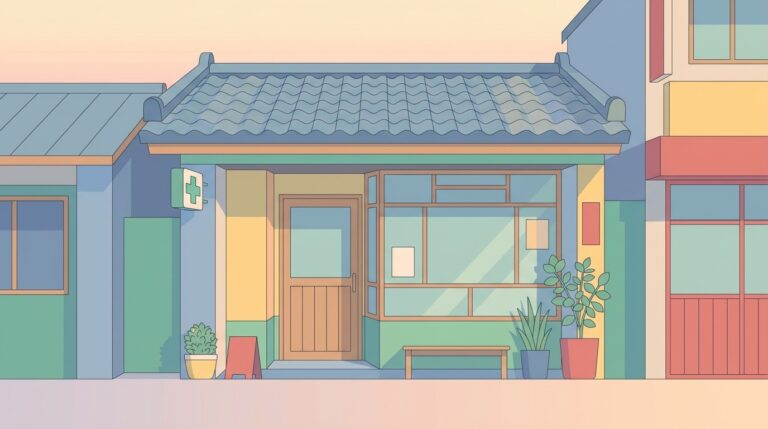
- K-Culture Moment: Explaining your symptoms to a pharmacist behind the counter in a clean, quiet neighborhood yakguk (pharmacy).
- Editor’s Insight: “두통” (Dutong) is a Hanja-based medical term (頭痛: 두 = head, 통 = pain). It sounds slightly more clinical but is very common when buying medicine.
- Situation Spectrum: Casual (⚠️) / Semi-formal (✅) / Formal (✅)
- 🤔 Think About It: Hanja (Chinese character roots) plays a massive role in Korean medical terms. Recognizing “통” (tong = pain) will help you understand words like 치통 (chitong = toothache) and 복통 (boktong = stomachache) later!
3. 머리가 깨질 것 같아요 (Meoriga kkaejil geot gatayo)
- Pronunciation: Muh-ree-gah kkae-jil guht gah-tah-yo (Pronounce ‘kkae’ with a sharp, tense ‘K’ sound)
- Meaning: My head feels like it’s going to split open!
- K-Culture Moment: The classic morning-after scene where characters search desperately for haejang-guk (hangover soup) after a night of drinking.
- Editor’s Insight: “깨지다” means to break or shatter. This is the perfect dramatic idiom for a splitting, throbbing headache.
- Situation Spectrum: Casual (✅ 깨질 것 같아) / Semi-formal (✅) / Formal (⚠️)
- 🤔 Think About It: Why do you think Koreans use such intense physical metaphors for discomfort? It shows how passionate and expressive Korean conversational culture truly is!
2. Textbook Korean vs. Real Korean
Let’s compare the stiff textbook phrases with what locals actually say!
Situation 1: At a local pharmacy
- 📖 Textbook: “저는 두통을 앓고 있습니다.” (I am suffering from a headache.)
- 🗣️ Real Korean: “머리가 아파서 왔어요. 두통약 좀 주세요.” (My head hurts, so I came. Please give me some headache medicine.)
- 💡 Why: Koreans prefer natural, conversational flow. Stating “I am suffering” sounds like a tragic historical novel!
Situation 2: Canceling plans with a close friend
- 📖 Textbook: “두통 때문에 약속을 취소해야 합니다.” (I must cancel the appointment due to a headache.)
- 🗣️ Real Korean: “나 오늘 머리가 너무 지끈거려서 못 나가겠어.” (My head is throbbing so much today, I don’t think I can make it out.)
- 💡 Why: The mimetic word “지끈거리다” (throbbing) makes your excuse feel much more real and heartfelt.
3. K-Culture Deep Dive & Non-verbal Manners
3-1. Nunchi & Gestures
When expressing physical pain in Korea, body language speaks volumes. Gently massage your temples with your index and middle fingers while closing your eyes. A soft, weary sigh (“휴…” / Hyu…) is a universally understood signal that you’re not feeling well. Keep your posture slightly lowered to show you’re drained, but avoid overacting unless you’re filming a drama!
3-2. Korean Medical Culture: Convenience Stores vs. Pharmacies
In Korea, you don’t always need a hospital for a minor headache. You can walk into any yakguk (약국 / pharmacy) and ask for medicine. But what if it’s 11 PM? Head to a 24-hour convenience store (편의점) like CU, GS25, or 7-Eleven! They keep basic over-the-counter safety medicines behind the counter. Just ask the clerk for “타이레놀” (Tylenol)!
4. Real-Life Roleplay Scenario
Setting: You walk into a cozy neighborhood pharmacy near Hongdae. Pharmacist Min-ji (NPC) is organizing boxes behind the counter.
- Pharmacist: 어서 오세요. 어디가 불편하세요?
(Eoseo oseyo. Eodiga bulpyeonhaseoyo?)
(🎭 Smiling warmly behind the counter: “Welcome. Where are you feeling uncomfortable?”) - You: 안녕하세요. 머리가 너무 아파요.
(Annyeonghaseyo. Meoriga neomu apayo.)
(🎭 Touching your temples, looking tired: “Hello. My head hurts so much.”) - Pharmacist: 아유, 머리가 많이 아프시군요. 언제부터 아프셨어요?
(Ayu, meoriga mani apeusigunyo. Eonjebuteo apeusyeosseoyo?)
(🎭 Looking concerned: “Oh dear, your head hurts a lot. Since when has it been hurting?”) - You: 오늘 아침부터 계속 지끈거려요.
(Oneul achimbuteo gyesok jikeungeoreoyo.)
(🎭 Frowning slightly: “It’s been throbbing constantly since this morning.”) - Pharmacist: 열도 나나요?
(Yeoldo nanayo?)
(🎭 Touching her own forehead to check: “Do you have a fever too?”) - You: 열은 없는데 머리만 깨질 것 같아요.
(Yeoreun eopneunde meoriman kkaejil geot gatayo.)
(🎭 Sighing softly: “No fever, but my head feels like it’s going to split open.”) - Pharmacist: 알겠습니다. 이 두통약 하루에 세 번, 식사 후에 드세요.
(Algetseumnida. I dutongyak harue se beon, siksa hue deuseyo.)
(🎭 Handing over a small box: “Understood. Take this headache medicine three times a day, after meals.”) - You: 감사합니다. 얼마예요?
(Gamsahabnida. Olmayeyo?)
(🎭 Taking out your card: “Thank you. How much is it?”)
🔀 Interactive Choice!
How would you order your medicine if you were in a rush?
* A) “머리가 아파요. 약 주세요.” (My head hurts. Give me medicine.)
👉 Bad: Quite blunt. It works in an emergency, but lacks polite wrapping.
* B) “머리가 지끈거리는데, 타이레놀 있나요?” (My head is throbbing, do you have Tylenol?)
👉 Best: Very natural, polite, and specific!
* C) “머리가 아픕니다. 치료를 원합니다.” (My head hurts. I desire treatment.)
👉 Risk: Too formal and dramatic. The pharmacist might think you need to be rushed to an emergency room!
5. 10-Second Emotion Shadowing Drill
Try reading these aloud with real emotion!
- “머리가 / 너무 / 아파요…”
(Muh-ree-gah / neo-mu / ah-pah-yo…)- [🥺 Emotion: Exhausted and weak]
- “머리가 / 깨질 것 / 같아요!”
(Muh-ree-gah / kkae-jil guht / gah-tah-yo!)- [😫 Emotion: Dramatic, intense pain]
6. K-Culture Mini Dictionary
- 약국 (Yak-guk) | Pharmacy | The primary place to buy medicine. Look for the red “약” sign on the streets.
- 타이레놀 (Ta-i-re-nol) | Tylenol | The most popular brand of painkiller in Korea.
- 지끈지끈 (Ji-kkeun-ji-kkeun) | Throbbing | An onomatopoeia describing a pulsing headache.
- 처방전 (Cheo-bang-jeon) | Prescription | A slip from a doctor needed for stronger, specialized medications.
7. Traveler’s Survival Kit
Survival Phrases TOP 3:
- “두통약 주세요.” (Dutongyak juseyo.) – Please give me headache medicine. (Pro Tip: Use this at any pharmacy.)
- “편의점에 타이레놀 있어요?” (Pyeonuijeome Tylenol isseoyo?) – Do you have Tylenol in the convenience store? (Pro Tip: Great for late-night needs.)
- “가까운 약국이 어디예요?” (Gakkaun yakgugi eodiyeyo?) – Where is the nearest pharmacy? (Pro Tip: Ask locals or a hotel lobby desk.)
📝 Editor’s Travel Note
When navigating South Korea, Google Maps won’t show you real-time pharmacy locations accurately due to local map restrictions. Instead, download the 네이버 지도 Naver Map app. Simply type “약국” (pharmacy) in the search bar to find the nearest open location. Note: Pharmacy operating hours can vary, but convenience stores are open 24/7. Painkiller prices are highly stable, usually around 3,000 KRW to 4,000 KRW per pack.
8. “One Step Deeper” (Thinking Points)
In Korean society, physical health complaints are often linked to emotional stress. The phrase “머리가 아프다” (my head hurts) is frequently used not just for physical illness, but to express deep worry, frustration, or stress caused by relational problems. When your Korean friend says this, they might not just need a Tylenol; they might need a warm cup of tea and a listening ear. Language is a mirror of a culture’s relational empathy.
💬 Your Turn: How does your culture express worry or stress? Do you also use physical symptoms like headaches, or do you focus strictly on emotions? Let’s discuss in the comments below!
9. FAQ & Misconceptions
Q: Can I buy painkillers in Korean convenience stores?
A: Yes, you can! Major convenience stores (CU, GS25, 7-Eleven) carry basic pain relievers like Tylenol and Brufen. They are usually placed behind the counter, so just ask the cashier.
Q: Is “머리 아파” rude to say?
A: “머리 아파” (meori apa) is casual Korean (반말). It is only polite when speaking to very close friends of the same age or younger. In professional settings, at a pharmacy, or with elders, always use “머리가 아파요” (meoriga apayo).
Q: Do I need insurance to buy medicine at a pharmacy?
A: No. Over-the-counter (OTC) medicines like basic painkillers do not require insurance or a prescription. You can simply walk in and pay with cash or credit card.
🚨 Common Mistakes Alert!
- Saying “머리가 병이 있어요” (My head has a disease).
👉 Correct Action: Say “머리가 아파요” (My head hurts). - Asking for “머리 약” (Head medicine).
👉 Correct Action: Use the correct medical compound word “두통약” (Headache medicine). - Bowing extremely deeply while groaning.
👉 Correct Action: Maintain a polite but natural posture. Too much bowing when sick might confuse locals or look like a comedy skit.
10. Action Mission
- 🥉 Bronze Level: Stand in front of a mirror and practice saying “머리가 아파요” five times with an exhausted expression.
- 🥈 Silver Level: Take a screenshot of a stressed K-drama character, post it on your Instagram Story, and caption it: “머리가 아파요! 🤯 @DailyHangul”.
- 🥇 Gold Level: Next time you pass a Korean convenience store, walk in and look for the “안전상비의약품” (safe OTC drugs) shelf to see what’s available!
🎮 K-Culture Mission
Watch your favorite K-Drama today and count how many times characters touch their foreheads or temples when stressed. Share the drama title in our comments!
11. Interactive Quiz Challenge
1. Which phrase is the most natural way to tell a pharmacist that your head hurts?
* A) 머리가 병이 있습니다.
* B) 머리가 아파요.
* C) 머리가 아픕니다.
2. Fill in the blank: “머리가 ____ 것 같아요” (My head feels like it’s going to split open).
* A) 터질
* B) 깨질
* C) 부서질
3. True or False: You can buy Tylenol at a Korean convenience store at midnight.
* True / False
🔍 Click to Reveal Answers & Explanations!
- 1. Answer: B (머리가 아파요 is the most natural, polite conversational option for A2 learners.)
- 2. Answer: B (깨질 is correct. ‘깨질 것 같아요’ means ‘going to shatter/crack’.)
- 3. Answer: True (Yes! Basic OTC medicines are sold 24/7 in major Korean convenience stores.)






