

Phase 1: Empathy (Immersion Open)
Hello! Daily Hangul Editor here.
Have you ever heard the ‘Morning Flower’ alarm? If you live in Korea, or if you’ve watched enough K-Dramas, you know that exact upbeat Samsung default alarm tune. Picture this: the protagonist groans, hits snooze on their smartphone for the fifth time, and then bolts upright because they are late for work. Or maybe you’ve seen your favorite K-Pop idols on a reality show, looking completely lost while their manager practically breaks the door down because they slept through all their alarms.
And let’s not forget the ultimate K-Drama romance trope: the sweet ‘Morning Call’ (모닝콜) from a crush, gently waking them up.
In Korea’s fast-paced, ppali-ppali (hurry up) society, waking up on time isn’t just about time management—it’s a social survival skill. However, the way Koreans talk about their alarms and morning routines is completely different from the textbook literal translations. If you use textbook Korean, you’ll sound like a smartphone user manual! Let’s learn the real, everyday expressions that will instantly make you sound like a true local.
Phase 2: Core Expressions Deep Dive
1. 알람(을) 맞추다
- Pronunciation: allam(eul) matchuda [Al-lam ma-chu-da]
- Meaning: Literal: To match the alarm. Real nuance: To set an alarm.
- K-Culture Moment: Picture a late-night drinking session (Hoesik). It’s 1 AM, and you have to be at work by 9 AM. Your coworker taps their phone screen and mutters, “내일 7시에 알람 맞춰야겠다…” (I should set an alarm for 7 AM tomorrow…)
- Editor’s Insight: This is the most crucial verb distinction! We don’t use ‘설정하다’ (to set/configure) in daily conversation. We use ‘맞추다’ (to match/align). You are literally ‘aligning’ your phone to the time you need to wake up.
- Situation Spectrum:
- 친구 사이(Casual): ✅
- 직장 동료(Semi-formal): ✅
- 직장 상사·어른(Formal): ✅ (Using 맞춰요/맞추셨어요)
- 🤔 Think About It: Why does Korean use ‘맞추다’ (to match) for alarms, puzzles, and even checking test answers? It reflects a cultural mindset of bringing things into alignment and harmony, rather than just mechanically ‘setting’ something.
2. 모닝콜 해주다
- Pronunciation: moningkol hae-ju-da [Mo-ning-kol heh-ju-da]
- Meaning: Literal/Real nuance: To give a wake-up call.
- K-Culture Moment: In K-Dramas, the male lead might whisper over the phone, “내일 모닝콜 해줄까?” (Shall I give you a morning call tomorrow?). In reality, idols often send voice messages on apps like Bubble or Weverse saying, “우리 팬들, 내가 모닝콜 해줄게!” (My fans, I’ll give you a wake-up call!).
- Editor’s Insight: ‘Morning call’ is classic Konglish. While it originally meant a hotel wake-up call, in Korea, it’s widely used for friends, family, or romantic partners calling to wake each other up. It implies care and intimacy.
- Situation Spectrum:
- 연인/친구 사이(Casual/Romantic): ✅
- 직장 동료(Semi-formal): ⚠️ (Only if you are very close work friends helping each other survive!)
- 직장 상사·어른(Formal): 🚫 (Never ask your boss to wake you up!)
- 🤔 Think About It: In many Western cultures, asking a friend to call and wake you up might seem overly dependent. Why do you think Koreans find it endearing among close friends and couples?
3. 알람(을) 못 들었어요
- Pronunciation: allam(eul) mot deu-reot-seo-yo [Al-lam mot deu-reot-seo-yo]
- Meaning: Literal/Real nuance: I couldn’t hear the alarm. (I slept through my alarm).
- K-Culture Moment: You run into the office 10 minutes late, bowing apologetically to your team leader. This is the ultimate, universally understood excuse in the Korean corporate world.
- Editor’s Insight: Notice we use ‘못’ (could not) instead of ‘안’ (did not). It emphasizes that it wasn’t your intention to ignore the alarm; you physically lacked the ability to hear it because you were in such a deep sleep. It shifts the blame slightly to your exhaustion!
- Situation Spectrum:
- 친구 사이(Casual): ✅ (알람 못 들었어!)
- 직장 동료(Semi-formal): ✅
- 직장 상사·어른(Formal): ✅ (But use it sparingly, or you’ll seem unreliable!)
- 🤔 Think About It: How do you say “I overslept” in your language? Does it carry a tone of guilt, or is it framed as an unavoidable accident like in Korean?
Phase 3: Textbook vs. Real Korean
[Setting the Alarm Before Bed]
* 📖 Textbook Korean: 저는 아침 7시에 알람을 설정했습니다. (I configured the alarm at 7 in the morning.)
* 🗣️ Real Korean: 내일 아침 7시로 알람 맞춰놨어요. (I’ve set the alarm for 7 AM tomorrow.)
* 💡 Why is it different?: Using ‘-아/어 놓다’ (놓았어요 -> 놨어요) adds the nuance that the action is completed and ready for the future. ‘설정하다’ sounds like you are coding an app!
[Asking for a Wake-Up Call]
* 📖 Textbook Korean: 내일 아침에 저를 깨워 주십시오. (Please awaken me tomorrow morning.)
* 🗣️ Real Korean: 내일 모닝콜 좀 부탁해! / 내일 좀 깨워줘! (Please give me a morning call tomorrow! / Wake me up tomorrow!)
* 💡 Why is it different?: “좀” (a little) softens the request, making it sound like a friendly favor rather than a military command.
Bottom Note: At the B2 level, start using ‘맞춰놨어요’ instead of ‘맞췄어요’ to sound much more native. It shows you understand aspectual verbs (verbs that show the state of an action).
Phase 4: Cultural Context — K-Culture Deep Dive
4-1. Non-verbal Cues
When someone says “알람을 못 들었어요” (I couldn’t hear the alarm) to a senior or boss, the body language is crucial. You shouldn’t make direct eye contact with a proud face. Look slightly down, scratch the back of your head or rub your eyes to look genuinely exhausted, and use a soft, apologetic tone. This is where Nunchi (reading the room) comes in—if the boss looks angry, stop explaining and just say sorry!
4-2. K-Culture Connections
The K-Drama Connection:
The ‘Morning Call’ is a legendary K-Drama trope. Usually, before two characters officially start dating, one will find an excuse to call the other in the morning.
“너 지각할까 봐 전화했어” (I called in case you’d be late).
This implies, “I was thinking about you the moment I woke up.” However, a critical reality check: outside of dramas, asking a casual acquaintance for a morning call can be seen as overly flirtatious or burdensome. Use it wisely!
The K-Pop Connection:
Idol fans love ‘Morning Call’ content. Many idols record short audio clips mimicking a phone call: “일어나~ 지각하겠다!” (Wake up~ You’re going to be late!). Fans actually download these mp3 files and set them as their smartphone alarm tones. It’s a prime example of parasocial intimacy in K-Pop!
Phase 5: Real-Life Roleplay Scenario
Setting: It’s 11:30 PM on a Thursday at a Gopchang (beef tripe) restaurant in Jongno. The team dinner (Hoesik) is finally wrapping up. Empty green Soju bottles line the table. You have a very important client meeting tomorrow at 8:30 AM.
Characters:
– YOU: A foreign employee who has been working in Seoul for a year. You are notoriously bad at waking up early.
– Min-su (32): Your Korean coworker. Friendly, a bit of a mother-hen, and always punctual.
Dialogue:
Min-su: 아, 오늘 너무 많이 마셨다. 내일 8시 반 미팅 어떡하죠? 😅
(A, oneul neomu mani masyeotda. Naeil yeodeolsi ban miting eotteokhajo?)
[Ah, drank too much today. What are we going to do about the 8:30 meeting tomorrow?]
(🎭 Stage Direction: Min-su rubs his temples and looks at his smartphone screen)
YOU: 그러니까요. 저 내일 절대 늦으면 안 되는데 큰일이에요.
(Geureonilkkayo. Jeo naeil jeoldae neujeumyeon an doeneunde keunirieyo.)
[I know, right. I absolutely cannot be late tomorrow, this is a big problem.]
Min-su: 알람 여러 개 맞춰놨어요?
(Allam yeoreo gae matchwonas-seoyo?)
[Did you set multiple alarms?]
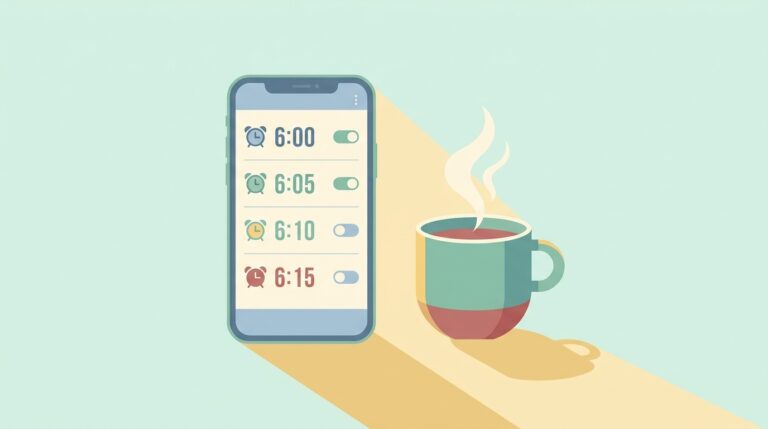
YOU: 네, 5분 간격으로 세 개나 맞췄어요!
(Ne, obun gangyeogeuro se gaena matchwosseoyo!)
[Yes, I set three of them at 5-minute intervals!]
Min-su: 불안한데… 제가 내일 아침 7시에 모닝콜 해줄까요?
(Buranhande… Jaega naeil achim ilgopsie moningkol haejulkkayo?)
[I’m still anxious about it… Shall I give you a morning call at 7 AM tomorrow?]
🔀 Your Turn! How should you respond?
– A) “아니요, 괜찮습니다. 제가 알아서 일어날게요.” (Too blunt! Sounds like you’re offended.)
– B) “진짜요? 와, 대박! 그럼 꼭 좀 부탁드릴게요. 생명의 은인이십니다!” (Friendly, appreciative, and slightly dramatic—perfect for a close coworker.)
– C) “네, 내일 7시에 전화해 주세요.” (Grammatically perfect, but lacks emotion and sounds like you are ordering him around.)✅ Best Choice: B — In Korea, expressing dramatic gratitude (calling someone a “life saver” – 생명의 은인) builds strong camaraderie (Jeong), especially after a team dinner!
Phase 6: 10-Second Shadowing Drill
Repeat these sentences aloud, paying attention to the intonation and pauses!
- 🥱 (Tiredly): 내일 / 아침 7시로 / 알람 좀 맞춰줘…
(naeil / achim ilgopsiro / allam jom matchwajwo…) - 🥺 (Pleadingly): 제가 / 알람을 못 들어서 / 지각했습니다. 죄송합니다!
(jega / allameul mot deureoseo / jigakaetseumnida. joesonghamnida!) - 😊 (Brightly): 오빠! / 내일 아침에 / 모닝콜 해줄 수 있어?
(oppa! / naeil achime / moningkol haejul su isseo?)
Phase 7: K-Culture Mini Dictionary
Here are some essential cultural keywords related to our topic!
1. 눈치
* Romanization: nunchi
* English: Social tact / Situational awareness
* Context: The Korean superpower. If you sleep through your alarm and arrive late, having ‘quick nunchi’ means quietly slipping into your seat and working extra hard to make up for it, rather than loudly apologizing and drawing attention.
2. 회식
* Romanization: hoesik
* English: Company dinner / After-work gathering
* Context: The primary reason why Korean office workers need 10 alarms the next morning. It’s an extension of work where colleagues bond over food and alcohol.
3. 모닝콜
* Romanization: moningkol
* English: Wake-up call
* Context: A Konglish word that has evolved from hotel services to a gesture of romantic or platonic affection in Korea.
4. 칼출근
* Romanization: kalchulgeun
* English: Arriving exactly on time (sharp)
* Context: ‘Kal’ means knife. It means arriving at work right on the dot, perfectly navigating your morning alarms and the crowded Seoul subway.
Phase 8: Traveler Survival Kit
Even if you’re just visiting Korea on vacation, alarms and morning calls are crucial, especially if you have an early KTX train to Busan or a flight to catch!
🆘 Survival Phrase #1: At the Hotel
– 🇰🇷 “내일 아침 7시에 모닝콜 부탁드립니다.” (naeil achim ilgopsie moningkol butakdeurimnida.)
– 🗣️ English: Please give me a wake-up call at 7 AM tomorrow.
– 📍 Where to use: Hotel Front Desk
– 💡 Pro Tip: Many modern Korean boutique hotels don’t have phones in the room anymore! They will ask you to use a smart pad or an app provided in the room to set your wake-up alarm.📌 Editor’s Travel Note
– Useful Apps: If you’re traveling, download the Subway Korea or KakaoMetro app. You can actually set an ‘Arrival Alarm’ (도착 알람) that rings right before you reach your subway stop so you don’t miss it if you fall asleep!
Phase 9: Critical Thinking — “One Step Deeper”
Media vs Reality: The ’10-Alarm’ Reality of Modern Korea
🧠 Think Deeper:
In K-Dramas, mornings look beautiful. The protagonist wakes up to the sunlight streaming in, stretching gracefully. However, in reality, you’ll often see young Koreans setting 5 to 10 alarms spaced exactly 3 minutes apart (e.g., 6:30, 6:33, 6:36). Why? Korea is infamous for its long working hours and intense study culture. The lack of sleep makes waking up a brutal daily battle. The phrase “5분만 더…” (Just 5 more minutes…) isn’t just a sign of laziness; it’s a reflection of chronic fatigue in a hyper-competitive society. The smartphone alarm is both a lifeline and the most hated sound in the country.💬 Your Turn: How does your culture view mornings? Are people expected to be ‘early birds’, and how many alarms do you usually set? Share in the comments!
Phase 10: FAQ & Avoiding Misunderstandings
Q: Can I use “모닝콜 해주세요” to older people or my boss?
A: NO! Absolutely not. Asking an elder or superior for a morning call flips the hierarchy upside down. It implies they are serving you. You should only ask friends, your partner, or hotel staff.
Q: What if I want to tell someone to turn OFF their alarm?
A: “알람 좀 꺼주세요” (Please turn off the alarm). If you are staying in a guesthouse in Hongdae and your roommate’s alarm has been ringing for 10 minutes, you might desperately need this phrase!
❌ Common Mistake #1: Saying “알람을 만들었어요” (I made an alarm) or “알람을 설정했어요” (I configured an alarm) in daily chat.
✅ Do this instead: Always use “알람 맞췄어요” (I aligned/set the alarm).
Phase 11: Summary & Action Items
One-Liner Summary: Remember to ‘match’ (맞추다) your alarms, and don’t be afraid to ask your close Korean friends for a sweet ‘Morning Call’ (모닝콜)!
Action Mission:
– 🥉 Bronze (Solo): Look at your smartphone alarm app right now and say out loud: “내일 아침 [Time]에 알람 맞춰야겠다!”
– 🥈 Silver (Online): Change your phone’s alarm name or label to Korean (e.g., “기상!” – Wake up!).
– 🥇 Gold (Real-world): If you are in Korea or have a Korean language exchange partner, jokingly ask them, “내일 모닝콜 해줄 수 있어요?” and see their reaction!
K-Culture Mission:
Go to YouTube and search for your favorite idol’s name + “모닝콜” (e.g., “BTS Jungkook 모닝콜”). Listen to the audio and see if you can catch the phrases we learned today!
Phase 12: Quiz — Interactive Challenge
1. Situational Judgment:
You stayed up until 3 AM studying for a TOPIK exam. You want to tell your roommate that you’ve set your phone alarm for 8 AM. What is the most natural thing to say?
– A) 저는 8시에 알람을 설정했습니다.
– B) 내일 8시로 알람 맞춰놨어.
– C) 내일 8시에 나한테 모닝콜 해줘.
2. Fill in the Blank:
You arrived late to your language class. Your teacher asks why.
“죄송합니다. 오늘 아침에 ______ 못 들었어요.”
3. True or False — K-Culture Edition:
“In Korea, it is considered polite to ask your manager for a ‘모닝콜’ if you have an important team presentation the next day.” (T/F)
👀 Click here for answers!
1. B (Textbook vs Real Korean! ‘맞춰놨어’ is the most natural way to express a completed setup for the future.)
2. 알람을 (allameul)
3. False (Never ask your manager! That breaks the hierarchy. Set 10 alarms instead!)
Frequently Asked Questions (FAQ)
Q: What does "알람(을) 맞추다" mean in Korean and how do you pronounce it?
A: In Korean, "알람(을) 맞추다" is pronounced [allam(eul] and means: Literal: To match the alarm. Real nuance: To set an alarm.
Q: What does "모닝콜 해주다" mean in Korean and how do you pronounce it?
A: In Korean, "모닝콜 해주다" is pronounced [moningkol hae-ju-da [Mo-ning-kol heh-ju-da] and means: Literal/Real nuance: To give a wake-up call.
Q: What does "알람(을) 못 들었어요" mean in Korean and how do you pronounce it?
A: In Korean, "알람(을) 못 들었어요" is pronounced [allam(eul] and means: Literal/Real nuance: I couldn't hear the alarm. (I slept through my alarm).







