

Phase 1: Empathy & K-Culture Cold Open
Hello! I’m the Lead Editor of Daily Hangul, your veteran Korean tutor and local culture navigator.
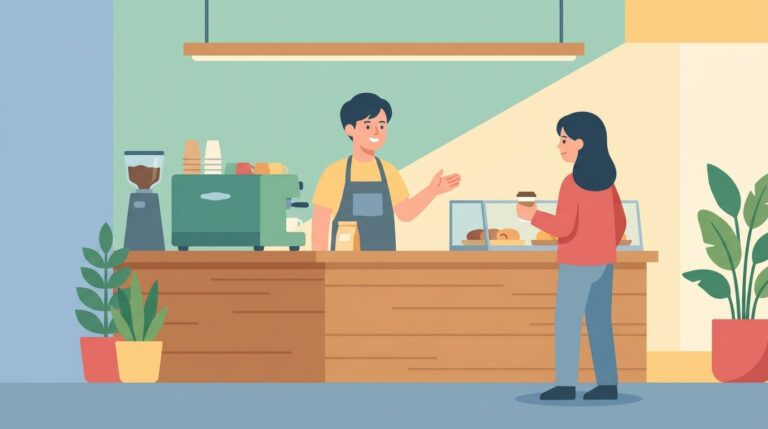
You’ve probably seen this scene in countless K-Dramas: The protagonist and their coworkers finish a spicy lunch at a Kimchi Jjigae restaurant and immediately march into a sleek, brightly lit cafe. Without missing a beat, they all shout, “Ah-Ah!” (Iced Americano).
But what if you’re like me, and too much caffeine gives you heart palpitations? Or what if it’s 8 PM, and you just want a cozy, aesthetic cafe vibe without staying awake until 3 AM? You stare at the fast-paced barista, the line is building up behind you, and your mind goes blank. You want to ask for decaf, but you’re not sure how to say it without disrupting the famous Korean Ppalli-ppalli (hurry-hurry) flow.
Don’t worry. This guide is based on real struggles from my students who successfully conquered Seoul’s bustling cafe scene. By the end of this unit, you won’t just know how to order decaf—you’ll do it with the smooth confidence of a local Seongsu-dong cafe-hopper.
Phase 2: Core Expressions Deep Dive
Let’s break down the most essential phrases you need.
1. 디카페인 되나요?
- Pronunciation: [dikapein doenayo?] (dee-ka-pe-in doe-na-yo?)
- Meaning: Is decaf available? (Literal: Does decaf work?)
- K-Culture Moment: Picture a trendy, minimalist cafe in Hongdae where the menu is handwritten on a tiny mirror. You don’t see “decaf” on the menu. Instead of asking a long, formal question, you just make eye contact and drop this short, natural phrase.
- Editor’s Insight: The verb “되다” (to become/work/be available) is your best friend in Korea. It’s the ultimate shortcut. We use it to ask if something is possible, available, or allowed.
- Situation Spectrum:
- Casual (Friends): ✅ (디카페인 돼?)
- Semi-formal (Cafe staff): ✅
- Formal (Boss): ⚠️ (Use ‘디카페인 커피 있나요?’)
- 🤔 Think About It: Why do Koreans prefer saying “Is [item] possible?” rather than “Do you have [item]?” How does this reflect the fast-paced, efficiency-driven nature of modern Korean society?
2. 디카페인으로 변경해 주세요.
- Pronunciation: [dikapeineuro byeongyeonghae juseyo.] (dee-ka-pe-in-eu-ro byun-gyung-hae joo-se-yo.)
- Meaning: Please change it to decaf.
- K-Culture Moment: Many Korean cafes don’t have a separate “Decaf Americano” on the menu. Instead, you order a regular coffee and ask them to change the beans to decaf.
- Editor’s Insight: This phrase makes you sound incredibly fluent. It shows you understand the Korean cafe system—that decaf is usually an “add-on” or “bean swap” rather than a completely different drink.
- Situation Spectrum:
- Casual: 🚫 (Too formal for friends)
- Semi-formal (Cafe staff): ✅
- Formal: 🚫
- 🤔 Think About It: Changing beans often costs an extra 300 to 500 won in Korea. How does the concept of “customizing” food and drinks exist in your home country?
3. 카페인 없는 음료 있나요?
- Pronunciation: [kapein eomneun eumnyo innayo?] (ka-pe-in uhm-neun oom-nyo in-na-yo?)
- Meaning: Do you have any caffeine-free drinks?
- K-Culture Moment: You’re at a traditional Hanok cafe in Bukchon. They only specialize in hand-drip coffee and don’t do decaf. This is your survival phrase to pivot smoothly to a sweet plum tea (Maesil-cha) or Yuja tea.
- Editor’s Insight: Use this when the answer to “디카페인 되나요?” is a polite “죄송합니다” (Sorry). It keeps the conversation flowing.
- Situation Spectrum:
- Casual: ⚠️
- Semi-formal (Cafe staff): ✅
- Formal: ✅
Phase 3: Textbook vs. Real Korean
Let’s see how language changes from the classroom to the streets of Seoul.
[Situation 1: Asking if they sell decaf]
* 📖 Textbook Korean: “디카페인 커피가 있습니까?” (Do you have decaf coffee?)
* 🗣️ Real Korean: “디카페인 되나요?” (Is decaf possible?)
* 💡 Why it’s different: Efficiency! “있습니까” sounds like a military report or a news anchor. “되나요” is softer, faster, and much more common in service industries.
[Situation 2: Ordering an Iced Decaf Americano]
* 📖 Textbook Korean: “저는 차가운 디카페인 아메리카노 한 잔을 마시겠습니다.”
* 🗣️ Real Korean: “디카페인 아아 하나요!”
* 💡 Why it’s different: Koreans love abbreviations. “아아” (Ah-Ah) is short for Iced Americano. Combining it with “하나요” (One, please) is the ultimate native-level order.
Bottom Note: For
B1learners, try using “~되나요?” in cafes, restaurants, and shops. It’s polite, natural, and shows you’ve moved past basic textbook patterns!
Phase 4: Cultural Context — K-Culture Deep Dive
4-1. Non-Verbal Cues: The Art of Nunchi at the Counter
When ordering in a busy Korean cafe during the lunch rush (12:00 PM – 1:00 PM), Nunchi (social awareness) is key. Baristas are making drinks at lightning speed. When asking “디카페인 되나요?”, don’t hesitate or linger. Have your card ready in your hand. Handing over your card with two hands, or a slight bow of the head, adds a touch of Korean politeness that baristas truly appreciate.
4-2. The “Ah-Ah” Obsession & The Rise of Decaf
In K-Dramas, coffee isn’t just a drink; it’s an accessory. The “Iced Americano” is the unofficial fuel of the Korean workforce. We even have a famous phrase: 얼죽아 (Eol-juk-ah), which means “Iced Americano even if I freeze to death.”
However, as the wellness trend hits the K-Beauty and K-Lifestyle sectors, Decaf has exploded in popularity. But be careful! The English word “Decaf” will often not be understood if pronounced with an English accent. You must pronounce every syllable cleanly: Dee-ka-pe-in. It’s a great example of how English loanwords adapt to Korean phonetics.
Phase 5: Real-Life Roleplay Scenario
Setting: 1:15 PM at a mega-sized franchise cafe in Gangnam. The espresso machines are hissing loudly. Office workers are lined up. You step up to the counter.
Characters:
– YOU: An international student trying to get a coffee before your afternoon class. You want a decaf Americano.
– Barista (NPC): Wearing a black apron, typing on the POS machine at lightspeed. Very polite but very fast.
Dialogue:
Barista: 어서 오세요. 주문하시겠어요? 😊
(eoseo oseyo. jumunhasigesseoyo?)
[Welcome. Would you like to order?]
YOU: 네, 아이스 아메리카노 한 잔 주세요.
(ne, aiseu amerikano han jan juseyo.)
[Yes, one iced Americano, please.]
Barista: 드시고 가시나요?
(deusigo gasinayo?)
[Are you having it here? / For here?]
YOU: 아니요, 테이크아웃이요. 아, 혹시 디카페인 되나요?
(aniyo, teikeuausiyo. a, hoksi dikapein doenayo?)
[No, takeout. Ah, by any chance, is decaf available?]
Barista: 네, 디카페인 원두로 변경하시면 500원 추가되는데 괜찮으신가요?
(ne, dikapein wonduro byeongyeonghasimyeon obaegwon chugadoeneunde gwaenchaneusingayo?)
[Yes, if you change to decaf beans, there is a 500 won extra charge. Is that okay?]
🔀 Your Turn! How should you respond?
– A) “아니요, 너무 비싸요.” (No, it’s too expensive.)
– B) “네, 괜찮아요. 그걸로 해주세요.” (Yes, that’s fine. Please do that.)
– C) “진짜요? 대박!” (Really? Awesome!)✅ Best Choice: B — It’s the most natural and polite way to accept the extra charge.
⚠️ Choice C Analysis: “대박” is a slang term meant for friends. Using it with a barista you just met would make you sound a bit like a cartoon character!
Barista: 네, 결제 도와드리겠습니다. 영수증 필요하신가요?
(ne, gyeolje dowadeurigetseumnida. yeongsujeung piryohasingayo?)
[Okay, I’ll help you with the payment. Do you need a receipt?]
YOU: 괜찮습니다. 감사합니다.
(gwaenchanseumnida. gamsahamnida.)
[It’s fine. Thank you.]
Phase 6: 10-Second Shadowing Drill
Let’s practice the rhythm! Pay attention to the pauses (/) and the emotion tags.
🥺 아, 혹시 / 디카페인 / 되나요?
(a, hoksi / dikapein / doenayo?)
Tip: Start with a soft “Ah, hoksi” (by any chance) to sound ultra-polite and native!
😊 네, / 디카페인으로 / 변경해 주세요.
(ne, / dikapeineuro / byeongyeonghae juseyo.)
Tip: Emphasize the “eu-ro” to make your grammar sound crisp.
Phase 7: K-Culture Mini Dictionary
Here are some essential keywords to decode the Korean cafe universe:
1. 얼죽아
* Romanization: eoljukah
* English: Iced Americano even if I freeze to death.
* Context: A popular slang acronym (얼어 죽어도 아이스 아메리카노) showing Koreans’ undying love for iced coffee, even in the middle of a snowy winter.
2. 테이크아웃
* Romanization: teikeu-aut
* English: To-go / Takeout
* Context: “To-go” isn’t commonly used. Always say “take-out” when ordering food or coffee to take away.
3. 진동벨
* Romanization: jindong-bel
* English: Buzzer / Pager
* Context: The buzzing disc they give you after ordering. When it vibrates and flashes violently, your coffee is ready!
4. 샷 추가
* Romanization: syat chuga
* English: Add an espresso shot
* Context: Want to stay awake all night to binge-watch a K-Drama? Ask for “Shot chuga”! (Opposite: 연하게 – make it weak/mild).
Phase 8: Traveler’s Survival Kit
Visiting Korea soon? Keep these cheat codes in your back pocket!
🆘 Survival Phrases for Cafes
– 🇰🇷 “영수증 버려주세요.” (yeongsujeung beoryeojuseyo.)
– 🗣️ Meaning: Please throw away the receipt.
– 📍 Usage: Cashiers always ask if you want the receipt. Use this to save paper!
– 🇰🇷 “얼음 조금만 넣어주세요.” (eoreum jogeumman neoeojuseyo.)
– 🗣️ Meaning: Please put in only a little ice.
– 📍 Usage: When you want more drink and less ice in your “Ah-Ah”.
– 🇰🇷 “와이파이 비밀번호가 뭐예요?” (waipai bimilbeonhoga mwoyeyo?)
– 🗣️ Meaning: What is the Wi-Fi password?
– 📍 Usage: Essential for working from cafes.📌 Editor’s Travel Note
– Ordering Kiosks: Many cafes now use touchscreen Kiosks. Look for the English menu option at the top right, but if there isn’t one, look for the word 디카페인 under the “Options” or “Beans” tab!
– Leaving Things Behind: In Korea, it is very common to leave your laptop or phone on the cafe table while you go to the restroom. It’s a high-trust society! (Though, always use your best judgment).
Phase 9: Critical Thinking — “One Step Deeper”
Korean in the Global Era: The Influx of English in Cafes
If you visit a trendy cafe in Seoul, you might notice something surprising: the entire menu is often written in English, with barely any Korean words. You’ll order a “Take-out” “Decaf” “Size-up” “Americano.”
While young people find this chic and global, it has sparked a social debate in Korea about accessibility for the elderly generation, who may not read English well. As a Korean learner, it’s fascinating to see how “Konglish” (Korean-style English) operates not just as a tool for communication, but as a marker of youth culture and trendiness.
💬 Your Turn: Does your home country use a lot of foreign words on cafe and restaurant menus to sound “trendy”? How do people feel about it? Share your thoughts below!
Phase 10: FAQ & Avoiding Common Mistakes
Q: If I just say “Decaf, please” in perfect English, will they understand?
A: Probably not! Korean phonetics are quite strict. If you use strong English intonation (DEE-caf), it sounds completely different to Korean ears. You must say it smoothly in 4 syllables: Di-ka-pe-in.
Q: Do I need to tip the barista if they customize my drink?
A: Absolutely not. There is zero tipping culture in Korea. If you leave money on the counter, the barista might literally chase you down the street to give it back!
❌ Common Mistake #1: Saying “노 카페인” (No Caffeine).
✅ Do This Instead: While they might understand “No caffeine,” it sounds unnatural. Stick to “디카페인” (Decaf) or “카페인 없는 것” (Things without caffeine).
Phase 11: Summary & Action Items
One-Liner Summary: To order decaf like a local, ditch the long textbook phrases and confidently ask, “디카페인 되나요?” (Is decaf available?).
Your Action Missions:
– 🥉 Bronze (Solo): Stand in front of your mirror and practice saying “디카페인으로 변경해 주세요” three times with a polite smile.
– 🥈 Silver (Online): Find an aesthetic Korean cafe vlog on YouTube and listen closely—can you hear someone ordering decaf?
– 🥇 Gold (Real World): Visit a Korean cafe (or any cafe if you’re not in Korea) and pretend to order in your head using the full Korean roleplay sequence!
Engagement: What is your go-to cafe drink? Are you an 얼죽아 (Iced Americano lover) or do you prefer sweet tea? Let me know in the comments!
Phase 12: Interactive Challenge (Quiz)
Test your new cafe survival skills!
1. Situational Judgment: The barista tells you that changing to decaf beans costs an extra 500 won. How should you politely agree?
* A) 비싸요. (It’s expensive.)
* B) 네, 괜찮아요. (Yes, it’s fine.)
* C) 대박. (Awesome.)
2. Fill in the Blank:
You want to ask if decaf is available.
“혹시 디카페인 ________?”
* A) 있습니까
* B) 되나요
* C) 주십시오
3. True or False – K-Culture Edition:
* You should leave a small tip in a cafe jar if the barista makes your decaf drink perfectly. (T / F)
(Answers: 1. B – It’s the polite way to accept the charge. / 2. B – “되나요” is the most natural, native-sounding choice. / 3. False – No tipping in Korea!)
Frequently Asked Questions (FAQ)
Q: What does "디카페인 되나요?" mean in Korean and how do you pronounce it?
A: In Korean, "디카페인 되나요?" is pronounced [dikapein doenayo?] and means: Is decaf available? (Literal: Does decaf work?)
Q: What does "디카페인으로 변경해 주세요." mean in Korean and how do you pronounce it?
A: In Korean, "디카페인으로 변경해 주세요." is pronounced [dikapeineuro byeongyeonghae juseyo.] and means: Please change it to decaf.
Q: What does "카페인 없는 음료 있나요?" mean in Korean and how do you pronounce it?
A: In Korean, "카페인 없는 음료 있나요?" is pronounced [kapein eomneun eumnyo innayo?] and means: Do you have any caffeine-free drinks?







