

“Can My Friend Come?” How to Ask in Korean!
Hello! This is [Maeil Hangul], here to upgrade your Korean skills!
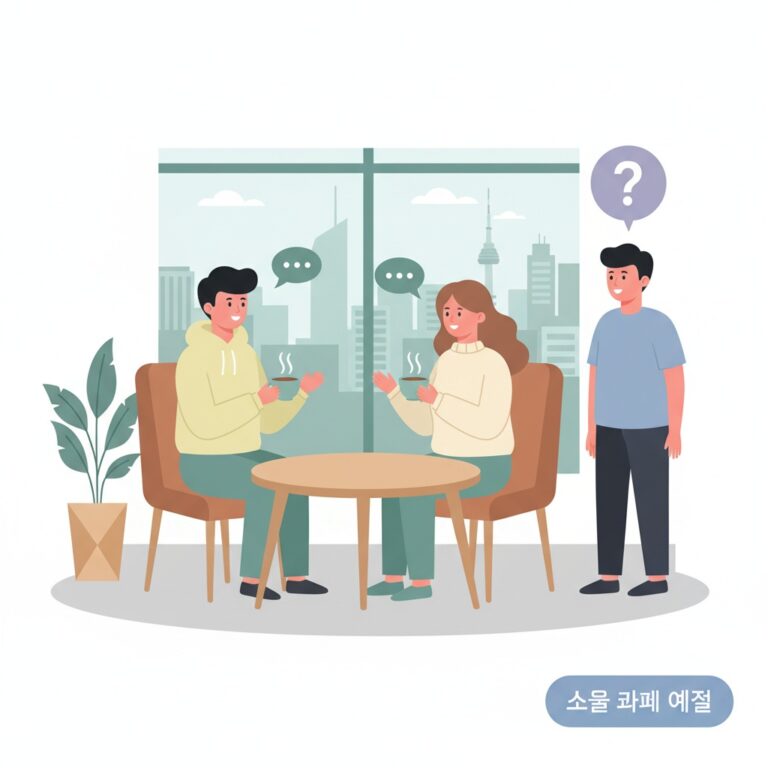
Have you ever made plans with a Korean friend and then suddenly wanted to bring someone else along? Maybe your friend from out of town is visiting, or your roommate wants to join. It can be a little awkward if you don’t know how to ask politely.
Well, don’t worry! Today, we’re going to learn some super useful and easy Korean phrases for exactly this situation. Nowadays in Korea, getting a reservation at a trendy, “Instagrammable” restaurant or cafe is a big deal. Imagine you finally get a spot at that viral new spot in Seoul, and you want to bring your +1. After this lesson, you’ll be able to ask with confidence!
Let’s get started!
Core Expressions You Need to Know
Here are three key expressions that will make you sound natural and polite when asking to bring a friend.
1. 친구 데려가도 돼요? (Chingu deryeogado dwaeyo?)
- Pronunciation [Romanization]: Chin-gu de-ryeo-ga-do dwae-yo?
- English Meaning: Can I bring a friend? / Is it okay if I bring a friend?
- Detailed Explanation: This is the most important phrase for today! Let’s break it down:
친구(chingu) means “friend.”데려가다(deryeogada) is a verb that means “to take a person with you.”~아/어도 돼요?(~a/eo-do dwaeyo?) is a super useful grammar pattern that means “Is it okay if…?” or “May I…?”
You can use this pattern for many things, like먹어도 돼요?(Meogeodo dwaeyo? – Can I eat this?).
- 💡 Pronunciation Tip: The
되(dwae) sound in돼요can be tricky. It’s a combination of ‘ㅗ’ (o) and ‘ㅐ’ (ae). Try saying “doh-ae” very quickly. It should sound like one syllable: [dwae].
2. 혹시… (Hoksi…)
- Pronunciation [Romanization]: Hok-si
- English Meaning: By any chance… / Perhaps…
-
Detailed Explanation: This little word is magic! You put it at the beginning of a question to make it sound much softer and more polite. It shows that you are being considerate and know that the answer might be “no.” Using
혹시before asking your question is a great way to sound more like a native speaker. -
💡 Pronunciation Tip: The first syllable ends with
ㄱ(k) and the next starts withㅅ(s). In this case, the sounds don’t change much. Just make sure to pronounce the first ‘k’ sound softly, without a strong puff of air. It’s closer to a ‘g’ sound than a hard ‘k’. [Hok-si].
3. 같이 가요. (Gachi gayo.)
- Pronunciation [Romanization]: Ga-chi ga-yo.
- English Meaning: Let’s go together.
-
Detailed Explanation: This is a simple and friendly phrase. You can use it as a suggestion (“Hey, let’s go together!”) or as a happy confirmation after your friend says yes (“Great, let’s go together!”).
같이(gachi) means “together” and가요(gayo) is the polite form of “to go.” -
💡 Pronunciation Tip: Pay close attention here! The word
같이is spelled with aㅌ(t) consonant at the end of the first syllable, so you might think it’s pronounced “gat-i.” But it’s actually pronounced [gachi]. Why? When theㅌ(t) sound is followed by anㅣ(i) vowel, it changes to aㅊ(ch) sound. This is a very common rule in Korean called palatalization. It makes the pronunciation smoother! Another example is굳이(gudi), which is pronounced [구지, guji].
Example Dialogue
Let’s see how these phrases work in a real conversation! Imagine friends A and B made plans to go to a popular new cafe that everyone on social media is talking about.
A: 나 이번 주 토요일에 그 성수동 핫한 카페 예약했어!
(Na ibeon ju toyoil-e geu seongsu-dong hat-han kape yeyak-haesseo!)
I got a reservation for that hot cafe in Seongsu-dong this Saturday!
B: 와, 진짜? 대박!
(Wa, jinjja? Daebak!)
Wow, really? Awesome!
A: 응! 아, 근데 혹시… 내 미국 친구가 한국에 왔는데, 친구 데려가도 돼요?
(Eung! Ah, geunde hoksi… nae miguk chingu-ga hangug-e wanneunde, chingu deryeogado dwaeyo?)
Yeah! Oh, but by any chance… my friend from America is visiting, is it okay if I bring her?
B: 그럼! 당연하지! 다 같이 가요!
(Geureom! Dangyeonhaji! Da gachi gayo!)
Of course! That’s a given! Let’s all go together!
Culture Tip & Trend Deep Dive
In Korea, social life is very important, and plans often happen in groups. While bringing a friend is usually welcomed, asking for permission first is a sign of good manners and respect for the person you made plans with. It shows that you value their time.
Using a word like 혹시 (hoksi) is a key part of this polite communication. It shows social awareness. Young Koreans, especially the Z-generation, are very mindful of these small details in communication. If you use 혹시 when making a request, you’ll instantly sound more considerate and fluent.
So, next time you score a reservation at a place that’s trending on Instagram or get tickets to see the latest K-pop group, you’ll know exactly how to ask if your +1 can join. It’s a small phrase that makes a big difference!
Let’s Practice!
Ready to check your understanding? Let’s try a quick quiz.
1. Fill in the blank: You want to bring your older sister (언니, eonni) to a party. How would you ask your friend?
혹시, _______ 데려가도 돼요?
2. O/X Quiz: The word 같이 is pronounced [gat-i]. (True or False?)
Great job today! You’ve learned some essential phrases for your social life in Korea. Now you can handle any +1 situation with ease.
Why not try making your own sentence using today’s expressions in the comments below? We’d love to see them! See you next time






