

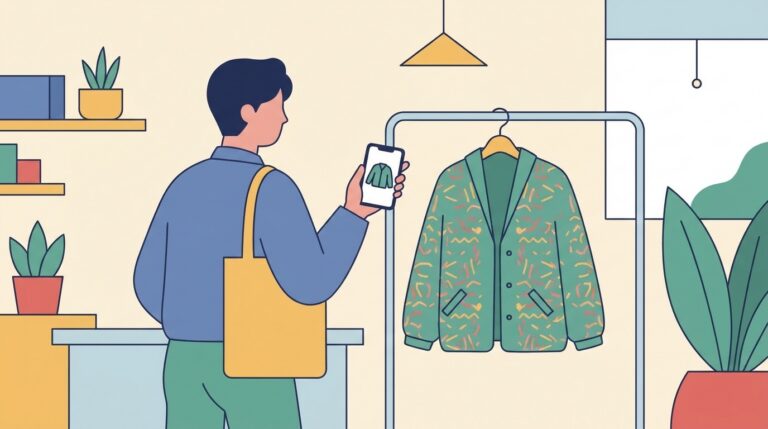
Phase 1: Why “Research Online, Buy Offline” Is Huge in Korea
안녕하세요! 매일한글 에디터입니다. (Annyeonghaseyo! Hello, I’m your Daily Hangul editor!)
Picture this: you spend two hours in your Seoul hotel room watching Korean beauty YouTubers and reading Naver reviews. Finally, you head to a trendy Seongsu-dong flagship store ready to buy. You hold up the real item, spot a staff member, and… freeze. How do you naturally say in Korean that you already researched the specs online and just want to check it in person before buying? That smart shopping habit even has a Korean buzzword: 역쇼루밍 (yeoksyoruming, webrooming)! Built from real learner feedback, this intermediate guide equips you with trendy lifestyle slang and natural store phrases so you can shop in Korea like a savvy local.
Phase 2: 3 Essential Expressions for Smart Webroomers
1. 역쇼루밍하다 (Yeoksyoruming-hada)
- Pronunciation: [Yeok-syo-ru-ming-ha-da] (Think of “yuck-show-room-ing-ha-da” with a short, crisp “yuck”—don’t stretch the first vowel!)
- Meaning: Literally “reverse showrooming.” In practice, it means thoroughly researching a product’s specs, price, and reviews online, then going to a physical store specifically to inspect the real item and buy it immediately.
- K-Culture Moment: Imagine watching a Korean tech reviewer rave about a new LG StanbyME or skincare device on YouTube, comparing prices on Coupang, and then heading straight to The Hyundai Seoul to test the weight and screen brightness before swiping your card.
- Editor’s Insight: Unlike 쇼루밍 (syoruming / showrooming—trying things in a store and buying cheaper online), 역쇼루밍 reflects how modern Koreans value instant gratification and zero shipping anxiety. You avoid fake reviews and return hassles all at once!
- Situation Spectrum: Casual ✅ | Semi-formal ✅ | Formal ⚠️ (In a formal presentation, explain the concept alongside the term so everyone follows along.)
- 🤔 Think About It: In Korea’s hyper-fast 빨리빨리 (ppalli-ppalli / hurry-hurry) culture, people love researching deeply beforehand so they don’t waste a single second in-store. How does shopping research work in your country?
2. 실물을 확인하다 (Silmureul hwaginhada)
- Pronunciation: [Sil-mu-reul hwa-gin-ha-da] (Sounds like “seal-mool-eul wah-geen-ha-da” with a super light, airy “h” on “hwa.”)
- Meaning: Literally “to check the real object.” Naturally used to mean “to see something in person / inspect the actual item before committing.”
- K-Culture Moment: You’ve seen a viral Musinsa Standard trench coat all over Instagram, or a K-pop pop-up store lightstick online, and you tell your friend you’re going to Seongsu-dong just to 실물을 확인하다 (silmureul hwaginhada / check how it looks in real life) first.
- Editor’s Insight: At Level 4, ditching 진짜를 보다 (jinjjaro boda / see the real thing) for 실물을 확인하다 instantly makes your Korean sound polished. Bonus slang: Koreans call celebrities or items that look way better in person 실물 깡패 (silmul kkangpae / real-life stunners)!
- Situation Spectrum: Casual ✅ | Semi-formal ✅ | Formal ✅
- 🤔 Think About It: Why do you think Koreans place so much importance on 실물 (physical reality) when Korea already has one of the world’s fastest e-commerce delivery networks?
3. 후기를 꼼꼼히 찾아보다 (Hugireul kkomkkomhi chajaboda)
- Pronunciation: [Hu-gi-reul kkom-kkom-hi cha-ja-bo-da] (“Who-gee” + “kkom-kkom” like a tight, punchy “com” in “comfort” without letting extra air out!)
- Meaning: Literally “to search for after-records meticulously.” It means “to thoroughly read user reviews and feedback.”
- K-Culture Moment: On K-variety shows like I Live Alone (나 혼자 산다), cast members often confess to staying up until 3 AM reading 내돈내산 (naedonnaesan / bought with my own money) reviews before visiting a store.
- Editor’s Insight: The adverb 꼼꼼히 (kkomkkomhi / meticulously) is a favorite badge of honor in Korean consumer culture. Pairing it with -아/어 보다 (try doing) conveys that you are a 스마트 컨슈머 (seumateu keonsyumeo / smart consumer), not an impulse shopper.
- Situation Spectrum: Casual ✅ | Semi-formal ✅ | Formal ✅
- 🤔 Think About It: In your culture, do shoppers trust official brand specs or everyday customer reviews more?
Phase 3: Textbook Korean vs. Real Korean
Textbooks teach you polite robot sentences. Let’s upgrade them to what actual Seoulites say inside Olive Young or a boutique.
Situation 1: Telling staff you already did your homework online
* 📖 Textbook Korean: 저는 인터넷에서 이 상품의 정보를 이미 다 조사했습니다. (Jeoneun inteoneseseo i sangpumui jeongboreul imi da josahaetseumnida. / I have already investigated all the information about this product on the internet.)
* 🗣️ Real Korean: 저 이미 후기랑 스펙 다 찾아보고 왔어요. (Jeo imi hugirang seupek da chajabogo wasseoyo. / I already looked up all the reviews and specs before coming here.)
* 💡 왜 다를까? (Why the difference?): Saying 정보를 조사하다 (investigate information) sounds like you’re a detective! Real Koreans love Konglish shortcuts like 스펙 (seupek / specs) and wrap actions in -아/어 보고 오다 (check and come) to sound relaxed and natural.
Situation 2: Loving the item in person and buying it on the spot
* 📖 Textbook Korean: 실제로 보니까 마음에 들어서 바로 구매하겠습니다. (Siljero bonikka maeume deureoseo baro gumaehagetseumnida. / Because I like it after seeing it in real life, I will purchase it right away.)
* 🗣️ Real Korean: 역시 실물이 훨씬 낫네요! 그냥 바로 데려갈게요. (Yeoksi silmuri hwolssin nanneyo! Geunyang baro deryeogalgeyo. / Just as I thought, it looks way better in person! I’ll just take it home right now.)
* 💡 왜 다를까? (Why the difference?): Koreans affectionately personify items they fall in love with using 데려가다 (deryeogada / to take along or “adopt”) instead of the stiff 구매하다 (purchase). Adding 역시 (yeoksi / as expected) subtly celebrates that your online research paid off!
Phase 4: K-Culture Deep Dive & Non-Verbal Manners
4-1. 눈치 (Nunchi) & Store Body Language
Korean retail spaces—from bustling Olive Young stores in Myeongdong to sleek boutiques in Seongsu—run on quiet efficiency and 눈치 (nunchi / social awareness). When you are webrooming:
* The Screenshot Signal: Don’t hesitate to show a saved Naver or Instagram screenshot (캡처 화면 / kaepcheo hwamyeon) on your phone! Hold your phone slightly tilted toward the staff with both hands or one supporting hand while making brief, polite eye contact.
* The Soft Nod (목례 / mongnye): Korean store staff rarely hover aggressively unless you signal them. A gentle nod and a soft “저기요” (Jeogiyo / Excuse me) is all it takes.
* Two-Handed Exchanges: Even in trendy Gen-Z pop-up shops, always hand over your card and receive your shopping bag with two hands (or one hand supporting your wrist). It shows instant warmth and respect.
4-2. Cultural Code Analysis: How Webrooming Fits Korea’s Big 4 Lifestyle Buzzwords
To understand modern Korean shopping, you have to see how 역쇼루밍 (Webrooming) connects with Korea’s hottest consumption buzzwords:
1. 디토 소비 (Ditto Consumption): Instead of researching 100 options, Koreans follow a trusted K-beauty creator or celebrity whose taste matches theirs—”Ditto!”—and then webroom to verify the color or fit in person.
2. 평균 실종 (Death of the Average / Polarization): Mid-tier products are disappearing. Consumers either save aggressively at Daiso/Coupang or splurge at experiential offline flagships where inspecting the 실물 (real item) feels like an event.
3. 도파밍 (Dopamine Farming): Visiting Seongsu-dong pop-ups after checking them out on Reels isn’t just shopping—it’s hunting for quick sensory excitement (도파민)!
4. 텍스트힙 (Text-Hip): Even young Koreans who love visual TikToks now treat reading detailed written reviews, indie newsletters, and carrying stylish paperbacks as a cool lifestyle flex.
Phase 5: Interactive Roleplay Scenario
Setting: Friday afternoon at a sleek, minimalist Musinsa Standard flagship store in Seongsu-dong. Sunlight hits racks of neatly steamed jackets. You’ve spent all week comparing fabric specs and Naver reviews on your phone.
Characters: You (a sharp intermediate Korean speaker) & Min-ji (a friendly, stylish store associate in an all-black uniform).
- Min-ji: 🎭 (Offering a warm smile and a slight bow from a comfortable distance) 어서 오세요! 찾으시는 제품 있으시면 편하게 말씀해 주세요. (Eoseo oseyo! Chajeusineun jepum isseusimyeon pyeonhage malsseumhae juseyo. / Welcome! If there’s a product you’re looking for, please feel free to let me know.)
- You: 🎭 (Walking up and tilting your phone screen toward her politely) 저기요, 제가 인터넷에서 스펙이랑 후기를 다 찾아보고 왔는데요. 이 자켓 실물을 좀 확인해 보고 싶어서요. (Jeogiyo, jega inteoneseseo seupegirang hugireul da chajabogo wanneundeyo. I jaket silmureul jom hwaginhae bogo sipeseoyo. / Excuse me, I came after looking up all the specs and reviews online. I wanted to check out this jacket in person.)
- Min-ji: 🎭 (Glancing at your screen and nodding enthusiastically) 아, 이 울 블렌드 자켓이요? 요즘 디토 소비로 제일 잘 나가는 모델이에요. 이쪽으로 안내해 드릴게요. (A, i ul beullendeu jagesiyo? Yojeum dito sobiro jeil jal naganeun moderieyo. Ijjogeuro annaehae deurilgeyo. / Ah, this wool-blend jacket? It’s our best-selling model lately thanks to ditto consumption. Let me guide you this way.)
- You: 🎭 (Touching the sleeve fabric carefully and checking the stitching) 오, 온라인 후기에서 원단이 탄탄하다고 하더니 역시 실물이 훨씬 낫네요! (O, onllain hugieseo wondani tantanhadago hadeoni yeoksi silmuri hwolssin nanneyo! / Oh, online reviews said the fabric was sturdy, and just as expected, it looks way better in person!)
- Min-ji: 🎭 (Holding up a medium size on a hanger) 맞아요, 구김도 잘 안 가서 만족도가 높아요. 혹시 착용해 보실래요? (Majayo, gugimdo jal an gaseo manjogdoga nopayo. Hoksi chagyonghae bosillaeyo? / Right, it doesn’t wrinkle easily, so satisfaction is high. Would you like to try it on?)
- You: 🎭 (Checking your watch because you have a café meetup soon) 아, 사이즈표는 미리 보고 와서 딱 맞을 것 같아요. 오늘 바로 입고 나가고 싶은데, 새 상품으로 재고 있나요? (A, saijeupyoneun miri bogo waseo ttak majeul geot gatayo. Oneul baro ipgo nagago sipeunde, sae sangpumeuro jaego innayo? / Ah, I checked the size chart beforehand so it should fit perfectly. I want to wear it out today—do you have a brand-new one in stock?)
- Min-ji: 🎭 (Checking her tablet quickly) 네, 방금 들어온 새 상품 하나 남아 있어요! 텍스 리펀도 도와드릴까요? (Ne, banggeum deureoon sae sangpum hana nama isseoyo! Tekseu ripeondo dowadeurilkkayo? / Yes, we have one brand-new item left that just arrived! Should I help you with a tax refund too?)
- You: 🎭 (Smiling brightly and pulling out your passport and card) 네, 감사합니다! 그럼 바로 데려갈게요. (Ne, gamsahamnida! Geureom baro deryeogalgeyo. / Yes, thank you! Then I’ll take it right away.)
🔀 Interactive Branching Point: What if the store price looks slightly higher than an online coupon price?
How should you ask Min-ji smoothly without sounding awkward? Pick your response:
* A) “온라인이 더 싼데 왜 여기가 비싸요? 깎아 주세요.” (Onllaini deo ssande wae yeogiga bissayo? Kkakka juseyo. / It’s cheaper online, why is it expensive here? Give me a discount.)
* B) “혹시 오프라인 매장 전용 멤버십 할인이나 이벤트도 따로 있나요?” (Hoksi opeurain maejang jeonyong membeosip harinina ibenteudo ttaro innayo? / By any chance, are there any offline-store-only membership discounts or events too?)
* C) “잠깐만요, 지금 앱으로 주문하면 내일 오니까 그냥 안 살게요.” (Jamkkanmanyo, jigeum aebeuro jumunhamyeon naeil onikka geunyang an salgeyo. / Wait, if I order on the app now it comes tomorrow, so I just won’t buy it.)
Feedback on Your Choice:
* Choice B (Best! ✅): Polished, Level-4 perfection! Korean flagship stores rarely bargain directly, but they often have app-check-in coupons, free gifts (사은품), or offline member perks if you ask nicely.
* Choice A (Bad! 🚫): 깎아 주세요 (Give me a discount) works at traditional markets (전통시장), never in fixed-price brand stores! It can make staff feel uncomfortable.
* Choice C (Risk! ⚠️): Switching back to showrooming right in front of the clerk after they helped you check stock hurts 눈치 (social tact). If you decide not to buy, simply smile and say “조금만 더 고민해 볼게요!” (Jogeumman deo gominhae bolgeyo! / I’ll think about it a bit more!).
Phase 6: 10-Second Emotion Shadowing Drill
Read these out loud! Pause briefly at every / and throw yourself into the emotion tag.
- [🧐 꼼꼼하고 진지하게 / Meticulous & serious]
“저는 물건 살 때 / 후기를 / 정말 꼼꼼히 찾아보는 편이에요.”
(Jeoneun mulgeon sal ttae / hugireul / jeongmal kkomkkomhi chajaboneun pyeonieyo. / When I buy things, I’m the type who looks up reviews really thoroughly.) - [🤩 기대에 차서 신나게 / Excited & hopeful]
“드디어 / 실물을 확인하러 / 성수동 팝업에 왔어요!”
(Deudieo / silmureul hwaginhareo / Seongsudong pabeobe wasseoyo! / I finally came to the Seongsu-dong pop-up to see it in person!) - [😌 만족스럽고 쿨하게 / Satisfied & cool]
“역시 / 실물이 훨씬 낫네요. / 오늘 바로 데려갈게요!”
(Yeoksi / silmuri hwolssin nanneyo. / Oneul baro deryeogalgeyo! / As expected, it looks way better in person. I’ll take it home today!)
Phase 7: K-Culture Mini Dictionary (Lifestyle Buzzwords)
| Korean & Romanization | English Meaning | How Koreans Actually Use It |
|---|---|---|
| 1. 디토 소비 (Dito sobi) | Ditto Consumption | Following a trusted celebrity, influencer, or friend’s taste without overthinking. “I saw Karina using that lip tint—디토 소비!” |
| 2. 평균 실종 (Pyeonggyun siljong) | Polarization / Death of the Average | The disappearance of ordinary middle-ground options. Shoppers either buy ultra-cheap essentials or splurge on unique luxury experiences. |
| 3. 도파밍 (Dopaming) | Dopamine Farming | Hunting for instant fun, thrills, and sensory rewards—like exploring flashy Seongsu pop-ups or unboxing viral snacks. |
| 4. 텍스트힙 (Tekseuteuhip) | Text-Hip | Treating reading books, indie zines, or deep written reviews as cool and stylish among Gen-Z Koreans. |
Phase 8: Traveler’s Survival Kit for Korea
Top 3 In-Store Survival Phrases
- 새 상품으로 주시겠어요? (Sae sangpumeuro jusigesseoyo? / Could you give me a brand-new one?) — Pro Tip: Display items on racks are often tried on by dozens of people; Koreans always ask for a 새 상품 (fresh boxed/sealed item) from storage!
- 재고가 남아 있나요? (Jaegoga nama innayo? / Is there any stock left?) — Pro Tip: Essential when a viral item from your online research isn’t visible on the shelf.
- 텍스 리펀 되나요? (Tekseu ripeon doenayo? / Is tax refund available?) — Pro Tip: Bring your physical passport! Many stores like Olive Young offer 즉시 환급 (jeuksi hwangeup / instant tax refund) right at the register.
Editor’s Travel Note: Digital Tools for Webrooming
Before hitting the streets of Seoul, equip your phone just like a local webroomer:
* Navigation & Store Reviews: Download the Naver Map App for Korean Store Locations to check real-time store hours, pop-up waitlists, and local photo reviews (방문자 리뷰).
* K-Beauty Specs & Rankings: Check Olive Young Global Product Reviews in your hotel first, screenshot your top picks, and scan shelf QR codes in-store to compare ingredients.
* Payments: Foreign cards (Visa/Mastercard) and Apple Pay work widely in major Seoul retail stores, or load up a WOWPASS Prepaid Card for Foreign Travelers for seamless subway + shopping payments.
Phase 9: One Step Deeper — Why Korea Obsesses Over Reviews
Have you ever wondered why a simple lipstick or phone case in Korea has 15,000 written reviews with close-up photos? In Korean society, there is a delicate balance between 가성비 (gaseongbi / cost-effectiveness) and 가심비 (gasimbi / emotional satisfaction for the price). Because apartments are compact and trends move at lightning speed, making a “wrong” purchase feels like both wasted space and wasted time. By leaning on collective wisdom (집단 지성 / jipdan jiseong) online and verifying the 실물 (real thing) offline, 역쇼루밍 gives Korean consumers peace of mind—turning shopping from a gamble into a confident ritual.
💬 Your Turn: Are you more of a webroomer (research online, buy in-store) or a showroomer (check in-store, buy online)? Drop a comment telling us the last item you researched way too hard before buying!
Phase 10: FAQ & Common Mistakes
Q: What is the exact difference between 쇼루밍 (Showrooming) and 역쇼루밍 (Webrooming)?
A: 쇼루밍 means visiting an offline store to test or try on a product, then leaving to buy it cheaper online. 역쇼루밍 (Webrooming) is the exact opposite: you research specs, prices, and reviews online first, then visit the physical store to inspect the real item and buy it immediately.
Q: Is it rude to bring my phone out and read reviews while standing in a Korean store?
A: Not at all! In fact, it’s completely normal in Korea. Staff are very used to shoppers checking Naver reviews, ingredient lists, or color swatches on their phones while browsing.
Q: What does 내돈내산 (naedonnaesan) mean when I’m checking Korean reviews?
A: It stands for 내 돈 주고 내가 산 (bought with my own money). Koreans search for 내돈내산 후기 to filter out sponsored influencer ads and find honest, unfiltered feedback.
🚨 Common Mistakes TOP 3
- Using “인터넷에서 봤어요” too vaguely: Saying “I saw it on the internet” is okay, but staff might not know if you mean an old blog post or their official app. Correct Action: Say “공식 앱/인스타에서 보고 왔어요” (I saw it on your official app/Instagram) and show the product photo.
- Asking for a discount at brand stores: Learners sometimes apply market haggling (깎아 주세요) at department stores or boutiques. Correct Action: Ask “혹시 지금 진행 중인 프로모션이나 할인 쿠폰 있나요?” (Are there any ongoing promotions or discount coupons right now?).
- Forgetting to check exchange/refund rules: Korean offline stores often have strict policies for opened items (단순 변심 교환/환불 불가 — no refunds for simple change of mind). Correct Action: Always ask “혹시 교환이나 환불 가능해요?” (Is exchange or refund possible?) before paying.
Phase 11: Action Missions & K-Culture Challenge
Ready to lock these expressions into your brain? Pick your level:
* 🥉 Bronze Mission (Solo Practice): Pick an item on your desk right now and say Phase 6’s three shadowing sentences out loud with full emotion.
* 🥈 Silver Mission (Social Share): Screenshot a Korean product you’d love to buy on your next Seoul trip and post a story tagging a friend with the caption: 실물 확인하러 가자! (Let’s go check it out in person!)
* 🥇 Gold Mission (Real-World Action): Next time you visit any store (even in your hometown!), practice describing the experience in Korean to yourself using 후기를 꼼꼼히 찾아보다 and 역쇼루밍하다.
🎮 K-Culture Mission: Search “성수동 팝업 브이로그” (Seongsu-dong Pop-up Vlog) or “내돈내산 추천템” (Self-bought Recommended Items) on YouTube! Count how many times the creator says 실물 (real thing), 후기 (review), or 스펙 (specs).
Phase 12: Interactive Quiz Challenge
Test your Level-4 shopping instincts! Try all three questions before opening the spoiler below.
1. Situational Judgment: You searched Coupang and Naver for three hours, went to a flagship store in Gangnam, fell in love with the actual product, and bought it right there. What did you just do?
* A) 쇼루밍 (Showrooming)
* B) 역쇼루밍 (Webrooming)
* C) 평균 실종 (Polarization)
2. Fill in the Blank: Choose the most natural intermediate phrase to praise how good an item looks in real life.
“사진보다 ________ 훨씬 낫네요! 바로 데려갈게요.”
* A) 인터넷이 (the internet)
* B) 실물이 (the real thing)
* C) 평균이 (the average)
3. True or False Cultural Quiz:
“In trendy Korean brand stores like Musinsa Standard or Olive Young, it’s super natural to ask the cashier for a brand-new sealed item (새 상품) instead of taking the display item.”
👇 Click to reveal answers and explanations!
- Answer: B) 역쇼루밍 (Webrooming)
- Feedback: If you picked A (쇼루밍), remember 역 (reverse) flips the order—online research first, offline purchase second! C (평균 실종) refers to market polarization, not your shopping route.
- Answer: B) 실물이 (Silmuri)
- Feedback: “사진보다 실물이 훨씬 낫네요!” means “It looks way better in person than in photos!” (실물 is your golden noun for anything physical.)
- Answer: True!
- Feedback: Totally normal and expected! Asking “새 상품으로 주시겠어요?” ensures you get an untouched, pristine item from the back stock.
🎬 Watch Our Daily Videos! (Daily Hangul Official Instagram)
Review the expressions you learned in this article with our fun daily short videos! Check out native pronunciation and real-life nuances in action.
- Instagram @dailyhangul_en







