

Cashless Paradise or Digital Maze? Mastering Korean Money & Tech Talk
Phase 1: Empathy — Welcome to Seoul’s Cashless World!
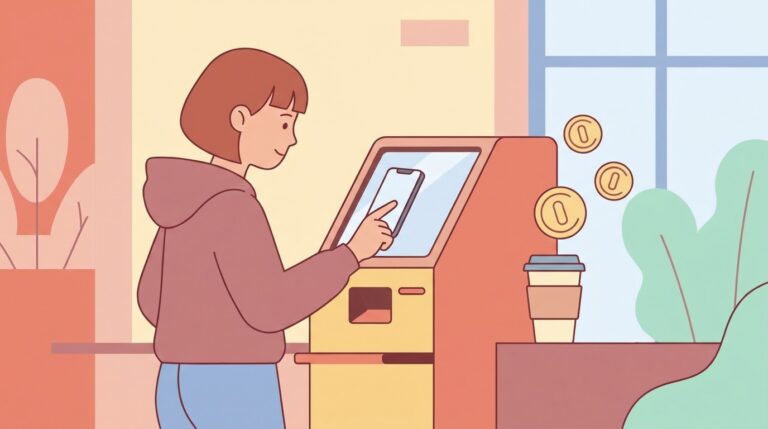
안녕하세요! 매일한글 에디터입니다. (Hello! This is your Daily Hangul Editor.) Have you ever stood in front of a trendy Hongdae cafe kiosk in Seoul, clutching a crisp 10,000-won bill, only to see a glowing “Card Only” sign staring back at you? It feels like a scene straight out of a comedy K-drama! Korea is practically a cashless paradise—there is no need to carry heavy coins jingling in your pockets, and every iced Americano you tap for pops straight into your budgeting app. Yet, this hyper-speed digital shift also leaves some elderly folks feeling excluded at touchscreens. Based on real feedback from our intermediate learners eager to discuss both the daily perks and social realities of Seoul’s tech-savvy lifestyle, this guide will help you express yourself effortlessly!
Phase 2: Deep Dive into 3 Essential Expressions
1. 잔돈을 거슬러 받을 필요가 없다 (No need to get loose change back)
- Pronunciation: jandoneul geoseulleo badeul piryoga eopda (Sounds like “jahn-do-neul guh-seul-luh bah-deul pi-ryo-gah up-dah” — for eu, pull your lips back as if saying “uh” without rounding them!)
- Meaning: Literally “there is no need to be handed back small change.” In daily life, it highlights the lightness and convenience of paying by card or phone without carrying bulky coins.
- K-Culture Moment: Picture a busy morning scene in an office K-drama like Misaeng or Business Proposal, where coworkers grab takeout coffee in 10 seconds with Samsung Pay so nobody wastes time counting coins.
- Editor’s Insight: Intermediate learners often just say 돈이 필요 없다 (doni piryo eopda, “don’t need money”), which sounds like you want things for free! Using 잔돈 (jandon, loose change) and 거슬러 받다 (geoseulleo batda, to receive change back) immediately elevates your Korean to natural Level 3 fluency.
- Situation Spectrum: Casual (필요 없어 ✅) / Semi-formal (필요 없어요 ✅) / Formal (필요가 없습니다 ✅)
- 🤔 Think About It: In your home country, do people still love carrying lucky pennies or tipping with cash, or has digital tapping taken over just like in Korea?
2. 사용 내역이 앱에 자동으로 기록되다 (Transaction history logs automatically in the app)
- Pronunciation: sayong naeyeogi aebe jadongeuro girokdoeda (Sounds like “sah-yong nae-yeo-gi eh-beh jah-dong-eu-ro gi-rok-dwae-dah” — crisp like “key-rock” for gi-rok!)
- Meaning: Literally “usage details are automatically recorded in the app.” It captures the magic of effortless expense tracking and 가계부 쓰기 (gagyebu sseugi, keeping a household budget).
- K-Culture Moment: Think of Korean lifestyle YouTubers doing a “Month-End Budget Vlog” (한 달 살기 가계부 브이로그), scrolling through Toss or KakaoBank screens to see where their 배달 (baedal, delivery food) budget went.
- Editor’s Insight: Notice the passive ending -되다 (-doeda). Instead of saying “I record it,” Koreans love highlighting the system’s automation with 자동으로 기록되다 (automatically gets recorded) paired with -아/어서 편해요 (convenient because…).
- Situation Spectrum: Casual (자동 기록돼서 편해 ✅) / Semi-formal (자동으로 기록돼서 편해요 ✅) / Formal (자동으로 기록되어 편리합니다 ✅)
- 🤔 Think About It: Does seeing every single coffee purchase pop up in an app instantly make you smarter with money, or does it give you budget anxiety?
3. 디지털 소외 문제 (The issue of digital exclusion)
- Pronunciation: dijiteol sooe munje (Sounds like “di-ji-teol so-weh moon-jeh” — glide smoothly from so into weh like a soft “so-way”)
- Meaning: Literally “digital alienation/exclusion problem.” It refers to the gap where older adults or people unfamiliar with tech struggle in a cashless, kiosk-first society.
- K-Culture Moment: Korean news documentaries and variety shows like You Quiz on the Block frequently feature touching stories about grandparents hesitating outside unmanned cafes (무인 카페) because they cannot navigate QR codes.
- Editor’s Insight: At CEFR Level 3 (Intermediate), moving beyond “good vs. bad” into social nuance is huge. Pairing 현금 없는 사회 (hyeongeum eomneun sahoe, cashless society) with 디지털 소외 (digital exclusion) shows deep empathy and cultural awareness.
- Situation Spectrum: Casual (디지털 소외 좀 심각해 ⚠️ — sounds a bit heavy for casual chat unless discussing news) / Semi-formal (디지털 소외 문제가 있어요 ✅) / Formal (디지털 소외 문제를 해결해야 합니다 ✅)
- 🤔 Think About It: Should businesses be legally required to keep at least one human cashier alongside kiosks, or is full automation unavoidable?
Phase 3: Textbook Korean vs. Real Korean
Situation 1: Bragging about easy app budgeting
- 📖 Textbook Korean: 카드 사용 내역이 앱에 기록되어 가계부 쓰기가 편리합니다. (Kadeu sayong naeyeogi aebe girokdoeeo gagyebu sseugiga pyeollihamnida.)
- 🗣️ Real Korean: 카드로 긁으면 앱에 다 떠서 가계부 정리하기 진짜 편해! (Kadeuro geulgeumyeon aebe da tteoseo gagyebu jeongnihagi jinjja pyeonhae!)
- 💡 Why the difference? Koreans use the vivid verb 긁다 (geukda, to swipe/scratch a card) even when tapping! And instead of the formal “기록되다 (recorded),” friends say 앱에 뜨다 (aebe tteuda, “pops up on the app”).
Situation 2: Sympathizing with seniors at kiosks
- 📖 Textbook Korean: 어르신들은 무인 단말기 사용에 어려움을 겪고 있습니다. (Eoreusindeureun muin danmalgi sayonge eoryeoumeul gyeokko itseumnida.)
- 🗣️ Real Korean: 어르신들 입장에서는 키오스크가 좀 막막하실 수도 있지. (Eoreusindeul ipjangeseoneun kioseukega jom mangmakhasil sudo itji.)
- 💡 Why the difference? Nobody says 무인 단말기 (unmanned terminal) over iced coffee—everyone uses the loanword 키오스크 (kioseukeu). Plus, 막막하다 (mangmakhada, feeling at a complete loss) conveys genuine human empathy.
Phase 4: K-Culture Deep Dive & Non-Verbal Manners
4-1. Nunchi (눈치) & Gestures at the Counter
In Korea, speed and consideration go hand in hand. Even at a cashless counter, pay attention to 눈치 (nunchi, social awareness): have your card or mobile pay app open before you reach the front of the line. If you accidentally hand over cash at a card-only spot, you might see the cashier gently cross their fingers or gesture toward the card slot with an apologetic bow—never take it personally! And if you spot an elderly person looking puzzled in front of a fast-food kiosk, a polite nod and asking “제가 도와드릴까요? (Jega dowadeurilkkayo? — May I help you?)” earns massive respect.
4-2. Cultural Code Analysis: K-Food & K-Travel
Visit a bustling Korean street food market like Gwangjang Market versus a modern Gangnam salad shop, and you will witness Korea’s fascinating duality. At modern K-Food franchises, “현금 없는 매장 (Cashless Store)” stickers are everywhere—because automatic app logging helps young Koreans track their 식비 (sikbi, food expenses) down to the last 100 won. Meanwhile, traditional markets still whisper “현금 영수증 돼요? (Hyeongeum yeongsujeung dwaeyo? — Can I get a cash receipt?)” or rely on instant bank transfers (계좌이체, gyejwaiche). Understanding both worlds is your ultimate K-Travel superpower!
Phase 5: Real-Life Roleplay Scenario
Setting: A sleek, sunlit salad and coffee shop in Yeouido during the lunch rush. Characters: Alex (an intermediate Korean learner living in Seoul) and Minji (Alex’s witty Korean coworker who loves budgeting apps).
- Minji: 알렉스 씨, 여기 현금 없는 매장이라 키오스크로 주문해야 해요. (Allekeu ssi, yeogi hyeongeum eomneun maejangira kioseukeuro jumunhaeya haeyo.)
Alex, this is a cashless store, so we have to order at the kiosk. 🎭 (Minji points toward a glowing touchscreen near the door.) - Alex: 아, 진짜요? 지갑에서 동전 꺼낼 뻔했네요! 그래도 잔돈을 거슬러 받을 필요가 없어서 편하긴 해요. (A, jinjayo? Jigabeseo dongjeon kkeonael ppeonhaenneyo! Geuraedo jandoneul geoseulleo badeul piryoga eopseoseo pyeonhagin haeyo.)
Oh, really? I almost pulled coins out of my wallet! Still, it is convenient not having to get loose change back. 🎭 (Alex laughs and slips his wallet back into his pocket.) - Minji: 맞아요! 게다가 카드 사용 내역이 앱에 자동으로 기록되어서 가계부 쓰기도 진짜 편해요. (Majayo! Gedaga kadeu sayong naeyeogi aebe jadongeuro girokdoeeoseo gagyebu sseugido jinjja pyeonhaeyo.)
Right! Plus, card transactions log automatically in the app, so keeping a budget is super easy. 🎭 (Minji taps her phone cheerfully on the payment pad.) - Alex: 저도 요즘 가계부 앱을 쓰는데, 커피값이 생각보다 너무 많이 나와서 깜짝 놀랐어요. (Jeodo yojeum gagyebu aebeul sseuneunde, keopigapshi saenggakboda neomu mani nawaseo kkamjjak nollasseoyo.)
I use a budgeting app these days too, and I was shocked at how much my coffee expenses added up! 🎭 (Alex widens his eyes dramatically.) - Minji: 하하, 카드는 눈에 안 보이니까 더 긁게 되죠. 참, 저기 할머니께서 좀 헤매시는 것 같네요. (Haha, kadeuneun nune an boinikka deo geukge doejyo. Cham, jeogi halmeonikkeseo jom hemaesineun geot gatneyo.)
Haha, since you don’t see cash leaving, you swipe even more. Oh, it looks like that grandmother over there is struggling a bit. 🎭 (Minji glances empathetically toward the adjacent kiosk.) - Alex: 그러게요. 편리하긴 한데, 어르신들한테는 이런 디지털 소외 문제가 클 것 같아요. (Geureogeyo. Pyeollihagin hande, eoreusindeulhanteneun ireon dijiteol sooe munjega keul geot gatayo.)
True. It’s convenient, yet for seniors, this issue of digital exclusion must be huge. 🎭 (Alex nods thoughtfully.) - Minji: 맞아요, 글씨도 작고 영어 메뉴도 많잖아요. 우리가 가서 잠깐 도와드릴까요? (Majayo, geulssido jakgo yeongeo menyudo manchanayo. Uriga gaseo jamkkan dowadeurilkkayo?)
Exactly, the text is small and there are so many English terms. Should we go help her for a moment? 🎭 (Minji takes a step toward the kiosk.) - Alex: 좋아요! 어르신, 주문하시는 거 제가 도와드릴까요? (Joayo! Eoreusin, jumunhasineun geo jega dowadeurilkkayo?)
Sounds great! Ma’am, may I help you place your order? 🎭 (Alex smiles warmly and approaches the elderly woman.)
🔀 Interactive Branching Point: What if the elderly customer only has cash?
Imagine the grandmother pulls out a 10,000-won bill and looks worried because the machine refuses cash. How should you respond in Korean?
* A) “여기 카드만 돼서 안 돼요. 나가셔야 해요.” (Yeogi kadeuman dwaeseo an dwaeyo. Nagasyeoya haeyo. — Only cards work here, you have to leave.)
* B) “여기 현금은 안 받는데, 제가 대신 카드로 결제해 드릴 테니 현금을 저한테 주실래요?” (Yeogi hyeongeumeun an banneunde, jega daesin kadeuro gyeoljehae deuril teni hyeongeumeul jeohante jusillaeyo? — They don’t take cash here, so I can pay by card for you and you can give me the cash?)
* C) “잠깐만요, 직원한테 그냥 현금 달라고 하세요.” (Jamkkanmanyo, jigwonhante geunyang hyeongeum dallago haseyo. — Wait, just tell the staff to take your cash.)
Feedback:
* Choice A (🚫 Bad): Way too blunt! It lacks Korean jeong (정, warm-heartedness) and may embarrass her.
* Choice B (✅ Best): Peak K-Culture kindness! Offering a quick card-for-cash swap is actually a very common, heartwarming gesture Koreans do at cashless kiosks.
* Choice C (⚠️ Risk): The staff at strictly cashless stores often aren’t allowed to open a cash register because none exists on-site, which might cause awkwardness.
Phase 6: 10-Second Emotional Shadowing Drill
Read aloud with rhythm! Pause briefly at / and match the emotion tag:
- [😊 Happy & Relieved]
잔돈을 / 거슬러 받을 필요가 없어서 / 정말 가볍고 편해요! /
(Jandoneul / geoseulleo badeul piryoga eopseoseo / jeongmal gabyeopgo pyeonhaeyo!)
— It’s so light and convenient since there’s no need to get loose change back! -
[😲 Surprised & Impressed]
어머, / 카드 사용 내역이 / 앱에 자동으로 기록되네요! /
(Eomeo, / kadeu sayong naeyeogi / aebe jadongeuro girokdoeneyo!)
— Whoa, my card transactions log automatically in the app! -
[🥺 Thoughtful & Empathetic]
우리한테는 편하지만, / 디지털 소외 문제도 / 꼭 생각해 봐야 해요. /
(Urihanteneun pyeonhajiman, / dijiteol sooe munjedo / kkok saenggakhae bwaya haeyo.)
— It’s convenient for us, yet we really need to think about the issue of digital exclusion too.
Phase 7: K-Culture Mini Dictionary
- 가계부 (Gagyebu) | Household ledger / Budget tracker | Used daily by Koreans of all ages; nowadays, phrases like “모바일 가계부 (mobile budget app)” dominate finance YouTube.
- 무인 매장 (Muin maejang) | Unmanned / Staffless store | Super common in Korean neighborhoods—from 24-hour ice cream shops to unmanned photo booths (인생네컷).
- 계좌이체 (Gyejwaiche) | Bank transfer | When a street vendor or flea market doesn’t take cards, Koreans instantly transfer money via KakaoBank or Toss.
- 정보 격차 (Jeongbo gyeokcha) | Digital divide / Information gap | A key intermediate news term often paired with 디지털 소외 when debating tech accessibility in Korean society.
Phase 8: Survival Kit for Travelers
Top 3 Survival Phrases
- 카드 결제만 되나요? (Kadeu gyeoljeman doenayo? — Do you only accept card payments?)
- Pro Tip: Ask this before waiting in line if you only brought cash!
- 영수증은 버려 주세요. (Yeongsujeungeun beoryeo juseyo. — Please toss the receipt.)
- Pro Tip: Since your app logs transactions automatically, saving paper is super common in Seoul.
- 현금도 받으세요? (Hyeongeumdo badeuseyo? — Do you accept cash too?)
- Pro Tip: Essential when entering hip cafes in Seongsu-dong or Yeonnam-dong.
Editor’s Travel Note
Want to glide through cashless Korea like a local? First, grab a rechargeable WOWPASS or T-money card right at Incheon Airport—they work seamlessly at almost every kiosk and subway gate. Also, remember that Google Maps has limited walking directions in Korea, so be sure to Download Naver Map App before your trip to locate card-friendly restaurants and nearby ATMs effortlessly!
Phase 9: “One Step Deeper” — Society & Tech
Korea’s famous 빨리빨리 (ppalli-ppalli, hurry-hurry) culture transformed the nation into a cashless wonderland in record time, making budgeting and daily errands wonderfully frictionless. Yet Korean society also deeply values 경로 사상 (gyeongno sasang, respect for elders) and communal warmth. That tension creates an ongoing cultural debate: how do we enjoy futuristic convenience without leaving anyone behind at the touchscreen? Seeing young commuters pause to help seniors at kiosks proves that even in a hyper-digital city, human connection remains Korea’s brightest currency.
💬 Your Turn: Has your city gone mostly cashless too, or do you still love having crisp bills and coins in your wallet? Share your thoughts in the comments below!
Phase 10: FAQ & Common Mistakes
Q: Can foreigners use Korean budgeting apps if they only visit for a short trip?
A: Yes! While full bank apps like KakaoBank require a Korean residence card (ARC), tourist-friendly apps paired with WOWPASS or NAMANE Card automatically track your Korean won spending history right on your phone.
Q: What is the difference between 잔돈 (jandon) and 거스름돈 (geoseureumdon)?
A: 잔돈 refers to loose change or small coins/bills in general (e.g., “Do you have small change?”), while 거스름돈 specifically means the change handed back to you after a purchase. Both fit naturally with 거슬러 받다!
Q: Are cashless-only stores legal in South Korea?
A: Yes, private businesses can operate as “현금 없는 매장 (cashless stores)” if they clearly notify customers in advance, though public backlash over digital exclusion has encouraged many brands to keep simple payment guides or staff assistance nearby.
🚨 Common Mistakes TOP 3
- Mistake: Saying “돈이 필요 없어요” (I don’t need money) when you mean “I don’t need loose change.”
- Correct Action: Specify 잔돈이 필요 없어요 (Jandoni piryo eopseoyo) or 잔돈을 거슬러 받을 필요가 없어요!
- Mistake: Translating “to swipe a card” literally as 카드를 밀다 (to push a card).
- Correct Action: Say 카드로 긁다 (kadeuro geukda) or 카드를 찍다 (kadeureul jjikda, to tap a card).
- Mistake: Asking “가계부를 쓰다” and thinking it only means using a physical paper notebook.
- Correct Action: Even when using a smartphone app, Koreans still use the expression 가계부를 쓰다 (gagyebu sseuda)!
Phase 11: Action Mission & Engagement
- 🥉 Bronze Mission (Solo Practice): Look at your latest bank or coffee app notification and say aloud in Korean: “사용 내역이 앱에 자동으로 기록돼서 진짜 편해요!”
- 🥈 Silver Mission (Share Online): Post a screenshot of your favorite budgeting app or a cashless cafe story on Instagram/TikTok with the Korean phrase #가계부쓰기 or #현금없는사회.
- 🥇 Gold Mission (Real-World Use): Next time you pay with your phone or card—whether in Seoul or your hometown—tell a Korean friend or tutor how easy it is without carrying loose change!
- 🎮 K-Culture Mission: Watch an episode of a modern Korean slice-of-life drama or Seoul travel vlog and spot at least one scene featuring a 키오스크 (kiosk) or 모바일 결제 (mobile payment). Listen closely for words like 카드 (card) or 영수증 (receipt)!
Phase 12: Interactive Quiz Challenge
1. [Situation Judgment] You are talking with a Korean friend about why you switched from cash to a mobile budgeting card. Which sentence sounds the most natural?
* A) 돈을 안 써도 돼서 가계부가 좋아요.
* B) 잔돈을 거슬러 받을 필요가 없고 사용 내역이 앱에 자동으로 기록되어 편해요.
* C) 무인 단말기가 가계부를 자동으로 긁어요.
Click to reveal Answer & Explanation
Answer: B
* Why B is right: It smoothly connects both key perks—no loose change (잔돈을 거슬러 받을 필요가 없고) and automatic app tracking (사용 내역이 앱에 자동으로 기록되어).
* Why A & C miss the mark: A means “it’s good because I don’t have to spend money” (hilarious, but incorrect!), and C mixes up “unmanned kiosk” with “swiping a budget book.”
2. [Fill in the Blank] Complete the empathetic sentence about seniors struggling with touchscreens:
“편리하긴 한데, 어르신들에게는 이런 ( _____ _____ ) 문제가 생길 수 있어요.”
(Hint: Digital exclusion)
Click to reveal Answer & Explanation
Answer: 디지털 소외 (dijiteol sooe)
* Explanation: 디지털 소외 문제 (dijiteol sooe munje) is the exact intermediate term used in Korean news and everyday thoughtful conversations for the issue of digital exclusion.
3. [True / False Cultural Quiz] In Korea, when people use a smartphone app to track expenses instead of a paper notebook, they can NO LONGER use the phrase “가계부를 쓰다” (to write a household ledger).
Click to reveal Answer & Explanation
Answer: False!
* Explanation: Even though Koreans mostly track spending on apps like Toss or KakaoBank today, 가계부를 쓰다 (gagyebu sseuda) or 가계부를 정리하다 (gagyebu jeongnihada) is still the #1 natural phrase for budgeting!
🎬 Watch Our Daily Videos! (Daily Hangul Official Instagram)
Review the expressions you learned in this article with our fun daily short videos! Check out native pronunciation and real-life nuances in action.
- Instagram @dailyhangul_en







