

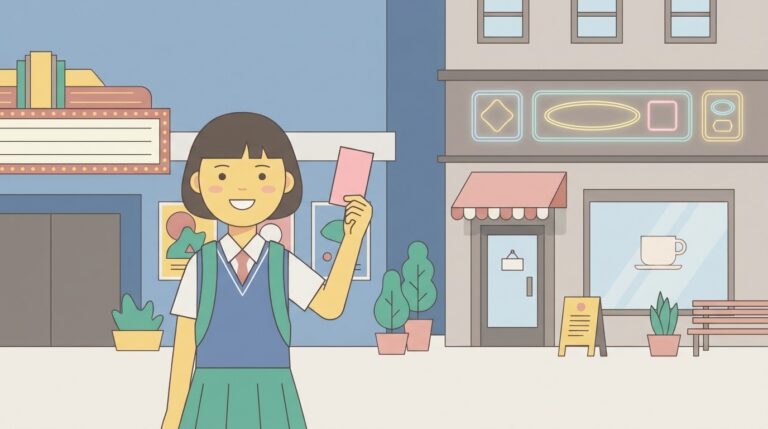
Post-Suneung Magic: Celebrate Like a Local in Korea
안녕하세요! 매일한글 에디터입니다. (Annyeonghaseyo! Hello, this is your Daily Hangul Editor.)
Imagine walking through Hongdae on the Friday after Suneung (수능), Korea’s intense college entrance exam. Yesterday, the whole nation held its breath as flights even paused for the listening test. Today, high schoolers wave a tiny exam slip like a VIP pass for huge discounts at cinemas, theme parks, salons, and restaurants! Many learners know Suneung from K-dramas, yet freeze up when trying to comfort Korean friends or decode post-exam promos. Built on real B1 learner feedback, this guide gives you the exact phrases and cultural tips to join the celebration naturally!
Phase 2: Top 3 Essential Expressions Deep Dive
1. 수험표 할인 돼요? (Suheompyo harin dwaeyo?)
- Pronunciation: Su-heom-pyo ha-rin dwae-yo? (“Su” like sue, “heom” like hum, “pyo” like pyoh, and “dwae” sounds like dweh in dwelling.)
- Meaning: Literal: “Does exam slip discount work?” vs. Real Nuance: “Do you offer the Suneung test-taker discount here?”
- K-Culture Moment: Think of the relieved seniors in K-dramas like Reply 1988 or Crash Course in Romance finally stepping out of study cafes and heading straight to a cinema or hair salon the very next morning.
- Editor’s Insight: Using
돼요? (dwaeyo?)instead of the stiff textbook word가능합니까? (ganeunghamnikka?)makes you sound relaxed and polite. Here,되다 (doeda)means “to be accepted or applicable”—a must-know verb for B1 learners! - Situation Spectrum: Casual ⚠️ (drop
요with close friends:돼?) / Semi-formal ✅ (best for cashiers and staff) / Formal ⚠️ (at luxury spots, try되나요? [doenayo?]or가능할까요? [ganeunghalkkayo?]) - 🤔 Think About It: Turning one exam into a nationwide festival of discounts shows how Korean society shares empathy for students. How does your home country celebrate or reward students after major exams?
2. 수험표만 보여 주면 돼요? (Suheompyoman boyeo jumyeon dwaeyo?)
- Pronunciation: Su-heom-pyo-man bo-yeo ju-myeon dwae-yo? (“man” like mahn, “myeon” like myuhn.)
- Meaning: Literal: “Is it okay if I only show the exam slip?” vs. Real Nuance: “Do I just need to show my exam slip (or do I need an ID too)?”
- K-Culture Moment: Just like characters in youth web-dramas realizing at the theme park ticket booth that they forgot their national ID, teens constantly double-check what documents are required.
- Editor’s Insight: Combining
-만 (-man, only)with the B1 grammar pattern-(으)면 되다 (-eumyeon doeda, all you have to do is...)gives you a Swiss-army-knife sentence for checking rules anywhere in Korea. - Situation Spectrum: Casual ⚠️ (drop
요with peers) / Semi-formal ✅ / Formal ✅ (politely inquisitive and clear) - 🤔 Think About It: Overnight, a simple piece of test paper becomes more powerful than a VIP membership card! Why do you think Korean businesses are so eager to offer huge perks to 19-year-olds right after Suneung?
3. 그동안 진짜 고생 많았어요! (Geudongan jinjja gosaeng manhasseoyo!)
- Pronunciation: Geu-dong-an jin-jja go-saeng ma-na-sseo-yo! (“geu” like guh in good, “saeng” rhymes with sang without a hard g, and “manh-a” smoothly glides as ma-na because the ㅎ softens away!)
- Meaning: Literal: “You had really many hardships during that time!” vs. Real Nuance: “You worked so hard and went through so much—I’m proud of you!”
- K-Culture Moment: Whether it’s a stressed-out student in Sky Castle or a young K-Pop idol greeting fans outside the test center on Suneung morning, everyone hears this warm phrase the moment the exam ends.
- Editor’s Insight: English “Good job” focuses on results, whereas
고생하다 (gosaenghada)validates the emotional and physical effort regardless of test scores. Always lead with this instead of asking how the test went! - Situation Spectrum: Casual ⚠️ (drop
요for friends:고생 많았어!) / Semi-formal ✅ / Formal 🚫 (To elders or bosses, use수고 많으셨습니다or고생 많으셨습니다.) - 🤔 Think About It: Why does Korean culture prioritize acknowledging someone’s hardship (
고생) rather than just saying “Congratulations”? Consider how that shapes daily empathy in Korea.
Phase 3: Textbook Korean vs. Real Korean
Situation 1: Asking about Suneung promos at a store
- 📖 Textbook Korean: 수험생 할인을 받을 수 있습니까? (Suheomsaeng harineul badeul su itseumnikka? — “Can I receive the examinee discount?”)
- 🗣️ Real Korean: 혹시 수험생 이벤트 진행해요? (Hoksi suheomsaeng ibenteu jinhaenghaeyo? — “By any chance, are you running a test-taker promo?”)
- 💡 Why is it different? Nobody uses rigid
-습니까?at trendy Hongdae cafes or salons! Korean brands also prefer the loanword이벤트 (ibenteu, promo/event)over plain “discount,” and starting with혹시 (hoksi, by any chance)makes you sound effortlessly polite.
Situation 2: Cheering up a friend after the exam
- 📖 Textbook Korean: 시험을 보느라고 수고했습니다. (Siheomeul boneurago sugohaetseumnida. — “You worked hard taking the exam.”)
- 🗣️ Real Korean: 이제 맘 편히 푹 쉬어! (Ije mam pyeonhi puk swieo! — “Now get some deep rest with peace of mind!”)
- 💡 Why is it different? Saying
수고했습니다to a close friend sounds awkwardly stiff, like a manager talking to an employee. Telling them to푹 쉬다 (puk swida, rest deeply)with맘 편히 (mam pyeonhi, worry-free)feels like a warm hug from a bestie.
Phase 4: K-Culture Deep Dive & Non-Verbal Manners
4-1. Nunchi (눈치) & Gestures
On Suneung evening and the days following, Korean teens guard their 수험표 (suheompyo) like gold—some even tuck it into a clear photocard holder! When handing it to a cashier or salon staff, hold it politely with both hands (or one hand supported by the other at the wrist) with a bright smile. More importantly, master the #1 nunchi rule of November: NEVER ask “시험 잘 봤어? (Siheom jal bwasseo? — Did you do well?)” unless they mention their score first. Even close family members tread lightly to avoid stressing them out!
4-2. K-Culture Code: K-Beauty Glow-Ups & K-Pop Scenes
The day after Suneung kicks off “Glow-Up Season” in Korea! Hair salons in Gangnam and Hongdae offer up to 50% off for perms and dyeing because many strict high schools limit hairstyles, and students finally have time to reinvent their look before university. Meanwhile, in K-Pop, it’s an annual tradition for rookie idols born that year to appear at Suneung sites with lunchboxes made by their groupmates, posing with their 수험표 for morning press cameras before rushing back to practice rooms—a mix of regular teen life and idol hustle that fans adore.
Phase 5: Interactive Roleplay Scenario
Setting: Friday at 2:00 PM in a bright, pastel-toned hair salon in Hongdae. K-Pop plays softly as Mina (a freshly freed 19-year-old) walks up to Jiwon (a cheerful hair designer).
- Mina: 저기요, 혹시 수험생 할인 돼요? (Jeogiyo, hoksi suheomsaeng harin dwaeyo? — Excuse me, do you offer a test-taker discount?) 🎭 Mina nervously pulls a slightly crumpled slip from her coat pocket.
- Jiwon: 네! 어제 수능 보셨나 봐요! 그동안 진짜 고생 많았어요! (Ne! Eo-je Suneung bosyeonna bwayo! Geudongan jinjja gosaeng manhasseoyo! — Yes! You must have taken Suneung yesterday! You worked so hard!) 🎭 Jiwon claps warmly and beams at Mina.
- Mina: 감사합니다! 수험표만 보여 주면 돼요? (Gamsahamnida! Suheompyoman boyeo jumyeon dwaeyo? — Thank you! Do I just need to show my exam slip?) 🎭 Mina holds out the paper with both hands.
- Jiwon: 신분증도 같이 확인해야 돼요. 사진 찍어 둔 건 안 되고 원본만 가능해요! (Sinbunjeungdo gachi hwaginhaeya dwaeyo. Sajin jjigeo dun geon an doego wonbonman ganeunghaeyo! — We have to check your ID together. Photos aren’t accepted, only the original paper!) 🎭 Jiwon gently points at a small notice on the counter.
- Mina: 아, 다행히 둘 다 챙겨 왔어요! 여기 있어요. (A, daehaenghi dul da chaenggyeo wasseoyo! Yeogi isseoyo. — Oh, luckily I brought both! Here you go.) 🎭 Mina smiles in relief and hands over her student ID.
- Jiwon: 완벽해요! 오늘 펌이랑 염색 다 50% 할인 적용돼요. 어떤 스타일 하고 싶어요? (Wanbyeokhaeyo! Oneul peomirang yeomsaek da osip peosenteu harin jeokyongdwaeyo. Eotteon seutail hago sipeoyo? — Perfect! Today both perms and dyeing are 50% off. What style do you want?) 🎭 Jiwon opens a tablet full of K-Pop hairstyle lookbooks.
- Mina: 저 밝은 색으로 염색 처음 해 보고 싶어요! (Jeo balgeun saegeuro yeomsaek cheoeum hae bogo sipeoyo! — I want to try dyeing my hair a bright color for the first time!) 🎭 Mina’s eyes sparkle with excitement.
- Jiwon: 좋아요! 이제 맘 편히 예쁘게 변신해 봐요! (Joayo! Ije mam pyeonhi yeppeuge byeonsinhae bwayo! — Great! Now relax and let’s give you a pretty makeover!)
🔀 Interactive Branching Point
Right after finishing her hair, Mina meets her friend Haneul outside the salon. Haneul looks a bit tired after taking Suneung too. What should Mina say first?
* A: “수능 점수는 잘 나왔어? 몇 점이야?” (Suneung jeomsuneun jal nawasseo? Myeot jeomiya? — Did your Suneung scores come out well? What’s your score?)
* B: “야, 그동안 진짜 고생 많았어! 오늘 수험표로 영화 보러 갈래?” (Ya, geudongan jinjja gosaeng manhasseoyo/manhasseo! Oneul suheompyoro yeonghwa boreo gallae? — Hey, you worked so hard! Want to go see a movie with our exam slips today?)
* C: “안녕! 내 머리 어때? 나 엄청 싸게 했어!” (Annyeong! Nae meori eottae? Na eomcheong ssage haesseo! — Hi! How’s my hair? I got it done super cheap!)
Feedback:
* Choice A (Bad ❌): Major nunchi foul! Asking about scores right away creates huge pressure and awkwardness, especially if your friend feels unsure about how they did.
* Choice B (Best ✅): Gold standard! You validate their hard work first (고생 많았어!) and immediately pivot to enjoying your post-exam freedom together.
* Choice C (Risk ⚠️): Cute and casual, so it won’t offend a close bestie, but showing off your discount before acknowledging their hard day feels a bit self-centered.
Phase 6: 10-Second Emotional Shadowing Drill
Read each line aloud, pausing briefly at the / marks and matching the emotion!
- [🤔 Curious & Polite] 저기요, / 혹시 / 수험표 할인 돼요? (Jeogiyo, / hoksi / suheompyo harin dwaeyo?)
- [😊 Cheerful & Bright] 수험표만 / 보여 주면 돼요? (Suheompyoman / boyeo jumyeon dwaeyo?)
- [🥺 Warm & Heartfelt] 그동안 / 진짜 / 고생 많았어요! (Geudongan / jinjja / gosaeng manhasseoyo!)
- [🎉 Excited & Free] 오늘부터 / 맘 편히 / 푹 쉬어요! (Oneulbuteo / mam pyeonhi / puk swieoyo!)
Phase 7: K-Culture Mini Dictionary
- 수능 (Suneung) | Translation: College Scholastic Ability Test (CSAT) | Usage: Short for
대학수학능력시험. Every November, it shapes traffic schedules, stock market hours, and even flight bans across Korea. - 수험표 (Suheompyo) | Translation: Exam admission slip | Usage: The printed paper ticket with your photo and test number. After the exam, businesses treat it as a golden discount coupon for weeks.
- 고생 (Gosaeng) | Translation: Hardship / toil / going through a lot | Usage: Used constantly in daily life and workplaces (
고생했어요) to appreciate someone’s sweat and stress, not just their final outcome. - 수험생 이벤트 (Suheomsaeng ibenteu) | Translation: Test-taker promotion | Usage: Marketing term used by cinemas (CGV, Lotte Cinema), theme parks (Lotte World, Everland), airlines, and restaurants from mid-November through December.
Phase 8: Traveler’s Survival Kit
Top 3 Survival Phrases
- 원본 꼭 필요해요? (Wonbon kkok piryohaeyo?) — “Is the original copy strictly necessary?” (Pro Tip: Most big chains refuse photos on your phone, so ask first!)
- 동반 할인도 돼요? (Dongban harindo dwaeyo?) — “Does the discount apply to companions too?” (Pro Tip: Many theme parks and buffets give discounts to 1–2 friends accompanying a test-taker!)
- 언제까지 이벤트 해요? (Eonjekkaji ibenteu haeyo?) — “Until when is this promo running?” (Pro Tip: Some perks last a weekend, while others run until year-end.)
Editor’s Travel Note
- Navigate Suneung Morning Wisely: On Suneung Day (usually the third Thursday of November), government offices, banks, and the stock market open 1 hour late (at 10:00 AM) to keep roads clear. Avoid taxis between 7:30–8:30 AM and 1:00–1:40 PM (the quiet English listening test window). Check real-time bus and subway updates by using the Naver Map App for Accurate Korea Transit.
- Beat the Crowds: Popular BBQ buffets and salons in Hongdae and Gangnam get packed the weekend after Suneung! Make sure to reserve tables ahead of time via CatchTable for Easy Korean Restaurant Bookings and keep the Papago AI Translator App for Instant Menu Photos handy to read promo posters!
Phase 9: One Step Deeper
In Korea, Suneung isn’t treated as a private family milestone—it is a shared national ritual fueled by jeong (정, deep communal warmth). Strangers slow down their cars near school gates, junior students hand out warm tea, and businesses open their doors with generous discounts the very next day. Even though academic pressure in Korea is undeniably intense, these post-Suneung rewards reflect a collective unspoken message: “We saw how hard you fought, and now the whole country wants to celebrate your freedom.”
💬 Your Turn: Have you ever experienced an intense exam season in your country? If you suddenly got a Korean 수험표 discount pass for one day, where would you go first—a cinema, a hair salon, a theme park, or a Korean BBQ spot? Tell us in the comments!
Phase 10: FAQ & Common Mistakes
Q: Can foreign tourists get the Suneung student discount in Korea?
A: Technically, no—you must present an official Korean 수험표 proving you registered for that year’s Suneung exam. However, if you’re traveling with a Korean friend who took the exam, many theme parks and restaurants offer 동반 할인 (dongban harin, companion discounts) for 1 to 3 guests!
Q: Is it really true that airplanes stop flying during Suneung?
A: Yes! Every year during the 35-minute English listening section (around 1:05 PM to 1:40 PM), the Ministry of Land, Infrastructure and Transport halts all commercial takeoffs and landings nationwide so aircraft noise won’t distract students.
Q: How long do Suneung discounts usually last?
A: It varies by brand! Movie theaters and beauty salons often run promos for 2 to 4 weeks starting the day after the exam, while major theme parks and ski resorts sometimes extend offers through the end of December.
🚨 Common Mistakes Alert!
- Mistake 1: Saying “시험 잘 봤어요?” (Did you score well?) right after the exam. -> Correct Action: Wait for them to share first, and always open with
그동안 진짜 고생 많았어요! (You worked so hard!). - Mistake 2: Bringing only a smartphone photo of the
수험표. -> Correct Action: Keep the physical original paper slip AND a valid photo ID together to avoid getting turned away at the counter. - Mistake 3: Using
수고했어to an older tutor or parent who supported you. -> Correct Action:수고하다shouldn’t be used upward to elders! Say감사합니다or덕분이에요 (Deokbunieyo — It's thanks to you).
Phase 11: Action Mission & Engagement
- 🥉 Bronze Mission (Solo Practice): Stand in front of a mirror and say
혹시 수험표 할인 돼요? (Hoksi suheompyo harin dwaeyo?)out loud 5 times with a polite smile and two-handed card gesture. - 🥈 Silver Mission (Share Online): Post on Instagram or Threads about the coolest post-Suneung discount you learned today using #DailyHangul and #SuneungCulture.
- 🥇 Gold Mission (Real-Life Use): Next time a Korean friend finishes a tough exam, project, or workweek, send them a message saying:
그동안 진짜 고생 많았어요! 이제 맘 편히 푹 쉬어요!(Or drop요if they’re a close same-age friend!) - 🎮 K-Culture Mission: Watch a November episode of a Korean vlog, news clip, or K-drama school finale (like Reply 1988 or Crash Course in Romance) and see if you can spot the words
수능,수험표, or고생!
Phase 12: Interactive Quiz Challenge
Q1. Situational Judgment: You’re at a Lotte World ticket booth the day after Suneung and want to ask if simply showing your exam slip is enough. Which sentence sounds most natural?
A) 수험표만 보여 주면 돼요? (Suheompyoman boyeo jumyeon dwaeyo?)
B) 수험표를 보는 것이 가능합니까? (Suheompyoreul boneun geosi ganeunghamnikka?)
C) 수험표 잘 봤어요? (Suheompyo jal bwasseoyo?)
👉 Click to reveal Answer & Feedback for Q1
Correct Answer: A! -(으)면 돼요? is the natural B1 way to ask “Do I just need to…?” Option B is overly stiff and grammatically awkward (it translates to “Is it possible to look at the exam slip?”), while Option C mixes up “showing the slip” with “doing well on the exam.”
Q2. Fill in the Blank: Complete the phrase to comfort a friend who just finished a long, stressful exam:
“그동안 진짜 ( ______ ) 많았어요!” (You really went through a lot!)
👉 Click to reveal Answer & Explanation for Q2
Correct Answer: 고생 (gosaeng)! 고생 많았어요 acknowledges all the hard effort and stress someone endured—making it the warmest thing to say right after Suneung.
Q3. True or False (Cultural Quiz): In Korea, taking a clear photo of your 수험표 on your phone guarantees you’ll get the discount at every cinema and theme park.
👉 Click to reveal Answer & Explanation for Q3
Correct Answer: False! Most major franchises require the original physical paper slip (원본) along with a photo ID (신분증) to make sure the slip isn’t being shared among multiple people.
🎬 Watch Our Daily Videos! (Daily Hangul Official Instagram)
Review the expressions you learned in this article with our fun daily short videos! Check out native pronunciation and real-life nuances in action.
- Instagram @dailyhangul_en







