

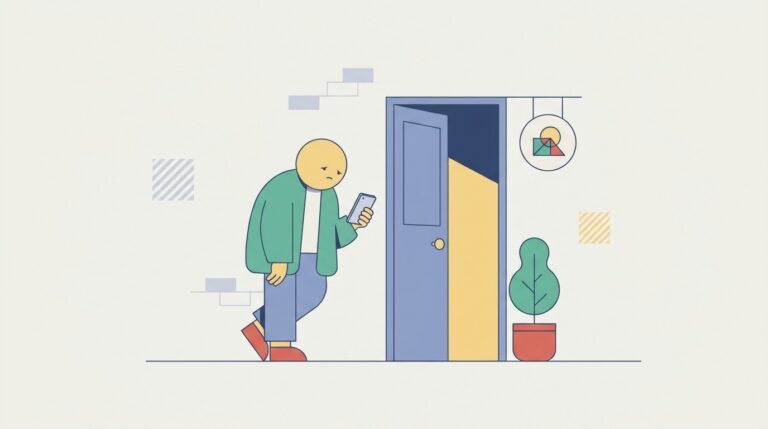
Phase 1: Why Does My Hotel Room Look Like a Closet?
안녕하세요! 매일한글 에디터입니다. (Annyeonghaseyo! Daily Hangul Editor imnida.) Imagine landing at Incheon Airport after a long flight, dragging your heavy suitcase to a trendy Hongdae hotel, and opening the door with excitement—only to freeze. On the booking site, the room looked bright and spacious. In reality, it feels like a tiny closet with zero windows! Don’t worry, you are not alone. Many of our Daily Hangul students in Seoul have faced this exact “catfish hotel” shock. By mastering today’s B1 expressions, you can calmly ask for a room switch or a refund without losing your cool or ruining your K-Travel dream.
Phase 2: Deep Dive into 3 Key Expressions
1. 사진이랑 너무 다른데요. (Sajinirang neomu dareundeyo.)
- Pronunciation: Sajinirang neomu dareundeyo (Sounds like: sah-jee-nee-rahng nuh-moo dah-reun-deh-yo, with a soft rising-then-falling curve at -deyo)
- Meaning: Literally “It is too different from the photo, but…” In real conversation, the
-는데요 (-neundeyo)ending softens the blow so you sound reasonable and shocked rather than aggressively picking a fight. - K-Culture Moment: Think of Korean travel variety shows like Battle Trip or a funny scene in a K-drama where a character checks into a shady countryside motel after seeing fake promotional photos online—they squint at their phone, look at the room, and drop this exact line.
- Editor’s Insight: At a B1 level, dropping
-아요/어요and using-는데요is a total game-changer! Saying달라요 (dallayo)can sound like a blunt accusation, whereas다른데요 (dareundeyo)invites the staff member to listen and solve the problem with you. - Situation Spectrum: Casual (사진이랑 너무 다른데! ⚠️) / Semi-formal (사진이랑 너무 다른데요. ✅) / Formal (사진과 너무 다릅니다. ⚠️ – sounds a bit robotic at a hotel desk)
- 🤔 Think About It: In English, people often start a complaint with “Excuse me, this isn’t what I paid for.” Why do Koreans prefer trailing off with
-는데요to invite the listener to fill in the next step?
2. 창문 있는 넓은 방으로 바꿀 수 있을까요? (Changmun inneun neolbeun bangeuro bakkul su isseulkkayo?)
- Pronunciation: Changmun inneun neolbeun bangeuro bakkul su isseulkkayo? (Sounds like: chahng-moon een-neun nuhl-beun bahng-eu-ro bah-kkool soo ee-sseul-kkah-yo? — notice
있는assimilates to in-neun, not it-neun!) - Meaning: Literally “Could it be possible to change to a wide room that has a window?” It’s the gold-standard polite B1 request for an immediate room swap.
- K-Culture Moment: Picture a scene from King the Land, where a VIP guest politely requests a room upgrade at a luxury hotel lobby, and the meticulous concierge checks the tablet right away.
- Editor’s Insight: Using
-(으)ㄹ 수 있을까요?instead of바꿔 주세요 (bakkwo juseyo)shows respect for the receptionist’s authority while still being super clear about your two non-negotiables: a window (창문 있는) and space (넓은). - Situation Spectrum: Casual (창문 있는 방으로 바꿀 수 있어? ⚠️) / Semi-formal (창문 있는 넓은 방으로 바꿀 수 있을까요? ✅) / Formal (창문이 있는 넓은 객실로 변경 가능할까요? ✅)
- 🤔 Think About It: Korean relies heavily on indirect question forms like “Would it be possible?” when asking favors. How does your native language balance politeness and firmness during a customer service dispute?
3. 방 변경이 안 되면 환불해 주세요. (Bang byeongyeongi an doemyeon hwanbulhae juseyo.)
- Pronunciation: Bang byeongyeongi an doemyeon hwanbulhae juseyo (Sounds like: bahng byuhn-gyuhng-ee ahn dweh-myuhn hwahn-bool-heh joo-seh-yo)
- Meaning: Literally “If a room change doesn’t work out, please give me a refund.” This is your calm, firm Plan B when the hotel claims they are fully booked.
- K-Culture Moment: In Korean slice-of-life dramas or YouTube consumer-review vlogs, travelers pull out this exact conditional
-(으)면structure to draw a clear boundary without yelling. - Editor’s Insight: Notice the order! Always ask for the room change first and mention
환불 (hwanbul - refund)second. Jumping straight to “Give me a refund!” right away often makes Korean front desk staff defensive. - Situation Spectrum: Casual (안 되면 환불해 줘. 🚫 too rude with staff) / Semi-formal (방 변경이 안 되면 환불해 주세요. ✅) / Formal (객실 변경이 어렵다면 환불 부탁드립니다. ✅)
- 🤔 Think About It: Why do you think framing a refund as a conditional consequence (
안 되면 - if it's not possible) works better in Korean service culture than demanding it upfront?
Phase 3: Textbook Korean vs. Real Korean
Situation 1: Pointing out that the room is tiny and windowless
- 📖 Textbook Korean: 이 방은 창문이 없고 너무 좁습니다. (I bangeun changmuni eopgo neomu jopseumnida.)
- 🗣️ Real Korean: 여기 창문도 없고 생각보다 많이 좁네요… (Yeogi changmundo eopgo saenggakboda mani jomneyo…)
- 💡 Why the difference? Textbook Korean uses stiff
-습니다endings that sound like a robot reading a hotel inspection report. Real Koreans add생각보다 (saenggakboda - than I expected)and the-네요 (-neyo)exclamation ending to show genuine surprise while staying super natural and approachable.
Situation 2: Asking to move rooms or cancel
- 📖 Textbook Korean: 다른 방으로 바꾸어 주십시오. (Dareun bangeuro bakkueo jusipsio.)
- 🗣️ Real Korean: 혹시 다른 방으로 옮길 수 있을까요? 안 되면 취소하고 싶어요. (Hoksi dareun bangeuro omgil su isseulkkayo? An doemyeon chwisohago sipeoyo.)
- 💡 Why the difference? Throwing
혹시 (hoksi - by any chance)at the start is a classic Korean social lubricant! Also, natives often prefer옮기다 (omgida - to move/transfer)alongside바꾸다 (bakkuda - to change)when talking about moving luggage into another room.
Phase 4: K-Culture Deep Dive & Non-Verbal Manners
4-1. Nunchi (눈치) & Body Language at the Front Desk
In Korea, how you complain matters almost as much as what you say. If you march back down to the lobby slamming your keycard and pointing angrily, staff may freeze up or stick rigidly to “no refund” policies. Instead, use good Nunchi (눈치 – social awareness):
* Show, don’t just tell: Have your booking app open to the bright, spacious room photo, and also snap 2–3 clear photos of your actual windowless room before heading down.
* Gesture softly: Hold your phone with two hands or place it gently on the counter while tilting it toward the staff member. Avoid wagging your finger.
* Tone & Eye Contact: Keep a steady, calm voice and gentle eye contact with a slight nod. In Korea, calm firmness signals that you are a serious, reasonable traveler who knows your rights.
4-2. Cultural Code: Seoul’s “Muchangbang” (무창방) Reality
If you travel in popular Seoul neighborhoods like Myeongdong, Hongdae, or Gangnam, real estate is famously tight. Many budget hotels and guesthouses convert interior spaces into 무창방 (muchangbang – windowless rooms). Sometimes booking sites upload photos of the deluxe corner room to represent the whole property! Unlike luxury K-drama hotels (King the Land), smaller Seoul accommodations often operate with just one evening manager on duty. Knowing this helps you stay patient while still firmly protecting your booking rights.
Phase 5: Real-Life Roleplay Scenario
Setting: 9:30 PM at a trendy boutique hotel in Hongdae, Seoul. Neon lights glow outside the glass lobby doors. You just dragged your 20kg suitcase back down from the 4th floor.
NPC: Min-jun (민준), the evening front desk manager—polite, wearing a neat black blazer, juggling check-ins on his tablet.
- Turn 1 — You: 저기요, 방금 체크인했는데 잠깐 말씀 좀 드릴 수 있을까요? (Jeogiyo, banggeum chekeuinhaenneunde jamkkan malsseum jom deuril su isseulkkayo?) — Excuse me, I just checked in, could I speak with you for a moment? 🎭 Approaches the desk calmly with your phone and keycard in hand.
- Turn 2 — Min-jun: 네, 손님. 방에 무슨 문제가 있으신가요? (Ne, sonnim. Bange museun munjega isseusingayo?) — Yes, guest. Is there a problem with the room? 🎭 Looks up from his tablet with a polite nod.
- Turn 3 — You: 예약 사이트 사진이랑 실제 방이 너무 다른데요. (Yeyak saiteu sajinirang silje bangi neomu dareundeyo.) — The actual room is really different from the booking site photos. 🎭 Gently turns the phone screen toward Min-jun to show the booking listing.
- Turn 4 — Min-jun: 아, 그러세요? 어떤 부분이 다르죠? (A, geureoseyo? Eotteon bubuni dareujyo?) — Oh, really? Which part is different? 🎭 Leans in slightly to look at your phone screen.
- Turn 5 — You: 사진에는 창문이 있었는데, 제 방은 창문도 없고 너무 좁아요. (Sajineneun changmuni isseonneunde, je bangeun changmundo eopgo neomu jobayo.) — In the photo there was a window, but my room has no window and is too small. 🎭 Shows the photo you just took of the cramped room.
- Turn 6 — Min-jun: 죄송합니다, 손님. 그 사진은 대표 객실 이미지라서요. (Joesonghamnida, sonnim. Geu sajineun daepyo gaeksil imijiraseoyo.) — I’m sorry, guest. That photo is just a representative room image. 🎭 Offers a slight apologetic bow while tapping his tablet.
- Turn 7 — You: 창문 있는 넓은 방으로 바꿀 수 있을까요? 안 되면 환불해 주세요. (Changmun inneun neolbeun bangeuro bakkul su isseulkkayo? An doemyeon hwanbulhae juseyo.) — Could I switch to a bigger room with a window? If that’s not possible, please refund me. 🎭 Speaks steadily with calm, polite eye contact.
- Turn 8 — Min-jun: 잠시만요, 확인해 볼게요. 추가 요금 없이 5층 방으로 옮겨 드릴게요! (Jamsimanyo, hwaginhae bolgeyo. Chuga yogeum eopsi ocheung bangeuro omgyeo deurilgeyo!) — One moment, let me check. I will move you to a 5th-floor room at no extra charge! 🎭 Smiles with relief and programs a new keycard.
🔀 Interactive Branching Point: What if Min-jun says, “Sorry, we have no other rooms tonight”?
Pick your next move!
* Option A: “그럼 오늘 밤 예약만 취소하고 무료 환불 받을 수 있을까요?” (Geureom oneul bam yeyakman chwisohago muryo hwanbul badeul su isseulkkayo? – Then could I cancel just tonight’s booking and get a free refund?) + contact the booking app customer center right there.
* Option B: Shout “여기 사기예요! 경찰 부를 거예요!” (Yeogi sagiyeyo! Gyeongchal bureul geoyeyo! – This place is a scam! I’m calling the police!) at the top of your lungs.
* Option C: Quietly say “아, 네… 알겠어요” (A, ne… algesseoyo – Oh, okay… got it) and suffer in the tiny windowless closet for four nights.
Feedback:
* Option A (Best! ✅): Smart, B1-level perfection! Asking for a 무료 환불 (muryo hwanbul - free refund) while involving the booking platform puts documented pressure on the hotel peacefully.
* Option B (Bad! 🚫): Accusing someone of 사기 (sagi - fraud/scam) and threatening police immediately creates a huge scene, makes staff refuse cooperation, and can even cause legal trouble in Korea.
* Option C (Risk! ⚠️): Don’t sacrifice your comfort! Even if they truly have zero rooms tonight, you can often negotiate a move for tomorrow plus a 부분 환불 (bubun hwanbul - partial refund) for night one.
Phase 6: 10-Second Emotional Shadowing Drill
Read aloud with rhythm! Pause briefly at / and really act out the emotion tags.
[😲 Shocked & disappointed]사진이랑 / 너무 다른데요. / 여긴 창문도 없고 / 너무 좁아요. (Sajinirang / neomu dareundeyo. / Yeogin changmundo eopgo / neomu jobayo.) — It’s so different from the photos. There’s no window here and it’s too tiny.[🥺 Polite yet determined]혹시 / 창문 있는 넓은 방으로 / 바꿀 수 있을까요? (Hoksi / changmun inneun neolbeun bangeuro / bakkul su isseulkkayo?) — By any chance, could I switch to a bigger room with a window?[😌 Calm & firm]방 변경이 / 안 되면 / 환불해 주세요. (Bang byeongyeongi / an doemyeon / hwanbulhae juseyo.) — If changing rooms isn’t possible, please give me a refund.
Phase 7: K-Culture Mini Dictionary
- 무창방 (muchangbang) | Windowless room | Super common on Korean hotel apps (
야놀자,여기어때). Always check room titles for(창문 없음)or무창before clicking pay! - 업그레이드 (eopgeureideu) | Room upgrade | Widely used Konglish at Korean hotel desks. Adding
무료 업그레이드 (muryo eopgeureideu - free upgrade)can score you a bigger room when a hotel makes a mistake. - 부분 환불 (bubun hwanbul) | Partial refund | Essential when you have to stay the first night in a bad room before switching, or when a hotel compensates you for misleading photos.
- 현장 결제 (hyeonjang gyeolje) | Pay at the property | Means you pay at the front desk instead of prepaying online. It gives you way more leverage if the room looks terrible upon check-in!
Phase 8: Survival Kit for Travelers
TOP 3 Survival Phrases
- 실제 사진 보여 주세요. (Silje sajin boyeo juseyo.) — “Please show me real photos.” | Pro Tip: Ask this before accepting a replacement room so you don’t walk into a second closet!
- 추가 요금 있어요? (Chuga yogeum isseoyo?) — “Is there an extra fee?” | Pro Tip: Always clarify this before taking an upgraded keycard so there are no surprise charges at checkout.
- 예약 사이트에 문의할게요. (Yeyak saiteue munuihalgeyo.) — “I will contact the booking site.” | Pro Tip: Hotels hate receiving dispute tickets from Agoda, Booking.com, or Airbnb—saying this calmly speeds up solutions fast.
Editor’s Travel Note
Before leaving the lobby, snap timestamped photos of the room and keep every receipt! If you need to relocate last-minute in Seoul, make sure to Download Naver Map for Korean Addresses since Google Maps doesn’t work well for walking directions in Korea. You can also Call Korea Travel Helpline 1330 (dial 1330 from any Korean phone) for free 24/7 English-Korean translation support during hotel disputes. Also, keep a T-money card or WOWPASS handy in case you grab a late-night cab to a better guesthouse!
Phase 9: One Step Deeper — Why Koreans Love “Soft Edges”
In Korean society, preserving 체면 (chemyeon – face/dignity) and 예의 (yeui – politeness) even during a disagreement is huge. That’s why Korean learners are often surprised that raising your voice rarely gets you a faster refund in Seoul—in fact, it does the opposite! When you use softening grammar like -는데요 or 혹시 alongside clear evidence, you give the staff member an honorable way to fix the mistake without feeling cornered. In Korea, calm persistence beats loud confrontation every single time.
💬 Your Turn: Have you ever booked a place that looked amazing online and turned out to be a tiny surprise? Drop your funniest or most stressful travel story in the comments—we’d love to hear how you handled it!
Phase 10: FAQ & Common Mistakes
Q: Can I get a refund directly at the hotel desk if I prepaid on a foreign booking app?
A: Usually no—the hotel only receives the money through the platform, so the desk can approve a 무료 취소 (muryo chwiso – free cancellation) while your booking app actually sends the money back. Ask the receptionist to confirm approval with the platform right in front of you.
Q: Is it rude to say “사진이랑 달라요 (It’s different from the photo)” to Korean staff?
A: Not at all, as long as you keep your tone calm and use -는데요 (사진이랑 너무 다른데요). Showing your phone screen politely makes it an objective comparison rather than a personal attack.
Q: What if the hotel says “모든 방이 다 찼어요 (All rooms are full)”?
A: Ask if they can switch you tomorrow (내일 방 바꿀 수 있어요? - Naeil bang bakkul su isseoyo?) and request a partial refund (부분 환불) or free breakfast for tonight’s inconvenience.
🚨 Common Mistakes TOP 3
- Mistake: Saying
방 바꿔! (Bang bakkwo!)in banmal (casual speech). -> Correct Action: Always use polite-요endings like바꿀 수 있을까요? (bakkul su isseulkkayo?)with service staff. - Mistake: Dropping your bags and sleeping in the room for a night before complaining. -> Correct Action: Leave your suitcase zipped and go back to the front desk immediately within 10–15 minutes of check-in.
- Mistake: Leaving the hotel without written proof of a refund agreement. -> Correct Action: Ask for a quick written note, email confirmation, or message through your booking app chat before walking out.
Phase 11: Action Mission & K-Culture Challenge
- 🥉 Bronze Mission (Solo Practice): Stand in front of your mirror with your phone in hand and do the 10-Second Shadowing Drill from Phase 6 three times without looking at the Romanization.
- 🥈 Silver Mission (Community Share): Leave a comment below writing your own B1 sentence combining
창문 (window)and다른데요 (different)! - 🥇 Gold Mission (Real-World Use): Next time you book a trip to Korea, message the accommodation in advance via app chat asking:
혹시 창문 있는 방으로 배정받을 수 있을까요? (Hoksi changmun inneun bangeuro baejeongbadeul su isseulkkayo? - Could I be assigned a room with a window?) - 🎮 K-Culture Mission: Search Korean YouTube for
서울 호텔 리뷰 (Seoul hotel review)or watch a travel episode on Netflix—spot how Korean vloggers use-네요and-는데요when reacting to surprisingly small hotel rooms!
Phase 12: Interactive Quiz Challenge
Test your hotel survival Korean! Click each toggle to check your answers.
Quiz 1 (Situational Judgment): You walk into your Seoul hotel room and see zero windows. You go to the front desk. Which response will get you the best help?
A) 여기 창문 왜 없어요? 당장 돈 주세요! (Yeogi changmun wae eopseoyo? Dangjang don juseyo!)
B) 사진이랑 너무 다른데요. 혹시 창문 있는 방으로 바꿀 수 있을까요? (Sajinirang neomu dareundeyo. Hoksi changmun inneun bangeuro bakkul su isseulkkayo?)
C) 이 방 아주 좋습니다. 감사합니다. (I bang aju joseumnida. Gamsahamnida.)
👉 Click to reveal Answer & Feedback for Quiz 1
Correct Answer: B!
* Why B wins: You politely point out the difference using -는데요 and make a clear, respectful B1 request for a window room.
* Why A fails: Asking “Give me money right now!” (당장 돈 주세요) sounds aggressive and lacks polite nuance.
* Why C fails: Telling them the room is great won’t get you out of that tiny closet!
Quiz 2 (Fill in the Blank): Complete the sentence for “If changing rooms isn’t possible, please give me a refund.”
“방 변경이 ______ ______, 환불해 주세요.”
👉 Click to reveal Answer & Explanation for Quiz 2
Correct Answer: 안 되면 (an doemyeon)
* Full Sentence: 방 변경이 안 되면 환불해 주세요. (Bang byeongyeongi an doemyeon hwanbulhae juseyo.)
* Grammar Tip: 안 되다 (to not work out / not be possible) + -(으)면 (if) = 안 되면!
Quiz 3 (True or False — Culture Quiz): In Korea, yelling loudly at a hotel manager is the fastest way to get a room upgrade.
👉 Click to reveal Answer & Explanation for Quiz 3
Correct Answer: False!
* Explanation: In Korean service culture, keeping your cool, showing photo evidence gently, and using polite indirect phrases (-는데요, 혹시) helps staff save face and motivates them to offer a free upgrade (무료 업그레이드) or smooth refund.
🎬 Watch Our Daily Videos! (Daily Hangul Official Instagram)
Review the expressions you learned in this article with our fun daily short videos! Check out native pronunciation and real-life nuances in action.
- Instagram @dailyhangul_en







