

Phase 1: Why Midnight Hospital Visits in Korea Don’t Have to Be Scary
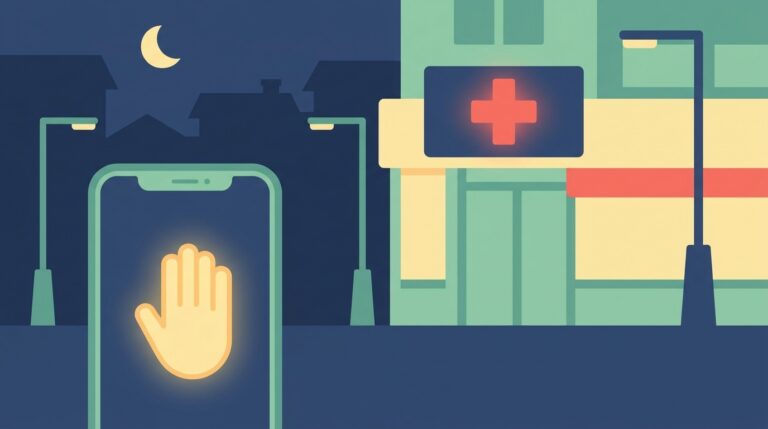
안녕하세요! 매일한글 에디터입니다. (Annyeonghaseyo! Hello! I’m your Daily Hangul editor.) Picture this: it’s 11:30 PM in Seoul after a fun night of spicy K-Food, and suddenly your stomach hurts badly. Like a tense scene from a K-Drama, you rush under bright neon signs into a quiet night emergency room (야간 응급실, yagan eunggeupsil). Your heart is pounding, and your mind goes blank—how do you explain your symptoms in Korean? Don’t worry! Based on real feedback from our Daily Hangul learners who faced late-night hospital visits, calling 1339 or Korea’s foreign medical support line connects you directly to interpretation services. Master these simple A2 phrases today, and you’ll turn midnight panic into total peace of mind.
Phase 2: Deep Dive into 3 Core Survival Expressions
When you’re tired or in pain, even native speakers forget fancy vocabulary (trust me, I once said ‘my head is spicy’ instead of ‘dizzy’ at a clinic!). Stick to these three A2 lifesavers.
1. 통역 연결해 주세요 (Tongyeok yeongyeolhae juseyo)
- Pronunciation: Tong-yeok yeon-gyeol-hae ju-se-yo (Sounds like: “Tong-yuck yun-gyul-hae joo-seh-yo” — smooth and steady like ordering an iced americano!)
- Meaning: Literally “Please connect interpretation.” Actually means “Could you connect me to an interpreter?”
- K-Culture Moment: Think of those intense scenes in Hospital Playlist or Dr. Romantic when a foreign traveler arrives at the ER desk—this single sentence immediately signals the triage nurse to switch into international-support mode.
- Editor’s Insight: Adding
-해 주세요 (-hae juseyo)turns a demand into a warm, polite request. Even if your voice shakes, Koreans hear this ending and immediately want to help you faster.- Situation Spectrum: Casual 🚫 | Semi-formal ✅ | Formal ✅
- 🤔 Think About It: In English, we often say “I need a translator” (focusing on “I”). In Korean, we say “Please connect interpretation” (focusing on the action of connection). How does removing “I” make requests feel softer in Korean culture?
2. 1339에 전화하면 돼요? (Il-sam-sam-gu-e jeonhwahamyeon dwaeyo?)
- Pronunciation: Il-sam-sam-gu-e jeon-hwa-ha-myeon dwae-yo (Sounds like: “Eel-sahm-sahm-goo-eh jun-hwa-ha-myun dweh-yo” — remember il-sam-sam-gu as 1-3-3-9!)
- Meaning: Literally “If I call 1339, is it okay?” Actually means “Can I just call 1339 (for medical help/interpretation)?”
- K-Culture Moment: Just like how K-Travel vlogs always highlight Korea’s 24/7 convenience, Korean public hotlines like 1339 (KDCA medical guidance), 1345 (immigration & multilingual help), and 1330 (tourist hotline) act like your invisible pocket concierge.
- Editor’s Insight: The
-(으)면 돼요?ending is an A2 superpower! You can swap the verb for anything to ask “Is it fine if I do X?” without sounding pushy.- Situation Spectrum: Casual ⚠️ | Semi-formal ✅ | Formal ⚠️
- 🤔 Think About It: In your home country, is there one single government hotline foreigners can call for language help at night, or do people mostly rely on translation apps?
3. 여기가 많이 아파요 (Yeogiga mani apayo)
- Pronunciation: Yeo-gi-ga ma-ni a-pa-yo (Sounds like: “Yuh-gee-gah mah-nee ah-pah-yo” — keep the ‘a’ in apayo open like saying “ah” at the doctor!)
- Meaning: Literally “Here hurts a lot.” Actually means “It hurts right here!” (while pointing).
- K-Culture Moment: In K-Dramas, characters clutch their stomach after eating late-night ramyeon and whisper
아파요 (apayo). Pointing and saying여기가 (yeogiga)saves you from memorizing 20 body-part names!- Editor’s Insight: Never worry if you forget words like “stomach” or “throat” in an emergency. Combining
여기 (here)with body language is 100% natural for Korean speakers too.- Situation Spectrum: Casual ⚠️ | Semi-formal ✅ | Formal ⚠️
- 🤔 Think About It: Koreans use the word
아프다 (apeuda)for both physical pain (“my leg hurts”) and being sick (“I have a cold”). Why do you think one word covers both feelings?
Phase 3: Textbook Korean vs. Real Korean
Textbook sentences are great for exams, but at 1:00 AM in a busy ER, nobody speaks in full formal paragraphs. Let’s upgrade your phrasing!
Situation 1: Asking for English interpretation
- 📖 Textbook Korean: 영어를 할 수 있는 직원이 있습니까? (Yeongeoreul hal su inneun jigwoni itseumnikka?)
- 🗣️ Real Korean: 영어 통역 되나요? (Yeongeo tongyeok doenayo?)
- 💡 Why is it different? In real life,
-나요? (-nayo?)sounds gentle, natural, and conversational. Saying통역 되나요?(Is interpretation possible?) gets you a fast yes/no answer without tiring you out.
Situation 2: Telling the nurse you suddenly feel sick
- 📖 Textbook Korean: 갑자기 배가 아파서 응급실에 왔습니다. (Gapjagi baega apaseo eunggeupsire watseumnida.)
- 🗣️ Real Korean: 갑자기 배가 너무 아파요. (Gapjagi baega neomu apayo.)
- 💡 Why is it different? Since you’re already standing inside the ER, you don’t need to say “I came to the emergency room”! Koreans naturally use
너무 (neomu)—literally “too much”—to express strong pain.
Phase 4: K-Culture Deep Dive & Non-Verbal Manners
4-1. Nunchi (눈치) & Gestures
Korean hospitals run on high-speed efficiency (ppalli-ppalli culture), so reading the room (nunchi) helps everything go smoothly:
* Point & Press: Gently place your hand on where it hurts while looking directly at the nurse’s eyes—it builds instant clarity.
* Ready Your Screen & ID: Before reaching the desk, open your phone to show 1339 or 1345 if you need 3-way interpretation, and hold your Passport or Alien Registration Card (외국인등록증) in hand.
* Calm Urgency: Even when stressed, keeping your voice calm with a slight nod (around 15 degrees) earns huge warmth and extra patience from busy night-shift staff.
4-2. Cultural Code Analysis: K-Drama ERs vs. Real Life
If you’ve watched Hospital Playlist or The Trauma Code, you’ve seen how organized Korean ERs (응급실, eunggeupsil) are! Unlike some countries where you wait passively for hours before anyone talks to you, Korean ERs start with quick triage and registration (접수, jeopsu) right at the door. Plus, Korea’s public safety network connects hospitals to multilingual support lines like 1339 (Korea Disease Control and Prevention Agency medical info), 1345 (Immigration Contact Center with 20+ languages for 3-way interpretation), and 1330 (24/7 Korea Travel Hotline). You are never truly stuck without a voice!
Phase 5: Real-Life Roleplay Scenario
Setting: 12:15 AM at a bright, humming Seoul hospital ER reception desk. The automatic glass doors slide shut behind you.
NPC: Nurse Min-ji — kind, brisk, wearing pale blue scrubs, holding a digital tablet.
- Nurse Min-ji: 안녕하세요, 어디가 아프세요? (Annyeonghaseyo, eodiga apeuseyo?)
Hello, where does it hurt? 🎭 (Looks up quickly with attentive eyes) - You: 안녕하세요… 여기가 많이 아파요. (Annyeonghaseyo… Yeogiga mani apayo.)
Hello… It hurts a lot right here. 🎭 (Holds your stomach and winces slightly) - Nurse Min-ji: 아, 배가 아프시구나. 언제부터 아팠어요? (A, baega apeusiguna. Eonjebuteo apasseoyo?)
Ah, your stomach hurts. Since when has it hurt? 🎭 (Starts typing on the tablet) - You: 한국어 잘 못해요. 통역 연결해 주세요. (Hangugeo jal mothaeyo. Tongyeok yeongyeolhae juseyo.)
I don’t speak Korean well. Please connect me to an interpreter. 🎭 (Shows your phone politely) - Nurse Min-ji: 네, 잠시만요! 신분증 있으세요? (Ne, jamsimanyo! Sinbunjeung isseuseyo?)
Yes, just a moment! Do you have your ID? 🎭 (Reaches for the desk phone) - You: 네, 여기 여권 있어요. 1339에 전화하면 돼요? (Ne, yeogi yeogwon isseoyo. Il-sam-sam-gu-e jeonhwahamyeon dwaeyo?)
Yes, here is my passport. Should I call 1339? 🎭 (Hands over passport with two hands) - Nurse Min-ji: 1339나 1345로 연결해 드릴게요. 잠깐 앉아 계세요. (Il-sam-sam-gu-na il-sa-o-ro yeongyeolhae deurilgeyo. Jamkkan anja gyeseyo.)
I’ll connect you to 1339 or 1345. Please sit for a moment. 🎭 (Points gently toward the waiting chairs) - You: 정말 감사합니다! (Jeongmal gamsahamnida!)
Thank you so much! 🎭 (Bows slightly with a relieved sigh)
🔀 Interactive Branching Point: The Nurse Asks About Allergies!
While waiting for the 3-way interpreter to pick up, Nurse Min-ji holds up a medicine chart and asks: “혹시 약 알레르기 있어요? (Do you have any medicine allergies?)” How do you respond?
- Option A: “잠시만요, 통역 기다려 주세요.” (Jamsimanyo, tongyeok gidaryeo juseyo. — Wait a moment, please wait for the interpreter.)
-> Feedback (Best ✅): Smart and safe! Never guess medical questions when an interpreter is seconds away. - Option B: “아뇨, 빨리 주사 주세요!” (Anyo, ppalli jusa juseyo! — No, give me a shot quickly!)
-> Feedback (Bad 🚫): Risky! Saying “no” without understanding could be dangerous if you do have allergies. - Option C: “음… 모르겠어요.” (Eum… moreugesseoyo. — Um… I don’t know.)
-> Feedback (Risk ⚠️): Honest, which is good, though asking to wait for interpretation or using a translation app to double-check is much safer.
Phase 6: 10-Second Emotion Shadowing Drill
Read these aloud right now! Follow the / marks for natural pauses and match the emotion tags.
- [😰 Urgently yet politely]
여기가 / 많이 아파요. // 통역 / 연결해 주세요.
(Yeo-gi-ga / ma-ni a-pa-yo. // Tong-yeok / yeon-gyeol-hae ju-se-yo.)
It hurts a lot here. Please connect an interpreter. -
[🙋 Curious and proactive]
1339에 / 전화하면 돼요? // 영어 통역 / 되나요?
(Il-sam-sam-gu-e / jeon-hwa-ha-myeon dwae-yo? // Yeon-geo tong-yeok / doe-na-yo?)
Should I call 1339? Is English interpretation available? -
[🥹 Relieved and grateful]
도와주셔서 / 정말 감사합니다.
(Do-wa-ju-syeo-seo / jeong-mal gam-sa-ham-ni-da.)
Thank you so much for helping me.
Phase 7: K-Culture Mini Dictionary
- 응급실 (Eunggeupsil) | Emergency Room (ER) | Big hospital signs glow in red or orange with these three syllables at night. Look for
응급! - 통역 (Tongyeok) | Interpretation | Spoken translation (unlike
번역, which is written translation). Essential word for phone hotlines! - 접수 (Jeopsu) | Registration / Check-in | Every Korean clinic or ER starts at the
접수counter before you see a doctor. - 외국인등록증 (Oegugindeungnokjeung) | Alien Registration Card (ARC) | Long-term residents carry this ID; tourists use their passport (
여권, yeogwon) instead.
Phase 8: Survival Kit for Travelers
Top 3 ER Survival Phrases
- 119 불러 주세요 (Il-il-gu bulleo juseyo) — Please call 119 (ambulance/emergency). Pro Tip: Use 119 for true emergencies and ambulance transport; they also offer interpretation support!
- 여권 있어요 (Yeogwon isseoyo) — I have my passport. Pro Tip: Hospitals always verify identity before treatment or issuing insurance receipts.
- 영수증 주세요 (Yeongsujeung juseyo) — Please give me a receipt. Pro Tip: Essential for claiming travel insurance when you get back home.
Editor’s Travel Note
Before your trip, prepare your phone so you never scramble at midnight:
* Check real-time night ER locations using the Naver Map App Download and search 야간 응급실 (night ER).
* Keep the Papago AI Translator App Download on your home screen—its voice and camera features work wonders for hospital registration forms.
* Save key numbers in your contacts: 1339 (Medical guidance), 1345 (Foreigner 3-way interpretation), 1330 (24/7 Korea Travel Hotline), and 119 (Ambulance). Most Korean ERs accept international credit cards (신용카드) and T-money taxis run all night via Kakao T!
Phase 9: One Step Deeper
Have you noticed how Korean hotlines and polite endings like -주세요 work together? Beneath Korea’s fast-paced cities lies a deep sense of jeong (정, warm human connection) and collective responsibility—the idea that nobody, not even a lost traveler at 2:00 AM, should struggle alone. When you soften your request with -요 or ask gently for 통역 (interpretation), you invite the person across from you into a shared moment of care rather than a cold transaction. Learning these phrases isn’t just about surviving an ER visit; it’s about tapping into Korea’s quiet community safety net.
💬 Your Turn: Have you ever had to visit a pharmacy or clinic while traveling abroad? Share your story—or tell us which Korean emergency phrase you’re saving to your phone today—in the comments below!
Phase 10: FAQ & Common Mistakes
Q: Does calling 1339 or 1345 really connect me to an interpreter at night?
A: Yes! Korea’s foreign support lines like 1345 (Immigration Contact Center) and 1330 (Korea Travel Hotline) operate multilingual support, and 1339 connects you to medical/disease guidance. If an ambulance is urgently needed, 119 also provides multilingual emergency dispatch!
Q: Can I use a foreign credit card at a Korean night emergency room?
A: Most medium-to-large hospitals and university ERs accept Visa and Mastercard without any trouble. Having a little cash (around 50,000–100,000 KRW) as backup is helpful for smaller neighborhood clinics or late-night pharmacies.
Q: What is the difference between 119 and 1339?
A: Call 119 when you need an ambulance, fire rescue, or immediate life-saving dispatch. Call 1339 for medical consultation/guidance or 1330 / 1345 for 24/7 foreigner interpretation and hospital guidance.
🚨 Common Mistakes Warning Board
- Saying “번역 (beonyeok)” instead of “통역 (tongyeok)”
- Correct Action:
번역is for written text; use통역when you need spoken phone or in-person interpretation!
- Correct Action:
- Leaving your Passport at the hotel
- Correct Action: Always carry your Passport (or ARC) or at least a clear photo of it, though physical ID is strongly preferred at Korean ERs.
- Using casual “아파! (Apa!)” with hospital staff
- Correct Action: Always attach
-요 (-yo)(아파요!) so you stay respectful and clear even under stress.
- Correct Action: Always attach
Phase 11: Action Mission & Engagement
- 🥉 Bronze Mission (Solo Practice): Stand in front of your mirror, point to your arm or stomach, and say
여기가 많이 아파요. 통역 연결해 주세요.three times clearly in under 10 seconds. - 🥈 Silver Mission (Share & Save): Screenshot the Phase 8 Survival Kit and save 1339 / 1345 / 1330 / 119 into your phone contacts under “Korea Help.”
- 🥇 Gold Mission (Real-World Action): Next time you walk past a hospital or clinic in Korea (or spot one on Naver Map), practice reading the Korean sign
응급실out loud! - 🎮 K-Culture Mission: Watch one medical episode of a K-Drama (like Hospital Playlist or Doctor Slump) and count how many times you hear the word
아파요or응급실!
Phase 12: Interactive Quiz Challenge
Quiz 1: Situation Judgment
You arrive at a Korean ER at midnight with a high fever and want an English interpreter on the phone. What is the most natural thing to say?
1) 영어 번역 해 주세요.
2) 통역 연결해 주세요.
3) 밥 주세요.
Click to check the answer & explanation!
Answer: 2) 통역 연결해 주세요. (Tongyeok yeongyeolhae juseyo.)
Why? 통역 means spoken interpretation! Option 1 uses 번역 (written translation), and Option 3 means “Please give me food/rice”—definitely not what you need in the ER!
Quiz 2: Fill in the Blank
Fill in the missing A2 grammar ending to ask: “Should I call 1339?”
1339에 전화______ 돼요?
Click to check the answer & explanation!
Answer: 하면 (hamyeon) -> 1339에 전화하면 돼요?
Why? Combining a verb stem with -(으)면 돼요? is the easiest way in Korean to ask “Is it okay/enough if I do X?”
Quiz 3: True or False Culture Quiz
Statement: You do NOT need to bring any ID when visiting a Korean emergency room at night. (True / False)
Click to check the answer & explanation!
Answer: False!
Why? Korean hospitals require identity verification (접수) via your Passport or Alien Registration Card (외국인등록증) for medical records and billing.
🎬 Watch Our Daily Videos! (Daily Hangul Official Instagram)
Review the expressions you learned in this article with our fun daily short videos! Check out native pronunciation and real-life nuances in action.
- Instagram @dailyhangul_en







