

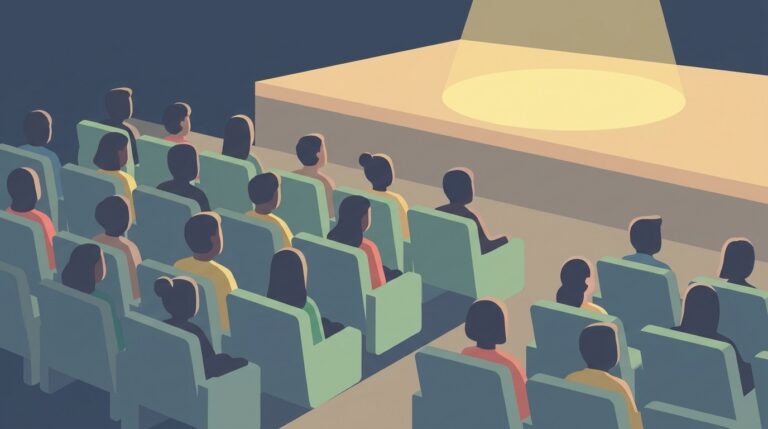
Once the Lights Dim: Navigating Korean Theater Etiquette Like a Local
Phase 1: Empathy (Welcome to the Theater!)
안녕하세요! (Annyeonghaseyo!) It is your Daily Hangul editor and cultural navigator here. Picture this: You finally scored a front-row ticket to see your ultimate K-pop bias starring in a grand musical in Seoul, or perhaps you braved the bustling alleys of Daehangno (대학로) to catch an acclaimed indie play. Your heart is pounding with excitement. The auditorium lights fade to black, the overture begins, and in your excitement, you lean forward in your seat to catch a closer look.
Suddenly, you feel an icy gaze or a sharp tap on your shoulder from the patron behind you. Or worse—your smartwatch lights up with a subtle buzz, and an usher instantly points a red laser near your foot! You freeze. Did you just commit a major cultural faux pas?
In South Korea, musical and theater fandoms have cultivated some of the strictest, most meticulous audience etiquette in the world. Locals refer to any disruptive behavior as 관크 (gwan-keu)—short for ‘관객 크리티컬’ (audience critical damage). But do not panic! Today, we are breaking down why Korean theaters demand complete stillness and dark screens, how to handle warnings politely, and the insider theater vocabulary you need to enjoy the show like an experienced Seoul regular.
Phase 2: 3 Core Expressions Deep-Dive
1. 등받이에 등을 붙여 주세요 (Deung-baji-e deung-eul buchyeo juseyo)
- Pronunciation: [Deung-baji-e deung-eul boo-chyeo joo-seh-yo] (Think of ‘deung’ sounding like ‘dung’ in dungarees, and ‘buchyeo’ like ‘boo-chuh’)
- Meaning: “Please keep your back against the seat backrest.”
- K-Culture Moment: You will hear ushers repeating this like a mantra before the curtain rises, or whispered discreetly by an audience member sitting right behind someone leaning forward.
- Editor’s Insight: Most Korean theaters have steeply tiered seating. Leaning forward just 10 centimeters cuts off the view of the person behind you completely. This offense is so notorious that theater fans call it 수구리 (suguri)—the act of hunching or ducking forward. Keeping your spine glued to your seat back is considered the golden rule.
- Situation Spectrum:
- Casual: 🚫 (Too formal for friends)
- Semi-formal: ✅ (Polite reminder to strangers)
- Formal: ✅ (Standard usher announcement)
- 🤔 Think About It: In many Western theaters, leaning forward indicates enthusiastic engagement. Why do you think Korean collective culture prioritizes the shared sightline of everyone in the hall over personal comfort?
2. 휴대폰 전원을 완전히 꺼 주세요 (Hyudae-pon jeon-won-eul wanjeon-hi kkeo juseyo)
- Pronunciation: [Hyoo-deh-pon jeon-won-eul wahn-jeon-hee kkuh joo-seh-yo]
- Meaning: “Please turn your mobile phone power completely off.”
- K-Culture Moment: Pre-show recorded announcements voiced by the lead actors often humorously warn: “Vibrate mode is not enough! A single vibration shatters actor focus!”
- Editor’s Insight: Notice the adverb 완전히 (wanjeon-hi) meaning ‘completely’. In Korea, putting your phone on silent or vibrate is considered insufficient. Theater fans can hear a faint buzz through the floorboards, and smartwatches glowing during dramatic pauses can ruin an entire scene. Turning it 100% off shows ultimate respect.
- Situation Spectrum:
- Casual: ⚠️ (Use ‘폰 꺼 둬’ with friends)
- Semi-formal: ✅ (Polite request)
- Formal: ✅ (Official announcement)
- 🤔 Think About It: Why does Korea, one of the most hyper-connected, smartphone-dependent countries on earth, insist on turning devices completely off during live performances?
3. 숨죽이고 몰입해서 봤어요 (Sum-jugigo morip-haeseo bwasseoyo)
- Pronunciation: [Soom-joo-gi-go mo-rip-hae-seo bwah-sseo-yo]
- Meaning: Literally: “I held my breath and watched in total immersion.” (Actual nuance: “The performance was so captivating that nobody dared make a sound.”)
- K-Culture Moment: Post-musical reviews on Twitter (X) and Interpark ticket review forums often start with this sentence to praise high-energy shows like Jekyll & Hyde or Death Note.
- Editor’s Insight: Korean audiences take pride in intense focus. This has given rise to the subculture term 시체관극 (siche-gwan-geuk), meaning ‘watching like a corpse’—no whispering, no shifting, no candy wrapper crinkling. While some find it intimidating, fans believe it creates electrical tension between the stage and the seats.
- Situation Spectrum:
- Casual: ✅ (Great for sharing reviews with friends)
- Semi-formal: ✅ (Perfect for blog reviews or fan forums)
- Formal: ⚠️ (A bit expressive for academic theater critiques)
- 🤔 Think About It: Is watching a show in absolute pin-drop silence more immersive, or does it stifle organic audience reactions like laughing and gasping?
Phase 3: Textbook Korean vs. Real Korean
Situation 1: Asking the person in front to sit back so you can see
- 📖 교과서 한국어 (Textbook Korean):
“앞이 안 보이니 똑바로 앉아 주시겠어요?”
(Api an boini ttokbaro anja jusigesseoyo? / “I can’t see the front, so would you sit properly?”) - 🗣️ 진짜 한국어 (Real Korean):
“죄송한데, 시야가 가려서 조금만 등받이에 기대어 주시겠어요?”
(Joesonghande, siyaga garyeoseo jogeumman deung-baji-e gidaeeo jusigesseoyo? / “Excuse me, my view is blocked—could you lean back against your seat just a little?”) - 💡 Why the difference? Directly telling someone to ‘sit properly’ sounds confrontational. Using 시야 (siya – sightline) and softening with 조금만 (jogeumman – just a little) avoids conflict while clearly fixing the problem.
Situation 2: Checking your phone before the lights go out
- 📖 교과서 한국어 (Textbook Korean):
“공연 중에는 전자기기 사용을 금지합니다.”
(Gong-yeon jung-eneun jeonja-gigi sayong-eul geumjihamnida. / “Use of electronic devices is prohibited during the show.”) - 🗣️ 진짜 한국어 (Real Korean):
“스마트워치랑 폰 전원 완전히 꺼둘게요.”
(Seumateu-wochi-rang pon jeon-won wanjeon-hi kkeodulgeyo. / “I’ll make sure to turn both my smartwatch and phone completely off.”) - 💡 Why the difference? Rather than citing rigid regulations with 금지 (prohibition), theatergoers naturally express proactive compliance using ~꺼둘게요 (~kkeodulgeyo – I will turn it off in advance).
Phase 4: K-Culture Deep Dive & Non-Verbal Manners
4-1. 눈치 (Nunchi) & Physical Body Language in the Auditorium
In Korean theater halls, your body language speaks volumes before you even say a word:
1. The ‘Pre-Show Lock-In’: Before the overture begins, sit deeply into your chair, adjust your jacket or bag, and place your hands in your lap. Once the music starts, shifting your weight back and forth or rustling coat fabric produces noticeable noise in Korea’s acoustically sensitive halls.
2. The Smartwatch Dilemma: It is not just phones! The flick-of-the-wrist screen activation on Apple Watches or Galaxy Watches shines brightly in pitch-black auditoriums. Cover your watch with a sleeve or activate ‘Theater Mode’ (영화관 모드).
3. Cough Drops: If you have a tickle in your throat, unwrap your throat lozenges before the performance begins. Slowly unwrapping a candy wrapper during a quiet ballad is the number one cause of collective theater cringe.
4-2. Fandom Culture: Casting Boards, Curtain Calls, and ‘Chong-mak’
Korean musical fans—affectionately called 연덕 (yeon-deok), short for 연극/뮤지컬 덕후 (theater/musical geeks)—have specific rituals:
* The Casting Board Photo (캐스팅 보드 인증샷): Arrive at least 45 minutes before showtime. Theater lobbies feature a photo board displaying today’s cast. There will be an orderly queue of fans waiting to photograph it with their physical tickets held up in frame.
* Strict Photo Bans: Taking photos of the stage or empty auditorium is strictly prohibited in most large Seoul theaters (like Charlotte Theater, Blue Square, or Seoul Arts Center). You may only take photos if today is an official 커튼콜 데이 (Curtain Call Day). Look for notices posted at the lobby entrance!
* 총막공 (Chong-mak-gong): The final performance of an entire show run. Tickets sell out in seconds, and audiences stay long after the curtain to hear emotional farewell speeches from the entire cast and creative team.
Phase 5: Real-World Roleplay Scenario
- Setting: Daehangno Small Theater, 3 minutes before an intimate play begins. You are sitting next to Min-ji, an experienced theatergoer, when your phone buzzes.
(Characters: You & Min-ji)

Min-ji: 저기요, 곧 암전될 것 같은데 휴대폰 비행기 탑승 모드로 해두셨어요?
(Jeogiyo, got amjeondoel geot gateunde hyudaepon bihaenggi tapseung modeuro haedusyeosseoyo?)
[Excuse me, the house lights are about to go pitch black; did you set your phone to airplane mode?]
🎭 Stage Direction: Whispering gently while pointing politely toward your screen.

You: 아, 진동으로 해뒀어요! 소리 안 나요.
(A, jindong-euro haedwosseoyo! Sori an nayo.)
[Ah, I put it on vibrate! It won't make any sound.]
🎭 Stage Direction: Smiling warmly, assuming vibrate is enough.

Min-ji: 아, 여긴 소극장이라 진동 소리도 엄청 크게 울려요. 전원을 아예 끄시는 게 좋아요.
(A, yeogin sogeukjang-ira jindong sorido eomcheong keuge ullyeoyo. Jeon-woneul aye kkeosineun ge joayo.)
[Ah, this is an intimate theater, so vibration hums echo really loudly. It is much better to turn the power completely off.]
🎭 Stage Direction: Handing you a small tissue discreetly, speaking with sincere helpfulness.

You: 그렇군요! 몰랐어요. 지금 바로 전원 끌게요. 알려주셔서 감사해요.
(Geureokunyo! Mollasseoyo. Jigeum baro jeon-won kkeulgeyo. Allyeojusyeoseo gamsahaeyo.)
[I see! I didn't know. I'll turn it completely off right now. Thank you for letting me know.]
🎭 Stage Direction: Holding down the power button and showing the black screen.

Min-ji: 그리고 혹시 등받이에 등 딱 붙여주실 수 있나요? 뒤쪽 시야가 조금 가려져서요.
(Geurigo hoksi deung-baji-e deung ttak buchyeojusil su innayo? Dwichok siyaga jogeum garyeojeoseoyo.)
[Also, could you lean your back firmly against the backrest? The view behind is slightly obstructed.]
🎭 Stage Direction: Making a soft gesture with both palms leaning back.

You: 앗, 죄송해요! 저도 모르게 몸이 앞으로 나갔네요. 이렇게 앉으면 될까요?
(At, joesonghaeyo! Jeodo moreuge momi apeuro nagatneyo. Ireoke anjeumyeon doelkkayo?)
[Oops, I am so sorry! Without realizing it, I was leaning forward. Is sitting like this okay?]
🎭 Stage Direction: Scooting hips deep into the chair and relaxing shoulders.

Min-ji: 네, 딱 좋아요! 이제 편하게 감상하세요. 오늘 배우님 성량 대박이에요.
(Ne, ttak joayo! Ije pyeonhage gamsanghaseyo. Oneul baeu-nim seongnyang daebagieyo.)
[Yes, that is perfect! Now enjoy comfortably. The actor's vocal volume today is incredible.]
🎭 Stage Direction: Giving a quick thumbs up as the lights fade out completely.

You: 기대돼요! 즐겁게 봐요!
(Gidaedwaeyo! Jeulgeopge bwayo!)
[I'm excited! Enjoy the show!]
🎭 Stage Direction: Whispering quickly and settling down into stillness.
🔀 Interactive Choice Point!
What should you do if the person seated right in front of you during Act 1 leans forward and blocks the stage?
* Choice A: Lean forward even further over your knees to see past their head.
* Choice B: Wait for a scene transition with loud music or dialogue, gently tap their shoulder, and whisper: “죄송한데 등받이에 조금만 기대어 주실 수 있을까요?” (Joesonghande deung-baji-e jogeumman gidaeeo jusil su isseulkkayo?)
* Choice C: Shout loudly immediately so the usher hears you.
Feedback:
* Choice A (Risk!): If you lean forward, you block the person behind you, creating a domino effect of blocked sightlines throughout the entire theater.
* Choice B (Best!): Polite, direct, addresses the specific issue (등받이에 기대어 주세요), and prevents escalating tension.
* Choice C (Bad!): Disrupts the actors and ruins immersion for hundreds of patrons.
Phase 6: 10-Second Emotion Shadowing Drill
Practice these natural phrases with pauses (/) and emotional tone indicators:
[🙏 미안하고 정중하게 / Apologetic & Courteous]
죄송해요, / 제가 시야를 가렸죠? / 바로 뒤로 기댈게요.
(Joesonghaeyo, / jega siyareul garyeotjyo? / baro dwiro gidaelgeyo.)
“I’m sorry, / was I blocking your view? / I’ll lean right back.”-
[🤫 조용하고 상냥하게 / Quietly & Sweetly]
공연 시작하니까 / 폰 전원 / 완전히 꺼둘게요.
(Gong-yeon sijak-hanikka / pon jeon-won / wanjeon-hi kkeodulgeyo.)
“Since the show is starting, / my phone power, / I’ll turn it completely off.” -
[🤩 감탄하며 벅찬 목소리로 / Thrilled & Overwhelmed]
오늘 캐스팅 진짜 레전드예요, / 숨죽이고 몰입해서 봤어요!
(Oneul kaeseuting jinjja rejeondeuyeyo, / sum-jugigo morip-haeseo bwasseoyo!)
“Today’s cast was legendary, / I held my breath and was totally immersed!”
Phase 7: K-Culture Mini Dictionary
- 관크 (Gwan-keu): Audience behavior that ruins immersion (e.g., phone glow, talking, rustling, tall hats). Derived from ‘관객’ (audience) + ‘크리티컬 데미지’ (critical damage).
- 시체관극 (Siche-gwan-geuk): ‘Corpse viewing’—watching a performance in absolute, motionless silence without moving a muscle.
- 커튼콜 (Keoteun-kol): The curtain call where actors take their bows. Always check whether today is a ‘Curtain Call Day’ before bringing out your camera!
- 총막공 (Chong-mak-gong): The final performance of a production’s entire run, filled with tearful goodbyes and special speeches.
Phase 8: Traveler’s Survival Kit
Top 3 Survival Phrases for Theater Goers
- “예매 내역 보여드릴게요.” (Yemae naeyeok boyeodeurilgeyo.)
Meaning: “I will show you my reservation details.”
Pro Tip: Say this at the ticket booth (매표소 / maepyoso) along with your passport. - “커튼콜 촬영 가능한가요?” (Keoteunkol chwaryeong ganeunghangayo?)
Meaning: “Is curtain call photography allowed today?”
Pro Tip: Ask the house usher before walking into the auditorium to avoid getting reprimanded. - “오페라글라스 대여 어디서 해요?” (Opera-geullaseu daeyeo eodiseo haeyo?)
Meaning: “Where can I rent opera glasses / binoculars?”
Pro Tip: Most grand theaters rent these out for 3,000 to 5,000 KRW, but rental queues fill up within 15 minutes of booth opening!
Editor’s Travel Note
- Ticketing Apps: When booking shows in Seoul, check out the 인터파크 티켓 (Interpark Ticket Global) platform or 예스24 티켓 (Yes24 Ticket). Both have English booking pages that accept foreign credit cards.
- Arriving on Time: Doors close strictly when the show starts. If you arrive late, you will be held in the lobby until an official ‘Late-Entrance Point’ (지연 입장), often missing the first 15 to 20 minutes of Act 1!
Phase 9: One Step Deeper (Cultural Reflection)
In Korean theater culture, individual expression takes a back seat to communal harmony. While theatergoers in Broadway or the West End often react loudly, sip drinks, or lean naturally, Korean theater fans treat the auditorium as a sacred temple of collective focus. This hyper-politeness creates an exceptionally immersive acoustic environment where every subtle vocal inflection can be heard clearly. However, it also sparks healthy debates among Koreans about whether 시체관극 creates too much social anxiety for casual viewers.
💬 Your Turn: Have you ever attended a theater performance or movie where someone’s screen light broke your focus? How does audience etiquette in your home country compare to Korea’s ‘corpse viewing’ culture? Share your thoughts below!
Phase 10: FAQ & Common Mistakes
Q: Can I take photos of the empty stage before the show starts?
A: In almost all major Korean productions, taking photos of the stage set—even when completely empty before showtime—is prohibited due to stage design copyright. Ushers will immediately stop you. Only take photos of the casting board in the lobby unless otherwise stated.
Q: Is smart watch vibration really noticeable to others?
A: Yes! When resting your wrist on the armrest, the vibration reverberates through the plastic or wood, making a humming buzz audible to everyone in your row. Always switch on Theater Mode or remove your watch.
Q: What should I do if I get a coughing fit during the show?
A: Do not try to hold it in until you choke. Lightly press your mouth into your inner sleeve to muffle the sound. If the cough persists, quietly slip out toward the nearest exit during an applause break. Ushers can assist you in the lobby.
🚨 흔한 실수 (Common Mistakes) Warning Block
| Common Mistake | Why It Causes Trouble | Correct Action |
|---|---|---|
| Putting phone on silent/vibrate only | Screen flashes from notifications and vibration echoes through chairs. | Turn power completely off (전원 끄기). |
| Leaning forward to see better (수구리) | Steep seating means you completely block the person behind you. | Keep spine flat against the seat backrest. |
| Snacking during the performance | Crinkling plastic packaging and chewing sounds distract patrons. | Finish all drinks and snacks before entering. |
Phase 11: Action Mission & Engagement
- 🥉 Bronze Mission: Practice saying “등받이에 등을 붙여 주세요” out loud three times until your tongue glides over the syllables effortlessly.
- 🥈 Silver Mission: Open your favorite music streaming app, find a Korean musical cast recording (like Frankenstein, The Days, or Mozart!), and comment the title below using the phrase “숨죽이고 몰입해서 들었어요!”
- 🥇 Gold Mission: On your next trip to Seoul, visit the ticket booth at Daehangno, pick up a ticket, and snap a proud photo with the casting board!
🎮 K-Culture Mission: Watch an episode of a drama featuring musical actors (like Hospital Playlist with Jeon Mi-do or Yoo Yeon-seok) and notice how clearly they articulate their lines. That powerful stage projection is why Korean theatergoers guard quiet focus so fiercely!
Phase 12: Interactive Quiz Challenge
Test your theater survival skills! Answer the questions below, then click to check your answers.
- Situational Judgment: You are sitting in the theater, and you hear a steady buzzing vibration coming from your neighbor’s bag during a quiet monologue. What is the most polite, natural response in Korean?
- A) “시끄러워요, 나가세요!”
- B) “저기요, 가방에서 진동 울리는 것 같아요.”
- C) “경찰 부를게요.”
- Fill in the Blank: Keeping your back glued against the backrest to avoid blocking sightlines is expressed as:
“________에 등을 붙여 주세요.” -
True or False: In Korea, you are freely allowed to take video recordings during every musical’s curtain call.
🔍 Click here to reveal answers and explanations!
- Answer: B (“저기요, 가방에서 진동 울리는 것 같아요.” / “Excuse me, I think there is a vibration buzzing in your bag.”)
Explanation: Option A is overly aggressive, while Option C is an extreme overreaction. Pointing out the vibration politely gives them a chance to fix it without public embarrassment. -
Answer: 등받이 (Deung-baji – Seat backrest)
Explanation: 등 means back, and 받이 means support or rest. -
Answer: False
Explanation: Curtain call photography is strictly banned for most performances, unless it is an officially designated ‘커튼콜 위크’ (Curtain Call Week) or ‘커튼콜 데이’. Always check the lobby signs!
🎬 Watch Our Daily Videos! (Daily Hangul Official Instagram)
Review the expressions you learned in this article with our fun daily short videos! Check out native pronunciation and real-life nuances in action.
- Instagram @dailyhangul_en







