

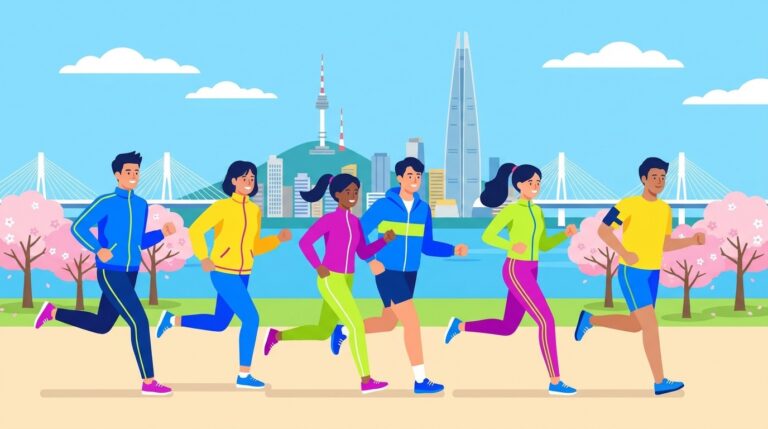
Phase 1: Empathy (Story-Driven Opening)
안녕하세요! 매일한글 에디터입니다.
Imagine stepping into a sunlit cafe in Seongsu-dong on a crisp Saturday morning. A few years ago, you might have overheard conversations revolving around grueling 500-calorie starvation routines, extreme detox teas, or panic dieting before wedding photo shoots. But today, the vibe is strikingly different. At the next table, two young professionals in sleek athletic wear are comparing their smartwatches, proudly debating deadlift form while devouring high-protein salmon poke bowls. On their social feeds, you see the hashtag #오운완 (Workout of the Day Completed) plastered over sweaty, glowing smiles.
For many international learners, the prevailing image of South Korea is still dominated by rigid lookism, K-pop idol diets, and an uncompromising ideal of extreme skinniness. While societal aesthetic pressures certainly haven’t vanished overnight, a massive cultural shift is underway. Korean youth are increasingly rejecting dizzying hunger strikes in favor of 건강미 (Geongangmi)—the vibrant beauty of a resilient body and an energized mind.
If you’re studying intermediate (B2) Korean, mastering this cultural shift is essential. It equips you with the vocabulary to talk about wellness, fitness, and modern lifestyle trends authentically without accidentally repeating outdated or tone-deaf tropes about “dieting.” This guide was built directly from ten years of mentoring expats, students, and language enthusiasts in Seoul. Let’s unpack the real language of modern Korean self-care!
Phase 2: Core Expressions Breakdown
1. 건강미가 넘치다 (Geongangmi-ga neomchida)
- Pronunciation: [Geon-gang-mi-ga neom-chi-da] (Pronounce ‘geon-gang’ like the English words ‘gun’ and ‘gang’, ‘mi’ like ‘me’, and ‘neom-chi-da’ like ‘num-chee-dah’)
- Meaning: Literal: “Healthy beauty overflows” | Real Nuance: “Radiating vitality, athletic muscle tone, and lively energy.”
- K-Culture Moment: Used continuously on variety and sports shows when celebrating energetic stars like Lee Si-young, Hwasa, or the powerhouse athletes on Netflix’s Physical: 100.
- Editor’s Insight: Traditionally, compliments focused on being fragile or pale. 건강미가 넘치다 signals admiration for posture, physical strength, and a vibrant glow.
- Situation Spectrum: Casual ✅ | Semi-formal ✅ | Formal ✅
- 🤔 Think About It: In English, telling someone “You look healthy!” can occasionally be misinterpreted as a polite euphemism for gaining weight. Does 건강미 in Korean carry that baggage? (Spoiler: In contemporary Korean, it is almost purely aspirational!)
2. 오운완 (O-un-wan)
- Pronunciation: [O-un-wan] (Sounds like “Oh-oon-wahn”)
- Meaning: Literal: Abbreviation of “오늘 운동 완료” (Today’s workout completed) | Real Nuance: The definitive daily gym verification flex.
- K-Culture Moment: Mirror selfies at 6:30 AM before heading to the office in Yeouido or Gangnam, showing resistance bands, gym passes, or running routes.
- Editor’s Insight: It is no longer just fitness slang; it’s a social identity badge proving self-discipline, routine consistency, and personal growth (God-saeng).
- Situation Spectrum: Casual ✅ | Semi-formal ⚠️ | Formal 🚫
- 🤔 Think About It: How does abbreviating three words into a catchy three-syllable acronym reflect the fast-paced, community-driven nature of Korean social media?
3. 굶는 건 이제 사양할게요 (Gumnneun geon ije sayanghalgeyo)
- Pronunciation: [Gumn-neun geon i-je sa-yang-hal-ge-yo] (Pronounce ‘gumn’ like ‘goom’ with an n sound, ‘sayang’ like ‘sah-yahng’)
- Meaning: Literal: “I will politely decline starving from now on” | Real Nuance: “I am done with toxic crash diets; I prioritize nourishment.”
- K-Culture Moment: Standing firm when older relatives or peers suggest skipping dinner to slim down before an event.
- Editor’s Insight: 사양하다 is a formal, polite verb of refusal. Using it here adds a touch of witty confidence while establishing a firm personal boundary.
- Situation Spectrum: Casual ✅ | Semi-formal ✅ | Formal ⚠️
- 🤔 Think About It: How does using polite refusal (사양) empower you to push back against intrusive societal commentary without starting an argument?
Phase 3: Textbook Korean vs. Real Korean
Situation 1: Explaining your lifestyle goals
- 📖 교과서 한국어: 저는 살을 빼기 위해 식사를 거르고 있습니다. (Jeoneun sareul ppaegi wihae siksareul georeugo itseumnida. / “I am skipping meals to lose weight.”)
- 🗣️ 진짜 한국어: 굶는 다이어트는 기운만 빠지고, 요즘은 근육량 늘리는 게 대세예요! (Gumnneun daieoteuneun gi-unman ppajigo, yojeumeun geunyungnyang neullineun ge daeseyeyo! / “Starvation diets just drain your energy; these days, building muscle mass is what everyone is doing!”)
- 💡 왜 다를까?: Textbook Korean relies on dry passive descriptions of weight loss. Native speakers now emphasize energy balance (기운), muscle mass (근육량), and prevailing social trends (대세).
Situation 2: Complimenting a friend’s physical transformation
- 📖 교과서 한국어: 몸매가 아주 가늘고 날씬해지셨네요. (Mommega aju ganeulgo nalssinhaejisyeonneyo. / “Your body shape has become very thin and slender.”)
- 🗣️ 진짜 한국어: 몸선이 진짜 탄탄해졌어요! 완전 건강해 보여요. (Momseoni jinjja tantanhaejyeosseoyo! Wanjeon geon-ganghae boyeoyo. / “Your physical frame looks so toned and firm! You look completely healthy and vibrant.”)
- 💡 왜 다를까?: Complimenting someone as merely 가늘다 (fragile/thin) can sound like you think they look sickly or weak. Praising someone as 탄탄하다 (toned/resilient) is the ultimate modern compliment.
Phase 4: K-Culture Deep Dive & Non-Verbal Manners
4-1. 눈치 (Nunchi) & Body Language
- When discussing fitness, Korean social dynamics require distinct eye contact etiquette. Avoid scanning someone from head to toe when offering a compliment, as an elevator gaze can feel scrutinizing. Instead, keep eye contact steady, flash an encouraging two-thumbs-up, or jokingly flex your own arm to create playful solidarity.
- When declining extra drinks or heavy midnight snacks (야식) on a night out, touch your stomach lightly and smile while saying, “내일 아침 운동 가야 해요!” (Naeil achim undong gaya haeyo! / “I have to work out tomorrow morning!”). It establishes a proactive boundary that Korean peers immediately respect.
4-2. Cultural Code: The Rise of “Body Profiles” & Functional Strength
- The phenomenon of the 바디 프로필 (Body Profile)—professional studio photoshoots celebrating physical milestones—has fundamentally altered the conversation. Where Korean media once championed the 42kg “paper doll” aesthetic, viral hits like Physical: 100 (피지컬: 100) and Siren: Survive the Island (사이렌: 불의 섬) highlighted female firefighters, stuntwomen, and crossfitters whose bodies are built for power.
- Today’s self-care is less about fitting into sub-zero clothing sizes and more about measurable metrics: deadlift personal records, InBody muscle-to-fat ratios, and cardiovascular stamina to handle high-demand work environments.
Phase 5: Real-World Roleplay Scenario
Setting: A vibrant fitness salad cafe near Yeouido Hangang Park after a weekend 5K run.
Characters:
* 민지 (Min-ji): A Korean marketing manager and Pilates enthusiast who ditched crash diets three years ago.
* 알렉스 (Alex): An intermediate Korean learner discovering Seoul’s fitness and wellness culture.
Dialogue:
- 민지: 알렉스 씨, 오늘 5킬로 뛰느라 고생 많았어요! 배 많이 고프죠?
(Alex-ssi, oneul o-killo ttwineura gosaeng manasseoyo! Bae mani gopeujyo?)
🎭 Alex, great job running 5K today! You must be starving, right? [Pours chilled lemon water] -
알렉스: 네, 다리가 후들거리는데 기분은 최고예요! 오늘 운동 완료네요.
(Ne, dariga hudeulgeorineunde gibuneun choegoyeyo! Oneul undong wallyoneyo.)
🎭 Yes, my legs are shaking, but I feel incredible! That’s my workout done for the day! [Taps running watch proudly] -
민지: 맞아요, 오운완 인증샷 찍어야죠! 점심은 탄수화물 적당히 넣은 닭가슴살 보울 어때요?
(Majayo, o-un-wan injeung-syat jjigeoyajyo! Jeomsimeun tansuhwamul jeokdanghi neoeun dakgaseumsal bo-ul eottaeyo?)
🎭 Exactly, gotta snap that #OUnWan proof shot! How about a chicken breast bowl with balanced carbs for lunch? [Points at menu] -
알렉스: 좋아요. 예전엔 다이어트한다고 무작정 굶었는데, 이젠 체력이 우선이에요.
(Joayo. Yejeonen daieoteuhandago mujakjeong gulmeonneunde, ijen cheryeogi useonieyo.)
🎭 Perfect. I used to starve mindlessly whenever I dieted, but now stamina comes first. [Smiles with relief] -
민지: 정말 공감해요. 저도 예전엔 체중계 숫자만 봤는데, 요즘은 근육량이 느는 게 훨씬 뿌듯해요.
(Jeongmal gong-gamhaeyo. Jeodo yejeonen chejung-gye sutjaman bwanneunde, yojeumeun geunyungnyangi neuneun ge hwolssin ppudeuthaeyo.)
🎭 I feel you completely. In the past, I only cared about the number on the scale, but nowadays seeing muscle gain feels way more rewarding. [Nods enthusiastically] -
알렉스: 민지 씨는 진짜 건강미가 넘쳐 보여요. 활력이 느껴진다고 할까요?
(Minji-ssineun jinjja geongangmiga neomchyeo boyeoyo. Hwallyeogi neukkyeojindago halkkayo?)
🎭 Minji, you truly radiate healthy beauty. How should I put it… you exude vibrant energy! [Sits upright with genuine admiration] -
민지: 고마워요! 우리 맛있는 단백질 먹고 건강하게 체력 관리해요.
(Gomawoyo! Uri masinneun danbaekjil meokgo geon-ganghage cheryeok gwallihaeyo.)
🎭 Thank you! Let’s fuel up with tasty protein and keep managing our stamina healthily. [Clinks water glass] -
알렉스: 네! 굶는 다이어트는 이제 완전히 졸업입니다!
(Ne! Gumnneun daieoteuneun ije wanjeonhi joreobimnida!)
🎭 Absolutely! I’ve officially graduated from starvation diets forever! [Laughs cheerfully]
🔀 Interactive Decision Branch
Min-ji notices someone at a nearby table drinking only water, complaining about fainting during a crash cleanse. She asks Alex: “저렇게 굶으면서 빼는 방식, 알렉스 씨는 어떻게 생각해요?” (What do you think about losing weight by starving like that?)
- Option A: “건강을 해치면서까지 감량하는 건 의미가 없다고 봐요. 근육과 기초대사량이 더 중요하죠.”
(Geongangeul haechimyeonseokkaji gamnyanghaneun geon uimiga eopdago bwayo. Geunyukkwa gichodaesaryangi deo jung-yohajyo.)
👉 Feedback [Best]: Thoughtful, articulate, and shows a strong grasp of B2 vocabulary like 기초대사량 (basal metabolic rate) and 감량 (weight reduction). -
Option B: “살을 빼려면 그냥 적게 먹는 게 가장 빠르지 않나요?”
(Sareul ppaeryeomyeon geunyang jeokge meongneun ge gajang ppareuji annayo?)
👉 Feedback [Bad]: Defends starvation methods, flying in the face of modern wellness values and shutting down the conversation. -
Option C: “한국 사람들은 원래 다 그렇게 마르게 빼지 않나요?”
(Hanguk saramdeureun wonrae da geureoke mareuge ppaeji annayo?)
👉 Feedback [Risk]: Over-generalizes an entire population based on old stereotypes, which can come across as insensitive.
Phase 6: 10-Second Emotion Shadowing Drill
Practice these natural cadences out loud. The slash (/) indicates a natural micro-pause.
[💪 Confident & Empowered]
“체중계 숫자보다 / 근육량이 늘어나는 게 / 훨씬 뿌듯해요!”
(Chejung-gye sutjaboda / geunyungnyangi neureonaneun ge / hwolssin ppudeuthaeyo!)
“Seeing my muscle mass go up is way more satisfying / than looking at numbers on a scale!”-
[😅 Playful & Self-Aware]
“예전엔 무조건 굶었지만 / 이젠 건강미 넘치는 몸이 / 제 목표예요.”
(Yejeonen mujokeon gulmeotjiman / ijen geongangmi neomchineun momi / je mokpyoyeyo.)
“I used to blindly starve myself in the past / but now, a body overflowing with healthy vitality / is my real goal.” -
[👏 Enthusiastic Camaraderie]
“오늘 진짜 알차게 운동했다! / 우리 오운완 인증샷 남겨요!”
(Oneul jinjja alchage undonghaetda! / Uri o-un-wan injeung-syat namgyeoyo!)
“We really had a solid workout today! / Let’s definitely take our #OUnWan verification photo!”
Phase 7: K-Culture Mini Dictionary
- 바디 프로필 (Badi Peuro-pil / Body Profile): A professional studio photoshoot taken by ordinary people after months of dedicated training to capture their physique at peak conditioning.
- 득근 (Deuk-geun / Muscle Gain): A portmanteau of 얻을 득 (得) and 근육 (筋肉), literally meaning “gaining muscle.” Commonly used like “득근하세요!” (Have a fruitful, muscle-gaining workout!).
- 유지어터 (Yuji-eoteo / Maintenance Dieter): A combination of the Korean word 유지 (maintenance) and 다이어터 (dieter). Refers to someone who has reached their ideal physical conditioning and focuses on maintaining muscle tone sustainably rather than cutting calories.
- 헬린이 (Hel-lin-i / Gym Beginner): A blend of 헬스 (fitness/gym) and 어린이 (child). Used humbly by learners to say “I’m still a gym novice, teach me the ropes!”
Phase 8: Traveler’s Survival Kit
Top 3 Survival Phrases for Wellness-Conscious Travelers
-
단백질 쉐이크나 삶은 계란 있나요?
(Danbaekjil swe-ikeu-na salmeun gyeran innayo?)
“Do you carry protein shakes or hard-boiled eggs?”
💡 Pro Tip: Head to any convenience store (CU, GS25, 7-Eleven). Look for the “단백질 (Protein)” section—Korea has hundreds of RTD high-protein drinks and flavored chicken breasts ready to heat. -
헬스장 1일권 이용 가능한가요?
(Helseujang il-ilgwon iyong ganeunghangayo?)
“Can I purchase a 1-day pass for the gym?”
💡 Pro Tip: Many Korean fitness centers require indoor athletic shoes (실내용 운동화). Bring a separate clean pair in your bag! -
샐러드 드레싱은 따로 담아주실 수 있나요?
(Saelleodeu deuresing-eun ttaro damajusil su innayo?)
“Could you please put the salad dressing on the side?”
💡 Pro Tip: Great for maintaining balance when dining at boutique cafes in Hongdae or Hannam-dong.
Editor’s Travel Note
Before packing your gym bag, download the 네이버 지도 앱 (Naver Map App) to search for “24시 헬스장” (24-hour fitness centers) or “클라이밍장” (bouldering gyms, hugely popular in Seoul). If you’re ordering high-protein meal preps to your hotel or Airbnb, check out healthy meal sections on the 배달의민족 앱 (Baemin Delivery App) under the “샐러드·포케” (Salad & Poke) category.
Phase 9: “한 발 더 깊이” (Cultural Reflection)
In South Korea’s fast-paced society, the traditional collectivist gaze often enforced rigid, standardized beauty definitions. For years, being exceptionally slender was equated with self-control and femininity. However, the modern surge in physical training is redefining bodily autonomy. Developing visible shoulder muscles, running half-marathons along the Han River, and deadlifting body weight are no longer taboo for Korean women—they are emblems of endurance and agency. Strength has replaced fragility as the new gold standard of self-care.
💬 Your Turn: How has the definition of “healthy self-care” shifted in your home country? Has strength training gained ground over restrictive dieting? Share your thoughts below in Korean or English!
Phase 10: FAQ & Common Mistakes
Q: Can I still use the word ‘다이어트’ (diet) if I mean eating healthy rather than starving?
A: Yes! In Korean, 다이어트 broadly means “managing body composition.” However, to clarify that you are focusing on strength, pair it with verbs like 건강하게 다이어트하다 (dieting healthily) or 식단을 챙기다 (curating balanced nutrition).
Q: Is it rude to comment on someone looking muscular in Korea?
A: Not at all! Complimenting someone with “몸이 탄탄해요” (You look firm and toned) or “운동 많이 하셨나 봐요!” (You look like you work out a lot!) is widely appreciated across genders.
Q: What is the difference between ‘마르다’ and ‘날씬하다’?
A: 마르다 generally means “scrawny, skinny, or dried out” and can sometimes sound clinical or negative if used alone (e.g., “너무 말랐어요” can mean “You’re too skinny”). 날씬하다 refers to a sleek, proportional silhouette, while 탄탄하다 specifically highlights solid muscle tone.
🚨 Common Mistakes Alert
- Mistake: Saying “살이 많이 쪘네요” (You’ve gained a lot of weight) as casual small talk.
Correct Action: While older generations sometimes made blunt comments about weight, among modern peers it is considered intrusive. Instead, ask about energy: “요즘 컨디션 좋아 보이네요!” (You look like you’re in great condition lately!). - Mistake: Describing athletic people as “뚱뚱하다” (fat) just because their frame is broad or muscular.
Correct Action: Use “체격이 좋다” (has a great build) or “골격이 탄탄하다” (has a solid, well-built frame). - Mistake: Assuming “헬스” means overall healthcare.
Correct Action: In Korea, 헬스 specifically refers to gym weightlifting/gym facilities (헬스장), not medical wellness.
Phase 11: Action Missions
- 🥉 Bronze Mission (Solo Shadowing): Stand in front of a mirror and recite: “굶는 건 이제 사양할게요. 건강미가 최고예요!” with confident posture.
- 🥈 Silver Mission (Social Media Engagement): Take a photo of your post-workout meal or sneakers, post it on Instagram or your study journal, and tag it with #오운완 and #건강미.
- 🥇 Gold Mission (Real-World Application): Next time a Korean tutor, language exchange partner, or friend mentions exercising, compliment them by saying: “요즘 운동 열심히 하시더니 몸이 정말 탄탄해지셨어요!” (You’ve been working out hard, your physique has become so toned!).
- 🎮 K-Culture Mission: Watch an episode of a Korean reality show (like Physical: 100 or I Live Alone) and write down every time someone uses the word 근육량 (muscle mass) or 체력 (stamina).
Phase 12: Interactive Quiz Challenge
1. Situational Judgment:
Your Korean friend shows you their gym calendar packed with deadlifts and meal preps. How do you compliment them in a modern, culturally attuned way?
(A) 왜 밥을 굶지 않고 많이 먹어요?
(B) 너무 말라서 바람에 날아갈 것 같아요.
(C) 와, 자기관리 진짜 철저하시네요! 건강미가 넘쳐요.
2. Fill-in-the-Blank:
“오늘 아침 러닝 5km 뛰고 ( ) 인증 사진을 인스타그램에 올렸어요!”
(Hint: The 3-syllable viral abbreviation for completing today’s workout)
3. True or False:
In modern Korean culture, calling someone “탄탄하다” is an insult implying they are not skinny enough.
(True / False)
👉 Click to reveal answers & explanations!
- Answer: (C)
Explanation: (C) translates to “Wow, your self-management is so thorough! You overflow with healthy vitality.” (A) questions their nutrition, and (B) uses the outdated trope of fragile skinniness. -
Answer: 오운완 (오늘 운동 완료)
Explanation: This acronym is the gold standard for daily workout check-ins on Korean social platforms. -
Answer: False
Explanation: Calling someone 탄탄하다 (toned, firm, solid) is one of the highest compliments in contemporary Korean fitness and wellness culture!
🎬 Watch Our Daily Videos! (Daily Hangul Official Instagram)
Review the expressions you learned in this article with our fun daily short videos! Check out native pronunciation and real-life nuances in action.
- Instagram @dailyhangul_en







