

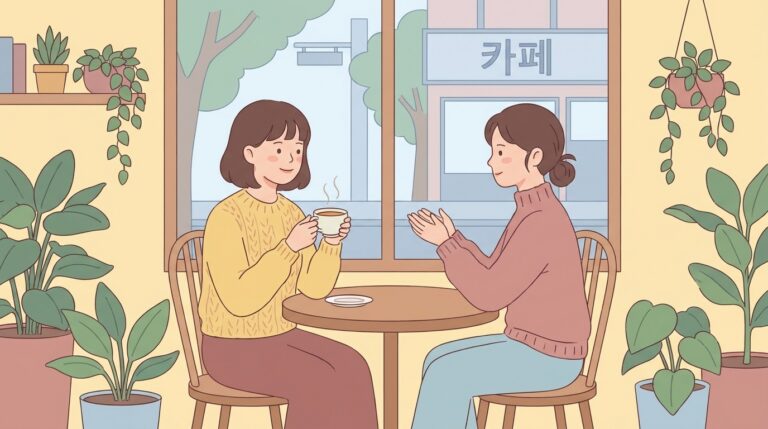
Phase 1: Empathy & Narrative Opening
안녕하세요! 매일한글 에디터입니다. (Hello! I’m your Daily Hangul editor.)
Have you ever watched the K-Drama Daily Dose of Sunshine (정신병동에도 아침이 와요) or My Mister (나의 아저씨) and felt a deep ache in your chest as the characters silently endured suffocating pressure at work until they collapsed? In Korea’s fast-paced society—often analyzed internationally through philosopher Byung-Chul Han’s concept of the Burnout Society (피로사회)—enduring suffering in silence has long been romanticized as diligence. Many of our advanced learners living or working in Korea tell us: “I felt completely drained, but I had no idea how to express that I needed professional psychological help without causing awkward silence or carrying an outdated stigma.”
If you have ever felt hesitant to admit emotional exhaustion in Korean, you are not alone. For years, psychiatric clinics were spoken of in hushed whispers. But modern Korean culture is undergoing a quiet revolution: younger generations are redefining mental health care, comparing clinical depression and burnout to 마음의 감기 (maeum-ui gamgi)—a simple cold of the heart that anyone can catch. Master this guide, built from real coaching logs with expatriate professionals in Seoul, to discuss emotional resilience, burnout, and therapy with the empathy, nuance, and sophistication expected at the C1 level.
Phase 2: In-Depth Breakdown of 3 Core Expressions
1. 마음의 감기 (Maeum-ui gamgi)
- Pronunciation: [Mae-um-ui gam-gi] (Sounds close to “May-um-eui gahm-ghee”, rolling smoothly with soft vowel transitions)
- Meaning: Literal: “A cold of the mind/heart” | Nuance: A normalized, destigmatizing metaphor indicating that mental health dips or depressive episodes are natural, common, and curable illnesses just like catching seasonal influenza.
- K-Culture Moment: Frequently heard on lifestyle counseling broadcasts, wellness podcasts, and modern medical dramas when doctors reassure anxious patients who feel ashamed of taking psychiatric medication.
- Editor’s Insight: This phrase intentionally neutralizes the heavy medical weight of 우울증 (depression). By framing emotional despair as a respiratory virus, it relieves personal guilt and prompts timely medical intervention.
- Situation Spectrum: Casual: ✅ | Semi-formal: ✅ | Formal: ✅
- 🤔 Think About It: Does your native culture compare psychological fatigue to physical, everyday ailments, or does it isolate emotional struggle as an individual moral failing?
2. 멘탈을 추스르다 (Mentareul chuseureuda)
- Pronunciation: [Men-tal-eul chu-seu-reu-da] (Imagine “men-tal” paired with “choo-seu-reu-dah”, uttered with composed gentleness)
- Meaning: Literal: “To gather and tidy up one’s mental state” | Nuance: To actively collect oneself, regain composure, and nurture emotional resilience after undergoing severe trauma, shock, or prolonged stress.
- K-Culture Moment: Used by seasoned variety show hosts or sports stars during press conferences after a devastating public failure or an exhausting project cycle.
- Editor’s Insight: The native verb 추스르다 is traditionally used for neatly straightening out crumpled clothes or lifting fallen crops. Applying it to 멘탈 reflects an intentional, dignified act of active self-repair rather than passive resignation.
- Situation Spectrum: Casual: ✅ | Semi-formal: ✅ | Formal: ✅
- 🤔 Think About It: Contrast the proactive nuance of 추스르다 (gathering oneself) with simply saying “I need to relax.” How does the imagery of tidying up an internal mess change your emotional agency?
3. 문턱을 낮추다 (Munteogeul natchuda)
- Pronunciation: [Mun-teog-eul nat-chu-da] (Pronounce like “Moon-tuh-geul naht-choo-dah”, keeping the stop consonant firm)
- Meaning: Literal: “To lower the doorsill/threshold” | Nuance: To make specialized services—especially psychiatric consultations and psychological counseling—accessible, casual, and free of social barriers or fear.
- K-Culture Moment: Prominently featured in Korean public health campaigns, progressive corporate HR policies, and youth-oriented mental health advocacy content.
- Editor’s Insight: Traditional Korean wooden architecture features a raised 문턱 (doorsill) that separates distinct spaces. Lowering that threshold symbolizes tearing down institutional shame, allowing people to step inside clinics without fear of social scrutiny.
- Situation Spectrum: Casual: ⚠️ | Semi-formal: ✅ | Formal: ✅
- 🤔 Think About It: Why do modern institutional changes in Korea rely so heavily on spatial metaphors to signal psychological inclusivity?
Phase 3: Textbook Korean vs. Real Korean
Situation 1: Suggesting Professional Therapy to a Burnt-Out Colleague
- 📖 교과서 한국어 (Textbook): 정신과에 방문하여 전문적인 치료를 받아보시는 것이 어떻겠습니까? (Jeongsingwa-e bangmunhayeo jeonmunjeogin chiryoreul bad-abosineun geosi eotteokkesseumnikka?) — “How about visiting the department of psychiatry and receiving professional treatment?”
- 🗣️ 진짜 한국어 (Real-World): 요즘 번아웃 온 것 같은데, 감기처럼 가볍게 상담 한번 받아보는 건 어때요? (Yojeum beon-aut on geot gateunde, gamgicheoreom gabyeopge sangdam hanbeon bad-aboneun geon eottaeyo?) — “You seem burnt out lately; why not drop by for counseling as lightly as you’d treat a cold?”
- 💡 왜 다를까? (Why the Difference?): The clinical term 정신과 (psychiatry) carries a stark, clinical weight in daily dialogue. Modern native speakers prefer conversational softening—pairing 번아웃 (burnout) with the metaphor 감기처럼 가볍게 (lightly, like a cold) to prevent the listener from feeling defensive or alarmist.
Situation 2: Explaining That You Are Attending Counseling to Rebalance Yourself
- 📖 교과서 한국어 (Textbook): 저는 심각한 심리적 스트레스를 겪고 있어서 의학적 도움을 받고 있습니다. (Jeoneun simgakhan simrijeok seuteureseureul gyeokgo isseoseo uihakjeok doumeul batgo isseumnida.) — “Because I am experiencing severe psychological stress, I am receiving medical help.”
- 🗣️ 진짜 한국어 (Real-World): 마음이 좀 버거워서 마음 클리닉 다니면서 멘탈 추스르고 있어요. (Maeumi jom beogeowoseo maeum keullinik danimyeonseo mental chuseureugo isseoyo.) — “My heart felt a bit weighed down, so I’ve been visiting a wellness clinic to reset and gather myself.”
- 💡 왜 다를까? (Why the Difference?): Advanced natural Korean avoids self-victimizing diagnostic declarations like 심각한 심리적 스트레스. Instead, native speakers choose evocative affective verbs like 버겁다 (to feel beyond one’s capacity) and soft clinic terms like 마음 클리닉.
Phase 4: K-Culture Deep Dive & Non-Verbal Manners
4-1. Nunchi (눈치) & Gentle Non-Verbal Etiquette
Discussing burnout requires high-level 눈치 (situational awareness and emotional tact). In Korean culture, jumping straight into inquisitive questions like “Are you taking anti-depressants?” is a boundary violation. When broaching this subject:
* Eye Contact & Angles: Never maintain an intense, interrogative gaze. Sit slightly diagonal (45 degrees) rather than square across the table. Look down at your warm beverage before looking up gently.
* The Head Tilt (고개 끄덕임): Slow, rhythmic nodding with lowered shoulders signals psychological safety, communicating: “I recognize your exhaustion without judging it.”
* Lowering Vocal Register: Drop your vocal pitch half an octave and lengthen ending syllables (e.g., 그랬구나… 힘겨웠겠네), avoiding high-pitched performative cheerfulness which feels invalidating.
4-2. Cultural Code: The Shift from ‘정신병원’ to ‘정신건강의학과’
In 2011, South Korea formally revised its statutory medical terminology, transforming the stigmatized label 정신과 (psychiatry) into 정신건강의학과 (Department of Mental Health Medicine). Dramas like It’s Okay, That’s Love (괜찮아, 사랑이야) paved the way, while current hits like Daily Dose of Sunshine explicitly demystify clinical wards. Modern urban Koreans refer to these spaces as 마음 클리닉 (Mind Clinics) located in ordinary commercial complexes next to coffee shops and dental offices. Seeking support is increasingly celebrated among Korean urbanites as an elite demonstration of 자기 관리 (diligent self-care and emotional governance).
Phase 5: Real-World Roleplay Scenario
Setting: A quiet rooftop garden of an IT company in Pangyo at 6:30 PM. Alex (a foreign senior project manager) notices his trusted Korean team lead, Min-jun, staring blankly into space, clutching his third iced Americano of the day.
- Min-jun: 하… 요즘은 아침에 눈뜨는 게 솔직히 너무 두려워요. (Ha… yojeumeun achime nuntteuneun ge soljikhi neomu duryeowoyo.)
🎭 행동 지문: 마른 세수를 하며 깊은 한숨을 내쉰다. (Rubs his dry face and lets out a deep sigh.)
“Phew… to be honest, I’m terrified of opening my eyes in the morning these days.” -
Alex: 민준 님, 요즘 업무 강도가 한계치를 넘은 것 같아요. (Min-jun nim, yojeum eommu gangdoga hangyechireul neomeun geot gat-ayo.)
🎭 행동 지문: 따뜻한 캔커피를 건네며 조용히 옆자리에 앉는다. (Hands over a warm canned coffee and quietly sits down beside him.)
“Min-jun, it feels like the current workload has passed your threshold.” -
Min-jun: 제가 나약해서 그런 걸까요? 다들 버티는데 저만 멘탈이 무너지는 느낌이에요. (Jega nayakhaeseo geureon geolkkayo? Dadeul beotineunde jeoman mentari muneojineun neukkim-ieyo.)
🎭 행동 지문: 자책하듯 시선을 바닥으로 떨군다. (Drops his gaze to the floor self-deprecatingly.)
“Is it because I’m weak? Everyone else endures it, but I feel like I’m the only one falling apart.” -
Alex: 전혀 아니에요. 감기 바이러스 들어오면 기침하듯, 마음에도 과부하가 걸린 거죠. (Jeonhyeo anieyo. Gamgi baireoseu deureoomyeon gichimhadeut, maeumedo gwabuhaga geollin geojyo.)
🎭 행동 지문: 차분하고 단호한 목소리로 공감한다. (Empathizes in a calm and reassuring tone.)
“Not at all. Just as you cough when a cold virus enters, your heart has simply encountered an overload.” -
Min-jun: 그냥 주말에 푹 자면 괜찮아질 줄 알았는데, 회복이 잘 안 되네요. (Geunyang jumare puk jamyeon gwaenchannajil jul aranneunde, hoebogi jal an doeneyo.)
🎭 행동 지문: 씁쓸한 표정으로 캔을 만지작거린다. (Fiddles with the can with a bitter expression.)
“I thought getting plenty of sleep over the weekend would fix it, but I’m just not bouncing back.” -
Alex: 심리적 고통도 감기 치료처럼 전문적인 도움을 문턱 낮춰 받아야 해요. (Simrijeok gotongdo gamgi chiryocheoreom jeonmunjeogin doumeul munteok natchwo bad-aya haeyo.)
🎭 행동 지문: 눈높이를 맞추며 다정하게 말한다. (Meets his eye level and speaks with warmth.)
“Emotional pain, just like treating a cold, needs professional support without social hesitation.” -
Min-jun: 정신건강의학과 기록이 남으면 어쩌나 걱정돼서 망설여졌어요. (Jeongsingeon-gang-uihakgwa girogi nameumyeon eojjeona geokjeongdwaeseo mangseoryeojyeosseoyo.)
🎭 행동 지문: 조심스럽게 속마음을 털어놓는다. (Carefully confides his honest concern.)
“I hesitated because I was worried about having a medical record in psychiatry.” -
Alex: 요즘은 상담 문턱도 낮아졌고 익명 보장 클리닉도 많으니 가볍게 다녀와요. (Yojeumeun sangdam munteokdo naj-ajyeotgo ingmyeong bojang keullinikdo maneuni gabyeopge danyeowayo.)
🎭 행동 지문: 어깨를 가볍게 토닥여 준다. (Gently pats him on the shoulder.)
“Nowadays, barriers to counseling are low and many clinics guarantee discretion, so consider a casual visit.”
🔀 Interactive Choice Point
How should Alex conclude his advice to give Min-jun agency and relief?
* Option A (Best): “내일 오후 반차 내시고, 저랑 회사 근처 마음 클리닉에 감기약 타러 가듯 가볍게 들러볼래요? 제가 동행해 줄게요.” (Naeil ohu bancha naesigo, jeorang hoesa geuncheo maeum keullinike gamgiyak tareo gadeut gabyeopge deulleobollaeyo? Jega donghaenghae julgeyo.)
Feedback: Best! Treats the appointment casually like picking up cold medicine and offers concrete companionship without being intrusive.
* Option B (Risk): “정신과 약 먹으면 멍해진다고 하던데, 일단 주말에 등산이나 가면서 참아보세요.” (Jeongsingwa yak meog-eumyeon meonghaejindago hadeonde, ildan jumare deungsan-ina gamyeonseo cham-aboseyo.)
Feedback: Risk! Perpetuates pharmacological stigma and reinforces the toxic expectation of solitary endurance (참기).
* Option C (Bad): “팀장님이 흔들리시면 우리 프로젝트는 어떡합니까? 정신력으로 버티세요.” (Timjangnimi heundeullisimyeon uri peurojekteuneun eotteokhamnikka? Jeongsinnyeogeuro beotiseyo.)
Feedback: Bad! Emotionally dismissive and guilt-inducing, representing the exact toxic self-exploitation described in Han’s Burnout Society.
Phase 6: 10-Second Emotion Shadowing Drill
Imitate these lines aloud. Focus strictly on the pitch bends indicated by / and the authentic emotional mindset inside the brackets.
[🥺 깊은 공감과 위로를 담아 / With deep empathy and solace]
마음이 아픈 건 / 그저 감기에 걸린 것뿐이에요. / 자책하지 마세요.
(Maeumi apeun geon / geujeo gamgie geollin geotppunieyo. / Jachaekhaji maseyo.)
“Having an aching heart / is simply catching a cold. / Please do not blame yourself.”-
[🌿 차분하고 단호한 격려 / With calm, grounded reassurance]
전문가의 도움을 받는 건 / 부끄러운 게 아니라 / 나를 지키는 용기예요.
(Jeonmun-gaui doumeul banneun geon / bukkeureoun ge anira / nareul jikkineun yong-gieyo.)
“Seeking expert guidance / is never a matter of shame / but the courage to protect oneself.” -
[🤝 든든한 연대감 / With steadfast solidarity]
멘탈이 흔들릴 땐 / 잠시 쉬어가도 괜찮아요. / 제가 곁에서 도울게요.
(Mentari heundeullil ttaen / jamsi swieogado gwaenchannayo. / Jega gyeot-eseo doulgeyo.)
“When your emotional footing trembles / stepping aside to pause is perfectly fine. / I will be right here to assist you.”
Phase 7: K-Culture Mini Dictionary
- 번아웃 증후군 (Beon-aut Jeunghugun) | Burnout Syndrome
Usage: Widely discussed in corporate Korea. Refers to severe emotional exhaustion and cynicism arising from continuous hyper-performance and self-exploitation. - 마음 클리닉 (Maeum Keullinik) | Mind/Wellness Clinic
Usage: Modern, approachable rebranding of private outpatient psychiatric clinics in metropolitan areas like Gangnam and Pangyo. - 회복탄력성 (Hoebok-tallyeokseong) | Emotional Resilience
Usage: Frequently cited in workplace leadership training and psychology books; describes the psychological bounce-back capacity after adversity. - 자기돌봄 (Jagi-dolbom) | Self-Care / Self-Nurturing
Usage: Progressive cultural buzzword emphasizing mindfulness, boundary setting, and guilt-free leisure away from collective workplace obligations.
Phase 8: The Traveler & Expat Survival Kit
Top 3 Survival Expressions for Medical Assistance
- 가벼운 수면장애와 우울감으로 상담받고 싶어요.
(Gabyeoun sumyeon-jang-aewa u-ulgameuro sangdambadgo sipeoyo.)
Pro Tip: Use this at front desks. It frames your visit around mild sleep disturbance and low mood, ensuring a smooth, low-pressure intake interview. - 건강보험 비급여로 전액 본인 부담 처리해 주세요.
(Geongang-boheom bigeub-yeoro jeonaek bonin budam cheorihae juseyo.)
Pro Tip: For expats concerned about medical records during visa renewals or employment checks, asking for non-reimbursed self-pay (비급여) ensures no automated diagnosis code is transmitted to public insurance servers. - 영어로 진료 가능한 선생님이 계실까요?
(Yeong-eoro jinryo ganeunghan seonsaengnimi gyesilkkayo.)
Pro Tip: Useful in international clinics across Itaewon, Hongdae, and Gangnam where bilingual board-certified psychiatrists practice.
Editor’s Travel Note: Healthcare Access Logistics
If you find yourself experiencing an acute emotional crisis in Korea, do not hesitate. You can use the Naver Map search for mental health clinics typing 정신건강의학과 or 심리상담센터. Most neighborhood clinics accept walk-ins during weekday mornings, though afternoon therapy sessions often require 1–2 weeks advance booking. Consultations typically cost between 30,000 to 70,000 KRW with National Health Insurance (NHI), and domestic credit cards or T-money transit payments are universally processed at medical payment kiosks.
Phase 9: Going Deeper (인문학 에세이)
In his acclaimed treatise The Burnout Society, Korean-born philosopher Byung-Chul Han highlights that the 21st-century subject is no longer enslaved by an external master, but voluntarily exploits themselves under the illusion of freedom and hyper-achievement (성과사회). In Korea, where historical collectivism rapidly hybridized with hyper-capitalism, emotional distress was long treated as a failure of grit (정신력). However, speaking openly about seeking therapy is not merely personal relief; it is a profound sociocultural reclamation. By openly describing therapy as treating 마음의 감기, contemporary speakers are actively dismantling decades of internal tyranny and replacing aggressive competition with mutual tenderness.
💬 Your Turn: Have you ever pushed yourself past your breaking point because resting felt like failure? Share your thoughts below in Korean using the expression 멘탈을 추스르다!
Phase 10: FAQ & Common Pitfalls
Q: Will visiting a mental health clinic in Korea affect my employment or E-7 visa status?
A: No. Under South Korea’s strict Medical Service Act and Personal Information Protection Act, employers and immigration officials have zero legal access to your psychiatric diagnostic history. If you still feel cautious, you can opt for 일반/비급여 (non-insurance self-pay), leaving no national health record trail.
Q: What is the exact difference between ‘정신건강의학과’ and ‘심리상담센터’?
A: 정신건강의학과 is a specialized medical clinic run by licensed medical doctors (M.D. psychiatrists) who can diagnose illnesses, write prescriptions for medication, and perform brief psychotherapy. A 심리상담센터 is staffed by clinical or counseling psychologists who focus entirely on in-depth, non-pharmacological talk therapy without medication privileges.
Q: Is it considered rude to ask a Korean friend if they are seeing a therapist?
A: Yes, direct inquiries like “너 정신과 다녀?” are excessively intrusive. Instead, ask about their overall well-being: 요즘 마음은 좀 어때요? 편안해요? Allow them to introduce the topic of clinical care first.
🚨 Common Mistakes Warning Board
- ❌ Mistake 1: Translating “I’m depressed” directly as “저 지금 정신병 있어요” (I have a mental illness).
Correct Action: Say “요즘 마음이 많이 가라앉고 버겁네요” (My heart feels weighed down and overwhelmed lately). - ❌ Mistake 2: Using 정신병원 (psychiatric asylum/hospital) when referring to a local outpatient private clinic.
Correct Action: Always use 정신건강의학과 or 마음 클리닉 for outpatient visits. - ❌ Mistake 3: Offering dismissive motivational advice like “힘내세요! 마음 단단히 먹어요!” (Cheer up! Steel your mind!).
Correct Action: Validate their struggle: “지금까지 버틴 것만으로도 대단해요. 무리하지 마세요” (Enduring this far is already incredible. Please don’t push yourself).
Phase 11: Action Missions
- 🥉 Bronze Mission (Solo Practice): Stand before a mirror, adopt the gentle Korean head tilt, and practice saying: “마음의 감기일 뿐이니, 문턱을 낮추고 상담받아 봐요” smoothly three times within 15 seconds.
- 🥈 Silver Mission (Social Sharing): Post an encouraging quote or Korean lyric about emotional healing on your Instagram Story or study notes, tagging your language partner with
#마음의감기 #회복탄력성. - 🥇 Gold Mission (Real-World Application): The next time a Korean coworker or study partner mentions feeling fatigued, avoid the cliché 힘내세요. Instead, use: “무리해서 버티지 마시고, 멘탈 추스를 수 있게 푹 쉬어요”.
🎮 K-Culture Mission: Watch Episode 1 of the K-Drama Daily Dose of Sunshine (정신병동에도 아침이 와요). Spot when characters discuss psychological exhaustion and write down how medical staff gently comfort incoming patients.
Phase 12: Interactive Quiz Challenge
Test your mastery of C1-level psychological empathy expressions!
- Situational Judgment: Your friend reveals they cannot sleep due to crushing project stress and feel like a failure. Which response exhibits the highest cultural tact?
- (A) 정신력이 약해서 그래요. 운동하세요.
- (B) 마음의 감기처럼 과부하가 온 것뿐이에요. 가볍게 클리닉에서 멘탈 추슬러 봐요.
- (C) 회사 그만두면 다 해결될 문제예요.
- Fill-in-the-Blank (C1 Idiomatic Nuance):
정신건강의학과 방문을 부끄러워하지 말고, 병원의 (________)을 낮추어 편안하게 상담받아야 합니다.
(Hint: Literal term for ‘doorsill’ / barrier) -
True or False Cultural Check:
In modern urban South Korea, going to a 마음 클리닉 for burnout is increasingly recognized as a form of proactive 자기 관리 (self-management) rather than an irredeemable social flaw. (True / False)
Click to view answers and explanations
- Correct Answer: (B)
Explanation: Option (B) uses the destigmatizing metaphor 마음의 감기 (cold of the heart) and 멘탈 추스르다 (rebuilding resilience), offering empathetic care without dismissal or reckless career advice. -
Correct Answer: 문턱 (Munteok)
Explanation: The idiom 문턱을 낮추다 means to lower thresholds/barriers, making clinical psychological support accessible. -
Correct Answer: True
Explanation: South Korea’s younger demographics actively reframe mental healthcare as responsible emotional hygiene and wellness.
🎬 Watch Our Daily Videos! (Daily Hangul Official Instagram)
Review the expressions you learned in this article with our fun daily short videos! Check out native pronunciation and real-life nuances in action.
- Instagram @dailyhangul_en







