

Phase 1: Empathy (Story-Driven Opening)
안녕하세요! 매일한글 에디터입니다.
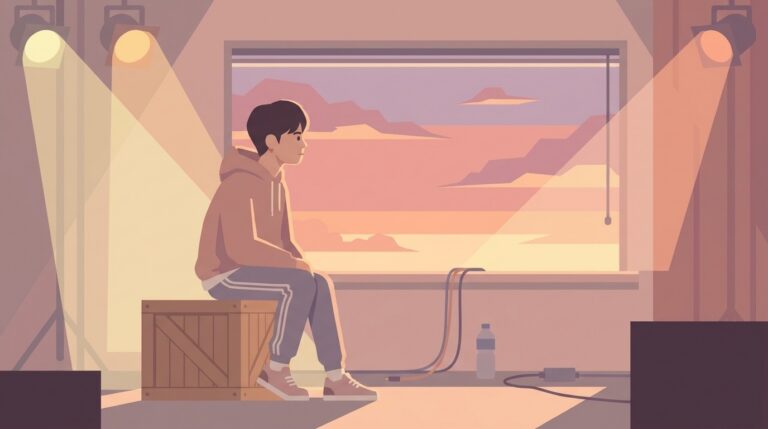
Imagine the scene: thousands of fans screaming under dazzling arena strobe lights, an idol group executing impossibly sharp choreography, flashing flawless smiles through synchronized high notes. But step backstage into the quiet dressing rooms at 1 AM. You might see a seventeen-year-old trainee icing bruised knees, scrolling through thousands of vicious comments on their phone, struggling with insomnia and anxiety before tomorrow’s 5 AM camera rehearsal.
As K-Culture shatters global streaming records and production investments scale into astronomical budgets, a critical question has taken center stage: What is the human cost of this glittering success? Behind the blockbuster dramas and chart-topping hits lies an urgent conversation about artist human rights, relentless trainee competition, and systemic mental healthcare.
Learning Korean at the B2 level means looking beyond surface-level pop lyrics to understand the societal discourses shaping modern Korea. By mastering the expressions in this guide, you will be equipped to discuss social sustainability, empathy, and workplace wellness in authentic, culturally nuanced Korean. Let’s dive behind the velvet curtain together.
Phase 2: 3 Key Expressions Deep Dive
1. 멘탈을 챙기다 (Mentaleul chaenggida)
- Pronunciation: men-tal-eul chaeng-gi-da (Sounds like the English word “mental” paired with chaeng-ghee-dah, which mimics gathering items into a bag)
- Meaning: Literal: “To pack/gather one’s mentality” | Nuance: To safeguard one’s emotional resilience and take proactive care of one’s psychological wellness under intense pressure.
- K-Culture Moment: Seen frequently on idol survival programs when a group leader comforts a sobbing teammate after a harsh mentor evaluation: “울지 말고 우리 멘탈 챙기자” (Don’t cry; let’s pull our mental strength together).
- Editor’s Insight: While textbook Korean teaches “정신을 차리다” (to pull oneself together / wake up), “멘탈을 챙기다” implies nurturing, compassionate self-care rather than harsh self-discipline.
- Situation Spectrum: Casual: ✅ | Semi-formal: ✅ | Formal: ⚠️
- 🤔 Think About It: In your culture, do you treat mental wellness as an individual responsibility or something nurtured collectively by your team?
2. 악플에 시달리다 (Akpeure sidallida)
- Pronunciation: ak-peul-e si-dal-li-da (Sounds like awk-peul + see-dahl-lee-dah)
- Meaning: Literal: “To be tormented by malicious comments” | Nuance: To suffer prolonged emotional distress caused by cyberbullying and hate comments.
- K-Culture Moment: Featured in Korean documentary investigations addressing idol welfare: “많은 아이돌들이 익명의 악플에 시달리고 있습니다” (Many idols are suffering relentlessly from anonymous hate comments).
- Editor’s Insight: The passive verb “시달리다” vividly portrays an exhausting, helpless state of continuous torment inflicted by external forces.
- Situation Spectrum: Casual: ✅ | Semi-formal: ✅ | Formal: ✅
- 🤔 Think About It: How does your native language describe the psychological weight of online toxicity compared to the physical imagery of “시달리다”?
3. 쉼표가 필요하다 (Swimpyoga piryohada)
- Pronunciation: swim-pyo-ga pi-ryo-ha-da (Sounds like shweem-pyo-gah pee-ryo-hah-dah, with swim echoing the gentle sigh of resting)
- Meaning: Literal: “To need a comma” | Nuance: To take a necessary, temporary pause or mental health hiatus before hitting burnout.
- K-Culture Moment: Often used in official agency press statements when an artist takes medical leave: “지금은 아티스트에게 잠시 쉼표가 필요한 시기입니다” (Now is a time when the artist requires a brief comma).
- Editor’s Insight: Notice that it’s a “쉼표” (comma), not a “마침표” (period/full stop). It beautifully reassures fans that the journey is paused, not over.
- Situation Spectrum: Casual: ✅ | Semi-formal: ✅ | Formal: ✅
- 🤔 Think About It: Why does modern society often view rest as an interruption rather than an essential punctuation mark in a creative career?
Phase 3: Textbook Korean vs. Real Korean
Situation 1: Warning someone about severe emotional exhaustion
- 📖 교과서 한국어: 스트레스를 너무 많이 받지 마세요. (Seuteureseureul neomu mani batji maseyo. / Please do not receive too much stress.)
- 🗣️ 진짜 한국어: 멘탈 털리지 않게 마음 잘 추스르세요. (Mental teol-li-ji an-ge maeum jal chuseureuseyo. / Make sure your emotional core doesn’t get completely drained; take care of your heart.)
- 💡 왜 다를까?: Native speakers use “털리다” (to be stripped/plundered) to describe feeling completely depleted by pressure, moving beyond clinical textbook terms.
Situation 2: Announcing a temporary break due to burnout
- 📖 교과서 한국어: 건강 문제로 인해 활동을 중단합니다. (Geongang munjero inhae hwaldong-eul jungdanhapnida. / Activities are halted due to health issues.)
- 🗣️ 진짜 한국어: 번아웃이 와서 잠시 재충전의 시간을 갖고 있어요. (Beon-a-usi waseo jamsi jaechungjeon-ui siganeul gatgo isseoyo. / Taking time to recharge right now because burnout hit.)
- 💡 왜 다를까?: Rather than framing hiatuses as cold institutional shutdowns, native speakers frame them as “재충전” (recharging a depleted battery).
Phase 4: K-Culture Deep Dive & Non-Verbal Manners
4-1. 눈치 (Nunchi) & Compassionate Body Language
When discussing mental health in Korea, direct bluntness can feel intrusive or judgmental. Employ careful Nunchi (situational perceptiveness):
* Softened Eye Contact: When someone opens up about feeling overwhelmed, do not stare intensely. Lower your gaze slightly and nod slowly to convey a safe space.
* Hedging Prefaces: Soften serious opinions with cushioning expressions such as “조심스럽지만…” (Speaking cautiously…) or “제 생각에는…” (In my humble opinion…).
* Empathetic Sighing: A gentle, quiet “에고…” (Aigo/Oh dear) with a mild head tilt signals that you feel their pain without turning it into theatrical pity.
4-2. Cultural Code: The Evolution of Trainee Rights
Historically, the hyper-competitive trainee system operated under rigid contracts often nicknamed “노예계약” (slave contracts). However, widespread public advocacy and international fandom solidarity have triggered a cultural shift. Major agencies now mandate standard fair contracts (표준계약서), on-site psychological therapists, and restrictions on minor trainee work hours. Moreover, fandoms no longer just promote music; they organize proactive “선플 운동” (positive comment campaigns) and compile legal evidence to help agencies penalize malicious cyberbullies. Sustainable K-culture is transitioning from high-yield survival to long-term artist care.
Phase 5: Real-Life Roleplay Scenario
Setting: A quiet lounge at a Seoul entertainment company. Minseo (Head of Artist Welfare) is conferring with Alex (a newly hired international performance coach).
- Minseo: 요새 데뷔 조 연습생들 표정이 너무 지쳐 보여요. (Yosae debwi jo yeonseupsaengdeul pyojeongi neomu jichyeo boyeoyo. / “The debut-line trainees look so exhausted these days.”) 🎭 Sighs softly while reviewing a packed weekly evaluation calendar.
- Alex: 맞아요. 매일 14시간 연습에 악플까지 찾아보고 있더라고요. (Majayo. Maeil yeolnesi-gan yeonseube akpeulkkaji chajabogo itdeoragoyo. / “Exactly. On top of 14 hours of daily rehearsals, they are constantly reading hate comments.”) 🎭 Frowns with genuine concern, pointing at his tablet.
- Minseo: 어린 나이에 겪기엔 경쟁 압박이 너무 심해요. (Eorin naie gyeokgien gyeongjaeng apbagi neomu simhaeyo. / “The competitive pressure is far too brutal for such young kids.”) 🎭 Clasps her hands tightly on the conference table.
- Alex: 회사 차원에서 정기 심리 상담을 필수로 넣어야 하지 않을까요? (Hoesa cha-woneseo jeonggi simni sangdameul pilssuro neoeoya haji aneulkkayo? / “Shouldn’t the company mandate regular psychological counseling?”) 🎭 Leans forward earnestly.
- Minseo: 전적으로 동감해요. 기술 연습보다 멘탈을 챙기는 게 먼저예요. (Jeonjeogeuro donggamhaeyo. Gisul yeonseupboda mentaleul chaenggineun ge meonjeoyeyo. / “I agree completely. Safeguarding their mental wellness comes before technical drills.”) 🎭 Nods decisively.
- Alex: 건강한 마음이 뒷받침되어야 지속 가능한 활동이 가능하니까요. (Geonganghan maeumi dwitbatchimdoeeoya jisok ganeunghan hwaldongi ganeunghanikkayo. / “Because sustainable careers are only possible when supported by a healthy mind.”) 🎭 Taps his notebook affirmatively.
- Minseo: 당장 이번 주부터 악플 필터링과 ‘쉼표 데이’를 도입합시다. (Dangjang ibeon jubuteo akpeul pilteoringgwa ‘swimpyo dei’reul doiphapsida. / “Let’s implement comment filtering and a mandatory weekly ‘Comma Day’ starting this week.”) 🎭 Smiles with resolve and begins drafting a memo.
- Alex: 정말 훌륭한 결정입니다. 함께 시스템을 바꿔봐요. (Jeongmal hullyunghan gyeoljeong-imnida. Hamkke siseutemeul bakkwobwayo. / “That is a wonderful decision. Let’s transform this system together.”) 🎭 Exhales a warm sigh of relief.
🔀 Interactive Branching Choices
If you were Alex, how would you respond to a company executive demanding even harsher schedules?
* Option A: “데뷔가 코앞인데 쉬면 안 됩니다. 더 혹독하게 훈련시키죠!” (Debwiga ko-ap-inde swimyeon an doemnida. Deo hokdokhage hunryeonsikijyo! / Debut is right around the corner; they can’t rest. Let’s train them even more severely!)
Feedback: [Bad] This outdated mentality triggers physical injuries and severe emotional breakdown, perpetuating toxic industry cycles.
* Option B: “연습생들에게 각자 알아서 멘탈 관리하라고 말해둘게요.” (Yeonseupsaengdeurege gakja araseo mental gwanliharago malhaedulgeyo. / I’ll tell trainees to manage their mental wellness on their own.)
Feedback: [Risk] Placing institutional pressure on underage trainees without systemic support leads directly to burnout.
* Option C: “지속 가능한 활동을 위해 전담 상담사와 보호 시스템을 강화해야 합니다.” (Jisok ganeunghan hwaldong-eul wihae jeondam sangdamsawa boho siseutemeul ganghwahaeya hamnida. / We must reinforce dedicated counselors and human protection systems for long-term sustainability.)
Feedback: [Best!] Thoughtful, professional, and directly addresses the core prerequisite for lasting artistic growth.
Phase 6: 10-Second Emotion Shadowing Drill
Practice these lines out loud. Notice how pauses (marked by /) allow empathy to resonate:
[🥺 따뜻하고 진심 어린 목소리로]
힘들 때는 / 억지로 버티지 말고 / 잠시 쉬어가도 괜찮아요.
(Himdeul ttaeneun / eokjiro beotiji malgo / jamsi swieogado gwaenchanayo.)
“When it’s overwhelming, / don’t force yourself to endure it; / it is completely okay to pause.”-
[💪 결연하고 단호한 어조로]
건강한 환경이 없으면 / K-컬처의 미래도 / 지속될 수 없습니다.
(Geonganghan hwangyeongi eopseumyeon / K-keolcheoui miraedo / jisokdoel su eopseumnida.)
“Without a healthy environment, / the future of K-culture / cannot be sustained.”
Phase 7: K-Culture Mini Dictionary
- 번아웃 (Beon-a-ut) | Burnout | Widely adopted in creative industries to normalize discussing physical and mental depletion without stigma.
- 악플러 (Akpeulleo) | Cyberbully / Malicious Commenter | A compound of Sino-Korean “악(惡 – evil)” and English “reply/er”. Used in legal notices by entertainment agencies.
- 선플 (Seonpeul) | Uplifting / Kind Comments | Derived from “선(善 – good)” and English “reply”. Refers to active fan campaigns posting loving messages to bury toxicity.
- 멘탈 케어 (Mental ke-eo) | Psychological Care / Mindset Support | Corporate and agency terminology for professional counseling services offered to public figures and trainees.
Phase 8: Traveler’s Survival Kit
Survival Expressions TOP 3
- 조금 천천히 가도 괜찮아요. (Jogeum cheoncheonhi gado gwaenchanayo.)
Meaning: “It’s okay to go a little slower.”
Pro Tip: Use this soothing phrase when a friend or coworker feels stressed about a tight itinerary or work goal. - 마음이 많이 지치셨죠? (Maeumi mani jichisyeotjyo?)
Meaning: “Your heart must be feeling very worn out, right?”
Pro Tip: A sophisticated B2 empathy phrase showing deep recognition of someone’s invisible struggles. - 잠시 바람 좀 쐬고 올게요. (Jamsi baram jom ssoego olgeyo.)
Meaning: “I will step outside for a breath of fresh air.”
Pro Tip: The most polite, natural way to step out of a tense meeting room or noisy social setting without raising alarms.
Editor’s Travel Note
When Seoul’s fast-paced energy feels overwhelming, step away from bright entertainment districts like Hongdae or Gangnam. Take a quiet healing stroll along the historic stone walls of Jeongdong-gil, or explore 한국청소년상담복지개발원 포털 사이트 to read how Korean organizations offer youth counseling resources. For peaceful city transit without stress, install the 네이버 지도 앱 다운로드 to locate calm temple-stay hubs and urban forested parks.
Phase 9: “One Step Deeper” (Reflective Question)
Korea’s compressed economic development in the late 20th century cultivated an ethos of “빨리빨리” (hurry, hurry) and relentless resilience (깡). While this unmatched work ethic propelled K-pop and K-dramas onto the international stage, society is now collectively reconsidering whether relentless suffering should ever be a prerequisite for artistic passion. Today’s younger generation is pioneering an essential value shift: prioritizing human rights and emotional sustainability over rapid industrial output.
💬 Your Turn: How does your home country’s creative or sports industry balance young talent development with mental health protection? Share your thoughts below in Korean or English!
Phase 10: FAQ & Avoiding Misunderstandings
Q: Is talking about mental health still taboo in South Korea?
A: The landscape has evolved rapidly over the past five years. While older generations may still hold conservative views, modern media, mainstream celebrities, and university communities openly discuss counseling, panic disorders, and depression. Terminology like “멘탈 관리” (mindset management) is now standard workplace vocabulary.
Q: What is the legal difference between an ordinary comment and an ‘악플’?
A: Under Korean penal law and the Information and Communications Network Act, comments containing defamatory falsehoods or malicious personal insults are criminally punishable. Agencies frequently issue legal warnings stating “선처 없는 법적 대응” (strict legal response without leniency).
Q: Can I use “멘탈” in professional business meetings?
A: While common in everyday business and entertainment offices, in formal executive boardrooms or legal documents, use the formal terms “심리적 안정” (psychological stability) or “정신 건강” (mental health) instead of the loanword “멘탈”.
🚨 Common Mistakes (흔한 실수)
- Saying “정신 차리세요” to a distressed friend: This sounds like “Wake up and get your act together!” Instead, say “마음 잘 추스르세요” (Take care of your heart).
- Confusing ‘악플’ with constructive criticism: Calling polite critique “악플” weakens your argument. Use “건설적인 비판” (constructive criticism) when feedback is respectful.
- Translating ‘mental breakdown’ literally: Foreign learners often say “내 정신이 부서졌어요”. Natural Korean phrasing is “멘탈이 털렸어요” or “멘탈이 붕괴됐어요 (멘붕)”.
Phase 11: Action Missions & Community Engagement
- 🥉 Bronze Mission (Solo Practice): Stand in front of your mirror and practice the 10-second shadowing drill with genuine, empathetic intonation.
- 🥈 Silver Mission (Community Share): Write an encouraging Korean “선플” (kind comment) for your favorite artist’s social media using the phrase: “항상 멘탈 잘 챙기고 건강이 최우선이에요!” (Always protect your mental health; wellness comes first!).
- 🥇 Gold Mission (Real-Life Dialogue): Ask a Korean friend or language partner: “요즘 멘탈 관리 어떻게 하세요?” (How do you manage your mental well-being these days?) and discuss your routines.
- 🎮 K-Culture Mission: Watch a behind-the-scenes documentary or press conference of a Korean drama or idol group. Count how many times you spot terms like “재충전”, “성장”, or “힐링”!
Phase 12: Interactive Quiz Challenge
Test your understanding of today’s lesson with these 3 questions:
1. Situational Judgment:
Your Korean study partner looks visibly shaken after receiving harsh feedback on a project. Which sentence shows the most natural, supportive B2 empathy?
(A) 정신 차리고 일을 더 열심히 하세요.
(B) 멘탈 털리지 않게 오늘 밤은 푹 쉬어요.
(C) 악플에 시달리는 건 당연한 일이에요.
2. Fill in the Blank:
기획사는 아티스트가 번아웃에 빠지지 않도록 건강한 휴식을 제공하는 [ ______ ]가 필요하다고 밝혔다.
(Hint: Think of the punctuation mark that means a brief pause, not an ending!)
3. True or False Cultural Quiz:
True or False? In modern Korean entertainment, taking a hiatus for mental health reasons is still universally considered a career-ending failure.
Click here to reveal answers & explanations!
- Answer: (B)
Explanation: “멘탈 털리지 않게 오늘 밤은 푹 쉬어요” validates their emotional state warmly. Choice (A) sounds cold and reprimanding, while Choice (C) heartlessly normalizes toxicity. -
Answer: 쉼표 (Swimpyo / Comma)
Explanation: The metaphor “쉼표가 필요하다” emphasizes an intentional pause for rest before continuing life’s sentence. -
Answer: False
Explanation: Public sentiment and agency policies have matured substantially. Fans and industry stakeholders now view mental health hiatuses as courageous, necessary steps toward long-term sustainability.
🎬 Watch Our Daily Videos! (Daily Hangul Official Instagram)
Review the expressions you learned in this article with our fun daily short videos! Check out native pronunciation and real-life nuances in action.
- Instagram @dailyhangul_en







