

Leading Enterprise AI in Korea: How to Pitch RAG and Prompt Engineering Without Sweating
Phase 1: Empathy & Storytelling Opening
안녕하세요! 매일한글 에디터입니다. (Hello! I’m your Daily Hangul editor.)
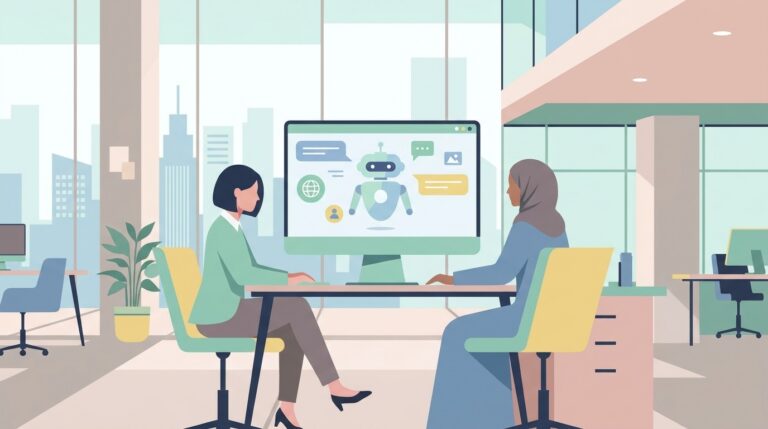
Picture this: It is 6:45 PM on a crisp autumn evening inside an open-plan glass tower in Pangyo Techno Valley—Korea’s buzzing Silicon Valley. You are standing before the VP of Strategy, your engineering team, and an operations director who still prints out daily memos. On the conference screen is your newly deployed enterprise generative AI assistant. Your mission? Enable hundreds of employees and thousands of external customers to search through dense 400-page internal company policies (사내 규정) and complex product manuals via a natural conversational chat interface.
The VP leans forward, adjusts his glasses, and asks: “What happens if our new recruit asks this bot about parental leave or our server warranty terms, and it hallucinates total fiction? Can we trust this model?”
If your heart skipped a beat, you are not alone. Explaining sophisticated architectural concepts like Prompt Engineering and RAG (Retrieval-Augmented Generation) in your native language is already tough. Explaining them in business-appropriate Korean—striking that golden balance between technological authority, respectful humility, and smooth collaboration—can feel overwhelming. Many intermediate learners get stuck using either robotic textbook grammar or blunt informal phrases that make Korean managers raise their eyebrows. This guide was built directly from real workplace debriefs with foreign tech leads in Seoul. By the time you finish this article, you will not only talk about AI architecture with native-level fluency, but you will also command the room with executive-ready Korean poise.
Phase 2: Core Expressions Deep Dive
Here are the three high-leverage Korean expressions you need when deploying enterprise AI solutions in a Korean corporate setting.
1. 정확한 근거를 바탕으로 답변하도록 프롬프트를 설계했어요.
(Jeong-hwak-han geon-geo-reul ba-tang-eu-ro dap-byeon-ha-do-rok peu-rom-peu-teu-reul seol-gye-haess-eo-yo.)
* Pronunciation: Jeong-hwak-han geon-geo-reul ba-tang-eu-ro dap-byeon-ha-do-rok peu-rom-peu-teu-reul seol-gye-haess-eo-yo. (Sounds like: Jung-hwahk-hahn gun-guh-reul bah-tahng-oo-roh dahp-byun-hah-doh-rohk promp-too-reul soul-gyeh-hess-uh-yoh).
* Meaning: Literal: “I designed the prompt so it answers based on accurate grounds.” / Workplace Nuance: “I engineered the system prompts strictly with ground truth guardrails to eliminate speculation.”
* K-Culture Moment: In workplace dramas like Search: WWW or Start-Up, product managers use “근거를 바탕으로” (based on evidence/grounds) when defending their design decisions in high-stakes boardrooms.
* Editor’s Insight: Koreans place huge value on documented precedent (근거, geon-geo). Saying your prompt relies on concrete internal documentation instantly relieves executive anxiety.
* Situation Spectrum: Casual: 🚫 | Semi-formal: ✅ | Formal: ✅
* 🤔 Think About It: In English, we often say “I fine-tuned the prompt constraints.” Why do you think Korean professionals emphasize 근거 (factual foundation) instead of just technical parameters?
2. 사내 규정 문서를 실시간으로 참조해서 오답률을 최소화했습니다.
(Sa-nae gyu-jeong mun-seo-reul sil-si-gan-eu-ro cham-jo-hae-seo o-dap-ryul-eul choe-so-hwa-haess-seum-ni-da.)
* Pronunciation: Sa-nae gyu-jeong mun-seo-reul sil-si-gan-eu-ro cham-jo-hae-seo o-dap-ryul-eul choe-so-hwa-haess-seum-ni-da. (Sounds like: Sah-neh gyoo-jung moon-suh-reul sheel-shee-gahn-oo-roh chahm-joh-heh-suh oh-dahp-ryool-eul chweh-so-hwah-hess-seum-nee-dah).
* Meaning: Literal: “By referencing internal regulation documents in real-time, we minimized the incorrect answer rate.” / Workplace Nuance: “Our RAG system retrieves authorized policies dynamically, driving hallucinations down to near zero.”
* K-Culture Moment: Think of the quintessential legal or corporate crisis K-drama where a quick-witted junior associate slaps down the official rulebook (사내 규정) to solve an impossible deadlock.
* Editor’s Insight: The verbal construction “~를 참조해서 … 최소화했습니다” shows an outcome-oriented professional mindset. It reassures your stakeholders that your solution connects directly to single-source-of-truth manuals.
* Situation Spectrum: Casual: 🚫 | Semi-formal: ⚠️ | Formal: ✅
* 🤔 Think About It: Notice how Korean reports highlight the prevention of harm (오답률 최소화) rather than just boasting model raw intelligence. How does risk aversion shape language in Korean corporate hierarchies?
3. RAG 파이프라인을 연동해서 최신 매뉴얼만 검색하도록 구성했습니다.
(RAG pa-i-peu-ra-in-eul yeon-dong-hae-seo choe-sin mae-nyu-eol-man geom-saek-ha-do-rok gu-seong-haess-seum-ni-da.)
* Pronunciation: RAG pa-i-peu-ra-in-eul yeon-dong-hae-seo choe-sin mae-nyu-eol-man geom-saek-ha-do-rok gu-seong-haess-seum-ni-da. (Sounds like: RAG pah-ee-poo-rah-een-ool yun-dong-heh-suh chweh-sheen meh-nyoo-uhl-mahn gum-sehk-hah-doh-rohk goo-sung-hess-seum-nee-dah).
* Meaning: Literal: “By linking the RAG pipeline, we configured it to search only the most recent manuals.” / Workplace Nuance: “We built out a RAG framework synchronized to our version-controlled manual repository.”
* K-Culture Moment: Typical dialogue heard in modern tech co-working spaces in Gangnam or Seongsu-dong, where IT jargon effortlessly blends into formal Korean grammar endings.
* Editor’s Insight: 연동하다 (yeon-dong-ha-da) means “to integrate / link together.” It is one of the most beloved words in Korean IT development meetings.
* Situation Spectrum: Casual: ⚠️ | Semi-formal: ✅ | Formal: ✅
* 🤔 Think About It: In Korean tech culture, borrowing English words like “pipeline” (파이프라인) alongside pure Sino-Korean stems like 연동 (integration) forms an authentic industry dialect known as Pangyo-mal (판교말).
Phase 3: Textbook Korean vs Real Korean
| Context | 📖 Textbook Korean | 🗣️ Real Tech-Business Korean |
|---|---|---|
| Addressing AI accuracy | 이 챗봇은 거짓말을 하지 않고 항상 진실만 말합니다. (This chatbot does not lie and always tells the truth.) |
사내 DB를 직접 물고 오게 RAG로 파이프라인을 짜서, 엉뚱한 소리(할루시네이션)는 사전에 차단했습니다. (We set up RAG to tap directly into company DBs, cutting off hallucinations at the source.) |
| Updating the data vector | 우리는 새로운 책을 시스템에 다시 입력해야 합니다. (We must input the new book into the system again.) |
매뉴얼 최신 개정본으로 벡터 DB 임베딩 다시 돌려둘게요. (I will re-run the vector DB embedding with the latest revision of the manual.) |
💡 Why the difference? Textbook Korean uses childlike personification (거짓말을 하지 않는다), whereas real-world Korean tech teams speak in precise infrastructure terms (DB를 물고 오다 – literally “biting/fetching the DB”; 돌려두다 – setting a batch script or process to run in the background).
Phase 4: K-Culture Deep Dive & Non-Verbal Manners
4-1. Nunchi (눈치) & Meeting Etiquette
When presenting generative AI in a Korean boardroom, senior directors (이사님, 상무님) often harbor unspoken worries about confidentiality leaks and job replacement.
* Two-Hand Screen Gesture: Never point with a single finger at the slide or screen when demonstrating the chat UI. Keep your hand open, fingers together, palm facing slightly upward (손바닥을 펴서 가리키기).
* Tone Down Tech Arrogance: If an executive asks a basic question like “Does it copy-paste our passwords to ChatGPT?”, do not sigh or smirk. Instead, nod with understanding (고개를 끄덕이며 경청), validate their worry (충분히 우려하실 수 있는 부분입니다), and calmly explain private tenant deployment.
4-2. The Cultural Code: Pangyo Dialect (판교 사투리)
Korea’s IT corridor has cultivated its own distinct sociolect. It is not slang; it is the modern business vernacular of Pangyo and Teheran-ro. You will hear engineers use Korean honorific verb endings (~시죠, ~하겠습니다) wrapped tightly around English tech terminology (얼라인 맞추다, 어사인하다, 인덱싱 돌리다). Mastering this style shows you belong in the room as an insider.
Phase 5: Real-World Roleplay Scenario
Setting: Conference Room A at a fintech firm in Pangyo.
Characters:
* Director Park (박 이사님): Traditional, risk-averse, highly protective of corporate compliance.
* Min-ji (민지 매니저): Senior AI Engineer, sharp and focused.
* You (Alex): AI Project Lead pitching the RAG-based manual search assistant.
- 박 이사 (Director Park):
🎭 (팔짱을 끼고 모니터를 유심히 보며)이번에 도입한다는 생성형 AI 챗봇 말이에요. 직원들이 사내 취업규칙이나 제품 보증 규정을 물어봤을 때, 엉뚱한 대답을 내놓으면 법적 문제가 생길 수도 있는데 괜찮습니까?
(I-beon-e do-ip-han-da-neun saeng-seong-hyeong AI chaet-bot mal-i-e-yo. Jik-won-deul-i sa-nae chwi-eop-gyu-chik-i-na je-pum bo-jeung gyu-jeong-eul mul-eo-bwas-seul ttae, eong-ttung-han dae-dap-eul nae-noh-eu-myeon beop-jeok mun-je-ga saeng-gil su-do it-neun-de gwaen-chan-seum-ni-kkah?)
“About this generative AI chatbot we are rolling out: if employees ask about employment rules or product warranty policies and it gives nonsense answers, we could face legal liability. Are we sure it is fine?” -
You (Alex):
🎭 (차분하게 미소를 지으며 두 손을 모으고)이사님, 충분히 우려하실 수 있는 부분입니다. 그래서 저희가 단순 LLM 모델만 쓴 게 아니라 RAG 아키텍처를 적용했습니다.
(I-sa-nim, chung-bun-hi u-ryeo-ha-sil su it-neun bu-bun-im-ni-da. Geu-rae-seo jeo-hui-ga dan-sun LLM mo-del-man sseun ge an-i-ra RAG a-ki-tek-cheo-reul jeok-yong-haess-seum-ni-da.)
“Director, that is a completely valid concern. That is precisely why we didn’t just use a standalone LLM model, but implemented a RAG architecture.” -
박 이사 (Director Park):
🎭 (눈썹을 살짝 치켜올리며)RAG요? 그게 정확히 사내 규정을 어떻게 지켜준다는 겁니까?
(RAG-yo? Geu-ge jeong-hwak-hi sa-nae gyu-jeong-eul eot-teoh-ge ji-kyeo-jun-da-neun geom-ni-kkah?)
“RAG? How exactly does that guarantee it follows internal policies?” -
You (Alex):
🎭 (노트북 화면의 아키텍처 다이어그램을 손바닥으로 가리키며)모델이 자체 기억으로 지어내지 않고, 승인된 사내 매뉴얼 DB에서만 문서를 검색해 근거로 삼도록 프롬프트를 설계했습니다.
(Mo-del-i ja-che gi-eok-eu-ro ji-eo-nae-ji an-ko, seung-in-doen sa-nae mae-nyu-eol DB-e-seo-man mun-seo-reul geom-saek-hae geon-geo-ro sam-do-rok peu-rom-peu-teu-reul seol-gye-haess-seum-ni-da.)
“The model does not fabricate from its parametric memory; we designed system prompts so it strictly retrieves documents from authorized manual DBs as its sole evidence.” -
민지 매니저 (Min-ji):
🎭 (자료를 넘겨 보여주며 보충 설명)맞습니다. 실제로 답변 하단에 어떤 규정 몇 조 몇 항을 참조했는지 출처 링크가 자동으로 표시됩니다.
(Mat-seum-ni-da. Sil-je-ro dap-byeon ha-dan-e eot-teon gyu-jeong myeot jo myeot hang-eul cham-jo-haess-neun-ji chul-cheo ling-keu-ga ja-dong-eu-ro pyo-si-doem-ni-da.)
“Exactly. In fact, source links showing the exact article and clause of the referenced policy are automatically displayed at the bottom of the response.” -
박 이사 (Director Park):
🎭 (턱을 괴고 끄덕이며)흠, 출처가 바로 뜨는군요. 그럼 제품 매뉴얼이 개정되면 바로 업데이트가 됩니까?
(Heum, chul-cheo-ga ba-ro tteu-neun-gun-yo. Geu-reom je-pum mae-nyu-eol-i gae-jeong-doem-yeon ba-ro eop-de-i-teu-ga doem-ni-kkah?)
“Hmm, so the source pops up right away. What if product manuals get revised—does it update immediately?” -
You (Alex):
🎭 (자신감 있는 눈빛으로)네, 모델을 매번 재학습시킬 필요 없이, 새로 등록된 최신 규정 PDF만 벡터 DB에 임베딩해 주면 실시간으로 반영됩니다.
(Ne, mo-del-eul mae-beon jae-hak-seup-si-kil pil-yo eop-si, sae-ro deung-rok-doen choe-sin gyu-jeong PDF-man bek-teo DB-e im-be-ding-hae ju-myeon sil-si-gan-eu-ro ban-yeong-doem-ni-da.)
“Yes, without needing to retrain the foundation model every time, simply embedding the newly registered policy PDF into the vector DB reflects the changes in real time.” -
박 이사 (Director Park):
🎭 (미소를 띠며 안경을 벗는다)좋습니다. 고객 CS 센터랑 사내 총무팀부터 파일럿 테스트 바로 진행해 보시죠.
(Jot-seum-ni-da. Go-gaek CS sen-teo-rang sa-nae chong-mu-tim-bu-teo pa-il-leot te-seu-teu ba-ro jin-haeng-hae bo-si-jyo.)
“Very good. Let’s move ahead immediately with a pilot test across our customer support center and general affairs team.”
🔀 Interactive Decision Point
Suppose Director Park asks: “Can internal confidential policies leak to outside users through this prompt?” How do you reply?
- Option A: “절대 안 샙니다. AI가 똑똑해서 외부인이 물어보면 알아서 입을 닫아요.” (It never leaks. The AI is smart, so it keeps its mouth shut when outsiders ask.)
- Option B: “사내용과 대고객용 검색 인덱스를 물리적으로 분리했고, 권한별 시스템 프롬프트 필터링을 걸어두어 유출을 원천 차단했습니다.” (We physically partitioned the enterprise and customer search indices, and established role-based system prompt filtering to fundamentally block leaks.)
- Option C: “그건 모델 파라미터와 트랜스포머 레이어의 엔트로피 문제라서 개발팀 말고는 이해하기 어렵습니다.” (That is an issue of model parameters and transformer layer entropy, which is hard for non-engineers to understand.)
Feedback:
* Option A (Bad): Far too informal (입을 닫다 = shut its mouth), lacks engineering proof, sounds evasive to management.
* Option B (Best ✅): Crisp, professional, uses precise architectural terms (물리적 분리, 권한별 필터링), inspiring 100% confidence.
* Option C (Risk ⚠️): Condescending and overly academic. Dismissing an executive’s security inquiry will immediately stall your budget.
Phase 6: 10-Second Emotion Shadowing Drill
Practice these lines aloud to master the pacing, tone, and breathing of a Korean tech lead.
[💼 자신감 넘치고 명료하게 / Confident and crisp]
정확한 사내 규정을 / 바탕으로 답변하도록 / 시스템 프롬프트를 설계했습니다.
(Jeong-hwak-han sa-nae gyu-jeong-eul / ba-tang-eu-ro dap-byeon-ha-do-rok / si-seu-tem peu-rom-peu-teu-reul seol-gye-haess-seum-ni-da.)-
[🤝 차분하고 신뢰감 있게 / Calm and reassuring]
출처 문서가 자동으로 표기되므로 / 직관적인 사실 확인이 / 가능합니다.
(Chul-cheo mun-seo-ga ja-dong-eu-ro pyo-gi-doe-mweo-ro / jik-gwan-jeok-in sa-sil hwak-in-i / ga-neung-ham-ni-da.) -
[🚀 추진력 있고 명쾌하게 / Proactive and clear]
최신 매뉴얼 개정본을 / 벡터 DB에 동기화하여 / 실시간으로 반영하겠습니다.
(Choe-sin mae-nyu-eol gae-jeong-bon-eul / bek-teo DB-e dong-gi-hwa-ha-yeo / sil-si-gan-eu-ro ban-yeong-ha-gess-seum-ni-da.)
Phase 7: K-Culture Mini Dictionary
- 사내 규정 (Sa-nae gyu-jeong) | Internal Company Policies / Regulations
- Meaning: The core operational bylaws of a Korean company, including attendance, remote work, expenses, and disciplinary codes. When building corporate tools, this is the first asset digitized.
- RAG / 검색 증강 생성 (Geom-saek jeung-gang saeng-seong) | Retrieval-Augmented Generation
- Meaning: Grounding LLM queries in external databases. In Korean offices, people usually just say “RAG” (알에이지 or 라그), but in formal written proposals, 검색 증강 생성 is used.
- 임베딩 (Im-be-ding) | Vector Embedding
- Meaning: Converting text chunks into numerical vectors. Engineers say “문서를 임베딩 돌리다” (run document embedding) when feeding new policy docs into vector databases.
- 할루시네이션 (Hal-lu-si-ne-i-syeon) | AI Hallucination
- Meaning: Factual errors generated by models. Korean business clients use this loanword daily. In formal reviews, you can also pair it with 환각 현상 (hwan-gak hyeon-sang).
Phase 8: Expat & Tech Professional Survival Kit
Survival Tech Phrases TOP 3
- API 키랑 엔드포인트 세팅 완료했습니다.
(API ki-rang en-deu-po-in-teu se-ting wan-ryo-haess-seum-ni-da.)
Pro Tip: Use this when closing ticket handoffs between backend and AI infrastructure teams. - 규정 문서 파싱(Parsing) 작업부터 먼저 진행할게요.
(Gyu-jeong mun-seo pa-sing jak-eop-bu-teo meon-jeo jin-haeng-hal-ge-yo.)
Pro Tip: Useful when unformatted PDFs or scanned Korean HWP documents need OCR cleanup before vectorization. - 질의응답 테스트 로그 한번 확인해 주시겠어요?
(Jil-ui-eung-dap te-seu-teu ro-geu han-beon hwak-in-hae ju-si-gess-eo-yo.)
Pro Tip: A polite way to invite your QA team or department head to review prompt testing runs.
Editor’s Travel & Tech Note
Visiting or working near Pangyo Techno Valley? Download the Naver Map app on your mobile device before commuting. While Google Maps has restricted transit routing in Korea due to local spatial data laws, Naver Map provides lane-by-lane bus routing directly into Pangyo station, live subway transfer gates, and building floor maps for major tech hubs.
Phase 9: A Step Deeper (한 발 더 깊이)
In many Western workplaces, rolling out an AI assistant is framed almost entirely around individual productivity gains—saving hours on customer ticketing or personal search. In Korean corporate culture, however, software rollouts carry profound collective responsibility (공동체적 책임). Because Korean companies emphasize standardized protocol, hierarchy, and legal adherence, introducing an AI that speaks “on behalf of the company” creates genuine tension.
When you present RAG and prompt engineering through the cultural lens of protecting team harmony (팀의 리스크 예방) and respecting verified corporate authority (공식 규정 준수), your Korean colleagues will see you not just as a competent coder, but as an empathetic, high-context business leader.
💬 Your Turn: Does your company use AI tools to parse internal policies? How would your team react if the tool made up a regulation? Drop your thoughts in the comments below!
Phase 10: FAQ & Common Mistakes
Q: Can I just pronounce “RAG” as a single word in Korean?
A: Yes! Korean developers commonly pronounce it as “라그” (ra-geu) or spell it out letter-by-letter as “알-에이-지” (al-e-i-ji). Both are instantly recognized in tech meetings.
Q: How do I say “The prompt needs fine-tuning” naturally?
A: Say “프롬프트 튜닝(또는 고도화)이 좀 더 필요합니다” (Peu-rom-peu-teu tyu-ning-i jom deo pil-yo-ham-ni-da). The term 고도화 (advancement / sophistication) is an executive favorite in project progress reports.
Q: What is the best word for internal enterprise documents?
A: Use 사내 문서 (internal documents) or 사내 규정집 (company policy manual). For product guides, use 제품 매뉴얼 (je-pum mae-nyu-eol) or 제품 설명서 (je-pum seol-myeong-seo).
🚨 Common Mistakes Alert
- Mistake: Using 거짓말 (geojit-mal / lie) when describing AI errors to clients.
- Correct Action: Say 할루시네이션 (hallucination) or 오답 현상 (error occurrence). AI does not have malicious intent to “lie” in Korean business parlance.
- Mistake: Translating “ground truth” literally as 땅 진실 (ttang jin-sil).
- Correct Action: Say 정답 데이터 (ground truth / gold standard data) or 신뢰할 수 있는 원본 근거 (trusted source grounding).
- Mistake: Forgetting to add ~시죠 or ~겠습니다 when proposing architecture changes.
- Correct Action: Don’t say “이거 RAG로 바꿔” (casual). Say “이 구조는 RAG 파이프라인으로 전환하는 것이 좋겠습니다” (formal proposal).
Phase 11: Action Missions
- 🥉 Bronze Mission: Stand in front of your mirror and practice the phrase: “사내 규정을 실시간으로 참조해서 오답률을 최소화했습니다” three times with crisp pronunciation.
- 🥈 Silver Mission: Open your LinkedIn or your team’s Slack channel and write one sentence about enterprise AI architecture using the phrase 근거를 바탕으로.
- 🥇 Gold Mission: In your next sprint demo or 1-on-1 meeting, propose a feature using “~를 연동해서 효율성을 높이겠습니다” to your team or manager.
- 🎮 K-Culture Mission: Watch an episode of a tech-focused K-Drama (like Start-Up or Search: WWW) and identify when characters use Sino-Korean business verbs like 검토하다 (review), 도입하다 (adopt), or 반영하다 (reflect).
Phase 12: Interactive Quiz Challenge
Test your real-world tech Korean skills below!
1. Situation Judgment
You are explaining to a Korean executive why the new internal chatbot will not invent vacation policy rules. Which sentence provides the most professional assurance?
* (A) AI한테 착하게 말하라고 프롬프트에 써놨어요.
* (B) 규정집 DB를 연동한 RAG 구조라 근거 있는 조항만 인용합니다.
* (C) 틀린 규정을 말하면 모델 서버를 강제로 꺼버리면 됩니다.
2. Fill-in-the-Blank
“사내 최신 매뉴얼을 벡터 데이터베이스에 [ ]하여 검색 속도와 정확도를 향상시켰습니다.”
* Clue: The tech loanword for turning text into numerical vectors.
3. True / False Cultural Check
- True or False: In Korean business presentations, it is customary to point out mistakes in executive assumptions immediately and bluntly to show technical superiority.
👉 Click to view answers and explanations
- Answer: (B)
- Explanation: (B) uses appropriate architecture terminology (연동, RAG 구조, 근거 있는 조항 인용). (A) is childishly informal, while (C) is reckless and unprofessional.
- Answer: 임베딩 (Embedding)
- Sentence: 사내 최신 매뉴얼을 벡터 데이터베이스에 임베딩하여 검색 속도와 정확도를 향상시켰습니다.
- Answer: False
- Explanation: In Korean business communication, 눈치 (nunchi) and 체면 (face-saving) are paramount. Always validate executive concerns first (“충분히 우려하실 수 있는 부분입니다”) before gently presenting the technical safeguard.
- Explanation: In Korean business communication, 눈치 (nunchi) and 체면 (face-saving) are paramount. Always validate executive concerns first (“충분히 우려하실 수 있는 부분입니다”) before gently presenting the technical safeguard.
🎬 Watch Our Daily Videos! (Daily Hangul Official Instagram)
Review the expressions you learned in this article with our fun daily short videos! Check out native pronunciation and real-life nuances in action.
- Instagram @dailyhangul_en







