

When Palace Nights Meet Funky Beats: Master Korea’s ‘Hip-Tradition’ Korean
Phase 1: Empathy (Story-Immersive Opening)
안녕하세요! 매일한글 에디터입니다. (Hello! This is your Daily Hangul editor.)
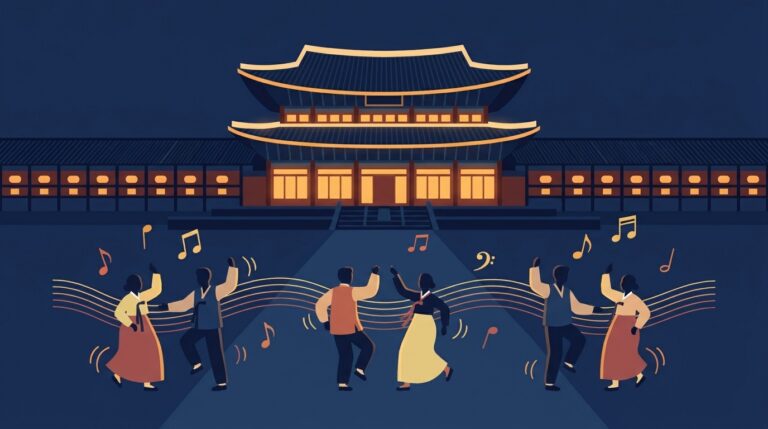
Imagine this: The sun dips behind the granite ridges of Inwangsan Mountain, and the historic pavilions of Gyeongbokgung light up in a warm amber glow. You are walking along the ancient stone paths during the Seoul Palace Night Tour, expecting quiet flute melodies and classical history. But suddenly, a funky bass guitar riff rumbles through the air, quickly joined by an electrifying, rhythmic vocal cry: “Beom naeryeoon-da!” (A tiger is coming!). People in modernized hanbok and trendy streetwear start grooving in unison. This is the world of ‘Hip-Tradition’ (힙트래디션), where centuries-old pansori and modern pop rhythm collide to create a global sensation like Leenalchi’s viral hits.
Yet, as you stand there wanting to chat with local concertgoers or comment on social media, you might freeze. How do you describe this wild fusion without sounding like an antique history textbook? Standard textbooks only teach you: “국악은 아름답습니다” (Traditional Korean music is beautiful). That doesn’t capture the electric pulse of this scene at all! Based on feedback from hundreds of our intermediate learners who visit Seoul, having the right slang and nuanced vocabulary turns an awkward tourist nod into an instant cultural connection. Let’s unlock the exact words you need to speak like a trend-savvy Seoulite.
Phase 2: Key Expressions Deep Dive (핵심 표현 3선)
1. 흥이 넘치다 (Heung-i neomchida)
- Pronunciation: [Heung-i neom-chi-da] (Sounds like “hung-ee num-chee-dah”)
- Meaning: Literal: “Joy/excitement overflows” | Actual Nuance: “Radiating infectious groove and energy”
- K-Culture Moment: Hearing the funky bassline of fusion gugak and seeing crowds instinctively bounce their shoulders to the rhythm.
- Editor’s Insight: Heung (흥) is uniquely Korean—it’s that communal, irrepressible spark of joy that makes you want to dance and sing together.
- Situation Spectrum: Casual: ✅ | Semi-formal: ✅ | Formal: ⚠️
- 🤔 Think About It: Does your native culture have a single word for joy that specifically demands movement and community, or do you describe the music itself?
2. 요즘 완전 대세예요 (Yojeum wanjeon daeseyeyo)
- Pronunciation: [Yo-jeum wan-jeon dae-se-ye-yo] (Sounds like “yo-jum wan-jun day-say-yo”)
- Meaning: Literal: “These days, it is totally the great trend” | Actual Nuance: “It’s the absolute biggest sensation right now”
- K-Culture Moment: Explaining why tickets to fusion pansori performances at palace night tours sell out in under 30 seconds.
- Editor’s Insight: Daese (대세) refers to the reigning cultural tide. Adding wanjeon (totally) gives it an authentic, enthusiastic native flavor.
- Situation Spectrum: Casual: ✅ | Semi-formal: ✅ | Formal: 🚫
- 🤔 Think About It: How does calling something “the mainstream tide” reflect Korea’s fast-moving trend cycles compared to just saying “it’s popular”?
3. 현대적으로 재해석했어요 (Hyeondaejeogeuro jaehaeseok-haesseoyo)
- Pronunciation: [Hyeon-dae-jeog-eu-ro jae-hae-seok-haess-eo-yo] (Sounds like “hyun-day-juh-gu-ro jay-hay-suk-hess-uh-yo”)
- Meaning: Literal: “Reinterpreted modernly” | Actual Nuance: “Given a chic, contemporary twist”
- K-Culture Moment: Reviewing how traditional folk songs or Joseon royal court garments are revamped into futuristic streetwear.
- Editor’s Insight: Use this when you want to sound thoughtful and articulate at exhibitions, indie gigs, or art pop-ups.
- Situation Spectrum: Casual: ⚠️ | Semi-formal: ✅ | Formal: ✅
- 🤔 Think About It: Why does Korea celebrate “reinterpretation” so passionately rather than keeping historical arts rigidly unchanged?
Phase 3: Textbook Korean vs. Real Korean (진짜 한국어 맞대결)
Situation 1: Reacting to an upbeat fusion gugak track
- 📖 교과서 한국어: 이 국악 노래는 매우 빠르고 신납니다. (I gug-ag noraeneun maeu ppareugo sinnamnida. / This traditional Korean music song is very fast and exciting.)
- 🗣️ 진짜 한국어: 국악인데 비트가 완전 미쳤어요! (Gug-ag-inde biteuga wanjeon michyeosseoyo! / It’s traditional gugak, but the beat is totally insane!)
- 💡 왜 다를까?: Native speakers rarely say “매우 신납니다” in casual settings. Using “비트가 미쳤다” (the beat is crazy/insane) conveys genuine awe and youthful excitement.
Situation 2: Commenting on trendy traditional palace events
- 📖 교과서 한국어: 전통문화 행사가 인기가 많습니다. (Jeontongmunhwa haengsaga ingiga mansumnida. / Traditional cultural events have high popularity.)
- 🗣️ 진짜 한국어: 요즘 힙트래디션이 대세잖아요! (Yojeum hiptraedisyeoni daesejanayo! / You know Hip-Tradition is the biggest thing right now!)
- 💡 왜 다를까?: The ending “-잖아요” (-janayo) builds instant rapport by reminding the listener of a shared truth, while “힙트래디션” instantly identifies you as culturally plugged-in.
Phase 4: K-Culture Deep Dive & Non-Verbal Manners
4-1. Nunchi & Concert Gestures
When listening to pansori or fusion gugak, staying motionless like you are at a Western classical symphony is actually considered cold! Traditional Korean performances thrive on chuimsae (추임새)—spontaneous verbal encouragements. When the rhythm hits a climax, tilt your head slightly, tap your foot to the off-beat, and shout “얼씨구!” (Eolssigu!) or “좋다!” (Jota!). Maintain a warm, engaging expression with the performers. However, at royal palace night tours, ensure your excitement doesn’t block walking corridors or historical artifacts; practice respectful spatial awareness (nunchi).
4-2. The ‘Hip-Tradition’ Cultural Code
Why did Leenalchi’s “Tiger is Coming” (범 내려온다) and the Ambiguous Dance Company capture the global imagination? Because young Koreans no longer view history as dusty relics locked in museums. From drinking traditional makgeolli in hip Seongsu-dong lounges to wearing cropped hanbok jackets at palace night openings, the Hip-Tradition wave proves that cultural preservation happens through evolution, not just preservation.
Phase 5: Real-Life Roleplay Scenario (실전 롤플레이)
Setting: Outside the illuminated pavilion at Changgyeonggung Palace during the night tour. You are standing with Min-jun, a Seoulite friend who loves indie music.
- Min-jun: 저기 야외 무대에서 베이스 소리 들려요? 오늘 퓨전 국악 밴드 공연 있대요! (Jeogi ya-oe mudae-eseo be-i-seu sori deullyeoyo? Oneul pyujeon gug-ak baendeu gong-yeon itdaeyo! / Do you hear that bass guitar from the outdoor stage? They say there’s a fusion gugak gig today!)
- You:
🎭 [눈을 동그랗게 뜨며 호기심 어린 표정으로]와, 진짜네요? 국악인데 비트가 장난 아니에요! (Wa, jinjjanaeyo? Gug-ag-inde biteuga jangnan anieyo! / Wow, really? It’s gugak, but the beat is no joke!) - Min-jun: 그쵸? 요즘 이날치 스타일의 퓨전 판소리가 완전 대세잖아요. (Geuchyo? Yojeum I-nal-chi seutail-ui pyujeon pansoriga wanjeon daesejanayo. / Right? You know fusion pansori in the style of Leenalchi is the absolute trend right now.)
- You:
🎭 [고개를 끄덕이며 감탄하는 제스처]전통 판소리를 현대적으로 재해석해서 진짜 신선해요. (Jeontong pansorireul hyeondaejeog-euro jaehaeseok-haeseo jinjja sinseonhaeyo. / It’s really fresh because they reinterpreted traditional pansori modernly.) - Min-jun: 맞아요! 저 보컬 분 목소리에서 흥이 넘치지 않아요? (Majayo! Jeo bokeol bun moksorieseo heung-i neomchiji anayo? / Totally! Doesn’t the vocalist’s voice overflow with excitement?)
- You:
🎭 [리듬에 맞춰 어깨를 가볍게 들썩이며]네! 어깨춤이 절로 나와요. 완전 힙해요. (Ne! Eokkaechumi jeollo nawayo. Wanjeon hiphaeyo. / Yes! My shoulders are dancing on their own. It’s totally hip.) - Min-jun: 이따 추임새도 같이 넣어요! ‘얼씨구’ 타이밍 알려줄게요. (Itta chuimsaedo gachi neoeoyo! ‘Eolssigu’ taiming allyeojulgeyo. / Let’s add rhythmic shouts together later! I’ll teach you the timing for ‘Eolssigu’.)
- You:
🎭 [미소 지으며 손가락으로 오케이 사인을 보내며]좋아요, 오늘 밤 제대로 즐겨봐요! (Joayo, oneul bam jedaero jeulgyeobwayo! / Sounds great, let’s truly enjoy tonight!)
🔀 Interactive Decision Point
Min-jun says the beat is ramping up and yells “얼씨구!” (Eolssigu!). What do you do?
* Choice A: Stand quietly with your arms crossed and say, “조용히 감상합시다.” (Joyonghi gamsanghapsida. / Let’s appreciate quietly.)
* Feedback [Bad]: Kills the vibe! Gugak thrives on audience reaction; this response creates awkwardness.
* Choice B: Groove to the bass, nod, and shout “좋다!” (Jota!) with a grin.
* Feedback [Best]: Flawless cultural mastery! You displayed great heung and natural timing.
* Choice C: Yell at the top of your lungs non-stop throughout the quiet vocal solo.
* Feedback [Risk]: Too excessive! Even chuimsae needs rhythmic timing, not chaotic shouting.
Phase 6: 10-Second Emotion Shadowing Drill (감정 섀도잉)
Practice matching the cadence, pause slashes (/), and emotional milestones:
[🔥 신나고 감탄하며]국악인데 / 비트가 / 완전 미쳤어요!
(Gug-ag-inde / biteuga / wanjeon michyeosseoyo!)[😎 여유롭고 트렌디하게]요즘 / 힙트래디션이 / 완전 대세잖아요.
(Yojeum / hiptraedisyeoni / wanjeon daesejanayo.)[🕺 어깨를 들썩이며 리듬을 타며]노래에서 / 흥이 / 넘쳐 흘러요!
(Norae-eseo / heung-i / neomchyeo heulleoyo!)
Phase 7: K-Culture Mini Dictionary (미니 사전)
- 힙트래디션 (Hiptradition): A portmanteau of “Hip” and “Tradition.” Used across social media to describe modern lifestyle items, fashion, or music rooted in traditional Korean heritage.
- 추임새 (Chuimsae): Verbal and rhythmic calls (like Eolssigu, Jota) made by listeners or drummers during a performance to fuel the singer’s excitement.
- 판소리 (Pansori): UNESCO-recognized traditional Korean musical storytelling performed by a vocalist (sorikkun) and a barrel drummer (gosu).
- 역주행 (Yeokjuhaeng): Originally meaning “driving backward,” it describes a classic song or traditional genre climbing back up modern music charts unexpectedly.
Phase 8: Traveler’s Survival Kit (여행자 생존 키트)
Top 3 Survival Phrases
- 야간 개장 티켓 현장 구매 가능한가요? (Yagan gaejang tiket hyeonjang gumae ganeunghangayo?)
Pro Tip: Palace night tours usually require reservations, but foreigners can often purchase a limited batch of on-site tickets by showing their passport at the booth. - 오늘 특별 공연 몇 시에 시작해요? (Oneul teukbyeol gong-yeon myeot sie sijakhaeyo?)
Pro Tip: Use this at the palace gate information desk so you don’t miss open-air gugak stages. - 사진 한 장만 찍어주실 수 있나요? (Sajin han jangman jjigeojusil su innayo?)
Pro Tip: Ask trendy locals wearing modern hanbok near the illuminated lanterns; they take great aesthetic shots!
Editor’s Travel Note
Tickets for night openings at Gyeongbokgung and Changgyeonggung disappear within seconds. Check out the official Korea Heritage Agency Ticket Reservation Guide well in advance. Download the Naver Map application to pinpoint the exact pavilion hosting traditional fusion stages inside the massive palace grounds.
Phase 9: One Step Deeper (한 발 더 깊이)
Korean traditional music historically carried han (한)—a deep, collective sorrow born from hardship. Yet, our ancestors famously dissolved that sorrow into heung (흥), turning melancholy into spirited song and communal dance. The modern global explosion of fusion gugak is not a mere musical trend; it is the modern manifestation of Korean resilience transforming history into living, vibrant joy.
💬 Your Turn: Have you ever seen an ancient art form from your home country modernized with pop culture? Share your thoughts below in Korean using 재해석했어요!
Phase 10: FAQ & Avoiding Misunderstandings
Q: Can I wear modern clothes to the palace night tour, or must I wear a Hanbok?
A: You can wear whatever comfortable clothes you like! While visitors wearing hanbok enter for free, modern casual wear is totally fine. Pairing modern clothes with traditional accessories (like a norigae keychain) is very popular right now.
Q: Is it considered rude to shout chuimsae like “얼씨구” if I am a foreigner?
A: Not at all! In fact, performers and locals love it when international guests shout chuimsae. Just listen for the pauses at the end of vocal phrases so you don’t interrupt complex storytelling parts.
Q: Is fusion gugak only popular among older Koreans?
A: Quite the opposite! Fusion gugak blew up thanks to Gen Z and Millennials sharing dance challenges and videos on YouTube and TikTok. It is considered one of the coolest youth trends in Seoul today.
🚨 Common Mistakes Warning Board
- ❌ Saying: “이 노래는 신기합니다.” (This song is strange/peculiar.)
Correct Action: Use “완전 신선해요!” (Wanjeon sinseonhaeyo! / It’s completely fresh!) to sound positive and appreciative. - ❌ Shouting: “브라보!” (Bravo!) loudly during traditional drums.
Correct Action: Shout traditional Korean cheers like “얼씨구!” (Eolssigu!) or “좋다!” (Jota!). - ❌ Sitting dead silent with no body rhythm during high-energy fusion performances.
Correct Action: Lightly bob your shoulders to the rhythm (eokkaechum).
Phase 11: Action Missions & Engagement
- 🥉 Bronze Mission: Practice saying “국악인데 비트가 완전 미쳤어요!” three times out loud using the shadowing pause cues in Phase 6.
- 🥈 Silver Mission: Search for Leenalchi’s “Tiger is Coming” (범 내려온다) on YouTube or Spotify, and leave a Korean comment: “흥이 넘쳐요!”
- 🥇 Gold Mission: Visit a Korean palace, cultural exhibition, or Korean cafe, take an aesthetic photo, and post it with the hashtag
#힙트래디션along with a sentence using 대세예요. - 🎮 K-Culture Mission: Watch an episode of a modern historical K-Drama (like Mr. Queen) and spot three moments where modern mannerisms or rhythms reinterpret Joseon tradition!
Phase 12: Interactive Quiz Challenge
Question 1: Situation Check
You are watching an exciting fusion pansori performance at Deoksugung Stone Wall Path. What is the most natural way to tell your friend that the track is an incredible hit right now?
A. 이 노래는 역사를 설명합니다.
B. 이 노래 요즘 완전 대세예요!
C. 이 노래는 매우 조용합니다.
🔍 Click to Reveal Answer & Explanation
Answer: B
Explanation: “대세예요” means it is the prevailing hit/trend right now. Choice A means “This song explains history,” and Choice C means “This song is very quiet.”
Question 2: Fill in the Blank
전통 음악을 현대 감각으로 새롭게 바꾸었을 때, “전통을 현대적으로 ______________”라고 말합니다.
(When traditional music is newly transformed with modern sense, we say “Tradition was ______________ modernly.”)
🔍 Click to Reveal Answer & Explanation
Answer: 재해석했어요 (jaehaeseok-haesseoyo)
Explanation: ‘재해석하다’ means to reinterpret an existing artistic piece or cultural tradition through a fresh modern perspective.
Question 3: True or False Cultural Quiz
True or False: During a fusion gugak performance, shouting “얼씨구!” (Eolssigu!) is considered bad concert etiquette in Korea.
🔍 Click to Reveal Answer & Explanation
Answer: False
Explanation: Shouting ‘얼씨구’ is a traditional Chuimsae (encouraging shout) that energizes both the vocalists and the crowd!
🎬 Watch Our Daily Videos! (Daily Hangul Official Instagram)
Review the expressions you learned in this article with our fun daily short videos! Check out native pronunciation and real-life nuances in action.
- Instagram @dailyhangul_en







