

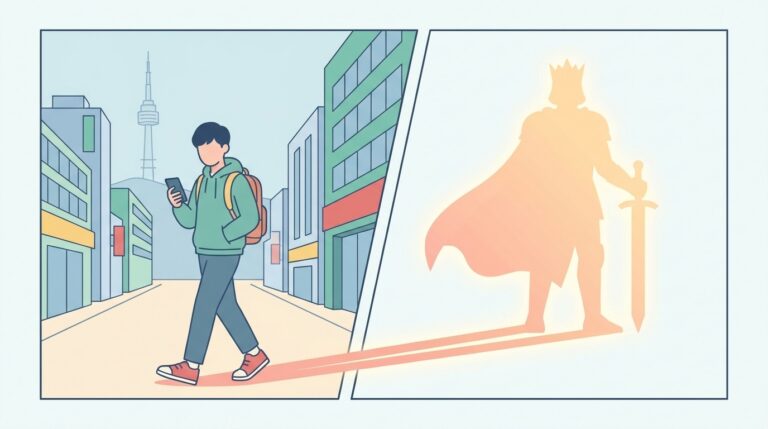
The Ultimate Guide to ‘환생’ (Reincarnation) in K-Webtoons: Level Up Your Slang
Phase 1: 공감 (Story-Driven Opening)
안녕하세요! 매일한글 에디터입니다. (Annyeonghaseyo! It’s your Daily Hangul editor!)
Picture this: You are curled up in bed at 2:00 AM, phone glowing in the dark, binge-reading the latest serialized sensation on Webtoon. The protagonist—a stressed, overworked Seoul office worker who survives entirely on iced americanos—gets hit by the infamous ‘Truck of Doom.’ Suddenly, flash! Eyes open. He is not in a sterile hospital ward; he is lying under silk canopies as the prodigal firstborn prince of a magic empire, completely retaining his modern knowledge of physics, tactical gaming, and bitter corporate survival skills.
You glance at the Korean comment section to see what fellow readers are shouting. Instead of formal literary analysis, the feed is exploding with terms like “드디어 환생 각 나왔다!” (Finally, the reincarnation plot kicks off!) and “전생 기억 갖고 환생하면 밸붕이지” (Keeping past-life memories after reincarnating is totally game-breaking). You understand the word “reincarnation” in English, but how do real Korean readers discuss this ubiquitous trope? Why does everyone treat ‘환생’ (Hwansaeng) as the ultimate power fantasy?
If you have ever felt left out of the buzzing comments under your favorite series or wanted to debate plotlines with Korean friends at a comic cafe in Hongdae, this guide is built for you. Based on real feedback from intermediate learners who want to move past dry textbook dialogues, we will decode the vocabulary of reincarnation, cathartic plots, and second-chance tropes so you can banter like a true K-culture insider.
Phase 2: 핵심 표현 3선 심층 분석 (Core 3 Expressions)
Here are the top three expressions you must know to talk about reincarnation plots in modern Korean pop culture.
1. 환생하다 (Hwansaenghada)
- Pronunciation: [Hwan-saeng-ha-da] (Sounds like “Hwan” as in ‘wander’ without the ‘d’ + “saeng” as in singing ‘sang’ + “hada”)
- Meaning: Literally “to be reincarnated/reborn into another life.” In pop culture, it implies starting anew from infancy or youth in a completely different world or identity, while possessing the conscious mind of your former self.
- K-Culture Moment: When a fallen grandmaster of martial arts breathes his last breath and awakens as the neglected infant child of a merchant clan, readers comment: “주인공이 무공 실력 그대로 가지고 환생했네!” (The main character was reincarnated with his martial arts skills intact!).
- Editor’s Insight: Do not confuse this with ‘회귀하다’ (Hoegwihada – turning back time in your current body) or ‘빙의하다’ (Bing-uihada – possessing someone else’s already existing body). ‘환생’ means physically being born again into babyhood or childhood!
- Situation Spectrum: Casual: ✅ | Semi-formal: ✅ | Formal: ✅ (Used in religious, philosophical, and pop-culture contexts alike)
- 🤔 Think About It: In Western media, reincarnation often wipes the slate clean (like in classical mythology). Why do Korean narratives insist on keeping past memories and trauma fully intact?
2. 전생의 기억 (Jeonsaeng-ui gieok)
- Pronunciation: [Jeon-saeng-ui gi-eok] (Think “Jeon” as in savory Korean pancake + “saeng” + “ui” like ‘we’ + “gieok” like ‘geer-oak’)
- Meaning: Literally “memories of a previous life.” Figuratively, it refers to the unfair ‘cheat code’ or unfair advantage a reborn protagonist utilizes to outsmart enemies.
- K-Culture Moment: In high-society romance fantasy (로판, Ropan), the female lead predicts a stock market crash or political treason because she remembers history textbooks from 21st-century Korea.
- Editor’s Insight: Koreans also playfully use this phrase when someone demonstrates an unexplainable, innate talent: “너 요리 왜 이렇게 잘해? 전생의 기억 있냐?” (Why are you so good at cooking? Do you have memories from a past life?).
- Situation Spectrum: Casual: ✅ | Semi-formal: ✅ | Formal: ⚠️ (Sounds humorous or literary in official meetings)
- 🤔 Think About It: How does your native language describe an uncanny natural talent? Do you attribute it to genes, divine gift, or past lives?
3. 인생 2회차 (Insaeng i-hoecha)
- Pronunciation: [In-saeng i-hoe-cha] (Sounds like “In” + “sang” + the letter “E” + “hoe” like gardening tool + “cha” like chai tea)
- Meaning: Literally “Life Round 2” or “Playing Life on New Game Plus.”
- K-Culture Moment: Used whenever a protagonist (or a remarkably mature child in a variety show) acts with veteran composure far beyond their biological age.
- Editor’s Insight: This is the quintessential B2-level slang derived straight from web novels. If a toddler neatly folds their clothes and speaks politely, adults chuckle: “쟤 진짜 인생 2회차 아니야?” (Isn’t that kid on their second playthrough of life?).
- Situation Spectrum: Casual: ✅ | Semi-formal: ⚠️ | Formal: 🚫 (Pure contemporary colloquialism)
- 🤔 Think About It: Viewing human life as iterative ‘rounds’ (회차) reflects how deeply video game and webtoon terminology has shaped modern Korean psychology.
Phase 3: 교과서 한국어 vs 진짜 한국어 (Textbook vs Real Korean)
Let’s compare formal standard expressions with how real fans and peers actually converse.
Situation A: Expressing that a character has retained past abilities
- 📖 교과서 한국어: 주인공은 과거의 뛰어난 능력을 유지한 채 다시 태어났습니다. (Juingong-eun gwageo-ui tti-eonan neungnyeog-eul yujihan chae dasi taeeonasseumnida. / The protagonist was born again while maintaining his superior past abilities.)
- 🗣️ 진짜 한국어: 주인공이 전생 스펙 그대로 들고 환생해서 완전 먼치킨 됐어요. (Juingong-i jeonsaeng seupik geudaero deulgo hwansaenghae-seo wanjeon meonchikin dwaesseoyo. / The protagonist reincarnated with all their past-life stats and became utterly overpowered.)
- 💡 왜 다를까?: Korean web novel fans borrow gaming terms like ‘스펙’ (specs/attributes) and ‘먼치킨’ (munchkin/overpowered character) to convey instant satisfaction rather than descriptive grammar.
Situation B: Complimenting a friend who solves a complex problem effortlessly
- 📖 교과서 한국어: 당신은 어려운 문제를 아주 노련하고 지혜롭게 해결하시는군요. (Dangsin-eun eoryeoun munje-reul aju noryeonhago jihyeropge haegyeolhasineungunyo. / You resolve difficult problems very skillfully and wisely.)
- 🗣️ 진짜 한국어: 대박, 어떻게 알았어? 너 진짜 인생 2회차 사는 거 맞지? (Daebak, eotteoke arasseo? Neo jinjja insaeng i-hoecha saneun geo matji? / Whoa, how did you know that? You are totally living your second life, right?)
- 💡 왜 다를까?: Calling someone ‘wise’ can sound distant or patronizing between friends, whereas jokingly suspecting them of ‘living life round two’ is high-praise camaraderie.
Phase 4: K-Culture 딥다이브 & 비언어적 매너 (Deep Dive & Non-Verbal Cues)
4-1. 눈치 (Nunchi) & Gestures
When discussing webtoons with Koreans at social meetups or university clubs:
* The Knowing Smirk & Nod: When someone brings up a new webtoon and asks if the hero is weak, a slow nod with a smirk and the phrase “아니, 환생물이야” (Nah, it’s a reincarnation story) instantly signals: Don’t worry, there’s zero frustration ahead, he is going to dominate.
* The Fist Pump of Catharsis: Koreans often make a tight fist at chest level when mentioning ‘사이다’ (cider/refreshing resolution) elements in a reincarnation story. It mimics crushing a petty villain without lingering melodrama.
4-2. Cultural Code Analysis: Why ‘환생’ Dominates K-Media
Why is the Korean webtoon landscape saturated with reincarnation stories rather than classic Western heroic journeys?
1. The Meritocracy Burnout: Korea’s hyper-competitive education and corporate culture (Hell Joseon discourse) leaves many feeling that no matter how hard you study or work, systemic obstacles prevent upward mobility. Reincarnation wipes out structural debt while preserving the hard-earned skills you spent a lifetime honing.
2. Immediate Catharsis over Slow Growth: Unlike traditional Bildungsroman tales where protagonists suffer through hundred-chapter training arcs, Korean readers prefer high velocity. Reborn protagonists already know the secret dungeon locations, the traitors’ names, and the stock tips. It provides instant, satisfying emotional relief (사이다).
Phase 5: 실전 롤플레이 시나리오 (Real-World Roleplay Scenario)
Setting: A cozy manhwa cafe (만화카페) in Sinchon, Seoul. You are browsing the trending webtoon shelf with your Korean friend, Minji, who reads 30 webtoons a week.
- 민지 (Minji): 너 요즘 새로 시작한 웹툰 있어? 볼 거 없어서 심심해 죽겠어.
(Neo yojeum saero sijakhan weptun isseo? Bol geo eopseoseo simsimhae jukgesseo.)
“Have you started any new webtoons lately? I’m dying of boredom because I have nothing to read.” - 나 (You): 🎭 Pulling a popular volume off the display stand with a knowing grin
이거 봤어? 대마법사가 1,000년 뒤에 망나니 귀족으로 환생하는 이야기야.
(Igeo bwasseo? Daemabeopsaga cheon-nyeon dwie mangnani gwijog-euro hwansaenghaneun iyagiya.)
“Have you checked this out? It’s about an archmage who reincarnates 1,000 years later as a good-for-nothing noble.” - 민지 (Minji): 🎭 Tilting head curiously, leaning closer
헐, 또 환생물이야? 전생 기억은 다 가지고 태어난대?
(Heol, tto hwansaengmuriya? Jeonsaeng gieog-eun da gajigo tae-eonandae?)
“Whoa, another reincarnation piece? Does he get born with all his past-life memories?” - 나 (You): 응, 전생의 무공이랑 마법 지식을 통째로 간직하고 있어.
(Eung, jeonsaeng-ui mugong-irang mabeop jisig-eul tongjjaero ganjikhago isseo.)
“Yeah, he retains every single bit of his martial arts and magic knowledge from his past life.” - 민지 (Minji): 🎭 Sighing with anticipated satisfaction
그럼 답답한 고구마 구간 없이 바로 사이다 전개로 가겠네?
(Geureom dapdaphan goguma gugan eopsi baro saida jeongae-ro gagenne?)
“Then it probably goes straight to refreshing catharsis without any frustrating, suffocating plot arcs, right?” - 나 (You): 완전! 1화부터 전생 기억 써먹으면서 적들을 다 털어버려.
(Wanjeon! Il-hwabuteo jeonsaeng gieok sseomeog-eumyeonseo jeokdeur-eul da teoreobeoryeo.)
“Totally! From episode one, he exploits his past memories and totally wrecks his enemies.” - 민지 (Minji): 🎭 Clapping hands together excitedly
대박! 완전 인생 2회차 먼치킨물이잖아. 나 오늘 밤샘 각이다.
(Daebak! Wanjeon insaeng i-hoecha meonchikin-mur-ijanha. Na oneul bamsaem gag-ida.)
“Awesome! That is completely an overpowered Life-Round-2 story. I’m definitely staying up all night.” - 나 (You): 라면 시켜 놓고 1화부터 정주행하자!
(Ramyeon sikyeo noko il-hwabuteo jeongjuhaenghaja!)
“Let’s order some ramyeon and binge it from episode one!”
🔀 인터랙티브 분기점 (Choose Your Response)
When Minji says she loves overpowered characters, what do you reply?
- Option A: “맞아, 역시 주인공은 전생 지식으로 적들을 압도해야 제맛이지!” (Maj-a, yeoksi juingong-eun jeonsaeng jisig-euro jeokdeur-eul apdohaeya jemasiji! / Exactly, it only hits the spot when the hero overwhelms foes using past-life intellect!)
Feedback (Best): Perfect cultural fluency! Shows deep comprehension of Korean serialized storytelling tropes. - Option B: “저는 불교식 윤회 사상에 대해 진지하게 토론해보고 싶어요.” (Jeoneun bulgyosik yunhoe sasang-e daehae jinjihage toronhaebogo sipeoyo. / I want to seriously discuss Buddhist samsara transmigration concepts.)
Feedback (Bad): Too rigid and academic. It kills the lighthearted pop-culture banter vibe. - Option C: “주인공이 너무 강해서 아무런 재미가 없을 것 같아요.” (Juingong-i neomu ganghaeseo amureon jaemiga eopseul geot gatayo. / The protagonist is too strong so it won’t be fun at all.)
Feedback (Risk): While valid literary criticism, if said bluntly, it dampens the excitement of a friend who explicitly requested mindless stress relief.
Phase 6: 10초 감정 섀도잉 드릴 (Shadowing Drill)
Practice reading these sentences aloud, paying attention to rhythm slashes (/) and emotional cues!
[😎 자신만만하고 당당하게 / Confidently & Smugly]
“전생의 기억을 / 그대로 간직한 채 / 다시 태어났지.”
(Jeonsaeng-ui gieog-eul / geudaero ganjikhan chae / dasi taeeonatji.)
“Reborn into this world / with every single memory / of my past life intact.”-
[😮 감탄하며 놀란 듯이 / Impressed & Wonderstruck]
“어린애가 / 말을 왜 저렇게 잘해? / 완전 인생 2회차네!”
(Eorinaega / mar-eul wae jeoreoke jalhae? / Wanjeon insaeng i-hoechane!)
“How does a kid / speak so eloquently? / He’s totally on life round two!” -
[🥤 속 시원하고 통쾌하게 / Cathartic & Relieved]
“답답한 고구마는 끝났고 / 이제부터 사이다 환생 전개 시작이야!”
(Dapdaphan gogumaneun kkeutnatgo / ijebuteo saida hwansaeng jeongae sijagiya!)
“The suffocating frustration is over / and the refreshing reincarnation sweep begins now!”
Phase 7: K-Culture 미니 사전 (Core 4 Keywords)
| 단어 (Word) | 번역 (Translation) | 일상 및 실전 쓰임새 (Usage Context) |
|---|---|---|
| 1. 회빙환 (Hoe-Bing-Hwan) | Regression, Possession, Reincarnation | A foundational acronym in the webtoon industry combining 회귀 (Time-travel backwards), 빙의 (Soul possession), and 환생 (Reincarnation). Used by editors, fans, and creators as an umbrella genre tag. |
| 2. 먼치킨 (Meon-chi-kin) | Overpowered Lead (Munchkin) | Derived from tabletop gaming, it denotes an excessively overpowered protagonist who bends all world rules effortlessly. Used in daily life for hyper-competent overachievers. |
| 3. 사이다 (Sa-i-da) | Refreshing Catharsis | Named after Chilsung Cider (lemon-lime soda). Represents the sparkling, gut-cleansing sensation when a villain receives instant poetic justice or when a hero solves an impossible roadblock without drama. |
| 4. 고구마 (Go-gu-ma) | Frustrating Bottleneck | Literally “sweet potato.” The suffocating feeling of eating dry sweet potatoes without water; describes plotlines where characters are misunderstood, victimized, or passive. |
Phase 8: 여행자를 위한 생존 키트 (Traveler’s Survival Kit)
서바이벌 표현 TOP 3
- “요즘 제일 잘나가는 웹툰 추천해 주세요.”
(Yojeum jeil jalnaganeun weptun chucheonhae juseyo.)
Pro Tip: Use this at comic stores or webtoon pop-up stores to get the staff’s honest, current favorites rather than algorithmic top charts. - “이 만화카페 이용 시간 어떻게 돼요?”
(I manhwa-kape iyong sigan eotteoke dwaeyo.)
Pro Tip: Korean manhwa cafes (like Nolsoop or Beoltoon) usually charge by packages combining hourly rates plus drinks. - “사이다 전개 위주로 보고 싶어요.”
(Saida jeongae wiju-ro bogo sipeoyo.)
Pro Tip: Tell this to bookstore clerks if you want fast-paced, high-satisfaction action manhwa.
Editor’s Travel Note
- Essential App: If you visit Seoul, download the official platforms via the 네이버 웹툰 공식 앱 다운로드 or 카카오페이지 앱 다운로드 to read Korean comments in real-time under weekly chapters.
- Local Hangout Recommendation: Head to Sinchon or Hongdae and search for 만화카페 (Manhwa Cafe) on your map app. You get private sleeper cubicles, high-speed Wi-Fi, instant ramyeon cooked in mini metal pots, and endless shelves of categorized webtoon tankōbon prints.
Phase 9: “한 발 더 깊이” (Cultural Essay)
In Western superhero mythos, heroes are often burdened by their power: with great power comes great responsibility. In modern Korean web fiction, however, power acquired via ‘환생’ is viewed as deserved compensation for past suffering. A protagonist who worked themselves to death in their previous life feels zero obligation to maintain moral modesty; their goal is personal peace, protecting their chosen circle, and decisively crushing parasites. Reincarnation narratives reflect an exhausted generation that doesn’t necessarily want to change the world—they want to enter a new world with enough built-in leverage so they can never be pushed around again.
💬 Your Turn: If you were reincarnated into another realm tomorrow, which single skill or memory from your current life would you demand to keep? Let us know in the comments below!
Phase 10: FAQ & 오해 방지 (FAQ & Common Mistakes)
Q: Is ‘환생’ (Hwansaeng) the exact same thing as Japanese ‘Isekai’?
A: Not quite! ‘Isekai’ (이세계물) broadly means “another world story,” which often involves physical transportation or summoning (소환). ‘환생’ specifically requires the physiological act of being born anew as a baby or young child, living through a fresh identity while retaining past memories.
Q: Can ‘환생’ happen in the exact same modern world?
A: Yes! This subgenre is known as ‘현대 환생’ (Modern Reincarnation). For example, a Joseon-era king or a legendary chef is reborn in 2024 Gangnam as the youngest heir of a conglomerate (재벌).
Q: When people tease me with “인생 2회차지?”, is it an insult?
A: Never! It is one of the trendiest, highest compliments in contemporary Korean youth slang. It implies you handled an unexpected situation with legendary, veteran poise.
🚨 흔한 실수 (Common Mistakes)
- Mistake: Confusing 환생 (Reincarnation) with 회귀 (Regression).
Correct Action: Remember that 회귀 goes back in time in your own body (like turning back the clock), while 환생 is born into an entirely new body. - Mistake: Using ‘인생 2회차’ in a formal job interview.
Correct Action: Use traditional honorific expressions like “풍부한 경험을 바탕으로 의연하게 대처합니다” (I respond calmly based on rich experience) in corporate settings. - Mistake: Pronouncing ‘환생’ with a hard ‘w’ sound like H-wan.
Correct Action: Blend the sounds smoothly into one fluid syllable: /Hwan/.
Phase 11: 액션 미션 & 참여 유도 (Action Missions)
- 🥉 Bronze Mission (Solo Shadowing): Stand in front of a mirror and recite: “전생의 기억을 가진 채 먼치킨으로 환생했다!” three times with dramatic swagger.
- 🥈 Silver Mission (Social Media): Post a screenshot of your favorite webtoon on social media and caption it in Korean using our trope vocabulary: “이 웹툰 완전 사이다 환생물! 주인공 인생 2회차 포스 대박.”
- 🥇 Gold Mission (Real-world Chat): Next time a Korean acquaintance or language partner solves a tricky computer or life issue effortlessly, naturally drop: “와, 혹시 인생 2회차 아니세요?”
- 🎮 K-Culture Mission: Open any Korean webtoon platform, find a series tagged with #환생 or #회빙환, and locate three reader comments using the words ‘사이다’ or ‘전생’.
Phase 12: 인터랙티브 퀴즈 챌린지 (Interactive Quiz)
Test your grasp of webtoon terminology!
1. [상황 판단] A hero dies as an overworked engineer and wakes up inside a cradle as the baby son of the Duke of the Northern Border, remembering all engineering formulas. What trope is this?
* (A) 빙의 (Possession)
* (B) 환생 (Reincarnation)
* (C) 회귀 (Regression)
2. [빈칸 채우기] Fill in the blank with the correct slang:
“우리 조카는 다섯 살인데 말을 어른처럼 해. 완전 ( ) 같아!”
3. [True / False] In Korean web novel slang, a ‘사이다’ (cider) scene refers to a scene that makes the reader feel frustrated and thirsty for water.
* (True / False)
👉 Click to reveal answers & explanations!
- Answer: (B) 환생
Explanation: Because the character is literally born again as an infant into a new life, it is ‘환생’. If he woke up in the body of an already adult prince, it would be ‘빙의’. -
Answer: 인생 2회차 (Insaeng i-hoecha)
Explanation: Describing a precocious child as playing “life round 2” is the natural conversational trope idiom. -
Answer: False
Explanation: ‘사이다’ (cider) is the cool, refreshing feeling of instant resolution and justice! The frustrating, thirst-inducing plot development is called ‘고구마’ (sweet potato).
🎬 Watch Our Daily Videos! (Daily Hangul Official Instagram)
Review the expressions you learned in this article with our fun daily short videos! Check out native pronunciation and real-life nuances in action.
- Instagram @dailyhangul_en







