

The Weight of Other People’s Eyes: Decoding Face Culture and Ostentation in Modern Korea
Phase 1: Empathy (Story-Driven Opening)
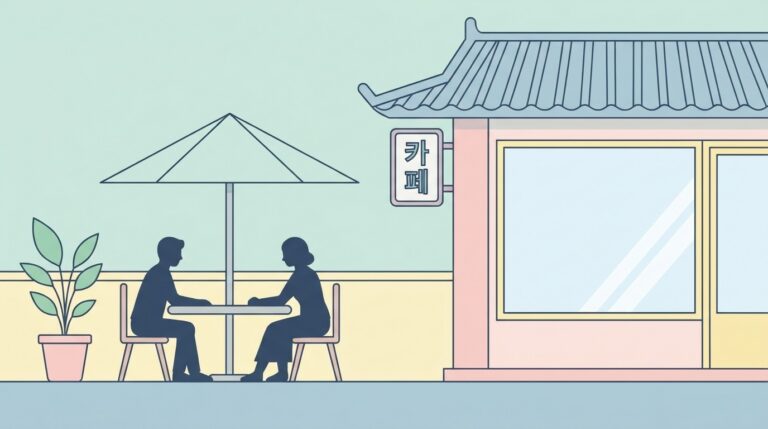
안녕하세요! 매일한글 에디터입니다. (Hello! I’m your Daily Hangul editor.) Have you ever found yourself sitting at an ultra-trendy café in Seongsu-dong, staring at a crowd of smartly dressed twenty-somethings meticulously taking 45 minutes to photograph a single pastry before taking a bite? Or perhaps you’ve watched a K-drama where a salaryman starves on convenience store kimbap for two weeks just to lease a luxury German sedan so he won’t look “pitiful” at a high school reunion.
If you’ve spent any time immersed in Korean society, you’ve likely felt the gravitational pull of Chaemyeon (체면 – Face/Social standing). While relational consciousness can cultivate heartwarming solidarity and mutual respect, its dark twin is the constant anxiety over social judgment. Excessive preoccupation with reputation often spirals into hollow ostentation over substance. As an advanced (C1) Korean learner, grasping this cultural dichotomy is essential for understanding societal debates and expressing critical viewpoints with natural fluency. Let’s explore the nuanced language Korean natives use when navigating the fine line between dignity and empty vanity.
Phase 2: Top 3 Core Expressions
1. 허례허식 (Heoryeheosik)
- Pronunciation: [Heo-rye-heo-sik] (Think of a sighing “Huh-reh” followed by a crisp “huh-seek”)
- Meaning: Empty formalities and vain ostentation (Literally: empty ceremonies and hollow decorations).
- K-Culture Moment: In the drama Sky Castle, parents throw outrageously opulent dinner parties simply to display family prestige, an archetypal illustration of 허례허식.
- Editor’s Insight: This four-character idiom (사자성어) is frequently used in cultural critiques, editorials, and serious conversations regarding expensive wedding traditions, ostentatious gift packages, or redundant corporate rituals.
- Situation Spectrum: Casual ⚠️ | Semi-formal ✅ | Formal ✅
- 🤔 Think About It: How does your native culture differentiate between healthy ceremonial respect and burdensome social vanity?
2. 남의 시선을 과도하게 의식하다 (Nam-ui siseoneul gwadohage uisikhada)
- Pronunciation: [Nam-ui shi-seon-eul gwa-do-ha-ge ui-sik-ha-da] (Flow smoothly: “she-sun-ul”, then a deliberate “gwa-doh”)
- Meaning: To be overly self-conscious of others’ gaze / To constantly worry about how others perceive you.
- K-Culture Moment: A character in My Liberation Notes (나의 해방일지) describing the exhausting daily battle of living up to society’s arbitrary benchmarks.
- Editor’s Insight: While beginners say “눈치 봐요” (Nunchi bwayo), advanced speakers employ “시선을 의식하다” (siseoneul uisikhada) to describe the internalized socio-psychological burden of public perception.
- Situation Spectrum: Casual ✅ | Semi-formal ✅ | Formal ✅
- 🤔 Think About It: Does “caring what people think” carry a more individualistic or collective connotation in your native tongue?
3. 실속을 차리다 (Silsogeul charida)
- Pronunciation: [Sil-so-geul cha-ri-da] (Crisp “Sil”, rounded “so-geul”, energetic “cha-ri-da”)
- Meaning: To look out for real substance / To choose practical benefits over superficial display.
- K-Culture Moment: Seen in lifestyle variety shows when young couples deliberately reject multi-thousand-dollar wedding halls in favor of a small, meaningful registry and personal investments.
- Editor’s Insight: Sil-sok (실속) denotes genuine inner substance. The phrase can sometimes carry a cheeky hint of being shrewdly self-interested, but it is predominantly admired in contrast to wasteful vanity.
- Situation Spectrum: Casual ✅ | Semi-formal ✅ | Formal ✅
- 🤔 Think About It: Is practical frugality celebrated or scrutinized within your community when high-stakes social events occur?
Phase 3: Textbook Korean vs. Real Korean
Situation 1: Calling out someone who spends excessively just to flaunt status
- 📖 Textbook Korean: 그 사람은 겉치레에 많은 돈을 낭비해요. (Geu sarameun geotchi-ree maneun doneul nangbihaeyo. / That person wastes a lot of money on outward appearances.)
- 🗣️ Real Korean: 걔 완전 폼생폼사잖아. 남들 시선 때문에 분수에 넘치게 플렉스하는 거지. (Gyae wanjeon pomsaengpomsa-janha. Namdeul siseon ttaemune bunsue neomchige peullekseu-haneun geoji. / He’s totally all about style over life. He’s flexing way beyond his means just because of what others think.)
- 💡 Why the difference? C1 speakers blend classical idioms like 분수에 넘치다 (to live beyond one’s station) with vibrant colloquialisms like 폼생폼사 (living and dying for image) to deliver sharp, authentic social commentary.
Situation 2: Choosing smart practicality over peer pressure
- 📖 Textbook Korean: 저는 남들의 평가보다 실용적인 이익을 더 중요하게 생각합니다. (Jeoneun namdeurui pyeong-gaboda siryongjeogin yieigeul deo jung-yohage saenggakhapnida. / I consider practical profit more important than others’ evaluations.)
- 🗣️ Real Korean: 남들 눈치 볼 필요 뭐 있어? 실속만 챙기면 장땡이지. (Namdeul nunchi bol piryo mwo isseo? Silsokman chaeng-gimyeon jhang-ttaeng-iji. / Why care about other people’s gazes? As long as you take care of the substance, you’re golden.)
- 💡 Why the difference? Native conversation relies on idiomatic endings like ~장땡이다 (to be the best outcome / case closed) to confidently dismiss unnecessary social performance.
Phase 4: K-Culture Deep Dive & Non-Verbal Etiquette
4-1. Nunchi & Non-Verbal Dynamics
When discussing wealth, status, or face-saving measures, direct bragging (자랑질) is considered vulgar, yet subtle signals are omnipresent. Koreans often perform a delicate dance called 겸양 (modesty display): downplaying an expensive purchase with statements like “어쩌다 보니 샀어요” (I just somehow ended up buying it) while subtly angling the brand logo forward. If someone around you is caught trapped in an ostentatious lie or an overstretched purchase, polite nunchi dictates looking away or gently changing the subject without exposing their loss of face (체면 손상).
4-2. Cultural Code Analysis: The Wedding Congratulatory Money Dilemma (축의금 문화)
In South Korea, wedding attendance is rarely just an intimate celebration; it is a transactional ledger of relational reciprocity (품앗이). Guests often agonize over whether to give 50,000 KRW, 100,000 KRW, or 150,000 KRW depending on the luxury level of the hotel venue and the closeness of the relationship. Giving too little risks damaging chaemyeon, while overspending strains personal finances. This friction between social expectations and economic reality is the ultimate stage where 허례허식 clashes with practical common sense.
Phase 5: Real-Life Roleplay Scenario
Setting: A cozy craft beer pub near Gangnam Station on a rainy Friday night.
Characters:
* Min-woo (민우): Your 32-year-old Korean coworker who feels pressured to finance an imported car before an upcoming college reunion.
* You: An astute, culturally savvy friend offering empathetic yet grounded perspective.
- 민우: 이번 동창회에 다들 외제차 끌고 온다는데, 나만 국산 준중형이라 솔직히 좀 꿀려. (Ibeon dongchanghoe-e dadeul oejecha kkeulgo ondaneunde, naman guksan junjunghyeong-ira soljikhi jom kkullyeo.)
- 🎭 Slumps shoulders, nervously peeling the label off his beer bottle.
- (Translation: Everyone says they’re driving foreign cars to the reunion; honestly, I feel so inferior driving my compact domestic car.)
- You: 민우 씨, 남들 시선 때문에 무리해서 차를 바꾸는 건 허례허식 아닐까요? (Min-woo ssi, namdeul siseon ttaemune murihaeseo chareul bakkuneun geon heoryeheosik anilkkayo?)
- 🎭 Leans in with genuine concern, making steady eye contact.
- (Translation: Min-woo, isn’t overstretching your budget to change cars just because of others’ gaze empty ostentation?)
- 민우: 머리로는 알지. 근데 한국 사회에서 체면이라는 게 무시하기 힘들잖아. 보여주기식이라도 어쩔 수 없어. (Meorironeun alji. Geunde hanguk sahoe-eseo chaemyeon-iraneun ge musi-hagi himdeuljanha. Boyeojugisik-irado eojjeol su eopseo.)
- 🎭 Sighs deeply and takes a heavy sip of craft beer.
- (Translation: Logically I know that. But in Korean society, “face” is hard to ignore. Even if it’s just for show, sometimes you have no choice.)
- You: 남에게 보여지는 겉모습보다 본인의 통장 잔고와 실속이 훨씬 더 중요하죠. (Nam-ege boyeojineun geotmoseupboda bonin-ui tongjang jango-wa silsogi hwolssin deo jung-yohajyo.)
- 🎭 Taps the table gently for emphasis with an encouraging smile.
- (Translation: Your actual bank balance and substance are infinitely more important than the outward appearance shown to others.)
- 민우: 듣고 보니 맞네. 괜히 남의 눈치 보느라 영끌해서 카푸어가 될 뻔했어. (Deutgo boni matne. Gwaenhi nam-ui nunchi boneura yeongkkeul-haeseo kapu-eo-ga doel ppeonhaesseo.)
- 🎭 Chuckles with relief as tension leaves his shoulders.
- (Translation: Hearing you say it, you’re right. I was about to scrape up every penny and end up a “car-poor” just from worrying about people’s opinions.)
- You: 맞아요! 남의 평판에 휘둘리지 말고, 우리만의 페이스대로 실속 차려요. (Majayo! Nam-ui pyeongpane hwidulliji malgo, uriman-ui peiseu-daero silsok charyeoyo.)
- 🎭 Raises glass for a cheerful toast.
- (Translation: Exactly! Let’s not get swayed by other people’s judgments, let’s keep our substance at our own pace.)
- 민우: 고마워! 네 덕분에 허세 부리려던 마음이 싹 사라졌다. (Gomawo! Ne deokbune heose buriryeodeon maeumi ssak sarajyeotda.)
- 🎭 Clinks glasses enthusiastically with a renewed grin.
- (Translation: Thank you! Thanks to you, my urge to bluff has completely vanished.)
- You: 짠! 이제 껍데기 말고 맛있는 안주나 더 시켜요! (Jjan! Ije kkeopdegi malgo masinneun anjuna deo sikyeoyo!)
- 🎭 Laughs and gestures toward the food menu.
- (Translation: Cheers! Now let’s forget the empty shells and order more delicious appetizers!)
🔀 Interactive Branch Point:
If Min-woo still insists: “그래도 첫인상인데 어떻게 남의 시선을 아예 안 봐?” (Still, it’s first impressions, how can you totally ignore people’s eyes?) How would you reply?
* Option A: “남의 시선만 맞추다 보면 끝이 없어요. 당당한 태도가 진짜 체면이에요.” (Best: Empathetic, culturally profound, reframes true dignity.)
* Option B: “남들 신경 쓰는 사람들은 다 한심한 것 같아요.” (Bad: Overly blunt, dismissive of the structural reality of Korean face culture.)
* Option C: “그럼 그냥 렌터카 하루 빌려서 타고 가요.” (Risk: Pragmatic compromise, but skirts solving his deeper anxiety.)
Phase 6: 10-Second Emotional Shadowing Drill
[😒 씁쓸하고 솔직하게 - Bittersweet & candid]
남들 시선 맞추려다 / 가랑이 찢어지겠어요. (Namdeul siseon matchuryeoda / garang-i jjijeojigesseoyo.)
(Trying to match other people’s standards / will tear my wallet apart.)-
[💡 단호하지만 다정하게 - Firm yet gentle]
허례허식에 휘둘리지 말고 / 우리 실속부터 챙겨요. (Heoryeheosige hwidulliji malgo / uri silsokbuteo chaeng-gyeoyo.)
(Let’s not get swayed by hollow ostentation / and look after our real substance first.) -
[😌 후련하고 당당하게 - Relieved & confident]
남들이 뭐라 하든 / 내 실속이 먼저죠! (Namdeuri mwora hadeun / nae silsogi meonjeojyo!)
(No matter what others say / my substance comes first!)
Phase 7: K-Culture Mini Dictionary
- 체면 (Chaemyeon – Face/Prestige): The moral, social, and reputational dignity maintained in relational networks. In corporate life, rejecting a senior’s invite openly damages chaemyeon.
- 겉치레 (Geotchi-re – Outward Window-Dressing): Decorative embellishments designed to hide lack of actual value. Used when describing over-packaged traditional holiday gift sets.
- 하차감 (Hachagam – The “Stepping-Out” Sensation): A modern neologism describing the thrill or perceived prestige felt when stepping out of an expensive car in front of a crowd.
- 보여주기식 (Boyeojugisik – For-Show Measure): Superficial gestures done strictly to appease public observation rather than solving core problems.
Phase 8: Traveler’s Survival Kit
Top 3 Survival Expressions
- 포장만 거창한 것 같아요. (Pojangman geochanghan geot gatayo.)
- Meaning: It seems only the packaging is extravagant.
- Pro Tip: Use this when shopping at tourist markets to subtly decline over-decorated, low-substance souvenir baskets.
- 형식적인 건 생략하고 편하게 해요. (Hyeongsikjeogin geon saengnyakhago pyeonhage haeyo.)
- Meaning: Let’s skip the formalities and keep it casual.
- Pro Tip: A great phrase to break the ice with Korean project partners who appear stiffly protocol-driven.
- 가성비랑 실속이 제일 중요하죠. (Gaseongbirang silsogi jeil jung-yohajyo.)
- Meaning: Value-for-money and real substance are most important.
- Pro Tip: Instantly builds rapport with local shopkeepers who appreciate grounded shoppers.
Editor’s Travel Note
When navigating modern Korean metropolitan areas, status pressures often manifest in restaurant queue culture and luxury shopping districts like Cheongdam. To discover authentic, substance-first culinary spots instead of viral “for-show” traps, rely on genuine local review filters. Be sure to check the Naver Map app download guide to cross-reference star ratings and uncensored photo reviews from verified local neighborhood residents.
Phase 9: “One Step Deeper” (Reflective Question)
Korean culture’s relationalism (gwangye-juui) means identity is rarely defined purely in isolation; one exists in relation to the community’s validation. While this fosters unparalleled public safety, civic discipline, and communal warmth, it inherently amplifies anxiety over falling behind one’s peers. Balancing respect for community standards without sacrificing personal autonomy is perhaps the defining internal journey for modern Koreans.
💬 Your Turn: Have you ever experienced social pressure to spend money or look successful just to satisfy others’ expectations? Share your story in Korean or English below!
Phase 10: FAQ & Mistake Prevention
Q: Is “체면” (Chaemyeon) always a negative concept in Korea?
A: Not at all. Historically, maintaining 체면 was rooted in Confucian ethics where leaders upheld rigorous moral integrity and composure under hardship. It becomes problematic only when it turns into 허례허식—maintaining an empty facade without ethical or practical substance.
Q: What is the difference between “허세” (Heose) and “허례허식” (Heoryeheosik)?
A: Heose (허세) refers to individual bluffing or acting tough/rich (e.g., bragging about famous friends). Heoryeheosik (허례허식) refers to institutionalized or customary social ceremonies and collective rituals that are wasteful and extravagant.
Q: Can I use “실속파” (Silsokpa) to describe myself?
A: Yes! Calling yourself a “실속파” (someone who prioritizes practical substance over showmanship) is viewed very positively, signaling emotional maturity and financial prudence.
🚨 Common Mistakes Warning Board
- Mistake: Using 눈치 (Nunchi) when you mean 허례허식 (Heoryeheosik).
- Why: Nunchi is the sensory skill of reading rooms; 허례허식 is the cultural symptom of societal vanity.
- Correct Action: Say “남의 시선에 얽매여 허례허식을 부린다” (Bound by others’ gaze, engaging in empty vanity).
- Mistake: Assuming “플렉스” (Flex) is always admired.
- Why: Among educated adults, excessive flexing without substance often draws silent eye-rolls and labels of “철없다” (immature).
- Correct Action: Praise someone’s “알짜배기” (solid, hidden substance) rather than superficial luxury.
- Mistake: Directly telling an older Korean that their custom is “허례허식이에요”.
- Why: It sounds like a direct assault on their personal honor.
- Correct Action: Soften with: “요즘 세대에는 다소 부담스러운 형식인 것 같아요” (For the younger generation, it feels like a slightly burdensome formality).
Phase 11: Action Mission & Engagement
- 🥉 Bronze Mission: Pronounce 허례허식 (Heo-rye-heo-sik) and 실속 (Sil-sok) out loud 5 times using Phase 6’s emotional shadowing guide.
- 🥈 Silver Mission: Write a 2-sentence journal entry comparing your own consumption habits versus societal expectations using the grammar
~기보다(는) 실속을 차리다. - 🥇 Gold Mission: Watch an episode of a contemporary K-drama (like Celebrity or Queen of Tears), identify a scene depicting social prestige pressure, and explain it to a Korean friend using “남의 시선” and “체면”.
🎮 K-Culture Mission: On your next trip to Seoul, spot an advertisement emphasizing practical benefits over luxury branding (look for the words “갓성비” or “실속”) and snap a photo for your Korean study log!
Phase 12: Interactive Quiz Challenge
1. Situational Judgment:
Your acquaintance is going deeply into debt to pay for a massive, multi-tiered flower arrangement for a casual store opening to avoid “looking poor.” Which idiom best diagnoses this behavior?
(A) 온고지신 (Ongojisin)
(B) 허례허식 (Heoryeheosik)
(C) 유비무환 (Yubimuhwan)
2. Fill in the Blank:
남의 ________을/를 너무 과도하게 의식하다 보면 자기 자신을 잃어버리기 쉽다. (If you are overly conscious of others’ ________, it’s easy to lose yourself.)
3. True or False:
In contemporary Korea, prioritizing “실속” over extravagant ceremony is increasingly viewed as a mature and wise life choice by younger demographics.
🔍 Click here to view Answers and Cultural Explanations
- Answer: (B) 허례허식 (Heoryeheosik).
- Explanation: Engaging in debt just to show off celebratory flowers is the textbook definition of hollow social formalities.
- Answer: 시선 (Siseon / gaze) or 눈치 (nunchi).
- Explanation: “남의 시선을 의식하다” is the standard advanced colocation for being hyper-aware of public perception.
- Answer: True.
- Explanation: Rising economic realism has caused a widespread shift towards small weddings (스몰 웨딩), no-frills travel, and practical living among Millennials and Gen Z.
- Explanation: Rising economic realism has caused a widespread shift towards small weddings (스몰 웨딩), no-frills travel, and practical living among Millennials and Gen Z.
🎬 Watch Our Daily Videos! (Daily Hangul Official Instagram)
Review the expressions you learned in this article with our fun daily short videos! Check out native pronunciation and real-life nuances in action.
- Instagram @dailyhangul_en







