

Phase 1: Empathy & Story Opening
안녕하세요! (Hello!) I’m your Daily Hangul editor and your personal Korean culture navigator.
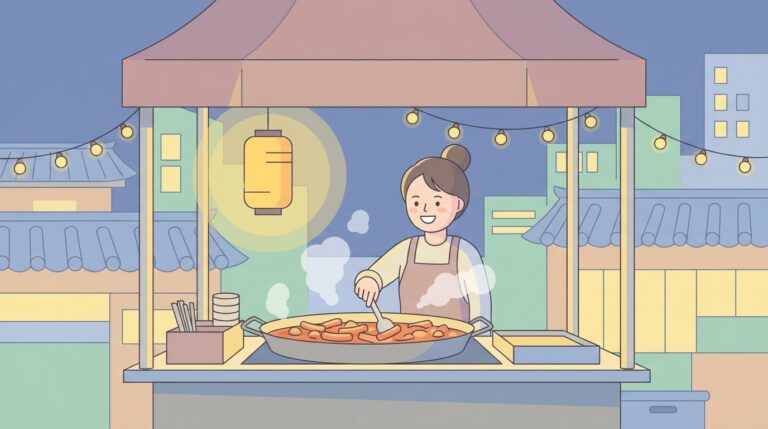
Picture this: You are standing in the vibrant, neon-lit streets of Hongdae after a long day of sightseeing. Your stomach is growling, and you walk up to a mouthwatering street food cart. You want to ask the friendly vendor if you can pay with your credit card: “카드 돼요?” (Kadeu dwaeyo? – Do you take card?). But instead of a crisp, airy 카 (Ka), you accidentally let out a soft 가 (Ga) or a tight 까 (Kka). The vendor tilts her head with a warm, puzzled smile, wondering if you just said “Go” (Ga) or asked to “Peel” something (Kka).
Every single Korean learner has been there! The three-way distinction between ㄱ (Plain), ㅋ (Aspirated), and ㄲ (Tense/Double) is notoriously one of the most frustrating speed bumps for English speakers. In English, we don’t change the meaning of a word just by tightening our throat or puffing out air. But in Korean, confusing 가 (Ga), 카 (Ka), and 까 (Kka) can turn “Please give me a discount” into complete gibberish.
Don’t panic! Based on real classroom breakthroughs with hundreds of beginner students, this guide will give you physical, intuitive sound hacks—like the famous tissue paper trick—to unlock native-like clarity in minutes. Let’s master these sounds together!
Phase 2: Core 3 Expressions In-Depth Breakdown
Let’s break down three essential everyday expressions featuring our trio: 가, 카, and 까.
1. 가요 (Gayo)
- Pronunciation: [Gayo] (Imagine the relaxed, gentle g in gum or guitar. Relax your vocal cords completely.)
- Meaning: Literal: “Goes” | Actual Nuance: “I’m going”, “Let’s go!”, or “Are you leaving?”
- K-Culture Moment: The classic K-Drama scene where the heroine grabs her bag in front of her friends at a pojangmacha (street tent) and says: “나 먼저 가요!” (Na meonjeo gayo! – I’m taking off first!)
- Editor’s Insight: This is a Plain Consonant (평음). Keep your throat relaxed and do not push out extra breath. If you hold your palm in front of your lips, you should feel almost no breath.
- Situation Spectrum: Casual: ✅ | Semi-formal: ✅ | Formal: ⚠️ (갑니다 [Gamnida] is preferred in formal military or corporate reports)
- 🤔 Think About It: In Korean, the same word 가요 can be a question, a statement, or a polite suggestion depending solely on your pitch. How does your native language indicate intent without changing words?
2. 카드 (Kadeu)
- Pronunciation: [Kadeu] (Explode a crisp burst of air like the k in kite or kitchen.)
- Meaning: Literal: Card | Actual Nuance: Credit/debit card or transit card (T-Money).
- K-Culture Moment: Swiping or tapping your transit card at Gangnam Station while the turnstile happily chirps: “카드를 다시 대주세요” (Kadeureul dasi daejuseyo – Please tap your card again).
- Editor’s Insight: This is an Aspirated Consonant (격음). You must deliver a sharp burst of air. If you put a sheet of tissue in front of your mouth, it should visibly flutter when you say 카!
- Situation Spectrum: Casual: ✅ | Semi-formal: ✅ | Formal: ✅
- 🤔 Think About It: Most English loanwords in Korean use aspirated sounds like ㅋ, ㅌ, and ㅍ. Why do Korean speakers perceive English consonants as full of explosive breath?
3. 깎아주세요 (Kkakka juseyo)
- Pronunciation: [Kkak-kwa ju-se-yo] (Tense your throat like the sharp k in skate or sky. Absolutely zero puff of air!)
- Meaning: Literal: “Peel / cut it for me” | Actual Nuance: “Please give me a little discount!”
- K-Culture Moment: Wandering through Namdaemun Market, flashing a warm smile at a sock or souvenir vendor and playfully asking: “이모, 조금만 깎아주세요!” (Imo, jogeumman kkakka juseyo! – Auntie, give me a tiny discount!)
- Editor’s Insight: This is a Tense/Double Consonant (경음). Imagine holding your breath for a microsecond, tightening your vocal cords, and releasing a high-pitched, snappy click. A tissue held to your mouth should remain completely still.
- Situation Spectrum: Casual: ⚠️ | Semi-formal: ✅ | Formal: 🚫 (Never say this at luxury department stores or formal business counters!)
- 🤔 Think About It: Bargaining in traditional Korean markets is seen as building Jeong (warm human connection) rather than being stingy. How does your culture view negotiating prices?
Phase 3: Textbook Korean vs. Real Korean
Koreans in modern Seoul rarely talk like audio recordings from a 1995 textbook. Here is how real people sound:
Situation 1: Asking if a friend is heading out
- 📖 교과서 한국어 (Textbook): 어디에 가십니까? (Eodie gasimnikka? – Where are you going?)
- 🗣️ 진짜 한국어 (Real-World): 어디 가요? (Eodi gayo? – Where are you going? / Heading out?)
- 💡 왜 다를까? (Why the difference?): While -십니까 is grammatically pristine, it sounds like an announcer on the evening news or a soldier addressing a general. In everyday daily life, the relaxed, polite -요 (Eodi gayo?) sounds warm, modern, and natural.
Situation 2: Paying with plastic at a convenience store
- 📖 교과서 한국어 (Textbook): 신용카드로 계산해 주십시오. (Sinyong-kadeuro gyesanhae jusipsio. – Please calculate the bill using my credit card.)
- 🗣️ 진짜 한국어 (Real-World): 카드로 할게요! (Kadeuro halgeyo! – I’ll do card!)
- 💡 왜 다를까? (Why the difference?): Koreans value speed (Palli-palli culture). Stating your intention with -할게요 (I will do…) is crisp, ultra-polite, and saves precious seconds during the bustling lunchtime rush.
Phase 4: K-Culture Deep Dive & Non-Verbal Manners
4-1. 눈치 (Nunchi) & Body Language
When speaking Korean, your hands and eyes do half the talking!
* Paying with 카드 (Kadeu): When handing over your card to a cashier, hold it with both hands, or support your right wrist/forearm lightly with your left hand. Tossing a card on the counter with one hand is considered rude.
* Asking to 깎아주세요 (Kkakka juseyo): Never say this with a stern face! The secret sauce is playful Aegyo (friendly charm): tilt your head slightly, smile warmly, and deliver the tense 까 (Kka) with a high, melodic pitch. If your tone sounds flat and harsh, it might come across as demanding rather than friendly bargaining.
4-2. Culture Code: The Sound of Korean Street Markets
In traditional markets (Sijang), sounds are loud and vibrant. Vendors use acoustic clarity to stand out. Double consonants like 까 (Kka), 싸다 (Ssada – cheap), and 짜다 (Jjada – salty) are phonetically higher in pitch and carry through noisy streets. Mastering 까 doesn’t just improve your grammar—it connects you to the rich sonic heritage of Korean markets!
Phase 5: Real-World Roleplay Scenario
Setting: A steamy Pocha (street stall) in Jongno on a crisp autumn evening. The intoxicating aroma of spicy Tteokbokki and sizzling fried treats fills the air.
Characters:
* You: A hungry traveler eager to practice your Korean pronunciation.
* Imo-nim (이모님): The cheerful stall owner in her late 50s, wearing a colorful floral apron.
Dialogue:
1. You: 안녕하세요, 이모님! 떡볶이 일인분 가요? (Annyeonghaseyo, Imo-nim! Tteokbokki il-inbun gayo? – Hello, Auntie! Can I get one portion of tteokbokki?)
🎭 Bowing politely at a 30-degree angle with an excited smile.
2. Imo-nim: 어서 와요! 떡볶이 금방 줄게. 바삭한 튀김도 먹을래? (Eoseo wayo! Tteokbokki geumbang julge. Basakhan twigimdo meogeullae? – Welcome, dear! I’ll dish it out right now. Want some crispy fried snacks too?)
🎭 Scooping bright red rice cakes with a large ladle.
3. You: 네, 튀김도 주세요! 근데 조금만 깎아주세요? (Ne, twigimdo juseyo! Geunde jogeumman kkakka juseyo? – Yes, fried snacks too, please! But could you give me a tiny discount?)
🎭 Clasping hands together playfully with a bright grin.
4. Imo-nim: 아이고, 발음이 똑 부러지네! ‘까’ 소리를 예쁘게 내니까 만두 하나 서비스! (Aigo, bareumi ttok bureojine! ‘Kka’ sorireul yeppeuge naenikka mandu hana seobiseu! – Oh my, your pronunciation is so crisp! Since you pronounced ‘Kka’ so clearly, here’s a dumpling on the house!)
🎭 Laughing heartfully and dropping a golden fried dumpling onto your plate.
5. You: 와, 정말 감사해요! 결제는 카드로 할게요. (Wa, jeongmal gamsahaeyo! Gyeoljeneun kadeuro halgeyo. – Wow, thank you so much! For payment, I’ll pay by card.)
🎭 Reaching into your wallet and pulling out your card.
6. Imo-nim: 그래요! 저기 단말기에 카드 대면 돼요. (Geuraeyo! Jeogi danmalgie kadeu daemyeon dwaeyo. – Sure! Just tap your card on that reader over there.)
🎭 Nodding toward the small card terminal beside the stove.
7. You: 네! 맛있게 잘 먹겠습니다. (Ne! Masikke jal meokgetseumnida. – Yes! I will enjoy this meal.)
🎭 Tapping the card with both hands and giving a thankful nod.
8. Imo-nim: 맛있게 먹고 또 와요! (Masikke meokgo tto wayo! – Enjoy the food and come back again!)
🎭 Waving her tongs cheerfully.
🔀 Interactive Decision Point
Imo-nim hands you the plate of piping hot Tteokbokki. How do you respond to seal your natural Korean?
- Option A: “카요!” (Kayo!)
- Option B: “감사합니다, 잘 먹을게요!” (Gamsahamnida, jal meogeulgeyo!)
- Option C: “이거 너무 까요!” (Igeo neomu kkayo!)
Feedback:
* Option A [Bad]: Saying Kayo! with a heavy aspirated ‘K’ sounds like you’re trying to say Gayo (I’m leaving) while accidentally spitting air. She’ll wonder why you’re leaving before eating!
* Option B [Best]: Perfect native manner! You express gratitude and say “I will eat well!” with relaxed, polite intonation.
* Option C [Risk]: Kkayo makes no sense here and could be confused with Kkawayo (peeling) or Kkayeoyo (getting dumped/rejected in slang). Stick to polite thanks!
Phase 6: 10-Second Emotion Shadowing Drill
Shadow these lines out loud! Pay attention to the rhythm pauses (/) and adopt the indicated emotion.
[😊 Relaxed & Friendly]
저 지금 / 집에 / 가요.
(Jeo jigeum / jibe / gayo. / I am going home right now.)-
[⚡ Crisp & Confident]
계산은 / 카드로 / 할게요!
(Gyesaneun / kadeuro / halgeyo! / I’ll pay by card!) -
[🥺 Playful & Charming]
이모님, / 조금만 / 깎아주세요~
(Imo-nim, / jogeumman / kkakka juseyo~ / Auntie, give me just a tiny discount please~)
Phase 7: K-Culture Mini Dictionary
-
가성비 (Gaseongbi) | Noun: Value for money / Cost-effectiveness
- Real-world usage: When eating at a restaurant that gives gigantic portions for cheap: “여기 진짜 가성비 최고예요!” (This place has the absolute best value!)
- 카페 투어 (Kape tueo) | Noun: Cafe hopping
- Real-world usage: Seoul has the highest concentration of aesthetic themed cafes in the world. On weekends, friends often say: “주말에 성수동 카페 투어 갈래?” (Want to go cafe hopping in Seongsu-dong this weekend?)
- 깜짝 (Kkamjjak) | Adverb: With a sudden surprise / startled
- Real-world usage: Notice the strong double ㄲ! When a friend jumps out to surprise you: “깜짝이야!” (You scared me!)
- 꿀팁 (Kkultip) | Noun: Secret golden tip / Life hack
- Real-world usage: Combining Kkul (honey) and Tip. Pronounced with a tense ㄲ: “한국 여행 꿀팁 알려줄게요!” (I’ll share some golden travel hacks for Korea!)
Phase 8: Traveler’s Survival Kit
Top 3 Survival Phrases
- 가장 인기 있는 게 뭐예요? (Gajang ingi inneun ge mwoyeyo?)
- Meaning: What is the most popular item here?
- Pro Tip: Use this when the Korean menu looks overwhelming. Relax your throat on 가 (Ga).
- 카드 결제 돼요? (Kadeu gyeolje dwaeyo?)
- Meaning: Can I pay with a card?
- Pro Tip: Blow that puff of air on 카 (Ka). Practically all taxis and shops in Seoul accept cards.
- 깎아주시면 현금 낼게요! (Kkakka jusimyeon hyeongeum naelgeyo!)
- Meaning: If you give a discount, I’ll pay in cash!
- Pro Tip: A secret bargaining weapon in underground shopping centers like Express Bus Terminal (Goto Mall)!
Editor’s Travel Note
Before stepping foot onto the streets of Seoul, make sure to bypass Google Maps (which has limited walking route features in South Korea) and check the Naver Map navigation app download for international travelers. It will help you navigate subway lines and find top-rated cafes. Also, pick up a Climate Card (기후동행카드) or T-Money card at any convenience store for unlimited or convenient public transit taps!
Phase 9: A Step Deeper (Reflective Insight)
In Western languages, the distinction between sounds often relies on whether our vocal cords vibrate (voiced vs. voiceless, like ‘B’ vs. ‘P’ or ‘D’ vs. ‘T’). Korean, however, ignores vocal cord vibration and focuses on aerodynamic energy and muscular tension—Relaxed (ㄱ), Explosive (ㅋ), and Constricted (ㄲ).
This reflects a culture that is deeply attuned to subtle physical nuances, emotional atmospheres (Bunwigi), and interpersonal space (Nunchi). How you project your breath and pitch communicates your respect, warmth, or intimacy toward the listener.
💬 Your Turn: Which sound feels the trickiest in your mouth right now: the soft sigh of 가 (Ga), the pop of 카 (Ka), or the throat lock of 까 (Kka)? Drop a comment below and let’s practice it together!
Phase 10: FAQ & Common Mistakes
Q: Why do native Koreans hear my ‘Ka’ when I try to say ‘Ga’?
A: In English, the letter ‘K’ in words like sky has no breath, but at the start of words like kite, it has a huge breath. English speakers often accidentally blow air when pronouncing ㄱ, which makes Korean ears immediately register it as ㅋ. Keep ㄱ completely soft and sigh-like!
Q: Is the tissue paper trick actually accurate?
A: Yes! It is the gold standard used by Korean speech therapists. Hold a 1-ply tissue two inches from your mouth:
* 가 (Ga): The tissue barely quivers.
* 카 (Ka): The tissue violently flies forward from the puff of air.
* 까 (Kka): The tissue stays 100% motionless because the air is held back in your throat.
Q: Can I use 깎아주세요 (Kkakka juseyo) anywhere in Korea?
A: No! Only use it in open traditional street markets (like Gwangjang or Namdaemun) or underground clothing bazaars. Never use it in franchise cafes (like Starbucks), convenience stores, or sit-down franchise restaurants where prices are strictly automated.
🚨 Common Mistakes Warning Board
- ❌ Mistake 1: Pronouncing 까 (Kka) with a heavy puff of air like an English “C” in “Cat”.
- ✅ Correct Action: Cut off the airflow! Say the English word sky, notice the sound of the k, and isolate that exact tense sound.
- ❌ Mistake 2: Starting 가 (Ga) with a deep, vibrating Western ‘G’ sound (like “Go”).
- ✅ Correct Action: Don’t push your vocal cords heavily. It should sound halfway between a gentle ‘G’ and a breathy ‘K’.
- ❌ Mistake 3: Forgetting polite hand manners when handing over your 카드 (Kadeu).
- ✅ Correct Action: Always present the card using both hands to show basic respect.
Phase 11: Action Mission & Participation
- 🥉 Bronze Mission (Solo Mastery): Grab a tissue paper or light strip of paper. Say 가 – 카 – 까 five times in a row. Make sure the tissue flutters only on 카!
- 🥈 Silver Mission (Social Share): Record a 5-second audio on your phone saying: “카드로 할게요!” (Kadeuro halgeyo!). Listen back to ensure you hear that crisp air burst.
- 🥇 Gold Mission (Real Action): The next time you order at a Korean bakery, restaurant, or online chat with a Korean friend, use 가요 or ask for the card option using proper pronunciation!
- 🎮 K-Culture Mission: Watch any K-Drama episode this week. Spot how many times characters say “가자!” (Gaja! – Let’s go!) versus how they pronounce “카페” (Kape – Cafe). Notice the difference in mouth shape!
Phase 12: Interactive Quiz Challenge
Test your ears and instincts with these three quick questions!
- Situation Judgment: You are ordering an iced latte at a trendy cafe in Seongsu-dong. How should you say “I’ll pay by card”?
- A) 가드로 할게요 (Gadeuro halgeyo)
- B) 카드로 할게요 (Kadeuro halgeyo)
- C) 까드로 할게요 (Kkadeuro halgeyo)
- Fill in the Blank: When asking an elderly vendor at Namdaemun Market for a sweet discount, you say: “이모님, 조금만 _____주세요!”
- A) 가가 (Gaga)
- B) 카카 (Kaka)
- C) 깎아 (Kkakka)
- Culture True or False: In Korea, double consonants like ㄲ are pronounced with a massive expulsion of breath compared to plain consonants.
- True or False?
👉 Click here to reveal the answers and explanations!
- Answer: B) 카드로 할게요
- Explanation: The word for card is borrowed from English (Card) and is pronounced with the aspirated ㅋ sound [Kadeu]. Saying Gadeu or Kkadeu will sound unnatural!
- Answer: C) 깎아
- Explanation: The verb is 깎다 (Kkakda – to cut or peel). You need the tense ㄲ consonant to say 깎아주세요 (Kkakka juseyo).
- Answer: False!
- Explanation: Tense consonants (쌍자음 like ㄲ) have zero puff of air! The vocal cords are clenched tight. Aspirated consonants (거센소리 like ㅋ) are the ones with the big puff of air.
- Explanation: Tense consonants (쌍자음 like ㄲ) have zero puff of air! The vocal cords are clenched tight. Aspirated consonants (거센소리 like ㅋ) are the ones with the big puff of air.
🎬 Watch Our Daily Videos! (Daily Hangul Official Instagram)
Review the expressions you learned in this article with our fun daily short videos! Check out native pronunciation and real-life nuances in action.
- Instagram @dailyhangul_en







