

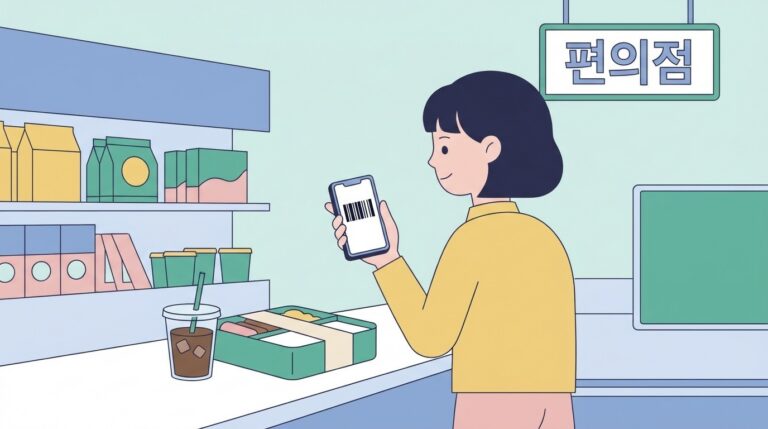
Stop Overpaying at Korean Convenience Stores: The 30% Off Life Hack You Need
Phase 1: Empathy (Story-Driven Opening)
안녕하세요! 매일한글 에디터입니다! (Hello! This is your Daily Hangul editor!)
Picture this: You are living your dream life in Seoul, waking up to the gentle morning hum of Hongdae or Gangnam. Before catching the subway, you do what millions of Koreans do every single day—step into the brightly lit sanctuary of a GS25 or CU. You grab a savory pork bulgogi lunchbox (dosirak) and an iced Americano in a plastic pouch with an ice cup. Total cost? Roughly 6,500 KRW. Do that 25 days a month, and you are easily spending over 160,000 KRW just on grab-and-go convenience food.
Many of our international students and expats ask us: “Between Baemin Club, Coupang Wow, and Naver Plus, which membership saves the most money?” While delivery apps are great for rainy weekends, here is the real insider secret nobody tells foreigners: If you buy convenience store meals or coffee daily, convenience store app subscription passes (편의점 구독권) offer the most unbeatable value in Korea. For just 1,000 to 4,000 KRW a month, apps like Pocket CU and GS25’s “Our Neighborhood GS” slash 20% to 30% off your daily lunchboxes and drinks.
In this lesson, we will break down the essential Korean phrases you need to discuss smart budget hacks, show cashier barcodes with confidence, and chat about saving money like a savvy Seoul local. Let’s level up your Korean while saving your wallet!
Phase 2: Core Expressions Deep Dive
1. 구독권을 쓰면 훨씬 저렴해요 (Gudokgwon-eul sseumyeon hwolssin jeoryeomhaeyo)
- Pronunciation: [Gu-dok-gwon-eul sseu-myeon hwol-ssin jeo-ryeom-hae-yo] (Think: “Goo-doke-gwun” + “hwool-seen jeo-ryum-hae-yo”)
- Meaning: “If you use a subscription pass, it’s way cheaper.”
- K-Culture Moment: You will hear this constantly on YouTube vlogs where Korean university students reveal their “Jantech” (짠테크 – penny-pinching frugality hacks) tips for surviving high living costs in Seoul.
- Editor’s Insight: 훨씬 (hwolssin) emphasizes a dramatic difference, far stronger than simply saying 더 (deo – more). Pair it with 저렴해요 (jeoryeomhaeyo), which is the polite, polished counterpart to 싸요 (ssayo – cheap).
- Situation Spectrum: Casual: ⚠️ | Semi-formal: ✅ | Formal: ✅
- 🤔 Think About It: In your home country, do people prefer monthly subscriptions for food staples, or is this digital convenience ecosystem unique to hyper-connected Korea?
2. 가성비가 진짜 최고예요 (Gaseongbiga jinjja choegoyeyo)
- Pronunciation: [Ga-seong-bi-ga jin-jja choe-go-ye-yo] (Sounds like: “Ga-sung-bee-ga jean-jja chway-go-yay-yo”)
- Meaning: Literal: “Price-to-performance ratio is truly the best.” / Nuance: “This gives you the absolute best bang for your buck!”
- K-Culture Moment: When K-Pop idols film backstage reality shows and show off their favorite 4,500 KRW convenience store feast, they enthusiastically shout this phrase to the camera.
- Editor’s Insight: 가성비 (Gaseongbi) is an essential compound noun (가격 대비 성능). In modern Korean consumer culture, being praised as 가성비 최고 is the ultimate compliment for any product or meal.
- Situation Spectrum: Casual: ✅ | Semi-formal: ✅ | Formal: ⚠️
- 🤔 Think About It: Koreans love optimizing value without sacrificing quality. How does your native language express the concept of “great value for money”?
3. 매일 사 먹으면 이게 이득이에요 (Maeil sa meogeumyeon ige ideuk-ieyo)
- Pronunciation: [Mae-il sa meo-geu-myeon i-ge i-deu-gi-e-yo] (Pronounce ‘ideuk’ like “ee-deuk” with a quick glottal stop)
- Meaning: Literal: “If you buy and eat it every day, this is a gain.” / Nuance: “If you eat this daily, you actually come out ahead.”
- K-Culture Moment: In office K-dramas (like Misaeng), junior coworkers whisper this to each other during quick 15-minute lunch breaks when debating whether to buy an app membership.
- Editor’s Insight: 이득 (ideuk) means profit or financial gain. In colloquial speech, young people often shorten it to 개이득 (gae-ideuk – huge gain/super lucky score), but stick to 이득이에요 in polite company.
- Situation Spectrum: Casual: ✅ | Semi-formal: ✅ | Formal: ⚠️
- 🤔 Think About It: Notice the structure 사 먹다 (sa meokda – buy and eat). Korean frequently stacks consecutive verbs together to describe seamless actions.
Phase 3: Textbook Korean vs. Real Korean
Situation 1: Explaining that something is a huge money-saver
- 📖 교과서 한국어 (Textbook): 이 구독 서비스는 비용 절감에 많은 도움이 됩니다. (I gudok seobiseuneun biyong jeolgame maneun doumi doemnida. / “This subscription service is very helpful in reducing expenses.”)
- 🗣️ 진짜 한국어 (Real-life): 이거 구독하면 완전 이득이에요! (Igeo gudokhamyeon wanjeon ideuk-ieyo! / “If you subscribe to this, it’s totally worth it!”)
- 💡 왜 다를까? (Why the difference?): Textbook Korean overuses Sino-Korean formal nouns (비용 절감 – expense reduction). Real Koreans use dynamic colloquial words like 완전 (totally) and 이득 (benefit/gain) to sound warm and relatable.
Situation 2: Asking if a discount app barcode can be scanned
- 📖 교과서 한국어 (Textbook): 모바일 애플리케이션 할인 바코드를 인식해 주시겠습니까? (Mobail aepeullikeisyeon halin bakodeureul insikhae jusigessseumnikka? / “Would you please recognize the mobile application discount barcode?”)
- 🗣️ 진짜 한국어 (Real-life): 앱 할인 바코드도 같이 찍어주세요. (Aep halin bakodedeo gachi jjigeojuseyo. / “Please scan this app discount barcode together too.”)
- 💡 왜 다를까? (Why the difference?): Nobody says 인식하다 (recognize/scan sensor-wise) at checkout counters. The everyday verb for scanning a barcode or beeping an item is 찍다 (to stamp/snap/beep).
Phase 4: K-Culture Deep Dive & Non-Verbal Manners
4-1. 눈치 (Nunchi) & Barcode Etiquette at the Counter
Korean convenience store counters are high-speed environments. Both cashiers and customers take pride in rapid transactions (빨리빨리 culture).
* The Screen Prep: Before you reach the cashier counter, open your convenience store app (GS25 or CU) and increase your phone screen’s brightness. Fumbling to unlock your phone while people wait behind you creates awkward tension.
* The Two-Handed Angle: Present your smartphone screen facing the cashier, holding it with both hands or supporting your right wrist with your left hand. Say gently: “할인 바코드 있어요” (Halin bakodeu isseoyo – I have a discount barcode).
4-2. The “Pyeon-shim” (Convenience Store Devotion) Phenomenon
In Korean media and daily life, convenience stores are not just places for emergency milk. With chef-collaborated lunchboxes, premium single-origin pouch coffees, and viral desserts (like Yonsei Cream Breads), convenience stores are lifestyle hubs. For busy office workers (K-jikjang-in) and students, buying a monthly app pass isn’t just about saving money—it’s part of an intentional, organized lifestyle known as 갓생 (God-saeng – living an exemplary, disciplined life).
Phase 5: Real-Life Roleplay Scenario
Setting: A sleek GS25 convenience store near Gangnam Station at 12:15 PM. You are grabbing lunch with your Korean coworker, Min-ji (민지).
- 민지: 오늘 점심 뭐 먹을래요? 배달 시킬까요? (Oneul jeomsim mwo meogeullaeyo? Baedal sikilkkayo?)
🎭 Scanning the packed office, checking delivery wait times on her phone.
“What do you want to eat for lunch today? Should we order delivery?” -
You: 배달비가 너무 비싸서 편의점 도시락 어때요? (Baedalbiga neomu bissaseo pyeon-uijeom dosirak eottaeyo?)
🎭 Pointing outside toward the nearby GS25 with a friendly smile.
“Delivery fees are so expensive, so how about a convenience store lunchbox?” -
민지: 좋아요! 요즘 편의점 도시락 퀄리티 진짜 좋더라고요. (Joayo! Yojeum pyeon-uijeom dosirak kwolliti jinjja joteoragoyo.)
🎭 Walking together into the cool air-conditioned convenience store.
“Sounds great! The quality of convenience store lunchboxes these days is really nice.” -
You: 혹시 편의점 앱 구독권 쓰세요? (Hoksi pyeon-uijeom aep gudokgwon sseuseyo?)
🎭 Taking out your phone and showing the app screen.
“By any chance, do you use the convenience store app subscription pass?” -
민지: 아니요, 그게 뭐예요? 매달 돈 내는 거 아니에요? (Aniyo, geuge mwoyeyo? Maedal don naeneun geo anieyo?)
🎭 Tilting her head with curiosity.
“No, what is that? Don’t you have to pay money every month?” -
You: 한 달에 3,990원인데, 30%나 할인돼서 완전 가성비 최고예요. (Han dare samcheon-gubaek-gusip-won-inde, samsip-peosenteu-na halindwaeseo wanjeon gaseongbi choegoyeyo.)
🎭 Highlighting the monthly savings breakdown on your screen.
“It’s 3,990 KRW a month, but you get 30% off, so the value is unbeatable!” -
민지: 대박! 도시락 자주 먹으면 무조건 이득이네요. (Daebak! Dosirak jaju meogeumyeon mujogeon ideuk-ineyo.)
🎭 Eyes widening in surprise as she calculates her weekly spend.
“Awesome! If you eat lunchboxes often, you definitely come out ahead.” -
You: 맞아요. 매일 사 먹으면 이게 제일 저렴해요. (Majayo. Maeil sa meogeumyeon ige jeil jeoryeomhaeyo.)
🎭 Nodding confidently while picking up your favorite bulgogi tray.
“Exactly. If you buy it daily, this is the cheapest way.”
🔀 Interactive Choice Point
Min-ji asks: “Can I use your barcode today so I can try the discount too?”
- Choice A: “안 돼요. 제 돈 주고 산 거라서 다른 사람은 못 써요.” (No. I bought it with my money, so others can’t use it.)
- Feedback [Risk]: While accurate in strict app terms (accounts are personal), this sounds abrasive and harsh to a coworker.
- Choice B: “당연하죠! 오늘 제 바코드로 같이 찍어드릴게요!” (Dangyeonhajo! Oneul je bakodeuro gachi jjigeodeurilgeyo!)
- Feedback [Best]: Warm, generous, and culturally natural! You can scan your app pass for her meal as long as daily limit quotas allow.
- Choice C: “배민클럽이 더 나으니까 그거 쓰세요.” (Baemin Club is better, so use that.)
- Feedback [Bad]: Completely dismisses her interest in the convenience store context and misses the chance to bond.
Phase 6: 10-Second Emotion Shadowing Drill
Practice matching these natural rhythm breaks (/) and emotional deliveries:
[😃 신나고 확신에 차서 / Enthusiastic & Confident]
매일 사 먹으면 / 이게 무조건 이득이에요!
(Maeil sa meogeumyeon / ige mujogeon ideuk-ieyo!)-
[😲 놀라며 감탄하듯 / Amazed & Impressed]
한 달에 30% 할인이면 / 가성비가 진짜 최고네요!
(Han dare samsip-peosenteu halinimyeon / gaseongbiga jinjja choegoneyo!) -
[😊 정중하고 부드럽게 / Polite & Friendly at Checkout]
계산할 때 / 앱 구독 바코드도 / 같이 찍어주세요.
(Gyesanhal ttae / aep gudok bakodedeo / gachi jjigeojuseyo.)
Phase 7: K-Culture Mini Dictionary
- 가성비 (Ga-seong-bi) | Price-to-performance ratio / Cost-effectiveness
- Everyday usage: Used constantly when reviewing restaurants, budget tech, or travel spots to indicate smart purchases.
- 도시락족 (Do-si-rak-jok) | The “Packed Lunch Tribe”
- Everyday usage: Refers to students and workers who opt for convenience store lunchboxes or home-packed meals to combat inflation.
- 꿀팁 (Ggul-tip) | “Honey tip” (Invaluable insider advice / Life hack)
- Everyday usage: Used across Korean social media and casual conversation to share money-saving secrets.
- 짠테크 (Jjan-te-keu) | Frugal finance / Penny-pinching investment strategies
- Everyday usage: A blend of 짜다 (stingy/salty) and 재테크 (financial technology), describing the trendy lifestyle of minimizing daily micro-expenses.
Phase 8: Traveler’s Survival Kit
Top 3 Cashier Survival Phrases
- 바코드 먼저 찍을게요. (Bakodeu meonjeo jjigeulkeyo.)
- Meaning: “I will scan the barcode first.”
- Pro Tip: Say this before tapping your credit card or T-Money so the cashier prepares the scanner gun.
- 영수증 버려주세요. (Yeongsujeung beoryeojuseyo.)
- Meaning: “Please throw away the receipt.”
- Pro Tip: Essential for quick exits when you don’t need physical paper.
- 전자레인지에 돌려야 하나요? (Jeonjareinjie dollyeoya hanayo?)
- Meaning: “Do I need to microwave this?”
- Pro Tip: Cashiers will point you to the in-store microwave counter where time settings are pre-labeled for lunchboxes.
Editor’s Travel Note
Before arriving in Korea, download the official convenience store apps to your phone. Check out the [Pocket CU Official App Download on Google Play] or the [GS25 Our Neighborhood App on the App Store]. Note that while Korean phone numbers are often required for payments inside apps, you can easily access discount passes and localized promotion barcodes right at the counter.
Phase 9: “One Step Deeper” (Reflective Question)
In many Western cultures, relying on convenience store food daily might imply neglect of one’s diet or financial desperation. In South Korea, however, the convenience store ecosystem reflects a high-tech, deeply respected solution to hyper-dense urban living. It symbolizes self-reliant modern budgeting (짠테크) and communal pragmatism. Instead of seeing it as cutting corners, Koreans view convenience store app optimization as a badge of clever, organized living.
💬 Your Turn: How are convenience stores viewed in your country? Would you feel comfortable having your lunch there every day if it cut your food budget in half? Tell us in the comments below!
Phase 10: FAQ & Common Mistakes
Q: Can foreigners sign up for GS25 or CU subscription passes without an ARC (Alien Registration Card)?
A: Yes! Most app interfaces allow registration using a localized Korean prepaid SIM card number, even before you receive your physical ARC.
Q: Does the 30% discount apply to everything in the store?
A: No. Subscriptions are category-specific. For instance, a “Dosirak Pass” covers lunchboxes and kimbap, while a “Cafe Pass” covers drip and pouch coffees. You choose the specific pass matching your daily habit.
Q: Can I combine app subscription discounts with 1+1 or 2+1 promotional items?
A: In most stores, subscription discounts cannot be stacked on items that are already part of a 1+1 event. The POS system automatically applies whichever gives you the greater discount.
🚨 Common Mistakes Alert!
- Mistake: Tapping your payment card before showing your discount barcode.
- Correct Action: Show and scan your app barcode first, then pay.
- Mistake: Saying “할인권 카드 있어요”.
- Correct Action: Keep it simple: “앱 바코드 있어요” (I have an app barcode).
- Mistake: Assuming the pass is valid unlimited times daily.
- Correct Action: Check your pass terms—most allow up to 5 to 10 uses per day, which is more than enough for daily meals!
Phase 11: Action Mission & Engagement
- 🥉 Bronze Level: Stand in front of your mirror and practice saying: “앱 할인 바코드도 같이 찍어주세요!” three times with natural intonation.
- 🥈 Silver Level: Next time you enter a GS25 or CU, find the subscription promo poster usually displayed near the register or lunchbox counter, and identify the word 구독 (subscription).
- 🥇 Gold Level: Successfully scan an app barcode or ask the clerk: “이거 앱 할인 돼요?” (Does this get an app discount?) during checkout!
- 🎮 K-Culture Mission: Watch an episode of a slice-of-life K-drama (like Work Later, Drink Now or My Liberation Notes) and spot how many times characters eat or meet outside a convenience store!
Phase 12: Interactive Quiz Challenge
Test your knowledge before your next convenience store run!
1. Situational Judgment: You want to tell your friend that a 3,000 KRW monthly coffee pass will save them tons of money because they drink iced Americanos twice a day. What do you say?
* (A) 배달비가 너무 아까워요.
* (B) 매일 마시면 이게 완전 이득이에요!
* (C) 편의점 커피는 맛이 없어요.
2. Fill in the Blank:
계산할 때 할인 바코드도 같이 ______ 주시겠어요? (When paying, could you scan the discount barcode together?)
* (A) 마셔
* (B) 찍어
* (C) 버려
3. True or False: In Korea, saying a product has great 가성비 (Gaseongbi) means it is low-quality and cheap.
* (A) True
* (B) False
👉 Click to reveal answers & explanations!
- Answer: (B) 매일 마시면 이게 완전 이득이에요! is the ideal B1 phrase to emphasize that daily frequency makes the subscription super beneficial.
- Answer: (B) 찍어 (from 찍다) is the standard verb used for scanning barcodes in Korean stores.
- Answer: (B) False! 가성비 means high quality relative to price—it is one of the highest compliments a consumer product can receive in Korea!
🎬 Watch Our Daily Videos! (Daily Hangul Official Instagram)
Review the expressions you learned in this article with our fun daily short videos! Check out native pronunciation and real-life nuances in action.
- Instagram @dailyhangul_en







