

Phase 1: Empathy & Story Opening
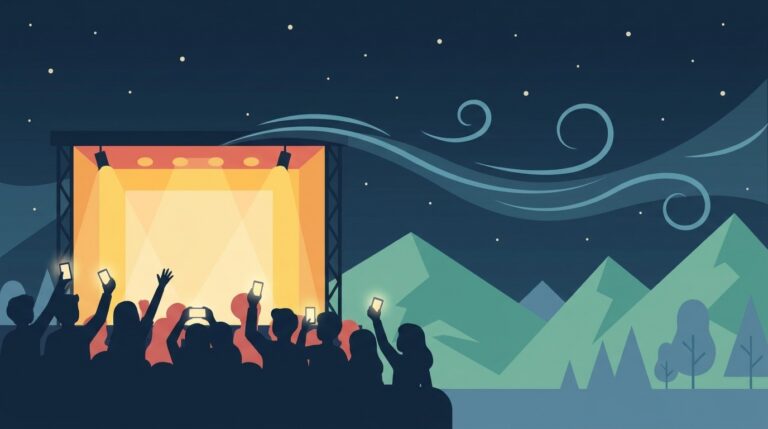
안녕하세요! 매일한글 에디터입니다. (Hello! This is your Daily Hangul Editor.) Have you ever stood on the grassy fields of Incheon’s Pentaport Rock Festival or Seoul’s Beautiful Mint Life as the cool night breeze rolls in? When the stars appear and tens of thousands of fans raise their phone flashlights to sing the headliner’s anthem, the magic is pure perfection—until you turn to share that goosebump moment with the Korean fan beside you and freeze up! Textbook Korean just doesn’t capture that festival rush. Built from real feedback by intermediate learners who felt tongue-tied at Hongdae clubs and outdoor stages, this guide gives you the exact emotional Korean to connect, sing along, and live the night like a local bestie.
Phase 2: Deep Dive into 3 Essential Expressions
1. 떼창하다 (tte-chang-ha-da)
- Pronunciation: tte-chang-ha-da (Sounds like “teh-chahng-hah-dah” — hit that first “t” crisp and tense, just like the “t” in “stop” without a puff of air!)
- Meaning: Literally “herd/crowd singing.” In reality, it means the iconic Korean concert tradition where the entire audience passionately sings every single lyric—even the guitar solos and ad-libs—together in unison.
- K-Culture Moment: Picture the headliner at Pentaport Rock Festival stopping mid-chorus, holding the mic out toward 30,000 fans under the starry sky. Suddenly, everyone yells, “다 같이 떼창해요! (Da ga-chi tte-chang-hae-yo! / Let’s all sing along together!)” and the whole field turns into one giant choir.
- Editor’s Insight: Unlike casual “singing along” (따라 부르다 / tta-ra bu-reu-da), 떼창 (tte-chang) carries intense unity and pride. Korean artists often say they get chills from Korean crowds’ 떼창 skills!
- Situation Spectrum:
- Casual (Friends/Festival crowd): ✅ 다 같이 떼창하자! (Da ga-chi tte-chang-ha-ja! / Let’s all sing along!)
- Semi-formal (Fellow fans/Strangers): ✅ 이 노래 떼창 진짜 대박이에요. (I no-rae tte-chang jin-jja dae-bag-i-e-yo. / The crowd sing-along for this song is insane.)
- Formal (Interviews/Announcements): ⚠️ 관객들과 함께 떼창을 했습니다. (Gwan-gaek-deul-gwa ham-kke tte-chang-eul haet-seum-ni-da. / We sang together with the audience.)
- 🤔 Think About It: English distinguishes between “singing along” and “a crowd chant,” but Korean invented a dedicated noun/verb (떼창) just for massive audience synchronization. How does your native culture express that collective concert energy?
2. 가슴이 벅차오르다 (ga-seum-i beok-cha-o-reu-da)
- Pronunciation: ga-seum-i beok-cha-o-reu-da (Sounds like “gah-seu-mee buk-chah-oh-reu-dah” — keep your lips relaxed and flat on “eu” and “eo”)
- Meaning: Literally “one’s chest swells up to the brim.” It describes being so deeply moved or overwhelmed with joy, awe, and emotion that your heart feels ready to burst.
- K-Culture Moment: Think of the final scene in a music K-Drama like Twinkling Watermelon or a live clip of Jannabi at Beautiful Mint Life: cool night wind, stage lights glittering, and you sigh, “밤바람 맞으면서 들으니까 가슴이 벅차올라요. (Bam-ba-ram ma-jeu-myeon-seo deu-reu-ni-kka ga-seum-i beok-cha-ol-la-yo. / Listening to this in the night breeze makes my heart swell with emotion.)”
- Editor’s Insight: Intermediate learners often overuse “감동이에요” (It’s touching). Using “가슴이 벅차오르다” instantly upgrades your Korean to poetic, native-level emotional depth.
- Situation Spectrum:
- Casual: ✅ 진짜 가슴이 벅차올라! (Jin-jja ga-seum-i beok-cha-ol-la! / My heart is so full!)
- Semi-formal: ✅ 너무 가슴이 벅차오르네요. (Neo-mu ga-seum-i beok-cha-o-reu-ne-yo. / I’m feeling so overwhelmed with emotion.)
- Formal: ✅ 오늘 무대는 가슴이 벅차오르는 순간이었습니다. (O-neul mu-dae-neun ga-seum-i beok-cha-o-reu-neun sun-gan-i-eot-seum-ni-da. / Today’s stage was a deeply moving moment.)
- 🤔 Think About It: Notice how Korean locates profound emotional fullness physically in the chest (가슴) rising upward (오르다). Does your language describe overwhelming joy as rising, bursting, or melting?
3. 분위기에 취하다 (bun-wi-gi-e chwi-ha-da)
- Pronunciation: bun-wi-gi-e chwi-ha-da (Sounds like “boon-wee-gee-eh chwee-hah-dah” — glide smoothly from “ch” into “wee”)
- Meaning: Literally “to get drunk on the atmosphere.” It means becoming completely captivated and swept up in a dreamy, magical mood—no alcohol required!
- K-Culture Moment: Sitting on a picnic mat at Olympic Park during a sunset indie set, watching lanterns sway while an acoustic guitar echoes. A friend smiles and says, “별 보면서 노래 들으니까 분위기에 취한다! (Byeol bo-myeon-seo no-rae deu-reu-ni-kka bun-wi-gi-e chwi-han-da! / Watching the stars while listening to the music, I’m totally drunk on the vibe!)”
- Editor’s Insight: Don’t worry—saying “취하다” here never sounds inappropriate! While “술에 취하다” means getting tipsy on drinks, “분위기에 취하다” is romantic, artistic, and very common at cozy Hongdae live clubs like Sangsangmadang or CJ Azit.
- Situation Spectrum:
- Casual: ✅ 완전 분위기에 취했어. (Wan-jeon bun-wi-gi-e chwi-haess-eo. / I’m completely swept up in the vibe.)
- Semi-formal: ✅ 여기 분위기에 취하게 되네요. (Yeo-gi bun-wi-gi-e chwi-ha-ge doe-ne-yo. / This place really gets you lost in the atmosphere.)
- Formal: 🚫 (Too poetic/personal for strict business settings; use “분위기가 정말 좋습니다” instead.)
- 🤔 Think About It: Why do both Korean and English borrow the metaphor of “intoxication” for beauty and music? What does that tell us about how humans lose track of time at live shows?
Phase 3: Textbook Korean vs. Real Korean
Situation 1: Reacting when the headliner takes the stage
- 📖 Textbook Korean: 이 가수의 노래는 정말 훌륭해서 기분이 아주 좋습니다. (I ga-su-ui no-rae-neun jeong-mal hul-lyung-hae-seo gi-bun-i a-ju jot-seum-ni-da. / This singer’s song is very splendid, so I feel very good.)
- 🗣️ Real Korean: 와, 라이브 미쳤다! 소름 돋아서 미치겠어! (Wa, la-i-beu mi-chyeot-da! So-reum do-da-seo mi-chi-gess-eo! / Whoa, their live vocals are insane! I’ve got crazy goosebumps!)
- 💡 Why the difference? At live concerts, stiff adjectives like “훌륭하다” (splendid) sound like a news anchor. Young Koreans express peak excitement with playful hyperbole like “미쳤다” (literally “crazy,” meaning phenomenal) and “소름 돋다” (to get chills).
Situation 2: Asking for an encore under the night sky
- 📖 Textbook Korean: 공연이 끝났지만 한 곡만 더 불러 주시기를 바랍니다. (Gong-yeon-i kkeut-nat-ji-man han gok-man deo bul-leo ju-si-gi-reul ba-ram-ni-da. / Although the performance ended, I hope you will sing one more song.)
- 🗣️ Real Korean: 앵콜! 가지 마세요! 한 곡만 더 해 주세요! (Aeng-kol! Ga-ji ma-se-yo! Han gok-man deo hae ju-se-yo! / Encore! Don’t go! Please do just one more song!)
- 💡 Why the difference? Encore culture in Korea is interactive and urgent. Rather than polite, distant wishes, fans chant “앵콜!” rhythmically or shout “가지 마!” (Don’t go!) playfully to pull the band back on stage.
Phase 4: K-Culture Deep Dive & Non-Verbal Manners
4-1. Nunchi (눈치) & Festival Gestures
- Phone Flashlights, Not Lighters: During slow ballads at Pentaport or BML, fans turn on their smartphone flashlights and sway them side-to-side like a sea of stars. Keep an eye on the crowd (눈치)—when the intro slows down, raise your phone light in sync!
- Picnic Zone vs. Standing Zone Etiquette: Korean festivals split cleanly into the 스탠딩존 (Standing Zone) for jumping and mosh pits (슬램), and the 피크닉존 (Picnic Zone) for sitting on mats (돗자리). Never stand up and block people’s view in the Picnic Zone, and keep your umbrella closed during performances!
- The “Scream & Pause” Rhythm: During 떼창, listen carefully to the artist’s hand gesture. When a vocalist points their mic toward the crowd or cups their ear, that is your cue to sing at maximum volume.
4-2. Culture Code Analysis: Pentaport, BML & Hongdae Live Clubs
Korea’s indie live scene has two distinct flavors that work in gorgeous harmony. Summer festivals like Incheon Pentaport Rock Festival bring raw rock energy, mud, fireworks, and giant crowd flags (깃발), while spring/autumn festivals like Beautiful Mint Life (뷰민라) at Olympic Park feel like a dreamy outdoor picnic with acoustic indie bands, iced Americanos, and tteokbokki booths. Meanwhile, year-round in Seoul’s Hongdae (clubs like Club FF, Jebidabang, or Veloso), you can stand two meters away from rising bands for the price of a drink ticket—and watch future festival headliners before they go mainstream.
Phase 5: Real-Life Roleplay Scenario
- Setting: It is 9:30 PM on a breezy Saturday night at Beautiful Mint Life in Seoul’s Olympic Park. The stars are out, and the indie rock headliner has just started the intro to their biggest hit.
- NPC: Min-jun (민준), a friendly 26-year-old Korean indie music blogger standing right next to you in the Standing Zone, wearing a festival wristband and holding a glowing phone light.
Dialogue (8 Turns):
- Min-jun: 드디어 이 노래 나온다! 이 곡 진짜 기다렸는데! (Deu-di-eo i no-rae na-on-da! I gok jin-jja gi-da-ryeot-neun-de!) 🎭 He jumps slightly and taps your shoulder with a huge grin.
(This song is finally coming on! I’ve been waiting so long for this track!) - You: 저도요! 밤바람 불 때 들으니까 진짜 분위기에 취하네요. (Jeo-do-yo! Bam-ba-ram bul ttae deu-reu-ni-kka jin-jja bun-wi-gi-e chwi-ha-ne-yo.) 🎭 You look up at the starry sky and breathe in the cool air.
(Me too! Listening to it while the night breeze blows really gets me lost in the vibe.) - Min-jun: 맞죠? 아, 이제 후렴구에서 다 같이 떼창할 거예요! 가사 알아요? (Mat-jyo? A, i-je hu-ryeom-gu-e-seo da ga-chi tte-chang-hal geo-ye-yo! Ga-sa a-ra-yo?) 🎭 He leans closer over the guitar riff, cupping a hand near his mouth.
(Right? Oh, everyone is going to sing along together at the chorus! Do you know the lyrics?) - You: 네! 한국 오기 전부터 매일 연습했어요! (Ne! Han-guk o-gi jeon-bu-teo mae-il yeon-seup-haess-eo-yo!) 🎭 You raise your glowing phone light excitedly.
(Yes! I practiced every day even before coming to Korea!) - Min-jun: 대박! 그럼 하나, 둘, 셋 하면 같이 소리 질러요! (Dae-bak! Geu-reom ha-na, dul, set ha-myeon ga-chi so-ri jil-leo-yo!) 🎭 He laughs, turning toward the stage as the drumroll builds.
(Awesome! Then on one, two, three, let’s scream it out together!) - You: 와… 수만 명이 같이 부르니까 가슴이 벅차올라서 눈물 날 것 같아요! (Wa… su-man myeong-i ga-chi bu-reu-ni-kka ga-seum-i beok-cha-ol-la-seo nun-mul nal geot ga-ta-yo!) 🎭 After the massive chorus, you place a hand over your heart in awe.
(Whoa… hearing tens of thousands sing together makes my heart so full I feel like crying!) - Min-jun: 그쵸? 이 맛에 한국 페스티벌 오는 거예요! (Geu-chyo? I ma-se han-guk pe-seu-ti-beol o-neun geo-ye-yo!) 🎭 He beams proudly and gives you a thumbs-up.
(See? That’s the exact thrill people come to Korean festivals for!) - You: 완전 인정! 끝나면 우리 앵콜도 목청껏 외쳐요! (Wan-jeon in-jeong! Kkeut-na-myeon u-ri aeng-kol-do mok-cheong-kkeot oe-chyeo-yo!) 🎭 You smile back and sway to the closing guitar solo.
(Totally agree! When it ends, let’s shout for an encore at the top of our lungs too!)
🔀 Interactive Branching Point
The song ends, the stage goes dark, and the crowd begins chanting. Min-jun turns to you and asks: “혹시 다음 앵콜 곡 뭐 부를지 예상돼요? (Any guess what they’ll play for the encore?)” How do you respond?
- Option A: “아마 대표곡 아껴 뒀다가 지금 부를 것 같아요! 빨리 앵콜 외쳐요!” (I bet they saved their signature hit for right now! Let’s hurry and shout encore!)
- Feedback (Best!): Natural, enthusiastic, and uses great intermediate vocabulary (아껴 두다 / save up, 대표곡 / signature song). Min-jun high-fives you!
- Option B: “조용히 좀 해 주세요. 노래 감상하는 데 방해돼요.” (Please be quiet. You’re disturbing my music appreciation.)
- Feedback (Bad!): Way too blunt and kills the festival vibe. At a rock festival, chatting enthusiastically between songs is part of the bonding experience.
- Option C: “글쎄요, 아마 술에 취해서 못 부를 거예요.” (Well, maybe they’re drunk so they can’t sing it.)
- Feedback (Risk!): Careful! You mixed up “분위기에 취하다” (drunk on the vibe) with “술에 취하다” (drunk on alcohol). Min-jun might laugh awkwardly thinking you’re accusing the band!
Phase 6: 10-Second Emotional Shadowing Drill
Read aloud smoothly, pausing briefly at / and matching the emotional cue:
- [😊 Excited & Breathless]
드디어 / 헤드라이너가 / 나왔어요! / 다 같이 / 떼창해요!
(Deu-di-eo / he-deu-la-i-neo-ga / na-wass-eo-yo! / Da ga-chi / tte-chang-hae-yo!)
— The headliner is finally out! Let’s all sing along together! -
[🥺 Overwhelmed & Moved]
별빛 아래에서 / 이 노래를 들으니까 / 정말 / 가슴이 벅차오르네요.
(Byeol-bit a-rae-e-seo / i no-rae-reul deu-reu-ni-kka / jeong-mal / ga-seum-i beok-cha-o-reu-ne-yo.)
— Listening to this song under the starlight really makes my heart swell with emotion. -
[✨ Dreamy & Relaxed]
선선한 밤바람이 불어서 / 완전히 / 분위기에 / 취했어요.
(Seon-seon-han bam-ba-ram-i bu-reo-seo / wan-jeon-hi / bun-wi-gi-e / chwi-haess-eo-yo.)
— Because the cool night breeze is blowing, I’m completely swept up in the atmosphere.
Phase 7: K-Culture Mini Dictionary
- 떼창 (tte-chang) | Crowd Sing-Along | Used constantly in concert reviews, YouTube comments, and variety shows whenever an audience sings along like a synchronized choir.
- 인생 라이브 (in-saeng la-i-beu) | Live Performance of a Lifetime | Combines 인생 (life) + 라이브 (live). Said when a concert moment is so unforgettable it ranks as the best show you have ever seen.
- 슬램 (seul-laem) | Mosh Pit / Moshing | Derived from “slam,” this is what Korean rock fans call energetic circle-pitting and bumping shoulders at Pentaport or Hongdae punk clubs.
- 타임테이블 (ta-im-te-i-beul) | Festival Set Schedule | Essential festival vocabulary! Before arriving, Korean fans highlight their must-see stages on the 타임테이블 image saved as their phone lock screen.
Phase 8: Survival Kit for Travelers
Top 3 Survival Phrases
- 스탠딩존 입구가 어디예요? (Seu-taen-ding-jon ip-gu-ga eo-di-ye-yo?) — Where is the Standing Zone entrance?
- Pro Tip: Larger festivals have separate wrist-band checkpoints for Picnic and Standing zones. Show your wristband while asking staff!
- 여기 자리 있어요? (Yeo-gi ja-ri iss-eo-yo?) — Is this spot taken?
- Pro Tip: Crucial in the Picnic Zone or crowded Hongdae clubs before placing your mat or bag down.
- 물 한 병이랑 맥주 두 잔 주세요. (Mul han byeong-i-rang maek-jju du jan ju-se-yo.) — One bottle of water and two beers, please.
- Pro Tip: Remember that Korean festivals often require mobile QR ordering at F&B booths to skip lines!
Editor’s Travel Note
- Essential Apps: Before heading to Incheon (Pentaport) or Seoul Olympic Park, install your navigation and ticket tools early. Use a reliable local map via Download Naver Map App for Accurate Subway Transfers because Google Maps walking routes are limited in Korea, and check Interpark Global Ticket Booking Guide for English-friendly festival passes.
- Transport & Payment Tips: For late-night festivals ending around 11 PM, check the last subway train time or book a shuttle bus in advance—leaving Pentaport in Songdo gets packed! Keep a T-money card topped up for buses/subways, and bring a credit card or WOWPASS since most festival food trucks are 100% cashless. Also, pack a light windbreaker—even summer nights feel chilly once the sea breeze hits!
Phase 9: “One Step Deeper” — Korean Communal Magic
Why does 떼창 at a Korean festival feel so uniquely electric? In Korea, cultural values like 우리 (uri / “we” instead of “I”) and 정 (jeong / deep unspoken warmth and bond) naturally spill into concert venues. Even if you arrived at the festival alone, the moment the lights dim and strangers share snacks on a picnic mat or sing shoulder-to-shoulder under the stars, that invisible wall between “me” and “strangers” dissolves. Singing together isn’t just enjoying music—it’s a shared heartbeat that turns thirty thousand individuals into one temporary family.
💬 Your Turn: Have you ever experienced a concert moment that gave you chills, or is there a Korean indie band (like Jannabi, Silica Gel, or Se So Neon) you dream of seeing live? Tell us in the comments!
Phase 10: FAQ & Common Mistakes
Q: Can I attend a Korean indie festival or Hongdae live club alone without feeling awkward?
A: Absolutely! Going solo is called 혼공 (hon-gong / solo concert-going) and it is super common in Korea. People in the standing zone and Hongdae clubs are welcoming and focused on the music, and you’ll easily bond during 떼창.
Q: Do I need to memorize every Korean lyric to join a 떼창?
A: Not at all! Even humming the melody, shouting the English hooks, or yelling “와!” and “앵콜!” counts. Many Korean bands even put giant lyrics on the side screens so everyone can sing together.
Q: Are Hongdae live music clubs open every night, and do I need reservations?
A: Many iconic Hongdae clubs like Club FF or Sangsangmadang run shows mostly from Thursday to Sunday. Smaller club gigs often sell door tickets (현매 / hyeon-mae) with a free drink included, while popular indie headliners require advance booking.
🚨 Common Mistakes Warning Board
- Confusing “떨리다” (nervous/fluttering) with “떨어지다” (to drop/fall)
- Mistake: “너무 떨어져요!” when trying to say you’re excited.
- Correct Action: Say “너무 설레요!” (I’m so excited/fluttering!) or “가슴이 뛰어요!” (My heart is racing!).
- Wearing heels or open sandals in the Standing Zone
- Mistake: Choosing fashion over comfort on festival grass and gravel.
- Correct Action: Wear comfortable sneakers! People jump nonstop during rock headliners, and your toes will thank you.
- Forgetting a portable charger & wristband rules
- Mistake: Cutting off your paper/fabric festival wristband after Day 1 of a 3-day pass, or letting your phone die before the headliner flashlight moment.
- Correct Action: Keep multi-day wristbands on until the festival ends, and pack a 10,000mAh power bank!
Phase 11: Action Mission & Engagement
3-Step Action Mission
- 🥉 Bronze (Solo Practice): Play your favorite Korean indie track tonight, dim the lights, and say aloud three times: “가슴이 벅차오르네요. 분위기에 완전히 취했어요.” (My heart is overwhelmed. I’m completely swept up in the vibe.)
- 🥈 Silver (Social Share): Post a clip or lyric of your favorite Korean band on Instagram/TikTok with the hashtag #떼창 and #DailyHangul, tagging a friend you want to take to a festival!
- 🥇 Gold (Real-Life Use): Next time you visit a live show, noraebang (karaoke), or even chat with a Korean language partner, drop “다 같이 떼창해요!” or “라이브 진짜 소름 돋아요!” into the conversation.
🎮 K-Culture Mission
Search YouTube for “Pentaport 떼창” or “뷰민라 헤드라이너” (Beautiful Mint Life headliner). Watch one live video under the night sky and spot at least two moments where the singer points the mic toward the crowd—then sing the chorus right along with them!
Phase 12: Interactive Quiz Challenge
Test your Level 3 festival Korean before hitting the crowd!
Quiz 1 (Situational Judgment): You are sitting on a picnic mat at Beautiful Mint Life watching the stars come out while an acoustic band plays. Which phrase sounds the most natural to tell your Korean friend?
* A) 이 음악은 매우 훌륭하여 기분이 좋습니다.
* B) 밤바람 맞으면서 들으니까 분위기에 취하네요!
* C) 저는 지금 술에 많이 취했어요.
Quiz 2 (Fill in the Blank):
수만 명의 팬들이 다 같이 노래를 부르는 걸 보니까 정말 ________ 벅차올라요.
(Seeing tens of thousands of fans singing together really makes my heart swell with emotion.)
* Hint: Starts with ㄱ!
Quiz 3 (True or False — Culture Quiz):
In Korea’s festival Picnic Zone, it is completely fine to stand up right in front of people sitting on mats and open a tall umbrella during the headliner’s set.
* True / False?
👉 Click here to check the Answers & Explanations!
- Quiz 1 Answer: B! “밤바람 맞으면서 들으니까 분위기에 취하네요!” smoothly captures the dreamy outdoor atmosphere. (Option A is way too stiff/textbook, and Option C literally means “I’m very drunk on alcohol”!)
- Quiz 2 Answer: 가슴이 (ga-seum-i). The full expression is 가슴이 벅차오르다 (one’s heart/chest swells with emotion).
- Quiz 3 Answer: False! Festival nunchi (etiquette) in Korea requires staying seated in the Picnic Zone so everyone can see the stage clearly, and using raincoats (우비) instead of umbrellas when it drizzles.
🎬 Watch Our Daily Videos! (Daily Hangul Official Instagram)
Review the expressions you learned in this article with our fun daily short videos! Check out native pronunciation and real-life nuances in action.
- Instagram @dailyhangul_en







