

Phase 1: Empathy & Storytelling
안녕하세요! 매일한글 에디터입니다. (Hello! I’m your Daily Hangul editor.)
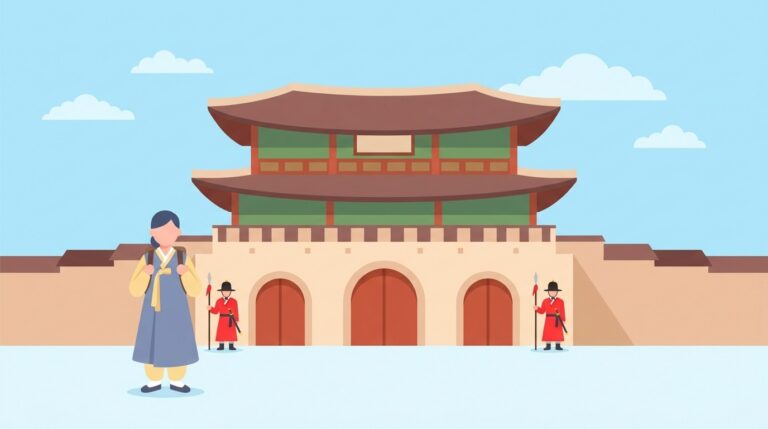
Picture this: You are dressed in the most breathtaking, flowing Hanbok you rented near Gyeongbokgung Palace. The silk catches the gentle Seoul breeze, you feel like royalty straight out of a hit historical K-drama like The King’s Affection, and you are ready for that cinematic stroll through ancient royal courtyards. You step through Gwanghwamun Gate expecting the grand, thunderous drums of the iconic Royal Palace Guard Changing Ceremony (수문장 교대식)… only to find an empty courtyard and a quiet breeze.
You check your watch. Did it start at 10:00 AM or 11:00 AM? Did you just miss the soldiers marching in their vivid scarlet and cobalt robes? You see a palace staff member standing near the ticket pavilion, but your mind freezes. How do you ask when the ceremony happens without fumbling through an awkward translation app that suggests an overly formal 18th-century phrase?
Take a deep breath! You are not alone. Over 80% of our beginner travelers tell us their biggest palace regret is missing the changing of the guards simply because they didn’t know how to ask a quick, 5-second timing question in natural, friendly Korean. Today, we are going to fix that forever. In this guide, tailored specifically for A1 beginners, you’ll master practical, authentic expressions to check ceremony schedules, locate events, and take unforgettable photos with total confidence.
Phase 2: Core Expressions Deep Dive
1. 몇 시에 시작해요? (Myeot sie sijak-haeyo?)
- Pronunciation: [Myeot-si-e si-jak-hae-yo] (Think of ‘Myeot’ like ‘mutt’ with a soft ‘y’ sound: ‘Myut-see-eh see-jack-hae-yo’)
- Meaning: Literal: “At what hour does it start?” | Real Nuance: “What time does it begin?”
- K-Culture Moment: You’ll hear this constantly in Korean travel vlogs and TV variety shows like 2 Days & 1 Night when cast members arrive at attractions and double-check event times with staff.
- Editor’s Insight:
몇 시(myeot si) means “what time,” and-에(e) marks the time. Adding시작해요(sijak-haeyo) creates the friendliest standard polite question you can use at any tourist spot, cinema, or festival. - Situation Spectrum:
- Casual (Friends): ⚠️ 몇 시에 시작해? (Myeot sie sijak-hae?)
- Semi-formal (Staff / Public): ✅ 몇 시에 시작해요? (Myeot sie sijak-haeyo?)
- Formal (Official Announcements): 🚫 몇 시에 시작합니까? (Myeot sie sijak-hamnikka? – a bit too rigid for asking a guard casually)
- 🤔 Think About It: In English, we often ask “When is it?” In Korean, specifying “What time does it start?” (
시작해요) is much more common and gets you the exact schedule instantly.
2. 수문장 교대식 어디서 해요? (Sumunjang gyodaesik eodiseo haeyo?)
- Pronunciation: [Su-mun-jang gyo-dae-sik eo-di-seo hae-yo] (Say: ‘Soo-moon-jang gyo-deh-seek uh-dee-suh heh-yo’)
- Meaning: Literal: “Royal guard changing ceremony where at do?” | Real Nuance: “Where does the Guard Changing Ceremony take place?”
- K-Culture Moment: Whenever protagonists in modern K-dramas visit palaces on a romantic date, you’ll spot the towering palace guards standing stoically at Heungnyemun Gate.
- Editor’s Insight: Beginners often mix up
어디에요?(Where is it?) and어디서 해요?(Where does the action happen?). Because a ceremony is an action/event, using-에서 / -서(at/in) with해요(does/happens) sounds 100 times more natural! - Situation Spectrum:
- Casual: ⚠️ 교대식 어디서 해? (Gyodaesik eodiseo hae?)
- Semi-formal: ✅ 수문장 교대식 어디서 해요? (Sumunjang gyodaesik eodiseo haeyo?)
- Formal: ✅ 교대식이 어디에서 진행됩니까? (Gyodaesigi eodieseo jinhaeng-doemnikka? – very formal)
- 🤔 Think About It: Notice how Korean stacks specific terms first (
수문장 교대식) before the question word (어디서). Korean thought structure naturally moves from the big topic to the specific inquiry.
3. 사진 찍어도 돼요? (Sajin jjigeodo dwaeyo?)
- Pronunciation: [Sa-jin jji-geo-do dwae-yo] (Say: ‘Sah-jeen jjee-guh-doh dweh-yo’ – produce a crisp ‘jj’ like the ‘zz’ in ‘pizza’)
- Meaning: Literal: “Even if I take a photo, is it okay?” | Real Nuance: “May I take a picture / Can I take a photo with you?”
- K-Culture Moment: Guard reenactors stand majestic and still like statues. Tourists line up beside them, giving a quick polite nod while asking this phrase.
- Editor’s Insight: The pattern
-[아/어]도 돼요?(-do dwaeyo?) is your magic passport in Korea for asking permission. Whether asking to try on a traditional hat (Gat) or posing next to a palace gatekeeper, this phrase prevents any accidental cultural blunders. - Situation Spectrum:
- Casual: 🚫 사진 찍어도 돼? (Sajin jjigeodo dwae? – never say this to staff or guards!)
- Semi-formal: ✅ 사진 찍어도 돼요? (Sajin jjigeodo dwaeyo?)
- Formal: ✅ 사진 촬영 가능한가요? (Sajin chwaryeong ganeung-hangayo?)
- 🤔 Think About It: Instead of demanding “Can I take a photo?”, Korean frames permission around mutual harmony: “Would it be okay for you if I took a photo?”
Phase 3: Textbook Korean vs. Real Korean
Situation 1: Asking when the next ceremony starts
- 📖 교과서 한국어 (Textbook Korean): 다음 수문장 교대식은 언제 거행됩니까? (Daeum sumunjang gyodaesigeun eonje geohaeng-doemnikka? – “When will the next ceremony be celebrated/held?”)
- 🗣️ 진짜 한국어 (Real-life Korean): 다음 교대식 몇 시예요? (Daeum gyodaesik myeot si-yeyo? – “What time is the next ceremony?”)
- 💡 왜 다를까? (Why is it different?): Textbook Korean often borrows hyper-formal vocabulary (
거행,언제 거행됩니까) preserved from diplomatic manuals. On the palace grounds, real Koreans simply say다음(next) + event name +몇 시예요?(what time is it?). Short, crisp, and completely polite!
Situation 2: Asking if you can stand next to a guard for a photo
- 📖 교과서 한국어 (Textbook Korean): 당신과 함께 사진을 촬영해도 되겠습니까? (Dangsingwa hamkke sajineul chwaryeonghaedo doegesseumnikka? – “May I photograph together with you, thou?”)
- 🗣️ 진짜 한국어 (Real-life Korean): 여기서 같이 찍어도 돼요? (Yeogiseo gachi jjigeodo dwaeyo? – “Can we take one together here?”)
- 💡 왜 다를까? (Why is it different?): Never use the word
당신(dangsin) in spoken Korean—it sounds confrontational or like poetry! Real speakers omit personal pronouns and use simple direction words like여기서(here) and같이(together).
Phase 4: K-Culture Deep Dive & Non-Verbal Manners
4-1. 눈치 (Nunchi) & Palace Body Language
When approaching palace guides or Royal Guards (수문장):
1. The Respectful Distance: The reenactors playing royal guards hold authentic traditional weapons (spears and swords). Never touch their costume, belt, or weapons. Maintain a polite 1-step buffer.
2. Two-Handed Inquiries: When pointing towards the courtyard to ask about the location, open your whole hand with your palm facing upward. Pointing with a single index finger at ceremonial staff or historic architecture is considered impolite.
3. The Micro-Bow: Before asking your question, give a slight 15-degree head nod while saying “저기요…” (Excuse me…). This gives the staff a moment of Nunchi (context awareness) to switch their focus to you.
4-2. The Palace Hanbok Privilege (한복 혜택)
Did you know that wearing a Hanbok gives you 100% free admission to Seoul’s 5 major palaces (Gyeongbokgung, Changdeokgung, Changgyeonggung, Deoksugung, and Gyeonghuigung)?
This policy was inspired by cultural revival movements celebrated in Korean media. As long as you wear a traditional two-piece set (Jeogori jacket + Chima skirt or Baji trousers) properly fastened, you can skip the general ticket booth line and enter straight through the main gate. The Royal Guard Changing Ceremony at Gyeongbokgung usually happens twice a day (typically 10:00 AM and 2:00 PM, lasting about 20 minutes, except Tuesdays when the palace is closed). Checking times in advance ensures your Hanbok rental hours don’t run out before the drums start beating!
Phase 5: Real-Life Roleplay Scenario
Setting: Outside Gwanghwamun Gate under the autumn sun. You are wearing a pastel blue Hanbok, holding your camera. You see Min-ho (민호), a friendly palace guide wearing an information vest.
- You: 저기요, 실례합니다! (Jeogiyo, sillyehamnida!)
- 🎭 Action: Give a polite 15-degree bow with hands gently folded in front of your Hanbok.
- Meaning: “Excuse me, pardon me!”
- Min-ho: 네, 안녕하세요! 한복 정말 잘 어울리시네요. 무엇을 도와드릴까요? (Ne, annyeonghaseyo! Hanbok jeongmal jal eoullisineyo. Mueoseul dowadeurilkkayo?)
- 🎭 Action: Smiles warmly and nods in acknowledgment.
- Meaning: “Yes, hello! Hanbok looks so great on you. How can I help you?”
- You: 혹시 수문장 교대식 몇 시에 시작해요? (Hoksi sumunjang gyodaesik myeot sie sijak-haeyo?)
- 🎭 Action: Tilt your head politely with an inquiring expression.
- Meaning: “By any chance, what time does the guard changing ceremony start?”
- Min-ho: 오전 10시하고 오후 2시에 시작해요. 지금 1시 50분이니까 10분 뒤에 시작하네요! (Ojeon yeolsihago ohu dusie sijak-haeyo. Jigeum hansi osibbun-inikka sibbun dwie sijakhaneyo!)
- 🎭 Action: Checks watch and points an open palm toward Heungnyemun Gate.
- Meaning: “It starts at 10:00 AM and 2:00 PM. It’s 1:50 PM right now, so it begins in 10 minutes!”
- You: 아, 다행이에요! 어디서 해요? (A, dahaeng-ieyo! Eodiseo haeyo?)
- 🎭 Action: Exhale in relief, smiling brightly.
- Meaning: “Oh, what a relief! Where does it happen?”
- Min-ho: 저기 흥례문 광장 앞쪽에서 해요. 저쪽으로 가시면 돼요. (Jeogi Heungnyemun gwangjang apjjog-eseo haeyo. Jeojjogeuro gasimyeon dwaeyo.)
- 🎭 Action: Guides direction with an open two-hand gesture.
- Meaning: “It takes place right in front of Heungnyemun Plaza over there. You can walk in that direction.”
- You: 수문장님이랑 사진 찍어도 돼요? (Sumunjang-nim-irang sajin jjigeodo dwaeyo?)
- 🎭 Action: Point lightly toward your camera with a hopeful smile.
- Meaning: “Can I take a photo with the Royal Guard Chief?”
- Min-ho: 네! 교대식이 끝난 다음에 포토타임에 찍으실 수 있어요. (Ne! Gyodaesigi kkeutnan daeume pototaim-e jjigeusil su isseoyo.)
- 🎭 Action: Gives an encouraging thumbs-up and nods.
- Meaning: “Yes! You can take photos during photo time right after the ceremony ends.”
🔀 Interactive Choice Point
You realize the ceremony starts in 10 minutes and you want a good viewing spot. What do you say to wrap up?
- Choice A: “감사합니다! 지금 바로 갈게요!” (Gamsahamnida! Jigeum baro galgeyo! – Thank you! I will go right now!)
- Choice B: “고마워, 이따 봐!” (Gomawo, itta bwa! – Thanks, see ya later!)
- Choice C: “빨리 가자!” (Ppalli gaja! – Let’s hurry up and go! spoken directly to Min-ho)
Feedback:
- Choice A: [BEST] Perfect! Polite, enthusiastic, and ends the conversation naturally using standard respectful Korean (
-요). - Choice B: [BAD] Danger! This is intimate casual talk (반말). Using this with an unfamiliar palace staff member will sound shockingly rude.
- Choice C: [RISK] Awkward!
빨리 가자means “Let’s go together quickly.” Min-ho has to stay at his post and cannot run to the plaza with you!
Phase 6: 10-Second Emotion Shadowing Drill
Practice these with vocal rhythm, pausing where you see /:
[😊 Curiosity & Politeness]- 저기요, / 수문장 교대식 / 몇 시에 시작해요?
- (Jeogiyo, / sumunjang gyodaesik / myeot sie sijak-haeyo?)
- Rhythm: Rise slightly at 저기요, flatten during the noun, and pitch up at 시작해요?
[😮 Relief & Confirmation]- 아, / 2시예요? / 어디서 해요?
- (A, / dusi-yeyo? / eodiseo haeyo?)
- Rhythm: Soft drop on 아, quick gentle lift on 2시예요?, followed by an eager 어디서 해요?
[🥺 Hopeful & Courteous]- 여기서 / 사진 / 찍어도 돼요?
- (Yeogiseo / sajin / jjigeodo dwaeyo?)
- Rhythm: Short pause after 여기서, crisp consonant on 사진, soft rising inquiry on 돼요?
Phase 7: K-Culture Mini Dictionary
- 수문장 (Sumunjang) | Royal Palace Gate Guard Chief
- Usage: Refers to the military officer historically responsible for guarding the palace gates during the Joseon Dynasty. Today, tourists use it to respectfully refer to the reenactors.
- 교대식 (Gyodaesik) | Changing Ceremony
- Usage: Made of
교대(shift change) +식(ceremony). Used for military guard handovers or changing of the watch events across Korea.
- Usage: Made of
- 한복 (Hanbok) | Traditional Korean Attire
- Usage: Worn on traditional holidays (Seollal, Chuseok), weddings, and widely rented around royal palaces for photography and cultural immersion.
- 고궁 (Gogung) | Ancient Royal Palace
- Usage:
고(ancient) +궁(palace). Often heard in terms like고궁 나들이(palace outing/stroll) or고궁 야간관람(palace evening night tours).
- Usage:
Phase 8: Traveler’s Survival Kit
Top 3 Instant Expressions
- 몇 시에 끝나요? (Myeot sie kkeutnayo?)
- Meaning: “What time does it finish?”
- Pro Tip: Useful if you arrive in the middle of the ceremony and need to know how much time is left.
- 앞자리 비어 있나요? (Apjari bieo innayo?)
- Meaning: “Is this front spot open / unoccupied?”
- Pro Tip: Use this when standing behind crowds along the red viewing ropes.
- 한 장만 찍어 주세요! (Han jangman jjigeo juseyo!)
- Meaning: “Please take just one photo for me!”
- Pro Tip: Hand your phone to a fellow traveler in Hanbok with two hands when asking.
Editor’s Travel Note: Palace Pro-Tips
- Check Open Days: Gyeongbokgung is closed on Tuesdays; Changdeokgung is closed on Mondays. Don’t show up in rental Hanbok on their maintenance day!
- Apps that Save Your Feet: Instead of generic web searches, download the official Visit Korea Palace Tour Guide app or pin your route via Naver Map Navigation App. Regular global maps often mislabel gate names inside historic walls.
- Ceremony Times at Gyeongbokgung:
- 10:00 AM & 2:00 PM: Main Changing Ceremony (20 mins)
- 11:00 AM & 1:00 PM: Gwanghwamun Gate Guard Duty Shift (10 mins)
Phase 9: “One Step Deeper” (Cultural Reflection)
In Western travel cultures, asking someone for directions or event schedules can be blunt and transactional: “Time of the show?” or “Where is it?”
However, Korean speech etiquette is deeply communal and relational. Notice how in our core phrases we attach the polite ending ~요 (~yo) and soften questions with 혹시 (by any chance) or 실례합니다 (excuse me). By adding ~요, you immediately project goodwill, acknowledging that the person assisting you is part of your shared experience in this historic space.
Palaces in Seoul aren’t dead monuments behind glass ropes; they are living spaces where centuries-old gatekeeping duties meet 21st-century travelers.
💬 Your Turn: Have you ever dressed up in traditional clothes while traveling abroad? How did you feel when people took photos of or with you? Drop your story in the comments below!
Phase 10: FAQ & Common Mistakes
Q: Can I talk directly to the Royal Guards while they are marching?
A: No. During the actual marching and drum ceremony, the reenactors maintain strict military focus and will not respond. Wait until the ceremony finishes and the announcer invites visitors for the official photo session near the gate.
Q: Is Hanbok rental required to watch the Changing Ceremony?
A: Not at all! The ceremony takes place between Gwanghwamun Gate and Heungnyemun Gate, which is accessible to all public visitors. However, wearing Hanbok grants you free entry beyond the ticket gate into the inner palace grounds.
Q: What if it rains heavily on the day of my visit?
A: In cases of severe rain, snow, or high heat warnings, the outdoor Guard Changing Ceremony may be modified, shortened, or cancelled to protect the performers and authentic silk costumes. You can check the information board right beside the ticket office.
🚨 흔한 실수 (Common Mistakes) Warning Board
- Mistake: Shouting “야! 사진!” (Ya! Sajin!) to get a guard’s attention.
- Correct Action: Never use 야 (Hey!). Always use 저기요 (Excuse me) or wait for the guide’s signal with 사진 찍어도 돼요? (Sajin jjigeodo dwaeyo?).
- Mistake: Confusing
몇 시(what time) with몇 개(how many items).- Correct Action: Remember:
시(si) means “o’clock / hour.” Keep the phrase몇 시에linked as one chunk.
- Correct Action: Remember:
- Mistake: Standing directly across the ceremonial guard marching line.
- Correct Action: Palace staff set up yellow or red boundary markers on the pavement. Always stand behind these ropes so you don’t interrupt the ceremonial procession.
Phase 11: Action Missions
- 🥉 Bronze Mission (Solo Practice): Stand in front of your mirror in your favorite outfit. Practice saying “저기요, 몇 시에 시작해요?” (Jeogiyo, myeot sie sijak-haeyo?) three times out loud until your voice sounds bright and melodic.
- 🥈 Silver Mission (Social Share): Snap a photo of a clock or your daily watch. Post it on your Instagram Story or study journal with the caption: “몇 시에 시작해요? (What time does it start?)” and tag
@DailyHangul! - 🥇 Gold Mission (Real-life Execution): On your next trip to Seoul, do not look up the ceremony time on your phone. Walk directly to the tourist information staff at Gwanghwamun Gate and ask: “수문장 교대식 몇 시에 시작해요?”
- 🎮 K-Culture Mission: Watch an episode of a royal Korean drama (e.g., Mr. Queen or 100 Days My Prince). Listen closely and spot the word
수문장(Sumunjang) or궁궐(Gunggwol – Palace) in the subtitles!
Phase 12: Interactive Quiz Challenge
Question 1: Situation Check
You arrive at the palace courtyard at 1:55 PM. You want to ask the palace volunteer where the Guard Changing Ceremony happens. What is the most natural sentence?
- A) 수문장 교대식 어디서 해요? (Sumunjang gyodaesik eodiseo haeyo?)
- B) 교대식 어디 가요? (Gyodaesik eodi gayo?)
- C) 당신은 누구예요? (Dangsineun nuguyeyo?)
Question 2: Fill in the Blank
Complete the polite question asking what time an event begins:
“_____ 시에 시작해요?” (What time does it start?)
- A) 몇 (Myeot)
- B) 왜 (Wae)
- C) 뭐 (Mwo)
Question 3: True or False (Culture)
Statement: Wearing a traditional Hanbok lets you enter Seoul’s main royal palaces for free without buying a general admission ticket.
- [True / False]
👉 Click to reveal answers & explanations!
Answer 1: A
Explanation: 어디서 해요? specifically asks where an event/action takes place. Option B means “Where does the ceremony go?” which makes no sense, and Option C rudely asks “Who are you?”
Answer 2: A (몇)
Explanation: 몇 (myeot) is the numerical question marker used before units of time: 몇 시 (what hour / what time).
Answer 3: True
Explanation: Yes! As part of Seoul’s cultural preservation initiative, visitors dressed in proper Hanbok enjoy 100% free entrance to Gyeongbokgung and other royal palaces.







