

Phase 1: Getting Ready for Olive Young
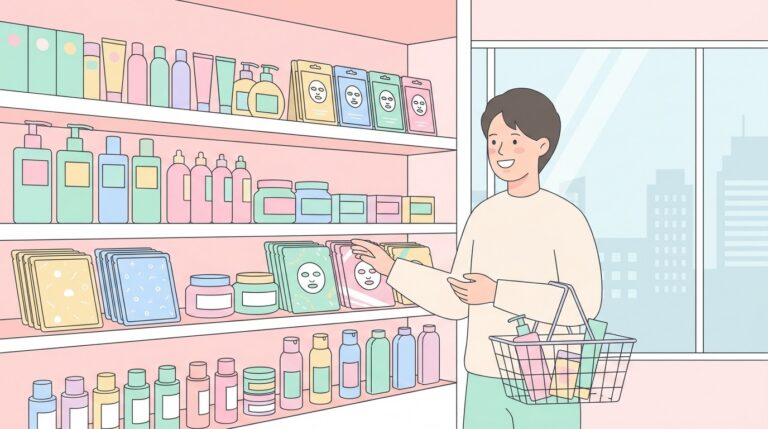
안녕하세요! 매일한글 에디터입니다. (Annyeonghaseyo! Hello, I’m your Daily Hangul editor.) Picture yourself stepping into a glowing Olive Young store in Myeongdong, Seoul. Upbeat K-Pop music fills the air, bright shelves overflow with colorful serums, and your favorite K-Drama actress smiles down from a giant poster. Suddenly, a friendly staff member walks over to help! You want a rich moisturizer, not a watery gel, because your skin feels tight. Then you freeze. How do you explain your skin type in Korean? Based on real feedback from hundreds of beginner learners, this guide gives you exact, stress-free phrases you can use today to shop K-Beauty like a local!
Phase 2: 3 Essential Phrases Deep Dive
1. 제 피부는 건성이에요 (Je pibuneun geonseong-ieyo / My skin is dry)
- Pronunciation: Je pi-bu-neun geon-seong-i-e-yo (Think “Jeh pee-boo-nun gun-sung-ee-eh-yo” — “gun” sounds like “gonna” without the “a”, and “sung” sounds like “sung a song”!)
- Meaning: Literally “My skin is dry-type,” meaning “I have dry skin.”
- K-Culture Moment: In K-Beauty YouTube vlogs and variety shows like Get It Beauty, hosts always start skincare reviews by stating their skin type so viewers know if a cream will work for them.
- Editor’s Insight: Beginners often say “건조해요 (geonjohaeyo / it is dry),” which is fine for the weather or lips, but “건성 (geonseong)” specifically refers to your permanent skin type! Staff will instantly know which aisle to take you to.
- Situation Spectrum:
- Casual (Friends): ⚠️ A bit polite; drop “에요” to say “나 건성이야 (Na geonseong-iya / I have dry skin).”
- Semi-formal (Store Staff / Acquaintances): ✅ Perfect! Warm, natural, and polite.
- Formal (Presentations / Elders): ⚠️ Use “제 피부는 건성입니다 (Je pibuneun geonseong-imnida).”
- 🤔 Think About It: In English, you say “I have dry skin” (possessing a condition), while Korean literally equates your skin to a category (“My skin IS dry-type”). How does your native language describe skin or hair types?
2. 수분 크림 추천해 주세요 (Subun keurim chucheonhae juseyo / Please recommend a moisturizing cream)
- Pronunciation: Su-bun keu-rim chu-cheon-hae ju-se-yo (Think “Soo-boon koo-reem choo-chun-heh joo-seh-yo” — “choo-chun” sounds like a “choo-choo” train plus “chunk” without the k!)
- Meaning: Literally “Moisture cream recommend please,” meaning “Could you recommend a good moisturizing cream?”
- K-Culture Moment: Just like characters in K-Dramas browsing trendy Seoul shops for a gift, asking for a “추천 (chucheon / recommendation)” is the fastest way to discover local bestsellers.
- Editor’s Insight: You can swap “수분 크림 (subun keurim / moisturizing cream)” with almost any item! Just say “[Item] 추천해 주세요” and you sound like a confident Seoul shopper.
- Situation Spectrum:
- Casual (Friends): ⚠️ Use “추천해 줘 (chucheonhae jwo).”
- Semi-formal (Store Staff / Cafes): ✅ The gold standard for polite customer requests.
- Formal (Business): ✅ Very polite and appropriate.
- 🤔 Think About It: Asking for recommendations in Korea isn’t just about shopping—it builds instant warmth and trust between you and the staff member. How often do you ask store clerks for advice back home?
3. 이거 순한가요? (Igeo sunhangayo? / Is this gentle?)
- Pronunciation: I-geo sun-han-ga-yo? (Think “Ee-guh soon-han-gah-yo?” — “soon” like “see you soon”, and “han” like “Han Solo”.)
- Meaning: Literally “Is this mild/gentle?” meaning “Is this gentle enough for sensitive skin?”
- K-Culture Moment: Clean beauty is huge in Korea right now! K-Pop idols often mention in “What’s in My Bag” interviews that they need “순한 제품 (sunhan jepum / gentle products)” after wearing heavy stage makeup.
- Editor’s Insight: The word “순하다 (sunhada)” is magical! Koreans use it for mild skincare, mild curry, and even a gentle-hearted person or puppy.
- Situation Spectrum:
- Casual (Friends): ⚠️ Say “이거 순해? (Igeo sunhae?)”
- Semi-formal (Store Staff): ✅ Soft, polite, and very natural.
- Formal (Elders): ✅ Works great in polite service settings.
- 🤔 Think About It: Korean uses the exact same adjective (“순하다”) for mild skincare, non-spicy food, and gentle personalities. What single word in your language covers multiple senses like that?
Phase 3: Textbook Korean vs. Real Korean
Situation 1: Explaining your dry skin
- 📖 Textbook Korean: 저는 피부가 아주 건조합니다. (Jeoneun pibuga aju geonjohamnida / My skin is very dry.)
- 🗣️ Real Korean: 저 건성인데 촉촉한 거 있어요? (Jeo geonseong-inde chokchokhan geo isseoyo? / I have dry skin, do you have something hydrating?)
- 💡 Why the difference? Textbook “-합니다 (-hamnida)” sounds like a stiff news broadcast! Real shoppers use friendly “-요 (-yo)” endings and K-Beauty buzzwords like “촉촉하다 (chokchokhada / dewy and hydrated).”
Situation 2: Politely saying you want to browse alone
- 📖 Textbook Korean: 괜찮습니다. 혼자서 구경하겠습니다. (Gwaenchanseumnida. Honjaseo gugyeonghagetseumnida / It is fine. I will look around alone.)
- 🗣️ Real Korean: 괜찮아요, 좀 둘러볼게요! (Gwaenchanayo, jom dulleobolgeyo! / I’m okay, I’ll just look around!)
- 💡 Why the difference? Saying “혼자서 (honjaseo / alone)” can feel a bit cold or distant. Adding “좀 (jom / a little)” softens your words so you sound relaxed and polite.
Phase 4: K-Culture Deep Dive & Non-Verbal Manners
4-1. Nunchi (눈치) & Gestures
In Korean stores, staff greet you energetically as soon as you walk in—don’t be startled! It’s just friendly service, not pressure to buy. If you want help, make brief eye contact and raise your hand slightly at chest level while saying “저기요 (Jeogiyo / Excuse me).” When explaining “제 피부는 건성이에요 (Je pibuneun geonseong-ieyo / My skin is dry),” gently tap your cheek with two fingers. This universal gesture makes communication super clear even if the store music is loud!
4-2. Cultural Code Analysis: The K-Beauty Hydration Obsession
Ever noticed how K-Drama actors always seem to have glowing “glass skin”? In Korea, dry winter winds and strong indoor heating make moisture a daily survival priority. That’s why skincare isn’t seen as luxury vanity—it’s basic self-care, just like drinking water! At Olive Young, products are neatly grouped by skin concern, and yellow “1+1” (buy one, get one free) tags mean double the hydration for the same price.
Phase 5: Real-Life Roleplay Scenario
Setting: Inside the bustling Olive Young flagship store in Hongdae, Seoul. Soft indie K-Pop plays while neon signs highlight the “Best Sellers” wall.
Characters: You (a happy K-Beauty shopper) and Mina (a cheerful K-Beauty advisor wearing a signature green Olive Young apron).
- Mina: 어서 오세요! 찾으시는 거 있으세요? (Eoseo oseyo! Chajeusineun geo isseuseyo? / Welcome! Are you looking for anything?)
🎭 Approaches with a warm smile and hands you a green shopping basket. - You: 안녕하세요! 제 피부는 건성이에요. (Annyeonghaseyo! Je pibuneun geonseong-ieyo / Hello! My skin is dry.)
🎭 Smiles back and gently touches your cheek. - Mina: 아, 건성이시구나! 크림 찾으세요? (A, geonseong-isiguna! Keurim chajeuseyo? / Oh, you have dry skin! Are you looking for a cream?)
🎭 Nods empathetically and gestures toward the skincare aisle. - You: 네! 수분 크림 추천해 주세요. (Ne! Subun keurim chucheonhae juseyo / Yes! Please recommend a moisturizing cream.)
🎭 Follows Mina over to the brightly lit shelf. - Mina: 이거 어때요? 요즘 제일 인기 많아요. (Igeo eottaeyo? Yojeum jeil ingi manayo / How about this one? It’s the most popular these days.)
🎭 Picks up a cute pastel-blue cream jar. - You: 이거 순한가요? 테스트해 봐도 돼요? (Igeo sunhangayo? Teseuteuhae bwado dwaeyo? / Is this gentle? Can I test it?)
🎭 Points politely at the tester bottle on the display. - Mina: 네, 엄청 순해요! 손등에 발라 보세요. (Ne, eomcheong sunhaeyo! Sondeung-e balla boseyo / Yes, it’s super gentle! Try putting it on the back of your hand.)
🎭 Opens the tester lid and offers you a tiny spatula. - You: 우와, 진짜 촉촉해요! 이거 살게요. (Uwa, jinjja chokchokhaeyo! Igeo salgeyo / Wow, it’s really hydrating! I’ll buy this.)
🎭 Beams with joy and drops a fresh box into your basket.
🔀 Interactive Branching Point
Mina asks at the register: “봉투 필요하세요? (Bongtu piryohaseyo? / Do you need a bag?)” You already have a big tote bag with you! How do you reply?
* Choice A: “아니요, 괜찮아요! (Aniyo, gwaenchanayo! / No, I’m good!)”
* Feedback (Best!): 10/10! Super polite, natural, and eco-friendly. Mina smiles and hands you your receipt.
* Choice B: “싫어요! (Sireoyo! / I hate it / I don’t want it!)”
* Feedback (Bad!): Whoa, too strong! “싫어요” sounds like you’re angry at the bag. Always stick to “괜찮아요 (gwaenchanayo / I’m okay)” to decline politely.
* Choice C: “봉투 없어요! (Bongtu eopseoyo! / There are no bags!)”
* Feedback (Risk!): Careful! That means the store is out of bags, which might confuse Mina. Say “안 필요해요 (An piryohaeyo / I don’t need one)” or “괜찮아요” instead!
Phase 6: 10-Second Emotion Shadowing Drill
Read these aloud! Pause at the / marks and match the emotion tags:
[😊 Friendly & hopeful]안녕하세요! / 제 피부는 / 건성이에요. (Annyeonghaseyo! / Je pibuneun / geonseong-ieyo. / Hello! My skin is dry.)[🤔 Curious & polite]수분 크림 / 추천해 주세요. / 이거 순한가요? (Subun keurim / chucheonhae juseyo. / Igeo sunhangayo? / Please recommend a moisturizing cream. Is this gentle?)[🤩 Excited & delighted]우와! / 진짜 촉촉해요! / 이거 살게요! (Uwa! / Jinjja chokchokhaeyo! / Igeo salgeyo! / Wow! It’s really hydrating! I’ll buy this!)
Phase 7: K-Culture Mini Dictionary
- 건성 (Geonseong) | Dry skin | Used everywhere in skincare shops and beauty blogs to describe skin that lacks oil and moisture.
- 수분 (Subun) | Moisture / Hydration | You’ll see this printed on blue bottles everywhere—”수분 크림” (moisture cream) and “수분 팩” (hydrating mask).
- 촉촉하다 (Chokchokhada) | To be dewy / moist | The ultimate compliment for healthy skin! Koreans also use it to describe deliciously moist cake or bread.
- 인생템 (Insaengtem) | Holy grail item | A fun slang mix of “인생 (life)” + “item”! Olive Young shoppers love hunting for their new skincare “인생템.”
Phase 8: Traveler’s Survival Kit
Top 3 Survival Phrases
- 지성 (Jiseong / Oily skin) — Pro Tip: If your friend has oily skin, swap “건성” for “지성”! Say “제 친구는 지성이에요 (Je chinguneun jiseong-ieyo / My friend has oily skin).”
- 샘플 있어요? (Saempeul isseoyo? / Do you have samples?) — Pro Tip: Korean stores are famous for generous freebies, especially when you buy full-size skincare sets!
- 텍스 프리 돼요? (Tekseu peuri dwaeyo? / Is tax-free available?) — Pro Tip: Show your physical passport at Olive Young checkout on purchases over 15,000 KRW for an instant tax refund!
Editor’s Travel Note
Before heading out to shop, make sure to Download the Naver Map App because Google Maps doesn’t give full walking directions in South Korea. Want to check product rankings before you walk in? You can Browse Olive Young Global Bestsellers to save screenshots of the bottles you want. Also, bring a T-money card or contactless credit card—almost every Olive Young in Seoul accepts card payments seamlessly!
Phase 9: One Step Deeper
In Korean culture, skincare is deeply connected to community warmth and “정 (jeong / affectionate connection).” Friends don’t just keep good products a secret—they excitedly share sheet masks, send links to sales, and ask about each other’s skin when the seasons change. Saying “제 피부는 건성이에요 (Je pibuneun geonseong-ieyo)” isn’t just sharing a biological fact; it’s an invitation for someone to care for you and help you feel comfortable in Korea’s crisp weather. Next time you step into a K-Beauty shop, you’re not just buying a cream—you’re joining a joyful daily ritual.
💬 Your Turn: What is your skin type, and which K-Beauty product is on your Seoul shopping wishlist? Tell us in the comments below!
Phase 10: FAQ & Common Mistakes
Q: How do I say “combination skin” or “sensitive skin” in Korean?
A: Great question! Combination skin is 복합성 (bokhapseong), and sensitive skin is 민감성 (mingamseong). Just plug them right into today’s main sentence: “제 피부는 민감성이에요 (Je pibuneun mingamseong-ieyo / My skin is sensitive).”
Q: Can I try the tester bottles at Olive Young?
A: Yes! Almost every skincare shelf has a bottle labeled “테스터 (Tester).” Just squeeze a tiny drop onto the back of your hand—never directly onto your face—and ask “이거 테스트해 봐도 돼요? (Igeo teseuteuhae bwado dwaeyo? / Can I test this?)” if you aren’t sure.
Q: What if the staff speaks too fast in Korean?
A: Don’t panic! Just smile and say “천천히 말씀해 주세요 (Cheoncheonhi malsseumhae juseyo / Please speak slowly).” Korean store staff are super patient and appreciate you trying Korean!
🚨 Common Mistakes TOP 3
- Saying “건조 (geonjo)” instead of “건성 (geonseong)”
- Correct Action: Use “건성” for your overall skin type. Save “건조해요 (geonjohaeyo)” for temporary dryness, like dry air or chapped lips.
- Forgetting “주세요 (juseyo / please)” when asking for help
- Correct Action: Ending with “추천해 (chucheonhae)” sounds bossy to strangers! Always add “주세요” to say “추천해 주세요 (Please recommend).”
- Testing products directly on your face in-store
- Correct Action: Always apply testers to the back of your hand (“손등 / sondeung”) to stay hygienic and follow local shopping etiquette.
Phase 11: Action Mission & Engagement
- 🥉 Bronze Mission (Solo Practice): Stand in front of your mirror tonight while doing your skincare routine and say “제 피부는 건성이에요! 촉촉해요!” out loud three times.
- 🥈 Silver Mission (Share Online): Snap a photo of your favorite moisturizer, post it on your story, and caption it with “My #인생템! 이거 진짜 순해요 (This is really gentle)!”
- 🥇 Gold Mission (Real-World Use): Visit your nearest Korean beauty store (or message a Korean friend) and ask “수분 크림 추천해 주세요! (Please recommend a moisturizing cream!)”
- 🎮 K-Culture Mission: Watch a “Get Ready With Me” vlog by your favorite K-Pop idol on YouTube and listen closely—can you catch words like 수분 (subun), 건성 (geonseong), or 촉촉 (chokchok)?
Phase 12: Interactive Quiz Challenge
1. Situation Quiz: You walk into Olive Young with super dry skin and want the clerk to pick out a gentle moisturizing cream for you. Which sentence is best?
A) 제 피부는 지성이에요. (Je pibuneun jiseong-ieyo.)
B) 제 피부는 건성이에요. 수분 크림 추천해 주세요. (Je pibuneun geonseong-ieyo. Subun keurim chucheonhae juseyo.)
C) 봉투 필요하세요? (Bongtu piryohaseyo?)
Reveal Answer & Explanation
Answer: B! “제 피부는 건성이에요” means my skin is dry, and “수분 크림 추천해 주세요” politely asks for a moisturizing cream recommendation. (Option A means oily skin, and Option C asks if someone needs a shopping bag!)
2. Fill-in-the-Blank: Complete the polite question to ask if a cream is gentle on your skin:
“이거 ______가요?” (Is this gentle?)
Reveal Answer & Explanation
Answer: 순한 (sunhan)! The full sentence is “이거 순한가요? (Igeo sunhangayo?)” derived from the adjective 순하다 (to be mild/gentle).
3. True or False Culture Quiz: In Korean, you should say “혼자서 구경하겠습니다” when you want to browse Olive Young by yourself without sounding stiff.
Reveal Answer & Explanation
Answer: False! While grammatically correct, “혼자서 구경하겠습니다” sounds like a stiff textbook line. Say “괜찮아요, 좀 둘러볼게요! (Gwaenchanayo, jom dulleobolgeyo!)” for a warm, natural vibe!
🎬 Watch Our Daily Videos! (Daily Hangul Official Instagram)
Review the expressions you learned in this article with our fun daily short videos! Check out native pronunciation and real-life nuances in action.
- Instagram @dailyhangul_en







