

Phase 1: Empathy & Connection
안녕하세요! 매일한글 에디터입니다. (Hello! I’m your Daily Hangul editor.)
Have you ever sat in a buzzing cafe in Seongsu-dong, sipping an iced Americano, only to hear the chic table next to you murmur, “나 이번에 완전 디토 소비했잖아 (I totally ditto-consumed this)” or “요즘엔 도파밍보다 텍스트힙이 대세야 (These days, text-hip is trendier than dopamine farming)”? You pause your playlist. Even if your Korean is comfortably intermediate, your mental dictionary hits a sudden wall. You know the words, yet you can’t piece together the deeper lifestyle vibe.
Trust me, you are not alone! Hundreds of intermediate learners tell me they feel disconnected when conversing with native peers because real-life Korean evolves at lightning speed. These buzzwords are not just playful internet slang; they are cultural mirrors reflecting how Koreans navigate consumerism, mental burnout, and identity. Let’s unlock the latest lifestyle buzzwords so you can decode the pulse of modern Korean culture like a local insider!
Phase 2: Core 3 Expressions In-Depth
1. 디토 소비 (Ditto Sobi)
- Pronunciation: [Ditto so-bi] (Sounds like the English word “Ditto” paired with “so-bi” like “so-bee”)
- Meaning: Literal: “Ditto Consumption.” Nuance: Buying items based purely on the curation or recommendation of a trusted person, influencer, or aesthetic brand rather than conducting endless product comparisons yourself.
- K-Culture Moment: On a YouTube “What’s in my bag” vlog, an idol holds up a lip balm and laughs, saying, “선배님 영상 보고 바로 디토 소비했어요 (I watched my senior’s video and immediately ditto-consumed it).”
- Editor’s Insight: Originating alongside NewJeans’ iconic song “Ditto,” this word highlights how young Koreans cope with choice overload. Instead of spending hours comparing specs, they say “ditto” to someone whose taste they respect.
- Situation Spectrum: Casual: ✅ | Semi-formal: ✅ (Often used in business marketing articles) | Formal: ⚠️
- 🤔 Think About It: In your culture, do people purchase items simply because an influencer owns them, or is independent research prized higher? How does community trust shape shopping habits?
2. 도파밍 (Dopaming)
- Pronunciation: [Do-pa-ming] (Sounds like “Dopamine” merged with the gaming term “farming”)
- Meaning: Literal: “Dopamine Farming.” Nuance: Actively hunting for quick, unpredictable, high-stimulation thrills, short-form reels, bizarre viral food combinations, or random novelty items to escape daily boredom.
- K-Culture Moment: Friends waiting in an hour-long line for a surreal dessert pop-up store say: “우리 지금 완벽하게 도파밍 중이야 (We are totally dopamine farming right now).”
- Editor’s Insight: Derived from “Dopamine” + “Farming” (harvesting items in games). It carries a slightly self-deprecating yet humorous tone, admitting: “I know this is chaotic and fleeting, but I need the brain rush right now!”
- Situation Spectrum: Casual: ✅ | Semi-formal: ⚠️ | Formal: 🚫
- 🤔 Think About It: Does Korean culture’s “Palli-palli” (quick, quick) lifestyle accelerate the urge to search for instant gratification compared to your home country?
3. 텍스트힙 (Tekseuteu-hip)
- Pronunciation: [Tek-seu-teu-hip] (Text + Hip, pronounced like “text-heap”)
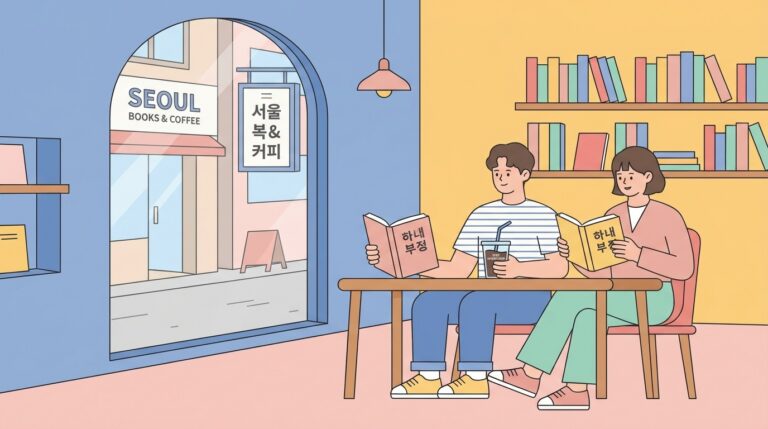
- Meaning: Literal: “Text is Hip.” Nuance: Finding reading printed books, writing handwritten notes, or diving into long-form philosophy genuinely cool, intellectual, and stylish.
- K-Culture Moment: An Instagram photo featuring a paperback novel alongside a matcha latte with no screen in sight, captioned simply: “주말의 텍스트힙 (Weekend text-hip).”
- Editor’s Insight: This word emerged as an antithesis to mindless screen scrolling. Gen Z Koreans treat carrying an aesthetically pleasing paperback or visiting quiet indie bookstores as the ultimate cultural sophistication.
- Situation Spectrum: Casual: ✅ | Semi-formal: ✅ | Formal: ⚠️
- 🤔 Think About It: Is reading paper books considered a nerdy solitary habit in your country, or has it transformed into a chic, trendy subculture like it has in Seoul?
Phase 3: Textbook Korean vs. Real Korean
Situation 1: Explaining why you bought a trendy jacket
- 📖 교과서 한국어 (Textbook Korean): 유명인이 착용한 것을 보고 그 브랜드를 따라 구매했습니다. (Yumyeongin-i chak-yonghan geos-eul bogo geu beuraendeu-reul ttara gumaehaessseumnida.) — “I saw a celebrity wearing it and purchased following that brand.”
- 🗣️ 진짜 한국어 (Real Korean): 고민하기 귀찮아서 그냥 인플루언서 보고 디토 소비했어. (Gomin-hagi gwichanhasseo geunyang impeullueonseo bogo ditto sobihaesseo.) — “I was too lazy to overthink, so I just ditto-consumed based on that influencer.”
- 💡 왜 다를까? (Why is it different?): Textbook phrasing sounds like a consumer behavior research report. Native Koreans prefer conversational buzzwords that honestly express fatigue with decision-making.
Situation 2: Scrolling social media on a dull afternoon
- 📖 교과서 한국어 (Textbook Korean): 저는 재미있는 동영상을 시청하며 스트레스를 해소하고 있습니다. (Jeoneun jaemi-inneun dong-yeongsang-eul sicheonghamyeo seuteureseu-reul haesohago isseumnida.) — “I am relieving stress while watching entertaining video clips.”
- 🗣️ 진짜 한국어 (Real Korean): 침대에 누워서 쇼츠 보면서 도파밍하고 있어. (Chimdae-e nuwo-seo syocheu bomyeonseo dopaminghago isseo.) — “Lying in bed watching shorts, just dopamine-farming.”
- 💡 왜 다를까? (Why is it different?): “스트레스 해소” (relieving stress) sounds too formal and purposeful, whereas “도파밍” captures the playful confession of consuming bite-sized viral videos.
Phase 4: K-Culture Deep Dive & Non-Verbal Manners
4-1. 눈치 (Nunchi) & Gestures
When using buzzwords like 디토 소비 or 도파밍, facial expressions do half the work. Koreans often pair these words with a playful, self-effacing smirk or a slight shrug of the shoulders (어깨를 으쓱하며), signaling: “I know it’s a trend, and maybe a bit silly, but I’m having fun!” On the other hand, discussing 텍스트힙 demands subtle, low-key body language: sitting straight, gently holding a book with both hands, and speaking in a calm, lowered vocal register (차분한 어조). Over-hyping a text-hip moment ruins the relaxed aesthetic!
4-2. Culture Code: The Rebound from Digital Burnout
Why did 도파밍 and 텍스트힙 rise at the exact same moment in Korea? They represent the two extreme ends of Seoul’s high-tech lifestyle. Korea has the world’s fastest mobile connectivity, driving people toward short-form video addictions and viral food crazes (like Tanghulu and crushed croissants). Yet, the resulting sensory exhaustion sparked an intense counter-trend: young Koreans craving quiet contemplation in independent bookstores across Yeonhui-dong and Seochon. Understanding these buzzwords helps you see that Korean youth are constantly balancing hyper-speed excitement with mindful escapes.
Phase 5: Real-Life Roleplay Scenario
Setting: A minimalist cafe in Seongsu with indie magazines and exposed concrete walls.
Characters: Minji (Your trend-loving Korean friend) & You.
- Turn 1 (Minji): 🎭
(눈을 동그랗게 뜨며 당신의 손에 들린 책을 가리킨다)와, 너 지금 읽고 있는 거 소설이야? 웬일이야? (Wa, neo jigeum ilko inneun geo soseoriya? Wenniriya?) — “Whoa, is that a novel you’re reading right now? What’s the occasion?” - Turn 2 (You): 🎭
(미소를 지으며 책을 살짝 들어 보인다)요즘 한국에서 텍스트힙이 유행이라길래 나도 한번 도전해 봤어. (Yojeum hanguk-eseo tekseuteu-hibi yuhaeng-iragillae nado hanbeon dojeonhae bwasseo.) — “I heard text-hip is trendy in Korea these days, so I gave it a shot too.” - Turn 3 (Minji): 🎭
(고개를 끄덕이며 웃는다)인정! 요즘 책 들고 다니는 게 힙스터들의 기본 옵션이잖아. (Injeong! Yojeum chaek deulgo danineun ge hipseuteodeur-ui gibon opsyeon-ijanha.) — “Agreed! Carrying a book is a hipster essential lately.” - Turn 4 (You): 🎭
(휴대폰을 테이블 위에 뒤집어 놓으며)맞아. 맨날 스마트폰만 보면서 도파밍하는 것도 피곤하더라고. (Maja. Maennal seumateupon-man bomyeonseo dopaminghaneun geotdo pigonhadeorago.) — “Right. Getting tired of dopamine-farming on my smartphone every day anyway.” - Turn 5 (Minji): 🎭
(가방에서 귀여운 키링을 꺼내 보여주며)완전 공감해. 그래도 난 아까 팝업스토어 가서 이 키링 디토 소비했잖아. (Wanjeon gonggamhae. Geuraedo nan akka pab-eop-seuto-eo gaseo i kiring ditto sobihaessjanha.) — “Totally relate. But still, I went to a pop-up store earlier and ditto-consumed this keyring.” - Turn 6 (You): 🎭
(키링을 자세히 들여다보며 감탄한다)아, 그 유명 인플루언서가 가방에 달고 나왔던 거 맞지? (A, geu yumyeong impeullueonseoga gabang-e dalgo nawattdeon geo matji?) — “Ah, that’s the one that famous influencer had hanging on her bag, right?” - Turn 7 (Minji): 🎭
(장난기 어린 목소리로)맞아! 그냥 예뻐서 고민 없이 결제했어. 취향 따라가는 게 제일 편해. (Maja! Geunyang yeppeoseo gomin eopsi gyeoljehaesseo. Chwihyang ttaraganeun ge jeil pyeonhae.) — “Exactly! It just looked pretty so I swiped without hesitation. Following good taste is the easiest way.” - Turn 8 (You): 🎭
(커피잔을 들며 가볍게 웃는다)내 책이랑 네 키링, 둘 다 오늘 쇼핑 성공이네! (Nae chaek-irang ne kiring, dul da oneul syoping seonggong-ine!) — “My book and your keyring—both our shopping choices were successful today!”
🔀 Interactive Decision Point
Minji asks if you want to visit an independent bookstore or a viral TikTok dessert pop-up next. How do you respond?
- Option A: “텍스트힙 감성 살려서 조용한 독립서점 가보자!” (Let’s keep the text-hip vibe going and check out a quiet indie bookstore!)
- Feedback (Best): Perfect cultural fluency! It connects directly to your conversation and matches the Seongsu/Seoul vibe.
- Option B: “저는 도파민 중독자니까 단것만 먹고 싶습니다.” (Since I am a dopamine addict, I only wish to consume sweets.)
- Feedback (Bad): Grammatically rigid and sounds overly clinical. Say “도파밍하러 디저트 먹으러 가자!” instead.
- Option C: “디토 소비하게 네가 고르는 거 다 살게.” (I will buy everything you pick to ditto-consume.)
- Feedback (Risk): Generous, but might sound like you are committing to spend a lot of money unexpectedly!
Phase 6: 10-Second Shadowing Drill
Repeat these sentences aloud, respecting pause marks (/) and feeling the labeled emotion:
[😊 유쾌하고 솔직하게 - Playful & honest]
“고민하기 싫어서 / 그냥 인플루언서 보고 / 디토 소비했어요.”
(Gomin-hagi silheoseo / geunyang impeullueonseo bogo / ditto sobihaesseoyo.)
“I didn’t want to overthink / so I just saw an influencer / and ditto-consumed it.”-
[😅 조금 찔리지만 장난스럽게 - Sheepish & cheeky]
“주말 내내 / 침대에서 숏폼 보면서 / 도파밍만 했네.”
(Jumal naenae / chimdae-eseo syotpom bomyeonseo / dopaming-man haenne.)
“All weekend long / watching short-form in bed / I only did dopamine farming.” -
[😎 쿨하고 지적인 느낌으로 - Calm & intellectual]
“스마트폰 내려놓고 / 책 읽는 게 / 요즘 진짜 텍스트힙이지.”
(Seumateupon naeryeonohgo / chaek ilnneun ge / yojeum jinjja tekseuteu-hibiji.)
“Putting down the smartphone / and reading a physical book / is what’s truly text-hip these days.”
Phase 7: K-Culture Mini Dictionary
- 평균 실종 (Pyeonggyun Siljong) | Disappearing Average / Consumption Polarization
- Meaning: The middle ground in the market is vanishing. Consumers either buy ultra-budget options (like Daiso cosmetics) or splurge on high-end luxury, skipping mid-tier items.
- 시성비 (Siseongbi) | Time-effectiveness Ratio
- Meaning: A combination of 시간 (time) and 가성비 (cost-effectiveness). Koreans use this to describe habits like watching dramas at 1.5x speed or skipping song intros to save precious minutes.
- 팝업 스토어 (Pab-eop Seuto-eo) | Pop-up Store
- Meaning: Temporary experimental concept stores in trendy hubs like Seongsu or The Hyundai Seoul, designed specifically for photo-worthy “dopaming” and brand storytelling.
- 갓생 (Gatsaeng) | God-Life (Living productively)
- Meaning: Combining “God” (갓) and “Life” (생). Refers to setting micro-habits, waking up early, and exercising diligently to build a self-disciplined, productive lifestyle.
Phase 8: Traveler’s Survival Kit
Top 3 Survival Expressions
- 요즘 여기서 제일 핫한 게 뭐예요? (Yojeum yeogi-seo jeil hat-han ge mwoyeyo?)
- Meaning: “What is the hottest item here these days?”
- Pro Tip: Use this at trendy lifestyle boutiques or bakeries to immediately tap into the locals’ “ditto consumption” radar.
- 사진 찍기 좋은 곳 추천해 주실 수 있나요? (Sajin jjikgi joeun got chucheonhae jusil su innayo?)
- Meaning: “Can you recommend a photogenic spot?”
- Pro Tip: Great for finding visual “text-hip” book cafes or vibrant pop-up interiors.
- 혹시 품절인가요? (Hoksi pumjeor-ingayo?)
- Meaning: “Is this by any chance sold out?”
- Pro Tip: Viral items that explode through dopamine farming often sell out before noon in Seoul.
Editor’s Travel Note
When hunting for trending pop-ups and indie bookstores in Seoul, Google Maps won’t show you real-time bookmark counts or accurate walking shortcuts. Make sure you complete your 네이버 지도 앱 다운로드 (Naver Map App Download) before heading out. Type buzzwords like “독립서점” (independent bookstore) or “소품샵” (curated lifestyle shop) into the search bar, filter by highest visitor saves, and you will bypass generic tourist traps instantly!
Phase 9: A Step Deeper (Cultural Reflection)
In Korean society, the emergence of terms like Ditto Sobi and Text-Hip reveals a unique tension between collective belonging and individual uniqueness. Koreans live in one of the most hyper-connected, dense digital ecosystems in the world. As algorithm fatigue sets in, copying trusted tastes feels comforting, while carrying an analog book provides a stylish statement of mental sovereignty. Language here moves as fast as high-speed broadband, giving a name to collective emotions almost overnight.
💬 Your Turn: In your home country, do people feel pressured by digital overload, or is there a similar “slow-living” buzzword taking over social media? Share your thoughts in the comments below!
Phase 10: FAQ & Common Pitfalls
Q: Can I use “도파밍” (Dopaming) in a business meeting?
A: Only if you work in marketing, advertising, or trend forecasting! In general corporate settings, it sounds too colloquial. Use formal phrases like “즉각적인 소비자 반응 유도” (inducing immediate consumer reaction) instead.
Q: Does “디토 소비” have a negative meaning, like blindly following trends?
A: Not necessarily! While it can occasionally imply thoughtless mimicry, it is mostly accepted as a smart, time-saving strategy for dealing with information overload.
Q: Is “텍스트힙” (Text-hip) only about reading physical books?
A: Mostly yes, but it also extends to collecting zines, fountain pens, typewriter aesthetics, or quoting classic poetry on social media.
🚨 Common Mistakes Warning Board
- Confusing ‘디토 소비’ with simple fandom buying: Buying BTS merchandise because you love BTS is just “덕질” (fan activity). Buying a plain black cap just because a celebrity wore it on Instagram is “디토 소비”.
- Using ‘도파민’ instead of ‘도파밍’: “도파민” is the chemical dopamine. “도파밍” is the action of harvesting dopamine through exciting activities. Don’t mix up the noun with the action verb!
- Overusing trendy slang with elders: Asking your Korean professor or boss if they are doing “도파밍” will result in confused stares. Keep these buzzwords between friends and peers.
Phase 11: Action Missions
- 🥉 Bronze Level: Write down one thing you bought recently and say out loud in Korean: “이거 완전 디토 소비야!” (This is totally ditto consumption!)
- 🥈 Silver Level: Snap a picture of a book you are reading with a cup of coffee, and share it on Instagram stories with the caption
#텍스트힙. - 🥇 Gold Level: During your next language exchange or cafe chat with a Korean friend, ask: “요즘 도파밍하려고 뭐 해?” (What do you do for dopamine farming these days?)
- 🎮 K-Culture Mission: Search the hashtag
#텍스트힙or#디토소비on Korean Instagram or YouTube Shorts, and note down three product or book recommendations featured by locals.
Phase 12: Interactive Quiz Challenge
1. Situation Judgment
Your Korean coworker spent the entire Sunday afternoon scrolling through 15-second cooking reels and buying a viral spicy noodle brand. Which buzzword best describes their behavior?
* (A) 텍스트힙 (Text-hip)
* (B) 도파밍 (Dopaming)
* (C) 평균 실종 (Disappearing Average)
2. Fill in the Blank
“고민하기 귀찮아서 그냥 유튜버가 추천한 거 보고 [ ______ ] 했어.” (I was too tired to compare options, so I just saw what the YouTuber recommended and [ ______ ].)
* (A) 텍스트힙
* (B) 갓생
* (C) 디토 소비
3. True or False
“텍스트힙” refers to spending money on expensive e-readers and audiobooks only.
* (True / False)
👉 Click to view answers and explanations!
- Answer: (B) 도파밍
- Explanation: Seeking quick digital stimulation and viral trends is textbook “dopamine farming”!
- Answer: (C) 디토 소비
- Explanation: Buying a product based on someone else’s curated taste without endless comparison is “디토 소비”.
- Answer: False
- Explanation: “텍스트힙” heavily emphasizes the tangible, analog aesthetic of holding and reading physical paper books.
- Explanation: “텍스트힙” heavily emphasizes the tangible, analog aesthetic of holding and reading physical paper books.







