

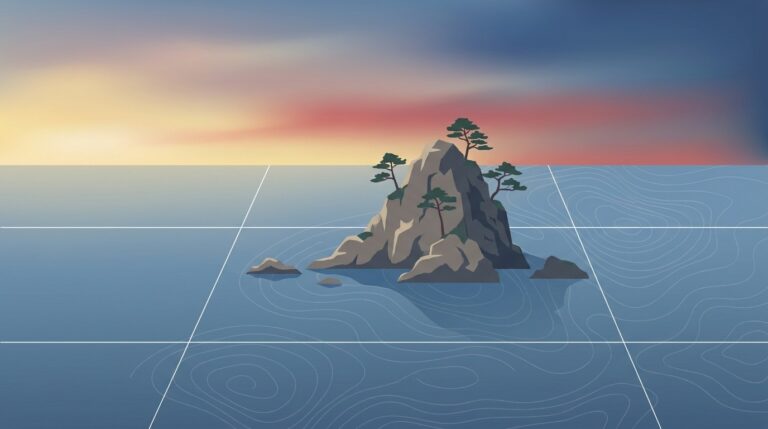
Navigating UNCLOS Article 121: Deciphering the Legal Battle Over Rocks, Islands, and Maritime Sovereignty in Korean
Phase 1: Empathy & Immersion — Decoding Geopolitics Over High-Stakes Diplomacy
안녕하세요! 매일한글 에디터입니다. (Annyeonghaseyo! It is your Daily Hangul editor.)
Picture this: You are watching a gripping Korean political thriller drama like The Whirlwind (돌풍) or sitting in an international law symposium in the diplomatic district of Gwanghwamun, Seoul. On the projector screen glows a high-resolution satellite map of contested islets and surrounding reefs across the East Sea and the Yellow Sea. Two senior diplomats lean forward, their voices steady yet taut with tension. One of them taps a pen on the conference desk and states calmly: “해당 해양 지형물은 인간의 거주나 독자적 경제생활을 유지할 수 없으므로, 암초에 불과합니다.” The room falls dead silent.
If you have ever attempted to tackle UNCLOS (United Nations Convention on the Law of the Sea / 국제해양법) debates in Korean, you already know the sheer cognitive overload. You are not merely learning textbook vocabulary; you are balancing sophisticated Sino-Korean legal terms like 영해 (territorial sea), 배타적 경제수역 (EEZ), and 대륙붕 (continental shelf), all while parsing Article 121 Paragraph 3—the notorious international legal threshold where an offshore “rock” (암초) is denied an EEZ or continental shelf.
Many of our advanced C2 learners tell us: “I know everyday Korean and business terms, but the moment international maritime disputes or academic legal treaties come up on KBS News or during policy briefings, I feel lost.” We hear you! Navigating high-level legal discourse requires mastering precise registers, formal hedging, and geopolitical nuance. This guide is built directly from real diplomatic translation briefs and advanced mock-court feedback to give you elite fluency in high-stakes Korean maritime law discussions. Let us dive in!
Phase 2: Top 3 Core Expressions for Deep Legal Analysis
1. 독자적 경제생활을 영위하다 (Dokjajeok gyeongjesaenghwareul yeongwihada)
- Pronunciation: [Dok-ja-jeok gyeong-je-saeng-hwal-eul yeong-wi-ha-da] (Think: “Dok-jah-juck gyeong-jeh-sang-hwal-ool yung-wee-hah-dah”)
- Meaning: Literally “to lead an autonomous economic life”; used legally to mean “to sustain economic life of its own” under UNCLOS Article 121(3).
- K-Culture Moment: Heard in geopolitical investigative documentaries on SBS or JTBC news specials when legal experts debate whether an offshore maritime formation generates full maritime rights.
- Editor’s Insight: The verb 영위하다 (to carry on, maintain, or lead a lifestyle) is distinctly high-register. You would never use it for casual errands like groceries; it exclusively depicts sustained, systemic living or long-term operational activities.
- Situation Spectrum: Casual: 🚫 | Semi-formal: ⚠️ | Formal: ✅
- 🤔 Think About It: In English, we simply say “sustain economic life.” Why does Korean employ Sino-Korean roots (독자적 – independent, 영위 – continuous preservation of life) to anchor international treaty translations?
2. 암초에 불과하여 영해만 인정받다 (Amcho-e bulgwahayeo yeonghaeman injeongbatda)
- Pronunciation: [Am-cho-e bul-gwa-ha-yeo yeong-hae-man in-jeong-bat-da] (Think: “Ahm-cho-eh bool-gwah-hah-yuh young-heh-mahn in-jung-baht-dah”)
- Meaning: “To be nothing more than a rock, thus being granted only a territorial sea (12 nautical miles).”
- K-Culture Moment: Frequently invoked in high-level diplomatic negotiation scenes in political films, illustrating a country’s legal counter-argument to deny an adversary an expansive 200-nautical-mile EEZ.
- Editor’s Insight: ~에 불과하다 carries a sharp, legally dismissive nuance (“it is a mere…”). When coupled with 영해만 (only the territorial sea), it acts as an argumentative wedge to preempt claims over vast fishing grounds and seabed resources.
- Situation Spectrum: Casual: 🚫 | Semi-formal: ⚠️ | Formal: ✅
- 🤔 Think About It: Notice how the particle ~만 (only/merely) shrinks hundreds of thousands of square kilometers of maritime jurisdiction into a modest territorial fringe in one brief sentence.
3. 경계 획정의 핵심 쟁점으로 부각되다 (Gyeonggye hoekjeong-ui haeksim jaengjeomeoro bugakdoeda)
- Pronunciation: [Gyeong-gye hoek-jeong-ui haek-sim jaeng-jeom-eu-ro bu-gak-doe-da] (Think: “Gyoung-gyeh hwek-jung-wee heck-sheem jeng-jum-oo-roh boo-gahk-dweh-dah”)
- Meaning: “To surface/emerge as the pivotal bone of contention in maritime boundary delimitation.”
- K-Culture Moment: Found in academic op-eds in the Chosun Ilbo or Hankyoreh, or delivered by seasoned spokespersons at the Ministry of Foreign Affairs (외교부) press briefing podium.
- Editor’s Insight: 부각되다 (to be brought into relief / highlighted) implies that amidst a labyrinth of overlapping historical, environmental, and geological claims, this single legal question has taken center stage.
- Situation Spectrum: Casual: 🚫 | Semi-formal: ⚠️ | Formal: ✅
- 🤔 Think About It: English often uses verbs like “stand out” or “become contentious.” Korean conceptualizes it visually through 부각 (浮刻, relief sculpture carved above a flat background).
Phase 3: Textbook Korean vs. Real Korean in Legal Diplomacy
Scenario 1: Denying Full Island Status to a Contested Landform
- 📖 교과서 한국어 (Textbook Korean): 이 지형물은 암초이므로 배타적 경제수역을 갖지 못합니다. (I jihyeongmureun amcho-imeuro baetajeok gyeongjesuyeogeul gatji mothamnida. / “Because this formation is a rock, it cannot have an Exclusive Economic Zone.”)
- 🗣️ 진짜 한국어 (Real Diplomatic Korean): 해당 해양 지형물은 자생적 경제생활이 불가능한 단순 암초에 불과하여, 200해리 EEZ의 기산점이 될 수 없습니다. (Haedang haeyang jihyeongmureun jasaengjeok gyeongjesaenghwari bulganeunghan dansun amcho-e bulgwahayeo, ibaekhaeri EEZ-ui gisanjeomi doel su eopseumnida. / “The maritime feature in question is a mere rock incapable of sustaining autonomous economic life, and thus cannot serve as a baseline for a 200-nautical-mile EEZ.”)
- 💡 Why the Difference? C2 legal discourse shuns generic words like 갖지 못하다 (cannot have) in favor of precision: 기산점이 될 수 없다 (cannot serve as a maritime baseline) and 자생적 (self-sustaining).
Scenario 2: Stating the Significance of UNCLOS Article 121 in Negotiations
- 📖 교과서 한국어 (Textbook Korean): 제121조 해석 문제는 아주 중요한 문제입니다. (Je-baek-i-sip-il-jo haeseok munjeneun aju jung-yohan munje-imnida. / “The interpretation of Article 121 is a very important issue.”)
- 🗣️ 진짜 한국어 (Real Diplomatic Korean): 유엔해양법협약 제121조 3항의 해석론이야말로 양국 간 해양 경계 획정의 승패를 가를 최대 승부처입니다. (Yuen-haeyangbeop-hyeobyak je-baek-i-sip-il-jo sam-hang-ui haeseokron-iyamallo yangguk gan haeyang gyeonggye hoekjeong-ui seungpaereul gareul choedae seungbucheo-imnida. / “The precise jurisprudence regarding Article 121(3) of UNCLOS is undeniably the decisive nexus that will determine the outcome of bilateral maritime delimitation.”)
- 💡 Why the Difference? Real Korean legal analysts use dramatic yet rigorously professional phrases like 해석론이야말로 (the jurisprudence itself indeed) and 승패를 가를 최대 승부처 (the ultimate decisive battleground) to convey high strategic stakes.
Phase 4: K-Culture Deep Dive & Non-Verbal Etiquette
4-1. 눈치 (Nunchi) & Diplomatic Physicality
When discussing maritime boundaries in Korea, emotional sensitivity runs extremely high due to historical memories and territorial sovereignty.
* The Steady Micro-Pause: When presenting an argument regarding maritime delimitation, Korean negotiators and academics avoid wide hand gestures or aggressive finger-pointing. Instead, maintain an upright posture, look directly into the primary interlocutor’s eyes, and pause for half a second before delivering legal qualifiers like “다만 (However),” or “법리적으로 볼 때 (From a legal doctrine perspective).”
* Head Tilts & Softened Refutations: If you strongly counter an opposing party’s classification of an islet, begin with a slight nod of acknowledgment: “그 해석도 주시하고 있습니다만…” (We are monitoring that interpretation as well, but…). This displays supreme diplomatic nunchi—neutralizing personal antagonism while tightening legal precision.
4-2. Cultural Code: The Peninsular Identity and Oceanic Sovereignty
Korea is a peninsula (반도국가, bandogukga) surrounded on three sides by water. In Korean collective consciousness, the seas are not merely empty legal spaces; they are vital economic lifelines for fisheries, trade, and defense. That is why legal disputes surrounding the interpretation of reefs, rocks, and baselines spark widespread public attention and feature in mainstream news editorials. Demonstrating fluency in how Koreans perceive their maritime zones instantly signals that you understand the soul of modern Korean statehood.
Phase 5: Real-World Roleplay Scenario: The Trilateral Delimitation Briefing
Setting: A quiet briefing chamber inside the Ministry of Foreign Affairs (외교부) in Seoul. Rain taps against the high panoramic windows overlooking Seoul Tower.
Characters:
* Director Han (한 국장): A veteran maritime boundaries negotiator known for calm logic and sharp analytical instinct.
* Attaché Elena (엘레나 서기관): An aspiring foreign diplomat (played by you) specializing in East Asian public international law.
- Director Han: 엘레나 서기관, 상대국 측 실무회담 보고서 확인했습니까? 상대는 남단 산호초를 완벽한 ‘섬’으로 규정하고 200해리 EEZ를 주장하고 있어요. (Elena seogigwan, sangdaeguk cheuk silmuhoedam bogoseo hwaginhaetseumnikka? Sangdaeneun namdan sanhochoreul wanbyeokhan ‘seom’-euro gyujeonghago ibaekhaeri EEZ-reul jujanghago isseoyo. / “Attaché Elena, have you reviewed the counterpart’s working-group report? They classify the southern coral feature as a full ‘island’ and claim a 200-nautical-mile EEZ.”)
- Elena: 🎭 [Reviewing the treaty binder calmly, looking up with firm poise] 네, 국장님. 하지만 이는 유엔해양법협약 제121조 3항의 법리를 명백히 오도한 처사입니다. (Ne, gukjangnim. Hajiman ineun yuen-haeyangbeop-hyeobyak je-baek-i-sip-il-jo sam-hang-ui beobrireul myeongbaekhi odohan cheosaimnida. / “Yes, Director Han. However, that approach clearly misconstrues the legal doctrine of UNCLOS Article 121, Paragraph 3.”)
- Director Han: 그 근거를 양국 공동 브리핑에서 어떻게 논파할 계획입니까? (Geu geungeoreul yangguk gongdong beuriping-eseo eotteoke nonpahal gyehoek-imnikka? / “On what grounds do you plan to refute them in the joint bilateral briefing?”)
- Elena: 해당 지형물은 만조 시 노출된다 하더라도, 담수 공급이 전무하여 인간의 상시 거주가 불가능함을 부각해야 합니다. (Haedang jihyeongmureun manjo si nochuldoenda hadeorado, damsu gonggeubi jeonmuhayeo ingan-ui sangsi geojuga bulganeunghameul bugakhaeya hamnida. / “Even if the maritime feature remains above water at high tide, we must emphasize that with zero freshwater supply, stable human habitation is impossible.”)
- Director Han: 🎭 [Nodding slowly, folding his hands] 좋습니다. 그런데 상대국은 군 병력 주둔과 소규모 등대 운영을 근거로 ‘거주성’을 입증했다고 맞설 겁니다. (Joeuseumnida. Geureonde sangdaeguk-eun gun byeongnyeok judungwa sogyumo deungdae un-yeongeul geungeoro ‘geojuseong’-eul ipjeonghaetdago matseol geomnida. / “Good. But they will counter by arguing that a station of military personnel and a small lighthouse establish ‘habitability.'”)
- Elena: 외부 보급에 전적으로 의존하는 인위적 배치는 독자적 경제생활 요건을 충족하지 못한다는 2016년 남중국해 중재판정례를 인용하겠습니다. (Oebu bogeube jeonjeogeuro uijonhaneun in-wijeok baechineun dokjajeok gyeongjesaenghwal yogeoneul chungjokhaji mothandaneun icheonsip-yungnyeon namjunggukhae jungjaepanjeongryereul inyonghagetseumnida. / “I will cite the 2016 South China Sea Arbitration ruling stating that artificial deployments completely dependent on external supplies fail the independent economic life criterion.”)
- Director Han: 🎭 [Smiling subtly with deep satisfaction] 날카롭군요. 그 논리면 단순 ‘암초’로서 영해 12해리만 부여되어 우리 측 EEZ 중첩 구간을 대폭 축소할 수 있겠어요. (Nalkaropgunyo. Geu nonrimyeon dansun ‘amcho’-roseo yeonghae sibi-haeriman buyeodoeeo uri cheuk EEZ jungcheop guganeul daepok chuksohal su itgetseoyo. / “Sharp analysis. Under that logic, classified as a mere ‘rock,’ it receives only a 12-nautical-mile territorial sea, drastically reducing their overlap with our EEZ.”)
- Elena: 맞습니다. 이번 협약 해석론을 바탕으로 공세적인 경계 획정 논리를 전개해 나가겠습니다. (Matseumnida. Ibeon hyeobyak haeseokroneul batangeuro gongsejeogin gyeonggye hoekjeong nonrireul jeongaehae nagagetseumnida. / “Precisely. Grounded in this treaty interpretation doctrine, I will advance an assertive boundary delimitation argument.”)
🔀 Interactive Decision Point
During the upcoming high-stakes meeting, the opposing envoy interrupts you and asks: “그렇다면 당신들이 생각하는 암초와 섬의 결정적 차이는 무엇입니까?” (What then, in your view, is the decisive difference between a rock and an island?)
- Option A: “그냥 크기가 작고 사람이 없으면 무조건 암초인 것 아닙니까?” (Isn’t it unconditionally a rock if it’s small and has no people?)
- Option B: “자연 상태에서 외부 원조 없이 인간의 지속 가능한 거주와 독자적 경제생활이 유지되는지의 여부입니다.” (It is whether, in its natural state without external assistance, sustainable human habitation and an independent economic life can be maintained.)
- Option C: “우리는 그 섬에 관심이 없으니 일단 영해 문제부터 먼저 합의합시다.” (We are not interested in that island, so let us just agree on the territorial sea first.)
Outcome & Detailed Analysis:
* Option A (Risk): Too blunt, analytically simplistic, and lacks treaty terminology. An international legal opponent would dismantle this in seconds by citing geographic scale precedents.
* Option B (Best!): Flawless C2 legal mastery! You deployed 자연 상태 (natural state), 외부 원조 없이 (without external assistance), and 독자적 경제생활 (independent economic life), echoing authoritative arbitral tribunals.
* Option C (Bad): Disastrous diplomatic forfeiture. In international law, silences or dismissals can be construed as legal acquiescence (묵인). Always hold the doctrinal line!
Phase 6: 10-Second Emotion Shadowing Drill
Practice these lines with appropriate diplomatic composure and breath control. The slashes / mark deliberate rhetorical pauses.
[🧐 차분하고 단호한 어조로 / Calm and resolute]- 해당 지형물은 / 인간의 거주가 불가능하므로 / 암초에 불과합니다.
- (Haedang jihyeongmureun / ingan-ui geojuga bulganeunghameuro / amcho-e bulgwahamnida.)
- “The feature in question / being incapable of human habitation / is merely a rock.”
[🏛️ 논리적 우위를 점하며 자신감 있게 / Confident with intellectual command]- 독자적 경제생활이 결여된 곳에 / 200해리 EEZ를 부여할 순 없습니다.
- (Dokjajeok gyeongjesaenghwari gyeoryeodoen gose / ibaekhaeri EEZ-reul buyeohal sun eopseumnida.)
- “To a formation lacking an independent economic life / we cannot accord a 200-nautical-mile EEZ.”
[⚖️ 반박 불가능한 쐐기를 박듯이 / Decisive like driving a final stake]- 제121조 3항의 엄격한 법리 적용이야말로 / 해양 분쟁 해결의 시금석입니다.
- (Je-baek-i-sip-il-jo sam-hang-ui eomgyeokhan beobri jeog-yong-iyamallo / haeyang bunjaeng haegyeol-ui sigeumseok-imnida.)
- “Strict application of Article 121(3) jurisprudence / is the very touchstone of resolving maritime disputes.”
Phase 7: K-Culture Mini Dictionary: Key Legal & Maritime Terms
- 기산점 (Gisanjeom) | Baseline / Starting Point
- Usage: The low-water coastal line from which the breadth of the territorial sea and EEZ is measured. In Korean negotiations: “직선기산점과 통상기산점 중 어느 것을 적용할지가 관건입니다.” (The crux is whether to apply straight baselines or normal baselines.)
- 해양 지형물 (Haeyang jihyeongmul) | Maritime Feature
- Usage: A neutral, diplomatic term used to refer to any land feature at sea (islands, rocks, low-tide elevations) before formal legal classification. Helps sidestep premature sovereignty concessions.
- 중첩 수역 (Jungcheop suyeok) | Overlapping Maritime Area
- Usage: Water areas where the 200-nautical-mile EEZ claims of two adjacent or opposite coastal states overlap, necessitating equitable delimitation negotiations under international law.
- 시금석 (Sigeumseok) | Touchstone / Litmus Test
- Usage: Literally a “touchstone” used to test gold purity. Frequently used in high-level Korean op-eds to describe an issue that tests the viability of an entire bilateral treaty.
Phase 8: Traveler’s & Diplomat’s Survival Kit
Survival Expressions for Academic Symposia & Legal Briefs
- 법리적 검토를 거친 후 서면으로 전달하겠습니다.
- Romanization: Beobrijeok geomtoreul geochin hu seomyeon-euro jeondalhagetseumnida.
- Pro Tip: The premier phrase to deflect sudden confrontational questions gracefully. Translates to: “We will deliver our response in writing following rigorous legal doctrinal review.”
- 해당 사안은 국제관습법상 확립된 원칙에 위배됩니다.
- Romanization: Haedang sa-aneun gukjegwanseupbeopsang hwangnipdoen wonchige wibaedoemnida.
- Pro Tip: Use this when calling out a proposal that breaks with accepted customary international law.
- 양국의 균등한 해양 권익을 위해 잠정 합의를 모색합시다.
- Romanization: Yangguk-ui gyeundeunghan haeyang gwon-igeul wihae jamjeong hab-uireul mosaekhapsida.
- Pro Tip: Perfect de-escalation sentence: “Let us explore a provisional arrangement for the equitable maritime rights and interests of both states.”
Editor’s Research & Visit Guide
- Where to Go: If you are visiting Seoul for academic or legal research, make sure to visit the Institute of Foreign Affairs and National Security (IFANS) library or attend open forums at the Korea Maritime Institute research archives.
- Local Commuting Tip: The central government complex in Gwanghwamun and the Ministry of Foreign Affairs are directly accessible via Gwanghwamun Station (Line 5, Exit 2). Keep your security clearance or passport ready at entry security checkpoints.
Phase 9: “한 발 더 깊이” (One Step Deeper: The Lexicon of Sovereignty)
In the Korean language, the distinction between 섬 (island) and 암초 (rock) is not merely an academic technicality—it is an existential question woven into geopolitical resilience. Historically exposed to continental and maritime powers, Korean diplomacy has honed a deep reverence for precise textualism in international law. When a Korean scholar or diplomat insists that a feature is an 암초 (rock) rather than a full 도서 (island), they are deploying the international rule of law as a shield to prevent disproportionate territorial encroachment. Language here is not passive; it is a meticulously engineered instrument of statecraft.
💬 Your Turn: Have you encountered debates over maritime features or rocks in your home country’s legal history? How does your native language contrast a bare “rock” with a habitable “island”? Share your reflections in the comments below!
Phase 10: FAQ & Common Mistakes
Q: Why do Korean commentators say “제121조 3항” instead of just “제121조”?
A: In UNCLOS, Paragraphs 1 and 2 define islands generally and grant them maritime zones just like mainland territory. Paragraph 3, however, creates the critical exception: rocks which cannot sustain human habitation or economic life of their own cannot claim an EEZ or continental shelf. Specifying 3항 (Paragraph 3) zeroes in instantly on the legal battleground.
Q: What is the difference between “도서 (Doseo)” and “섬 (Seom)”?
A: Both mean island! 섬 is pure Korean (순우리말), ideal for daily conversation, travel, and literature (e.g., 아름다운 섬). 도서 (島嶼) is a Sino-Korean legal and geographic term used in treaties, laws, and administrative decrees (e.g., 도서지역 – island regions, 도서제도 – regime of islands).
Q: Can an artificial island (인공섬) generate an EEZ under Korean legal doctrine?
A: Absolutely not. In both Korean maritime jurisprudence and UNCLOS Article 60, 인공섬 (artificial islands) possess neither the status of natural islands nor do they generate a territorial sea, let alone an EEZ or continental shelf.
🚨 Common Mistakes Board
| Foreign Learner’s Misconception | What Goes Wrong | The C2 Native Action |
|---|---|---|
| Calling any small land in water a 돌 (Dol) | 돌 is a handheld stone or rock on the ground. Using it for maritime law sounds like elementary phrasing. | Use 암초 (Amcho – reef/rock) or 해양 지형물 (Maritime feature). |
| Using 살 수 없다 (Cannot live) casually | Grammatically correct, but sounds like conversational chitchat in a legal debate. | Use 인간의 상시 거주가 불가능하다 (Incapable of continuous human habitation). |
| Saying 바다 땅 (Sea land) for Continental Shelf | Cute, but completely invalid in public policy. | Always use 대륙붕 (Daeryukbung / Continental Shelf). |
Phase 11: Action Mission & Engagement
- 🥉 Bronze Level Mission: Read aloud the 3 shadowing sentences from Phase 6 three times, emphasizing the pause
/and natural Sino-Korean rhythm. - 🥈 Silver Level Mission: Write a 2-sentence formal argument in Korean contrasting 인간의 거주 (human habitation) and 독자적 경제생활 (independent economic life), and post it in the comment section below.
- 🥇 Gold Level Mission: Watch an episode of a Korean diplomatic news report or documentary discussing UNCLOS, identify at least two terms from our Phase 7 Mini Dictionary, and summarize the core dispute in formal Korean (~ㅂ/습니다 style).
- 🎮 K-Culture Mission: Locate a Korean legal K-drama scene involving court or diplomatic negotiations, and spot how speakers use formal hedging terms like “~에 불과하다” when demolishing an opposing argument!
Phase 12: Interactive Quiz Challenge
1. Situation Judgment
An international panel is evaluating whether an uninhabited, arid maritime feature with only a temporary automated weather beacon can claim a 200-nautical-mile EEZ. Which formal Korean legal argument should you submit?
* (A) 이 지형물은 등대가 있으므로 완전한 섬으로 인정되어 EEZ를 가집니다.
* (B) 단순 기상관측 시설만으로는 인간의 상시 거주나 독자적 경제생활을 입증할 수 없으므로 암초에 불과합니다.
* (C) 날씨가 맑은 날에만 보이는 지형물이므로 공해상 수역으로 처리해야 합니다.
2. Fill-in-the-Blank
유엔해양법협약 제121조 3항에 따르면, 인간의 거주나 ( ________ ) 경제생활을 유지할 수 없는 암초는 배타적 경제수역이나 대륙붕을 갖지 아니한다.
* Hint: Meaning “autonomous/independent of its own”
3. True or False
In formal Korean maritime law debates, using the casual word 섬 (Seom) is preferred over 도서 (Doseo) in written treaty submissions. (True / False)
🔍 Click to Reveal Answers & In-depth Explanations
- Answer: (B)
- Explanation: Installing automated equipment or small unmanned beacons does not fulfill the legal requirements of sustaining human habitation or autonomous economic vitality. Thus, it remains classified as an 암초에 불과하다 (mere rock).
- Answer: 독자적 (Dokjajeok)
- Explanation: The official treaty rendering of “an economic life of their own” in Korean international law is 독자적 경제생활.
- Answer: False
- Explanation: In formal treaty texts and official state memorials submitted to international tribunals, the Sino-Korean legal designation 도서 (Doseo) is standard, whereas 섬 is predominantly conversational.
- Explanation: In formal treaty texts and official state memorials submitted to international tribunals, the Sino-Korean legal designation 도서 (Doseo) is standard, whereas 섬 is predominantly conversational.
Mastering these sophisticated legal distinctions elevates your Korean language skill directly into the professional stratosphere. You are no longer just speaking Korean—you are analyzing geopolitical frameworks with absolute nuance! Keep up the brilliant study, and see you in the next masterclass!






