

Cancel Plans Politely in Korean: What to Say When You’re Sick
Phase 1: Empathy (Opening Story)
안녕하세요! 매일한글 에디터입니다. (Hello! I’m your Daily Hangul editor.)
Picture this: It is 8:30 AM on a crisp Saturday morning in Seoul. Your phone buzzes with an alarm, but your head feels like a lead bowling ball, your throat feels like sandpaper, and your eyes are burning. You were supposed to meet your close Korean friend, Minji, at 1:00 PM for delicious spicy tteokbokki and cafe-hopping in Yeonnam-dong. Panic immediately spikes in your chest: “If I cancel just 4 hours before, will she be upset? Will she think I’m ghosting her or making excuses?”
If you’ve ever felt trapped between dragging your feverish body out the door or sending a cold, awkward text, take a deep breath. In Korean culture, considerate communication (배려, baeryeo) is everything. Cancelling because you are genuinely sick is completely understood—if you express it with genuine warmth and soft phrasing. Based on real feedback from hundreds of elementary Korean learners, this guide gives you the exact phrases and cultural etiquette to reschedule smoothly while actually deepening your friendship.
Phase 2: Core Expressions Deep Dive
1. 오늘 감기 기운이 있어서 집에서 쉬어야 할 것 같아 (Oneul gamgi giuni isseoseo jibeseo swieoya hal geot gata)
- Pronunciation: [Oh-neul gahm-gi gee-oon-ee ees-suh-suh jeeb-eh-suh swee-uh-yah hal geot gah-tah] (Sounds like “gam-gee” as in a quick game, and “swieo” like whispering ‘sweet’ without the t)
- Meaning: Literal: “Today cold energy exists, so resting at home seems necessary.” / Real Nuance: “I’ve caught a bit of a cold since morning, so I think I should stay home and rest today.”
- K-Culture Moment: In K-dramas, whenever an overworked lead collapses with a towel on their forehead, their worried best friend texts this exact phrase to their weekend hiking club.
- Editor’s Insight: Koreans rarely declare flatly “I am sick” (저는 아픕니다). Instead, they soften it with
기운(gi-un, energy/symptom) and~ㄹ 것 같아(~eul geot gata, “it seems like / I think”). It sounds gentle rather than defensive. - Situation Spectrum: Casual (✅) / Semi-formal (✅ with -요: 쉬어야 할 것 같아요) / Formal (⚠️ use 병원에 다녀와서 쉬어야 할 것 같습니다)
- 🤔 Think About It: Why does Korean prefer saying “it seems like I should rest” instead of a direct “I will rest”? How does indirect phrasing protect harmony?
2. 약속을 다른 날로 미룰 수 있을까? (Yaksogeul dareun nallo mirul su isseulkka?)
- Pronunciation: [Yahk-sso-geul dah-reun nal-lo mee-rool soo ees-seul-kkah?]
- Meaning: Literal: “Can we push the appointment to another day?” / Real Nuance: “Could we possibly reschedule for another time?”
- K-Culture Moment: When plans clash unexpectedly in everyday life, this phrase shows you still really want to meet up, prioritizing the bond over the disruption.
- Editor’s Insight: The verb
미루다(miruda) means “to postpone/delay.” Ending in~수 있을까?poses a humble question, giving the other person full agency to accept or suggest another day. - Situation Spectrum: Casual (✅) / Semi-formal (✅ with -요: 미룰 수 있을까요?) / Formal (🚫)
- 🤔 Think About It: In English, we often say “I can’t make it today.” Notice how Korean immediately looks forward toward “another day” (다른 날).
3. 정말 미안해, 다음엔 내가 맛있는 거 살게! (Jeongmal mianhae, daeumen naega masinneun geo salge!)
- Pronunciation: [Jeong-mahl mee-ahn-hae, dah-eum-en nae-gah mah-sheen-neun guh sal-geh!]
- Meaning: Literal: “Really sorry, next time I will buy something delicious!” / Real Nuance: “I’m so sorry! Next time, lunch/treat is totally on me!”
- K-Culture Moment: In Korean social dynamics, food equals affection. Offering to pay for the next meal instantly dissolves lingering disappointment.
- Editor’s Insight:
내가 살게(naega salge, “I’ll buy/treat”) is the ultimate relationship glue in Korea. It converts an apology into a future promise of hospitality. - Situation Spectrum: Casual (✅) / Semi-formal (✅ with -요: 제가 맛있는 거 살게요!) / Formal (⚠️)
- 🤔 Think About It: Why is offering food the universal apology and reconciliation tool in Korean society?
Phase 3: Textbook Korean vs. Real Korean
Situation 1: Letting your friend know you caught a cold
- 📖 교과서 한국어 (Textbook Korean):
“저는 감기에 걸렸습니다. 만날 수 없습니다.” (Jeoneun gamgie geollyeotseumnida. Mannal su eopseumnida.) — “I have caught a cold. Meeting is impossible.” - 🗣️ 진짜 한국어 (Real Korean):
“아침부터 감기 기운이 너무 심해서 오늘은 쉬어야 할 것 같아ㅠㅠ” (Achimbuteo gamgi giuni neomu simhaeseo oneureun swieoya hal geot gataㅠㅠ) — “I’ve had such bad cold symptoms since this morning, so I think I need to stay in and rest todayㅠㅠ” - 💡 왜 다를까?: Textbook phrases sound like an official military leave request or a hospital chart. Real natives use
감기 기운(cold symptoms) and append crying text emoticons (ㅠㅠ) to convey sorrow.
Situation 2: Asking to reschedule
- 📖 교과서 한국어 (Textbook Korean):
“약속 일정을 변경해 주십시오.” (Yaksok iljeongeul byeongyeonghae jusipsio.) — “Please change the appointment schedule.” - 🗣️ 진짜 한국어 (Real Korean):
“혹시 다음 주로 미뤄도 될까? 컨디션 회복하고 연락할게!” (Hoksi daeum juro mirwodo doelkka? Keondisyeon hoebokhago yeollakhalge!) — “Could we maybe postpone to next week? I’ll text you as soon as I get my energy back!” - 💡 왜 다를까?:
혹시(by any chance) acts as a linguistic buffer, making the request sound polite and non-demanding.
Phase 4: K-Culture Deep Dive & Non-Verbal Manners
4-1. 눈치 (Nunchi) & Mobile Etiquette
When cancelling plans in Korea, speed is respect. The moment you realize your fever isn’t going away, notify them immediately. Waiting until 30 minutes before the meetup is considered bad manners (실례, sillye) because Korean people schedule their travel time and outfits meticulously.
* The Emoticon Rule: In messaging apps like KakaoTalk, sending a plain sentence like “오늘 못 가” (I can’t go today) feels angry or dismissive. Always soften it with a sick or bowing emoticon (ㅠㅠ, 😭, or a warm sticker).
* Voice Call vs. Text: For casual friends, KakaoTalk text is completely fine! For older acquaintances or workplace colleagues, a short, polite voice call followed by a text summary shows peak maturity.
4-2. Cultural Code: The Culture of Porridge (죽, Juk) and Healing
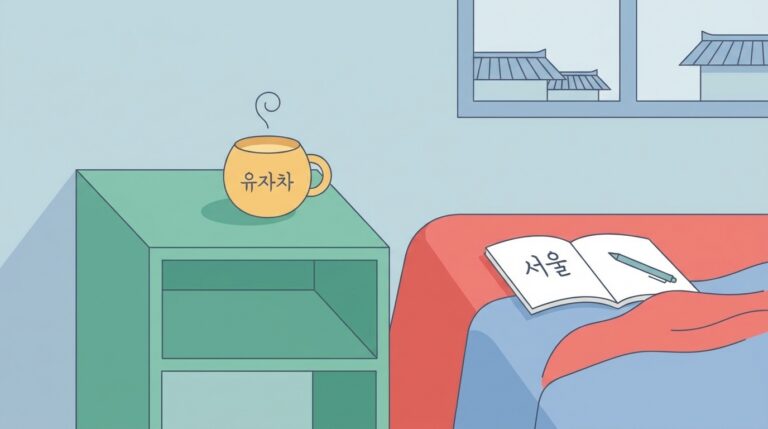
In Korea, being sick activates an immediate community response: “Did you eat porridge (죽 먹었어?)?” Don’t be surprised if your Korean friend responds to your cancellation by sending a mobile voucher (기프티콘) for abalone porridge from Bonjuk (본죽) or hot citron tea (유자차). It represents care and communal solidarity.
Phase 5: Real-Life Roleplay Scenario
- Background: It is 9:00 AM on a Saturday. Alex wakes up coughing and texts Yuna, a university friend who is eager to take him to a popular brunch spot in Hongdae.
-
Yuna: 유나: 알렉스, 오늘 1시에 홍대 입구역 9번 출구에서 보는 거지? 날씨 좋다! (Alex, oneul hansi-e Hongdae ipguyeok gubeon chulgueseo boneun geoji? Nalssi jota!) — “Alex, we’re meeting at Hongdae Station Exit 9 at 1, right? The weather is so nice!”
- Alex: 🎭 [목을 가다듬으며 미안한 표정으로 타자 치기] 알렉스: 유나야, 진짜 미안해ㅠㅠ 아침에 일어났는데 감기 기운이 너무 심해. (Yunaya, jinjja mianhaeㅠㅠ Achime ireonanneunde gamgi giuni neomu simhae.) — “Yuna, I’m so sorryㅠㅠ I woke up this morning and my cold symptoms are really bad.”
- Yuna: 유나: 헐, 진짜? 열도 나? 목소리도 안 좋을 것 같아. (Heol, jinjja? Yeoldo na? Moksorido an joeul geot gata.) — “Oh no, really? Do you have a fever too? I bet your throat hurts.”
- Alex: 🎭 [기침을 콜록거리며] 알렉스: 응, 열도 좀 있는 것 같아서 오늘은 집에서 쉬어야 할 것 같아… (Eung, yeoldo jom inneun geot gataseo oneureun jibeseo swieoya hal geot gata…) — “Yeah, I think I have a slight fever, so I think I need to rest at home today…”
- Yuna: 유나: 아이고, 어떡해. 약은 먹었어? 무리해서 나오면 절대 안 돼! (Aigo, eotteokhae. Yageun meogeosseo? Murihaeseo naomyeon jeoldae an dwae!) — “Oh dear, what should we do. Did you take medicine? You must not push yourself to come out!”
- Alex: 🎭 [고마움과 아쉬움 가득한 어조로] 알렉스: 약 먹고 쉬려고 해. 혹시 우리 약속 다음 주로 미룰 수 있을까? (Yak meokgo swiryeogo hae. Hoksi uri yaksok daeum juro mirul su isseulkka?) — “I’m going to take meds and rest. By any chance, could we postpone our plans to next week?”
- Yuna: 유나: 당연하지! 약속은 언제든 다시 잡으면 되지. 푹 쉬어! (Dangyeonhaji! Yaksogeun eonjedeun dasi jabeumyeon doeji. Puk swieo!) — “Of course! We can always reschedule anytime. Get plenty of rest!”
- Alex: 🎭 [안도하며 미소 짓기] 알렉스: 이해해 줘서 고마워ㅠㅠ 다음엔 내가 진짜 맛있는 점심 살게! (Ihaehae jwoseo gomawoㅠㅠ Daeumen naega jinjja masinneun jeomsim salge!) — “Thank you so much for understandingㅠㅠ Next time lunch is totally on me!”
🔀 Interactive Decision Point
How would you reply to Yuna if she says: “약은 먹었어? 병원 가야 하는 거 아니야?” (Did you take medicine? Shouldn’t you go to the clinic?)
* Option A: “괜찮아, 약 먹고 자면 나을 것 같아. 걱정해 줘서 고마워!” (I’m okay, I think sleeping after meds will fix it. Thanks for worrying about me!)
👉 Best Choice! Shows gratitude for her care while updating your condition clearly.
* Option B: “몰라. 귀찮아서 안 갔어.” (Dunno. Too lazy, didn’t go.)
👉 Bad Choice. Sounds dismissive and makes her caring question awkward.
* Option C: “응, 병원 예약했어. 너 혼자 밥 먹어.” (Yeah, booked clinic. Eat alone.)
👉 Risk! Grammatically correct, but “너 혼자 밥 먹어” sounds cold and curt.
Phase 6: 10-Second Emotion Shadowing Drill
Read these aloud, pausing at the / marks and channeling the emotion in the brackets!
[🥺 아쉽고 미안한 목소리로]
“유나야, / 아침부터 감기 기운이 심해서 / 오늘은 쉬어야 할 것 같아…”
(Yunaya, / achimbuteo gamgi giuni simhaeseo / oneureun swieoya hal geot gata…)-
[🙏 조심스럽고 공손한 억양으로]
“혹시 / 우리 약속을 / 다음 주로 미룰 수 있을까?”
(Hoksi / uri yaksogeul / daeum juro mirul su isseulkka?) -
[😊 고맙고 씩씩하게 다짐하듯]
“이해해 줘서 고마워! / 다음엔 내가 / 맛있는 밥 꼭 살게!”
(Ihaehae jwoseo gomawo! / daeumen naega / masinneun bap kkok salge!)
Phase 7: K-Culture Mini Dictionary
- 감기 기운 (Gamgi giun) | Cold symptoms / Feeling a cold coming on
Used when you aren’t completely bedridden yet, but your throat tickles or your head throbs. - 눈치 (Nunchi) | Situational awareness / Tact
Having good nunchi means notifying your friend the instant you feel sick, saving their preparation time. - 죽 (Juk) | Korean rice porridge
The default comfort food when recovering from illness, widely sold at chains like Bonjuk. - 기프티콘 (Gifticon) | Mobile coupon sent via KakaoTalk
Used to send small comforts like tea or vitamins to someone resting at home.
Phase 8: Survival Kit for Travelers
Survival Expressions TOP 3
- 감기약 주세요. (Gamgiyak juseyo.) — “Please give me cold medicine.”
Pro Tip: Say this at any local pharmacy (약국) or convenience store (편의점). - 따뜻한 물 한 잔만 주실 수 있나요? (Ttatteuthan mul han janman jusil su innayo?) — “Could I get a glass of warm water?”
Pro Tip: Great for airports, train stations, or cafes when your throat is dry. - 오늘 몸이 안 좋아서 못 갈 것 같아요. (Oneul momi an joaseo mot gal geot gatayo.) — “I don’t feel well today, so I don’t think I can make it.”
Pro Tip: The best polite standard line for tour guides, hosts, or classes.
Editor’s Travel Note
If you catch a cold while traveling in Korea, you don’t always need a prescription for mild symptoms. Convenience stores stock basic items like Pankol-A and Tylenol. If you need warm food delivered directly to your guesthouse, check out the 네이버 지도 앱 다운로드 to locate the nearest Bonjuk branch or local pharmacy marked with a big red 약 sign.
Phase 9: “One Step Deeper” (Cultural Reflection)
In Western individualism, cancelling an engagement is often a simple transaction: “I am unable to attend.” However, in Korean culture, relationship maintenance (관계, gwangye) is an ongoing collective balance. When you say 내가 맛있는 거 살게 (I’ll buy something tasty next time), you are not simply compensating for lost time; you are reassuring the other person that their companionship is deeply valued and anticipated in the near future. Being considerate about how you cancel protects the emotional bond.
💬 Your Turn: What is the most polite way people cancel plans in your country? Drop your thoughts in the comments below!
Phase 10: FAQ & Common Mistakes
Q: Can I just text “미안, 오늘 못 가” to my friend?
A: Only if you are extraordinarily close like childhood friends! To most peers, “미안, 오늘 못 가” sounds abrupt and slightly cold. Always add the reason (감기 기운이 있어서) and a softening phrase like 쉬어야 할 것 같아.
Q: What is the difference between “아파요” and “감기 기운이 있어요”?
A: 아파요 means “I am in pain / I am sick,” which can sound alarming and urgent (like needing an emergency room). 감기 기운이 있어요 indicates that you feel under the weather with cold symptoms, which explains your situation clearly without causing panic.
Q: How late is too late to cancel a casual meetup in Korea?
A: Cancelling 2 to 3 hours prior is acceptable if you suddenly fall ill, provided you apologize genuinely. Cancelling when the person has already arrived at the meeting location is considered a major faux pas unless there is an emergency.
🚨 Common Mistakes Warning Board
| Foreign Learner Mistake | Why It Feels Unnatural | Correct Action |
|---|---|---|
| “오늘 갈 수 없습니다.” | Sounds like a robotic rejection email. | Use “오늘은 가기 힘들 것 같아ㅠㅠ” |
| Ghosting out of embarrassment | Destroys trust and creates unnecessary worry. | Send a quick message the moment you wake up sick. |
| Forgetting to propose rescheduling | Leaves the friend wondering if you don’t like them. | Add “다음에 꼭 다시 만나자!” (Let’s definitely meet next time!) |
Phase 11: Action Mission
- 🥉 Bronze Level: Practice saying “감기 기운이 있어서 쉬어야 할 것 같아” aloud 5 times in front of the mirror.
- 🥈 Silver Level: Write a sample apology text message in your Korean study notebook using
혹시and~ㄹ 것 같아. - 🥇 Gold Level: Next time you chat with a Korean language exchange partner, use “다음에 맛있는 거 살게!” whenever you wrap up your study session!
- 🎮 K-Culture Mission: Watch an episode of a slice-of-life K-drama (like Hospital Playlist or Reply 1988) and listen for how characters soften bad news using
~것 같아.
Phase 12: Interactive Quiz Challenge
1. Multiple Choice: Which phrase is the most natural and polite way to reschedule with an A2 peer?
– ① 오늘 약속을 취소하십시오.
– ② 감기 기운이 있어서 그런데, 약속 다음 주로 미뤄도 될까?
– ③ 나는 아프니까 나오지 마.
Click for Answer & Explanation
Answer: ②
Explanation: Option ② gives the softened reason (감기 기운이 있어서 그런데) and asks politely using 미뤄도 될까?. Option ① is an unnatural command, and Option ③ is blunt and rude.
2. Fill in the Blank: Complete the phrase for “I’ll buy you something delicious next time!”
“정말 미안해, 다음엔 내가 맛있는 거 (_______)!”
Click for Answer & Explanation
Answer: 살게 (salge)
Explanation: 사다 (to buy) + ~ㄹ게 (speaker’s promise/intent) becomes 살게.
3. True or False: In Korean messaging culture, ending a sick text with “ㅠㅠ” is considered unprofessional and should never be used with peers.
Click for Answer & Explanation
Answer: False
Explanation: Among friends, peers, and friendly language partners, emoticons like ㅠㅠ or 😭 express genuine regret and make your apology much softer and friendlier!






