

Phase 1: Empathy (Starting Your Cozy Smart-Life Story)
안녕하세요! 매일한글 에디터입니다.
Imagine this familiar scene: It is 7:30 PM on a sweltering or freezing Seoul evening. You just survived the notorious “Hell-line” Subway Line 2 or a grueling day at work. Your shoulders feel heavy, your feet are aching, and all you want is to collapse onto your living room floor. But the moment you walk through the door, you realize dust and loose hair tumbleweeds are greeting you on the hardwood floor. In Korea, where we live barefoot indoors on warm ondol floors, feeling a single crumb or speck of dust under your soles can instantly drain whatever energy you have left.
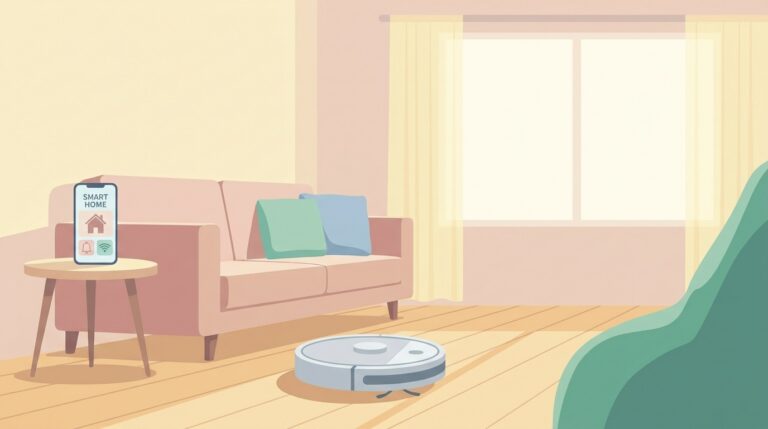
Now, picture the modern alternative. While sitting at your office desk sipping your afternoon Iced Americano, you tap your smartphone screen. Miles away, your trusty robotic vacuum wakes up with a cheerful chime, systematically mapping your rooms, sweeping, and mopping every corner. When you open your front door at night, you are greeted by fresh air and a floor so sparkling clean that it feels like you checked into a boutique hotel.
In contemporary Korea, tech-driven convenience is not just a luxury; it is an art form. Koreans love celebrating everyday life hacks that protect their precious evening downtime. In this lesson, we will explore the real, conversational Korean that locals use when talking about smart home IoT setups, automated cleaning, and the trending appliances that Koreans jokingly call “life-saving aunties.” You will move beyond robotic textbook phrases into natural, B1-level expressions that make your Korean friends nod enthusiastically and say, “와, 한국 사람 다 됐네요!” (Wow, you’ve become completely Korean!).
Phase 2: Core 3 Expressions Deep Dive
1. 돌려놓다 (Dollyeonota)
- Pronunciation: [dohl-lyuh-no-t’a] (Think of saying “dole-lyuh-no-tah” smoothly, linking the ‘h’ sound into a soft breath)
- Meaning: Literally “to turn and put,” but idiomatically used as “to start/run a machine in advance so that an action stays completed.”
- K-Culture Moment: In reality shows like I Live Alone (나 혼자 산다), busy celebrities will glance at their phones before leaving a film set and say: “집 가기 전에 로봇청소기 돌려놔야겠다.” (I should run the robot vacuum before heading home.)
- Editor’s Insight: In Korean, machines with rotating parts or repetitive cycles (laundry machines, microwaves, robot vacuums) are operated using the verb 돌리다 (to spin/run). Combining it with the auxiliary grammar pattern -아/어 놓다 (to do something in advance and leave it in that state) creates 돌려놓다. It encapsulates the peaceful feeling of delegating chores to technology ahead of time.
- Situation Spectrum: Casual (✅) / Semi-formal (✅) / Formal (⚠️ – in formal documents, use 가동해 두다)
- 🤔 Think About It: English usually relies on separate prepositions like “run it in advance,” whereas Korean bundles the action and the enduring result into one seamless compound verb. How does your native language express preparing chores beforehand?
2. 반짝반짝 깨끗하다 (Banjjakbanjjak Kkaekkeuthada)
- Pronunciation: [bahn-jjak-bahn-jjak kkae-kkeut-ha-da] (The double ‘jj’ is a crisp, popping sound, like the snap in “sparkling”)
- Meaning: Literally “twinkle-twinkle clean,” naturally translating to “squeaky clean” or “gleaming clean.”
- K-Culture Moment: You will often hear this in home renovation shows or YouTube house tours (랜선 집들이) when an influencer rubs their barefoot on a polished wooden floor to prove there is zero residue.
- Editor’s Insight: Korean has hundreds of uiseong-eo (onomatopoeia) and uitae-eo (mimetic words). While 깨끗하다 merely states that something is clean, adding the shimmering visual mimetic 반짝반짝 gives your listener a tactile, sensory picture of shiny surfaces catching the ceiling light.
- Situation Spectrum: Casual (✅) / Semi-formal (✅) / Formal (⚠️ – sounds somewhat childish in business reports, but very natural in conversation)
- 🤔 Think About It: Notice how Korean uses visual twinkling (반짝반짝) to describe physical cleanliness, while English often uses auditory words like squeaky clean. What sensory imagery does your language use?
3. 삶의 질이 수직 상승하다 (Salm-ui Jiri Sujiksangseunghada)
- Pronunciation: [sahl-mui jee-ree soo-jik-sahng-seung-ha-da] (Sujik sounds like “soo-jeek,” meaning vertical; sangseung means rise)
- Meaning: “One’s quality of life skyrockets vertically.”
- K-Culture Moment: Search any Korean social media platform for reviews on dishwashers or robotic vacuums, and this exact phrase appears in thousands of captions accompanied by fire emojis and sparkling house photos.
- Editor’s Insight: This phrase evolved from Korean internet and lifestyle culture. Instead of simply saying 편리해요 (it is convenient), modern Koreans use financial/scientific jargon (수직 상승 = vertical takeoff/spike) to dramatically emphasize how a small tech purchase dramatically upgraded their daily mental peace.
- Situation Spectrum: Casual (✅) / Semi-formal (✅) / Formal (🚫 – slightly exaggerated slang for serious academic or business settings)
- 🤔 Think About It: Why do you think modern Koreans in hyper-dense urban centers place such immense value on appliances that purchase back their leisure time?
Phase 3: Textbook Korean vs. Real Korean
Situation 1: Talking about starting a cleaning cycle
- 📖 교과서 한국어 (Textbook): 스마트폰 애플리케이션으로 진공청소기를 작동시켰습니다. (Seumateupon aepeullikeisyeon-euro jingongcheongsogireul jakdongsigyeotseumnida.) — “I operated the vacuum cleaner via smartphone application.”
- 🗣️ 진짜 한국어 (Real-life): 스마트폰 앱으로 로봇청소기 돌려놨어요. (Seumateupon aebeuro robocheongsogi dollyeonwaseoyo.) — “I ran the robot vacuum through the app in advance.”
- 💡 Why is it different? Nobody in Korea calls an app 애플리케이션 in spoken conversation—it is simply 앱 (aep). Similarly, 작동시키다 sounds like an instruction manual engineer; native speakers universally say 돌리다 for household appliances.
Situation 2: Expressing how helpful a smart device is
- 📖 교과서 한국어 (Textbook): 이 가전제품은 가사 노동 시간을 단축해 줍니다. (I gajeonjeepeum-eun gasa nodong sigan-eul danchukae jumnida.) — “This household appliance shortens domestic labor time.”
- 🗣️ 진짜 한국어 (Real-life): 이거 완전 삶의 질 수직 상승템이에요! (Igeo wanjeon salm-ui jil sujiksangseung-tem-ieyo!) — “This is totally a life-quality skyrocketing item!”
- 💡 Why is it different? The suffix -템 (derived from the gaming term “item”) is attached to nouns by millennials and Gen Z to label indispensable lifestyle goods (꿀템 = honey item/pro-tip item, 필수템 = must-have item).
Phase 4: K-Culture Deep Dive & Non-Verbal Manners
4-1. Nunchi & Barefoot Etiquette (온돌 감각)
In Korea, home is sacredly separated into the 현관 (sunken entryway where shoes are removed) and the living floor. Because Koreans sit, lounge, and historically sleep directly on the floor over heated ondol pipes, foot tactile sensitivity is exceptionally high.
When a Korean coworker boasts that their home is 반짝반짝 깨끗해요, the subtle non-verbal cue often involves a satisfied sigh and a playful sweeping motion of the foot against the floor. If you ever visit a Korean friend’s apartment, walking cautiously and praising how smooth and clean the floor feels beneath your socks (바닥이 정말 뽀송뽀송하네요!) displays high nunchi (social intuition) and deep appreciation for their domestic care.
4-2. The Cultural Myth: The “Three Divine Appliances” (삼신가전)
In ancient Korean mythology, the Samshin Halmoni (삼신할머니) is the three-goddess deity who bestows fertility and protects newborn life. In modern consumer folklore, Koreans created a witty parody term: 삼신가전 (The Three Divine Home Appliances).
These three items are:
1. 로봇청소기 (Robot vacuum cleaner)
2. 식기세척기 (Dishwasher)
3. 의류건조기 (Clothes dryer)
Young Korean couples and solo-dwellers (1인 가구) consider these appliances the holy trinity that saves relationships and preserves mental sanity after 10-hour workdays. When you mention 삼신가전 in conversation, Koreans immediately recognize you as someone who truly understands the heartbeat of contemporary Korean urban life.
Phase 5: Real-Life Roleplay Scenario
Setting: A sunlit café near Yeoksam Station in Gangnam during lunchtime. You are enjoying an iced latte with your Korean coworker, Ji-hye, who looks unusually relaxed despite working overtime yesterday.
1. 나 (Me): 지혜 씨, 오늘따라 얼굴이 되게 편안해 보여요! 어제 야근하지 않았어요?
(Jihye ssi, oneulttara eolguri doege pyeonanhae boyeoyo! Eoje yageunhaji anatseoyo?)
🎭 Leaning forward with a warm smile, resting your coffee cup on the napkin.
“Ji-hye, you look so relaxed today! Didn’t you work late yesterday?”
2. 지혜 (Ji-hye): 맞아요, 어제 완전 녹초였죠. 근데 집에 들어가니까 스트레스가 확 풀리더라고요.
(Majayo, eoje wanjeon nokchoyeotjyo. Geunde jibe deureoganikka seuteureseuga hwak pullideoragoyo.)
🎭 Nodding gratefully and taking a sip of her drink.
“Right, I was totally exhausted yesterday. But the moment I stepped into my house, my stress just melted away.”
3. 나 (Me): 왜요? 집에 무슨 좋은 일 있었어요?
(Waeyo? Jibe museun joeun il isseosseoyo?)
🎭 Tilting head curiously with raised eyebrows.
“Why? Did something great happen at home?”
4. 지혜 (Ji-hye): 출근할 때 스마트폰 앱으로 로봇청소기를 돌려놨거든요. 퇴근하니까 바닥이 반짝반짝 깨끗한 거예요!
(Chulgeunhal ttae seumateupon aebeuro robocheongsogireul dollyeonwatgeodeunyo. Twegeunhanikka badagi banjjakbanjjak kkaekkeutan geoyeyo!)
🎭 Clapping hands softly together with sparkling eyes.
“Before going to work, I started the robot vacuum via the smartphone app. When I got home, the floor was gleaming clean!”
5. 나 (Me): 와, 원격으로 제어할 수 있으니까 진짜 편하겠네요.
(Wa, wongyeogeuro jeeohal su isseunikka jinjja pyeonhagetneyo.)
🎭 Nodding in agreement, tapping your own smartphone thoughtfully.
“Wow, being able to control it remotely must be so convenient.”
6. 지혜 (Ji-hye): 진짜요. 물걸레 청소까지 다 해주니까 삶의 질이 수직 상승했어요.
(Jinjyayo. Mulgeolle cheongsokkaji da haejunikka salm-ui jiri sujiksangseunghaesseoyo.)
🎭 Holding both thumbs up excitedly.
“Seriously. It even does the wet mopping, so my quality of life skyrocketed.”
7. 나 (Me): 저도 요즘 청소할 시간이 부족한데, 하나 장만할까 봐요.
(Jeodo yojeum cheongsohal sigani bujokhande, hana jangmanhalkka bwayo.)
🎭 Chuckling softly while checking your phone’s shopping app.
“I don’t have much time to clean these days either; maybe I should invest in one.”
8. 지혜 (Ji-hye): 무조건 사세요! 이건 돈값을 제대로 하는 효도템이에요.
(Mujogeon saseyo! Igeon donkkapseul jedaero haneun hyodotemieyo.)
🎭 Giving a decisive nod and laughing.
“Buy it without hesitation! It is genuinely worth every single won.”
🔀 Interactive Decision Point: How do you react to Ji-hye?
- Option A: “진짜요? 청소기 이름이 뭐예요? 저도 당장 사야겠어요!” (Jinjyayo? Cheongsogi ireumi mwoyeyo? Jeodo dangjang sayagetseoyo!)
- Feedback (Best! ⭐): Highly natural! It shows enthusiasm, mirrors her excitement, and keeps the conversation flowing effortlessly.
- Option B: “청소기를 작동하는 것은 전력 소비가 많지 않습니까?” (Cheongsogireul jakdonghaneun geoseun jeonryeok sobiga manji anseumnikka?)
- Feedback (Bad ❌): Excessively stiff textbook grammar (-지 않습니까). It sounds like an energy audit inspection rather than a friendly coffee chat.
- Option C: “돈이 아까워요. 손으로 닦으면 공짜인데요.” (Doni akkawoyo. Soneuro dakk-eumyeon gongjjaindeyo.)
- Feedback (Risk ⚠️): Overly blunt. It indirectly criticizes her spending habits and ignores the cultural emphasis on saving personal time and energy.
Phase 6: 10-Second Emotional Shadowing Drill
Practice reading these out loud by matching the emotional tone tags and observing the rhythm pauses (/).
[😌 Relieved and cozy]
출근할 때 / 앱으로 돌려놓으니까 / 집이 반짝반짝 깨끗해요.
(Chulgeunhal ttae / aebeuro dollyeonoeunikka / jibi banjjakbanjjak kkaekkeuthaeyo.)
“Because I ran it via app while leaving for work / my house is sparkling clean.”-
[🤩 Shocked and amazed]
우와, / 물걸레 청소까지 된다고요? / 진짜 대박이다!
(Uwa, / mulgeolle cheongsokkaji doendagoyo? / Jinjja daebak-ida!)
“Whoa, / you mean it even does wet mopping? / That’s truly awesome!” -
[😊 Proud and enthusiastic]
이거 산 뒤로 / 제 삶의 질이 / 완전 수직 상승했어요!
(Igeo san dwiro / je salm-ui jiri / wanjeon sujiksangseunghaesseoyo!)
“Ever since buying this / my quality of life / literally skyrocketed!”
Phase 7: K-Culture Mini Dictionary
-
삼신가전 (Sam-sin-ga-jeon)
- Translation: The Three Divine Home Appliances (Robot vacuum, dishwasher, dryer).
- Real-world Usage: Used constantly among newlyweds (신혼부부) and apartment owners when debating budget priorities for moving into a new home.
- 돌리다 (Dollyeonota / Dollida)
- Translation: To run / spin a machine.
- Real-world Usage: Not limited to vacuums! Koreans say 세탁기 돌리다 (run the laundry), 전자레인지 돌리다 (microwave food), and 식기세척기 돌리다 (run the dishwasher).
- 삶의 질 (Salm-ui jil)
- Translation: Quality of life.
- Real-world Usage: Paired with verbs like 올라가다 (go up), 상승하다 (rise), or adjectives like 높다 (high). An indispensable phrase for lifestyle discussions.
- 칼퇴 (Kal-twae)
- Translation: Leaving work razor-sharp on time (Knife-like clock-out).
- Real-world Usage: Leaving work right on the dot (칼퇴근) to enjoy one’s pristine, automated smart home sanctuary.
Phase 8: Survival Kit for Expats & Smart Travelers
Survival Expressions TOP 3
- 스마트폰이랑 어떻게 연결해요? (Seumateupon-irang eotteoke yeongyeolhaeyo?)
- Meaning: “How do I connect this with my smartphone?”
- Pro Tip: Use this at electronics stores like Hi-Mart (하이마트) when asking about IoT compatibility.
- 물걸레 기능도 지원되나요? (Mulgeolle gineungdo jiwondoenayo?)
- Meaning: “Does it also support the wet-mopping function?”
- Pro Tip: Because Korean apartments feature hard flooring, wet mopping is essential for Korean consumers.
- 원격으로 작동돼요? (Wongyeogeuro jakdongdwaeyo?)
- Meaning: “Can it be operated remotely?”
- Pro Tip: Perfect when verifying smart home Wi-Fi capabilities for foreign models.
Editor’s Travel & Smart-Living Note
If you are living in or visiting Korea long-term in an officetel (오피스텔) or Airbnb, you will find modern Korean smart ecosystems remarkably interconnected. Download and set up the LG ThinQ 공식 앱 다운로드 or 삼성 SmartThings 앱 가이드 on your phone. Most recent Korean apartments come with built-in wall pads that sync with these apps, allowing you to turn on floor heating (난방), control indoor lighting, and inspect your robot vacuum’s camera feed directly from the subway train!
Phase 9: One Step Deeper (Reflective Insight)
Korea’s legendary 빨리빨리 (hurry, hurry) mindset is usually portrayed as stressful or rushed. However, in the context of domestic life, this cultural drive has transformed into an obsession with supreme efficiency and domestic peace. For Koreans, working hard outside demands that the home becomes an absolute sanctuary free of physical burdens. Automating your floor cleaning isn’t just about saving thirty minutes; it’s about reclaiming emotional sovereignty over your personal space after a demanding day in society.
💬 Your Turn: Does your culture value automated household chores in the same way, or do you still prefer cleaning your home manually with your own hands? Tell us in the comments below in simple Korean or English!
Phase 10: FAQ & Avoiding Misunderstandings
Q: Can I use the verb ‘켜다’ instead of ‘돌리다’ for a robot vacuum?
A: Yes, you can say 청소기를 켰어요 (I turned on the vacuum cleaner), but 돌리다 is far more common in everyday spoken Korean because it implies the entire active cleaning cycle rather than just flipping the power switch.
Q: What is the grammatical difference between ‘돌려놓다’ and ‘돌려두다’?
A: Both express completing an action in advance. While -아/어 놓다 emphasizes the clear physical result that remains evident, -아/어 두다 places slightly more subtle emphasis on storing or saving that state for future utility. In daily conversation regarding appliances, they are virtually interchangeable!
Q: Is ‘반짝반짝’ only used for floors and clean surfaces?
A: Not at all! 반짝반짝 is an expressive word for anything that twinkles or glitters, including stars in the night sky (반짝반짝 작은 별), sparkling eyes (눈이 반짝반짝), and polished jewelry.
🚨 Common Mistakes (흔한 실수)
- Mistake: Calling smart home phone programs 애플리케이션 (Aepeullikeisyeon) in casual chats.
- Correct Action: Simply say 앱 (Aep) or 어플 (Eopeul).
- Mistake: Translating “to vacuum” literally as 진공청소기로 빨아들이다.
- Correct Action: Use the natural compound 청소기를 돌리다 (to run the vacuum).
- Mistake: Using 삶의 질이 수직 상승하다 in a formal business contract or academic thesis.
- Correct Action: Use 생활 편의성이 크게 개선되다 (Living convenience is significantly improved) in formal environments.
Phase 11: Action Missions
- 🥉 Bronze Mission (Solo Shadowing): Stand in your living room and practice saying out loud with high energy: “출근할 때 돌려놨더니 집이 반짝반짝 깨끗해요!” 3 times.
- 🥈 Silver Mission (Social Share): Take a picture of your favorite home appliance or desk gadget and post it on your Instagram Story or Korean study blog with the caption: “완전 삶의 질 수직 상승템 ✨ #DailyHangul”.
- 🥇 Gold Mission (Real-life Practice): Next time you chat with a Korean friend, language exchange partner, or tutor, ask them: “혹시 집에서 로봇청소기 쓰세요? 삶의 질이 달라지나요?” (Do you use a robot vacuum at home? Does your quality of life change?).
- 🎮 K-Culture Mission: Watch an episode of MBC’s I Live Alone (나 혼자 산다) or an apartment vlog on YouTube, and listen for how often Korean hosts say 돌리다 when talking about doing their chores!
Phase 12: Interactive Quiz Challenge
Test your understanding of today’s lesson! Can you score 3 out of 3?
1. [상황 판단] You want to tell your Korean friend that your floor is gleaming clean after remote mopping. Which phrase sounds most natural?
(A) 바닥이 어지러워요. (Badagi eojireowoyo.)
(B) 바닥이 반짝반짝 깨끗해요. (Badagi banjjakbanjjak kkaekkeuthaeyo.)
(C) 바닥이 작동되었어요. (Badagi jakdongdoeeosseoyo.)
2. [빈칸 채우기] Complete the sentence:
스마트폰 앱으로 세탁기나 로봇청소기를 미리 작동시켜 둘 때, “기계를 미리 ______”라고 말합니다.
(A) 돌려놔요 (dollyeonwayo)
(B) 날려놔요 (nallyeonwayo)
(C) 빌려놔요 (billyeonwayo)
3. [True or False 문화 퀴즈] In modern Korea, the popular slang ‘삼신가전’ refers to the three divine household appliances that save time and skyrocket the quality of life.
(True / False)
👉 Click here to reveal the answers and explanations!
- Answer: (B)
- Explanation: 반짝반짝 깨끗하다 is the natural, sensory way to express that a floor is gleaming clean. Option (A) means the floor is messy/dizzy, and (C) is ungrammatical.
- Answer: (A) 돌려놔요
- Explanation: The auxiliary construction 돌려놓다 (돌리다 + -아/어 놓다) means to run a machine cycle in advance.
- Answer: True
- Explanation: Absolutely! 삼신가전 (robot vacuum, dishwasher, and clothes dryer) is a widely celebrated cultural term describing modern life-upgrading appliances.
- Explanation: Absolutely! 삼신가전 (robot vacuum, dishwasher, and clothes dryer) is a widely celebrated cultural term describing modern life-upgrading appliances.







