

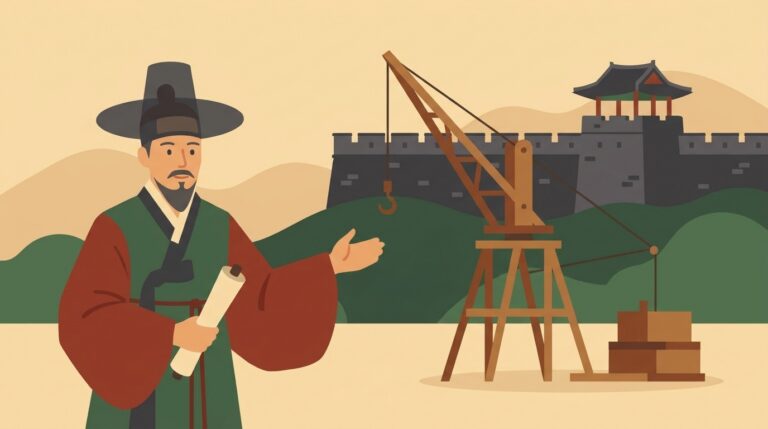
Phase 1: Why Practical Learning Still Shapes Modern Korea
Hello! This is the Daily Hangul Editor. Ever watched a historical K-drama like Yi San or The Red Sleeve and heard officials arguing fiercely over empty ritual while ignoring starving citizens? That exact frustration sparked Silhak (실학, Practical Learning) in 17th–18th century Joseon, led by polymath Dasan Jeong Yak-yong. Today, even modern Koreans quote Silhak thinkers when calling out useless office bureaucracy! Many of our Level 6 learners told us they understand daily Korean effortlessly, yet freeze when debates turn to philosophical idioms from Gyeongse Yupyo or Mokmin Simseo. Built directly from real tutoring feedback, this guide equips you to master Silhak vocabulary and wield razor-sharp, persuasive Korean like a native scholar.
Phase 2: 3 Essential Level 6 Expressions Deep Dive
1. 실사구시 (實事求是)
- Pronunciation: Silsa gusi (Sounds like seal-sah goo-she—keep the final shi crisp and light, like whispering ‘shh’ with a smile.)
- Meaning: Literally ‘seeking truth from actual facts.’ In real conversation, it means evidence-based pragmatism—ditching abstract dogma to solve tangible problems.
- K-Culture Moment: In Korean news debates or office dramas like Misaeng and Stranger, a sharp reformer slams a folder onto the conference table and declares, “이건 명분이 아니라 실사구시의 문제입니다” (Igeon myeongbun-i anira silsa gusi-ui munje-imnida — This isn’t about saving face; it’s a matter of facts and practicality).
- Editor’s Insight: Unlike simple words like 현실적 (hyeonsiljeok — realistic), 실사구시 carries intellectual weight and moral authority. It signals that you aren’t just cutting corners—you’re honoring truth through real-world verification.
- Situation Spectrum: Casual ⚠️ | Semi-formal ✅ | Formal ✅
- 🤔 Think About It: Western philosophy often separates ‘pragmatism’ from ‘idealism.’ Why did Joseon Silhak scholars view seeking practical facts as the highest form of Confucian morality rather than its opposite?
2. 이용후생 (利用厚生)
- Pronunciation: Iyong husaeng (Sounds like ee-yong hoo-seng—blend the ‘ee’ smoothly into ‘yong,’ and pronounce ‘saeng’ bright like the ‘a’ in sang mixed with said.)
- Meaning: Literally ‘making tools useful to enrich livelihoods.’ Today, it captures innovation that genuinely improves everyday life.
- K-Culture Moment: Tech documentaries and city-planning specials on Korean TV love invoking 이용후생 when profiling smart transit in Seoul or revisiting Dasan’s Geojunggi crane in historical specials about Suwon Hwaseong Fortress.
- Editor’s Insight: You won’t drop this while ordering iced Americano! Save it for essays, interviews, UX/product pitches, or policy discussions when you want to sound effortlessly eloquent.
- Situation Spectrum: Casual 🚫 | Semi-formal ⚠️ | Formal ✅
- 🤔 Think About It: In English, we talk about ‘human-centered design’ or ‘utilitarian value.’ How does putting husaeng (thickening/enriching life) at the core change how Koreans talk about technology?
3. 공리공담 (空理空談)
- Pronunciation: Gongni gongdam (Sounds like gong-nee gong-dahm—notice how the ‘r’ in 리 melts into an ‘n’ sound right after ‘ng,’ just like saying ‘sing nicely’ fast!)
- Meaning: Literally ‘empty theories and hollow talk.’ In practice, it’s a devastating critique of all talk, zero real-world action.
- K-Culture Moment: Think of every sageuk (historical drama) scene where the progressive young king glares at stubborn cabinet ministers chanting ancient verses while famine strikes the provinces: “그만들 하시오! 백성 굶주리는데 공리공담이나 늘어놓는가!” (Geumandeul hasio! Baekseong gumjurineunde gongni gongdam-ina neureononneunga! — Enough! The people are starving, and you spout empty theories!)
- Editor’s Insight: Use this carefully! Calling a colleague’s idea 공리공담 directly can sting. Native speakers soften the blow by framing it impersonally: “공리공담에 그치지 않으려면…” (Gongni gongdam-e geuchiji aneuryeomyeon… — So this doesn’t end up as empty talk…).
- Situation Spectrum: Casual ⚠️ | Semi-formal ✅ | Formal ✅
- 🤔 Think About It: Does your native language have a four-syllable idiom that exposes performative intellectualism as sharply as 공리공담?
Phase 3: Textbook Korean vs. Real Korean
Situation 1: Calling out an impractical plan in a meeting
- 📖 Textbook Korean: 이 계획은 이론에만 치우쳐서 현실성이 부족합니다. (I gyehoeg-eun iron-eman chiuchyeoseo hyeonsilseong-i bujokhamnida — This plan leans too heavily on theory and lacks realism.)
- 🗣️ Real Korean: 현장감이 전혀 없는 탁상공론 같아요. (Hyeonjanggam-i jeonhyeo eomneun taksang gongnon gatayo — This feels like armchair theorizing completely detached from the field.)
- 💡 Why the difference? While textbooks teach neutral nouns like 현실성 (realism), fluent professionals reach for vivid idioms like 탁상공론 (desk-top empty debate) paired with 현장감 (a sense of the actual現場/field) to sound incisive yet collaborative.
Situation 2: Praising a policy or feature that actually helps people
- 📖 Textbook Korean: 실생활에 아주 유용하고 국민을 위한 정책입니다. (Silsaenghwar-e aju yuyonghago gungmin-eul wihan jeongchaeg-imnida — It is a very useful policy in daily life for the citizens.)
- 🗣️ Real Korean: 겉치레가 아니라 진짜 실속 있고 체감되는 대안이네요. (Geotchire-ga anira jinjja silsok itgo chegamdoeneun daean-ineyo — It’s not just window dressing; it’s a substantial alternative people can actually feel.)
- 💡 Why the difference? Modern Korean echoes Silhak’s war against 겉치레 (empty show/formality) by favoring visceral words like 실속 (practical substance) and 체감되다 (to be physically/personally felt).
Phase 4: K-Culture Deep Dive & Non-Verbal Manners
4-1. Nunchi & Gestures in Intellectual Debates
In Korean culture, winning an argument through 실사구시 (facts) still requires nunchi (눈치 — social awareness). When challenging a senior colleague’s outdated idea, never point directly with your index finger or lean back with crossed arms—that reads as arrogant defiance rather than Silhak reform! Instead, lean slightly forward, keep both hands visible on the table or holding your notes, nod steadily while they speak, and look down briefly before offering data: “선배님 말씀도 일리가 있지만, 현장 데이터를 보면…” (Seonbaenim malsseum-do illi-ga itjiman, hyeonjang deiteo-reul bomyeon… — Your point has merit, senior, yet looking at field data…). You preserve myeongbun (face/respect) while steering the room toward silri (practical truth).
4-2. Cultural Code Analysis: Yi San, Suwon Hwaseong, and Engineering as Compassion
If you’ve watched the classic K-drama Yi San (이산) or visited Suwon Hwaseong Fortress (수원 화성), you’ve seen Silhak in stone and timber. King Jeongjo commissioned a young Dasan Jeong Yak-yong to design the fortress walls—not merely for royal grandeur, but to protect merchants and ease laborers’ suffering. Dasan invented the 거중기 (Geojunggi), a pulley crane that lifted massive stones with minimal manpower, even paying workers fair wages instead of forcing unpaid corvée labor! In Korea, visiting Suwon Hwaseong isn’t just sightseeing; it’s experiencing how Silhak fused science, architecture, and aemin (love for the people).
Phase 5: Interactive Roleplay Scenario
Setting: A sunlit hanok café near Suwon Hwaseong Fortress after a museum tour. Min-ho, a sharp-witted Korean urban planner and history nerd, is debating city redesign over traditional omija tea with you.
- Min-ho: 🎭 Sets his teacup down and gestures toward the fortress walls outside the window. 오늘 화성 둘러보니까 어때요? 정약용 선생의 실사구시 정신이 느껴지지 않아요? (Oneul Hwaseong dulleobonikka eottaeyo? Jeong Yak-yong seonsaeng-ui silsa gusi jeongsin-i neukkyeojiji anayo? — How was touring Hwaseong today? Don’t you feel Master Jeong Yak-yong’s spirit of seeking truth from facts?)
- You: 🎭 Leans in enthusiastically, tracing the rim of your cup. 진짜 놀랐어요. 거중기 설계도 그렇고, 백성들의 노역을 줄이려던 이용후생의 철학이 대단하더라고요. (Jinjja nollasseoyo. Geojunggi seolgye-do geureotgo, baekseongdeur-ui noyeog-eul juryeodeon iyong husaeng-ui cheolhag-i daedanhadeoragoyo. — I was genuinely amazed. Both the Geojunggi design and the philosophy of enriching livelihoods to ease laborers’ toil were incredible.)
- Min-ho: 🎭 Smiles knowingly and taps his notebook. 맞아요. 당시 성리학자들은 명분론에만 빠져서 공리공담을 일삼았는데, 실학자들은 달랐죠. (Majayo. Dangsi Seongnihakjadeur-eun myeongbullon-eman ppajyeoseo gongni gongdam-eul ilsam-anneunde, Silhakjadeur-eun dallatjyo. — Right. Neo-Confucian scholars back then got trapped in dogma and empty theorizing, whereas Silhak thinkers were different.)
- You: 🎭 Nods thoughtfully. 요즘 회사 회의에서도 마찬가지인 것 같아요. 가끔 현장 사정은 모른 채 탁상공론만 하는 경우가 있잖아요. (Yojeum hoesa hoeui-eseodo machangaji-in geot gatayo. Gakkeum hyeonjang sajeong-eun moreun chae taksang gongnon-man haneun gyeongu-ga itjanayo. — It seems the same in modern office meetings too. Sometimes people just engage in armchair theorizing without knowing field realities.)
- Min-ho: 🎭 Laughs aloud in agreement. 와, 한국인보다 어휘력이 더 좋으신데요? 다산 선생의 목민심서가 딱 그런 태도를 경계했잖아요. (Wa, Hangugin-boda eohwiryeog-i deo joeusindeyo? Dasan seonsaeng-ui Mokmin Simseo-ga ttak geureon taedo-reul gyeonggyehaetjanayo. — Wow, your vocabulary is better than a native Korean’s! Dasan’s Mokmin Simseo warned against that exact attitude.)
- You: 🎭 Raises eyebrows in curiosity. 공직자가 백성을 대할 때의 도리를 담은 책이죠? 경세유표랑 헷갈리기 쉬운데 차이가 뭐예요? (Gongjikja-ga baekseong-eul daehal ttae-ui dori-reul dameun chaeg-ijyo? Gyeongse Yupyo-rang hetgalligi swiunde chai-ga mwoyeyo? — That’s the book on officials’ duties toward the people, right? It’s easy to confuse with Gyeongse Yupyo—what’s the difference?)
- Min-ho: 🎭 Holds up two fingers to contrast them clearly. 목민심서는 지방관의 실무 지침서고, 경세유표는 국가 제도 전반을 개혁하려는 청사진이에요! (Mokmin Simseo-neun jibanggwan-ui silmu jichimseo-go, Gyeongse Yupyo-neun gukga jedo jeonban-eul gaehyeokharyeoneun cheongsajin-ieyo! — Mokmin Simseo is a practical handbook for local magistrates, while Gyeongse Yupyo is a blueprint for reforming the entire national system!)
- You: 🎭 Jots a quick note on your phone. 아, 미시적 실천과 거시적 제도 개혁의 차이군요! 이제 확실히 구분돼요. (A, misijeok silcheon-gwa geosijeok jedo gaehyeog-ui chai-gunyo! Ije hwaksilhi gubundwaeyo. — Ah, the difference between micro-level practice and macro-level institutional reform! Now I can tell them apart clearly.)
🔀 Interactive Branching Point
Min-ho suddenly asks: “그럼 만약 지금 다산 선생이 서울 시장을 맡는다면, 제일 먼저 뭘 개혁해야 할까요?” (Geureom manyak jigeum Dasan seonsaeng-i Seoul sijang-eul matneundamyeon, jeil meonjeo mwol gaehyeokhaeya halkkayo? — So if Master Dasan became Mayor of Seoul today, what should he reform first?) How do you reply?
- A) “보여주기식 전시 행정을 없애고, 서민 주거 안정처럼 시민이 체감할 수 있는 이용후생 정책부터 펼칠 것 같아요.” (Boyeojugisik jeonsi haengjeong-eul eopsaego, seomin jugeo anjeong-cheoreom simin-i chegamhal su inneun iyong husaeng jeongchaek-buteo pyeolchil geot gatayo — I think he’d abolish performative showcase administration and start with livelihood-focused policies citizens can truly feel, like housing stability.)
- Feedback (🏆 Best): Phenomenal Level 6 fluency! Blending modern terms like 전시 행정 (showcase administration) with 이용후생 shows native-level mastery of historical-modern continuity.
- B) “그냥 다산 선생이 옛날 사람이라서 지금 서울에 오면 아무것도 못 할 거예요.” (Geunyang Dasan seonsaeng-i yennal saram-iraseo jigeum Seoul-e omyeon amugeotdo mot hal geoyeyo — Dasan is just an old-timey person, so he couldn’t do anything in modern Seoul.)
- Feedback (❌ Bad): Too dismissive and overly blunt! It shuts down an engaging cultural conversation and overlooks the timeless spirit of Silhak.
- C) “성리학을 다시 부활시켜서 예절부터 엄격하게 가르칠 것 같은데요.” (Seongnihag-eul dasi buhwalsikyeoseo yejeol-buteo eomgyeokhage gareuchil geot gateundeyo — I think he’d revive Neo-Confucianism and strictly teach etiquette first.)
- Feedback (⚠️ Risk): Careful! While Dasan respected Confucian ethics, Silhak explicitly arose to critique empty Neo-Confucian ritualism. Min-ho might politely correct your history here!
Phase 6: 10-Second Emotion Shadowing Drill
Read aloud with rhythm! Pause briefly at / and commit to the emotional cue:
- [😤 Frustrated yet sharp] 겉치레뿐인 명분론은 / 이제 그만하고, / 실사구시의 태도로 / 해결책을 찾읍시다. (Geotchire-ppunin myeongbullon-eun / ije geumanhago, / silsa gusi-ui taedo-ro / haegyeolchaeg-eul chajeupsida — Enough with empty prestige politics; let’s find solutions with fact-based pragmatism.)
- [✨ Inspired and passionate] 백성의 삶을 바꾸지 못하는 학문은 / 결국 공리공담에 / 불과합니다. (Baekseong-ui salm-eul bakkuji mothaneun hangmun-eun / gyeolguk gongni gongdam-e / bulgwahamnida — Scholarship that cannot transform people’s lives is ultimately nothing more than empty talk.)
- [🤝 Warm and persuasive] 현장의 목소리를 반영해야 / 진정한 이용후생이 / 실현될 수 있습니다. (Hyeonjang-ui moksori-reul banyeonghaeya / jinjeonghan iyong husaeng-i / silhyeondoel su itseumnida — Only by reflecting voices from the field can true livelihood improvement be realized.)
Phase 7: K-Culture Mini Dictionary
- 경세유표 (Gyeongse Yupyo) | Design for Good Governance | Dasan’s grand blueprint written in exile to overhaul Joseon’s tax, land, and bureaucratic systems. In modern essays, it symbolizes sweeping structural reform.
- 목민심서 (Mokmin Simseo) | Admonitions on Governing the People | A hands-on ethical and administrative manual for local officials. Today, Korean politicians and CEOs frequently gift it—or get criticized for ignoring it!
- 탁상공론 (Taksang Gongnon) | Armchair theorizing | Literally ‘debating on a desk.’ Essential daily business Korean for calling out out-of-touch corporate or academic plans.
- 애민정신 (Aemin Jeongsin) | Spirit of love for the people | The emotional heartbeat behind Silhak and King Sejong’s Hangul alike—used today in leadership speeches, journalism, and historical documentaries.
Phase 8: Survival Kit for Travelers
Planning a trip to Suwon Hwaseong Fortress or the Dasan Heritage Site in Namyangju? Pack these phrases:
- 실학 관련 전시실은 어느 쪽이에요? (Silhak gwallyeon jeonsisil-eun eoneu jjog-ieyo?) — Which way is the Silhak exhibition hall? Pro Tip: Ask docents at the National Museum of Korea or Gyeonggi-do Silhak Museum—many offer free English audio guides!
- 거중기 모형도 볼 수 있나요? (Geojunggi mohyeong-do bol su innayo?) — Can we see a model of the Geojunggi crane too? Pro Tip: At Suwon Hwaseong Museum, kids and adults alike can inspect replicas of Dasan’s engineering marvels.
- 해설사 투어 예약이 가능한가요? (Haeseolsa tueo yeyag-i ganeunghangayo?) — Is it possible to reserve a docent tour? Pro Tip: Korean historical sites often run scheduled English docent walks—ask at the ticket booth upon arrival.
Editor’s Travel Note: Navigating from Seoul to Suwon Hwaseong or Namyangju’s Dasan Ecological Park is effortless if you Download the Naver Map App for Accurate Korean Transit Routes before leaving your hotel—Google Maps won’t give reliable walking paths inside Korean fortress parks! Grab a T-money card at any convenience store to tap onto the Suwon-bound Subway Line 1 or Bundang Line seamlessly.
Phase 9: One Step Deeper
In Korean society, a quiet tug-of-war still plays out between 명분 (myeongbun)—doing what looks proper, hierarchical, and principled—and 실리 (silri)—doing what actually works for people on the ground. When 17th- and 18th-century Silhak scholars challenged rigid Neo-Confucian dogma, they weren’t rejecting Korean tradition; they were bravely insisting that ethics without empathy for real human suffering is hollow. Even today, whenever Koreans debate work-life balance, startup innovation, or public accountability, you can hear Dasan’s restless, compassionate voice echoing beneath modern slang.
💬 Your Turn: Have you ever run into a moment of taksang gongnon (armchair theorizing) at work or school where a dose of silsa gusi saved the day? Share your story in the comments!
Phase 10: FAQ & Misconception Prevention
Q: Was Silhak an anti-Confucian movement that wanted to overthrow the Joseon dynasty?
A: Not at all! Most Silhak scholars, including Dasan Jeong Yak-yong, were devoted Confucian intellectuals. They didn’t want to destroy Confucianism—they wanted to rescue it from barren metaphysical debates (공리공담) and restore its original mission of serving the people (애민정신).
Q: What is the fastest way to remember the difference between Gyeongse Yupyo and Mokmin Simseo?
A: Think Macro vs. Micro! Gyeongse (경세) means governing the state/world—so Gyeongse Yupyo tackles big national laws and institutions. Mokmin (목민) means shepherding the people—so Mokmin Simseo teaches local officials day-to-day integrity and hands-on care.
Q: Can I use four-character idioms like 실사구시 in casual texts with Korean friends?
A: Yes, especially in witty or ironic contexts! Advanced speakers often playfully say “오늘은 실사구시 모드로 가자” (Let’s go into practical mode today) when skipping fancy plans for something cozy and efficient, though heavy use in casual chat can sound playfully dramatic.
🚨 Common Mistakes Warning Board
- Mistake: Pronouncing 공리공담 literally as gong-ri-gong-dam. Correct Action: Apply Korean nasalization! Pronounce it gong-ni-gong-dam so it flows naturally.
- Mistake: Confusing 실학 (Silhak — Practical Learning) with 실학자 in modern job titles. Correct Action: Use 실학 strictly for the late Joseon reform movement; for modern pragmatism, use 실용주의 (siryongjuui) or 실사구시.
- Mistake: Using 명분론 (dogmatic formalism) as a compliment. Correct Action: In modern Korean, 명분론 almost always carries a negative nuance of stubbornly prioritizing appearances over results—use 원칙 (principles) if you mean it positively!
Phase 11: Action Mission & Engagement
- 🥉 Bronze Mission (Solo Practice): Record yourself reading the 3 Phase 6 Shadowing sentences aloud, focusing on the nasalization in 공리공담 (gongni gongdam) and the pause markers.
- 🥈 Silver Mission (Share Online): Post your favorite Silhak expression from Phase 2 on social media with one sentence explaining how it applies to your career or studies, tagging
#DailyHangul. - 🥇 Gold Mission (Real-World Use): During your next Korean language exchange or work chat, naturally weave in 탁상공론 (armchair theorizing) or 실사구시 (evidence-based pragmatism) and watch your Korean partner’s eyes light up!
- 🎮 K-Culture Mission: Watch an episode of The Red Sleeve, Yi San, or a Korean news debate clip on YouTube and try to spot one moment where a character challenges empty formality with practical compassion.
Phase 12: Interactive Quiz Challenge
1. Situational Judgment: Your Korean teammate proposes a flashy marketing campaign that ignores your customers’ actual budget and habits. Which phrase politely yet firmly critiques this using today’s lesson?
* A) 완전 이용후생의 표본이네요!
* B) 명분론을 아주 잘 지키셨군요.
* C) 취지는 좋은데, 현장감이 빠진 탁상공론이 되지 않게 조심해야겠어요.
Click to Reveal Answer & Feedback
Answer: C! Option C gracefully acknowledges the intention (취지는 좋은데) while warning against detached theorizing (탁상공론). Option A praises it as practical innovation (wrong!), and Option B sarcastically praises empty formalism.
2. Fill in the Blank: 다산 정약용은 지방 수령이 백성을 다스릴 때 지켜야 할 구체적 실무 지침을 담은 책인 ( )을(를) 저술했다.
Click to Reveal Answer & Feedback
Answer: 목민심서 (Mokmin Simseo)! Remember: Mokmin (shepherding the people) = local magistrate’s practical manual, whereas Gyeongse Yupyo = blueprint for national systemic reform.
3. True or False: Because 실사구시 (Silsa Gusi) is an 18th-century historical term, modern Koreans never use it in business or news.
Click to Reveal Answer & Feedback
Answer: False! 실사구시 remains one of the most respected Level 6 idioms in Korean journalism, executive speeches, and policy debates to champion data-driven pragmatism.
🎬 Watch Our Daily Videos! (Daily Hangul Official Instagram)
Review the expressions you learned in this article with our fun daily short videos! Check out native pronunciation and real-life nuances in action.
- Instagram @dailyhangul_en







