

How to Talk About Your K-Pop Weekend Hobbies Like a True Korean Friend
Phase 1: Empathy (A Story-Driven Opening)
안녕하세요! 매일한글 에디터입니다.
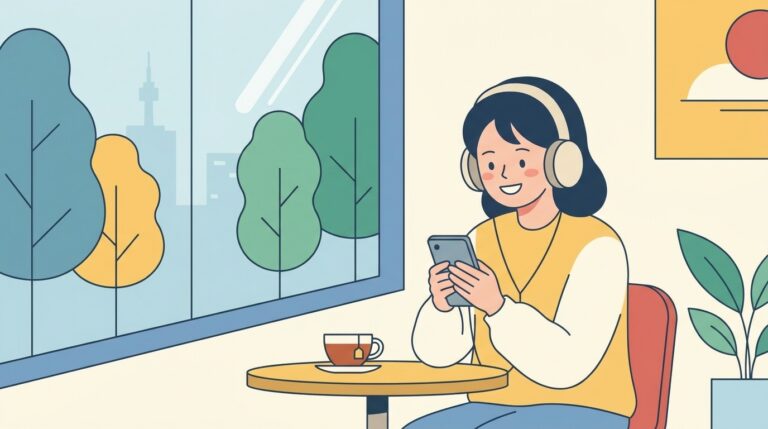
Imagine this scene: You are sitting at a sunlit cafe in Yeonnam-dong on a lazy Saturday afternoon, sipping on a refreshing iced Americano. Your Korean friend leans across the wooden table with an affectionate smile and asks, “주말에 보통 뭐 해요?” (What do you usually do on weekends?). Your heart races for a second. You spent all morning streaming your ultimate bias group’s newest music video and unboxing cute photocards. You want to share this joy! But the only sentence your old textbook taught you is: “제 취미는 음악 감상입니다” (My hobby is music appreciation)—a stiff phrase that sounds like you are sitting for a corporate job interview in 1995!
Sound familiar? We hear this exact frustration from hundreds of our beginner learners at Daily Hangul every single week. Talking about what brings you joy should feel exciting, comfortable, and natural—not like passing a grammar test. By learning just a few conversational phrases tailored for beginners (CEFR A1), you will unlock the power to connect instantly with Korean friends over your favorite tunes, join casual weekend banter, and express your passions without hesitation.
Phase 2: Core Expressions Deep Dive
Here are three essential expressions you need to talk about music and your free time effortlessly.
1. 케이팝 듣는 걸 좋아해요
- Pronunciation: [Ke-i-pap deun-neun geol jo-a-hae-yo] (Sound metaphor: Think of “Kay-pop dune-noon girl joe-ah-heh-yo”)
- Meaning: Literal: “I like the thing of listening to K-pop.” / Real nuance: “I love listening to K-pop” or “K-pop is my go-to hobby.”
- K-Culture Moment: The moment an idol on a live broadcast asks fans what they did over the weekend, and the chat floods with fans sharing their listening playlists.
- Editor’s Insight: In Korean, rather than stating “My hobby is [Noun]”, natives almost always turn verbs into action habits using the pattern
~는 걸 좋아해요(I like doing [verb]). It instantly sounds ten times more casual and authentic! - Situation Spectrum: Casual ⚠️ (Drop yo: 케이팝 듣는 거 좋아해) | Semi-formal ✅ (케이팝 듣는 걸 좋아해요) | Formal ✅ (케이팝 듣는 것을 좋아합니다)
- 🤔 Think About It: English often uses direct nouns (“I like music”), whereas Korean prefers describing the sensory action (“I like listening to music”). What does this tell you about how Korean speakers focus on real experiences?
2. 주말에 보통 뭐 해요?
- Pronunciation: [Ju-mar-e bo-tong mwo hae-yo?] (Sound metaphor: Like “Zoo-mahl-eh bo-tong mwah heh-yo?”)
- Meaning: Literal: “On weekend, usually what do?” / Real nuance: “What do you usually do on weekends?”
- K-Culture Moment: The classic icebreaker used by college seniors, coworkers during Friday lunchtime, or your language exchange partner.
- Editor’s Insight: Notice that Korean often drops subject pronouns like “you” (당신, dangsin). Asking “주말에 보통 뭐 해요?” without specifying “you” is the most polite and natural way to keep a conversation moving.
- Situation Spectrum: Casual ⚠️ (주말에 보통 뭐 해?) | Semi-formal ✅ (주말에 보통 뭐 해요?) | Formal ✅ (주말에는 보통 무엇을 하십니까?)
- 🤔 Think About It: Why does Korean naturally omit the word “you” in casual small talk, while English requires it in almost every question?
3. 이 노래 진짜 좋아요
- Pronunciation: [I no-rae jin-jja jo-a-yo] (Sound metaphor: Like “Ee no-reh jeen-jjah joe-ah-yo”)
- Meaning: Literal: “This song real good.” / Real nuance: “This song is amazing! You have to hear it.”
- K-Culture Moment: You hand one side of your wireless earbuds to your friend on the subway to share a brand-new comeback track.
- Editor’s Insight: 진짜 (jinjja) is the universal Korean word for “really” or “truly”. Pair it with 좋아요 (joayo – good/like), and you have an instant reaction phrase that works in 90% of daily situations.
- Situation Spectrum: Casual ⚠️ (이 노래 진짜 좋아) | Semi-formal ✅ (이 노래 진짜 좋아요) | Formal ✅ (이 노래가 정말 좋습니다)
- 🤔 Think About It: How does adding emotional intensifiers like 진짜 (jinjja) build immediate rapport compared to neutral adjectives?
Phase 3: Textbook Korean vs. Real Korean
Let’s see how native speakers actually talk outside the classroom:
Situation 1: Introducing your hobby
- 📖 교과서 한국어 (Textbook): 저의 취미는 음악 감상입니다. (Jeoui chwimineun eumak gamsang-imnida. – My hobby is music appreciation.)
- 🗣️ 진짜 한국어 (Real-life): 저 케이팝 듣는 거 진짜 좋아해요! (Jeo keipap deunneun geo jinjja joahaeyo! – I really love listening to K-pop!)
- 💡 왜 다를까? 음악 감상 (music appreciation) is a formal Hanja-based term mainly used in resumes and official self-introduction forms. In real life, people use the active verb phrase 듣는 거 좋아해요.
Situation 2: Asking someone about their favorite artist
- 📖 교과서 한국어 (Textbook): 당신이 가장 좋아하는 가수는 누구입니까? (Dangsini gajang joahaneun gasuneun nugu-imnikka? – Who is the singer you like the most?)
- 🗣️ 진짜 한국어 (Real-life): 누구 노래 제일 좋아해요? (Nugu norae jeil joahaeyo? – Whose songs do you like best?)
- 💡 왜 다를까? Asking “당신” (you) sounds confrontational or overly dramatic like a movie subtitle. Asking “Whose songs do you like?” (누구 노래 제일 좋아해요?) sounds warm, polite, and natural.
Phase 4: K-Culture Deep Dive & Non-Verbal Manners
4-1. 눈치 (Nunchi) & Polite Gestures
When sharing music playlists or K-Pop recommendations with a Korean friend:
* Head Nodding (끄덕끄덕): When your friend plays a song on their phone, nod gently to the rhythm while keeping soft eye contact. It shows active listening and warmth.
* Respecting Tastes: Even if their favorite group isn’t your favorite, exclaim with a supportive smile: “오, 이 노래도 좋다!” (Oh, this song is nice too!). Koreans value harmony (화합) over fierce musical debates during friendly hangouts.
4-2. Cultural Codes: “스밍” & Fandom Weekends
In Korea, listening to music on weekends is rarely a solitary experience. Fans participate in 스밍 (streaming charts on Melon or Genie) and organize weekend visits to 생일 카페 (Birthday Cafes)—local cafes decorated with photos of their beloved idols where fans trade photo cards (포카). Saying 케이팝 듣는 걸 좋아해요 can be the magical gateway to invitations to these vibrant youth culture events!
Phase 5: Real-Life Roleplay Scenario
Setting: A trendy indie cafe in Hongdae on a Sunday afternoon. You are sitting with Minji (민지), a friendly Korean classmate.
- 민지 (Minji): 주말에 보통 뭐 해요? (Jumare botong mwo haeyo? – What do you usually do on weekends?)
🎭 Leaning forward with curious eyes, holding her warm mug. - You: 저 케이팝 음악 듣는 걸 좋아해요. (Jeo keipap eumak deunneun geol joahaeyo. – I like listening to K-pop music.)
🎭 Smiling brightly and tapping your chest gently. - 민지 (Minji): 진짜요? 누구 노래 제일 좋아해요? (Jinjyayo? Nugu norae jeil joahaeyo? – Really? Whose songs do you like best?)
🎭 Clapping her hands together softly in pleasant surprise. - You: 뉴진스 노래 진짜 좋아해요! (Nyujinseu norae jinjja joahaeyo! – I really love NewJeans songs!)
🎭 Taking out your phone to show your favorite playlist. - 민지 (Minji): 대박! 저도 뉴진스 신곡 매일 들어요. (Daebak! Jeodo Nyujinseu singok maeil deureoyo. – Awesome! I listen to NewJeans’ new song every day too.)
🎭 Nodding enthusiastically with a huge grin. - You: 이번 노래 진짜 좋지 않아요? (Ibeon norae jinjja joji anayo? – Isn’t their latest song so good?)
🎭 Nodding along in excitement. - 민지 (Minji): 맞아요, 완전 제 스타일이에요! 주말에 같이 음악 들으면서 과제할래요? (Majayo, wanjeon je seutairieyo! Jumare gachi eumak deureumyeonseo gwajehallaeyo? – Totally, it is completely my style! Want to do our assignment together this weekend while listening to music?)
🎭 Winking playfully and pointing to her laptop. - You: 좋아요! 완전 신나요! (Joayo! Wanjeon sinnayo! – Sounds great! I’m so excited!)
🎭 Giving a light two-handed thumbs up.
🔀 Interactive Branching Moment
Minji asks: “어떤 노래 제일 추천해요?” (Which song do you recommend most?) What do you say?
- Option A: “그냥 다 좋아요.” (I just like everything.)
- Feedback (Bad): Conversation stopper! It gives Minji nowhere to steer the discussion.
- Option B: “이 타이틀곡 진짜 좋아요. 한번 들어보세요!” (This title track is really good. Please give it a listen!)
- Feedback (Best!): Friendly, natural, and shares a specific recommendation while remaining polite.
- Option C: “옛날 노래는 별로예요. 새 노래만 들어요.” (Old songs are lame. I only listen to new songs.)
- Feedback (Risk): A bit too blunt! It risks dismissing genres or generations she might love.
Phase 6: 10-Second Emotion Shadowing Drill
Practice these lines with matching emotion and rhythm! The slash (/) indicates a natural micro-pause.
[😊 Cheerful & upbeat]
저 / 케이팝 듣는 걸 / 진짜 좋아해요!
(Jeo / ke-i-pap deun-neun geol / jin-jja jo-a-hae-yo!)
“I / really like / listening to K-pop!”-
[🤔 Curious & warm]
주말에 / 보통 / 뭐 하고 지내요?
(Ju-mar-e / bo-tong / mwo ha-go ji-nae-yo?)
“On weekends / usually / what do you do?” -
[😍 Fond & excited]
와, / 이 노래 / 멜로디가 / 진짜 좋아요!
(Wa, / i no-rae / mel-lo-di-ga / jin-jja jo-a-yo!)
“Wow, / this song’s / melody / is truly good!”
Phase 7: K-Culture Mini Dictionary
- 최애 (Choeae) | Ultimate Bias / Favorite Member
Usage: From “최고로 애정하다” (to love the most). Say: “제 최애는 지민이에요!” (My ultimate bias is Jimin!). - 입덕 (Ipdeok) | Becoming a fan (joining a fandom)
Usage: Combining ‘Enter’ (입) and ‘Otaku/Fan’ (덕). Say: “작년에 입덕했어요” (I joined the fandom last year). - 스밍 (Seuming) | Streaming music
Usage: Short for ‘streaming’ on Korean audio platforms. Say: “주말 내내 스밍 돌렸어요” (I streamed music all weekend). - 띵곡 (Ttinggok) | Masterpiece song / Bop
Usage: Visual slang for 명곡 (myeong-gok, masterpiece). Say: “이 노래 진짜 띵곡이에요” (This song is an absolute bop).
Phase 8: Traveler’s Survival Kit
Survival Expressions TOP 3
- 이 노래 제목이 뭐예요? (I norae jemogi mwoyeyo?)
Pro Tip: Use this at shopping malls or trendy Hongdae boutiques when you hear a fantastic background track. - K-POP 앨범 어디에 있어요? (K-POP aelbeom eodie isseoyo?)
Pro Tip: Essential for navigating big bookstores like Kyobo or music stores in Myeongdong. - 노래 추천해 주세요! (Norae chucheonhae juseyo!)
Pro Tip: A fun, warm way to make friends with local baristas or college students.
Editor’s Travel Note
- Install the Melon Music streaming guide or Spotify Korea to see real-time Top 100 charts.
- Keep your transit card handy via the Naver Map subway directions app when traveling between K-Pop entertainment agency buildings in Seongsu and Gangnam.
Phase 9: One Step Deeper (Reflective Essay)
In Korean society, sharing a hobby is rarely just an individual interest; it is an invitation to belong. While modern life in bustling cities like Seoul can be fast-paced and demanding, asking about someone’s music preferences softens social hierarchies and dissolves age gaps. K-pop fandoms operate on a collective warmth where fans bond over shared lyrics, concerts, and memories. When you say “케이팝 듣는 걸 좋아해요”, you aren’t just reciting Korean grammar—you are taking your first step into a shared cultural heartbeat.
💬 Your Turn: Who is the first Korean artist that made you fall in love with K-pop? Let us know in the comments below!
Phase 10: FAQ & Common Mistakes
Q: Can I just say “케이팝 좋아해요” instead of “케이팝 듣는 걸 좋아해요”?
A: Yes, absolutely! “케이팝 좋아해요” (I like K-pop) is very natural and commonly used. However, using “듣는 걸 좋아해요” (I like listening to it) specifies your weekend hobby and makes you sound much more descriptive and expressive.
Q: What is the difference between “좋아요” and “좋아해요”?
A: Great question! “좋아요” describes something that is good (Subject + 이/가 좋아요), while “좋아해요” means to like an action or object (Object + 을/를 좋아해요). For example: “노래가 좋아요” (The song is good) vs. “노래를 좋아해요” (I like songs).
Q: Can I use “취미는 음악 감상이에요” with friends?
A: You can, and people will understand you! However, it sounds slightly formal and stiff—similar to saying “My hobby constitutes music audition” in English. Stick with “음악 듣는 거 좋아해요” for everyday conversations.
🚨 Common Mistakes Warning Board
- Mistake: Saying “당신은 주말에 뭐 해요?” (Using ‘Dangsin’ for ‘you’).
Correct Action: Drop ‘당신’ completely and simply ask: “주말에 뭐 해요?” - Mistake: Confusing 좋다 with 좋아하다 (e.g., 케이팝을 좋아요 ❌).
Correct Action: Pair 을/를 with 좋아해요 (케이팝을 좋아해요 ✅). - Mistake: Over-using formal ~습니다 in casual coffee shops.
Correct Action: Stick to the comfortable, polite ~해요 ending style for everyday acquaintances.
Phase 11: Action Missions
- 🥉 Bronze Mission (Solo Practice): Stand in front of your mirror and practice saying: “저 케이팝 듣는 걸 좋아해요!” three times with a confident smile.
- 🥈 Silver Mission (Social Media): Post a screenshot of your current favorite Korean song on your Instagram story with the caption: “이 노래 진짜 좋아요! 🎶”.
- 🥇 Gold Mission (Real Conversation): The next time you meet a Korean speaker or practice partner, break the ice by asking: “주말에 보통 뭐 해요?”.
- 🎮 K-Culture Mission: Watch a short behind-the-scenes video of your favorite K-pop group this week and spot how often the members say “진짜 좋아요”!
Phase 12: Interactive Quiz Challenge
Test your knowledge from today’s lesson below!
1. Situational Judgment:
A new Korean friend asks you about your Sunday routine. Which sentence sounds most friendly and natural?
(A) 저의 주말 취미는 음악 감상입니다.
(B) 주말에 케이팝 듣는 걸 좋아해요.
(C) 당신은 음악을 듣습니까?
2. Fill-in-the-Blank:
“이 노래 _____ 좋아요!” (This song is really good!)
Fill in the blank with the natural Korean word for “really”.
3. True or False:
In natural Korean conversation, it is always required to include the pronoun “당신” (you) when asking someone what they do on weekends.
Click to view answers & explanations
1. Answer: (B)
Explanation: (B) uses the natural conversational pattern ~는 걸 좋아해요, whereas (A) is textbook-stiff and (C) sounds unnatural due to the pronoun “당신”.
2. Answer: 진짜 (jinjja)
Explanation: “진짜 좋아요!” is the everyday phrase used to express high excitement and praise.
3. Answer: False
Explanation: Korean naturally omits second-person pronouns like “당신” in everyday spoken dialogue. Simply saying “주말에 뭐 해요?” is polite and correct!







