

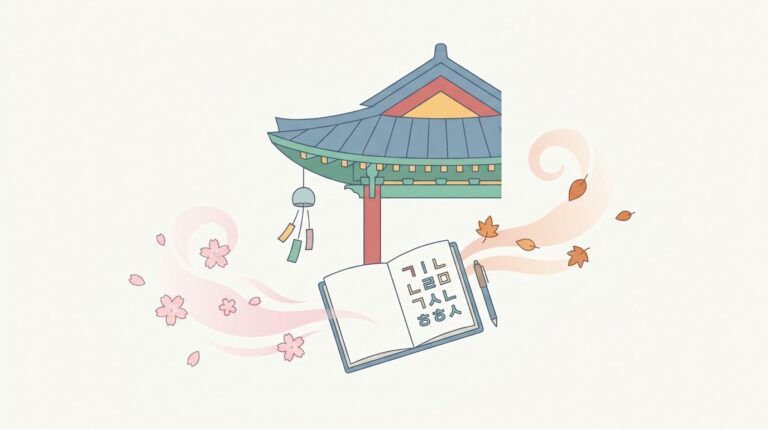
Listen to the Wind: The Poetic Heart of Pure Korean Nature Words
Phase 1: Empathy & Story Immersion
안녕하세요! 매일한글 (Daily Hangul) editor here! As an advanced Korean speaker at the C1 or C2 frontier, you have likely mastered the dense, intellectual landscape of Sino-Korean words (Hanja-eo). You can debate economic policies using gyeongje (경제) and deliberate on social reforms using jedojeok byeokhwa (제도적 변화). But let me ask you an honest question: When you stand on the stone ramparts of Naksan Park at twilight and a brisk, dry gust sweeps across your cheek, rustling the autumn reed grasses, what Korean word pops into your mind?
Is it just baram (바람 – wind)? Or perhaps gangeun baram (강한 바람 – strong wind)?
Many of our highest-level students confess feeling an unexpected linguistic plateau right here. You can read modern literary essays or watch sweeping period sageuks like Mr. Sunshine or poetic masterpieces like My Liberation Notes, yet the intimate, evocative language of everyday sensations feels just out of reach. While Sino-Korean vocabulary structures abstract logic, pure native Korean (Sun-urimal, 순우리말) holds the visceral, tactile soul of the Korean peninsula. For centuries before scholarly scripts dominated the bureaucracy, Korean ancestors did not view the wind as a singular meteorological phenomenon. They felt its moisture, sensed the blossoms it carried, measured its direction against the crops, and gave each whisper a distinct name.
Mastering these pure native poetic descriptors is the crowning milestone of true C2 fluency. It transforms you from someone who merely speaks Korean to someone who perceives the world through the sensory depth of a Korean poet. Let us step outside the dry grammar textbooks and listen to how the wind speaks.
Phase 2: Core Expressions Deep Dive
1. 꽃바람 (Kkotbaram)
- Pronunciation: [Kkot-ba-ram] (Sounds like coat-bah-rahm, with a crisp, tensed double ‘k’ like the sharp click of scissors followed by a soft, rounded exhalation).
- Meaning: Literally “flower wind”—the specific, rejuvenating spring breeze that blows gently when blossoms burst into bloom and flutter through the air.
- K-Culture Moment: Imagine a sweeping slow-motion scene in a spring romance drama (think Weightlifting Fairy Kim Bok-joo or Our Beloved Summer). Cherry blossoms dance across an alleyway in Samcheong-dong, and the protagonist whispers as the petals brush their shoulder.
- Editor’s Insight: Kkotbaram is never icy, nor is it merely warm. It carries the microscopic scent of moisture and awakening flora. Using this word instead of ttatteuthan bombaram (따뜻한 봄바람) shifts your sentence from utilitarian description to lyrical photography.
- Situation Spectrum: Casual: ✅ | Semi-formal: ✅ | Formal/Literary: ✅
- 🤔 Think About It: Does your native tongue distinguish between a regular springtime wind and one that specifically carries flower petals? What does this say about the agricultural and poetic attention historical Koreans paid to seasonal shifts?
2. 소슬바람 (Soseulbaram)
- Pronunciation: [So-seul-ba-ram] (Think so-sul-bah-rahm; the first syllable glides cleanly, followed by the soft, tongue-flat seul that mimics the dry friction of fallen leaves).
- Meaning: The crisp, cool, slightly lonesome breeze of early autumn that raises subtle goosebumps and carries a premonition of winter.
- K-Culture Moment: You are listening to an acoustic indie ballad by artists like Lucid Fall or Jannabi. The acoustic guitar strums softly as the lyrics evoke the solitary sensation of walking along the stone walls of Deoksugung Palace beneath amber ginkgo foliage.
- Editor’s Insight: The root soseul- is etymologically related to the sensation of hair standing on end (soreum-i dodda) or brisk coolness. It evokes melancholia (seulsseulham), marking the transition of the soul into autumn contemplation.
- Situation Spectrum: Casual: ⚠️ (sounds very poetic in daily chat) | Semi-formal: ✅ | Formal/Literary: ✅
- 🤔 Think About It: Notice the emotional state baked directly into this weather term. Why do you think Korean conflates physical sensory touch with emotional solitude?
3. 하늬바람 (Hanuibaram)
- Pronunciation: [Ha-nui-ba-ram] (Sounds like hah-nwee-bah-rahm—soft breath on the ha, followed by the rapid, whistling glide nui).
- Meaning: The dry, clear westerly breeze that sweeps across the Korean peninsula, typically bringing azure, crystal-clear skies after a long rain or signaling harvest season.
- K-Culture Moment: In historical maritime sageuks or agricultural dramas, farmers look up at the ridge of the mountains, watching the cloud bank break, feeling the dry western gust that ripens the rice paddies.
- Editor’s Insight: Traditional Korean compass directions in nature differ completely from Sino-Korean coordinates (Dong/Seo/Nam/Buk). The west wind is Hanuibaram, the east is Sae-baram (or Dwaenam-baram), the south is Mabaram, and the fierce north wind is Dopbaram. Hanuibaram is beloved because it sweeps away mugginess and brings clarity.
- Situation Spectrum: Casual: ⚠️ | Semi-formal: ✅ | Formal/Literary: ✅
- 🤔 Think About It: Maritime and agrarian communities across the world name winds by direction. How does knowing directional winds from a folk perspective deepen your connection to Korean landscape geography?
Phase 3: Textbook Korean vs. Native Korean
Scenario 1: Acknowledging a gentle, refreshing spring breeze on a walk
- 📖 Textbook Korean:
오늘 봄바람이 정말 시원하게 부네요. (Oneul bombarami jeongmal siwonhage buneyo. / The spring wind is blowing really refreshingly today.) - 🗣️ Native Lyrical Korean:
어느새 완연한 봄이네요. 뺨을 스치는 실바람이 참 다정해요. (Eoneusae wanyeonhan bom-ineyjo. Ppyameul seuchineun silbarami cham dajeonghaeyo. / Spring is truly in full bloom. The silken breeze grazing my cheek feels so warmhearted.) - 💡 Why the Difference? C2 native expression moves beyond generic adjectives like siwonhada (cool/refreshing). By using silbaram (thread-like gentle breeze) and describing it as dajeonghada (affectionate/gentle), you personify the natural world, a hallmark of refined Korean conversation.
Scenario 2: Feeling the chill of autumn at an outdoor terrace
- 📖 Textbook Korean:
가을이 되어서 날씨가 많이 쌀쌀해졌어요. (Gaeuri doeeoseo nalssiga mani ssalssalhaejyeosseoyo. / Since it became autumn, the weather has become quite chilly.) - 🗣️ Native Lyrical Korean:
벌써 옷깃을 여미게 하는 소슬바람이 부네요. 가을의 한가운데로 들어선 것 같아요. (Beolsseo otgiseul yeomige haneun soseulbarami buneyo. Gaeurui hangaunde-ro deureoseon geot gat-ayo. / Already that crisp autumn breeze is making us fasten our collars. It feels as though we’ve stepped right into the heart of autumn.) - 💡 Why the Difference? Instead of flatly stating the temperature dropped, the native phrasing couples the specific wind name (soseulbaram) with the somatic human reaction: otgiseul yeomida (pulling one’s collar shut against the chill).
Phase 4: K-Culture Deep Dive & Non-Verbal Manners
4-1. Nunchi & Sensory Gestures (Pungryu and Aesthetic Pauses)
When Koreans invoke these pure sensory words in conversation, it is not merely intellectual flex; it is an invitation to shared presence (gonggam). Notice how native speakers behave when stepping outside a bustling Seoul café into an unexpected breeze:
* The Mindful Pause: They rarely speak mid-stride. A native speaker will pause momentarily, lift their chin slightly toward the sky, close their eyes, and inhale the ambient air.
* The Somatic Gesture: When mentioning kkotbaram or silbaram, one gently brushes their fingers against the neck or softly gestures outward toward the tree canopies.
* The Non-Verbal Accord: You do not shout these words. Lowering your vocal pitch slightly and exhaling on the final syllable signals nunchi—it shows you respect the atmosphere and are not disturbing the sensory tranquility of those around you.
4-2. Cultural Code Analysis: The Spirit of Pungryu (풍류) and Modern Lyrical Pop
The Korean obsession with naming every permutation of wind stems from the classical aesthetic tradition of Pungryu (풍류)—the art of living in harmony with the flowing streams, winds, and seasons without attachment.
In modern K-Culture, this ancient aesthetic has found new life. In RM’s solo album Indigo or IU’s nostalgic acoustic tracks, you often hear pure native terms woven seamlessly into contemporary beats. Contemporary scriptwriters utilize these words to construct emotional tension; when a historical or fantasy character pauses to remark that a Nopsaebaram (dry, scorching easterly wind) is approaching, it forebodes both climatic hardship and national turmoil. Understanding pure Korean nature terms is your VIP pass into the poetic subtext of Korean artistic storytelling.
Phase 5: Real-Life Roleplay Scenario
Setting: An open-air Hanok café garden in Bukchon Hanok Village during mid-October.
Characters:
* Min-seo (민서): A Korean literature essayist and tea connoisseur.
* Learner (당신): An advanced Korean student visiting Seoul, sharing a table with warm jujube tea.
- Turn 1 (Min-seo): (찻잔을 조용히 내려놓으며 기와지붕 너머를 바라본다) 날이 참 맑네요. 방금 처마 끝을 흔들고 간 바람 느끼셨어요?
(Nari cham malgneyo. Bang-geum cheoma kkeuteul heundeulgo gan baram neukkisyeosseoyo? / The sky is remarkably clear. Did you feel that wind that just shook the edge of the eaves?) - Turn 2 (Learner): (고개를 끄덕이며 옷깃을 살짝 만진다) 네, 귓가를 스치는데 마냥 차갑지만은 않고 기분 좋게 알싸하네요.
(Ne, gwitgareul seuchineunde manyang chagapjimaneun anko gibun joke alssahanejo. / Yes, as it grazed my ears, it wasn’t simply cold, but pleasantly crisp and stinging.) - Turn 3 (Min-seo): 맞아요. 우리 선조들은 이맘때 부는 바람을 ‘소슬바람’이라고 불렀대요. 쓸쓸하지만 맑은 기운이 담겨 있죠.
(Majayo. Uri seonjodeureun imamttae buneun barameul ‘soseulbaram’-irago bulleotdaeyo. Sseulsseulhajiman malgeun giuni damgyeo itjyo. / Exactly. They say our ancestors called the wind that blows around this time ‘soseulbaram.’ It carries a melancholy yet pristine clarity.) - Turn 4 (Learner): ‘소슬바람’이라니, 어감이 정말 근사하네요. 서풍이 불어 하늘이 이렇게 높고 푸른 걸 보니 하늬바람 같기도 하고요.
(Soseulbaram-irani, eogami jeongmal geunsahanejo. Seopungi bureo haneuri ireoke nopgo pureun geol boni hanuibaram gatgido hagoyo. / ‘Soseulbaram’—the auditory texture of that word is exquisite. Seeing how high and blue the sky is from the west wind, it feels like Hanuibaram as well.) - Turn 5 (Min-seo): (놀란 눈으로 미소를 지으며) 세상에, ‘하늬바람’이라는 고유어를 아세요? 한국 사람 중에서도 시를 즐기지 않으면 잘 모르는 단어인데 대단하세요!
(Sesang-e, ‘hanuibaram’-iraneun goyuhoureul aseyo? Hanguk saram jungeseodo sireul jeolgiji aneumyeon jal moreuneun daneo-inde daedanhaseyo! / Goodness, you know the pure Korean word ‘hanuibaram’? Even among Koreans, unless one enjoys poetry, many hardly use it. That’s remarkable!) - Turn 6 (Learner): (미소를 띠며 차 한 모금을 마신다) 계절의 온도를 섬세하게 포착하는 순우리말의 매력에 푹 빠졌거든요.
(Misoreul ttimyeo cha han mogeumeul masinda. Gyejeorui ondoreul seomsehage pochakaneun sun-urimarui maeryeoge puk ppajyeotgeodeunyo. / I’ve fallen deeply in love with the charm of pure Korean words that delicately capture seasonal temperatures.) - Turn 7 (Min-seo): 깊이 있는 눈으로 계절을 마주하시는군요. 봄에 꽃바람이 불어올 때 이곳에서 다시 뵈면 좋겠어요.
(Gipi inneun nuneuro gyejeoreul majuhasineungunyo. Bome kkotbarami bureool ttae igoseseo dasi boemyeon jokgesseoyo. / You look at the seasons with such perceptive depth. I would love to meet you here again when the flower breeze blows in spring.) - Turn 8 (Learner): (찻잔을 두 손으로 쥐며) 초대 고마워요, 민서 씨. 그때는 실바람을 맞으며 차를 나누죠.
(Chodae gomawoyo, Min-seo ssi. Geuttaeneun silbarameul majeumyeo chareul nanujyo. / Thank you for the invitation, Min-seo. Let’s share tea then while welcoming the gentle thread-breeze.)
🔀 Interactive Decision Point
How would you respond in Turn 4 if Min-seo introduces soseulbaram to you?
- Option A: “맞아요, 소슬바람이라는 표현을 들으니 왠지 마음이 차분해지네요. 가을의 정취와 참 어울려요.”
(Ne, soseulbaram-iraneun pyohyeoneul deureuni waenji maeumi chabunhaejineyo. Gaeurui jeongchwiwa cham eoullyeoyo. / Yes, hearing the word soseulbaram makes my mind feel strangely serene. It matches the autumn mood perfectly.) - Option B: “네, 근데 그냥 가을바람(Autumn wind)이라고 부르는 게 더 실용적이지 않나요?”
(Ne, geunde geunyang gaeulbaram-irago bureuneun ge deo siryongjeogiji annayo? / Yes, but isn’t it more practical to just call it gaeulbaram?) - Option C: “태풍은 아니니까 괜찮아요! 바람 불면 춥죠.”
(Taepung-eun aninikka gwaenchannayo! Baram bulmyeon chupjyo. / Well, at least it’s not a typhoon! When the wind blows, it’s just cold.)
Analysis & Feedback:
* Choice A (Best): Pure cultural mastery. You validate her literary sentiment with nuanced emotional reaction (chabunhaejida – to become calm/composed) and atmospheric vocabulary (jeongchwi – poetic mood).
* Choice B (Risk): While grammatically correct, dismissing poetic words as impractical creates social distance (gapbunssa), killing the romantic ambiance of traditional tea time.
* Choice C (Bad): Overly blunt and utilitarian. It reduces a serene literary exchange to a basic meteorological weather report, missing the nunchi of the moment entirely.
Phase 6: 10-Second Emotional Shadowing Drill
Read each sentence aloud, paying attention to the breath pauses (/) and channeling the required emotional inflection.
[🌸 Romantically and softly with a lingering breath]
뺨을 스치는 / 꽃바람에 / 마음마저 몽글몽글 피어나는 것 같아요.
(Ppyameul seuchineun / kkotbarame / maeummajeo monggeul-monggeul pieonaneun geot gat-ayo.)
“With the flower breeze grazing my cheek, it feels as though my very heart is blossoming soft and fluffy.”-
[🍂 Pensive, solitary, reflective with lowered pitch]
마른 잎을 굴리는 / 소슬바람 소리에 / 불현듯 옛 기억이 떠오르네요.
(Mareun ipeul gullineun / soseulbaram sorie / bulhyeondeut yet gieogi tteooreuneyo.)
“At the sound of the crisp autumn wind rolling dry leaves, old memories suddenly flash across my mind.” -
[☀️ Refreshing, bright, invigorated with upward tilt]
장마가 걷히고 / 선선한 하늬바람이 불어오니 / 비로소 살 것 같아요.
(Jangmaga geochigo / seonseonhan hanuibarami bureooni / biroso sal geot gat-ayo.)
“Now that the monsoon has lifted and the crisp westerly wind blows, I finally feel alive again.”
Phase 7: K-Culture Mini Dictionary
-
실바람 (Silbaram)
- Translation: Thread-like breeze / Light air (Beaufort Scale 1 equivalent).
- Usage: Used when the wind is so imperceptible and fine that it barely moves a single strand of hair or thin silk thread. A staple in classical essays describing early summer evenings by the Han River.
- 건들바람 (Geondeulbaram)
- Translation: A pleasant, swaying early-autumn breeze.
- Usage: Derived from the motion geondeul-geondeul (swaying softly). Used in culinary and leisure contexts to describe that prime patio season in September when outdoor tables in Euljiro are filled with people enjoying beer.
- 높새바람 (Nopsaebaram)
- Translation: Foehn-type northeast wind blowing over the Taebaek Mountains.
- Usage: Historically feared by farmers because it dries out crops on the Yeongseo plains. In contemporary culture and news, it is used metaphorically to describe unexpected dry, searing winds or harsh socio-economic headwinds.
- 솔솔 (Solsol)
- Translation: Softly, smoothly, whispering through (mimetic sensory adverb).
- Usage: Collocates with wind and sleep (jami solsol onda – sleep drifts in softly). If a breeze is gentle, you describe it as barami solsol bune-yo (바람이 솔솔 부네요).
Phase 8: Traveler’s Survival Kit
Sensory Survival Expressions TOP 3
- 바람결이 참 보드라워요. (Baramgyeori cham bodeurawoyo. / The grain of the wind feels so velvety soft.)
- Pro Tip: Use baram-gyeol (grain/texture of wind, like wood grain) when appreciating nature at places like Suncheon Bay Wetland.
- 소슬바람이 부니 따뜻한 차 한잔 생각나네요. (Soseulbarami buni ttatteuthan cha hanjan saenggangnaneyo. / With this crisp autumn wind blowing, I can’t help thinking of a warm cup of tea.)
- Pro Tip: Perfect sentence to propose a cafe visit to your Korean companion without sounding demanding.
- 어디선가 꽃바람 타고 봄 냄새가 나요. (Eodiseonga kkotbaram tago bom naemsaega nayo. / Riding on the flower breeze, the scent of spring is wafting from somewhere.)
- Pro Tip: Say this while walking through Yeouido or Gyeongju during April blossom season.
Editor’s Travel Note
When seeking to experience these winds in their native habitat, escape the concrete wind tunnels of central Gangnam. Instead, download the Naver Map app walking routes for Seoul City Wall Trails to hike Mount Inwangsan or Mount Namsan during October. For real-time updates on wind direction and air clarity, monitor the native weather notices on the Korea Meteorological Administration portal, where you will often spot authentic seasonal wind references in regional agricultural advisories.
Phase 9: A Step Deeper (Reflective Essay)
In Western meteorological traditions, wind is largely treated as vector physics: velocity, barometric pressure, and directional azimuth. But in pure native Korean (Sun-urimal), language acts as an emotional diaphragm between humans and earth. Notice that pure Korean words for nature lack cold clinical detachment; they describe tactile relationships (sil = thread, kkot = blossom, geondeul = swaying leisurely). To speak pure Korean is to practice animism—acknowledging that the atmosphere is not empty space through which you stride, but a living fabric that brushes against your skin with purpose. When you substitute kkotbaram for baram, you are not changing vocabulary; you are changing your spiritual posture toward the season.
💬 Your Turn: What is your favorite sensory or nature word in your native language, and do you feel it translates cleanly into Korean? Share your thoughts below in the comments! 댓글로 여러분의 생각을 들려주세요!
Phase 10: FAQ & Common Pitfalls
Q: Can I use words like ‘꽃바람’ (Kkotbaram) or ‘소슬바람’ (Soseulbaram) in daily text messages (KakaoTalk)?
A: Absolutely, but context matters! In functional, hurried business texts (“네 부장님, 파일 보냈습니다”), it would feel theatrical. However, in personal messages to close friends, dating partners, or on Instagram captions under a photo of an autumn walk, it signals immense taste and emotional sensibility (gamseong).
Q: Is ‘높새바람’ (Nopsaebaram) commonly used in everyday conversation?
A: Nopsaebaram is more specialized; it frequently appears in geography, history documentaries, literature, and news broadcasts discussing dry spells in Gangwon-do. You do not need to use it at a coffee shop, but recognizing it instantly will solidify your C2 native reading credentials.
Q: How do native speakers distinguish between ‘산들바람’ (Sandeulbaram) and ‘실바람’ (Silbaram)?
A: Silbaram (thread breeze) is the gentlest breeze possible—almost imperceptible, moving only smoke or light silk. Sandeulbaram (light gentle breeze) is slightly stronger; it makes leaves on branches rustle softly and pleasantly cools your forehead while walking.
🚨 Common Mistakes Warning Board
- Mistake: Over-combining Sino-Korean roots with pure nature suffixes (e.g., saying 춘바람 instead of 봄바람 or 꽃바람).
- Correct Action: Keep pure Korean words with pure Korean partners. Pair bom (봄) with baram (바람), not chun (춘).
- Mistake: Using 소슬바람 (Soseulbaram) during a freezing mid-winter blizzard.
- Correct Action: Soseulbaram belongs exclusively to the onset of autumn. For freezing, knife-like winter winds, use galbaram (갈바람 – sharp northwesterly) or salbaram (살바람 – piercing winter wind that stings the skin).
- Mistake: Pronouncing 꽃바람 as flat kot-ba-ram without the double consonant reinforcement.
- Correct Action: Tense the vocal cords firmly on the first syllable: [꽃바람 / Kkot-ba-ram].
Phase 11: Action Missions
- 🥉 Bronze Level: Stand near an open window or go for a brief walk. Close your eyes, feel the air, and declare aloud in Korean which breeze best matches today: “오늘은 실바람이 부네요” or “오늘은 소슬바람이 부네요”.
- 🥈 Silver Level: Post a photo of autumn trees or spring flowers on social media with the caption: “옷깃을 스치는 소슬바람(혹은 꽃바람)이 아름다운 하루.” Tag a Korean-speaking friend and ask them their favorite seasonal word.
- 🥇 Gold Level: During your next free-talking session with an advanced Korean tutor or native friend, deliberately swap out siwonhan baram (cool wind) for sandeulbaram (산들바람) or hanuibaram (하늬바람), and observe their delighted reaction to your literary nuance!
🎮 K-Culture Mission: Find an indie Korean song or watch an episode of a historic sageuk drama this week. Keep a notebook open and jot down whenever an actor or singer describes the sky or wind using 순우리말 instead of basic Hanja-eo.
Phase 12: Interactive Quiz Challenge
1. Situational Judgment
You are standing under the blooming apricot trees in Hadong during early April. A soft gust scatters white petals over your hair. Which word is the most poetically accurate?
* (A) 소슬바람 (Soseulbaram)
* (B) 꽃바람 (Kkotbaram)
* (C) 높새바람 (Nopsaebaram)
* (D) 된바람 (Dwaenbaram)
2. Fill in the Blank
가을비가 그치고 서쪽에서 맑고 건조한 ( )이 불어오니 하늘이 티 없이 푸르다.
(After the autumn rain ceased, the clear and dry [ ] blew from the west, making the sky impeccably blue.)
3. Cultural True or False
True or False: 순우리말 wind names like 하늬바람 and 마바람 were purely invented by 20th-century modern poets and were never used by common historical fishermen or farmers.
👉 Click to reveal answers & explanations!
1. Answer: (B) 꽃바람 (Kkotbaram)
Explanation: Kkotbaram is the explicit term for the fragrant, blossom-fluttering breeze of spring. Soseulbaram is for autumn, Nopsaebaram is a dry foehn wind, and Dwaenbaram refers to a fierce, biting northern gale.
2. Answer: 하늬바람 (Hanuibaram)
Explanation: The westerly, dry breeze that brings blue skies and clarity during autumn is traditionally termed Hanuibaram.
3. Answer: False
Explanation: These terms are authentic folk heritage (minjung goyuh-eo). Long before modern poets canonized them, traditional navigators, mariners, and rice farmers relied upon directional wind names (Hanuibaram for west, Mabaram for south, Saebaram for east) to forecast tides and crop seasons!







