

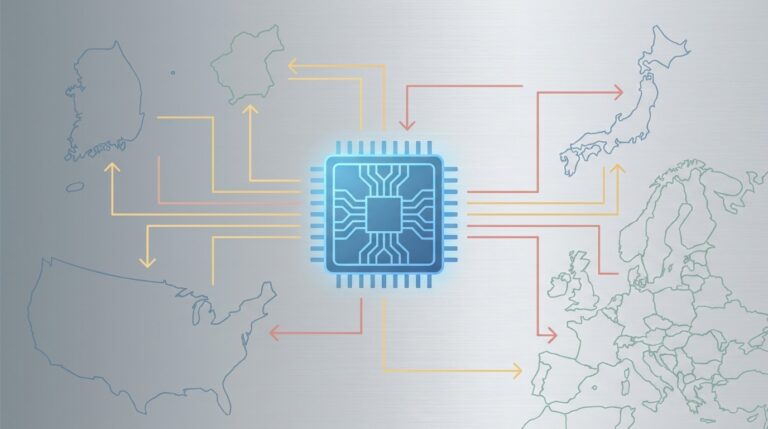
Geopolitics of Tech Hegemony: Navigating Korea’s Friend-Shoring and Supply Chain Debates
Phase 1: Empathy (Immersive Story Opening)
안녕하세요! 매일한글 에디터입니다.
Imagine stepping into a high-level executive briefing in a sleek glass boardroom overlooking Pangyo Techno Valley—the Silicon Valley of South Korea. You are surrounded by senior directors debating the latest export curbs, semiconductor roadmaps, and next-generation solid-state battery patents. The room is tense. Someone whispers about the fracturing multilateral trade order, and an executive turns to you, asking how your regional partners are preparing for “friend-shoring blocs.”
You understand the underlying economic concepts perfectly, yet when you attempt to articulate your position in Korean, you find yourself trapped inside elementary vocabulary like “친구 나라와 무역해요” (trading with friend countries). It sounds painfully simplistic against the sophisticated backdrop of Korean geoeconomic discourse. You freeze because textbook Korean simply hasn’t equipped you with the high-register idioms, strategic lexicon, and socio-political nuances that define modern business Korean at the C1 level.
Over the past decade coaching foreign executives and geopolitical analysts in Seoul, I have seen this exact bottleneck repeatedly. Discussing topics like semiconductor supply chains, US-China strategic competition, and global friend-shoring requires more than just grammar—it demands fluency in Korea’s unique strategic vocabulary. This masterclass bridges that gap, giving you authoritative, natural Korean expressions designed to command respect in boardrooms, diplomatic dialogues, and advanced policy discussions.
Phase 2: Core Expressions Deep Dive
1. 공급망 재편 (Gonggeupmang jaepyeon)
- Pronunciation: [Gong-geup-mang jae-pyeon] (Phonetic flow: “Gong” as in gong, “geup” like a soft ‘gup’, “mang” like mango, “jae-pyeon” like ‘jay-pyun’)
- Meaning: Literal: “Supply chain reorganization” | Nuanced: Strategic restructuring of trade pipelines away from vulnerable dependencies toward resilient, allied corridors.
- K-Culture Moment: Seen frequently in prime-time economic dramas like Reborn Rich (재벌집 막내아들) or Queen of Tears (눈물의 여왕), where board members scramble during emergency task force meetings after foreign regulations threaten overseas production plants.
- Editor’s Insight: Korean business analysts rarely say “공급망 바꾸기” (changing supply chains). “재편” carries an institutional gravity, implying high-level geopolitical calculus and long-term tectonic shifts.
- Situation Spectrum: Casual 🚫 | Semi-formal ⚠️ | Formal ✅
- 🤔 Think About It: How does your native language distinguish between administrative adjustments and national-security-driven supply reorganizations?
2. 각자도생의 길 (Gakjadosaeng-ui gil)
- Pronunciation: [Gak-ja-do-saeng-ui gil] (Phonetic flow: “Gahk-jah-doh-seng-wee geel”)
- Meaning: Literal: “The road where each seeks their own survival” | Nuanced: Every nation or conglomerate for itself; the collapse of collective trust and multilateral safety nets.
- K-Culture Moment: Headlines across Korean economic dailies (Hankyung, Maeil Business) describing the aftermath of protectionist legislation: “자유무역 종말, 이제는 각자도생의 길” (End of free trade; now entering the era of every nation for itself).
- Editor’s Insight: Originating from historical crises, this four-character idiom (사자성어, 四字成語) has been revived to describe realpolitik. Using this in formal conversations demonstrates profound cultural resonance and analytical depth.
- Situation Spectrum: Casual ⚠️ | Semi-formal ✅ | Formal ✅
- 🤔 Think About It: Is self-reliance viewed in your culture as an heroic virtue or as an unfortunate breakdown of multilateral cooperation?
3. 우방국 중심의 블록화 (Ubangguk jungsim-ui beullok-hwa)
- Pronunciation: [Oo-bang-guk joong-sim-ui beul-lok-hwa] (Phonetic flow: “Oo-bahng-gook joong-seem-wee block-hwah”)
- Meaning: Literal: “Bloc formation centered around allied nations” | Nuanced: Friend-shoring; the geopolitical fracturing of global markets into allied technological fortresses.
- K-Culture Moment: Prominently featured on investigative current affairs shows like KBS Sisa Direct (시사직격) when evaluating Korea’s precarious balance between export markets and security treaties.
- Editor’s Insight: While Korean tech professionals adopt the English loanword “프렌드쇼어링” (friend-shoring), public policy, keynote lectures, and white papers strictly prefer “우방국 중심의 블록화” to underline geopolitical division.
- Situation Spectrum: Casual 🚫 | Semi-formal ⚠️ | Formal ✅
- 🤔 Think About It: How do terminology choices between commercial concepts (“near-shoring”) and political alignments (“friend-shoring”) shape public debate in your country?
Phase 3: Textbook Korean vs. Real Korean
Scenario 1: Describing the polarization of global trade alliances
- 📖 교과서 한국어 (Textbook Korean):
세계 무역 환경이 블록화되고 있습니다. (Segye muyeok hwangyeongi beullokhwa doego itseumnida. / The global trade environment is becoming bloc-based.) - 🗣️ 진짜 한국어 (Real Korean):
이제는 완전히 내 편, 네 편 가르는 진영 싸움 국면으로 접어들었어요. (Ijeneun wanjeonhi nae pyeon, ne pyeon gareuneun jin-yeong ssa-um gukmyeoneuro jeobeodeureosseoyo. / We’ve completely entered a phase of camp-versus-camp factional warfare.) - 💡 왜 다를까? (Why the difference?): While textbook phrasing sounds like an excerpt from an encyclopedia, native corporate strategists use evocative idioms like “편 가르기” (taking sides) and “진영 싸움” (camp warfare) to convey the acute zero-sum tension in the market.
Scenario 2: Stating that maintaining an absolute technological lead is essential
- 📖 교과서 한국어 (Textbook Korean):
우리는 기술 경쟁력을 높여야 합니다. (Urineun gisul gyeongjaengnyeogeul nopyeoya hamnida. / We must improve our technical competitiveness.) - 🗣️ 진짜 한국어 (Real Korean):
대체 불가능한 초격차 기술 없이는 판에서 단숨에 밀려납니다. (Daeche bulganeunghan chogyeokcha gisul eopsineun paneseo dansume millyeonamnida. / Without irreplaceable super-gap technology, you get pushed off the board in an instant.) - 💡 왜 다를까? (Why the difference?): In Korean corporate jargon—particularly shaped by Samsung Electronics’ management philosophy—the buzzword is not just “경쟁력” (competitiveness), but “초격차” (super-gap: an insurmountable technical lead) and “판” (the geopolitical game board).
Phase 4: K-Culture Deep Dive & Non-Verbal Manners
4-1. Nunchi & Boardroom Body Language in Korea
When engaging in high-stakes Korean debates regarding semiconductors and national security:
* The Heavy Silence (침묵의 무게): When a Korean counterpart pauses, presses their lips together, and tilts their head slightly downward after you propose a trade strategy, this is not rejection—it is Nunchi (눈치) at work. They are evaluating corporate sensitivities, domestic government alignment, and alliance diplomacy. Never interrupt this silence; match it with a composed, deliberate nod.
* Indirect Hedging: Direct disagreement (“그건 틀렸습니다” / “That’s wrong”) is considered abrasive in high-stakes negotiations. Instead, high-level Korean executives employ strategic hedging: “원론적으로는 맞습니다만, 현실적인 지정학적 변수를 고려하지 않을 수 없습니다” (In principle you are right, but we cannot help but consider real-world geopolitical variables).
4-2. Cultural Code: The “Whale Fight, Shrimp Back” Dilemma
Korea’s industrial DNA in semiconductors and rechargeable batteries cannot be separated from its historic geopolitical identity as an economic powerhouse navigating superpower friction—traditionally captured in the adage 고래 싸움에 새우 등 터진다 (A shrimp’s back breaks when whales fight).
Today, Korea refuses to be the “shrimp.” By engineering an insurmountable technical advantage (초격차) in high-bandwidth memory (HBM) and electric vehicle battery chemistry, Korea transforms itself into an indispensable “dolphon” or strategic linchpin. Understanding this national strategic ethos transforms your business Korean from grammatical correctness into deep, empathetic alignment with your Korean counterparts.
Phase 5: Real-World Roleplay Scenario
Setting: A private conference salon in Yeouido Financial District. Late evening.
Characters:
* Executive Director Min (민 전무): Veteran battery industry strategist at a top-tier Korean conglomerate.
* Sarah (사라): Global supply chain director for a partner multinational tech enterprise.
Turn 1: Sarah
🎭 Leaning forward, pointing at the global supply chain map on the tablet.
전무님, 최근 미국과 유럽의 프렌드쇼어링 기조가 한층 강화되면서 기존 공급망을 전면 재검토해야 할 시점인 것 같습니다.
(Jeonmunim, choegeun migukgwa yureobui peurendeusyo-eoring gijoga hancheung ganghwadoemyeonseo gijon gonggeupmangeul jeonmyeon jaegeomtohaeya hal sijeomin geot gatseumnida.)
“Director Min, with the friend-shoring stance in the US and Europe intensifying further, it seems we have reached the point where our existing supply chain requires a full review.”
Turn 2: Director Min
🎭 Takes off his glasses, rubbing the bridge of his nose thoughtfully.
맞습니다. 자유무역 분업 체제가 사실상 붕괴되면서, 우리 기업들로서도 진영 내 공급망 재편이 불가피해졌어요.
(Matseumnida. Jayumuyeok buneop chejega sasilsang bunggoedoemyeonseo, uri gieopdeulloseodo jin-yeong nae gonggeupmang jaepyeoni bulgapihaejyeosseoyo.)
“Indeed. With the global free-trade division of labor practically collapsed, restructuring our supply lines within aligned blocs has become unavoidable for our companies too.”
Turn 3: Sarah
🎭 Maintaining steady eye contact, speaking in a firm, measured tone.
일각에서는 비용 증가를 우려하지만, 지금은 원가 절감보다 경제안보와 공급망 안정성이 최우선 순위 아닙니까?
(Ilgageseoneun biyong jeonggareul u-ryeohajiman, jigeumeun wonga jeolgamboda gyeongje-anbowa gonggeupmang anjeongseongi choe-useon sunwi animnikka?)
“Some voice concerns over escalating costs, but isn’t economic security and supply chain stability the top priority right now over cost reduction?”
Turn 4: Director Min
🎭 Nodding slowly, taking a measured sip of green tea.
동의합니다. 하지만 핵심 광물 조달처 다변화가 말처럼 쉽지 않다는 게 딜레마입니다. 자칫하면 생산 차질로 이어질 수 있으니까요.
(Dong-uihamnida. Hajiman haeksim gwangmul jodalcheo dabyeonhwaga malcheoreom swipji antaneun ge dillemaimnida. Jachithamyeon saengsan chajillo ieojil su isseunikkayo.)
“I agree. However, diversifying the procurement sources of critical minerals is easier said than done—that is the dilemma. A misstep could immediately lead to production disruptions.”
Turn 5: Sarah
🎭 Unfolding a confidential feasibility report on the desk.
그래서 저희 측에서는 북미와 호주 중심의 배터리 동맹 네트워크에 합류할 수 있는 구체적인 로드맵을 가져왔습니다.
(Geuraeseo jeohui cheugeseoneun bungmiwa hoju jungsimui baeteori dongmaeng neteuwokeue hamnyuhal su inneun guchejeogin rodeumaebeul gajyeowatseumnida.)
“That is precisely why we brought a concrete roadmap to integrate into the North American and Australian-centered battery alliance network.”
Turn 6: Director Min
🎭 Looking over the document carefully with heightened curiosity.
호주 리튬 정제 시설과의 직거래 모델이군요. 만약 이게 현실화된다면 보조금 요건 충족은 물론 리스크 분산에도 큰 힘이 되겠군요.
(Hoju rityum jeongje siseolgwaui jikgeorae moderigunyo. Manyak ige hyeonsilhwadoendamyeon bojogeum yogeon chungjog-eun mullon riseukeu bunsan-edo keun himi doegetgunyo.)
“Direct contracting with Australian lithium refining facilities. If this materializes, it would be a major asset not only for meeting subsidy requirements but also for risk diversification.”
Turn 7: Sarah
🎭 Speaking with quiet confidence and professional poise.
결국 동맹국 간의 신뢰를 바탕으로 한 패키지 딜이 기술 패권 경쟁에서 살아남는 유일한 돌파구라고 봅니다.
(Gyeolguk dongmaengguk ganui sinroereul batang-euro han paekiji dili gisul paegwon gyeongjaeng-eseo saranamneun yu-ilhan dolpagurado bomnida.)
“Ultimately, we believe that package deals rooted in mutual trust among allies are the only breakthrough for surviving this tech hegemony contest.”
Turn 8: Director Min
🎭 Smiles subtly, offering a firm handshake.
좋습니다, 사라 이사. 이 초안을 바탕으로 실무진 기술 검토를 즉시 지시하겠습니다. 함께 활로를 찾아봅시다.
(Jotsseumnida, Sara isa. I cho-aneul batangeuro silmujin gisul geomtoreul jeuksi jisihagetseumnida. Hamkke hwalloreul chajabopsida.)
“Splendid, Director Sarah. Based on this draft, I will instruct our technical team to conduct an immediate review. Let us find a path forward together.”
🔀 Interactive Decision Point
How should Sarah respond to finalize the strategic consensus?
- Option A: “무조건 미국 정책에만 맞춰서 중국 공장은 바로 철수하는 게 맞습니다.” (We must unconditionally align with US policy and immediately pull out of our Chinese factories.)
- Option B: “지정학적 리스크를 선제적으로 통제하면서, 동맹국 공급망 내에서 대체 불가능한 핵심 입지를 다져나가겠습니다.” (While preemptively controlling geopolitical risks, we will solidify our irreplaceable core standing within the allied supply chain.)
- Option C: “비용이 너무 많이 드니까 정권이 바뀔 때까지 관망하며 기다려 보시죠.” (Since costs are too high, let’s just wait and see until the government administration changes.)
[Feedback Analysis]
- Option A (Bad): Excessively radical and blunt. Disregarding sunk capital in China without diplomatic hedging alarms senior Korean executives who value balanced risk management.
- Option B (Best): Articulates high-level strategic maturity. Balances geopolitical risk controls with establishing an irreplaceable technical niche (초격차/핵심 입지).
- Option C (Risk): Displays passivity. In fast-paced technology hegemony races, sitting on the sidelines leads directly to competitive obsolescence.
Phase 6: 10-Second Emotion Shadowing Drill
Sharpen your cadence, pause rhythm, and executive intonation with these high-level strategic lines:
[💼 비장하고 단호하게 - Resolute & Decisive]
자유무역 분업 체제가 / 완전히 흔들리고 있는 지금, / 공급망 다변화는 / 생존의 문제입니다.
(Jayumuyeok buneop chejega / wanjeonhi heundeulligo inneun jigeum, / gonggeupmang dabyeonhwaneun / saengjonui munj-e-imnida.)
“Now that the free trade division of labor is completely unraveling, supply chain diversification is a matter of survival.”-
[🤔 신중하고 조심스럽게 - Prudent & Deliberative]
우방국 중심의 블록화 흐름에 / 동참하면서도, / 과도한 원가 상승 요인은 / 선제적으로 통제해야 합니다.
(Ubangguk jungsimui beullokhwa heureume / dongchamhamyeonseodo, / gwadohan wonga sangseung yoineun / seonjejeogeuro tongjehaeya hamnida.)
“While taking part in the friend-shoring bloc trends among allies, we must preemptively control excessive cost escalation factors.” -
[🔥 자신감 넘치고 확신 있게 - Confident & Convincing]
독보적인 초격차 기술력이야말로 / 어떤 지정학적 파고도 넘어설 수 있는 / 우리의 가장 강력한 무기입니다.
(Dokbojeogin chogyeokcha gisullyeog-iyamallo / eotteon jijeonghakjeok pagodo neomeoseol su inneun / uriui gajang gangnyeokhan mugi-imnida.)
“An unrivaled super-gap technological edge is indeed our most potent weapon to surmount any geopolitical turbulence.”
Phase 7: K-Culture Mini Dictionary
| Term (Hangul + Romanization) | Translation | Business & Strategic Nuance |
|---|---|---|
| 초격차 (Chogyeokcha) | Super-Gap / Overwhelming Lead | An industrial doctrine coined in Korea’s semiconductor sector: maintaining an R&D lead so vast that competitors cannot even dream of bridging the gap. |
| 탈동조화 (Taldongjohwa) | Decoupling | The separation of interconnected supply chains, trade arrangements, and technological standards between rival geopolitical superpowers. |
| 경제안보 (Gyeongje-anbo) | Economic Security | The convergence where industrial supply chains, rare-earth minerals, and microchips are treated identically to military munitions and defense sovereignty. |
| 안미경중 (Anmigyeongjung) | Security with US, Economy with China | A historic catchphrase summarizing Korea’s historical diplomatic dilemma (“Security with the US, Economy with China”), now undergoing fundamental restructuring. |
Phase 8: Survival Kit for Business Expats & Tech Visitors
Strategic Survival Expressions TOP 3
- 핵심 광물 공급망에 대한 리스크 점검이 시급합니다.
- Haeksim gwangmul gonggeupmange daehan riseukeu jeomgeom-i sigeuphamnida.
- Pro Tip: Drop this during quarterly reviews when addressing upstream supply lines (lithium, cobalt, nickel) to immediately capture the room’s strategic focus.
- 이 제휴는 단순한 원가 절감을 넘어, 경제안보적 연대입니다.
- I jehyuneun dansunhan wonga jeolgameul neomeo, gyeongje-anbojeok yeondae-imnida.
- Pro Tip: Perfect framing when presenting cross-border joint ventures or allied supplier agreements to executive committees.
- 기술 유출 방지를 위한 보안 체계를 대폭 강화하고 있습니다.
- Gisul yuchul bangjireul wihan bo-an chegyereul daepok ganghwahago itseumnida.
- Pro Tip: In Korean national core technology (국가핵심기술) ecosystems, demonstrating rigorous IP security protocol is paramount for establishing mutual credibility.
Editor’s Travel & Fieldwork Note
If you are traveling to Seoul for corporate meetings in Pangyo or the Yongin Semiconductor Mega Cluster, standard international map tools will let you down. For real-time subway routing, gate numbers, and campus transit, make sure to read our curated walkthrough for the Naver Map App Download.
When scheduling offsite business dinners with Korean industrial counterparts, aim for venues around Gwanghwamun or Yeouido that offer room-salon style private partitions (룸 형태의 식당). High-level geopolitical friction discussions are rarely held in open spaces due to extreme industrial espionage sensitivities.
Phase 9: “One Step Deeper” (Critical Thinking)
Language reflects a nation’s geographical memory. Korea’s modern semiconductor success is not merely commercial triumphant capitalism; it represents the defense of national sovereignty on a peninsula historically battered by surrounding empires. When Korean executives discuss “초격차” (Super-gap) and “경제안보” (Economic Security), they are tapping into a collective psychological determination never to fall behind in technological self-reliance. As the global division of labor fractures into allied blocs, mastering this vocabulary means understanding Korea’s enduring instinct to turn technical precision into diplomatic leverage.
💬 Your Turn: How does your home country conceptualize the boundary between private commercial trade and national security? Does business language reflect vulnerability or sovereign power? Share your perspective in the comments below!
Phase 10: FAQ & Common Mistakes
Q: Can I use the term “프렌드쇼어링” (Friend-shoring) directly in Korean business meetings?
A: Absolutely! In casual discussions, executive scrums, and tech journalism, “프렌드쇼어링” is widespread. However, when delivering official board presentations, writing white papers, or speaking at diplomatic symposiums, prioritize formal native terms like “우방국 간 공급망 블록화” (Supply chain bloc formation among allies) to sound significantly more authoritative.
Q: What is the difference between 공급망 다변화 and 공급망 재편?
A: 공급망 다변화 (Diversification) refers specifically to broadening your source base to eliminate reliance on a single supplier (e.g., adding factories in Vietnam or India). 공급망 재편 (Realignment/Restructuring) is a broader macro term denoting the structural overhaul of global trade routes, geopolitical realignment, and factory relocations.
Q: Why do Koreans use “진영 싸움” (Camp/Faction fighting) when discussing international economics?
A: “진영” (陣營) originally referred to military encampments during war. In contemporary Korean geopolitical discourse, it vividly conveys how economic policies (like the US IRA, CHIPS Act, or export controls) are no longer open-market decisions, but ideological battle lines drawn between competing political systems.
🚨 Common Mistakes Alert
- Translating “Friend-shoring” as “친구 무역” (Chingu muyeok):
- Wrong: 우리는 친구 무역을 해야 합니다.
- Correct Action: Use 우방국 중심의 공급망 협력 (Cooperation on supply chains centered on allied nations) or 프렌드쇼어링.
- Confusing ‘초격차’ (Super-gap) with ordinary ‘차이’ (Difference):
- Wrong: 기술 차이를 넓혀야 합니다. (Too generic).
- Correct Action: Use 초격차 기술을 확보해야 합니다 to emphasize an insurmountable competitive edge.
- Overusing aggressive confrontation terms:
- Wrong: 중국을 배제하고 싸웁시다. (Let’s exclude China and fight.)
- Correct Action: Express realpolitik through diplomatic corporate language: 지정학적 리스크 분산을 위해 포트폴리오를 다변화해야 합니다 (We need to diversify our portfolio to disperse geopolitical risks).
Phase 11: Action Missions
- 🥉 Bronze Mission (Solo Practice): Read the 3 sentences in the Phase 6 Shadowing Drill out loud 5 times using a voice memo app. Focus on natural pauses at the slashes (
/) and capturing the executive tone. - 🥈 Silver Mission (Social Reflection): Write a 2-sentence comment on LinkedIn or your study blog analyzing a recent semiconductor news headline using the phrase 공급망 재편 and 초격차.
- 🥇 Gold Mission (Real-world Deployment): In your next corporate check-in, geopolitical exchange, or Korean language tutoring session, replace simple words like 동맹 (alliance) with 우방국 중심의 블록화 and assess how quickly the conversation elevates!
🎮 K-Culture Media Mission: Watch an episode of a modern Korean corporate drama (such as Numbers, Agency, or Reborn Rich). Listen closely for the terms 기술 패권 (Tech hegemony), 판 (the business board), or 생존 전략 (survival strategy). Write down the timestamps when you hear them!
Phase 12: Interactive Quiz Challenge
Test your mastery of Korean geoeconomic terminology and high-level corporate nuance:
1. Situation Judgment Quiz:
Your Korean joint-venture partner expresses anxiety that international trade disputes will halt raw material exports. Which response is most professional and reassuring at a C1 level?
– (A) 걱정 마세요, 친구 나라에서 사 오면 됩니다.
– (B) 우방국과의 전략적 연대를 통해 핵심 광물 공급망 다변화를 조속히 추진하겠습니다.
– (C) 무역 전쟁은 항상 있는 일이니 그냥 기다립시다.
2. Fill-in-the-Blank:
경쟁사가 넘볼 수 없는 압도적인 기술적 우위를 일컬어 한국 비즈니스 현장에서는 ‘___________’ 기술이라고 부른다.
3. True or False:
In formal Korean corporate documentation, loanwords like “프렌드쇼어링” completely replace traditional Sino-Korean expressions like “우방국 중심의 공급망 재편.”
👉 Click here to reveal the answers and explanations!
Answers & Strategic Explanations:
- Answer: (B)
Explanation: (A) uses childish phrasing (“친구 나라”), while (C) displays a passive, reckless attitude. (B) articulates executive-level strategic reassurance using precise terms like 전략적 연대 (strategic alliance) and 공급망 다변화 (supply chain diversification). -
Answer: 초격차 (Chogyeokcha / Super-gap)
Explanation: “초격차” signifies an overwhelming technological lead designed to render competition impossible, a cornerstone concept in Korean high-tech industry. -
Answer: False
Explanation: While loanwords like “프렌드쇼어링” are common in spoken conversations and journalism, formal government white papers, academic treatises, and corporate bylaws heavily favor native Sino-Korean terms like “우방국 중심의 공급망 재편” or “진영 간 블록화.”







