

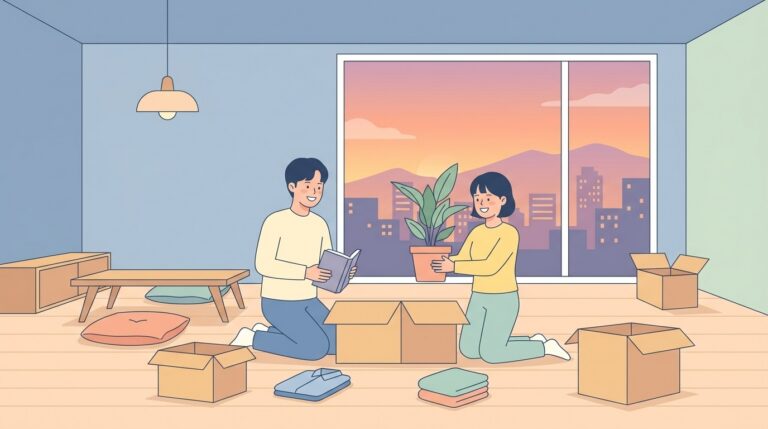
Phase 1: 공감 (Story-Driven Opening)
안녕하세요! 매일한글 에디터입니다.
Imagine sitting in a quiet, warmly lit natural wine bar in Yeonnam-dong on a rainy Friday night. Across from you, your close Korean friend, Min-seo, sighs deeply into her glass of Gamay. She and her partner of four years are planning to move into a bright, two-room apartment in Mapo next month. But here is the catch: neither of them has told their parents, nor have they set a wedding date. “살아보지도 않고 덜컥 혼인신고부터 했다가 안 맞으면 어떡해?” (What if we register our marriage without living together first and realize we are totally incompatible?), she whispers, casting a quick, instinctively guarded glance at the neighboring table.
In contemporary South Korea, the topic of pre-marital cohabitation (혼전 동거) sits at a fascinating sociological fault line. On one side lies the crushing economic pragmatism of astronomical Seoul housing deposits and the cautious self-preservation of the MZ generation. On the other looms the persistent, generational shadow of Confucian decorum, family registry sanctity (hojeok), and conservative social optics.
For an advanced speaker targeting C2 proficiency, conversing about modern romance in Korea demands vastly more than simply translating “we live together.” It requires navigating subtle relational hedges, understanding legal vulnerability, and honoring the unspoken psychological weight carried by your Korean peers. This guide was born directly from real-life debates, sociological studies, and feedback from hundreds of advanced expats navigating the deep currents of Korean relationships. By mastering these expressions, you will not just speak fluent Korean—you will articulate the nuanced emotional landscape of a society in dynamic transition.
Phase 2: 핵심 표현 3선 심층 분석 (Core Expressions In-Depth)
1. 혼전 동거 (Honjeon donggeo)
- Pronunciation: [Hon-jeon dong-geo] (Sounds like “hohn-jun dong-guh”)
- Meaning: Literal: “Before-marriage cohabitation” | Pragmatic Nuance: A committed domestic union prior to holding a wedding ceremony, often serving as an empirical litmus test for lifelong compatibility.
- K-Culture Moment: You will hear this term dissected on candid talk shows like Witch Hunt (마녀사냥) or modern web-dramas, where panelists passionately debate whether experiencing everyday pet peeves beforehand actually curtails the divorce rate.
- Editor’s Insight: Notice how Korean attaches the temporal anchor “혼전” (before marriage). Unlike the Western notion of cohabitation as an open-ended personal milestone, Korean culture often frames living together through its relationship to the inevitable institutional destination: marriage.
- Situation Spectrum: Casual ✅ | Semi-formal ✅ | Formal ✅
- 🤔 Think About It: Does your native tongue classify living with a partner as an independent lifestyle choice, or does it linguistically chain the act to the institution of marriage?
2. 맞춰가다 (Matchwogada)
- Pronunciation: [Mat-chwo-ga-da] (Sounds like “maht-chwaw-gah-dah”)
- Meaning: Literal: “To go fitting together” | Pragmatic Nuance: The continuous, effortful process of mutual compromise, recalibrating individual habits, lifestyles, and temperaments into harmony.
- K-Culture Moment: In melancholic indie romance films, you will frequently see a weary partner remark over a late-night soju: “사랑만으로는 안 돼. 결국 맞춰가는 과정이 전부야.” (Love isn’t enough. In the end, the ongoing process of adjusting to each other is everything.)
- Editor’s Insight: Korean views compatibility not as a static binary jackpot, but as active craftsmanship. Using 맞춰가다 highlights emotional maturity and a willingness to compromise rather than expecting effortless perfection.
- Situation Spectrum: Casual ✅ | Semi-formal ✅ | Formal ✅
- 🤔 Think About It: English often frames conflict as “working things out” (labor), while Korean frames it as “matching interlocking pieces” (puzzle/harmony). How does this subtle metaphor affect relationship expectations?
3. 색안경을 끼고 보다 (Saegangyeongeul kkigo boda)
- Pronunciation: [Saek-an-gyeong-eul kki-go bo-da] (Sounds like “sehk-ahn-gyung-eul kkee-goh boh-dah”)
- Meaning: Literal: “To look while wearing tinted glasses” | Pragmatic Nuance: Viewing someone’s personal life choices through deep-seated biases or moralistic preconceptions.
- K-Culture Moment: Often exclaimed by a modern protagonist challenging an intrusive relative during Chuseok holiday gatherings: “왜 동거라는 말만 들으면 다들 색안경부터 끼고 보세요?” (Why does everyone put on biased lenses the moment they hear the word ‘cohabitation’?)
- Editor’s Insight: An indispensable, highly idiomatic phrase for C2 discourse. It allows you to critique narrow societal double standards with poetic naturalness rather than sounding combative.
- Situation Spectrum: Casual ✅ | Semi-formal ✅ | Formal ⚠️ (In formal legislative debates, prefer 편향된 시각을 갖다)
- 🤔 Think About It: Why does sensory distortion (colored glasses) serve as the ultimate universal metaphor for moral prejudice across East Asian idioms?
Phase 3: 교과서 한국어 vs 진짜 한국어 (Textbook vs. Real Korean)
Situation 1: Justifying living together to test compatibility before marriage
- 📖 교과서 한국어 (Textbook Korean):
“우리는 서로 성격이 맞는지 확인하기 위해 결혼 전에 함께 살아보기로 결정했습니다.”
(Urineun seoro seonggyeogi matneunji hwaginhagi wihae gyeolhon jeone hamkke sarabogiro gyeoljeonghaessseumnida.)
“We decided to try living together before marriage to verify if our personalities match.” - 🗣️ 진짜 한국어 (Real-World C2 Korean):
“살아보지도 않고 덜컥 도장부터 찍을 순 없잖아. 일상 패턴이 맞는지 일단 부딪혀봐야지.”
(Sarabojido anko deolkeok dojangbuteo jjigeul sun eopjana. Ilsang paeteoni matneunji ildan budichyeobwayaji.)
“You can’t just blindly stamp the legal registry without having lived together. You have to bump against each other first to see if your daily rhythms actually align.” - 💡 왜 다를까? (Why is it different?): Native speakers use evocative somatic idioms like “도장 찍다” (stamping the seal / official marriage registration) and visceral adverbs like “덜컥” (impulsively, with dread), highlighting the sheer gravity of marriage registration in Korea.
Situation 2: Discussing the societal pressure and secrecy surrounding living together
- 📖 교과서 한국어 (Textbook Korean):
“한국 사회는 아직 동거에 대해 부정적인 인식을 가지고 있습니다.”
(Hanguk sahoeneun ajik donggeoe daehae bujeongjeogin insigeul gajigo issseumnida.)
“Korean society still possesses a negative perception regarding cohabitation.” - 🗣️ 진짜 한국어 (Real-World C2 Korean):
“인식이 많이 유연해졌다지만, 어른들 시선이나 주변 눈치 때문에 아직은 쉬쉬하는 분위기지.”
(Insigi mani yuyeonhaejyeottajiman, eoreundeul siseonina jubyeon nunchi ttaemune ajigeun swiswihaneun bunwigiji.)
“They say perceptions have softened considerably, but because of our elders’ gaze and social scrutiny, people still keep it hush-hush.” - 💡 왜 다를까? (Why is it different?): Advanced natural Korean relies on mimetic expressions like “쉬쉬하다” (to keep quiet/hush up) paired with the omnipresent cultural compass of “눈치” (social radar/concern for others’ gaze).
Phase 4: K-Culture 딥다이브 & 비언어적 매너 (Cultural Nuances & Etiquette)
4-1. 눈치 (Nunchi) & Gestures in Sensitive Discussions
When discussing cohabitation with Koreans, the delivery is just as critical as the vocabulary:
* Vocal Modulation & Tone: Lower your vocal volume by roughly 20% compared to a casual chat. Avoid sweeping, celebratory declarations like “Cohabitation is simply better!” Instead, use deliberative sentence endings such as ~하는 측면도 무시할 수 없죠 (One cannot dismiss that aspect either) to display intellectual humility.
* The Empathetic Nod (공감의 끄덕임): When a Korean friend confides their cohabitation anxieties, tilt your head slightly (around 10 degrees) and maintain soft, non-confrontational eye contact. Avoid wide, shocked eyes or laughing it off as trivial, as they are likely wrestling with potential friction with their parents.
* Discretionary Shielding: If referring to a mutual acquaintance who is living with their partner, never announce it openly in crowded spaces or near traditional elders. Keep your hands resting close to your chest or drink, projecting discretion.
4-2. Culture Code: Real Estate Crisis & The Civil Union Bill
- The Economic Push (The Jeonse Squeeze): For Seoulites in their late twenties and thirties, the median key money deposit (Jeonse, 전세) for an apartment runs into hundreds of thousands of dollars. Pooling financial capital has turned pre-marital living from an ideological bohemian statement into an acute financial survival mechanism.
- The Legislative Debate (생활동반자법 – Civil Partner Act): Modern K-media frequently covers heated national debates around civil partnerships. Without official marriage, cohabiting couples in South Korea have zero hospital visitation rights as legal family in intensive care units, cannot sign for emergency surgeries, and are excluded from state subsidized housing mortgages. Understanding this legal vulnerability is essential for truly appreciating why Koreans debate this subject so passionately.
Phase 5: 실전 롤플레이 시나리오 (Roleplay Dialogue & Branching)
Setting: An intimate, late-night vinyl bar in Euljiro. Soft jazz is spinning on the turntable.
Characters:
* 민우 (Min-woo): 32, tech startup PM. Cautious, thoughtful, weighing family expectations against modern reality.
* 지윤 (Ji-yoon): 31, freelance visual director. Highly independent, values emotional authenticity over traditional rituals.
민우: 🎭 (맥주잔 테두리를 만지작거리며 망설이다가) 지윤아, 나 요즘 여자친구랑 진지하게 살림 합치는 걸 고민 중이거든. 근데 부모님께 어떻게 말씀드려야 할지 막막해.
(Jiyuna, na yojeum yeojachingu-rang jinjihage sallim hapchineun geol gomin jung-igeodeun. Geunde bumonimkke eotteoke malsseumdeuryeoya halji mangmakhae.)
“Ji-yoon, I’ve been seriously mulling over moving in together with my girlfriend. But I’m completely at a loss about how to break it to my parents.”
지윤: 🎭 (눈을 살짝 크게 뜨며 차분하게 귀를 기울인다) 진짜? 큰 결심 했네! 솔직히 요즘 세상에 안 살아보고 덜컥 결혼하는 게 더 위험부담이 크지 않아?
(Jinja? Keun gyeolsim haenne! Soljiki yojeum sesange an sarabogo deolkeok gyeolhonhaneun ge deo wiheombudami keuji ana?)
“Really? That’s a massive decision! Honestly, in this day and age, isn’t it a way bigger risk to get married without living together first?”
민우: 🎭 (씁쓸한 미소를 지으며 한숨을 쉰다) 이성적으론 나도 100% 동의하거든. 근데 우리 부모님 세대는 동거라고 하면 일단 색안경부터 끼고 보시니까… 행여 딸 가진 처가 쪽에서 흠이라도 잡힐까 걱정하시는 거지.
(Iseongjeog-eoron nado baek peosenteu dong-uihageodeun. Geunde uri bumonim sedeneun donggeorago hamyeon ildan saegangyeongbuteo kkigo bosinikka… Haeng-yeo ttal gajin cheoga jjok-eseo heum-irado japhilkka geokjeonghasineun geoji.)
“Rationally, I agree one hundred percent. But our parents’ generation immediately sees it through biased lenses… They worry that, especially for the bride’s side, it will leave an irreparable blemish on her reputation.”
지윤: 🎭 (단호하지만 따뜻한 목소리로) 그 마음도 이해는 가. 하지만 평생을 같이할 사람인데 생활 습관이나 경제관념을 미리 맞춰보는 게 장기적으로 훨씬 현명한 선택 아닐까?
(Geu ma-eumdo ihae-neun ga. Hajiman pyeongsaeng-eul gat-ihal saram-inde saenghwal seupgwan-ina gyeongjegwallyeom-eul miri matchwoboneun ge jang-gijeog-euro hwolssin hyeonmyeonghan seontaek anilkka?)
“I can understand their concern. Still, this is the person you’ll spend your whole life with. Isn’t harmonizing everyday habits and financial mindsets in advance a far wiser choice in the long run?”
민우: 🎭 (테이블 쪽으로 몸을 숙이며 작은 목소리로) 맞아. 문제는 법적으로 아무런 보호도 못 받는다는 거야. 만약 아프거나 보증금 문제가 생기면 우린 법적으로 남남이잖아.
(Maja. Munje-neun beopjeog-euro amureon bohodo mot batneundaneun geoya. Manyak apeugeona bojeunggeum munje-ga saeng-gimyeon urin beopjeog-euro namnam-ijana.)
“Exactly. The real problem is that we get zero legal protection. If one of us falls ill or an issue arises with the apartment lease, we are legally complete strangers.”
지윤: 🎭 (깊게 공감하며 고개를 끄덕인다) 그게 바로 동거의 가장 큰 맹점이지. 그래서 요즘 생활동반자법 같은 제도적 보완이 시급하다는 목소리가 커지는 거잖아.
(Geuge baro donggeo-ui gajang keun maengjeom-iji. Geuraeseo yojeum saenghwal dongbanjabeop gateun jedojeok bo-wan-i sigeuphadaneun moksoriga keojineun geojana.)
“That’s precisely the fatal blind spot of cohabitation. That’s why voices demanding systemic safety nets like the Civil Partner Act are growing louder these days.”
민우: 🎭 (질문하듯 당신을 바라본다) 넌 어떻게 생각해? 둘의 확신만으로 현실적인 리스크를 감수할 가치가 있을까?
(Neon eotteoke saeng-gakhae? Dur-ui hwaksin-man-euro hyeonsiljeogin riseukeu-reul gamsuhal gachiga isseulkka?)
“What do you think? Is our personal conviction alone worth bearing these practical risks?”
🔀 인터랙티브 분기점 (Choose Your Response)
- Choice A (Best – Nuanced & Empathetic):
“현실적인 한계는 분명하지만, 서로의 밑바닥까지 확인하며 맞춰가는 시간은 그 어떤 리스크보다 값진 예방주사가 될 수 있어.”
(Hyeonsiljeogin hangye-neun bunmyeonghajiman, seoro-ui mitbadak-kkaji hwaginhamyeo matchwoganeun siganeun geu eotteon riseukeuboda gapjin yebangjusaga doel su isseo.)
Feedback: Best! You brilliantly employ metaphorical C2 expressions like “밑바닥까지 확인하다” (seeing someone at their lowest/rawest) and “값진 예방주사” (a valuable preventative vaccine). This validates Min-woo’s anxiety while championing the relationship’s maturity. -
Choice B (Bad – Culturally Tone-Deaf):
“부모님이 반대하든 말든 상관없잖아! 네 인생인데 그냥 몰래 살아버려.”
(Bumonimi bandaehadeun maldeun sang-gwaneopjana! Ne insaeng-inde geunyang mollae sarabeoryeo.)
Feedback: Bad. Dismissing the deeply rooted familial ties (Hyo, 효) in Korean society sounds immature and disregards the emotional burden Min-woo carries. -
Choice C (Risk – Overly Detached & Clinical):
“법적 보호가 전혀 없으니 그냥 혼인신고부터 하고 같이 사는 게 합리적입니다.”
(Beopjeok bohoga jeonhyeo eopseuni geunyang honinsingobuteo hago gachi saneun ge hamnijeogimnida.)
Feedback: Risk. While legally sound, this formal register (~합리적입니다) and cold clinical reasoning sidestep the entire emotional dilemma of testing compatibility before making an irreversible legal commitment.
Phase 6: 10초 감정 섀도잉 드릴 (10-Second Shadowing Drills)
Practice these 3 high-frequency emotional lines aloud. Follow the slashes (/) for authentic breath and rhythmic pauses!
[🥺 아쉽고 진지하게 - Wistful & Serious]
“인식이 많이 바뀌었다지만 / 아직 어른들 앞에선 / 조심스러울 수밖에 없지.”
(Insigi mani bakkwieottajiman / ajik eoreundeul ap-eseon / josimseureoul subakke eopji.)
“They say views have changed a lot / but in front of our elders / one has no choice but to remain cautious.”-
[🔥 단호하고 확신에 차서 - Resolute & Confident]
“낭만만 좇다가 후회하느니 / 현실적인 생활 패턴부터 / 확실하게 맞춰봐야 해.”
(Nangmanman jotdaga huhoehaneuni / hyeonsiljeogin saenghwal paeteonbuteo / hwaksilhage matchwobwaya hae.)
“Rather than regretting after chasing pure romanticism / you must firmly align / your practical daily living habits first.” -
[😮💨 안타깝고 답답한 어조로 - Empathetic & Frustrated]
“서로에게 평생을 약속한 사이라도 / 법 앞에서는 남남 취급을 받으니까 / 참 씁쓸하지.”
(Seoroege pyeongsaeng-eul yaksokhan sairado / beop ap-eseoneun namnam chwigeubeul badeunikka / cham sseupsseulhaji.)
“Even if you’ve pledged a lifetime to each other / being treated as complete strangers before the law / is truly bitter.”
Phase 7: K-Culture 미니 사전 (Mini Dictionary: 4 Essential Keywords)
-
살림을 합치다 (Sallimeul hapchida)
Translation: To combine households / to move in together.
Usage: A warm, domestically grounded native idiom that carries far softer, more mature social connotations than the clinical, somewhat provocative term “동거”. Frequently used when sharing living plans with peers. -
파혼 (Pahon)
Translation: Calling off an engagement / breaking an official marriage promise.
Usage: Breaking up after formal wedding announcements (Sang-gyeon-rye) brings immense familial shame in traditional Korea. Proponents of cohabitation often cite preventing 파혼 as a primary defense. -
흠 (Heum)
Translation: A blemish, flaw, or societal stigma on one’s past.
Usage: Historically, having lived with someone before marriage was viewed as a damaging moral “흠” that could impair future match-making prospects. Understanding this word unlocks the conservative generational dread. -
생활동반자 (Saenghwal dongbanja)
Translation: Registered domestic partner / civil partner.
Usage: The centerpiece of modern progressive socio-legal discourse, referring to two cohabiting adults legally registered to care for and protect each other outside the bounds of traditional marriage.
Phase 8: 여행자를 위한 생존 키트 (Traveler’s Survival Kit)
Top 3 Advanced Relationship Expressions
- “요즘은 젊은 층 사이에서 동거를 자연스러운 결혼 준비 과정으로 보는 시각도 꽤 많아요.”
(Yojeumeun jeolmeun cheung saieseo donggeoreul jayeonseureoun gyeolhon junbi gwajeong-euro boneun sigakdo kkwae manayo.)
Pro Tip: Use this balanced sentence to introduce modern generational perspectives without sounding disrespectful of traditional norms. - “제도적 보완 없이 무작정 동거를 시작하는 건 리스크가 너무 크죠.”
(Jedojeok bo-wan eopsi mujakjeong donggeoreul sijakhaneun geon riseukeuga neomu keujyo.)
Pro Tip: A sophisticated phrasing to highlight legal and structural limitations during intellectual discussions. - “사생활의 영역인 만큼, 남들의 잣대로 왈가왈부할 문제는 아니라고 봅니다.”
(Sasaenghwal-ui yeong-yeogin mankeum, namdeur-ui jatdaero walgawalbu-hal munje-neun anirago bomnida.)
Pro Tip: The ultimate C2 statement to gracefully defend personal autonomy against uninvited gossip.
Editor’s Real-Life Note
Curious about the actual financial reality of couples trying to rent an apartment in Seoul? Rather than relying on tourist blogs, explore genuine local housing conditions yourself by checking out the real-time listings on 네이버 부동산 웹사이트. Browsing deposit rates (보증금) and monthly rent (월세) across diverse Seoul neighborhoods will quickly clarify why modern Korean youth are increasingly pooling their assets.
Phase 9: “한 발 더 깊이” (One Step Deeper: Thought-Provoking Reflection)
In traditional Korean thought, an individual’s union was never simply a private agreement between two independent souls; it was a cosmic and social pact between two extended clans (가문). Even in our hyper-modern, high-tech republic, the legal and emotional remnants of the family registry system (hojeok) continue to shape societal expectations. Choosing to live together outside of formal marriage is fundamentally an act of quiet rebellion—a assertion that intimate domestic compatibility takes precedence over ritualistic filial validation. As real estate pressures accelerate this trend, we are witnessing a profound generational transition: from marriage as the sacred starting line of adulthood to cohabitation as the ultimate pragmatic laboratory of self-knowledge.
💬 Your Turn:
In your own culture, is cohabitation seen as a mandatory stepping stone, a risky shortcut, or an independent lifestyle entirely uncoupled from marriage? Drop your thoughts in Korean below using the phrase ~하는 과정에서 (in the process of…)!
Phase 10: FAQ & 흔한 실수 방지 (FAQ & Common Mistakes)
Q: Can I use the word “룸메이트” (Roommate) interchangeably with a cohabiting romantic partner in Korea?
A: Technically yes, but culturally no. Calling your romantic partner a “룸메이트” is often used intentionally as a linguistic evasion (연막작전) when speaking to conservative colleagues or curious landlords to deflect awkward gossip. If you genuinely mean a romantic domestic partner, using expressions like 함께 살고 있는 사람 (the person I live with) or 동거 중인 파트너 (cohabiting partner) is much more honest and accurate.
Q: Is cohabitation explicitly illegal in South Korea?
A: Not at all! Cohabitation is completely legal. However, South Korean family law operates on a strictly binary civil registration system (혼인신고). Without marriage, you are legally complete strangers: no spousal tax credits, zero inheritance rights, and no authority to make medical decisions if your partner is in an ICU.
Q: How do younger Koreans typically refer to their cohabitation status when speaking casually to friends?
A: Rather than repeating the relatively formal noun 동거 (which can sound clinical or sensationalized), friends typically say, “우리 살림 합쳤어” (We combined our households) or “그냥 같이 살아” (We just live together). It sounds far warmer, natural, and grounded.
🚨 흔한 실수 (Common Mistakes) 경고판
- ❌ Mistake 1: Translating “We live together” literally as “우리 동거해요” to an older colleague or boss.
Why it fails: It sounds overly abrupt and inappropriately reveals personal intimacy in a hierarchy-driven professional setting.
Correct Action: Use “결혼을 전제로 교제하며 현실적인 준비를 함께하고 있습니다” (We are dating with marriage in mind and preparing practically together). - ❌ Mistake 2: Assuming “맞추다” simply means “to guess correctly.”
Why it fails: In romantic discourse, 맞춰가다 implies the delicate, ongoing personal craftsmanship of harmonizing differing lifestyles.
Correct Action: Say “서로의 생활 방식을 맞춰가는 중이에요” (We are in the process of harmonizing our living habits). - ❌ Mistake 3: Saying someone is living together by saying “둘이 합쳤어요” without context.
Why it fails: Without the word 살림 (household management), 합쳤다 could ambiguously mean their business companies merged!
Correct Action: Always specify “살림을 합쳤어요” (We merged our daily households).
Phase 11: 액션 미션 & 참여 유도 (Action Missions)
- 🥉 Bronze Mission (Solo Mastery):
Record a 30-second voice note explaining the difference between 동거 and 살림을 합치다 using your best native cadence and natural pauses. Listen back and check your rhythmic slashes! - 🥈 Silver Mission (Social Sharing):
Leave a thoughtful comment under your favorite K-drama review scene (e.g., Because This Is My First Life / 이번 생은 처음이라) utilizing the phrase 맞춰가는 과정. - 🥇 Gold Mission (Real-World Application):
Next time you have a deep discussion with a Korean peer about life goals, bring up this topic naturally by asking: “요즘 주변 친구들은 결혼 전 동거에 대해 어떻게 생각하는 편이에요?” (How do your friends view living together before marriage these days?) - 🎮 K-Culture Media Mission:
Watch Episode 1 of the renowned romance drama Because This Is My First Life (이번 생은 처음이라). Pinpoint the exact conversation where the two protagonists debate the economic reality of Seoul room rentals and write down three contextual phrases they use to describe their pragmatic cohabitation agreement!
Phase 12: 인터랙티브 퀴즈 챌린지 (Interactive Quiz Challenge)
Test your mastery of C2 nuance! Think through each question before clicking open the explanation.
1. Situational Judgment
Your close Korean friend tells you they want to test compatibility with their fiancé before signing the official papers, but their traditional parents are strictly opposed. Which of the following reactions displays the most culturally sophisticated, empathetic C2 tone?
* A) 부모님 말씀이 맞아요. 동거는 무조건 흠이 될 수 있으니까요.
* B) 어른들 입장에서는 흠이 될까 우려하시는 것도 당연하지만, 평생을 약속하기 전에 서로의 생활 패턴을 맞춰가는 시간도 그에 못지않게 중요하다고 봐요.
* C) 그냥 부모님 몰래 방을 구해서 살림을 합쳐버리세요.
🔍 Check Answer & Explanation
Correct Answer: B
Explanation: Option B strikes the quintessential balance of Korean emotional diplomacy (Nunchi). It acknowledges the parents’ protective fears (우려) regarding societal stigma (흠) while validating the couple’s practical need to align habits (맞춰가다) before making a lifelong commitment. Option A is blindly rigid, while Option C is recklessly disrespectful of filial family bonds.
2. Fill-in-the-Blank
Fill in the blank with the most natural idiomatic phrasing for high-level discourse:
“상대방의 과거 동거 경험에 대해 무조건 (____________) 보는 것은 건강한 관계 형성에 걸림돌이 됩니다.”
(Judging a partner’s past cohabitation experience with unconditional prejudice becomes a stumbling block to building a healthy relationship.)
* A) 눈치를 보며
* B) 도장을 찍고
* C) 색안경을 끼고
🔍 Check Answer & Explanation
Correct Answer: C (색안경을 끼고)
Explanation: 색안경을 끼고 보다 is the authentic Korean idiom for viewing someone through biased lenses. 눈치를 보다 means walking on eggshells or reading the room, while 도장을 찍다 refers to signing an official seal/contract.
3. Cultural True or False
True or False: In South Korea, cohabiting couples who have lived together for more than 5 years automatically gain statutory hospital visitation privileges as legal spouses under the national Civil Code.
🔍 Check Answer & Explanation
Correct Answer: False
Explanation: South Korean civil law does not recognize common-law domestic partnerships (동거) with automatic hospital visitation or medical consent rights, regardless of how long the couple has lived together. This legal vulnerability remains a major driver behind ongoing public discussions surrounding the 생활동반자법 (Civil Partner Act).







