

Phase 1: Empathy (스토리 몰입형 오프닝)
안녕하세요! 매일한글 에디터입니다.
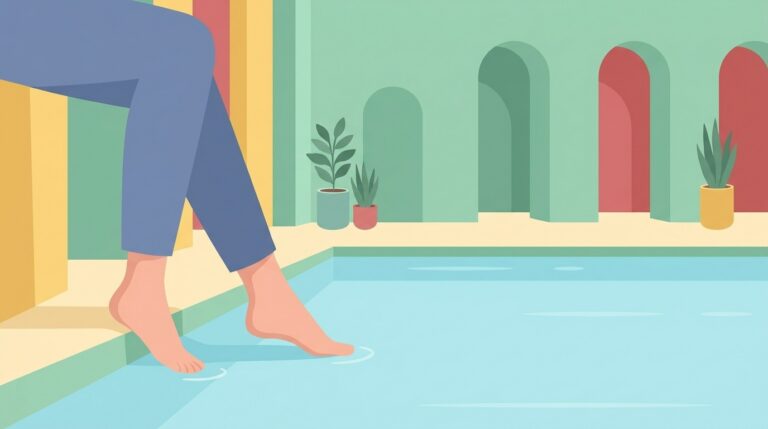
Picture this: It is a dazzling Saturday in mid-July. You and your Korean colleagues have taken a road trip up to Gapyeong (가평), the epicenter of thrilling river waterparks affectionately nicknamed Paji (빠지). The pontoon floats are bouncing, vibrant jet boats are slicing through the Bukhan River, and everyone is gearing up for a group banana boat ride. Suddenly, that familiar, suffocating coldness grips your chest. Your throat constricts. While everyone else sees cooling summer fun, your mind screams: The murky water has no bottom, and my feet cannot touch.
When foreign professionals and advanced learners encounter aquaphobia (물 공포증) in Korea, the default survival mechanism is often awkward evasion or rigid, textbook declarations like “저는 물을 싫어합니다” (I dislike water). But at an advanced C1 communicative level, such rudimentary phrasing fails to capture your genuine psychological boundary without dampening the collective mood or inviting unsolicited “encouragement” to just jump in. Over the past decade as a cultural navigator, I have coached dozens of expats through this exact vulnerability. Today’s guide provides nuanced, native-level linguistic strategies to articulate your exact comfort levels, preserve group harmony (nunchi), and conquer your aquatic anxieties with confidence and poise.
Phase 2: 핵심 표현 3선 심층 분석
1. 발이 안 닿으면 순간적으로 패닉이 와요. (Bali an daeumyeon sunganjeog-euro paenigi wayo.)
- Pronunciation: Bahl-ee ahn dah-eu-myeon soon-gahn-jeok-eu-ro pae-nik-ee wah-yo (Think of “bahl” like ball, “soon-gahn” like a sudden snap of fingers, and “panic” pronounced with a sharp Korean cadence).
- Meaning: “When my feet can’t touch the bottom, I experience momentary panic.”
- K-Culture Moment: Used frequently in variety shows like I Live Alone (나 혼자 산다) when celebrities visit specialized freediving or scuba centers and explain their phobias to instructors before entering deep diving pools.
- Editor’s Insight: Advanced speakers don’t merely say “무서워요” (I am scared). By pinpointing the tactile trigger—발이 안 닿다 (feet not touching the ground) combined with 순간적으로 패닉이 오다 (panic setting in momentarily)—you sound grounded, self-aware, and precise rather than dramatically fearful.
- Situation Spectrum: Casual ✅ | Semi-formal ✅ | Formal ⚠️
- 🤔 Think About It: In English, we often say “I have a phobia.” In Korean, panic “comes” (패닉이 오다) to you as an external wave, emphasizing that the physical reaction is an involuntary visitor rather than your permanent identity.
2. 물에 몸을 온전히 맡기는 게 아직 벅차요. (Mure momeul onjeonhi matgineun ge ajik beokchayo.)
- Pronunciation: Mool-eh mohm-eul ohn-jeon-hee maht-gee-neun geh ah-jik buhk-chah-yo (Flow the vowels together: mool like cool, and beok-cha with a breathless sigh on the first syllable).
- Meaning: “Completely surrendering my body to the water is still overwhelming for me.”
- K-Culture Moment: Often heard in emotional athletic documentaries or dramas featuring rehabilitation, where a protagonist slowly overcomes trauma related to swimming.
- Editor’s Insight: 온전히 맡기다 (to surrender/entrust completely) paired with 벅차다 (to be beyond one’s capacity/overwhelming) demonstrates sophisticated emotional intelligence. It signals that you are attempting the process of buoyancy and relaxation, but acknowledging your current physiological threshold.
- Situation Spectrum: Casual ✅ | Semi-formal ✅ | Formal ✅
- 🤔 Think About It: Why does Korean use the concept of 맡기다 (entrusting) when floating? It implies a relationship of trust between the swimmer and the element, contrasting with the Western framing of “treading” or “fighting” the water.
3. 천천히 물에 적응할 수 있게 페이스 좀 맞춰 주시겠어요? (Cheoncheonhi mure jeogeunghal su itge peiseu jom matchwo jusigesseoyo?)
- Pronunciation: Chuhn-chuhn-hee mool-eh juhg-eung-hahl soo eet-geh peh-ee-seu johm maht-chwoh joo-shee-gehs-suh-yo (Emphasize the rhythmic double consonants in matchwo).
- Meaning: “Could you match my pace so I can gradually acclimate to the water?”
- K-Culture Moment: Spoken when taking private 1:1 lessons at community athletic centers (구립 체육센터) or engaging in marine sports along Jeju’s coast.
- Editor’s Insight: The phrase 물에 적응하다 (to acclimate to water) is the technical term Korean aquatic coaches use for desensitization drills. Asking someone to 페이스를 맞추다 (match pace) establishes an equal partnership between you and your instructor or peer.
- Situation Spectrum: Casual ⚠️ | Semi-formal ✅ | Formal ✅
- 🤔 Think About It: Notice the soft request ending -주시겠어요?. In high-stakes situations where anxiety peaks, maintaining polite deferential syntax ensures your instructor remains deeply attentive to your psychological safety.
Phase 3: 교과서 한국어 vs 진짜 한국어
Situation 1: Explaining to friends why you can’t join the deep-water ride
- 📖 교과서 한국어: 저는 수영 실력이 부족해서 깊은 물에 들어가는 것이 무섭습니다. (Jeoneun suyeong sillyeogi bujokhaeseo gipeun mure deureoganeun geosi museopseumnida.)
- 🗣️ 진짜 한국어: 제가 워낙 맥주병이라 수심 깊은 데는 엄두가 안 나네요. (JegaCalculated wonak maekjubyeong-ira susim gipeun deneun eomduga an naneyo.)
- 💡 왜 다를까? Textbook Korean sounds like a medical interview. Locals rely on the witty self-deprecating metaphor 맥주병 (literally “beer bottle,” slang for someone who sinks like a stone) and the idiom 엄두가 안 나다 (cannot even conceive the courage to try), which lightens the atmosphere while establishing a firm boundary.
Situation 2: Asking your swimming coach to stay by your side in the lane
- 📖 교과서 한국어: 제가 불안하니 제 옆에 계속 있어 주십시오. (Jega buranhani je yeope gyesok isseo jusipsio.)
- 🗣️ 진짜 한국어: 발 안 닿는 코스에서는 저 시야에서 놓치지 마시고 꼭 밀착 마크해 주세요! (Bal an danneun koseueseoneun jeo siya-eseo notchiji masigo kkok milchak makeuhae juseyo!)
- 💡 왜 다를까? Command forms like 있어 주십시오 sound overly dramatic. Natural high-level speakers use sporty colloquialisms like 밀착 마크 (“close mark,” borrowed from soccer defense) to ask for close visual supervision with humor and clarity.
Phase 4: K-Culture 딥다이브 & 비언어적 매너
4-1. 눈치 (Nunchi) & 제스처: The Body Language of Aquatic Safety
In Korean public sports centers (체육센터) and crowded leisure pools, lane etiquette is intensely communal. If you start hyperventilating or freeze up, thrashing your arms creates chaos.
* The Chest Tap & Raised Palm: If panic strikes, place one hand over your sternum, make direct eye contact with the lifeguard or lane leader, and raise your other hand with an open palm at shoulder height. This signals internal distress without triggering a chaotic emergency evacuation.
* The Ladder Buffer: Never cling blindly to the lane ropes (레인 줄); it snaps lane tension and disrupts others. Instead, maneuver yourself to the edge wall near the ladder. In Korean water etiquette, stopping mid-lane is considered dangerous; always yield by hugging the right wall.
4-2. 문화 코드 분석: The Gapyeong ‘Paji’ Culture and ‘Ipsu’ Complex
Korea’s recreational water scene has a peculiar cultural nuance known as Ipsu (입수, jumping into water). Popularized by legendary variety programs like 2 Days & 1 Night (1박 2일), plunging into freezing river water is culturally framed as a rite of passage, an act of loyalty, or collective stress relief. When visiting Gapyeong floating leisure parks (빠지), peer pressure to jump off platforms or ride turbulent banana boats is pervasive. Understanding this dynamic is crucial: Koreans don’t push you because they lack empathy; they mistakenly view water immersion as an exhilarating emotional cure-all. Responding with C1 cultural articulation allows you to declutter their assumptions without offending their hospitable intentions.
Phase 5: 실전 롤플레이 시나리오
Setting: A 5-meter deep indoor diving pool in Jamsil, Seoul.
Characters: Coach Min (민 코치), an experienced freediving instructor, and Alex (You), an expat working to overcome deep-water trauma.
- 민 코치: 알렉스 씨, 준비운동 끝났으니까 이제 풀 사이드에 걸터앉아서 천천히 입수 준비해 볼까요? (Alex-ssi, junbi-undong kkeun-nasseunikka ije pul saideu-e geolteo-anjaseo cheoncheonhi ipsu junbihae bolkkayo?)
🎭 Arms folded casually, gesturing encouragingly toward the deep blue water.
“Alex, warm-ups are done! Shall we sit on the pool edge and get ready for a gradual entry?” -
Alex: 네, 코치님. 근데 솔직히 수면 아래를 내려다보니까 다리가 좀 후들거리네요. (Ne, kochinim. Geunde soljikhi sumyeon araereul naeryeodabonikka dariga jom hudeulgeorineyo.)
🎭 Looking down at the 5-meter abyss, taking a deliberate deep breath.
“Yes, Coach. But honestly, looking down beneath the water’s surface is making my legs shake a bit.” -
민 코치: 괜찮아요. 처음엔 바닥이 멀어 보이니까 시각적인 공포가 생기는 게 당연해요. 무리하지 말고 계단부터 밟아 봐요. (Gwaenchanayo. Cheo-eumen badagi meoreo boinikka sigakjeogin gongpoga saenggineun ge dang-yeonhaeyo. Murihaji malgo gyedanbuteo balba bwayo.)
🎭 Kneeling down to Alex’s eye level to provide steady non-verbal reassurance.
“That’s completely fine. Since the bottom looks far away, visual fear is natural at first. Don’t push yourself; let’s step on the ladder first.” -
Alex: 네. 일단 가슴 높이까지만 담그고 호흡 먼저 가다듬을게요. (Ne. Ildan gaseum nopikkajiman damgeugo hoheup meonjeo gadadeumeulgeyo.)
🎭 Gripping the stainless steel ladder firmly, submerging slowly to chest level.
“Alright. I will submerge just to chest level first and steady my breathing.” -
민 코치: 좋아요. 시선은 바닥 보지 마시고 제 어깨 쪽 보세요. 자, 힘 빼고 물살을 느껴 보세요. (Joh-ayo. Siseoneun badak boji masigo je eokkae jjok boseyo. Ja, him ppaego mulsareul neukkyeo boseyo.)
🎭 Standing one step below in the water, offering an open hand as a steady anchor.
“Great. Don’t look at the bottom; focus your gaze on my shoulder. Now, release tension and feel the current.” -
Alex: 후… 코치님이 바로 앞에 계시니까 패닉이 올라오려다가도 좀 진정되네요. (Hoo… Kochinimi baro ape gyesinikka paenigi olla-oryeodagado jom jinjeongdoeneyo.)
🎭 Exhaling steadily through pursed lips, relaxing the shoulders.
“Phew… Having you right in front of me helps calm the panic whenever it tries to flare up.” -
민 코치: 아주 훌륭해요! 이제 손잡이 살짝 놓고 제 팔 잡아 보실래요? 3초만 둥둥 떠 보는 거예요. (Aju hullyunghaeyo! Ije sonjabi saljjak noko je pal jaba bosillaeyo? Samchoman dungdung tteo boneun geoyeyo.)
🎭 Smiling warmly, locking arms securely to ensure zero risk of sinking.
“Wonderful! Now, would you like to gently let go of the rail and hold my arm? We will float for just three seconds.” -
Alex: [See Interactive Choices Below]
🔀 인터랙티브 분기점 (Choose Alex’s Next Line)
- Option A: “좋아요, 코치님 믿고 몸 한번 맡겨 볼게요. 카운트다운 세어 주세요!”
- Option B: “안 돼요, 절대 못 놓겠어요! 그냥 저 여기서 수업 그만두면 안 될까요?”
- Option C: “코치님, 팔을 잡는 건 아직 무리일 것 같고, 사다리 잡은 채로 발장구만 먼저 치면 안 될까요?”
Detailed Scenario Feedback:
* Option A (Best): Demonstrates high-level trust, courage, and clear communicative readiness. Using 몸을 맡기다 (surrender body) and asking for a countdown maintains structured psychological control.
* Option B (Bad): Overly reactive panic that shuts down communication completely. While expressing fear is okay, this abruptly terminates the learning progression and creates social awkwardness.
* Option C (Risk / Diplomatic Alternative): A brilliant assertiveness strategy. If 3 seconds of floating feels too premature, negotiating a smaller intermediate milestone (사다리 잡고 발장구 치기) demonstrates advanced emotional self-regulation.
Phase 6: 10초 감정 섀도잉 드릴
Read these aloud while mimicking the intonation slashes (/) and feeling the embedded emotion markers.
[😨 겁먹었지만 조심스럽게]
저기… / 제가 물 공포증이 좀 심해서 그러는데, / 갑자기 밀거나 장난치시면 / 진짜 큰일 나요.
(Jeogi… / jega mul gongpojeungi jom simhaeseo geureoneunde, / gapjagi milgeona jangnanchisimyeon / jinjja keun-il nayo.)
“Excuse me… / I have quite severe aquaphobia, / so if you suddenly push me or play pranks, / it could be truly dangerous.”-
[🧘 호흡을 가다듬으며 담담하게]
바닥에 발이 닿지 않으니까 / 숨이 턱 막히네요. / 1분만 기대어 쉬었다 갈게요.
(Badage bari dachi anneunikka / sumi teok makin-eyo. / Ilbunman gidaeeo swieotta galgeyo.)
“Because my feet cannot touch the floor, / my breath catches in my throat. / I will rest against the wall for just one minute before continuing.” -
[🤝 신뢰를 표하며 결의에 차서]
두려움을 단번에 없앨 순 없겠지만, / 오늘은 물속에서 눈 뜨는 것부터 / 차근차근 극복해 볼게요.
(Duryeoumeul danbeone eopsael sun eopgetjiman, / oneureun mulsog-eseo nun tteuneun geotbuteo / chageunchageun geukbokhae bolgeyo.)
“I know I can’t eliminate the fear all at once, / but today, starting from simply opening my eyes underwater, / I’ll conquer this step by step.”
Phase 7: K-Culture 미니 사전
-
맥주병 (Maekjubyeong) [Noun]
- Translation: Sinker / Non-swimmer (Literal: Beer bottle).
- Context: A humorous, widespread idiomatic term. Just as a glass beer bottle drops directly to the riverbed, someone who cannot float is affectionately called a 맥주병. Use it casually among friends to disarm expectations.
- 물적응 (Muljeogeung) [Noun]
- Translation: Water desensitization / Aquatic acclimation.
- Context: The formal educational term used by swimming instructors throughout Korea. It denotes fundamental exercises like blowing bubbles (음파 호흡), floating like a jellyfish, and submerging the face to alleviate sensory shocks.
- 빠지 (Paji) [Noun]
- Translation: Floating water park / Barge leisure facility.
- Context: Derived from the English word “barge.” In Korea, it refers to massive floating platforms moored along rivers (especially Gapyeong) equipped with obstacle courses, water slides, and motorboats. It is the holy grail of Korean youth summer vacations.
- 입수 (Ipsu) [Noun / Verb: 입수하다]
- Translation: Water entry / Plunge.
- Context: In professional contexts, it means entering the pool cleanly. In pop culture, it represents the classic entertainment penalty of jumping into ice-cold water, symbolizing team solidarity and resilience.
Phase 8: 여행자를 위한 생존 키트
Survival Expressions TOP 3
- “구명조끼 버클 단단히 조여졌는지 확인 한 번만 부탁드립니다.”
(Gumyeongjokki beokeul dandani joyeojyeonneunji hwagin han beonman butakdeurimnida.)
Pro Tip: At river parks, life vests often loosen. Ask staff to verify your buckle security; it provides immediate psychological relief before boarding rides. -
“제가 물을 많이 무서워해서 그런데, 혹시 얕은 풀장은 어디에 있나요?”
(Jega mureul mani museowohaeseo geureonde, hoksi yateun puljang-eun eodie innayo?)
Pro Tip: Large Korean waterparks (like Caribbean Bay or Ocean World) have dedicated shallow zones (유아풀/유수풀). Knowing where to retreat preserves your peace. -
“장난이라도 물에 빠뜨리지는 말아 주세요. 패닉 반응이 올 수 있습니다.”
(Jangnan-irado mure ppatteurijineun mara juseyo. Paenik baneung-i ol su itseumnida.)
Pro Tip: Use this clear, assertive C1 phrase to establish unmistakable personal boundaries during company retreats (MT) or group holidays.
Editor’s Travel Note: Aquatic Navigation in Korea
- When booking private aquatic therapy or specialized adult swimming classes, avoid general search engines and check the municipal booking sections directly via the 네이버 지도 앱 다운로드. Search for keywords like
성인 수영 레슨(Adult Swim Lessons) or수영 공포증 극복(Overcoming Aquaphobia). - Most public pools require a silicone cap (실리콘 수모) and tight swim attire; loose beach shorts are often prohibited in lane pools. Bring cash or a domestic card (T-Money or local credit cards) for locker deposits.
Phase 9: “한 발 더 깊이” (생각 질문)
In Korean society, the concept of 극복 (geukbok, overcoming hardship through willpower) is deeply embedded in the national consciousness, celebrated from post-war industrialization to sporting victories. Consequently, when someone expresses fear of water, native peers instinctively rally with enthusiastic chants of “할 수 있어!” (You can do it!) or lighthearted attempts to push you past your limit. While well-intentioned, this collective drive can overwhelm an individual grappling with legitimate sensory trauma. True advanced fluency involves mastering the diplomatic art of acknowledging their encouragement while setting an unshakeable, self-regulated boundary.
💬 Your Turn: Have you ever felt cultural pressure to participate in an activity you were terrified of while living abroad? How did you explain your boundary in Korean? Share your story in the comments below!
Phase 10: FAQ & 오해 방지
Q: Can I wear water shoes or a rashguard in Korean municipal swimming pools?
A: In outdoor waterparks and river parks (빠지), rashguards and neoprene water shoes are virtually the national uniform. However, in indoor municipal swimming centers (구립 수영장), strict hygiene rules apply: traditional swimsuits, goggles, and swim caps are mandatory, while shoes and loose rashguards are typically forbidden unless medically justified.
Q: What is the polite way to stop a Korean friend from pulling a water prank on me?
A: Avoid screaming in English or laughing nervously, as laughing is often misinterpreted as playful resistance. Look them directly in the eye, lower your vocal pitch, and say firmly: “진짜로 위험하니까 장난은 치지 말아 줘” (Seriously, it’s dangerous, so please don’t prank me). The adverb 진짜로 (genuinely/seriously) instantly shifts the register.
Q: How do I book a private swim lesson specifically for aquaphobia in Seoul?
A: Look for specialized dive pools (like Olympic Park or Jamsil Pool) offering 체험 다이빙 (trial diving) or 1:1 물 공포증 탈출 클래스 on platforms like Naver or the sports talent-sharing app Soomgo (숨고).
🚨 흔한 실수 (Common Mistakes) 경고판
- ❌ Mistake 1: Shouting “살려주세요!” (Save me!) playfully when you are mildly startled.
- Correct Action: “살려주세요” is an extreme emergency distress call that will cause lifeguards to blow whistles and halt entire pool operations. Use “잠깐만요!” (Wait a moment!) instead.
- ❌ Mistake 2: Saying “저는 물을 싫어해요” when asked to join water sports.
- Correct Action: Saying you dislike water sounds antisocial or judgmental toward those planning the trip. Say “물 공포증이 있어서 보는 것만으로 만족할게요!” (I have aquaphobia, so I’m happy just watching!).
- ❌ Mistake 3: Assuming life vests at commercial river parks fit automatically.
- Correct Action: Always tighten the groin straps (다리 끈 / 생명 끈). If you fall into deep river currents without groin straps secured, the vest pops upward past your ears, exacerbating panic.
Phase 11: 액션 미션 & 참여 유도
- 🥉 Bronze Mission (Solo Practice): Stand in front of your bathroom mirror. Practice the 10-second shadowing drill from Phase 6, focusing on pacing and using your hand to gesture your boundary.
- 🥈 Silver Mission (Social Connection): Post a short diary entry on your language exchange app (like Hellotalk or Tandem): Describe your relationship with water using the words 맥주병 and 물적응.
- 🥇 Gold Mission (Real-World Application): Next time you visit a Korean bathhouse (jjimjilbang or sauna), immerse yourself in the cold plunge pool (냉탕) up to your waist, practicing breathing steadily for 30 seconds while articulating 호흡을 가다듬다 in your mind.
- 🎮 K-Culture Mission: Watch an episode of a Korean travel variety show (such as Earth Arcade or Born to Travel). Spot how cast members negotiate jumping into water, and note down two real-life expressions they use when hesitating.
Phase 12: 인터랙티브 퀴즈 챌린지
1. 상황 판단 퀴즈 (Situational Judgment)
You are at Gapyeong with colleagues. Everyone is boarding the disco-boat float, but the river water is dark and deep. You feel a panic attack brewing. Which response is the most culturally adept and clear?
* (A) “야! 내가 물 싫다고 했잖아! 왜 사람 말을 안 들어?”
* (B) “제가 물 공포증이 심해서 그런데요, 이번엔 배 위에서 여러분 사진 멋지게 찍어 드릴게요!”
* (C) “저는 수영을 전혀 배우지 않은 사람입니다. 탑승을 거부합니다.”
2. 빈칸 채우기 (Fill in the Blank)
Complete the sentence using the correct idiomatic term for someone who sinks like a stone:
“저는 구명조끼 없이는 수영장에 못 들어가요. 워낙 소문난 (__________)이거든요.”
3. True / False 문화 퀴즈
- True or False: In Korean public indoor pools, it is considered polite and standard etiquette to wear casual outdoor boardshorts and cotton T-shirts to protect your modesty.
👉 정답 및 해설 확인하기 (Click to reveal answers & explanations)
1. 정답: (B)
* 해설: (A) is excessively aggressive and ruptures social harmony. (C) sounds like a robotic legal deposition. (B) gracefully communicates your boundary using C1 psychological framing (물 공포증이 심하다) while offering a valuable alternative role (photographer) that maintains the collective festive spirit.
2. 정답: 맥주병 (Maekjubyeong)
* 해설: 맥주병 literally means beer bottle and is the universally understood native idiom for someone who cannot stay afloat.
3. 정답: False
* 해설: Unlike outdoor resorts, Korean public municipal pools enforce strict hygienic swimming attire rules. Cotton shirts and loose boardshorts contaminate pool filters and are strictly forbidden. You must wear dedicated swim attire and a silicone or fabric swim cap.






