

안녕하세요! 매일한글 에디터입니다.
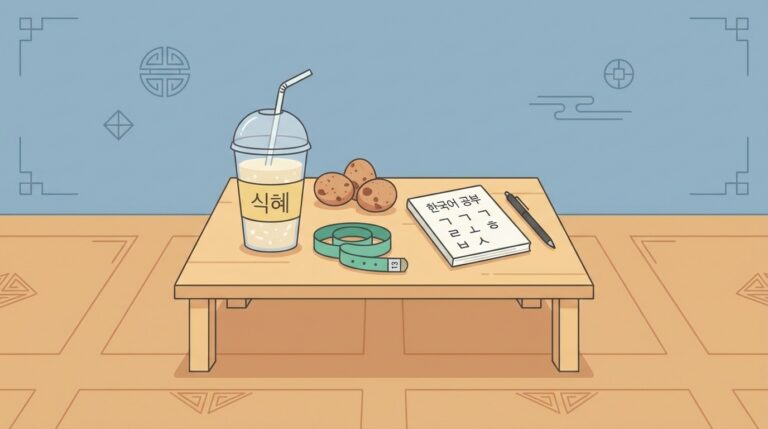
Picture this: You’ve just walked out of a scorching 65°C amethyst sauna room inside a Seoul jjimjilbang (Korean dry sauna). Your muscles are completely relaxed like jelly, but your throat feels like a desert, and your stomach is starting to grumble. You walk out to the central lounging hall and spot the glowing snack counter (majeom). Huge buckets of frosted sweet sikhye (cold fermented malt rice drink) and wicker baskets overflowing with warm, copper-brown baked eggs (gu-un gyeran) are waiting for you.
Then, hesitation hits. How do you pay when your wallet and phone are locked away in your locker? How do you ask for extra ice without stumbling over vocabulary? Over the past decade, dozens of our beginner learners have admitted they chickened out and drank lukewarm water from the hallway fountain instead! That ends today. As your Korean best friend and culture navigator, I’m going to give you the exact A2 phrases and insider etiquette so you can order and enjoy this iconic culinary duo with total swagger.
1. 식혜 하나랑 구운 계란 주세요 (Sik-hye ha-na-rang gu-un gye-ran ju-se-yo)
- Pronunciation: [Sik-hye ha-na-rang gu-un gye-ran ju-se-yo] (Think: “Seek-yeah” + “ha-na” like the Hawaiian island + “rang” like “wrung”, followed by “goo-oon gyeh-rahn joo-seh-yo”)
- Meaning: Literal: “Please give one sikhye and roasted eggs.” vs. Real Nuance: “Can I get one sikhye and an order of baked eggs, please?”
- K-Culture Moment: Every memorable K-drama sauna scene—from Crash Landing on You to Secret Garden—features characters sitting cross-legged on heated hardwood floors, nursing giant cups of sikhye and snacking on eggs.
- Editor’s Insight: The connector ~랑 (-rang) means “and/with”. While textbooks love teaching ~하고 (-hago) or ~와/과 (-wa/gwa), native Koreans in casual environments almost exclusively reach for ~랑 because it flows off the tongue effortlessly.
- Situation Spectrum: Casual: ✅ | Semi-formal: ✅ | Formal: ⚠️
- 🤔 Think About It: In Western cafes, you routinely order drinks by precise sizes (small, medium, large). In a traditional jjimjilbang kiosk, sikhye usually comes in one legendary default size: a giant plastic tumbler with a sturdy handle and an oversized straw!
2. 키로 찍을게요 (Ki-ro jji-geul-ge-yo)
- Pronunciation: [Ki-ro jji-geul-ge-yo] (Think: “Key-row” + “jee” with a crisp pop on the ‘jj’ + “guhl-geh-yoh”)
- Meaning: Literal: “I will tap/stamp with the key.” vs. Real Nuance: “I’ll charge this to my locker wristband key.”
- K-Culture Moment: On variety shows like Running Man, cast members casually flick their wrists against the payment scanner at the kiosk to order snacks without carrying cash.
- Editor’s Insight: The word 키 (ki) literally borrows the English word “key,” referring to your RFID locker wristband. The verb 찍다 (jjikda) means to stamp, photograph, or tap a sensor. Putting them together creates the ultimate insider shortcut phrase!
- Situation Spectrum: Casual: ✅ | Semi-formal: ✅ | Formal: ⚠️
- 🤔 Think About It: Bathhouse culture removes physical money entirely so guests can reach peak relaxation. How does your native culture handle transactions in resort or spa spaces?
3. 얼음 많이 넣어 주세요 (Eo-reum man-i neo-eo ju-se-yo)
- Pronunciation: [Eo-reum man-i neo-eo ju-se-yo] (Think: “Uh-reum” + “ma-nee” like “money” + “nuh-uh joo-seh-yoh”)
- Meaning: Literal: “Please insert a lot of ice.” vs. Real Nuance: “Could you make it extra icy, please?”
- K-Culture Moment: Stepping out from an intense bulgama (fire kiln room) sweating buckets, characters instantly press icy cups against their flushed cheeks with pure joy.
- Editor’s Insight: While sikhye naturally flows from slush dispensers, asking for 얼음 많이 (eoleum mani – lots of ice) guarantees that ice-cold crackle stays chilled while you lounge for hours on the heated floor.
- Situation Spectrum: Casual: ✅ | Semi-formal: ✅ | Formal: ⚠️
- 🤔 Think About It: Koreans love icy beverages regardless of sub-zero winter temperatures outside (a cultural phenomenon known as Eol-juk-ah—freezing to death for iced drinks). Does your culture drink ice-cold beverages in winter saunas?
Phase 3: 교과서 한국어 vs 진짜 한국어
Situation 1: Ordering your drinks and egg bundle
- 📖 교과서 한국어 (Textbook): 식혜 한 개와 구운 계란 세 개를 주십시오. (Sik-hye han gae-wa gu-un gye-ran se gae-reul ju-sip-si-o. / “Please provide one unit of sikhye and three units of baked eggs.”)
- 🗣️ 진짜 한국어 (Real-Life): 식혜 하나랑 계란 세 개 주세요! (Sik-hye ha-na-rang gye-ran se gae ju-se-yo! / “One sikhye and three eggs, please!”)
- 💡 왜 다를까? Textbook Korean frequently overuses formal imperative endings like -(으)십시오 and grammatical particles like 와/과. Real customers use conversational counting words (하나, 둘, 셋) with the friendly polite ending ~주세요.
Situation 2: Asking if you can pay with the locker wristband
- 📖 교과서 한국어 (Textbook): 신용카드로 결제할 수 있습니까? (Sin-yong-ka-deu-ro gyeol-je-hal su it-seum-ni-kka? / “Is it permissible to execute payment with a credit card?”)
- 🗣️ 진짜 한국어 (Real-Life): 락커 키로 찍으면 돼요? (Lak-keo ki-ro jji-geu-myeon dwae-yo? / “Can I just tap my locker key for this?”)
- 💡 왜 다를까? Inside the sauna lounging area, wallets and physical credit cards are kept safe in lockers. Locals verify the electronic wristband scanner using the everyday pattern ~(으)면 돼요? (“Is it okay if I…?”).
Phase 4: K-Culture 딥다이브 & 비언어적 매너
4-1. 눈치 (Nunchi) & Bathhouse Gestures
- Two-Handed Wrist Extension: When the counter auntie (Imo) reaches for her scanner, extend your wrist forward with your other hand gently supporting your forearm. This subtle physical posture demonstrates natural Korean respect.
- The Head-Smash Myth: In comedic K-drama scenes, characters crack hard sauna eggs against their best friend’s forehead. In real life? 절대 금지 (Never do this!) without express permission! Roasted egg shells are hardened from hours of baking; hitting someone’s forehead genuinely hurts. Instead, crack the rounded base gently against the wooden floor, your plastic tray, or between your own palms.
4-2. Cultural Code: The Science of Sikhye & Baked Eggs
Why this specific combination? When you sweat in dry cedar and salt saunas (often reaching 60°C to 90°C), your body depletes electrolytes, fluids, and glycogen.
* 맥반석 계란 (Germanium Baked Eggs): Baked on mineral stones for 6 to 10 hours, these eggs turn hazelnut-brown with a chewy, smoky texture. They provide immediate protein and sodium (dipped in salt).
* 식혜 (Sikhye): Fermented with barley malt and cooked rice, sikhye delivers natural enzymes that aid digestion and replenish depleted sugars immediately.
Phase 5: 실전 롤플레이 시나리오
- Location: The snack counter (매점) at Haneul Jjimjilbang.
- Character: Counter Auntie (Imo-nim), wearing an apron and smiling warmly.
-
Imo-nim: 어머, 땀 쫙 뺐네! 뭐 줄까? (Eo-meo, ttam jjwaek ppaen-ne! Mwo jul-kka? / “Oh my, you sweated a lot! What can I get you?”) 🎭 Wiping the shiny stainless counter
- Learner: 안녕하세요, 이모님! 식혜 하나랑 구운 계란 주세요. (An-nyeong-ha-se-yo, i-mo-nim! Sik-hye ha-na-rang gu-un gye-ran ju-se-yo. / “Hello Auntie! One sikhye and baked eggs, please.”) 🎭 Greeting with a gentle nod
- Imo-nim: 계란 세 개짜리 줄까? 얼음도 동동 띄워줘? (Gye-ran se gae-jja-ri jul-kka? Eol-eum-do dong-dong tti-wo-jwo? / “A 3-egg set? Want lots of floating ice too?”) 🎭 Reaching for a tall transparent cup
- Learner: 네! 얼음 많이 넣어 주세요. (Ne! Eol-eum man-i neo-eo ju-se-yo. / “Yes! Please put in plenty of ice.”) 🎭 Smiling gratefully
- Imo-nim: 자, 여기 시원한 식혜랑 계란 나왔어. 소금 챙겨가! (Ja, yeo-gi si-won-han sik-hye-rang gye-ran na-wat-seo. So-geum chaeng-gyeo-ga! / “Here comes ice-cold sikhye and eggs. Take this salt pouch!”) 🎭 Placing the loaded plastic tray on the counter
- Learner: 감사합니다! 키로 찍을게요. (Gam-sa-ham-ni-da! Ki-ro jji-geul-ge-yo. / “Thank you! I’ll tap my locker key.”) 🎭 Extending wrist toward the sensor
- Imo-nim: 그래, 센서에 띡 대면 돼. (Geu-rae, sen-seo-e ttik dae-myeon dwae. / “Sure, just tap it ‘beep’ on the sensor.”) 🎭 Pointing a finger at the glowing scanner
- Learner: 네, 찍었어요. 맛있게 먹겠습니다! (Ne, jji-geot-seo-yo. Mas-it-ge meok-get-seum-ni-da! / “Done, I tapped it. I’ll enjoy the treats!”) 🎭 Lifting the tray with both hands
🔀 인터랙티브 분기점 (Interactive Choice)
When Auntie tells you the total, what do you do?
* Choice A: Say “잠시만요, 지갑 가져올게요!” (Hold on, I will run to the locker to fetch my wallet!)
* Choice B: Extend your wrist and say “키로 찍을게요!” (I will tap with my locker key!)
* Choice C: Pick up an egg and smash it on the counter loudly.
- Choice Feedback:
- Choice A (Risk): Unnecessary hassle! You’ll have to walk barefoot all the way back into the locker room. Remember: everything is cashless inside!
- Choice B (Best!): Perfect! Auntie will be thrilled with your local manners and smooth Korean.
- Choice C (Bad): You’ll shatter the shell across the clean counter, and Imo will scold you playfully: “아이구, 조심해야지!” (Goodness, be careful!).
Phase 6: 10초 감정 섀도잉 드릴
Practice reading these out loud at normal conversational speed. Pause momentarily at every / mark!
[😊 Bright & Friendly]식혜 하나랑 / 구운 계란 / 세 개 주세요! (Sik-hye ha-na-rang / gu-un gye-ran / se gae ju-se-yo!)[🤤 Craving & Thirsty]목말라요! / 얼음 많이 / 팍팍 넣어 주세요! (Mong-mal-la-yo! / Eol-eum man-i / pak-pak neo-eo ju-se-yo!)[✨ Confident & Natural]지갑 없어요, / 키로 / 띡 찍을게요! (Ji-gap eop-seo-yo, / ki-ro / ttik jji-geul-ge-yo!)
Phase 7: K-Culture 미니 사전
- 맥반석 계란 (Maek-ban-seok gye-ran) | Baked mineral stone egg | Slow-baked for half a day until the whites become bouncy, nutty, and amber-brown.
- 식혜 (Sik-hye) | Sweet malted rice beverage | Traditional beverage served chilled with softened rice grains at the bottom that provide sweet refreshment.
- 양머리 (Yang-meo-ri) | Towel sheep-head roll | Folding a sauna towel into two rolled buns on the sides to wear like a cute hat that holds sweat away from your eyes.
- 매점 (Mae-jeom) | Bathhouse kiosk/canteen | The bustling snack hub selling drinks, cup noodles, iced coffee, and ice pops inside the communal lounge.
Phase 8: 여행자를 위한 생존 키트
Survival Phrases TOP 3
- 소금 하나 더 주세요. (So-geum ha-na deo ju-se-yo. / “Please give me one more salt packet.”)
- Pro Tip: If your salt packet gets wet on the tray, Auntie will happily give you an extra packet for dipping.
- 빨대 꽂아 주세요. (Ppal-dae kko-ja ju-se-yo. / “Please stick a straw in it for me.”)
- Pro Tip: Drinking sikhye while lying on the heated floor is much easier with a long bendable straw.
- 정산은 나갈 때 하나요? (Jeong-san-eun na-gal ttae ha-na-yo? / “Do I settle the bill when checking out?”)
- Pro Tip: Use this at the counter if you want peace of mind confirming that your snack totals go onto your locker account.
Editor’s Travel Note
- Find authentic 24-hour saunas easily by checking the Naver Map app for mobile and searching for 24시 찜질방.
- Remember: You never pay cash at the inside counter. Wear your RFID band on your non-dominant wrist so it doesn’t bump against your cup or tray!
Phase 9: “한 발 더 깊이” (생각 질문)
In modern Korea, where high-speed digital efficiency rules daily life, the jjimjilbang remains one of the few democratic social sanctuaries. In this space, everyone wears identical oversized cotton loungewear, leaves luxury watches and designer bags locked away in lockers, and lies side by side on heated stone floors eating humble baked eggs. Food here is not just fuel; sharing sweet sikhye with friends or family symbolizes shedding your social armor and sharing unpretentious comfort.
💬 Your Turn: Have you ever experienced a public bathhouse or thermal spa in your own country? What comfort snack would be the equivalent of Korean sikhye and roasted eggs?
Phase 10: FAQ & 오해 방지
Q: Can I pay with cash or a foreign credit card at the snack bar?
A: In almost all modern Korean jjimjilbangs, cash and credit cards are strictly not accepted inside the lounge area. Everything you consume at the snack counter, arcade, or massage chair is charged electronically to your RFID locker wristband. You settle the full balance at the front desk when leaving before your shoe locker unlocks.
Q: Are roasted eggs (구운 계란) completely cooked and safe to eat?
A: Yes! They are thoroughly cooked through high-temperature baking on stones for hours. In fact, because the moisture is significantly reduced compared to regular hard-boiled eggs (삶은 계란), baked eggs stay fresh longer and have a rich, smoky umami flavor.
Q: Can I bring my own outside food or drinks into the jjimjilbang lounge?
A: Generally, outside food is strictly prohibited to maintain cleanliness and hygiene across the heated floors. Plain personal water bottles are acceptable, but enjoying the on-site kiosk snacks is an essential part of the authentic cultural experience.
🚨 흔한 실수 (Common Mistakes) 경고판
- Trying to smash the egg on your partner’s head without checking: Jjimjilbang eggs are baked hard and can cause bumps or bruises. Correct Action: Crack the shell against the floor, wooden table, or tray.
- Drinking sikhye without stirring: The sweet cooked rice settles heavily at the bottom. Correct Action: Swirl your straw gently while sipping so you enjoy the rice grains with the chilled punch.
- Taking your locker key off your wrist while relaxing: Losing your wristband results in a steep replacement fee (usually 20,000 to 30,000 KRW). Correct Action: Keep the band comfortably on your wrist or ankle at all times.
Phase 11: 액션 미션 & 참여 유도
- 🥉 Bronze Mission: Read the core sentence 식혜 하나랑 구운 계란 주세요 aloud 5 times in front of your mirror with a warm smile.
- 🥈 Silver Mission: Record yourself saying 키로 찍을게요! on your phone’s voice memo app and listen to verify your clear pronunciation of the sharp [jj] sound.
- 🥇 Gold Mission: Visit a local Korean supermarket (like H-Mart) or authentic restaurant, head to the beverage aisle, pick up a canned sikhye (like Paldo Sikhye), and order baked eggs in Korean!
🎮 K-Culture Mission: Watch an episode of any K-drama with a sauna scene (such as Legend of the Blue Sea). Spot the towel folded into sheep horns (양머리) and look at what snacks sit on the floor between the characters!
Phase 12: 인터랙티브 퀴즈 챌린지
Q1. Which expression naturally means “I will charge this to my locker key”?
* A) 카드로 결제할게요
* B) 키로 찍을게요
* C) 현금으로 낼게요
Q2. Fill in the blank:
* “식혜 하나____ 구운 계란 세 개 주세요.” (Hint: Conversational connector meaning ‘and’)
Q3. True or False?
* In a Korean jjimjilbang, it is standard polite manners to smash your baked egg directly on your friend’s forehead as hard as you can.
👉 Click here to reveal answers and explanations
- Q1 Answer: B) 키로 찍을게요 (Explanation: ‘키’ refers to your locker band and ‘찍다’ means to tap against the RFID sensor!)
- Q2 Answer: 랑 (rang) (Explanation: ~랑 is the natural, conversational connector for ‘and’ used between nouns in informal polite speech.)
- Q3 Answer: False! (Explanation: While characters do this for laughs in comedy K-dramas, baked sauna egg shells are tough and can cause real pain. Crack them gently on the floor or tray!)







