

Phase 1: 공감 (Immersive Storytelling Opening)
안녕하세요! 매일한글 에디터입니다.
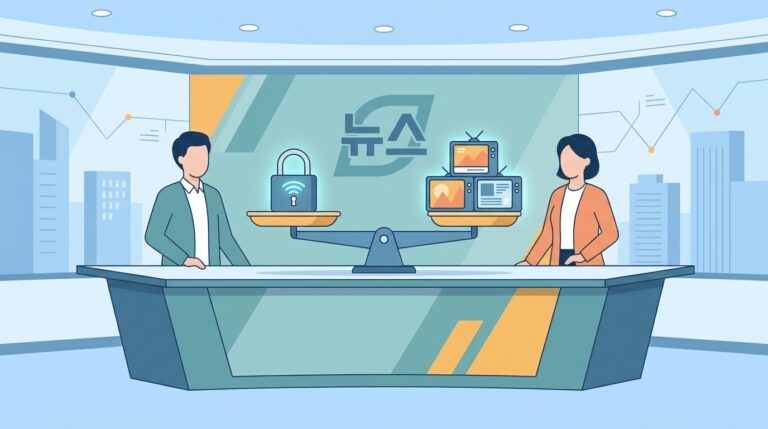
Imagine this scenario: You are sitting in a sleek conference room in Sangam-dong, Seoul’s vibrant media capital, surrounded by investigative journalists and broadcast producers. On the overhead monitor, an archival broadcast clip from ten years ago plays alongside trending viral forum posts. A former youth offender who completely turned their life around is begging for their digital past to be erased from portal search engines—invoking the “Right to be Forgotten” (잊혀질 권리). On the other side, an impassioned investigative reporter argues that scrubbing this data compromises public safety and violates the citizens’ “Right to Know” (국민의 알 권리). The room turns to you for your take.
For many advanced Korean learners, this is the exact moment where the “fluency ceiling” hits hard. You might know every grammar point in Level 6 textbooks, but when the debate shifts into the realm of constitutional values, media ethics, and hyper-connected netizen culture, standard conversational Korean suddenly feels inadequate. Over the past decade coaching foreign correspondents, media analysts, and diplomats in Seoul, I have heard this frustration constantly: “I know how to express basic opinions, but I lack the sophisticated, authoritative Korean required to articulate institutional compromises without sounding overly textbook-robotic or unintentionally aggressive.”
This guide is engineered to break that ceiling. By dissecting the intense clash between digital erasure and transparent journalism in South Korea—one of the world’s most hyper-networked societies—you will master the precise, C2-level discourse needed to command respect in any high-stakes media discussion.
Phase 2: 핵심 표현 3선 심층 분석 (Top 3 Core Expressions)
1. 잊혀질 권리와 국민의 알 권리가 첨예하게 대립하고 있습니다.
- Pronunciation: Ichyeojil gwonniwa gungminui al gwonniga cheom-yehage daeriphago itseumnida. (Phonetic anchor: Think of “첨예” as chum-yeh, biting sharply like the edge of a chisel).
- Meaning: Literal: “The right to be forgotten and the people’s right to know are sharply confronting each other.” | Nuanced: “There is a fierce, irreconcilable tension between individual privacy erasure and the public’s right to information.”
- K-Culture Moment: Often heard in legal commentary on SBS Curious Stories Y (궁금한 이야기 Y) or JTBC news debates when evaluating whether to reveal personal information of cyber-criminals or past public figures.
- Editor’s Insight: The adverb “첨예하게” (cheom-yehage) elevates standard discourse from simple disagreement (갈등이 있다) to a profound, razor-sharp clash of foundational legal principles. Use this when two legitimate rights collide with no easy compromise.
- Situation Spectrum: Casual: 🚫 | Semi-formal: ⚠️ | Formal: ✅
- 🤔 Think About It: In your home country, which right typically takes judicial precedence when personal rehabilitation clashes with permanent public digital archives?
2. 무분별한 신상 털기와 공익적 보도의 경계를 명확히 해야 합니다.
- Pronunciation: Mubunbyeolhan sinsang teolgiwa gong-ikjeok bodoui gyeonggyereul myeonghwakhi haeya hamnida. (Phonetic anchor: “신상 털기” sounds like shin-sang tul-gi, vibrating like dust shaken vigorously from clothes).
- Meaning: Literal: “We must clearly define the boundary between indiscriminate identity looting and reporting for public benefit.” | Nuanced: “We must draw a definitive line between malicious, vigilantist doxxing and legitimate investigative journalism in the public interest.”
- K-Culture Moment: Frequently invoked on media literacy podcasts and broadcast review boards discussing “Cyber Wrecker” (사이버 렉카) YouTube channels that expose civilian records under the guise of justice.
- Editor’s Insight: Pairing the vernacular idiom “신상 털기” (doxxing/identity digging) with the formal juridical term “공익적 보도” (public-interest reporting) demonstrates acute awareness of Korea’s contemporary digital reality while maintaining academic composure.
- Situation Spectrum: Casual: ⚠️ | Semi-formal: ✅ | Formal: ✅
- 🤔 Think About It: Does Korean digital culture’s emphasis on collective moral sanction blur the legal line between public interest and personal retribution?
3. 사회적 공론화 과정을 거쳐 제도적 절충점을 찾아야 합니다.
- Pronunciation: Sahoejeok gongnonhwa gwajeong-eul geocheo jedeojeok jeolchungjeomeul chajaya hamnida. (Phonetic anchor: “공론화” undergoes nasal assimilation: gong-non-hwa).
- Meaning: Literal: “Going through a social public-discourse process, we must find an institutional compromise point.” | Nuanced: “We must forge a viable policy consensus through structured democratic deliberation.”
- K-Culture Moment: The signature closing argument used by panelists on KBS Sunday Diagnostic (일요진단) when summarizing complex regulatory impasses.
- Editor’s Insight: This is the ultimate diplomatic C2 synthesis phrase. It prevents your arguments from sounding extremist by signaling that you respect both democratic procedure (공론화) and systematic policy calibration (제도적 절충점).
- Situation Spectrum: Casual: 🚫 | Semi-formal: ⚠️ | Formal: ✅
- 🤔 Think About It: Why does Korean administrative culture place such immense weight on the phrase “공론화” before amending digital privacy acts?
Phase 3: 교과서 한국어 vs 진짜 한국어 (Textbook vs. Real Native Korean)
Situation 1: Describing someone whose digital past has been permanently archived online
- 📖 교과서 한국어: 인터넷에 남아 있는 과거의 개인 정보 때문에 당사자가 심각한 고통을 겪고 있습니다. (Inteonete nama inneun gwageoui gaein jeongbo ttaemune dangsajaga simgakan gotong-eul gyeokgo itseumnida. / The party is suffering seriously due to past personal information remaining on the internet.)
- 🗣️ 진짜 한국어: 옛날 일이 악의적으로 박제되는 바람에, 디지털 장례식을 치르지 않고선 일상 복귀가 불가능한 처지예요. (Yennal iri aguijeogeuro bakjedeoneun barame, dijiteol jangnyesig-eul chireuji ankoseon ilsang bokgwiga bulganeunghan cheojiyeyo. / Their past was maliciously archived and pinned, so returning to normal life is impossible without hiring a digital undertaker.)
- 💡 왜 다를까?: While textbooks use neutral phrases like “개인 정보” (personal data), educated natives use the provocative term “박제” (literally ‘taxidermy’—referring to irreversible screenshots on community boards) and “디지털 장례식” (digital funeral—scrubbing digital footprints). It encapsulates the permanence of online shaming in Korea.
Situation 2: Critiquing sensationalist internet journalism targeting private lives
- 📖 교과서 한국어: 대중의 알 권리를 핑계로 사생활을 과도하게 침해하는 보도는 지양해야 합니다. (Daejung-ui al gwonnireul pinggyero sasaenghwareul gwadohage chimhaehaneun bodoneun jiyanghaeya hamnida. / Reporting that excessively violates private life using the public’s right to know as an excuse should be avoided.)
- 🗣️ 진짜 한국어: 알 권리라는 미명 하에 벌어지는 사이버 렉카들의 마녀사냥은 명백한 인격 살인입니다. (Al gwonriraneun mimyeong hae beoreojineun saibeo rekkadeurui manyeosanyang-eun myeongbaeghan ingyeok sarinimnida. / The witch hunts carried out by cyber wreckers under the pretext of the ‘right to know’ constitute outright character assassination.)
- 💡 왜 다를까?: Modern C2 discourse relies on potent legalistic metaphors: “미명 하에” (under the pretext of), “사이버 렉카” (cyber wreckers profiting off scandal), and “인격 살인” (character assassination), transforming a passive textbook critique into a compelling editorial critique.
Phase 4: K-Culture 딥다이브 & 비언어적 매너 (Deep Dive & Non-Verbal Manners)
4-1. 눈치(Nunchi) & Debate Demeanor
When debating civil rights and press freedom with Korean media professionals:
* The Head Tilt and Slow Inhale: Never flatly counter an opposing viewpoint with “아니요, 틀렸습니다” (No, you are wrong). Instead, tilt your head slightly down, take a measured half-second breath, and begin with: “물론 부장님 말씀처럼 알 권리도 중대하지만…” (While the right to know is of course critical as you noted, Director…). This showcases high-level interpersonal Nunchi, validating the hierarchy and the counterpoint before pivoting.
* Softening Hand Posture: Keep your hands open with fingers gently together on the table. Pointing pens or index fingers during debates over constitutional rights (헌법적 기본권) comes across as confrontational and unrefined in Korean broadcasting circles.
4-2. Cultural Code Analysis: The Digital Scarlet Letter & The Cyber Wrecker Phenomenon
South Korea possesses the world’s highest smartphone penetration and fiber-optic speeds, creating an ecosystem where public shaming can be swift and irreversible. Major web portals like Naver and Daum have already removed comment sections under entertainment and sports articles to mitigate cyber-bullying. In this hyper-scrutinized environment, the phenomenon of 사이버 렉카 (Cyber Wreckers—creators who immediately arrive at the scene of a societal accident to tow views and monetize outrage) has turned the clash between privacy and transparency into a national crisis. Understanding this background is critical: when Koreans debate the “Right to be Forgotten,” they are not merely discussing old forum posts; they are addressing the terror of permanent digital ostracism (사회적 매장).
Phase 5: 실전 롤플레이 시나리오 (Interactive Real-World Role-Play)
- Setting: The high-tension editing room of a Seoul current affairs program “Focus Korea.”
- Character: NPC Senior Producer Han (한 부장), a veteran 25-year journalist who is fiercely protective of investigative journalism.
Turn 1: 한 부장 (Han Bu-jang)
* 🎭 안경을 벗으며 이마를 짚고, 모니터에 띄워진 과거 기사를 노려본다.
* “이번 특집 다큐에서 이 사건 당사자의 과거 행적, 모자이크 처리 없이 그대로 내보내는 게 맞아. 국민들의 알 권리가 우선이니까.”
* Ibeon teukjip dakyueseo i sageon dangsajaui gwageo haengjeok, mojaikeu cheori eopsi geudaero naebonaeneun ge maja. Gungmindeurui al gwonniga useoninikka.
* “In this special documentary, it’s right to air the subject’s past track record without any mosaic blurring. The public’s right to know comes first.”
Turn 2: You (Associate Producer)
* 🎭 고개를 끄덕여 선배의 취재 의도를 존중한 뒤, 차분하게 이의를 제기한다.
* “선배님 말씀의 취지는 십분 이해합니다만, 이미 죗값을 치른 개인에 대한 잊혀질 권리 역시 헌법상 보장된 법익 아닐까요?”
* Seonbaenim malsseumui chwijineun sipbun ihaehamnidaman, imi joetgapseul chireun gaeine daehan ichyeojil gwonni yeoksi heonbeopsang bojangdoen beobik anilkkayo?
* “I fully understand your intent, Senior, but isn’t the right to be forgotten for an individual who has already paid their debt to society also a constitutionally guaranteed legal right?”
Turn 3: 한 부장 (Han Bu-jang)
* 🎭 볼펜으로 책상을 툭툭 치며 눈썹을 치켜올린다.
* “법익? 하지만 이 사람이 다시 공적 영역에 발을 들이려는 이상, 유권자와 시민의 알 권리를 위해 기록을 투명하게 공개하는 게 언론의 사명이야.”
* Beobik? Hajiman i sarami dasi gongjeok yeong-yeoge bareul deulliryeoneun isang, yugwonjawa siminui al gwonnireul wihae girogeul tumyeonghage gonggaehaeneun ge eonnonui samyeong-iya.
* “Legal right? But so long as this person seeks to re-enter the public sphere, it is the press’s mission to transparently disclose records for the voters’ and citizens’ right to know.”
Turn 4: You (Associate Producer)
* 🎭 자료 파일 하나를 정돈하여 한 부장 앞에 조심스럽게 내려놓는다.
* “물론 공익적 가치가 크다는 점에는 전적으로 동의합니다. 다만 당사자 가족들에 대한 2차 가해나 무차별적인 신상 털기로 변질될 우려가 큽니다.”
* Mullon gong-ikjeok gachiga keudaneun jeomeneun jeonjeog-euro dong-uihamnida. Daman dangsaja gajokdeure daehan icha gahaena muchabyeoljeogin sinsang teolgiro byeonjildoel uryeoga keumnida.
* “I totally agree that the public-interest value is substantial. However, there is immense risk that this could devolve into secondary harm against their family or indiscriminate doxxing.”
Turn 5: 한 부장 (Han Bu-jang)
* 🎭 팔짱을 끼고 의자에 깊숙이 기대며 깊은 한숨을 내쉰다.
* “그렇다고 과거의 명백한 과오를 말끔히 지워주는 선례를 남기면, 권력자들이 이를 악용해 비리를 덮으려 할 텐데, 그건 어떻게 감당할 건가?”
* Geureotdago gwageoui myeongbaeghan gwaoreul malkkeumhi jiwojuneun seonryereul namgimyeon, gwollyeokjadeuri ireul agyonghae birireul deopeuryeo hal tende, geugeon eotteoke gamdanghal geon-ga?
* “If we set a precedent by wiping clean clear past misdeeds, power-holders will exploit this to conceal corruption. How do we account for that?”
Turn 6: You (Associate Producer)
* 🎭 시선을 마주하며 확신에 찬 목소리로 대안을 제시한다.
* “따라서 전면 삭제나 무제한 공개라는 극단적 선택보다는, 비식별 처리를 거쳐 사안의 구조적 모순을 짚는 쪽으로 절충점을 찾아야 합니다.”
* Ttaraseo jeonmyeon sakjena mujehan gonggaeraneun geukdanjeok seontaekbodaneun, bisikbyeol cheorireul geocheo saanui gujojeok mosuneul jimneun jjogeuro jeolchungjeomeul chajaya hamnida.
* “Therefore, rather than binary extremes of total deletion or unrestricted disclosure, we should find a compromise by de-identifying the individual while highlighting the structural contradictions of the issue.”
Turn 7: 한 부장 (Han Bu-jang)
* 🎭 턱을 매만지며 화면과 편집 기획안을 번갈아 쳐다본다.
* “비식별화라… 취재의 본질을 훼손하지 않으면서 인격권 침해 논란을 비껴갈 수 있는 묘수가 될 수도 있겠군.”
* Bisikbyeolhwara… Chwijaeui bonjireul hwesonhaji aneumyeonseo ingyeokgwon chimhae nollaneul bikkyeogal su inneun myosuga doel sudo itgetgun.
* “De-identification… That might indeed be an astute move to sidestep controversy over violating personality rights without undermining the essence of our reporting.”
Turn 8: You (Associate Producer)
* 🎭 단정하게 미소를 지으며 편집 타임라인을 켠다.
* “네, 알 권리와 잊혀질 권리 사이의 균형추를 맞추는 성숙한 보도 모델을 이번 편에서 구현해 보겠습니다.”
* Ne, al gwonniwa ichyeojil gwonni saiui gyunhyeongchureul matchuneun seongsughan bodo modereul ibeon pyeon-eseo guhyeonhae bogetseumnida.
* “Yes, let’s establish a mature journalistic model in this episode that balances the scales between the public’s right to know and the right to be forgotten.”
🔀 인터랙티브 분기점 (Choose Your Strategy)
What would you say if Han Bu-jang insisted: “We must publish the real name to maximize viewer ratings”?
- Option A: “시청률 때문에 공익성을 빙자하는 건 저널리즘 윤리에 정면으로 위배됩니다.” (Pivoting to ratings under the guise of public interest directly violates journalistic ethics.)
- Option B: “부장님 생각이 그러시다면 어쩔 수 없지만, 나중에 방심위 제재를 받으면 책임지실 수 있습니까?” (If that’s what you think, I can’t stop you, but can you take responsibility if the Korea Communications Standards Commission sanctions us?)
- Option C: “선정성에 기댄 시청률 견인은 단기적 성과에 불과하며, 탐사보도의 지속 가능한 신뢰도를 실추시킬 공산이 큽니다.” (Boosting ratings reliant on sensationalism is merely a short-term gain, with a high probability of undermining the sustainable credibility of our investigative reporting.)
Strategic Feedback:
- Option A (Risk): While morally correct, accusing your executive producer of “빙자” (falsely feigning public interest) is viewed as a direct insubordination in Korean organizational hierarchy. It ends the dialogue abruptly.
- Option B (Bad): Passive-aggressive and defensive. Using “책임지실 수 있습니까?” sounds petulant and unprofessional for a C2 communicator.
- Option C (Best): Perfect C2 discourse. It reframes ethics into long-term strategic asset value (“지속 가능한 신뢰도”) using sophisticated, measured vocabulary like “실추시킬 공산이 큽니다” (high probability of tarnishing).
Phase 6: 10초 감정 섀도잉 드릴 (Emotional Shadowing Drill)
Practice matching the cadence, vocal weight, and pauses (/) of an elite Korean current affairs commentator:
[⚖️ 진중하고 단호하게 - Serious & Resolute]
“개인의 사생활 침해를 방치하는 것은 / 알 권리의 보호가 아니라 / 사회적 폭력의 방조에 불과합니다.”
(Gaeinui sasaenghwal chimhaereul bangchihaneun geoseun / al gwonniui boyoga anira / sahoejeok pongnyeogui bangjoe bulgwahamnida.)
“Neglecting the infringement of an individual’s privacy / is not the protection of the right to know / but merely abetting societal violence.”-
[🤔 숙고하며 타협점을 모색하듯 - Deliberative & Diplomatic]
“무조건적인 알 권리의 주장보다는 / 시대적 법 감정을 반영한 / 제도적 가이드라인 제정이 / 시급한 시점입니다.”
(Mujogeonjeogin al gwonniui jujangbodaneun / sidaejeok beop gamjeong-eul banyeonghan / jedeojeok gaideurain jejeong-i / sigeuphan sijeomimnida.)
“Rather than an unconditional insistence on the right to know / the enactment of institutional guidelines / reflecting the legal sentiment of our era / is of the utmost urgency.” -
[🔥 비판적 논조로 무게감 있게 - Sharply Critical & Weighty]
“공공의 이익이라는 허울 좋은 명분 뒤에 / 숨어 있는 관음증적 소비 행태를 / 이제는 직시해야 합니다.”
(Gonggong-ui i-igiraneun heoul joeun myeongbun dwie / sumeo inneun gwaneumjeungjeok sobi haengtaereul / ijeneun jiksihayeoya hamnida.)
“Behind the plausible justification of public interest / the voyeuristic consumption behavior hidden beneath / must now be confronted squarely.”
Phase 7: K-Culture 미니 사전 (Mini Dictionary: 4 Essential Terms)
- 신상 털기 (Sinsang teolgi)
- Translation: Digital Doxxing / Unmasking Identity.
- Context: The act of scouring someone’s digital footprint (SNS, university portals, military history) to unmask and humiliate them publicly. Often juxtaposed with “알 권리” during scandals.
- 박제 (Bakje)
- Translation: Digital Taxidermy / Permanent Archival Shaming.
- Context: Originally meaning preservation of animal specimens, in media culture it means capturing and immortalizing problematic remarks or past mistakes via immutable screenshots, preventing the author from ever exercising a “right to be forgotten.”
- 사이버 렉카 (Saibeo rekka)
- Translation: Cyber Wreckers.
- Context: Content creators who exploit real-time scandals and private vulnerabilities for monetary profit. They frequently defend their vigilantism using the slogan “국민의 알 권리.”
- 법익 형량 (Beobik hyeongnyang)
- Translation: Balancing of Legal Interests (Proportionality Assessment).
- Context: The formal judicial and editorial test applied when weighing two competing constitutional values—such as Article 17 (Right to Privacy) vs. Article 21 (Freedom of Expression & the Press).
Phase 8: 여행자를 위한 생존 키트 (Survival Kit for Global Professionals)
Even non-journalists encounter digital privacy hurdles in South Korea (e.g., CCTV coverage, real-name online verification, credit card trace notices).
Survival Expressions:
- “제 개인정보가 포털 사이트에 노출되어 있어 삭제 조치를 요청합니다.”
(Je gaeinjeongboga poteol saiteue nochuldoeeo isseo sakje jochireul yocheonghamnida.)
Pro Tip: Use this formal request when filing an official deletion petition on major Korean search engines. - “이 영상의 초상권 및 방송 동의를 철회할 수 있습니까?”
(I yeongsang-ui chosanggwon mit bangsong dong-uireul cheolhoehal su itseumnikka?)
Pro Tip: Crucial phrase if you were filmed on a Korean reality broadcast or YouTube street channel and wish to withdraw consent. - “기사 속 내용이 당사자의 인격권을 현저히 침해하고 있습니다.”
(Gisa sok naeyong-i dangsajaui ingyeokgwoneul hyeonjeohi chimhaehago itseumnida.)
Pro Tip: High-register wording when disputing defamatory reporting with the Press Arbitration Commission.
Editor’s Expat Note:
If you find your personal information or image distributed online without consent in Korea, do not hesitate to contact authorities. You can formally appeal via the KISA 개인정보침해 신고센터 웹사이트 방문 to file an official privacy grievance, or submit a request directly through the 방송통신심의위원회 신청 포털 for immediate corrective takedown orders.
Phase 9: “한 발 더 깊이” (Cultural Insight Essay)
South Korea’s unique tension between digital privacy and transparency is rooted deeply in its collectivist moral matrix. Historically influenced by Confucian notions of 염치 (yeomchi—a sense of shame and social honor), community oversight has long functioned as a primary mechanism for social order. In the digital age, this collective accountability transformed into rapid online mobilization, where netizens feel a moral duty to expose wrongdoers for the public good. Consequently, asserting an individual “right to be forgotten” can sometimes be misconstrued not as a legitimate civil protection, but as an evasion of collective moral retribution.
💬 Your Turn: Do you believe an individual’s past criminal record should be permanently scrubbed from search engines once they have served their legal sentence, or does society’s right to know always supersede personal digital rehabilitation? Let’s discuss in the comments below!
Phase 10: FAQ & 오해 방지 (FAQ Schema Compliant)
Q: Can foreigners exercise the Right to be Forgotten on Korean search portals like Naver?
A: Yes. South Korea’s Personal Information Protection Act (개인정보 보호법) and Information and Communications Network Act allow anyone—regardless of nationality—to request the blinding or deletion (임시조치 – temporary exclusion) of posts that infringe upon their personal rights or reveal unconsented identifiable information.
Q: What is the exact difference between “공익” (Public Interest) and “국민의 알 권리” (The Public’s Right to Know)?
A: “국민의 알 권리” is a constitutional freedom derived from freedom of expression, empowering citizens to seek out and receive information. “공익” (Gong-ik) is the broader judicial justification—the societal benefit or utility derived from making that information public.
Q: When is “사이버 렉카” legally classified as defamation in Korea?
A: Under Korean criminal law (Article 307 of the Criminal Act), defamation can be penalized even if the reported facts are true (사실적시 명예훼손), unless the speaker can prove beyond reasonable doubt that the disclosure was solely and purely for the public interest (오로지 공공의 이익에 관한 때).
🚨 Common Mistakes Alert (TOP 3)
- Using “잊혀질 권리” with active verb forms: Foreigners often say “잊혀질 권리를 지워주세요” (Awkward: Please erase the right to be forgotten). Say instead: “잊혀질 권리를 행사하겠습니다” (I will exercise my right to be forgotten).
- Confusing “공론화” with simple argument: Don’t say “친구와 공론화했어요” (Awkward: I publicly deliberated with my friend). Reserve 공론화 strictly for issues brought to the societal or institutional public sphere.
- Overusing “알 권리” casually: Avoid saying “네 비밀을 알 권리가 있어” (Awkward: I have a constitutional right to know your secret). It sounds absurdly grandiose in interpersonal settings. Use “알 자격이 있어” instead.
Phase 11: 액션 미션 & 참여 유도 (Action Missions)
- 🥉 Bronze Mission (Solo Practice): Record yourself reciting Phase 6 Shadowing Drill #2 with steady, authoritative pacing without stumbling on “제도적 가이드라인”.
- 🥈 Silver Mission (Social Application): Look up a recent Korean news article about “잊혀질 권리” on Naver News and leave a respectful Korean comment using the expression: “사회적 공론화를 통한 절충안 마련이 시급해 보입니다.”
- 🥇 Gold Mission (Real-Life Mastery): In your next Korean language exchange, mock interview, or debate group, construct a 60-second speech arguing whether cyber-wreckers genuinely serve “국민의 알 권리” or simple “영리 목적” (commercial profit).
- 🎮 K-Culture Mission: Watch an episode of SBS Unanswered Questions (그것이 알고 싶다) and listen carefully for how many times the presenter mentions “공익적 목적” when justifying the disclosure of personal data.
Phase 12: 인터랙티브 퀴즈 챌린지 (Quiz Challenge)
1. Situational Judgment
Which expression is the most tactful and natural way to advocate for an individual’s digital privacy during a high-level broadcast review meeting?
* (A) “시청률 떨어지더라도 저 사람 불쌍하니까 지워줍시다.”
* (B) “언론의 자유보다는 개인의 프라이버시가 무조건 앞서는 법입니다.”
* (C) “알 권리 보장도 중요하나, 당사자의 잊혀질 권리와의 법익 형량이 신중히 이루어져야 합니다.”
* (D) “사이버 렉카들처럼 행동하면 방송통신위원회에 고발당합니다.”
2. Fill in the Blank
“공공의 이익을 위한 보도라 할지라도, 무분별한 (_________)으로 이어져 2차 가해를 낳는 일은 경계해야 합니다.”
* Clue: The popular Korean slang-turned-media term for doxxing/digging up personal files.
3. True / False Culture Trivia
In South Korea, disclosing completely true facts about another person online can still lead to criminal prosecution for defamation if it lacks public utility.
* (True / False)
👉 Click to view Answers & Explanations
- Answer: (C)
- Explanation: Choice (A) is overly emotional; Choice (B) makes an absolutist claim that is legally inaccurate; Choice (D) is accusatory. Choice (C) represents impeccable C2 professional register using the precise juridical term 법익 형량 (balancing legal rights).
- Answer: 신상 털기 (Sinsang teolgi)
- Explanation: “무분별한 신상 털기” (indiscriminate doxxing) perfectly completes this sentence warning against secondary victimization.
- Answer: True
- Explanation: Under Article 307(1) of the Korean Penal Code, “Defamation by True Facts” (사실적시 명예훼손) is a recognized crime unless proven to be solely for public interest under Article 310.
- Explanation: Under Article 307(1) of the Korean Penal Code, “Defamation by True Facts” (사실적시 명예훼손) is a recognized crime unless proven to be solely for public interest under Article 310.







