

Surviving Korea’s Wild Secondhand Market: Essential Phrases for Joonggonara and Danggeun
Phase 1: 공감 (Story-Driven Opening)
안녕하세요! 매일한글 에디터입니다. Have you ever tried hunting for a rare K-pop photocard, a vintage camera, or cozy studio furniture in Korea, only to freeze when opening a secondhand trading app? In Korea, everyone knows the infamous nickname “중고로운 평화나라” (Joonggonara: The Peaceful Realm of Used Goods). The name is pure, affectionate irony. While called “peaceful,” it is legendary for lightning-fast negotiations, witty banter, and the occasional bizarre scam attempt!
Many of my intermediate students tell me: “I know how to say ‘How much is this?’ in Korean, but the moment I open Danggeun Market (당근마켓), sellers use weird slang I cannot decipher!” That confusion ends today. With over ten years of navigating Seoul’s bustling flea markets and digital marketplaces, I have curated this street-smart survival guide based on real learner pain points. By the end of this guide, you will chat smoothly, dodge common etiquette traps, and score amazing local bargains with genuine Korean flair.
Phase 2: 핵심 표현 3선 심층 분석 (3 Key Expressions)
1. 네고 가능한가요? (Nego ganeunghangayo?)
- Pronunciation: [Ne-go ga-neung-han-ga-yo?] (Think of nego sounding just like “negotiation” cut in half, followed by ga-neung like “gah-nung” in “fungus” + hangayo like “hahn-gah-yo”)
- Meaning: Literal: “Is negotiation possible?” | Real Nuance: “Are you open to a small, polite discount?”
- K-Culture Moment: Seen frequently in slice-of-life K-dramas where frugal university students decorate their rooftop one-room flats (oktapbang) by messaging online sellers late at night.
- Editor’s Insight: Koreans love trimming long loanwords. “Negotiation” became “Nego” (네고). While asking for a price cut directly with “깎아주세요” (Kkakk-a-juseyo) can feel slightly pushy or blunt online, asking “네고 가능한가요?” sounds humble, respectful, and leaves the door open without pressuring the seller.
- Situation Spectrum: Casual ✅ | Semi-formal ✅ | Formal ⚠️
- 🤔 Think About It: In your home country, is haggling online considered rude, expected, or purely transactional? Notice how Koreans add the possibility marker (~가능한가요) to soften the request.
2. 쿨거래 원해요 (Kulgorae wonhaeyo)
- Pronunciation: [Kul-geo-rae won-hae-yo] (Sounds like the English word “Cool” + “guh-rae” rhyming with buffet + “one-hae-yo”)
- Meaning: Literal: “I want a cool transaction.” | Real Nuance: “I want a hassle-free, lightning-fast deal with no endless questions or penny-pinching!”
- K-Culture Moment: Sellers often write “쿨거래 시 택배비 무료” (Free shipping if you do a cool deal!) in listing titles on Joonggonara or Karrot (Danggeun).
- Editor’s Insight: A “cool deal” (쿨거) in Korean culture means paying instantly without asking ten thousand questions about minor scratches. If you promise a seller a 쿨거래, you are signaling: “I am a decisive, trustworthy buyer who will not waste your time.”
- Situation Spectrum: Casual ✅ | Semi-formal ✅ | Formal 🚫
- 🤔 Think About It: Why does Korean secondhand culture prize speed and zero hassle over squeezing out every last won? It reflects Korea’s signature “빨리빨리” (ppalli-ppalli, hurry-hurry) lifestyle!
3. 직거래 할게요 (Jikgeorae halgeyo)
- Pronunciation: [Jik-geo-rae hal-ge-yo] (Sounds like Jeek + guh-rae + hahl-geh-yo)
- Meaning: Literal: “I will do direct trade.” | Real Nuance: “I prefer to meet face-to-face in person to hand over the item and cash.”
- K-Culture Moment: In comedy variety shows, stars secretly meet fans outside local subway station turnstiles wearing oversized bucket hats and masks to exchange used jackets.
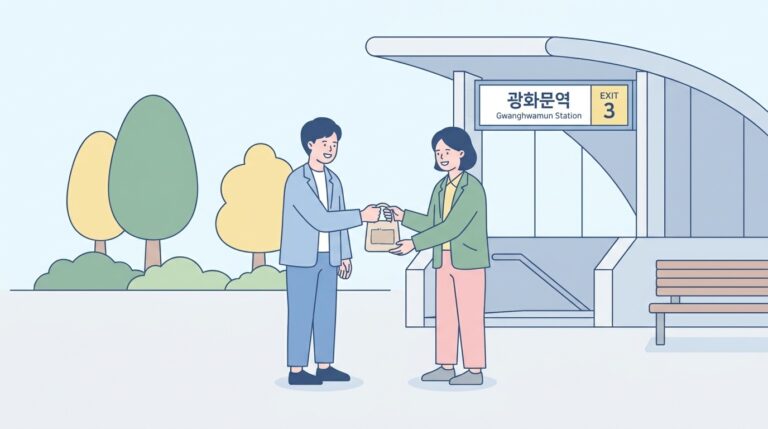
- Editor’s Insight: The opposite of 택배거래 (postal parcel delivery). Because online fraud can happen in any country, 직거래 is the golden standard of safety in Korea. Usually, buyers and sellers choose an unmistakable public landmark, like “Gangnam Station Exit 4.”
- Situation Spectrum: Casual ✅ | Semi-formal ✅ | Formal ✅
- 🤔 Think About It: How does meeting strangers face-to-face in designated public subway stations reflect the general public safety landscape of South Korea?
Phase 3: 교과서 한국어 vs 진짜 한국어 (Textbook vs. Real Korean)
Situation 1: Asking if an item is still available
- 📖 교과서 한국어: 이 물건은 아직 판매 중인 상품입니까? (I mulgeoneun ajik panmae jung-in sangpum-imnikka?)
- 🗣️ 진짜 한국어: 혹시 아직 판매 중인가요? (Hoksi ajik panmae jung-in-gayo?)
- 💡 왜 다를까? Textbook Korean uses rigid interrogative endings (-입니까) that sound like a formal police inquiry or legal deposition. Native speakers always soften initial questions with “혹시” (by any chance) and gentle endings (~인가요?).
Situation 2: Asking for a modest discount
- 📖 교과서 한국어: 가격을 깎아 주실 수 있습니까? (Gagyeogeul kkakk-a jusil su isseumnikka?)
- 🗣️ 진짜 한국어: 쿨거래할 테니 조금만 네고 될까요? (Kulgorae-hal teni jogeumman nego doelkkayo?)
- 💡 왜 다를까? Simply demanding “Discount the price, please” creates friction. Adding a win-win condition (“I will make it a hassle-free, fast deal, so could a small nego be possible?”) displays polite tact and gets a much higher success rate.
Phase 4: K-Culture 딥다이브 & 비언어적 매너 (Deep Dive & Manners)
4-1. 눈치 (Nunchi) & In-Person Gestures
When meeting a seller for a 직거래 (in-person trade), Korean social etiquette demands specific physical cues:
1. The 15-Degree Head Nod: You do not need a deep 90-degree bow, but when spotting the person holding the item, offer a light 15-degree head nod while holding eye contact for just a split second.
2. The Two-Handed Handover: Always hand over cash or inspect the item using both hands (or one hand lightly supporting your opposite forearm). Handing money or a gadget with one casual flick of the wrist feels dismissive.
3. Quick On-Site Confirmation: Quickly inspect the gadget screen or item quality, smile, and say: “상태 좋네요, 감사합니다!” (Sangtae jonneyo, gamsahamnida! / It is in great condition, thank you!). Dragging the inspection out for 10 awkward minutes on a freezing winter sidewalk breaches unspoken etiquette.
4-2. Cultural Code: The Karrot “Manner Temperature”
In Korea’s beloved neighborhood app Danggeun (Karrot), every user starts at the standard human body temperature: 36.5°C. Positive reviews and kind messages raise your temperature (some elite traders boast 60°C or higher!), while ghosting, rude messages, or sudden cancellations drop it into the freezing negatives. The platform essentially gamified Korean Jeong (정, warm social bonding) and community accountability.
Phase 5: 실전 롤플레이 시나리오 (Real-Life Roleplay)
- Setting: Chilly Friday dusk outside Hongdae Station Exit 9. The neon street signs are flickering awake.
- Character: Min-woo (민우), a punctual university student selling a gently used iPad mini.
- Min-woo: 혹시 당근마켓 아이패드 구매자분이신가요? (Hoksi Danggeun Market aipaedeu gumaejabun-isin-gayo?)
🎭 Shifts weight from one sneaker to another, holding a neat shopping bag with both hands.
“By any chance, are you the iPad buyer from Danggeun Market?” -
Learner: 네, 맞아요! 추운데 기다리게 해서 죄송해요. (Ne, majayo! Chuunde gidarige haeseo joesonghaeyo.)
🎭 Bows slightly with a polite smile, catching breath after walking up the stairs.
“Yes, that’s right! I’m sorry to keep you waiting in the cold.” -
Min-woo: 아니에요, 저도 방금 도착했어요. 물건 확인해보세요! (Anieyo, jeodo banggeum dochakhaesseoyo. Mulgeon hwaginhaeboseyo!)
🎭 Pulls out the device box carefully and hands it over using both hands.
“Not at all, I just arrived too. Please feel free to check the item!” -
Learner: 와, 기스도 없고 거의 새것 같네요. (Wa, giseudo eopgo geoui saegeot ganneyo.)
🎭 Turns on the screen and inspects the corners swiftly with an appreciative nod.
“Wow, there are no scratches and it looks almost brand new.” -
Min-woo: 아껴서 쓰던 거라 상태 정말 좋아요. 충전기도 같이 넣었어요. (Akkyeoseo sseudeon geora sangtae jeongmal joayo. Chungjeon-gido gachi neoeosseoyo.)
🎭 Smiles proudly, pointing toward the bottom of the original packaging.
“I took great care of it, so the condition is top-notch. I included the charger too.” -
Learner: 꼼꼼하게 챙겨주셔서 감사합니다. 계좌로 바로 보내드릴까요? (Kkomkkomhage chaenggyeojusyeoseo gamsahamnida. Gyejwaro baro bonaedeurilkkayo?)
🎭 Pulls out smartphone with banking app open, ready to transfer.
“Thank you for preparing it so meticulously. Shall I transfer the money directly to your bank account right now?” -
Min-woo: 네, 제 프로필에 있는 계좌로 부탁드립니다! (Ne, je peuropire inneun gyejwaro butakdeurimnida!)
🎭 Nods with relief upon seeing the swift, decisive payment preparation.
“Yes, please send it to the bank account listed on my profile!” -
Learner: 방금 송금 완료했습니다! 확인해보세요. (Banggeum songgeum wanryohaesseumnida! Hwaginhaeboseyo.)
🎭 Tilts the phone screen briefly so Min-woo can see the instant transfer confirmation.
“I just completed the transfer! Please check your account.”
🔀 Interactive Choice Point:
Now that the money is transferred and you have the item, what do you say as you wrap up the deal?
- Choice A: “계좌 확인되셨죠? 이제 매너온도 후기 좋게 남겨드릴게요! 조심히 들어가세요.” (Gyejwa hwagindoesyeotjyo? Ije maeneo-ondo hugi joke namgyeodeurilgeyo! Josimhi deureogaseyo.)
- Choice B: “혹시 만 원만 다시 깎아주시면 안 돼요? 이미 샀으니까요.” (Hoksi man wonman dasi kkakk-ajusimyeon an dwaeyo? Imi sasseunikkayo.)
- Choice C: Just take the box, turn around silently, and walk down the stairs without saying a word.
- Feedback for Choice A (Best): Perfect 100! Mentioning a positive Manner Temperature review (매너온도) and greeting them warmly (조심히 들어가세요) leaves an unforgettable impression and guarantees you a 5-star reciprocal review!
- Feedback for Choice B (Bad): Extreme breach of manners! Asking for an on-the-spot cash refund discount after agreeing on a price is called “현장 네고” (on-site haggling) and is widely despised in Korea.
- Feedback for Choice C (Risk): Awkward! Walking off silently makes the seller wonder if something went wrong and will likely result in a poor review tag: “대화가 무뚝뚝해요” (The conversation felt cold).
Phase 6: 10초 감정 섀도잉 드릴 (Emotion Shadowing Drill)
Repeat these lines aloud! Follow the pause markers (/) and tap into the specified emotion:
[😊 기쁘고 신나게 / Warm & Cheerful]
“혹시 / 아직 판매 중인가요? / 제가 바로 / 구매하고 싶어요!”
(Hoksi / ajik panmae jung-in-gayo? / Jega baro / gumaehago sipeoyo!
“By any chance / is this still available? / I would love to / buy it immediately!”)-
[🥺 아쉽고 애교 섞어서 / Hopeful & Polite]
“제가 학생이라 그런데요, / 혹시 택포로 / 조금만 네고 될까요?”
(Jega haksaeng-ira geureondeyo, / hoksi taekporo / jogeumman nego doelkkayo?
“I am a student on a budget, / so by any chance / could you do a slight discount including shipping?”) -
[🤝 든든하고 신뢰감 있게 / Confident & Reliable]
“쿨거래 약속드릴게요! / 오늘 저녁 7시에 / 역 앞에서 봬요!”
(Kulgorae yaksokdeurilgeyo! / Oneul jeonyeok ilgopsie / yeok ap-eseo bwaeyo!
“I promise a smooth, swift deal! / Let’s meet at 7 PM tonight / right outside the station!”)
Phase 7: K-Culture 미니 사전 (Mini Dictionary)
- 쿨거 (Kulgeo) | Quick, fuss-free transaction
Short for 쿨거래. Used widely in chat rooms to reassure the seller that you won’t hesitate or stall payment. - 네고 (Nego) | Price discount / Negotiation
Abbreviation of negotiation. Often used as a noun: “네고 사절” (No discounts accepted / firm price). - 택포 (Taekpo) | Shipping fee included
Short for 택배비 포함. A beloved term buyers look for to avoid paying separate 3,000–4,000 won courier fees. - 불발 (Bulbal) | Deal fell through / Cancellation
Used when a prospective buyer ghosts or cancels last minute: “예약 불발되어 다시 올립니다” (Re-listing because the previous reservation fell through).
Phase 8: 여행자를 위한 생존 키트 (Traveler’s Survival Kit)
Top 3 Survival Expressions
- 택배 거래 가능한가요? (Taekbae georae ganeunghangayo?)
Meaning: Can you ship this via postal delivery?
Pro Tip: Essential if the seller lives far away in Busan while you are staying in Seoul. - 몇 번 출구에서 만날까요? (Myeot beon chulgu-eseo mannalkkayo?)
Meaning: Which subway station exit shall we meet at?
Pro Tip: Seoul subway stations have up to 14 exits! Specifying the exit number prevents wandering around in circles. - 포장 꼼꼼히 부탁드려요! (Pojang kkomkkomhi butakdeuryeoyo!)
Meaning: Please pack it securely!
Pro Tip: Vital when buying fragile K-pop lightsticks, ceramics, or electronics.
Editor’s Travel Note
- If you want to trade locally, make sure to check out our detailed guide on [Kakao Pay registration steps for foreigners] to facilitate seamless QR-code transfers without carrying bulky paper bills.
- Before traveling to a station meetup, check the location on the [Naver Map subway navigation app] so you can anticipate which train car puts you closest to the agreed exit gate!
Phase 9: “한 발 더 깊이” (Deep Reflection)
South Korea’s secondhand economy is a fascinating reflection of social hyper-connectivity and community trust. While “Joonggonara” gained fame for wild internet anecdotes, the recent rise of neighborhood-based platforms like Danggeun reflects a collective yearning for warmer, hyper-local village bonds (dongsang, 동네) within high-density urban high-rises. Even in a hyper-modern metropolis like Seoul, trading used goods isn’t just about saving money; it is a shared ritual where neighbors share small gifts, exchange snacks, and build everyday trust one transaction at a time.
💬 Your Turn: Have you ever bought secondhand goods while traveling abroad? What is the most memorable secondhand item you have ever scored? Share your story in the comments below!
Phase 10: FAQ & 오해 방지 (FAQ & Mistakes)
Q: Can foreigners sign up for Danggeun Market and Joonggonara without a Korean ID?
A: Joonggonara traditionally requires a verified Naver account, while Danggeun Market verifies your physical GPS neighborhood and requires a domestic Korean phone number (tied to an Alien Registration Card or domestic SIM) for SMS verification. Travelers with temporary tourist SIMs can often browse listings, but sending chat messages requires local identity verification.
Q: What should I do if a seller demands bank transfer before shipping an item?
A: If doing postal delivery (택배), verify their phone number or account number on fraud-check databases like “The Cheat” (더치트). If you are meeting in person (직거래), never wire money in advance—always transfer on-site immediately after checking the physical product.
Q: Is it considered rude to say no if a seller rejects my discount request?
A: Not at all! If they say “네고는 죄송합니다” (Sorry, no nego), simply reply politely: “네, 알겠습니다! 그럼 원래 가격으로 구매할게요” (Understood! I will buy it at the original price) or “네, 확인 감사합니다! 좋은 하루 보내세요” (Got it, thanks for checking! Have a great day).
🚨 Common Mistakes Warning Board
- ❌ Mistake 1: “현장 네고” (Haggling in person after agreeing on chat). Agreeing to 30,000 won online and then pulling out 25,000 won in person will get you reported and blocked immediately.
- Correct Action: Finalize all price discussions inside the app chat before setting foot outside.
- ❌ Mistake 2: Ghosting (잠수) after asking for their bank account. Asking for bank details makes the seller reserve the item for you. Disappearing without paying hurts their selling schedule.
- Correct Action: If you change your mind, message promptly: “죄송하지만 이번에는 구매하지 않겠습니다” (I apologize, but I won’t be able to purchase it this time).
- ❌ Mistake 3: Arriving late without notice. In Korea, being 5 minutes late to a subway exit trade in freezing or rainy weather is considered disrespectful.
- Correct Action: If delayed on the subway, send a message immediately: “지하철이 지연되어 5분 정도 늦을 것 같습니다. 정말 죄송합니다!”
Phase 11: 액션 미션 & 참여 유도 (Action Missions)
- 🥉 Bronze Mission (Solo Practice): Read the 8-turn roleplay in Phase 5 out loud twice. Time yourself to make the line exchanges feel natural within 1 minute!
- 🥈 Silver Mission (Social Share): Write down your favorite expression among 네고, 쿨거래, or 직거래 in our comments section along with an imaginary sentence using it.
- 🥇 Gold Mission (Real Life Action): Download a Korean marketplace app (or visit a local vintage thrift shop in Dongdaemun/Hongdae) and use “혹시 이거 네고 가능한가요?” with a warm smile!
- 🎮 K-Culture Mission: Watch an episode of a recent slice-of-life K-drama or web variety show and spot when characters say “당근이세요?” (Are you from Danggeun Market?). Tag us when you hear it!
Phase 12: 인터랙티브 퀴즈 챌린지 (Interactive Quiz)
1. Situation Judgment: You found an adorable vintage mug listed on Danggeun for 15,000 won. The seller’s bio explicitly states: “네고 사절” (Nego sajeol). What should you message?
* A) “10,000원에 주시면 지금 바로 쿨거래할게요!”
* B) “안녕하세요! 네고 사절 확인했습니다. 직거래로 15,000원에 구매하고 싶어요.”
* C) “너무 비싸요. 학생이니까 깎아주세요.”
2. Fill-in-the-Blank: Complete the sentence meaning: “Shall we meet outside Exit 3?”
* “3번 _______에서 만날까요?”
3. True or False: On Korean secondhand apps, it is customary to negotiate the price in person when you meet face-to-face, rather than inside the chat.
* (True / False)
👉 Click to reveal answers & explanations!
- Answer: B
- Explanation: “네고 사절” means discounts are strictly rejected. Ignoring the seller’s rule to ask for 10,000 won will get you ignored or reported. Choice B shows great Nunchi and manners!
- Answer: 출구 (Chulgu)
- Explanation: “출구” means exit (3번 출구 = Exit 3).
- Answer: False
- Explanation: In-person haggling (현장 네고) is considered taboo and bad etiquette in Korean secondhand culture. All price adjustments must be agreed upon inside the chat beforehand.
- Explanation: In-person haggling (현장 네고) is considered taboo and bad etiquette in Korean secondhand culture. All price adjustments must be agreed upon inside the chat beforehand.







