

Phase 1: Empathy & Story Opening
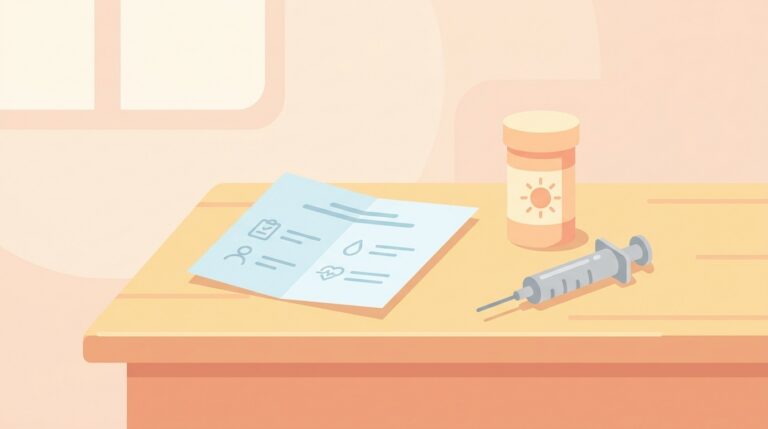
안녕하세요! 매일한글 에디터입니다. (Annyeonghaseyo! Maeil Hangeul editeoimnida. — Hello! I am your Daily Hangul editor.) Imagine sitting in a bustling Seoul clinic straight out of a K-Drama like Hospital Playlist. You hold your annual health checkup paper (건강검진 결과표, geon-gang-geomjin gyeolgwapyo) packed with cholesterol, liver levels, and polyp notes. Suddenly, the doctor points at your Vitamin D and Hepatitis B antibody results and says they are low. Your mind blanks—should you get a shot right now or buy supplements? Built from real feedback by our intermediate expat students navigating Korean hospitals, this guide gives you natural phrases to discuss results, get booster shots, and start daily vitamins with total confidence.
Phase 2: Deep Dive into Top 3 Key Expressions
1. 수치가 부족하다고 나오다 (Suchiga bujokadago naoda)
- Pronunciation: [Su-chi-ga bu-jo-ka-da-go na-o-da] — Think of “soo-chee-gah” (numbers), “boo-joh-kah-dah-go” (like boo + joke + ah-dah-go), and “nah-oh-dah”. Note that ㅈ + ㅎ merges cleanly into a crisp ‘k’ sound (bujokadago).
- Meaning: Literally “it comes out saying the numerical value is insufficient.” In real life, it means “my test results showed low levels.”
- K-Culture Moment: Picture a K-Drama protagonist nervously unfolding a 건강검진 결과표 (health checkup report) at a café, telling their friend that their Vitamin D or iron levels came back low.
- Editor’s Insight: Using -다고 나오다 (-dago naoda) is a classic TOPIK Level 4 indirect quotation pattern! Instead of claiming it yourself, you’re objectively reporting what the lab paper says. Koreans love this phrasing because it sounds accurate and calm.
- Situation Spectrum: Casual ✅ | Semi-formal ✅ | Formal ⚠️ (Use 나오다 in Polite -아요/어요 form, or 나옵니다 for formal reports.)
- 🤔 Think About It: In English, you might say “I’m low on Vitamin D.” In Korean, you distance your identity from the lab sheet by saying “the numbers came out as insufficient.” How does separating “you” from “the data” change how stressful medical news feels?
2. 예방접종 주사를 맞다 (Yebangjeopjong jusareul matda)
- Pronunciation: [Ye-bang-jeop-jjong ju-sa-reul mat-tta] — “Yeh-bahng” + “jup-jjong” (sharp double ‘j’ sound like t-ch in match) + “joo-sah-reul maht-ttah”.
- Meaning: Literally “to receive/be hit by a preventive inoculation injection.” Naturally means “to get a vaccine/booster shot.”
- K-Culture Moment: In Korean variety shows like I Live Alone, celebrities often visit neighborhood clinics (동네 병원) to get flu or Hepatitis shots before winter, nervously gripping the chair before saying they “got hit by a shot” (주사 맞았어요).
- Editor’s Insight: Notice the verb 맞다 (matda)! In Korean, you don’t “take” or “get” a shot—you “get hit” by it, just like getting hit by rain (비를 맞다). Using 주사를 받다 (to receive a shot) sounds unnatural to native ears.
- Situation Spectrum: Casual ✅ | Semi-formal ✅ | Formal ✅
- 🤔 Think About It: English frames injections passively as something you “get” or “receive,” while Korean uses a verb tied to physical impact (맞다). Does that make getting a tiny needle sound dramatically funnier or scarier in Korean?
3. 영양제를 챙겨 먹다 (Yeong-yangjereul chaeng-gyeo meokda)
- Pronunciation: [Yeong-yang-je-reul chaeng-gyeo meok-tta] — “Yung-yahng-jeh-reul” + “chaeng-gyeo” (like chang in change with a soft ‘gyuh’) + “muk-ttah”.
- Meaning: Literally “to pack/take care of and eat nutritional supplements.” Means “to make sure to take your vitamins/supplements regularly.”
- K-Culture Moment: Whenever a K-Pop idol does a “What’s in My Bag” interview, they inevitably pull out a small pouch of Vitamin D, omega-3, and 홍삼 (red ginseng), proudly saying they 챙겨 먹어요 (make sure to take them) every morning.
- Editor’s Insight: 챙기다 (chaeng-gida) adds the warm nuance of “making an effort not to forget” or “looking after yourself.” Simply saying 영양제를 먹다 means eating them, whereas 챙겨 먹다 shows consistent self-care!
- Situation Spectrum: Casual ✅ | Semi-formal ✅ | Formal ✅
- 🤔 Think About It: Why do Koreans pair 챙기다 (to look out for someone/something) with eating vitamins? In Korean culture, caring for your own body is treated like taking care of a close friend!
Phase 3: Textbook Korean vs. Real Korean
Situation 1: Explaining why you started taking supplements
- 📖 Textbook Korean: 비타민 D가 부족하기 때문에 영양제를 복용하기 시작했습니다. (Bitamin D-ga bujokagi ttaemune yeong-yangjereul bogyonghagi sijakaetseumnida. — Because I lack Vitamin D, I started taking nutritional supplements.)
- 🗣️ Real Korean: 비타민 D 수치가 좀 떨어졌다고 나와서 영양제 꼬박꼬박 챙겨 먹기 시작했어요. (Bitamin D suchiga jom tteoreojyeotdago nawaseo yeong-yangje kkobakkobak chaeng-gyeo meokgi sijakaesseoyo. — My Vitamin D levels came back a bit low, so I started taking supplements religiously.)
- 💡 Why is it different? 복용하다 (bogyonghada) is clinical, stiff, and usually printed on pill bottles. In daily chats, Koreans swap it for 챙겨 먹다 and add the cute adverb 꼬박꼬박 (kkobakkobak), meaning “regularly without skipping a beat.”
Situation 2: Asking about follow-up monitoring or booster schedules
- 📖 Textbook Korean: 추적 관찰 및 추가 접종을 위해 언제 다시 내원해야 합니까? (Chujeok gwanchal mit chuga jeopjongeul wihae eonje dasi naewonhaeya hamnikka? — When must I revisit the hospital for follow-up monitoring and additional vaccination?)
- 🗣️ Real Korean: 선생님, 그럼 다음 주사 맞으러 언제쯤 다시 오면 될까요? (Seonsaengnim, geureom da-eum jusa majeureo eonjejjeum dasi omyeon doelkkayo? — Doctor, roughly when should I come back for the next shot?)
- 💡 Why is it different? 내원하다 (naewonhada) is formal hospital admin jargon. Calling your doctor 선생님 (seonsaengnim) and using -면 될까요? (“would it be okay if…”) sounds polite, natural, and conversational at an intermediate level.
Phase 4: K-Culture Deep Dive & Non-verbal Manners
4-1. Nunchi (눈치) & Gestures at the Clinic
In a Korean neighborhood clinic (내과, internal medicine), things move fast! When the doctor suggests a Hepatitis B booster shot right after reviewing your checkup paper, you’ll be directed to the 주사실 (jusasil — injection room). Here is the unspoken nunchi etiquette:
* Sleeve Prep: Sit down and immediately roll up the sleeve (소매를 걷다, somaereul geotda) of your non-dominant arm without waiting to be asked.
* The Cotton Ball Rule: After the nurse injects you, they will tape or hand you an alcohol cotton ball (알코올 솜). Never rub it vigorously! Press it firmly (꾹 누르세요, kkuk nureuseyo) for 10–15 seconds.
* Eye Contact & Gratitude: Even if the nurse looks super busy, give a slight seated nod and say “감사합니다 (Gamsahamnida — Thank you)” as you stand up.
4-2. Cultural Code Analysis: K-Health & The Vitamin Obsession
Why did your checkup flag Vitamin D in the first place? Welcome to modern Korean life! Between rigorous daily sunscreen use (K-Beauty rule #1!), long office hours, and indoor café culture, a massive percentage of people living in Korea test low for Vitamin D. In fact, Korean health checkups (건강검진) are famously efficient—many companies require annual checkups, and clinics treat follow-ups like a pit stop: check cholesterol (콜레스테롤), liver levels (간 수치), and polyps (용종), get a booster shot in 5 minutes, and grab supplements on the way home!
Phase 5: Real-Life Roleplay Scenario
Setting: A bright, clean internal medicine clinic (내과) in Seoul. Soft acoustic music plays in the waiting area. Dr. Park (friendly, wears glasses, types briskly while looking at your monitor) is reviewing your checkup results with You.
- Dr. Park: 어서 오세요. 지난주 건강검진 결과표 같이 한번 볼까요? 🎭 (Gesturing toward the monitor with a warm smile)
(Eoseo oseyo. Jinanju geon-gang-geomjin gyeolgwapyo gachi hanbeon bolkkayo? — Welcome. Shall we look at your health checkup results from last week together?) - You: 네, 선생님. 혹시 콜레스테롤이나 간 수치는 괜찮게 나왔나요? 🎭 (Leaning forward slightly, holding your breath)
(Ne, seonsaengnim. Hoksi kolleseuterorina gan suchineun gwaenchanke nawannayo? — Yes, doctor. By any chance, did my cholesterol and liver levels come out okay?) - Dr. Park: 다행히 간 수치랑 콜레스테롤은 정상이고, 위내시경에서도 용종은 없었어요. 🎭 (Pointing calmly to green numbers on the screen)
(Dahaenghi gan suchirang kolleseuteroreun jeongsang-igo, winaesigyeong-eseodo yongjong-eun eopseosseoyo. — Fortunately, your liver levels and cholesterol are normal, and there were no polyps in your gastroscopy either.) - You: 휴, 다행이네요! 그런데 다른 수치 중에 문제 있는 게 있나요? 🎭 (Letting out a relieved sigh, still scanning the paper)
(Hyu, dahaeng-ineyo! Geureonde dareun suchi jung-e munje inneun ge innayo? — Phew, what a relief! Still, are there any issues among the other numbers?) - Dr. Park: 비타민 D 수치랑 B형 간염 항체가 좀 부족하다고 나왔어요. 🎭 (Highlighting two yellow lines on the chart)
(Bitamin D suchirang Bi-hyeong gan-yeom hangchega jom bujokadago nawasseoyo. — It came out that your Vitamin D levels and Hepatitis B antibodies are a bit low.) - You: 아, 항체가 없으면 위험한가요? 오늘 바로 주사 맞을 수 있어요? 🎭 (Looking slightly concerned, touching your upper arm)
(A, hangchega eopseumyeon wiheomhan-gayo? Oneul baro jusa majeul su isseoyo? — Oh, is it dangerous if I don’t have antibodies? Can I get the shot right away today?) - Dr. Park: 네, 주사실에서 바로 예방접종 주사 맞고 가시면 돼요. 비타민 D는 햇빛도 좀 보고 영양제를 챙겨 드세요. 🎭 (Printing a prescription slip and handing it over)
(Ne, jusasireseo baro yebangjeopjong jusa matgo gasimyeon dwaeyo. Bitamin D-neun haetbitdo jom bogo yeong-yangjereul chaeng-gyeo deuseyo. — Yes, you can just get the vaccination shot in the injection room before you leave. For Vitamin D, get some sunlight and make sure to take supplements.) - You: 알겠습니다! 추적 관찰이 필요하면 6개월 뒤에 다시 올게요. 🎭 (Standing up and bowing politely)
(Algetseumnida! Chujeok gwanchari piryohamyeon yukgaewol dwie dasi olgeyo. — Understood! If follow-up monitoring is needed, I’ll come back in six months.)
🔀 Interactive Branching Point: What do you say at the reception desk?
After leaving Dr. Park’s room, the receptionist calls your name to settle the bill and arrange your Hepatitis B vaccine schedule. How do you respond?
* A. “비타민 D 수치가 부족해서 주사 맞고 영양제 사려는데, 다음 접종은 언제예요?” (Bitamin D suchiga bujokaeseo jusa matgo yeong-yangje saryeoneunde, da-eum jeopjong-eun eonjeyeyo? — “My Vitamin D is low so I’m getting a shot and buying supplements, when is the next shot?”)
* B. “B형 간염 예방접종 주사 오늘 1차 맞았는데, 2차는 한 달 뒤에 다시 오면 될까요?” (Bi-hyeong gan-yeom yebangjeopjong jusa oneul ilcha majanneunde, ichaneun han dal dwie dasi omyeon doelkkayo? — “I got the 1st Hepatitis B vaccine shot today; should I come back in a month for the 2nd one?”)
* C. “선생님이 영양제 주라고 했어요. 빨리 주세요.” (Seonsaengnimi yeong-yangje jurago haesseoyo. Ppalli juseyo. — “The doctor told you to give me supplements. Give them fast.”)
Feedback:
* Choice A (Risk): Polite tone, but you mixed up the Hepatitis B vaccine with Vitamin D! The receptionist might look confused for a second. Remember: shots (예방접종) are for Hepatitis B antibodies (항체), while supplements (영양제) are usually bought at a pharmacy (약국) for Vitamin D.
* Choice B (Best): Spot on! You accurately used 1차 / 2차 (1st / 2nd dose) and confirmed your follow-up schedule politely. Native-level clinic communication!
* Choice C (Bad): Too blunt and commanding (빨리 주세요), plus clinics don’t hand out over-the-counter vitamins—you take your prescription or go next door to a pharmacy (약국).
Phase 6: 10-Second Emotion Shadowing Drill
Read aloud using the / marks for natural pauses and match the emotion!
- [😟 Slightly worried & curious]
간 수치랑 / 콜레스테롤은 괜찮은데, / 비타민 D가 부족하대요.
(Gan suchirang / kolleseuteroreun gwaenchaneunde, / bitamin D-ga bujokadaeyo. — My liver levels and cholesterol are fine, but they say my Vitamin D is low.) -
[😌 Relieved & proactive]
병원에서 바로 / B형 간염 예방접종 / 주사를 맞았어요.
(Byeong-woneseo baro / Bi-hyeong gan-yeom yebangjeopjong / jusareul majasseoyo. — I got the Hepatitis B vaccination shot right away at the clinic.) -
[😊 Determined & bright]
오늘부터 / 비타민 D 영양제를 / 꼭 챙겨 먹기 시작했어요!
(Oneulbuteo / bitamin D yeong-yangjereul / kkok chaeng-gyeo meokgi sijakaesseoyo! — Starting today, I made sure to start taking Vitamin D supplements!)
Phase 7: K-Culture Mini Dictionary
- 1. 건강검진 (Geon-gang-geomjin) | 2. Health checkup | 3. Usage: In daily and business life, companies give employees paid leave for 건강검진. You’ll hear coworkers ask “이번에 건강검진 받았어요?” (Did you get your checkup this year?) every autumn.
- 1. 항체 (Hangche) | 2. Antibody | 3. Usage: Essential medical term used for Hepatitis A/B (A형/B형 간염), COVID, or measles immunity checks required for Korean universities and jobs.
- 1. 간 수치 (Gan suchi) | 2. Liver enzyme levels | 3. Usage: A staple topic in Korean office 회식 (company dinner) jokes! When coworkers drink too much, someone always sighs and worries about their 간 수치.
- 1. 추적 관찰 (Chujeok gwanchal) | 2. Follow-up monitoring | 3. Usage: Used when a doctor finds something minor (like a small thyroid nodule or mild polyp 용종) that doesn’t need surgery yet, just regular checkups every 6–12 months.
Phase 8: Survival Kit for Travelers & Expats
Top 3 Survival Expressions
- 결과표 설명 좀 부탁드려요. (Gyeolgwapyo seolmyeong jom butakdeuryeoyo. — Please explain my checkup results.)
- Pro Tip: Hand over your paper with both hands while smiling; nurses or doctors will gladly point to the important numbers!
- 오늘 바로 주사 맞을 수 있나요? (Oneul baro jusa majeul su innayo? — Can I get the shot right away today?)
- Pro Tip: Most Korean neighborhood clinics keep Hepatitis B vaccines in stock, so you don’t need a second appointment.
- 이거 하루에 몇 알 먹어야 돼요? (Igeo harue myeoch al meogeoya dwaeyo? — How many pills of this should I take per day?)
- Pro Tip: Use 알 (al) as the counter for round pills/capsules at the pharmacy (약국).
Editor’s Travel & Clinic Note
- Essential Apps: Before heading to a clinic, Download Naver Map App for Accurate Clinic Directions and search “내과” (internal medicine) to see real-time waiting times and English-speaking clinic reviews. You can also Check Goodoc App for Nearby Hospital Reservations to skip long morning queues.
- Payment & Pharmacy Tips: Pay with your Korean check card or T-money-linked card at the kiosk (키오스크) or reception desk, and ask for a 영수증 (yeongsujeung — receipt) if you have private insurance (실손보험). For Vitamin D, walk into any nearby 약국 (yakguk — pharmacy)—you don’t need a prescription for standard supplements, and pharmacists will often recommend high-absorption softgels!
Phase 9: One Step Deeper
In Korea, health isn’t treated purely as a private matter—it is woven into how people show care for their community. Notice how Koreans greet each other after a long time with “요즘 건강은 어때요?” (How is your health lately?) or remind friends to eat well and take vitamins. Because Korea’s National Health Insurance (국민건강보험) makes preventive screenings (건강검진) accessible every one to two years, checking your liver levels, cholesterol, and antibodies becomes a shared annual ritual. Taking care of your own 수치 (levels) is quietly seen as a responsible, considerate way to stay energetic for your friends, family, and team.
💬 Your Turn: Have you ever gotten a health checkup in Korea or your home country and been surprised by one of the results? Share your story or your favorite daily supplement in the comments below!
Phase 10: FAQ & Myth Busting
Q: Can I get a Hepatitis B booster shot on the exact same day I get my checkup results?
A: Yes! In most Korean internal medicine clinics (내과), once the doctor confirms your B형 간염 항체 (Hepatitis B antibody) is negative or low, they send the order straight to the clinic’s 주사실 (injection room), and you can get the shot within 5 minutes.
Q: Is Vitamin D covered by Korean health insurance, or do I buy it myself?
A: High-dose Vitamin D injections or prescription drops for severe deficiency may be partially covered if prescribed, but standard daily Vitamin D 영양제 (supplements) are usually bought over the counter at a 약국 (pharmacy) or Olive Young.
Q: What does “추적 관찰 요망” on a Korean checkup report mean? Should I panic?
A: Don’t panic! It literally means “follow-up monitoring recommended.” Doctors write this when something minor—like slightly elevated cholesterol or a tiny benign polyp (용종)—just needs another look in 6 months to 1 year.
🚨 Common Mistakes TOP 3
- Saying “주사를 먹다” (to eat a shot) or “주사를 받다” (to receive a shot)
- Correct Action: Always pair 주사 with 맞다 (matda): 주사를 맞았어요 (I got a shot).
- Asking the doctor directly for over-the-counter Vitamin D bottles
- Correct Action: Doctors write prescriptions (처방전) or give advice; walk next door to the 약국 (pharmacy) to buy supplement bottles.
- Rubbing the injection spot right after getting a vaccine
- Correct Action: Follow the nurse’s instruction—문지르지 말고 꾹 누르세요 (Don’t rub it, press it firmly) to prevent bruising.
Phase 11: Action Mission & Engagement
- 🥉 Bronze Mission (Solo Practice): Look at your own vitamin bottle or pantry right now and say aloud three times: “오늘부터 영양제를 꼬박꼬박 챙겨 먹기 시작했어요!” (Oneulbuteo yeong-yangjereul kkobakkobak chaeng-gyeo meokgi sijakaesseoyo!)
- 🥈 Silver Mission (Share): Snap a photo of your morning tea and vitamins, post it to your Instagram Story or study log, and tag it with
#매일한글and#영양제챙겨먹기. - 🥇 Gold Mission (Real-World Use): Next time you visit a Korean 약국 (pharmacy) or talk to a Korean language partner, ask: “요즘 피곤해서 그런데, 비타민 D 영양제 추천해 주실 수 있어요?” (Yojeum pigonhaeseo geureonde, bitamin D yeong-yangje chucheonhae jusil su isseoyo? — I’m tired lately, could you recommend a Vitamin D supplement?)
🎮 K-Culture Mission: Watch a medical K-Drama (Hospital Playlist, Doctor Cha, or Dr. Romantic) or a Korean vlog titled 건강검진 브이로그 (Health Checkup Vlog) on YouTube, and see if you can catch the words 수치 (suchi), 정상 (jeongsang — normal), or 주사 (jusa) in the wild!
Phase 12: Interactive Quiz Challenge
Test your intermediate Korean clinic skills! Click each toggle to check your answers.
1. Situational Judgment: Your doctor tells you your Hepatitis B antibodies came out low (항체가 부족하다고 나왔어요) and suggests getting a shot today. Which response is most natural?
* A) 네, 그럼 오늘 바로 주사 먹고 갈게요.
* B) 네, 그럼 오늘 바로 예방접종 주사 맞고 갈게요.
* C) 네, 그럼 오늘부터 주사 챙겨 먹을게요.
Click to reveal answer & explanation
Answer: B! In Korean, you always use 맞다 (to get hit by) for shots (예방접종 주사 맞고 갈게요). Option A uses 먹다 (eat), and Option C uses 챙겨 먹다 (take supplements regularly), which only works for pills/vitamins!
2. Fill in the Blank: Complete the sentence naturally: “건강검진에서 비타민 D 수치가 부족하____ 나와서 영양제를 챙겨 먹기 시작했어요.”
Click to reveal answer & explanation
Answer: -다고 (-dago)! Because 부족하다 is a descriptive verb (adjective), it attaches directly to -다고 나오다 (부족하다고 나와서) to report what the test results stated.
3. True or False Cultural Quiz: In Korea, if a health checkup report says “추적 관찰 (Chujeok gwanchal),” it means you need emergency surgery right away.
Click to reveal answer & explanation
Answer: False! 추적 관찰 means “follow-up monitoring”—simply re-checking a minor finding (like slightly high liver levels or a small polyp) in a few months to make sure nothing changes.
🎬 Watch Our Daily Videos! (Daily Hangul Official Instagram)
Review the expressions you learned in this article with our fun daily short videos! Check out native pronunciation and real-life nuances in action.
- Instagram @dailyhangul_en







