

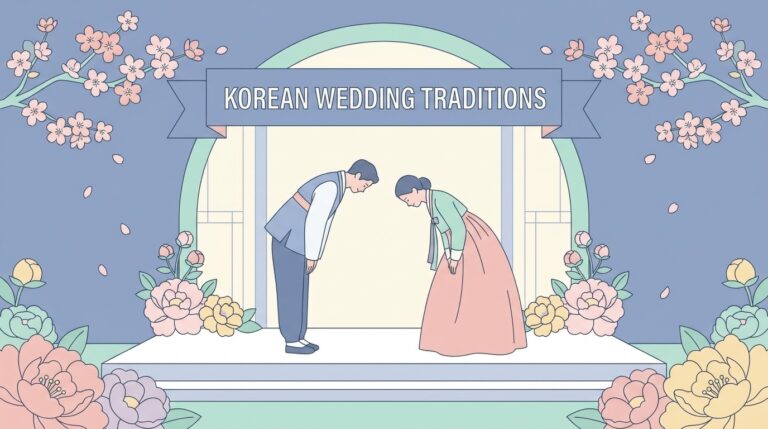
Attending a Modern Korean Wedding: The Ultimate Guide to the Officiant-Free Trend
Phase 1: Empathy (Story Immersion Opening)
안녕하세요! 매일한글 에디터입니다. (Hello! This is your Daily Hangul editor.)
Picture this: You step into a glamorous Seoul wedding hall dressed in your sharpest semi-formal attire, clutching a crisp white envelope filled with congratulatory cash. You look around, expecting to see an elderly, distinguished university professor or retired politician standing grandly at the altar, ready to deliver a lengthy 30-minute speech. But wait—the podium is completely empty! Suddenly, upbeat K-pop music plays, a witty friend takes the microphone as the MC, and the bride and groom exchange playful, personalized vows while the audience laughs and cheers.
Welcome to the vibrant world of 주례 없는 결혼식 (jurye eomneun gyeolhonsik—officiant-free weddings), a massive cultural shift reshaping romance in South Korea. Over the past few years, intermediate Korean learners have often told me: “I studied all these rigid, traditional honorific greetings for an officiant, but the wedding felt like an intimate family party! What was I actually supposed to say?” Don’t worry. This guide draws upon real cultural insights and field-tested feedback from learners like you so that you can navigate modern Korean ceremonies with confidence, warmth, and authentic B2-level natural speech.
Phase 2: Key Expressions Deep Dive
1. 주례 없는 결혼식 (Jurye eomneun gyeolhonsik)
- Pronunciation: [Joo-ryeh eom-neun gyeol-hon-sik] (Sounds like Joo-ray + um-noon + gyul-hone-sheek)
- Meaning: Literal: “Wedding without an officiant” | Actual Nuance: A customized, modern ceremony where speeches by an authoritative figure are replaced by personal vows, parental blessings, or entertainment.
- K-Culture Moment: In modern romantic K-dramas, whenever an unconventional couple marries, the groom often dances down the aisle or friends put on a mini-concert rather than listening to a solemn elder.
- Editor’s Insight: Traditionally, a 주례 (officiant) had to be a high-status male elder to give social prestige to the family. Today’s youth prioritize authentic connection and fun over empty social status.
- Situation Spectrum: Casual (✅) / Semi-formal (✅) / Formal (✅)
- 🤔 Think About It: In many Western weddings, an officiant or minister is legally required to sign the certificate during the ceremony. In Korea, the legal registration is handled separately at district offices. How does separating legal paperwork from celebration change what couples value during their ceremony?
2. 덕담 한마디 (Deokdam hanmadi)
- Pronunciation: [Deok-dam han-ma-di] (Sounds like Duck-dahm hahn-mah-dee)
- Meaning: Literal: “A word of virtuous speech” | Actual Nuance: Heartfelt words of blessing, wisdom, or humorous encouragement given by parents or close mentors instead of a formal officiant’s sermon.
- K-Culture Moment: The moment the bride’s father holds the microphone with trembling hands, saying, “Live happily, and remember son-in-law, you can always come to me for barbecue and soju!”
- Editor’s Insight: 덕담 (deokdam) is warmly emotional. It softens the hierarchy of traditional wedding speeches into a loving, familial conversation.
- Situation Spectrum: Casual (⚠️) / Semi-formal (✅) / Formal (✅)
- 🤔 Think About It: The word combines 덕 (virtue) and 담 (talk). Why do you think Korean blessings emphasize building shared virtue and endurance over merely wishing for good luck?
3. 혼인서약서 (Honinseoyakseo)
- Pronunciation: [Ho-nin-seo-yak-seo] (Sounds like Hoe-neen-suh-yahk-suh)
- Meaning: Literal: “Written marriage pledge” | Actual Nuance: Couple-authored wedding vows read aloud in unison or taking turns, often balancing romantic promises with funny daily pledges.
- K-Culture Moment: The groom pledges: “I promise to take out the recycling even on rainy days,” and the bride answers: “I promise not to get grumpy when you play computer games on weekends.”
- Editor’s Insight: While the term sounds formal and Sino-Korean, the actual delivery in an officiant-free wedding is usually playful, deeply touching, and intimate.
- Situation Spectrum: Casual (🚫) / Semi-formal (✅) / Formal (✅)
- 🤔 Think About It: When couples draft their own vows rather than repeating preset scripts, how does that shift the responsibility and equality within a modern marriage?
Phase 3: Textbook Korean vs. Real Korean
Situation 1: Asking if the wedding has an officiant
- 📖 교과서 한국어 (Textbook): 주례 선생님이 계십니까? (Jurye seonsaengnimi gyesimnikka? / Is the respected officiant teacher present?)
- 🗣️ 진짜 한국어 (Real-life): 이번 결혼식 주례 없죠? (Ibeon gyeolhonsik jurye eopjyo? / There’s no officiant for this wedding, right?)
- 💡 왜 다를까? (Why is it different?): Over 70% of modern city weddings now skip the officiant. Asking naturally with the confirmation ending -죠? reflects the contemporary norm without sounding like an antique etiquette handbook.
Situation 2: Commenting on the ceremony’s atmosphere
- 📖 교과서 한국어 (Textbook): 예식이 참으로 경건하고 엄숙합니다. (Yesigi chameuro gyeonggeonhago eomsukhamnida. / The ceremony is truly solemn and austere.)
- 🗣️ 진짜 한국어 (Real-life): 식이 지루하지 않고 훨씬 감동적이네요! (Sigi jiruhaji anko hwolssin gamdongjeogineyo! / The ceremony isn’t boring at all and is so much more touching!)
- 💡 왜 다를까? (Why is it different?): While traditional guests placed high value on heavy solemnity (엄숙), contemporary guests enthusiastically praise ceremonies that are heartfelt, engaging, and concise.
Phase 4: K-Culture Deep Dive & Non-Verbal Manners
4-1. 눈치 (Nunchi) & Gestures
- Envelope Etiquette: When presenting the congratulatory money envelope (축의금, chug-uigeum) at the reception desk, always use two hands with a respectful 30-degree bow. Never pass it casually with one hand.
- Attentive Listening: Even though there is no solemn officiant, quiet down immediately when the parents step up to give 덕담 (deokdam). Looking at your smartphone during this time shows severe lack of 눈치 (nunchi).
- Clap with Gusto: In officiant-free ceremonies, the MC (사회자) drives the energy. When they announce “큰 박수 부탁드립니다!” (Please give a big round of applause!), clap enthusiastically to boost the celebratory vibe.
4-2. Cultural Code Analysis
This trend represents a generational rebellion against the commercialized “conveyor-belt wedding” culture (공장형 결혼식) common in South Korea since the 1990s. Young Koreans have embraced personal freedom, shifting weddings from a status tournament for parents’ business networks into a meaningful celebration shared with genuine friends. K-pop performance numbers (축가) and creative video presentations have naturally replaced stiff 40-minute speeches.
Phase 5: Real Roleplay Scenario
Setting: Min-jun (the groom’s college friend and today’s wedding MC) meets Sarah (a foreign colleague attending her first Korean wedding) near the photo wall.
- 민준: 사라 씨, 와줘서 고마워요! 축의금 접수대는 들렀어요? (Sara ssi, wajwoseo gomawoyo! Chug-uigeum jeopsudaeneun deulleosseoyo? / Sarah, thanks for coming! Did you drop by the reception desk?)
🎭 활짝 웃으며 손을 흔든다 (Smiling brightly and waving) - 사라: 네, 축의금 내고 식권 받았어요! 그런데 주례 선생님은 어디 계세요? (Ne, chug-uigeum naego sikgwon badasseoyo! Geureonde jurye seonsaengnimeun eodi gyeseyo? / Yes, I submitted the gift money and got my meal ticket! But where is the officiant?)
🎭 식장 내부를 두리번거리며 묻는다 (Looking around the wedding hall curiouly) - 민준: 아, 오늘 식은 주례 없는 결혼식으로 진행되거든요! (A, oneul sigeun jurye eomneun gyeolhonsigeuro jinhaengdoegeodeunyo! / Ah, today’s ceremony is actually conducted without an officiant!)
🎭 마이크를 점검하며 설명한다 (Checking microphone and explaining) - 사라: 주례가 없으면 식순이 어떻게 진행돼요? (Juryega eopseumyeon siksooni eotteoke jinhaengdwaeyo? / If there is no officiant, how does the program proceed?)
🎭 호기심 가득한 눈으로 바라본다 (Looking with curious eyes) - 민준: 신랑 신부가 직접 혼인서약서를 읽고, 양가 부모님이 덕담을 해주실 거예요. (Sinrang sinbuga jikjeop honinseoyakseoreul ilgo, yangga bumonimi deokdameul haejusil geoyeyo. / The couple will read their own vows, and both sets of parents will offer blessings.)
🎭 식순 팜플렛을 보여주며 말한다 (Showing the wedding program sheet) - 사라: 와, 훨씬 특별하고 감동적이겠네요! 민준 씨가 사회자니까 기대할게요. (Wa, hwolssin teukbyeolhago gamdongjeogigetneyo! Minjun ssiga sahoejanikka gidaehalgeyo. / Wow, that sounds much more special and touching! Since you’re the MC, I have high expectations.)
🎭 가볍게 손뼉을 치며 웃는다 (Clapping lightly with a smile) - 민준: 하하, 제가 긴장해서 실수하지 않아야 할 텐데요. (Haha, jega ginjanghaeseo silsuhaji anaya hal tendeyo. / Haha, I just hope I don’t get too nervous and mess up.)
🎭 머리를 긁적이며 쑥스러워한다 (Scratching head shyly) - 사라: 민준 씨 목소리가 좋아서 아주 멋진 결혼식이 될 것 같아요! 화이팅! (Minjun ssi moksoriga joaseo aju meotjin gyeolhonsigi doel geot gatayo! Hwaiting! / You have a great voice, so I’m sure it will be a wonderful ceremony! Fighting!)
🎭 주먹을 쥐며 응원을 보낸다 (Fist-pumping playfully in encouragement)
🔀 Interactive Choice Point
Min-jun asks Sarah to write a quick congratulatory note on the guest message tree before the doors close. Which message should Sarah write?
- Choice A: “주례사 없어서 지루하지 않겠어요! 최고!” (So glad there’s no officiant speech so it won’t be boring! Best!)
- Choice B: “두 분만의 특별한 혼인서약서 기대할게요. 결혼 축하드려요!” (Looking forward to your special vows. Congratulations on your marriage!)
- Choice C: “식권 두 장 더 챙겨주실 수 있나요?” (Could you spare two more meal tickets?)
Feedback:
- Option A (Risk): While true in spirit, pointing out that ceremonies are usually “boring” on an open guestboard might offend traditional family elders.
- Option B (Best Choice): Perfect! It highlights the unique charm of an officiant-free wedding while showing heartfelt respect and high-level vocabulary.
- Option C (Bad): Asking for extra meal vouchers looks tactless and greedy at a Korean wedding.
Phase 6: 10-Second Emotion Shadowing Drill
- Sentence 1 [😊 기쁘고 설레는 목소리로 / Joyful and Excited]:
오늘 / 주례 없는 결혼식이라니 / 정말 기대돼요!
(Oneul / jurye eomneun gyeolhonsikirani / jeongmal gidaedwaeyo!)
An officiant-free wedding today? / I’m so excited! -
Sentence 2 [🥺 감동받아 뭉클한 톤으로 / Touched and Emotional]:
부모님의 따뜻한 덕담이 / 가슴을 찡하게 울리네요.
(Bumonimui ttatteut-han deokdami / gaseumeul jjing-hage ullineyo.)
The parents’ warm blessings / truly tug at my heartstrings. -
Sentence 3 [🎉 활기차고 축하 가득 담아 / Energetic and Celebratory]:
두 사람만의 특별한 서약, / 진심으로 축하합니다!
(Du sarammanui teukbyeolhan seoyak, / jinsimeuro chukahamnida!)
Your very own special vows, / heartfelt congratulations!
Phase 7: K-Culture Mini Dictionary
- 성혼선언문 (Seonghon-seoneonmun) | Formal Marriage Declaration
Usage: In officiant-free weddings, one of the parents or the MC reads this official statement aloud to declare the couple lawfully and socially wed. - 식권 (Sikgwon) | Meal Voucher
Usage: When you hand over your 축의금 (gift money) envelope at the counter, the reception staff exchanges it for this ticket, granting you entry to the buffet hall. - 축가 (Chukga) | Congratulatory Song
Usage: A musical gift performed during the wedding by talented friends, professional singers, or even the bride and groom themselves. - 식순 (Siksoon) | Order of Ceremony / Program
Usage: The program sequence. Korean wedding halls operate on tight 60-minute time slots, making the 식순 strictly coordinated.
Phase 8: Survival Kit for Travelers
Top 3 Wedding Survival Phrases:
- 결혼 진심으로 축하드립니다! (Gyeolhon jinsimeuro chukahadeurimnida. / Heartfelt congratulations on your wedding!)
Pro Tip: Say this to the couple when visiting the bridal waiting room (신부대기실) or greeting the groom in the lobby. - 축의금은 어디에 내면 되나요? (Chug-uigeumeun eodie naemyeon doenayo? / Where do I submit the gift money?)
Pro Tip: Wedding halls can be chaotic with multiple ceremonies occurring simultaneously. Use this to locate the right table. - 연회장은 몇 층에 있어요? (Yeonhoejangeun myeot cheung-e isseoyo? / On which floor is the banquet dining hall?)
Pro Tip: After the ceremony photos, ask the hall staff this to locate the buffet.
Editor’s Travel Note:
To navigate complicated multi-story wedding complexes in Seoul, make sure to use 네이버 지도 앱 다운로드 to find the venue quickly. Also, always withdraw clean cash the day before. ATMs directly inside wedding venues often run out of money or feature massive lines 10 minutes before the ceremony.
Phase 9: “한 발 더 깊이” (Deep Dive Reflection)
The rise of officiant-free weddings reflects South Korea’s evolving cultural canvas: a transition from Confucian collectivist display to individual authenticity. For decades, weddings served as family status symbols where prominent figures legitimized the union. Today’s younger generation views the day as a shared milestone with friends. Yet, notice how filial piety (효, hyo) hasn’t disappeared—it has merely transformed. By replacing an external officiant with emotional parental blessings (덕담), modern couples keep family center stage in a much warmer, more authentic way.
💬 Your Turn: Have you attended a wedding where traditional formalities were replaced with personal touches? How would an officiant-free ceremony be received in your native country? Share your stories below!
Phase 10: FAQ & Mistake Prevention
Q: Can guests dress casually since officiant-free weddings are more relaxed?
A: No. Even though the atmosphere during the ceremony is lively, dress codes remain formal or smart-business casual (dark suits, elegant dresses, neat slacks). Avoid wearing all-white, which is reserved strictly for the bride.
Q: How much congratulatory money (축의금) should I prepare?
A: The golden rule follows odd numbers: 50,000 KRW for casual acquaintances, 100,000 KRW for colleagues and good friends, and 150,000–200,000+ KRW if you are very close or bringing a plus-one.
Q: If there is no officiant, is the wedding legally valid in Korea?
A: Yes, because wedding ceremonies in Korea have zero legal power! Legal marriage registration (혼인신고) is conducted completely separately at the local municipal office (구청) with two adult witness signatures.
🚨 Common Mistakes (경고판)
- ❌ Arriving right on the dot: Korean weddings last only 40–50 minutes total. If you are 15 minutes late, the ceremony is practically over! Arrive 30 minutes early.
- ❌ Writing names in red ink: Never write your name or congratulations on the white gift envelope using red ink, which traditionally symbolizes death or bad omen.
- ❌ Eating at the buffet before watching the ceremony: Even if the buffet opens early, slipping away to eat before the vows shows bad manners toward the hosts.
Phase 11: Action Mission & Engagement
- 🥉 Bronze Mission: Practice saying the shadowing drill sentence #1 out loud 3 times with enthusiastic facial expressions.
- 🥈 Silver Mission: Leave a comment below introducing your favorite K-pop song you would choose for a wedding 축가 (celebration song).
- 🥇 Gold Mission: Watch a modern Korean wedding vlog on YouTube and write down two jokes or promises the couple makes during their 혼인서약서 (wedding vows)!
🎮 K-Culture Mission: Watch episode 1 of the drama Because This Is My First Life or wedding scenes in Queen of Tears. Observe how the couple negotiates ceremonial traditions versus personal desires!
Phase 12: Interactive Quiz Challenge
1. Situational Judgment: You are attending a colleague’s officiant-free wedding. During the ceremony, the bride’s father steps up to give his speech. What should you call his speech?
(A) 주례사 (Juryesa)
(B) 덕담 (Deokdam)
(C) 축가 (Chukga)
2. Fill-in-the-Blank:
“신랑과 신부가 무대 위에서 직접 쓴 _________를 낭독했습니다.”
(The bride and groom read their self-written _________ on the stage.)
3. True or False: In Korea, if a wedding ceremony does not have an officiant, the marriage is legally null and void. (True / False)
👉 Click to reveal answers & explanations!
- Answer: (B) 덕담 — 주례사 is an officiant’s sermon, and 축가 is a celebratory song. Words of blessing from parents are called 덕담.
- Answer: 혼인서약서 (Honinseoyakseo) — Wedding vows written and read by the couple.
- Answer: False — Korean weddings are purely ceremonial. Legal marriage occurs separately at the municipal district office (구청).







