

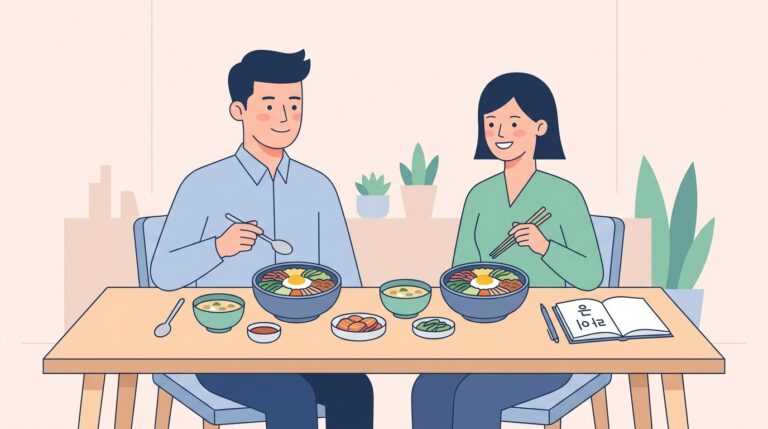
Phase 1: Empathy (Story-Immersive Opening)
안녕하세요! 매일한글 에디터입니다.
Imagine this: You’ve just started your internship or language program in the vibrant district of Gangnam or Sinchon. It’s 12:15 PM, and the office or classroom begins to stir. As you pack your bag to head toward the elevator, your Korean teammate turns around with a bright, welcoming smile and asks, “밥 먹었어요? (Bap meogeosseoyo?)”
Your mind instantly races. Wait, are they checking if I have lunch plans? Are they offering to buy me food? Are they auditing my schedule? Or did they just ask me out on a lunch date?! Before you can formulate an answer, they nod, say “점심 맛있게 드세요!”, and walk toward the door with another friend. You stand there wondering: What just happened?
If you have ever felt puzzled by Korean lunchtime exchanges, you are definitely not alone. At Daily Hangul, one of the most frequent panic questions we hear from beginner learners is: “Why does everyone keep asking me about rice whenever it hits noon?”
Here is the inside secret: In Korea, lunchtime is not just a biological break—it is a cherished cultural ritual of connection, hospitality, and daily wellness. When you master natural lunch greetings, you unlock an instant bridge into the hearts of Korean friends and colleagues. This friendly, battle-tested guide is designed specifically for A1 absolute beginners to help you navigate Korean lunch hours with total confidence, flawless manners, and genuine local charm. Let’s dive right in!
Phase 2: Core Expressions Deep Dive
1. 점심 맛있게 드세요! (Jeomsim mas-itge deuseyo!)
- Pronunciation: [Jeom-shim ma-sheet-geh deu-seh-yo] (Sound tip: Think of “chum” + “shim”, followed by “my sheet”, and finish with “deh-say-yo” with a gentle upward cadence.)
- Meaning: Literal: “Eat lunch deliciously!” | Real Nuance: “Enjoy your lunch!” or “Have a great meal!”
- K-Culture Moment: In popular workplace K-Dramas like Misaeng or King the Land, whenever colleagues step away from their desks around noon, you will hear this sentence floating across the entire office cubicle floor like clockwork.
- Editor’s Insight: 드세요 (deuseyo) is the polite honorific form of the verb “to eat” (먹다 – meokda). By wishing someone a “delicious” meal rather than merely a “good” one, Korean expresses heartfelt warmth about sensory enjoyment and personal nourishment.
- Situation Spectrum: Casual: 🚫 (too stiff for very close same-age peers) | Semi-formal: ✅ | Formal: ✅
- 🤔 Think About It: In English, we often say “Have a good day” or “Bon appétit.” Why do you think Korean specifically focuses on wishing that the food tastes delicious for the other person?
2. 밥 먹었어요? (Bap meogeosseoyo?)
- Pronunciation: [Bap meo-geo-sseo-yo?] (Sound tip: Sounds like “Bop” + “muh-guh-so-yo” with a friendly rising question tone.)
- Meaning: Literal: “Did you eat rice/food?” | Real Nuance: “Hey there, how are you doing? / Hope you’re taking care of yourself!”
- K-Culture Moment: In slice-of-life dramas like Hospital Playlist or Reply 1988, whenever a mother calls her child or close friends meet between shifts, this is virtually always the very first greeting out of their mouths—not “Hello,” but “Have you eaten?”
- Editor’s Insight: 90% of the time, this is an emotional check-in rather than an actual invitation to dine together! If you haven’t eaten, an older Korean might immediately hand you snacks or worry about your health. If you just want to acknowledge it politely, a cheerful “네, 먹었어요! (Yes, I ate!)” keeps the conversation smooth.
- Situation Spectrum: Casual: ✅ | Semi-formal: ✅ | Formal: ⚠️ (To your direct senior or boss, upgrade to: 식사하셨어요? [Siksahasyeosseoyo?])
- 🤔 Think About It: Historically, Korea endured severe hardships where securing daily meals was a shared challenge. How does greeting someone by asking if they have eaten show community solidarity in ways that “Nice weather today” does not?
3. 맛있게 먹겠습니다! (Mas-itge meokgetseumnida!)
- Pronunciation: [Ma-sheet-geh meok-get-seum-ni-da] (Sound tip: “Ma-sheet-geh” + “muck-get-soom-nee-dah”.)
- Meaning: Literal: “I will eat deliciously!” | Real Nuance: “Thank you for the meal! / Let’s enjoy this food!”
- K-Culture Moment: On variety shows like Running Man, right before the cast dives into a sizzling tabletop barbecue or lunch trays, everyone instinctively clasps their hands together and chants this phrase in unison.
- Editor’s Insight: This is the golden rule of Korean table etiquette. You say it before your first bite to express respect and anticipation, especially when someone else prepared or treated you to the meal.
- Situation Spectrum: Casual: ⚠️ (Use ‘잘 먹을게 – jal meogeulge’ with close friends) | Semi-formal: ✅ | Formal: ✅
- 🤔 Think About It: Many Western cultures thank the host after finishing the food. What mindset does it create when you vocalize your appreciation before taking even one single bite?
Phase 3: Textbook Korean vs. Real Korean
Situation 1: Asking what to eat for lunch
- 📖 교과서 한국어 (Textbook Korean): 점심 식사로 무엇을 드시겠습니까? (Jeomsim siksa-ro mueos-eul deusigesseumnika?) — “What will you consume for your midday meal?”
- 🗣️ 진짜 한국어 (Real Korean): 오늘 점심 뭐 먹어요? (Oneul jeomsim mwo meogeoyo?) — “What are we eating for lunch today?”
- 💡 왜 다를까?: Textbook Korean often relies on ultra-formal honorific suffixes that sound like a butler addressing a monarch in a historical drama. Real Korean speakers at work or school prefer the neat, warm, and natural “~뭐 먹어요?” phrasing.
Situation 2: Wishing someone a quick, friendly lunch in messengers or hallways
- 📖 교과서 한국어 (Textbook Korean): 즐거운 점심시간을 보내십시오. (Jeulgeoun jeomsimsigan-eul bonaesipsio.) — “Please spend a joyful lunch hour.”
- 🗣️ 진짜 한국어 (Real Korean): 맛점하세요! (Mat-jeom-ha-se-yo!) — “Have a delicious lunch! (Tasty lunch!)”
- 💡 왜 다를까?: 맛점 (Mat-jeom) is a beloved, everyday portmanteau blending 맛있는 (delicious) + 점심 (lunch). Combined with the polite ending -하세요, it is the #1 phrase Koreans type in KakaoTalk chats at 11:59 AM!
Phase 4: K-Culture Deep Dive & Non-Verbal Manners
4-1. 눈치 (Nunchi) & Lunchtime Body Language
In Korea, greetings are as much physical as they are verbal. When you exchange lunchtime greetings:
* The Quick Head Bow (목례 – Mongnye): When passing colleagues or classmates in the hallway at noon, you do not need a deep 90-degree bow. A slight 15-degree nod with warm eye contact and a gentle smile as you say “점심 맛있게 드세요!” is the gold standard.
* Utensil Timing: When seated together for lunch, never pick up your spoon or chopsticks until the eldest or most senior person at the table touches theirs first. It demonstrates keen social awareness (nunchi).
* The Napkin Courtesy: A legendary green flag in Korean social life! Before the food arrives, take clean paper napkins, lay them on the table in front of your companions, and gently place their spoons and chopsticks on top. Everyone will be impressed by your thoughtfulness.
4-2. Cultural Code: The Meaning of “Bap-shim” (밥심)
Why do Koreans care so much about your lunch? In Korean culture, there is a famous concept called 밥심 (Bap-sim)—literally, “rice-power” or the energy and spirit drawn from a warm, hearty meal. In K-Dramas, whenever someone is sick, heartbroken, or exhausted, friends never say “Just relax”; they say “밥 든든하게 먹어 (Eat a sturdy meal of rice)”. Asking about lunch is Korea’s most genuine, everyday love language.
Phase 5: Real Role-Play Scenario
- Setting: 12:10 PM at a sunny creative studio in Seongsu-dong, Seoul. Your friendly Korean colleague, Minho, stretches his arms and stops right by your desk.
- Characters: Minho (Friendly designer NPC) & You (A1 Korean Explorer).
- Minho: 점심시간이에요! 점심 맛있게 드세요! (Jeomsimsigan-ieyo! Jeomsim mas-itge deuseyo!)
“It’s lunchtime! Have a delicious lunch!”
🎭 Stretches his arms and smiles warmly toward your desk. - You: 민호 씨도 점심 맛있게 드세요! (Minho ssido jeomsim mas-itge deuseyo!)
“You have a delicious lunch too, Minho!”
🎭 Gives a friendly nod while closing your laptop. - Minho: 혹시 오늘 점심 뭐 먹어요? (Hoksi oneul jeomsim mwo meogeoyo?)
“By the way, what are you having for lunch today?”
🎭 Points playfully toward the doorway. - You: 아직 안 정했어요. 민호 씨는요? (Ajik an jeonghaesseoyo. Minho ssineunyo?)
“I haven’t decided yet. How about you, Minho?”
🎭 Shrugs gently with an interested look. - Minho: 저는 회사 앞 김치찌개 식당 가요. 같이 갈래요? (Jeoneun hoesa ap gimchijjigae sikdang gayo. Gachi gallaeyo?)
“I’m heading to the Kimchi stew spot in front of the office. Want to come along?”
🎭 Gestures invitingly toward the elevator. - You: 좋아요! 같이 가요! (Joayo! Gachi gayo!)
“Sounds great! Let’s go together!”
🎭 Grabs your phone and stands up eagerly. - Minho: (At the restaurant table as steaming stew arrives) 자, 맛있게 먹읍시다! (Ja, mas-itge meogeupsida!)
“Alright, let’s eat deliciously!”
🎭 Hands you your spoon on a napkin. - You: 맛있게 먹겠습니다! 잘 먹을게요! (Mas-itge meokgetseumnida! Jal meogeulgeyo!)
“Thank you for the food! I will eat deliciously!”
🎭 Claps hands lightly together with a happy smile before taking a spoon.
🔀 Interactive Choice Point
What if a senior manager walks past your table right as you are eating? What do you say?
* Choice A: “점심 맛있게 드세요!” (Jeomsim mas-itge deuseyo!)
* 👉 Verdict [Best Choice]: Perfect! Polite, warm, and natural for any colleague or supervisor.
* Choice B: “밥 먹어요? 저리 가세요.” (Bap meogeoyo? Jeori gaseyo.)
* 👉 Verdict [Bad Choice]: This means “Do you eat food? Go away.” Unintentionally devastating and hilarious!
* Choice C: “진지 잡수셨습니까?” (Jinji japsusyeosseumnikka?)
* 👉 Verdict [Risk Choice]: Technically royal historical honorific for elders, but saying this to a modern coworker sounds like you are filming a Joseon dynasty historical period drama!
Phase 6: 10-Second Emotion Shadowing Drill
Practice reading these out loud, observing the pause marks / and emotional milestones:
[😊 Bright and welcoming]- 점심 / 맛있게 / 드세요!
- (Jeomsim / mas-itge / deuseyo!)
- Voice hint: Slightly raise your pitch on “맛있게” to sound genuinely cheerful!
[😋 Anticipating delicious hot food]- 맛있게 / 먹겠습니다!
- (Mas-itge / meokgetseumnida!)
- Voice hint: Crisp and energetic tone on “먹겠습니다” with palms touching lightly.
[🤔 Casual, curious, and friendly]- 오늘 점심 / 뭐 / 먹어요?
- (Oneul jeomsim / mwo / meogeoyo?)
- Voice hint: Micro-pause after “점심”, stress the word “뭐” (what), and raise the tone at “먹어요?”.
Phase 7: K-Culture Mini Dictionary
- 맛점 (Mat-jeom) | Contraction of ‘Delicious Lunch’ | The most common slang contraction used on KakaoTalk and social media around noon. Example: “모두 맛점! (Everyone have a tasty lunch!)”
- 식곤증 (Sik-gon-jeung) | Post-lunch food coma | The universal, cozy drowsiness that hits right around 1:45 PM after slurping a warm bowl of soup or rice. Example: “식곤증 때문에 졸려요 (I’m sleepy because of my food coma).”
- 밥심 (Bap-sim) | Rice stamina / Vitality | The cultural philosophy that true health, resilience, and happiness start with regular warm rice meals.
- 덤 (Deom) | Free extra side dish or bonus treat | When a restaurant auntie (이모 – Imo) smiles and brings you a free soda or extra dumplings with your lunch, that warm hospitality is called 덤.
Phase 8: Survival Kit for Travelers
Survival Expressions TOP 3
- 메뉴 추천해 주세요 (Menyu chucheonhae juseyo)
- Pronunciation: [Meh-nyoo choo-chun-hae joo-seh-yo]
- Pro Tip: Overwhelmed by a Korean-only lunch menu? Use this phrase to ask the owner for their signature bestseller!
- 물은 셀프인가요? (Mureun selpeu-ingayo?)
- Pronunciation: [Moo-reun sell-peuh-in-gah-yo?]
- Pro Tip: In most casual Korean lunch spots, drinking water is self-service near a silver dispenser cabinet.
- 계산해 주세요 (Gyesanhae juseyo)
- Pronunciation: [Gyeh-san-hae joo-seh-yo]
- Pro Tip: Bring your paper bill slip directly to the counter register by the front door when finished.
Editor’s Travel Note
When hunting for authentic neighborhood lunch restaurants in Seoul, do not rely on standard Western map applications because their walking pathways are often outdated. Instead, take two minutes right now to check the Download Naver Map App Guide to bookmark high-rated local baekban (home-style meal) spots. Also remember: many bustling lunchtime eateries during peak rush (12:00 PM – 1:00 PM) expect payment with cards or T-money transport cards right at the counter.
Phase 9: One Step Deeper (Reflection)
In many English-speaking societies, casual weather observations like “Chilly outside, isn’t it?” serve as safe, low-stakes conversational icebreakers. In Korea, however, checking on whether someone has eaten penetrates right through superficial formalities to express personal solidarity and care. It reflects an ancient collective consciousness where ensuring that our neighbors, teammates, and loved ones are nourished is everyone’s responsibility.
💬 Your Turn: What is the most common casual question people use to greet each other in your home country? Does your mother tongue connect greetings to meals? Share your language and culture in the comments below!
Phase 10: FAQ & Avoiding Misunderstandings
Q: When someone asks “밥 먹었어요?”, do I need to explain everything I ate?
A: Not at all! Treat it like “How are you?”. A simple “네, 먹었어요! (Yes, I ate!)” or “아직 안 먹었어요 (Not yet)” is more than enough. You don’t need to give a calorie breakdown unless they enthusiastically ask “뭐 먹었어요? (What did you eat?)”.
Q: What is the difference between “점심 드세요” and “점심 맛있게 드세요”?
A: “점심 드세요” literally sounds like a plain command: “Eat lunch.” Adding the magic adverb 맛있게 (deliciously) transforms it into a warm wish: “Have a delicious lunch!” Always include 맛있게 for genuine natural warmth.
Q: Can I say “잘 먹겠습니다” to the restaurant cashier when paying?
A: No. “잘 먹겠습니다 (I will eat well)” is said before eating to your dining partners or the cook. When leaving the restaurant after finishing, bow slightly to the cashier and say “잘 먹었습니다! (Jal meogeotseumnida – I ate very well / Thank you for the meal!)”.
🚨 Common Mistakes Warning Board
- Mistake 1: Translating “Good afternoon” word-for-word. Translating it literally into “좋은 오후입니다” sounds like an automated radio broadcast. Use “점심 맛있게 드세요!” instead.
- Mistake 2: Leaving the office quietly at noon without saying anything. In Korean office culture, vanishing at lunch without acknowledging your teammates feels cold. Give a quick nod and say “점심 맛있게 드세요!”.
- Mistake 3: Starting to eat before anyone else at the table. Always wait until the seniors pick up their chopsticks, and say “맛있게 먹겠습니다!” first!
Phase 11: Action Mission & Engagement
- 🥉 Bronze Mission (Solo Practice): Stand in front of your mirror and practice saying “점심 맛있게 드세요!” with a bright, welcoming nod 5 times.
- 🥈 Silver Mission (Social Share): Drop a message to your language exchange partner or Korean friend around noon: “맛점하세요! 🍱”.
- 🥇 Gold Mission (Real Life Execution): Next time you visit a Korean restaurant or eat with a Korean friend, say “맛있게 먹겠습니다!” right as the dishes touch the table.
- 🎮 K-Culture Mission: Turn on an episode of your favorite slice-of-life drama (like Reply 1988 or Our Blues). Notice how many times characters ask each other about eating 밥 (rice) within the first 20 minutes!
Phase 12: Interactive Quiz Challenge
Test your new lunchtime superpower with these quick questions!
- Situational Judgment: You are stepping out of the office library at 12:05 PM and pass a coworker heading toward the cafeteria. What is the most natural greeting?
- A) 잘 자요! (Sleep well!)
- B) 점심 맛있게 드세요! (Have a delicious lunch!)
- C) 계산해 주세요! (Please give me the check!)
- Fill-in-the-Blank: Before taking your very first bite of food with Korean friends, you should clap your hands lightly and say:
- “맛있게 __________!” (먹겠습니다 / 먹었습니다)
- True or False: When a Korean coworker asks “밥 먹었어요?” at 12:30 PM, it always means they are officially asking you out on a romantic date.
- [True / False]
👉 Click here to reveal the Answers & Explanations!
- 1. Answer: B (점심 맛있게 드세요!) — This is the quintessential noon-hour workplace greeting.
- 2. Answer: 먹겠습니다 (Meokgetseumnida) — 맛있게 먹겠습니다 expresses anticipation and thanks before eating. (먹었습니다 is past tense, used after finishing!)
- 3. Answer: False — It is the classic Korean equivalent of “How’s it going?” and a warm wellness check-in, not an automatic date proposal!







