

Moving In Before “I Do”: The Unspoken Reality of Premarital Cohabitation in Korea
Phase 1: Empathy (Narrative Immersion Opening)
안녕하세요! 매일한글 에디터입니다. (Hello! I’m your Daily Hangul editor.)
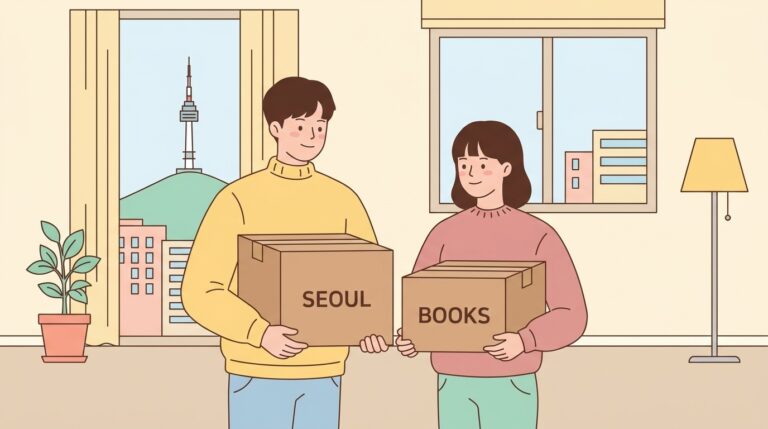
Picture this scene from a modern Seoul drama: A couple in their early thirties stands inside a sunlit, semi-furnished studio apartment in Mapo-gu. They hold a single key ring with matching Kakao Friends keychains. On paper, it is a practical triumph—slashing Seoul’s punishing housing costs, splitting grocery expenses, and testing their compatibility before committing to a 30-year mortgage and an extravagant wedding ceremony. But suddenly, the doorbell rings. It’s the boyfriend’s mother making an unannounced visit with homemade side dishes (banchan). In pure, adrenaline-fueled panic, the girlfriend frantically shoves her high heels and skincare bottles into an oversized wardrobe while the boyfriend stands frozen in the hallway.
This comedic yet painfully familiar dilemma highlights the real friction of dating in contemporary Korea. If you are navigating romance or advanced cultural discourse in Korea, understanding premarital cohabitation (혼전 동거 – honjeon dong-geo) is essential. It is not merely a matter of sharing an address; it sits squarely at the fault line between traditional neo-Confucian expectations—where marriage is an alliance between two extended families (jiban)—and the hyper-pragmatic, individualistic reality of the modern MZ generation.
Advanced learners often stumble here because textbooks reduce the conversation to clinical vocabulary like “찬성한다” (I agree) or “반대한다” (I disagree). However, real native debates require sophisticated discourse markers, sociological nuance, and an understanding of the legal blind spots (jedojeok sagakjidae) surrounding non-registered unions. Based on feedback from our top-tier learners and cultural analysts, this masterclass equips you with native C2-level expressions to articulate complex opinions on intimacy, autonomy, and societal perception without sounding detached or offensive.
Phase 2: In-Depth Breakdown of 3 Core Expressions
1. 혼전 동거는 아직 시기상조라는 시선이 지배적이에요.
- Pronunciation: Honjeon dong-geoneun ajik sigisangjoraneun siseoni jibaejeogieyo. (Phonetic feel: Hon-jeon dong-guh-neun ah-jeek she-gee-sahng-jo-rah-neun she-sun-ee jee-bae-juhk-ee-eh-yo — pronounce sigisangjo with an even, deliberative cadence, like weighing a serious verdict).
- Meaning:
- Literal: The gaze that premarital cohabitation is still premature is dominant.
- Nuanced: The prevailing consensus remains that living together before marriage is socially premature and still frowned upon by the mainstream.
- K-Culture Moment: Commonly heard in social analysis podcasts, investigative talk shows like Unanswered Questions (Geu-geot-i algo sipda), or intense dinner debates in relationship dramas like Lovestruck in the City.
- Editor’s Insight: Incorporating the four-character idiom (sajaseong-eo) 시기상조 (時期尙早 – too early/premature) alongside 시선 (gaze/perception) immediately elevates your discourse from basic opinion to sociological commentary.
- Situation Spectrum: Casual ⚠️ | Semi-formal ✅ | Formal ✅
- 🤔 Think About It: Why does Korean rhetoric frequently frame personal decisions in terms of the collective “gaze” (시선) rather than individual preference?
2. 살아보고 결정하는 게 오히려 현실적이지 않나요?
- Pronunciation: Sarabogo gyeoljeonghaneun ge ohiryeo hyeonsiljeogiji annayo? (Phonetic feel: Sah-rah-bo-go gyuhl-jeong-hah-neun geh oh-hee-ryuh hyun-sheel-juhk-ee-jee ahn-nah-yo? — let the pitch rise gently on ohiryeo to emphasize the counter-intuitive logic).
- Meaning:
- Literal: Isn’t trying living together and then deciding actually more realistic?
- Nuanced: Wouldn’t it be far more sensible to test compatibility under one roof before legally binding our lives?
- K-Culture Moment: A modern protagonist challenging an older sibling or conservative colleague over grilled pork belly (samgyeopsal) and soju.
- Editor’s Insight: The verbal structure -아/어 보다 denotes trial or experimentation (살아보다), while 오히려 flips the table against traditional norms, presenting cohabitation not as moral looseness, but as prudent risk management against divorce.
- Situation Spectrum: Casual ✅ | Semi-formal ✅ | Formal ⚠️
- 🤔 Think About It: In your own cultural context, is living together considered a preliminary trial run for marriage, or an entirely self-sufficient relationship milestone?
3. 제도적 사각지대에 놓여 있는 게 가장 큰 맹점이에요.
- Pronunciation: Jedojeok sagakjidae-e noyeo inneun ge gajang keun maengjeomieyo. (Phonetic feel: Jeh-doh-juhk sah-gahk-jee-dae-eh noh-yuh een-neun geh gah-jahng keun maeng-juhm-ee-eh-yo — articulate sagakjidae crisply, echoing serious legal commentary).
- Meaning:
- Literal: Being placed in an institutional blind spot is the biggest blind spot/flaw.
- Nuanced: The primary vulnerability lies in falling through the cracks of existing legal and institutional safety nets.
- K-Culture Moment: Quoted in legal dramas like Extraordinary Attorney Woo or policy debates concerning Korea’s changing household composition.
- Editor’s Insight: 사각지대 (blind spot) and 맹점 (critical vulnerability/flaw) are indispensable C2 terms when dissecting issues where rapid cultural transformation outpaces statutory law—such as housing subsidies, hospital visitation rights, and joint asset recognition for unmarried partners.
- Situation Spectrum: Casual 🚫 | Semi-formal ⚠️ | Formal ✅
- 🤔 Think About It: What legal liabilities arise when a society withholds institutional recognition from unmarried cohabiting couples?
Phase 3: Textbook Korean vs. Real Native Korean
Situation 1: Expressing your personal pragmatic openness to moving in together
- 📖 교과서 한국어 (Textbook Korean):
- 저는 결혼하기 전에 상대방과 같이 사는 것에 찬성합니다. (Jeoneun gyeolhonhagi jeone sangdaebanggwa gachi saneun geose chanseonghamnida. / “I agree with living together with one’s partner before marriage.”)
- 🗣️ 진짜 한국어 (Real Native Korean):
- 저는 굳이 식 올리기 전에 살림부터 합쳐보는 것도 나쁘지 않다고 봐요. (Jeoneun gudi sik olligi jeone sallimbuteo hapchyeoboneun geotdo nappeuji antago bwayo. / “Personally, I see nothing wrong with combining households before having the actual ceremony.”)
- 💡 왜 다를까? (Cultural & Linguistic Context):
- Native Koreans rarely say “같이 살다” in formal adult discourse. Instead, they use idiomatic expressions like 살림을 합치다 (to combine daily domestic lives) and refer to marriage as 식(을) 올리다 (to raise the wedding ritual), which captures the distinct separation between legal registration, ritual wedding, and day-to-day cohabitation.
Situation 2: Acknowledging societal resistance and family friction
- 📖 교과서 한국어 (Textbook Korean):
- 부모님 세대는 동거에 대해 부정적인 생각을 가지고 있습니다. (Bumonim sedeneun dong-geoe daehae bujeongjeogin saenggakeul gajigo itseumnida. / “The parents’ generation holds negative thoughts toward cohabitation.”)
- 🗣️ 진짜 한국어 (Real Native Korean):
- 기성세대 시선도 만만찮고, 집안 어른들이 결사반대하실 게 뻔하잖아요. (Giseongsede siseondo manmanchanko, jiban eoreundeuri gyeolsabandaehasil ge ppeonhajanayo. / “The older generation’s gaze is no joke, and it’s obvious the elders of the clan would fiercely oppose it.”)
- 💡 왜 다를까? (Cultural & Linguistic Context):
- Replacing “부모님 세대” with 기성세대 (the established/older generation) and “부정적이다” with 만만찮다 (formidable/unyielding) immediately signals communicative maturity. The use of 결사반대 (opposing with one’s life) captures the visceral weight of intergenerational conflict in Korea.
Phase 4: K-Culture Deep Dive & Nonverbal Manners
4-1. 눈치 (Nunchi) & Nonverbal Manners: The Geography of Discretion
When discussing cohabitation in Korea, nonverbal cues carry as much weight as your vocabulary:
* Lowering Voice Pitch & Moderating Volume: In open cafés or public transit, discussing “동거” (dong-geo) loudly still invites inquisitive stares. Lowering your vocal register demonstrates social intelligence (nunchi).
* The Reflective Head Tilt: When someone introduces a conservative counter-argument, do not abruptly interrupt with “아닌데요?” (That’s not true). Instead, tilt your head slightly, nod twice, and say: “그 말씀도 일리가 있네요. 다만…” (That makes sense too. However…).
* Social Context Filtering: Among close peer groups (chingu), discussing cohabitation is candid and common. In corporate gatherings (hoesik) or around senior colleagues (seonbaenim), framing cohabitation as an abstract sociological phenomenon rather than personal practice protects interpersonal harmony.
4-2. Cultural Code: Real Estate Realities vs. Confucian Heredity
Why is premarital cohabitation such a high-stakes issue in South Korea?
* The Leasehold Bottleneck: Securing a Jeonse (전세 – massive lump-sum leasehold deposit) often demands hundreds of thousands of dollars, virtually requiring young couples to seek financial backing from parents. Because parents bankroll the housing, they historically retain moral veto power over who crosses the threshold.
* The “Ceremony First, Registration Later” Paradox: Interestingly, many modern Korean couples practice a unique form of cohabitation: they hold the formal wedding (결혼식), move into an apartment together, but deliberately delay the legal paperwork (혼인신고) for 1 to 2 years to benefit from single-tax statuses, housing lottery brackets, or ensure marital durability. Thus, post-ceremony cohabitation is normalized, while pre-ceremony cohabitation remains a battleground.
Phase 5: Real-Life Roleplay Scenario
Setting: A dimly lit craft beer pub in Seongsu-dong on a rainy Thursday night. Indie pop plays faintly in the background. Rain taps gently against the large industrial window pane.
Characters:
* 민우 (Min-woo): 32, a thoughtful UX designer contemplating moving in with his partner of three years before formal marriage talks begin.
* 당신 (You): An observant, culturally adept friend offering advanced counsel.
- Turn 1 (민우):
- 한글: 사실 지은이랑 이번 계약 끝나면 합쳐볼까 하는데, 솔직히 부모님께 어떻게 말씀드려야 할지 막막해.
- Romanization: Sasil Jieun-irang ibeon gyeyak kkeunnamyeon hapchyeobolkka haneunde, soljikhi bumonimkke eotteoke malsseumdeuryeoya halji mangmakhae.
- English: “To be honest, Ji-eun and I are thinking of moving in together once our current lease ends, but I’m at a complete loss about how to break it to my parents.”
- 🎭 Action: (He nervously traces the rim of his beer glass with his finger, looking hesitant.)
- Turn 2 (당신):
- 한글: 부모님 성향을 고려하면 아무래도 혼전 동거라는 단어 자체에 거부감을 느끼실 수도 있겠네.
- Romanization: Bumonim seonghyang-eul goryeohamyeon amuraedo honjeon dong-georaneun daneo jache-e geobugameul neukkisil sudo itgetne.
- English: “Considering your parents’ temperament, they might feel an immediate knee-jerk aversion to the very word ‘premarital cohabitation.'”
- 🎭 Action: (You nod empatiously, keeping your posture open and supportive.)
- Turn 3 (민우):
- 한글: 맞아. 막상 같이 살면서 생활 패턴이나 재정 관리를 맞춰보는 게 훨씬 합리적이잖아. 안 그래?
- Romanization: Maja. Maksang gachi salmyeonseo saenghwal paeteon-ina jaejeong gwanrireul matchwoboneun ge hwolssin hamnijeogijana. An geurae?
- English: “Exactly. Isn’t it far more rational to align our lifestyle patterns and financial habits while actually living together? Don’t you think?”
- 🎭 Action: (He leans forward, his voice earnest and seeking validation.)
- Turn 4 (당신):
- 한글: 물론 그렇지. 결혼 후에 생활 습관 차이로 파경을 맞는 것보다 훨씬 리스크를 줄일 수 있으니까.
- Romanization: Mullon geureotji. Gyeolhon hue saenghwal seupgwan chai-ro pagyeongeul manneun geotboda hwolssin riseukeureul juril su isseunikka.
- English: “Of course. It significantly reduces the risk compared to suffering a breakdown in marriage later due to trivial habit discrepancies.”
- 🎭 Action: (You take a measured sip of your drink, affirming his rational premise.)
- Turn 5 (민우):
- 한글: 그런데 만에 하나 헤어지게 되면, 특히 한국 사회에서는 여자 쪽에 더 주홍글씨가 남지 않을까 그게 제일 마음에 걸려.
- Romanization: Geureonde mane hana heeojige doemyeon, teukhi hanguk sahoe-eseoneun yeoja jjoge deo juhonggeulssiga namji aneulkka geuge jeil maeume geollyeo.
- English: “Still, if by any chance things go south, I worry most that Korean society tends to cast an unfair scarlet letter, particularly on women.”
- 🎭 Action: (He sighs deeply, furrowing his brows.)
- Turn 6 (당신):
- 한글: 그 우려도 일리가 있어. 법적인 보호 장치가 전무한 상태에서 오는 불안감도 무시할 수 없고.
- Romanization: Geu uryeodo illiga isseo. Beopjeogin boho jangchiga jeonmuhan sangtae-eseo oneun burangamdo musihal su eopgo.
- English: “That concern is entirely valid. You also can’t overlook the anxiety that stems from an utter absence of statutory legal protections.”
- 🎭 Action: (You place your glass down quietly, maintaining direct eye contact.)
- Turn 7 (민우):
- 한글: 넌 만약 내 입장이라면 당장 어른들께 오픈하고 설득하겠어, 아니면 일단 둘만의 비밀로 시작하겠어?
- Romanization: Neon manyak nae ipjang-iramyeon dangjang eoreundeulkke opeunhago seoldeukhagesseo, animyeon ildan dulmanui bimillo sijakhagesseo?
- English: “If you were in my shoes, would you be upfront and persuade the elders right away, or would you start discreetly as just a secret between the two of you?”
- 🎭 Action: (He looks directly at you, waiting for your decisive insight.)
- Turn 8 (당신):
- 한글: 감정적인 설득에 앞서, 서로의 가치관과 향후 계획을 구체화한 뒤에 단계적으로 접근하는 게 현명하지 않을까?
- Romanization: Gamjeongjeogin seoldeuk-e apseo, seoroui gachigwangwa hyanghu gyehoegeul guchehwahan dwie dangyejeogeuro jeopgeunhaneun ge hyeonmyeonghaji aneulkka?
- English: “Before attempting an emotional persuasion, wouldn’t it be wiser to crystallize your shared values and long-term trajectory first, and then approach them incrementally?”
- 🎭 Action: (You smile calmly, providing a balanced, mature roadmap.)
🔀 Interactive Decision Branch
What would your immediate strategic advice to Min-woo be?
- Option A: “어차피 요즘 세상에 부모님 허락까지 받을 필요 있어? 둘이 좋으면 그냥 밀어붙여!” (Why seek parental permission nowadays? If you two love each other, just push forward!)
- ❌ Bad Feedback: Disregards the intricate filial interdependence in Korean family dynamics. While modern, completely alienating parents can lead to catastrophic long-term friction, especially when wedding assistance is required.
- Option B: “어른들이 반대하실 게 뻔하니까, 그냥 식 올릴 때까지 비밀로 하고 각자 자취하는 척해.” (Since the elders will surely object, keep it secret until the wedding and pretend you’re each living alone.)
- ⚠️ Risk Feedback: A common pragmatic workaround practiced in Seoul, but fraught with constant psychological strain, unexpected pop-in visits, and catastrophic fallout if exposed.
- Option C: “단순한 동거가 아니라 ‘결혼을 전제로 한 준비 단계’라는 명확한 로드맵을 보여드리면 부모님도 불안을 덜람하실 거야.” (Frame it not as mere cohabitation, but as an explicit ‘pre-marital preparation milestone with a timeline’; it will alleviate your parents’ anxiety.)
- 🏆 Best Feedback: Culturally brilliant. Re-anchoring cohabitation within an intentional commitment narrative respects filial concerns while asserting adult autonomy.
Phase 6: 10-Second Emotion Shadowing Drill
Practice matching both the rhythmic pauses (/) and the precise emotional frequency indicated.
[🤔 사려 깊고 신중하게 - Thoughtfully and prudently]- “결혼이라는 중대한 결정을 내리기 전에 / 서로의 민낯을 확인해보는 과정은 / 필수적이라고 생각해요.”
- (Gyeolhon-iraneun jungdaehan gyeoljeongeul naerigi jeone / seoroui minnacheul hwaginhaeboneun gwajeongeun / pilsujeogirago saenggakhaeyo.)
- “Before making the monumental decision of marriage / the process of verifying each other’s unvarnished true colors / is, in my view, indispensable.”
[💡 단호하면서도 공감하듯 - Resolute yet empathetic]- “제도적인 보호막이 없다 보니 / 한쪽이 일방적인 희생을 감수해야 하는 / 법적 리스크가 엄연히 존재하죠.”
- (Jedojeogin bohomagi eopda boni / hanjjogi ilbangjeogin huisaengeul gamsuhaeya haneun / beopjeok riseukeuga eom-yeonhi jonjaehajo.)
- “Since there is no institutional safety blanket / the legal risk where one party must bear unilateral sacrifices / undisputedly exists.”
[😮 조심스럽게 속마음을 털어놓으며 - Confiding with cautious honesty]- “남들의 시선보다는 / 두 사람의 신뢰가 우선이지만 / 현실적인 장벽을 마주하면 / 망설여지는 게 사실이에요.”
- (Namdeurui siseonbodaneun / du saramui sinroega useon-ijiman / hyeonsiljeogin jangbyeogeul majuhamyeon / mangseoryeojineun ge sasirieyo.)
- “While mutual trust between the two must take precedence over external gazes / when facing practical barriers / it is undeniably true that one hesitates.”
Phase 7: K-Culture Mini Dictionary
| # | Term (Hangul / Romanization) | Accurate Nuanced Translation | Contextual Real-World Application |
|---|---|---|---|
| 1 | 사실혼 (Sasilhon) | De facto marriage / Common-law marriage | Legally distinct from mere cohabitation (dong-geo). Refers to a state where a couple has held a wedding or shares intent to be married and cohabits as a married couple, entitling them to certain property division protections under Korean court precedent. |
| 2 | 살림을 합치다 (Sallimeul hapchida) | To combine households / move in together | A polished, mature idiom referring to the physical merger of furniture, expenses, and domestic upkeep, far less blunt than using “동거하다”. |
| 3 | 비혼주의 (Bihonjuui) | Voluntary singlehood / Non-marriage lifestyle | The conscious personal conviction to abstain from legal marriage, frequently discussed in alongside cohabitation as an alternative, permanent partnership model. |
| 4 | 시선 의식 (Siseon uisik) | Hyper-consciousness of external/public judgment | The deeply ingrained socio-cultural awareness of how one’s non-traditional life choices appear to neighbors, colleagues, and extended relatives. |
Phase 8: Traveler’s & Expat’s Survival Kit
Top 3 Survival Expressions for Deep Social Debates
- “양가 부모님의 동의를 얻는 게 현실적인 관건이겠네요.”
- Romanization: Yang-ga bumonimui dong-uireul eonneun ge hyeonsiljeogin gwangeon-igetneyo.
- Pro Tip: Use this during any group discussion on relationships to sum up the socio-familial core. It means: “Gaining the consent of both sets of parents remains the practical crux of the matter.”
- “서로의 생활 반경과 루틴을 존중해 주는 게 선행되어야 해요.”
- Romanization: Seoroui saenghwal bangyeonggwa rutineul jonjunghae juneun ge seonhaengdoe-eoya haeyo.
- Pro Tip: Translates to: “Respecting each other’s living radius and daily routines must precede everything else.” Demonstrates high emotional and syntactic maturity.
- “단순한 호기심으로 접근할 문제는 아닌 것 같아요.”
- Romanization: Dansunhan hogisimeuro jeopgeunhal munjeneun anin geot gatayo.
- Pro Tip: “I don’t think this is an issue one should approach out of mere casual curiosity.” Perfect for gracefully de-escalating a conversation that is veering into shallow gossip.
Editor’s Travel Note: Living Arrangements in Seoul
If you are relocating to Seoul as a digital nomad or long-term student and considering cohabitating or sharing spaces, download the Naver Map application to scout modern “co-living houses” (코리빙 하우스) in vibrant transit hubs such as Seongsu, Gangnam, or Sinchon. These modern institutions offer private residential studios combined with shared lounges and kitchen facilities—sidestepping both massive deposits (Jeonse) and invasive leaseholder surveillance. When drawing up any residential agreement together, consulting a licensed legal notary (공증인사무소) is strongly advised to clearly demarcate financial security deposits.
Phase 9: A Step Deeper (Sociological Reflection)
In South Korea, kinship has traditionally been anchored in the legal family registry system (Hoju-je, which transitioned into the modern Family Relations Register in 2008). Because the state and community historically authenticated personal identity strictly through filial lineage and registered wedlock, cohabitation without a registered contract has frequently been treated not just as an alternative lifestyle, but as an institutional anomaly. When younger generations embrace premarital cohabitation today, they are not merely adopting Western-style pragmatism; they are renegotiating the boundary between personal agency and communal duty. It represents a subtle ideological migration from a society organized by family-clan consensus to one forged by mutual, autonomous partnership.
💬 Your Turn: Does your native culture consider cohabitation an essential milestone before marriage, or does traditional sentiment still view it with skepticism? Drop your perspective in the comments below using the expression “~라는 시선이 지배적이에요”!
Phase 10: FAQ & Common Mistakes
Q: Can an unmarried cohabiting couple register their lease together under Korean real estate law?
A: While two individuals can technically be co-tenants on a standard rental contract, joint housing loans and government-backed low-interest Jeonse subsidies (such as those offered by the Korea Housing Finance Corporation) are strictly reserved for legal married couples or those within three months of an officially scheduled wedding.
Q: What is the semantic difference between “동거” (Dong-geo) and “룸메이트” (Roommate)?
A: While “동거” (dong-geo) literally translates to “living together,” in Korean conversation it almost universally carries a romantic, intimate connotation. If you are simply sharing rent with an acquaintance or platonic friend, you must explicitly use the loanword 룸메이트 (Roommate) or 하우스메이트 (Housemate) to prevent instant misunderstandings.
Q: Is premarital cohabitation protected under “사실혼” (Common-law status)?
A: No. Korean jurisprudence distinguishes sharply between mere cohabitation (단순 동거) and 사실혼 (de facto marriage). To claim common-law status—which grants the right to equitable division of jointly accumulated property upon breakup—the couple must prove an explicit mutual intent to be married (혼인의 의사) and evidence of public marital standing, such as a formal wedding ceremony, family holiday attendance, or shared kinship celebrations.
🚨 Common Mistakes Warning Board
- Calling your platonic flatmate your “동거인” in casual company:
- Wrong: “제 동거인 소개할게요.” (Sounds to Koreans like: “Let me introduce the partner I’m cohabitating with.”)
- Correct Action: Say “저랑 같이 사는 룸메이트예요” (This is the roommate living with me).
- Equating “살아보다” with “동거하다” without grammatical balance:
- Nuance: Dropping “우리 동거해볼까?” can sound unnecessarily stiff or overly intense. Using conversational phrasing such as “우리 살림 합쳐볼까?” or “같이 살아보는 건 어때?” reflects genuine native fluency.
- Probing elders directly about their personal cohabitation views:
- Tactful approach: Avoid asking older Koreans “동거해보셨어요?” (Did you ever live together?). Instead, frame it conceptually: “요즘 젊은 세대의 혼전 동거 문화에 대해서는 어떻게 생각하시나요?” (What are your thoughts regarding the younger generation’s culture of premarital cohabitation?).
Phase 11: Action Missions & Engagement
- 🥉 Bronze Level (Solo Mastery): Stand before a mirror. Read aloud the 3 Shadowing Drill sentences from Phase 6, ensuring your pause markers (
/) and facial expressions accurately match the designated emotion tags. - 🥈 Silver Level (Social Engagement): Leave a comment below or post on your study account answering this prompt in sophisticated Korean: “결혼 전 동거에 대해 찬성하시나요, 반대하시나요? 그 이유는 무엇인가요?”
- 🥇 Gold Level (Real-World Application): The next time you watch a romance K-drama featuring a couple navigating housing or marriage decisions, jot down how family members react to the idea of living together, and discuss the scene with your language partner using the term 제도적 사각지대.
- 🎮 K-Culture Mission: Watch an episode of the Korean reality dating show Transit Love (환승연애) or I am Solo (나는 솔로). Observe how participants subtly frame their past long-term relationships and see if any participants reference living habits (생활 패턴) or living together.
Phase 12: Interactive Quiz Challenge
Test your situational instincts and advanced linguistic competence!
1. Contextual Judgment
You are attending a formal university seminar on demographic decline in South Korea. Which sentence represents the most sociologically polished, natural phrasing to argue that cohabitation deserves legal recognition?
* (A) 동거하는 사람들이 불쌍하니까 법으로 돈을 줘야 합니다.
* (B) 비혼 동거 가구가 증가하는 현실에 발맞추어, 법적 사각지대를 해소할 제도적 보완이 시급합니다.
* (C) 부모님들이 반대하더라도 동거는 무조건 합법화해야 마땅하다고 봅니다.
👉 Click to Reveal Answer & Detailed Explanation
Correct Answer: (B)
* Explanation: (B) uses sophisticated, high-register C2 vocabulary: 비혼 동거 가구 (non-married cohabiting households), 발맞추어 (in tandem with), 사각지대를 해소하다 (resolve blind spots), and 제도적 보완이 시급하다 (institutional supplementation is urgent). Option (A) is overly simplistic and condescending, while (C) is overly aggressive and polemical for academic debate.
2. Fill-in-the-Blank
Complete the following sentence with the appropriate idiom meaning “to officially merge daily domestic lives/households”:
- 문장: “두 사람은 오랜 연애 끝에 식을 올리기 전 먼저 (________)으로 합의했다.”
👉 Click to Reveal Answer & Detailed Explanation
Correct Answer: 살림을 합치기로
* Explanation: The verbal phrase is 살림을 합치다 (to combine households/lives). Conjugated with the nominalized purposive form, it becomes 살림을 합치기로 합의했다 (agreed to combine households).
3. True or False Cultural Insight Quiz
- Question: In contemporary South Korean legal precedents, any couple that lives together for more than one year is automatically granted full common-law marriage (사실혼) status, including inheritance rights.
- [True / False]
👉 Click to Reveal Answer & Detailed Explanation
Correct Answer: False
* Explanation: Duration alone does not create 사실혼 in Korea. There must be substantiated mutual intent to form a married union (혼인의 의사) and external societal proof (e.g., introductions as spouse to family, holding a ceremony). Furthermore, under current Korean civil law, common-law partners do not have statutory rights to legal inheritance (상속권), highlighting the precise 제도적 사각지대 (legal blind spot) discussed in this guide.







