

Phase 1: Empathy & Story Opening
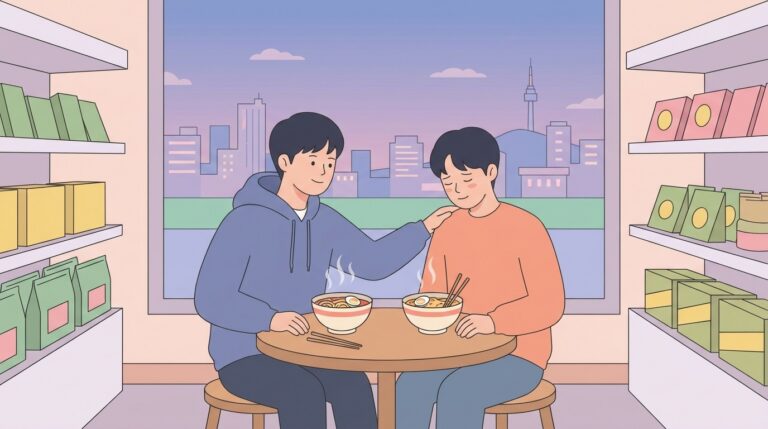
안녕하세요! (Annyeonghaseyo!) I’m your Daily Hangul editor. Picture this: you’re sitting outside a glowing Seoul convenience store with your Korean friend, Jiwoo, over cups of hot ramen. She just found out she missed her dream internship by one point. Your heart aches for her, and you want to say, “Luck just wasn’t on your side this time—next time will definitely go much better!” Yet your mind freezes on simple textbook words. Many of my A2 students tell me this exact silence feels worse than making a grammar mistake. Based on ten years of coaching learners through real emotional moments, this guide gives you warm, natural Korean phrases to comfort a struggling friend like a true local.
Phase 2: Deep Dive into 3 Essential Expressions
1. 이번엔 운이 좀 없었어 (Ibeon-en un-i jom eopseosseo)
- Pronunciation: Ibeon-en un-i jom eopseosseo (Sounds like: “ee-bun-en oon-ee jom up-suh-ssuh” — keep “jom” light and soft, like humming “jum” gently.)
- Meaning: Literal: “This time, you didn’t have a little luck.” / Actual Nuance: “Luck just wasn’t on your side this time.” It gently shifts blame away from your friend’s effort or talent and puts it on bad timing.
- K-Culture Moment: Think of those rainy-night K-Drama scenes in slice-of-life hits like Reply 1988 or Hospital Playlist, where a character fails an exam or audition and their best friend sits beside them with snacks, softly blaming “bad luck” instead of giving a lecture.
- Editor’s Insight: Adding 좀 (jom, “a little”) is the secret magic trick here. Without it, 운이 없었어 (un-i eopseosseo) can sound blunt. With 좀 (jom), it feels like wrapping a warm blanket around your friend’s disappointment. If you want to sound even closer to “it just didn’t follow you,” you can also say 운이 좀 안 따랐을 뿐이야 (un-i jom an ttarasseul ppun-iya).
- Situation Spectrum:
- Casual (친구/동생): ✅ 이번엔 운이 좀 없었어 (Ibeon-en un-i jom eopseosseo)
- Semi-formal (동료/선배): ✅ 이번엔 운이 좀 없었어요 (Ibeon-en un-i jom eopseosseoyo)
- Formal (상사/어른): ⚠️ Use with care—better to say 이번에는 조금 아쉬웠네요 (Ibeon-eneun jogeum aswiwonne-yo, “This time was a bit unfortunate”) so you don’t sound presumptuous.
- 🤔 Think About It: In English, we often say “Better luck next time,” which focuses on the future. In Korean, acknowledging bad luck right now—운이 없었어 (un-i eopseosseo)—validates the friend’s hard work first. How do people in your culture separate a person’s effort from unlucky results?
2. 다음엔 분명 더 잘될 거야 (Daeum-en bunmyeong deo jaldoel geoya)
- Pronunciation: Daeum-en bunmyeong deo jaldoel geoya (Sounds like: “da-eum-en boon-myung duh jal-dwel guh-ya” — stress “bun-myeong” slightly to show genuine confidence!)
- Meaning: Literal: “Next time, clearly, more well-become will.” / Actual Nuance: “Next time will definitely go much better!” It radiates sincere belief in your friend’s future success.
- K-Culture Moment: You hear this exact encouraging energy in K-Pop survival show backstage clips and idol vlogs, where members hug a teammate after a shaky stage rehearsal and promise that the next live performance will shine.
- Editor’s Insight: Beginning learners often just say 잘될 거야 (jaldoel geoya, “it’ll go well”). Adding 다음엔 (daeum-en, “next time”) plus 분명 (bunmyeong, “definitely/clearly”) shows you actually listened to what happened this time and still believe in them 100%.
- Situation Spectrum:
- Casual (친구/동생): ✅ 다음엔 분명 더 잘될 거야 (Daeum-en bunmyeong deo jaldoel geoya)
- Semi-formal (동료/지인): ✅ 다음엔 분명 더 잘될 거예요 (Daeum-en bunmyeong deo jaldoel geoyeyo)
- Formal (비즈니스/어른): 🚫 Too casual in tone; use 다음 기회에는 좋은 결과가 있을 겁니다 (Daeum gihoe-eneun joeun gyeolgwaga isseul geomnida, “There will be good results next time”).
- 🤔 Think About It: Korean uses the predictive ending -(으)ㄹ 거야 (-(eu)l geoya) here not just as a guess, but as an emotional promise. Do you find it easier in your native language to comfort someone with hope for the future or empathy for the present?
3. 너무 속상해하지 마 (Neomu soksanghaehaji ma)
- Pronunciation: Neomu soksanghaehaji ma (Sounds like: “nuh-moo sok-sang-hae-ha-jee ma” — glide smoothly through “soksanghae” without pausing.)
- Meaning: Literal: “Don’t feel too hurt inside.” / Actual Nuance: “Don’t beat yourself up” or “Please don’t be too upset about it.”
- K-Culture Moment: In cozy K-Drama family kitchens, a mom or older sister says this while sliding a warm bowl of seaweed soup or fried chicken across the table after someone has a rough day at work.
- Editor’s Insight: 속 (sok) literally means “inside” (your stomach/heart), and 상하다 (sanghada) means “to go bad or get hurt.” So 속상하다 (soksanghada) paints a vivid picture of your insides feeling bruised. Using this word shows deep emotional warmth that simple 슬프다 (seulpeuda, “sad”) cannot match.
- Situation Spectrum:
- Casual (친구/동생): ✅ 너무 속상해하지 마 (Neomu soksanghaehaji ma)
- Semi-formal (동료/지인): ✅ 너무 속상해하지 마세요 (Neomu soksanghaehaji maseyo)
- Formal (상사/어른): 🚫 Telling a senior “don’t be upset” directly can feel disrespectful.
- 🤔 Think About It: Notice how Korean locates emotional pain inside the body with 속 (sok, inside). Does your language also use physical body metaphors for disappointment?
Phase 3: Textbook Korean vs. Real Korean
Situation 1: When your friend fails a test or job interview
- 📖 Textbook Korean: 실망하지 마세요. 다음 기회에 성공할 것입니다. (Silmanghaji maseyo. Daeum gihoe-e seonggonghal geosimnida. — “Do not be disappointed. You will succeed at the next opportunity.”)
- 🗣️ Real Korean: 에이, 이번엔 운이 좀 없었을 뿐이야! 다음엔 무조건 잘될 거야. (Ei, ibeon-en un-i jom eopseosseul ppun-iya! Daeum-en mujogeon jaldoel geoya. — “Hey, luck just wasn’t on your side this time! Next time it’ll go well no matter what.”)
- 💡 Why the difference? Textbook endings like -습니다 (-seumnida) and words like 성공하다 (seonggonghada, “succeed”) sound like a news anchor talking to a stranger. Real friends soften the blow with 에이 (ei, “aw/hey”) and 무조건 (mujogeon, “definitely/no matter what”) to sound warm and on your side.
Situation 2: Wrapping up the pep talk
- 📖 Textbook Korean: 힘내세요. 저는 당신을 응원합니다. (Himnaeseyo. Jeoneun dangsin-eul eungwonhamnida. — “Cheer up. I cheer for you.”)
- 🗣️ Real Korean: 너무 걱정 마. 내가 맛있는 거 사 줄게! (Neomu geokjeong ma. Naega masinneun geo sa julge! — “Don’t worry too much. I’ll buy you something delicious!”)
- 💡 Why the difference? Using 당신 (dangsin, “you”) between friends sounds weirdly dramatic or even confrontational in Korea! Instead of abstract speeches, Koreans show affection through action—especially offering food.
Phase 4: K-Culture Deep Dive & Non-Verbal Manners
4-1. Nunchi (눈치) & Gestures
When comforting a Korean friend, your body language speaks louder than your grammar:
* Gentle Shoulder Pat, Not a Giant Bear Hug: Unless you are super close, Koreans often prefer a soft pat on the shoulder or upper arm (어깨를 토닥토닥하다, eokkaereul todaktodak-hada) rather than an intense hug in public.
* Read the Room First (눈치, Nunchi): Don’t rush in with loud cheerleading right away. Sit quietly for two seconds, let them sigh, and mirror their calm tone before raising your energy with 다음엔 분명 더 잘될 거야! (Daeum-en bunmyeong deo jaldoel geoya!).
* Eye Contact: Keep your gaze warm and relaxed, and nod slowly (고개를 끄덕이다, gogaereul kkeudeogida) while they vent.
4-2. Cultural Code: K-Food & Comfort Culture
In Korea, food is love language #1 when someone’s luck runs dry. After a tough day, friends rarely just say “good luck next time” and walk home. Instead, they head to a nearby pojangmacha (street food tent) for spicy tteokbokki (떡볶이) or grab iced americano and sweet bakery treats at a neighborhood cafe. Sharing a meal signals, “You’re not alone in this.” Even in K-Dramas, the ultimate healing moment happens when two friends clink soda cans or share grilled pork belly (삼겹살, samgyeopsal) while laughing off today’s bad luck.
Phase 5: Real-Life Roleplay Scenario
Setting: A breezy Friday evening outside a cozy convenience store in Hongdae, Seoul. Fairy lights glow above plastic tables, and the smell of spicy ramen drifts through the air. Characters: You and your Korean friend Minjun (민준), who just left a tough part-time job interview.
- Minjun: 하… 오늘 면접 완전 망한 것 같아. (Ha… oneul myeonjeop wanjeon manghan geot gata.) — “Sigh… I think I totally bombed today’s interview.”
🎭 Minjun slumps onto the plastic stool and stares at his iced tea. - You: 진짜? 왜? 민준 너 준비 진짜 열심히 했잖아. (Jinjja? Wae? Minjun neo junbi jinjja yeolsimhi haetjana.) — “Really? Why? Minjun, you prepared so hard.”
🎭 You lean in slightly with a concerned, caring expression. - Minjun: 너무 긴장해서 말을 조금 버벅거렸어. 이번에도 떨어질 것 같아. (Neomu ginjanghaeseo mareul jogeum beobeokgeoryeosseo. Ibeon-edo tteoreojil geot gata.) — “I was so nervous that I stuttered a bit. I think I’ll fail this time too.”
🎭 Minjun rubs the back of his neck, looking defeated. - You: 에이, 너무 속상해하지 마. 이번엔 운이 좀 없었을 뿐이야. (Ei, neomu soksanghaehaji ma. Ibeon-en un-i jom eopseosseul ppun-iya.) — “Hey, don’t feel too upset. Luck just wasn’t on your side this time.”
🎭 You gently tap his shoulder twice in a reassuring rhythm. - Minjun: 고마워. 그래도 좀 아쉽네. (Gomawo. Geuraedo jom aswimne.) — “Thanks. Still, it feels a bit disappointing.”
🎭 Minjun gives a small, tired smile. - You: 당연하지. 근데 다음엔 분명 더 잘될 거야! 내가 알잖아. (Dangyeonhaji. Geunde daeum-en bunmyeong deo jaldoel geoya! Naega aljana.) — “Of course. But next time will definitely go much better! You know I know that.”
🎭 You smile warmly and give him an encouraging thumbs-up. - Minjun: 그렇게 말해 주니까 힘이 좀 난다. (Geureoke malhae junikka him-i jom nanda.) — “Hearing you say that gives me some strength.”
🎭 Minjun finally relaxes his shoulders and chuckles. - You: 좋았어! 오늘 스트레스 풀게 맛있는 거 먹으러 가자! (Joasseo! Oneul seuteureseu pulge masinneun geo meogeureo gaja!) — “Awesome! Let’s go eat something delicious to blow off today’s stress!”
🎭 You stand up cheerfully and gesture toward the nearby tteokbokki shop.
🔀 Interactive Branching Point: What do you say next when Minjun starts doubting himself again?
- Option A: “그냥 잊어버리고 떡볶이나 먹자! 다음엔 꼭 될 거야!” (Geunyang ijeobeorigo tteokbokkina meokja! Daeum-en kkok doel geoya! — “Just forget it and let’s eat tteokbokki! Next time you’ll definitely make it!”)
- Option B: “왜 긴장했어? 다음엔 연습을 더 많이 해야지.” (Wae ginjanghaesseo? Daeum-en yeonseubeul deo mani haeyaji. — “Why were you nervous? Next time you need to practice more.”)
- Option C: “운이 없었네. 나도 저번에 떨어졌어.” (Un-i eopseonne. Nado jeobeon-e tteoreojeosseo. — “No luck, huh. I failed before too.”)
Feedback:
* Option A (Best!): Warm, action-oriented, and blends comfort food with hope—total Korean best-friend energy!
* Option B (Bad!): Giving unsolicited advice right after someone fails hurts their pride. Save constructive tips for another day.
* Option C (Risk!): Sharing your own failure can bond you together, if your tone is warm—but keeping it too short without encouragement can shift the spotlight onto yourself.
Phase 6: 10-Second Emotion Shadowing Drill
Read these aloud three times, following the pause / marks and matching the emotion cues!
[🥺 Soft, empathetic, and slow]
이번엔 / 운이 좀 / 없었을 뿐이야. (Ibeon-en / un-i jom / eopseosseul ppun-iya.)[😊 Warm, steady, and confident]
다음엔 / 분명 / 더 잘될 거야! (Daeum-en / bunmyeong / deo jaldoel geoya!)[🤗 Gentle and reassuring]
너무 / 속상해하지 마, / 내가 있잖아. (Neomu / soksanghaehaji ma, / naega itjana.)
Phase 7: K-Culture Mini Dictionary
- 운 (Un) | Luck / Fortune | Used constantly in daily life—from checking daily horoscopes to saying 운이 좋다 (un-i jota, “lucky”) when you snag the last concert ticket.
- 속상하다 (Soksanghada) | To be upset / feel hurt inside | Much warmer and more personal than “sad”; used with friends and family when plans fall through.
- 화이팅 / 파이팅 (Hwaiting / Paiting) | You got this! / Cheer up! | Korea’s iconic Konglish cheer used before exams, office presentations, and K-Pop concerts.
- 토닥토닥 (Todaktodak) | Pat-pat (comforting sound word) | An adorable onomatopoeia you’ll see in KakaoTalk messages and captions when comforting someone virtually.
Phase 8: Survival Kit for Travelers
Top 3 Survival Expressions
- 괜찮아요 (Gwaenchanayo) — “It’s okay / No worries.” Pro Tip: Use a gentle downward intonation to soothe someone, or a rising tone to check if they’re alright!
- 다음엔 잘될 거예요 (Daeum-en jaldoel geoyeyo) — “Next time will go well.” Pro Tip: Safe and warm for Airbnb hosts, classmates, or polite acquaintances.
- 힘내세요! (Himnaeseyo!) — “Cheer up / Stay strong!” Pro Tip: Great to say to hardworking cafe baristas or local friends during exam season.
Editor’s Travel Note
Want to surprise a discouraged friend in Seoul with comfort food or a spontaneous healing trip? You can Download the Naver Map App for Korean Navigation to find top-rated late-night tteokbokki spots and cozy dessert cafes near any subway station, and Explore the Visit Korea Official Cultural Travel Guide for peaceful Han River picnic parks. Keep a T-money card loaded at any convenience store (GS25 or CU) so you can hop on the subway together, and pick up a warm honey-ginger tea (유자차, yujacha) from the heated drink case—it’s an instant mood booster!
Phase 9: One Step Deeper
Why does Korean comfort lean so heavily on “luck” and “next time” rather than analyzing what went wrong? At the heart of Korean relationships is Jeong (정)—a deep, unspoken bond of loyalty and shared emotion. When a friend stumbles, jumping straight into logical problem-solving can feel cold, as if you are judging them from the outside. Saying 이번엔 운이 좀 없었을 뿐이야 (Ibeon-en un-i jom eopseosseul ppun-iya) tells your friend, “I stand inside this disappointment with you, and I still believe in who you are.”
💬 Your Turn: When a close friend in your country has a stroke of bad luck, what is your go-to comforting phrase or comfort food? Share it in the comments!
Phase 10: FAQ & Myth-Busting
Q: Can I say 힘내 (Himnae, “Cheer up”) to my Korean boss or professor?
A: No! Without the polite ending -세요 (-seyo), 힘내 (himnae) is strictly casual and sounds rude to elders or bosses. Even 힘내세요 (himnaeseyo) can feel slightly bold to a high-ranking boss—use 파이팅하세요 (paitinghaseyo) or 응원하겠습니다 (eungwonhagetseumnida, “I will be cheering for you”) instead.
Q: Is it okay to blame “bad luck” if my friend clearly didn’t study?
A: Yes, in the heat of the moment! Right after bad news, Koreans value emotional solidarity first. Once they feel better over coffee or dinner, they’ll usually admit their own mistakes anyway.
Q: How do I text “Next time will go better” in a cute KakaoTalk message?
A: Add a soft wave ~ or friendly emoji, like 다음엔 분명 더 잘될 거야~ 토닥토닥! (Daeum-en bunmyeong deo jaldoel geoya~ todaktodak!).
🚨 Common Mistakes Warning Board
- Mistake: Saying 잘 하세요 (Jal haseyo, “Do well”) to comfort someone who already failed. -> Correct Action: Use past-acknowledging comfort first: 이번엔 운이 없었어 (Ibeon-en un-i eopseosseo), then future hope: 다음엔 잘될 거야 (Daeum-en jaldoel geoya).
- Mistake: Using 당신 (dangsin, “you”) in comfort phrases like 당신은 잘될 거예요. -> Correct Action: Use their name + 씨/아/야 or drop the pronoun completely! Korean prefers omitting “you” between friends.
- Mistake: Overusing 괜찮아 (gwaenchana, “it’s fine”) like a robot. -> Correct Action: Mix in 속상해하지 마 (soksanghaehaji ma) so they feel truly heard, not brushed off.
Phase 11: Action Mission & Engagement
- 🥉 Bronze (Solo Practice): Look in the mirror tonight and say all three Phase 6 shadowing lines out loud with matching facial expressions.
- 🥈 Silver (Share Online): Post one comforting phrase in Hangul with a photo of your favorite comfort snack and tag your study buddies!
- 🥇 Gold (Real-Life Use): Next time a Korean language partner or friend mentions a bad day, reply with 이번엔 운이 좀 없었을 뿐이야. 다음엔 분명 더 잘될 거야! (Ibeon-en un-i jom eopseosseul ppun-iya. Daeum-en bunmyeong deo jaldoel geoya!).
- 🎮 K-Culture Mission: Watch any slice-of-life K-Drama or K-Pop behind-the-scenes clip this week and listen closely for 운 (un), 다음엔 (daeum-en), or 속상해하지 마 (soksanghaehaji ma)!
Phase 12: Interactive Quiz Challenge
1. Situational Judgment: Your close Korean friend just missed the bus in the pouring rain and feels awful. What is the warmest, most natural thing to say?
A) 왜 늦었어? 다음엔 일찍 나와. (Wae neujeosseo? Daeum-en iljjik nawa.)
B) 아이고, 운이 좀 없었네! 너무 속상해하지 마. (Aigo, un-i jom eopseonne! Neomu soksanghaehaji ma.)
C) 성공할 것입니다. (Seonggonghal geosimnida.)
Click to reveal Answer & Explanation
Correct Answer: B! Option A sounds scolding, and Option C is stiff textbook Korean that doesn’t even fit missing a bus. Option B uses natural empathy and warm friend-level speech!
2. Fill in the Blank: Complete the sentence: “Next time will definitely go much better!”
다음엔 _____ 더 잘될 거야! (Daeum-en _____ deo jaldoel geoya!)
Click to reveal Answer & Explanation
Correct Answer: 분명 (bunmyeong) — It means “definitely/clearly” and adds strong confidence to your encouragement!
3. True or False Cultural Quiz: In Korea, offering to buy your friend a meal or snack after they fail something is a common and sincere way to comfort them.
Click to reveal Answer & Explanation
True! Food is one of the strongest ways Koreans express Jeong (정, warm affection) and lift a friend’s spirits after a tough day.
🎬 Watch Our Daily Videos! (Daily Hangul Official Instagram)
Review the expressions you learned in this article with our fun daily short videos! Check out native pronunciation and real-life nuances in action.
- Instagram @dailyhangul_en







