

Phase 1: 공감 (Story-Driven Opening)
안녕하세요! 매일한글 에디터입니다.
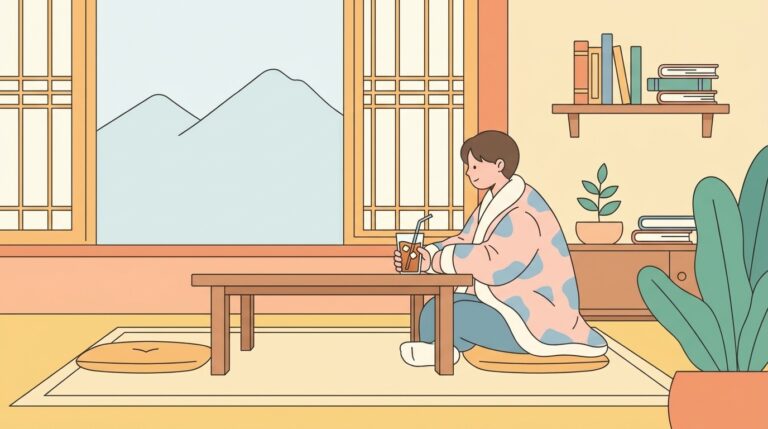
Picture this: It is a lazy Sunday afternoon in Seoul. The gentle sunlight pours across your floor, your favorite K-Drama is playing on your laptop, and you are wrapped up like a warm gimbap in your blanket. You receive a text from your Korean friend: “What are you doing today? Let’s go climb Namsan Mountain!”
You want to tell them, “I’m feeling lazy today!” So you open a standard translation app, type in “lazy,” and send the result: “저는 게으릅니다” (Jeoneun geeureumnida). Suddenly, the chat goes quiet. Why? Because you just declared yourself an inherently indolent, morally defective individual with the stiffness of an 18th-century court record!
Describing your mood, energy, and personality is one of the most delightful bonding moments in any language. Over the past 10 years of coaching global learners at Daily Hangul, we have seen hundreds of beginners freeze up because textbooks teach cold, formal definitions. In this guide, we are going to unlock natural, charming, and relatable ways to say you are taking it easy—without ever sounding rude or robotic. Let’s dive in!
Phase 2: 핵심 표현 3선 심층 분석 (Top 3 Core Expressions)
1. 게을러요 (Geeulleoyo)
- Pronunciation: [ge-eul-leo-yo] (Imagine saying geh + ull like “gull” + law-yo with a relaxed tongue)
- Meaning: Direct: “I am lazy” vs. Real Nuance: “I tend to be slow to act / I’m lounging around”
- K-Culture Moment: Commonly heard on Korean reality shows like I Live Alone (나 혼자 산다) when a celebrity sheepishly admits they have not washed their dishes from yesterday evening.
- Editor’s Insight: This is the standard A1 polite form of the verb 게으르다. It describes a personality trait or current state. To soften it, natives almost always add “조금” (a little bit): “저 조금 게을러요” (I’m a little lazy).
- Situation Spectrum: Casual: ✅ | Semi-formal: ✅ | Formal: ⚠️ (Avoid using this in job interviews!)
- 🤔 Think About It: In your native culture, does calling yourself “lazy” feel like a flaw, or can it be a charming confession among close friends?
2. 귀찮아요 (Gwichanayo)
- Pronunciation: [gwi-chan-ah-yo] (Say gooey fast, then chahn, then ah-yo)
- Meaning: Direct: “It is bothersome” vs. Real Nuance: “I can’t be bothered / I feel too unmotivated to do it”
- K-Culture Moment: When the main character in a slice-of-life drama is invited to an after-work dinner on a rainy night and groans into their desk pillow.
- Editor’s Insight: Koreans rarely brand themselves as permanently lazy people; instead, they blame the action for being bothersome! Saying “귀찮아요” explains that you simply lack the willpower for a specific task right now.
- Situation Spectrum: Casual: ✅ | Semi-formal: ✅ | Formal: 🚫 (Never say this to a superior or customer!)
- 🤔 Think About It: Notice the psychological difference: instead of saying “I am bad at moving,” Korean says “The act of moving is demanding too much energy from me.”
3. 집순이 / 집돌이예요 (Jipsuni / Jipdori-yeyo)
- Pronunciation: [jeep-soon-ee / jeep-doh-ree-ye-yo] (Jip = house, Soon-i = traditional female nickname, Dori = male nickname)
- Meaning: Direct: “I am a house-girl / house-boy” vs. Real Nuance: “I’m a proud homebody!”
- K-Culture Moment: K-Pop idols during live stream fan chats frequently identify as a 집순이 or 집돌이, sharing how they spent their entire holiday lounging with snacks.
- Editor’s Insight: If calling yourself “lazy” feels too negative, this is your magic word! It frames your love of staying in bed as a cute, relatable lifestyle identity rather than a character flaw.
- Situation Spectrum: Casual: ✅ | Semi-formal: ✅ | Formal: ⚠️ (Acceptable in casual office small talk, but not in formal reports)
- 🤔 Think About It: Why do you think modern societies invent affectionate names for people who prefer staying indoors?
Phase 3: 교과서 한국어 vs 진짜 한국어 (Textbook vs. Real Korean)
Situation 1: Explaining why your apartment is slightly messy
- 📖 교과서 한국어: “저는 나태한 성격입니다.” (Jeoneun nataehan seong-gyeogimnida. / I possess an indolent nature.)
- 🗣️ 진짜 한국어: “제가 좀 게을러서 그래요!” (Jega jom geeulleoseo geuraeyo! / It’s just because I’m a bit lazy!)
- 💡 왜 다를까?: 나태하다 is a literary Sino-Korean word found in philosophical essays. Real native speakers use 게으르다 paired with the softening word 좀 (a little) to sound modest and natural.
Situation 2: Declining an invitation to go outdoors in the freezing winter
- 📖 교과서 한국어: “저는 밖에 나가는 것을 게을리합니다.” (Jeoneun bakke naganeun geoseul geeulli-hamnida. / I neglect going outside.)
- 🗣️ 진짜 한국어: “오늘은 나가기 너무 귀찮아요!” (Oneureun nagagi neomu gwichanayo! / It’s honestly such a hassle to go out today!)
- 💡 왜 다를까?: Natural Korean focuses on emotional immediacy. Expressing that an action feels like a hassle (귀찮다) is far more common than clinically describing habits.
Phase 4: K-Culture 딥다이브 & 비언어적 매너 (Deep Dive & Non-Verbal Manners)
4-1. 눈치 (Nunchi) & Gestures
When confessing that you are lazy or feeling unmotivated in Korean, your body language carries 60% of the politeness:
* The Bashful Head Scratch (긁적긁적): Slightly tilt your head and scratch the back of your neck while saying “제가 좀 게을러요~”. This conveys bashful humility, signaling that you are not proud of it, which keeps the tone light and friendly.
* The Gentle Shoulder Shrug: When using “귀찮아요”, give a soft shrug with your palms facing upward and a playful smile. Without a smile, “귀찮아요” can easily sound dismissive or irritated!
4-2. Culture Code: The “Ppalli-Ppalli” Paradox
South Korea is world-renowned for its 빨리빨리 (Ppalli-ppalli / Hurry-hurry) speed culture. High-speed trains, lightning-fast food delivery, and brisk walking are daily norms. Because productivity is valued so highly, admitting you are 게을러요 or a 집순이/집돌이 serves as an intentional pressure release valve. It shows your friends: “I am dropping my social armor around you; I can finally be my unhurried self.”
Phase 5: 실전 롤플레이 시나리오 (Interactive Roleplay Scenario)
- Setting: A trendy café in Yeonnam-dong on Saturday afternoon. You are chatting with your Korean friend, Minho (민호), who loves outdoor sports.
- Minho: “오늘 날씨 진짜 좋다! 우리 한강 가서 자전거 탈래?” (Oneul nalssi jinjja jota! Uri Hangang gaseo jajeon-geo tallae? / The weather is amazing today! Do you want to go to the Han River and ride bicycles?)
🎭 [눈을 반짝이며 가방을 챙긴다 – Eyes sparkling, packing his bag] - You: “음… 오늘은 조금 게을러요.” (Eum… oneureun jogeum geeulleoyo. / Hmm… I’m feeling a little lazy today.)
🎭 [머리를 긁적이며 멋쩍게 웃는다 – Scratching your head with an awkward smile] - Minho: “에이, 주말인데! 침대에만 있을 거야?” (Ei, jumal-inde! Chimdaeman isseul geoya? / Aw, come on, it’s the weekend! Are you just going to stay in bed?)
🎭 [장난스러운 표정으로 재촉한다 – Playfully teasing and nudging you] - You: “사실 오늘은 움직이기 너무 귀찮아요.” (Sasil oneureun umjigigi neomu gwichanayo. / To be honest, moving around feels like too much hassle today.)
🎭 [소파에 푹 기대며 편안하게 한숨을 쉰다 – Leaning back deep into the sofa and sighing comfortably] - Minho: “하하, 너 완전 집순이(집돌이)구나?” (Haha, neo wanjeon jipsuni(jipdori)guna? / Haha, you are a complete homebody, aren’t you?)
🎭 [손뼉을 치며 크게 웃는다 – Clapping his hands and laughing out loud] - You: “맞아요! 침대 밖은 위험해요.” (Majayo! Chimdae bakkeun wiheomhaeyo. / Exactly! Outside the bed is dangerous.)
🎭 [진지한 표정을 지어 보이며 끄덕인다 – Nodding with a mock-serious face] - Minho: “인정! 그럼 여기서 시원한 커피나 마실까?” (Injeong! Geureom yeogiseo siwonhan keopina masilkka? / Fair enough! Then shall we just drink iced coffee here?)
🎭 [메뉴판을 다시 넘기며 묻는다 – Flipping through the menu again with a grin] - You: “좋아요! 그건 전혀 안 귀찮아요.” (Joayo! Geugeon jeonhyeo an gwichanayo. / Sounds great! That is not a hassle at all.)
🎭 [환하게 웃으며 아이스 아메리카노를 가리킨다 – Pointing at iced americano with a bright smile]
🔀 Interactive Decision Point: What would you say if Minho kept insisting?
- Choice A: “싫어요. 절대 안 가요.” (Silheoyo. Jeoldae an gayo. / I hate it. I’m never going.)
- Feedback [Bad]: Much too aggressive! It cuts off the playful mood and sounds genuinely angry.
- Choice B: “오늘은 커피 마시면서 멍때리고 싶어요.” (Oneureun keopi masimyeonseo meong-ttaerigo sipeoyo. / Today I just want to space out while drinking coffee.)
- Feedback [Best]: Perfect! It uses a beloved Korean concept (멍때리다 – to space out) and gently stands your ground in a humorous way.
- Choice C: “저는 원래 쓸모없는 사람입니다.” (Jeoneun wonrae sseulmo-eomneun saram-imnida. / I am originally a useless person.)
- Feedback [Risk]: Uncomfortably dark! Korean friends will think you are facing an emotional crisis rather than having a lazy weekend.
Phase 6: 10초 감정 섀도잉 드릴 (10-Second Emotion Shadowing Drill)
Read aloud following the slash marks / for natural pacing and pause:
- [🥺 아쉽고 애교 섞어서 – Bashful, making an endearing excuse]
“오늘은 / 조금 / 게을러요.” (Oneureun / jogeum / geeulleoyo.) - [🥱 나른하고 귀찮은 목소리로 – Drowsy, sluggish, and unbothered]
“아… / 나가기 / 진짜 귀찮아요.” (Ah… / nagagi / jinjja gwichanayo.) - [😎 당당하고 장난스럽게 – Playful, confident, and unapologetic]
“저 / 완전 / 집순이(집돌이)예요!” (Jeo / wanjeon / jipsuni(jipdori)yeyo!)
Phase 7: K-Culture 미니 사전 (Mini Dictionary)
- 뒹굴뒹굴 (Dwinggul-dwinggul) | Rolling around playfully | An onomatopoeia for rolling over repeatedly on your bed or floor without doing any productive work.
- 눕방 (Nupbang) | Lying-down live broadcast | A compound of 눕다 (to lie down) + 방송 (broadcast). Popularized by K-Pop idols holding fan streams while lying in bed.
- 귀차니즘 (Gwichanijeum) | The state of chronic laziness | Slang combining 귀찮다 (hassle) with the English suffix -ism. It describes the philosophy of minimizing movement.
- 침대 밖은 위험해 (Chimdae bakkeun wiheomhae) | Outside the bed is dangerous | A widely used internet meme and reality show title expressing that staying tucked under your covers is the best life choice.
Phase 8: 여행자를 위한 생존 키트 (Traveler’s Survival Kit)
3 Essential Survival Expressions
- “조금 쉬었다 가요.” (Jogeum swieotta gayo.)
- Meaning: Let’s rest for a little bit before we keep walking.
- Pro Tip: Seoul involves countless stairs and steep hills. Use this when sightseeing with friends!
- “포장해 주세요.” (Pojanghae juseyo.)
- Meaning: Please pack this to go.
- Pro Tip: When you feel too lazy to sit in a bustling barbecue spot, order takeout to enjoy in your hotel room.
- “배달 돼요?” (Baedal dwaeyo?)
- Meaning: Do you deliver?
- Pro Tip: Korea is the king of late-night delivery (야식). Ask your front desk or guesthouse host if the nearby restaurant delivers!
Editor’s Travel Note
If you find yourself worn out during your trip, don’t force a packed itinerary. Plan flat walking routes using the Naver Map app download to check elevator locations and bus alternatives across subway stations, saving your stamina for tasty street snacks!
Phase 9: “한 발 더 깊이” (Cultural Reflection)
Language reflects societal rhythms. While traditional Korean culture emphasizes diligence (성실함), the modern linguistic landscape has carved out generous spaces for playful self-acceptance. Admitting you are 게을러요 or calling yourself a 집순이 is no longer seen as a character flaw; it is a warm social olive branch that gives the other person permission to drop their high standards and relax alongside you.
💬 Your Turn: What kind of person are you on your days off? Are you an energetic explorer, or do you prefer staying in bed? Leave a comment below with: “저는 집순이(집돌이)예요!”
Phase 10: FAQ & 오해 방지 (FAQ Schema)
Q: Can I use “게을러요” with my Korean boss or university professor?
A: We recommend against it! In formal workplace or academic contexts, calling yourself lazy sounds unprofessional. If you need more time to complete a project, politely say: “시간이 조금 더 필요합니다” (I need a little more time).
Q: What is the core difference between “피곤해요” and “귀찮아요”?
A: 피곤해요 (Pigonhaeyo) refers to physiological exhaustion (my muscles ache, I need sleep). 귀찮아요 (Gwichanayo) refers to psychological reluctance (I have the energy, but I lack the motivation to perform the task).
Q: Can I tell someone else that they are “게을러요”?
A: Only with very close friends or younger siblings in a teasing way! Telling an acquaintance or senior that they are 게을러요 is considered a direct and rude personal critique.
🚨 흔한 실수 (Common Mistakes) Warning Board
| Mistake | Why It Happens | Correct Action |
|---|---|---|
| “저는 나태해요” | Relying on old Sino-Korean dictionary entries | Say “저 조금 게을러요” or “집순이/집돌이예요” |
| “선생님, 귀찮아요!” | Using casual emotional words with superiors | Say “조금 어렵습니다” (It is a bit difficult) |
| Pronouncing 게 like English “gay” | Over-vocalizing the diphthong | Keep lips relaxed and flat: [ge-eul-leo-yo] |
Phase 11: 액션 미션 & 참여 유도 (Action Missions)
- 🥉 Bronze Mission (Solo): Stand before a mirror, give a cute shoulder shrug, and practice saying: “오늘은 좀 게을러요!” three times with a bashful smile.
- 🥈 Silver Mission (Social): Take a photo of your cozy bed or couch and post it to social media with the caption: “침대 밖은 위험해요! 🛌”
- 🥇 Gold Mission (Real-life): When a Korean language partner asks about your weekend plans, reply: “주말에는 집에서 뒹굴뒹굴 쉴 거예요!” (On the weekend, I will just roll around and rest at home!).
- 🎮 K-Culture Mission: Watch an episode of any Korean variety show (such as Running Man or Hangout with Yoo) and spot when a cast member whines “아, 귀찮아~!” during a tedious challenge!
Phase 12: 인터랙티브 퀴즈 챌린지 (Interactive Quiz Challenge)
- Situational Judgment: Your Korean friend asks you to go jogging at 7:00 AM on Sunday. How do you naturally and politely express that you just want to stay cozy at home?
- A) 저는 나태한 인간입니다.
- B) 주말에는 침대에서 뒹굴뒹굴하고 싶어요!
- C) 조깅은 불법이에요.
- Fill-in-the-blank: Complete the natural sentence:
- “날씨가 추워서 밖에 나가기 너무 ________.” (Hint: The word for when an action feels like too much hassle/bothersome!)
- True or False: Telling your Korean company manager “이 일은 귀찮아요” is a polite way to ask for assistance.
- (True / False)
👉 Click here to check the Answers and Explanations!
- Question 1 Answer: B (“주말에는 침대에서 뒹굴뒹굴하고 싶어요!” is friendly, natural, and charming. Option A is overly dramatic and stiff, while Option C is factually absurd!).
- Question 2 Answer: 귀찮아요 (Gwichanayo) (When cold weather makes stepping outside feel like a chore, 귀찮아요 is the perfect natural fit).
- Question 3 Answer: False! (귀찮아요 conveys that you can’t be bothered. Saying this to a manager would be viewed as extremely disrespectful).






