

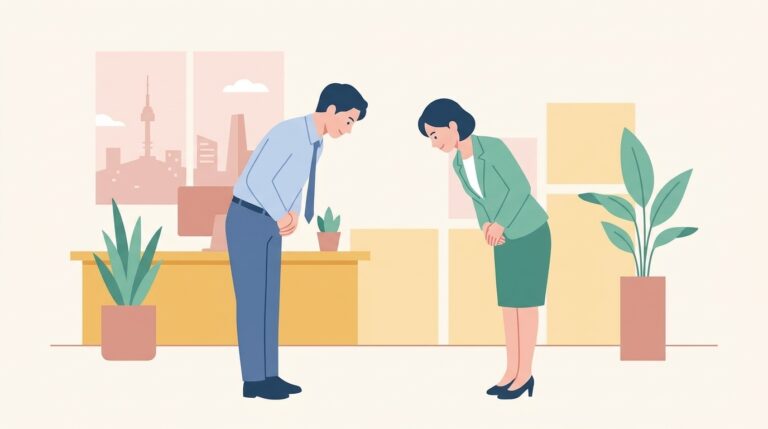
Phase 1: 공감 (Story Opening)
안녕하세요! 매일한글 에디터입니다.
Have you ever watched a gripping K-drama like Misaeng or Queen of Tears and noticed something fascinating during high-stakes boardrooms or emotional family dinners? A character doesn’t just say “Thank you” or “I’ll tell you.” Instead, their posture softens, their chin dips slightly, and a completely different set of words rolls off their tongue. You might hear them say 말씀드리겠습니다 (Malsseum-deurigess-seumnida) instead of 말할게요 (Malhalgeyo), or refer to their own team as 저희 (Jeohui) instead of 우리 (Uri).
Many intermediate Korean learners hit a notorious plateau right here: you’ve mastered standard polite endings like -yo (-요) and -seumnida (-습니다), yet native speakers still sound miles more sophisticated, delicate, and humble than you. Why? Because elevating the listener is only half of Korean politeness. The real secret weapon of native-level fluency is 겸양어 (Gyeomyang-eo)—the art of lowering yourself to elevate others.
Over the past decade of coaching foreign professionals, diplomats, and passionate K-culture fans, I’ve seen learners accidentally sound arrogant or robotic simply because textbooks never taught them how to shrink their verbal ego with grace. Today’s guide is built on real learner struggles and tested cultural strategies. By the time you finish this guide, you will know exactly how to speak with magnetic humility that earns genuine respect across Seoul.
Phase 2: 핵심 표현 3선 심층 분석 (Top 3 Humble Expressions)
1. 말씀드리다 (Malsseum-deurida)
- Pronunciation: [Mahl-sseum-deu-ree-da] (Think of Mahl like “mall”, sseum like the “sum” in summary with tight lips, and deurida like “dree-dah”)
- Meaning: Literal: “To offer speech” | Real Nuance: “To explain / to inform / to tell you (humbly lowering my words as an offering to your ears)”
- K-Culture Moment: Picture a rookie corporate associate reporting quarterly results to a stern department director in a sleek Teheran-ro skyscraper. Instead of saying “I will tell you,” they bow their head five degrees and announce: “제가 지금부터 말씀드리겠습니다.” (Jega jigeumbuteo malsseum-deurigess-seumnida – “Allow me to present/explain now.”)
- Editor’s Insight: Malsseum (말씀) is a linguistic chameleon! When referring to an elder’s words, it is an honorific elevation (honorific speech). But when attached to deurida (to offer), it becomes a humble reduction of your own speech. Never say “내 말 (nae mal)” to a senior or business client; always use malsseum-deurida.
- Situation Spectrum: Casual: 🚫 | Semi-formal: ⚠️ | Formal: ✅
- 🤔 Think About It: In English, “I will tell you” sounds direct and confident. Why does Korean culture consider directness towards seniors potentially disrespectful unless softened by a verbal offering?
2. 뵙다 / 찾아뵙다 (Boepda / Chajaboepda)
- Pronunciation: [Boep-dah / Chah-jah-boep-dah] (Pronounce boep like “bwehp”—combine “b” with the quick “we” in “wet”, ending in a crisp closed-lip “p”)
- Meaning: Literal: “To be received by eyes / to visit someone respected” | Real Nuance: “To meet / to see you (acknowledging that granting me an audience is your favor)”
- K-Culture Moment: In family dramas, when the protagonist plans to meet their partner’s parents for the first time, they never say “내일 만나요” (Naeil mannayo). They nervously text: “내일 찾아뵙겠습니다, 어머님.” (Naeil chajaboepgess-seumnida, eomeonim – “I will come and pay my respects to you tomorrow, Mother.”)
- Editor’s Insight: Mannada (만나다) assumes equality—two friends crossing paths horizontally. Boepda (뵙다) creates a subtle vertical tilt: you are stepping into the dignified presence of an elder, client, or professor.
- Situation Spectrum: Casual: 🚫 | Semi-formal: ✅ | Formal: ✅
- 🤔 Think About It: Notice how English uses “meet” universally, regardless of whether you meet the President or a roommate. How does changing the verb itself affect how you perceive interpersonal hierarchy?
3. 저희 (Jeohui)
- Pronunciation: [Jeo-hee / Jeo-ee] (Sounds like “Juh-hee”, fast and light)
- Meaning: Literal: “Humble we / our” | Real Nuance: “Our group (lowered out of respect for you, the esteemed listener)”
- K-Culture Moment: At a K-pop press conference, idols never refer to their squad as “우리 그룹” (Uri geurup) when addressing fans and reporters. They clasp the microphone with two hands and proudly say: “저희 앨범 많이 사랑해 주세요!” (Jeohui aelbeom mani saranghae juseyo! – “Please show lots of love to our album!”)
- Editor’s Insight: While Koreans famously say “우리 나라” (Uri nara – our country) because the nation cannot be lowered to other citizens, you must switch to Jeohui (저희) whenever speaking on behalf of yourself, your family, or your company to an outsider or elder. Calling your company “우리 회사” to a client sounds childish and unpolished.
- Situation Spectrum: Casual: ⚠️ | Semi-formal: ✅ | Formal: ✅
- 🤔 Think About It: Why does Korean distinguish between an inclusive/equal “we” (우리) and a humble “we” (저희)? What does this reveal about in-group versus out-group etiquette?
Phase 3: 교과서 한국어 vs 진짜 한국어 (Textbook vs Real Korean)
Situation 1: Asking a question to a university professor or manager
- 📖 교과서 한국어: 질문이 하나 있어요. 물어봐도 돼요? (Jilmuni hana isseoyo. Mureobwado dwaeyo? – “I have a question. Can I ask you?”)
- 🗣️ 진짜 한국어: 교수님, 여쭤볼 것이 하나 있습니다. (Gyosunim, yeojjwobol geosi hana itseumnida. – “Professor, I have something humble I would like to inquire about.”)
- 💡 왜 다를까?: The verb mutda (묻다 – to ask) implies a casual inquiry. When addressing a mentor or superior, native speakers instinctively switch to the humble verb 여쭈다 / 여쭤보다 (yeojjuda / yeojjwoboda), eliminating any abrasive sense of interrogation.
Situation 2: Handing documents or gifts to a client or in-law
- 📖 교과서 한국어: 이거 받으세요. 제가 줄게요. (Igeo badeuseyo. Jega julgeyo. – “Take this. I will give it to you.”)
- 🗣️ 진짜 한국어: 검토하실 자료 전달해 드리겠습니다. (Geomttohasil jaryo jeondalhae deurigess-seumnida. – “I will deliver the materials for your review.”)
- 💡 왜 다를까?: Juda (주다 – to give) sounds like a handout between peers or from a superior to a subordinate. Native speakers always replace juda with 드리다 (deurida) or compound constructions like 전달해 드리다 (to pass along respectfully) to express genuine courtesy.
Phase 4: K-Culture 딥다이브 & 비언어적 매너 (K-Culture Deep Dive & Mannerisms)
4-1. 눈치 (Nunchi) & Physical Gestures
Humble speech in Korea is never just about vocabulary; it is a full-body performance. When uttering humble verbs like 말씀드리다 or 드리다:
1. The Hand Cradle: When handing over a business card, document, or coffee cup, hold the object with your right hand while resting your left fingers gently beneath your right forearm or wrist. This historic gesture stems from holding back long traditional hanbok sleeves so they wouldn’t brush against an honored guest.
2. The Gaze Tilt: Avoid glaring directly into a superior’s eyes without blinking. Soften your gaze toward their necktie knot or collarbone, tilting your head roughly 10 to 15 degrees during pivotal transitions.
3. Postural Contraction: Notice how native Koreans slightly pull in their shoulders and elbows when apologizing or presenting an idea. Making yourself physically take up slightly less space mirrors the linguistic function of gyeomyang-eo.
4-2. Cultural Code Analysis: The K-Drama Corporate Hierarchy
In K-dramas like Search: WWW or Agency, watch how power shifts during negotiation scenes. A ruthless CEO doesn’t shout; they weaponize ultra-humble speech (극존칭 and 겸양어). By lowering themselves verbally while laying out an ironclad contract, they project immense poise and unshakeable self-control. In Korean culture, blustering confidence (자만) is seen as weak and rookie-like, whereas quiet, self-lowering eloquence (겸손한 당당함) signals true mastery.
Phase 5: 실전 롤플레이 시나리오 (Interactive Roleplay Scenario)
Setting: A quiet meeting room at a Gangnam tech company. You are pitching a new project timeline to Team Leader Park (박 팀장님), known for his sharp eye and traditional standards.
- Turn 1 (Park): “민우 씨, 지난번 기획서 수정안 어떻게 됐습니까?” (Minwoo-ssi, jinanbeon gihoekseo sujeongan eotteoke dwaessseumnikka? – “Minwoo, what happened to the revision of the proposal from last time?”)
- Turn 2 (You): 🎭 Taking a breath, resting hands neatly on table “팀장님, 방금 검토를 마치고 말씀드리려고 했습니다.” (Timjangnim, banggeum geomtoreul machigo malsseum-deuriryeogo haess-seumnida. – “Team Leader, I just finished reviewing it and was about to report to you.”)
- Turn 3 (Park): “그래요? 핵심 변경 사항이 뭡니까?” (Geuraeyo? Haeksim byeongyeong sahangi mwomnikka? – “Really? What are the key modifications?”)
- Turn 4 (You): 🎭 Turning tablet screen toward Park with two hands “저희 팀에서 논의한 예산 조정안을 먼저 전달해 드리겠습니다.” (Jeohui timeseo nonihan yesan jojeonganeul meonjeo jeondalhae deurigess-seumnida. – “I will first present the budget adjustments discussed by our team.”)
- Turn 5 (Park): “음, 예산이 좀 빠듯하군요. 협력사 측 의견은 물어봤어요?” (Eum, yesani jom ppadeuthagunyo. Hyeomnyeoksa cheuk uigyeoneun mureobwasseoyo? – “Hmm, the budget looks tight. Did you ask the partner company for their opinion?”)
- Turn 6 (You): 🎭 Nodding thoughtfully, lowering tone slightly “네, 어제 협력사 대표님을 직접 찾아뵙고 상의드렸습니다.” (Ne, eoje hyeomnyeoksa daepyonimeul jikjeop chajaboepgo sang-uideuryeoss-seumnida. – “Yes, I visited the partner CEO in person yesterday and consulted with him.”)
- Turn 7 (Park): “오, 발 빠르게 움직였네. 아주 깔끔합니다.” (O, bal ppareuge umjigyeonne. Aju kkalkkeumhamnida. – “Oh, you moved fast! Very clean work.”)
- Turn 8 (You): 🎭 Subtle bow of the head with a composed smile “감사합니다. 부족한 부분은 계속 보완해 올리겠습니다.” (Gamsahamnida. BujokhanStore bubuneun gyesok bowanhae olligess-seumnida. – “Thank you. I will continue to refine and submit any lacking areas.”)
🔀 Interactive Decision Point
Suppose Team Leader Park asks: “외부 자문위원 의견도 확인했나요?” (Did you also verify the external advisor’s opinion?) How do you respond?
- Choice A: “네, 제가 자문위원님한테 물어봤어요.” (Ne, jega jamunwiyeonnimhante mureobwasseoyo.)
- Choice B: “네, 자문위원님께 여쭤보고 조언을 구했습니다.” (Ne, jamunwiyeonnimkke yeojjwobogo joeoneul guhaess-seumnida.)
- Choice C: “네, 자문위원님이 저한테 말씀하셨습니다.” (Ne, jamunwiyeonnimi jeohante malsseumhasyeoss-seumnida.)
-
Feedback:
- Choice A [Risk]: Grammatically understood, but using 물어봤어요 (asked casually) and 한테 instead of honorific 께 sounds unpolished in a corporate setting.
- Choice B [Best!]: Flawless! ~께 여쭤보다 is the gold-standard humble phrase for consulting seniors, paired with 조언을 구하다 (seeking guidance).
- Choice C [Bad]: Avoid this! It puts the spotlight on the advisor talking to “you” rather than highlighting your humble action of consulting them.
Phase 6: 10초 감정 섀도잉 드릴 (10-Second Emotional Shadowing Drill)
Practice reading these sentences aloud, exaggerating the pauses (/) and channeling the tagged emotion:
[🙇 Humble & Composed]
제가 / 직접 / 찾아뵙고 / 말씀드리겠습니다.
(Je-ga / jik-jeop / cha-ja-boep-go / mal-sseum-deu-ri-gess-seum-ni-da.)
“I will visit you in person / and explain everything.”-
[🤝 Professional & Respectful]
저희 팀에서 / 정성껏 준비한 자료를 / 전달해 드립니다.
(Jeo-hui tim-e-seo / jeong-seong-kkeot jun-bi-han ja-ryo-reul / jeon-dal-hae deu-rim-ni-da.)
“We hereby deliver the materials / meticulously prepared / by our team.” -
[🙏 Polite & Earnest]
궁금하신 점이 있다면 / 언제든 / 편하게 여쭤봐 주세요.
(Gung-geum-ha-sin jeom-i it-da-myeon / eon-je-deun / pyeon-ha-ge yeo-jjwo-bwa ju-se-yo.)
“If you have any questions / please feel free / to ask at any time.”
Phase 7: K-Culture 미니 사전 (Core Vocabulary)
- 겸양 (Gyeomyang) | Self-lowering virtue / Modesty
- The philosophical bedrock of Korean honorifics. It refers to deliberately minimizing your own status to show genuine reverence toward others.
- 말씀 (Malsseum) | Humble words (own) / Honorific speech (other’s)
- When you speak, it lowers your speech (말씀드리다). When your boss speaks, it praises their words (좋은 말씀).
- 여쭙다 (Yeojjupda) | To inquire humbly
- The sophisticated replacement for 묻다 (to ask). Indispensable for office emails, college office hours, and customer service.
- 드리다 (Deurida) | To present / To offer
- The humble counterpart of 주다 (to give). Turns any standard action verb (도와주다 -> 도와드리다) into a courteous service.
Phase 8: 여행자를 위한 생존 키트 (Traveler’s Survival Kit)
TOP 3 Survival Phrases
- “제가 도와드릴까요?” (Jega dowa-deurilkkayo?)
- Pro Tip: Use this when offering your seat on the subway or helping an elder carry luggage. It sounds infinitely sweeter than 도와줄까요?
- “하나만 여쭤봐도 될까요?” (Hanaman yeojjwobwado doelkkayo?)
- Pro Tip: The ultimate street survival line! Stop any passerby in Seoul with this polite opening, and they will go out of their way to guide you.
- “저희가 주문할게요.” (Jeohuiga jumunhalgeyo.)
- Pro Tip: When dining with a companion at a traditional Korean restaurant, call the server over politely using 저희 instead of 우리.
Editor’s Travel Note
When navigating Korean transit or ordering at local eateries, don’t rely on generic global apps. Be sure to use the Naver Map official transit app to pinpoint local bus schedules accurately. When booking regional KTX trains, reserve via the Korail Talk ticketing platform where conductors and staff appreciate polite humble greetings (수고 많으십니다, 말씀 좀 묻겠습니다).
Phase 9: “한 발 더 깊이” (Cultural Reflection Essay)
In Western communication paradigms, assertiveness, equality, and claiming space are frequently championed as hallmarks of confidence. However, Korean linguistic heritage approaches strength from the opposite polarity: the majestic art of self-diminishment (겸양의 미덕). By consciously calling yourself 저 instead of 나, and referring to your actions as humble offerings (드리다), you create an emotional safe harbor for your conversation partner. You are not saying “I am beneath you in human worth”; you are declaring “I value our relationship enough to offer you the higher seat.” In an increasingly hurried world, this ancient linguistic etiquette remains Korea’s most poetic bridge of empathy.
💬 Your Turn: Does your native culture have ways to lower oneself verbally, or do you rely entirely on tone of voice and body language? Let’s discuss in the comments below!
Phase 10: FAQ & 오해 방지 (FAQ Schema & Pitfalls)
Q: Can I use 저희 (Jeohui) when talking about South Korea (저희 나라)?
A: No! This is a notorious mistake even native speakers make. South Korea belongs equally to all Korean citizens and cannot be lowered before other nations. Always say 우리나라 (Urinara) instead of 저희 나라 (Jeohuinara).
Q: Is it rude to use standard polite style (-요) instead of humble verbs?
A: It is not necessarily “rude,” but it may sound overly blunt, casual, or emotionally distant in formal settings like job interviews, academic consultations, or when greeting elders.
Q: Can I use 드리다 (deurida) when talking to my younger sibling or close friend?
A: Absolutely not! Using humble speech toward peers or younger individuals sounds heavily sarcastic, mocking, or unnervingly bizarre.
🚨 Common Mistakes TOP 3
- Elevating yourself by mistake: Saying “제가 말씀하셨습니다” (I spoke [honorific]).
- Correct Action: Say “제가 말씀드렸습니다” (I spoke [humble]).
- Using “저희” for the whole country: Saying “저희 나라는 사계절이 있어요.”
- Correct Action: Say “우리나라는 사계절이 있어요.”
- Using “줄게요” to a senior: Saying “선생님, 제가 커피 줄게요.”
- Correct Action: Say “선생님, 제가 커피 드릴게요.”
Phase 11: 액션 미션 & 참여 유도 (Action Missions)
- 🥉 Bronze Mission (Solo Drill): Stand in front of a mirror. Practice the 15-degree head bow while vocalizing: “처음 뵙겠습니다. 잘 부탁드립니다.” five times until it feels rhythmic.
- 🥈 Silver Mission (Community Share): Leave a comment on this post introducing yourself and your favorite K-drama using 저희 and 말씀드리다 in one complete sentence.
- 🥇 Gold Mission (Real-Life Application): The next time you visit a Korean restaurant, mart, or talk to an online Korean language partner, replace 물어보다 with 여쭤보다!
- 🎮 K-Culture Mission: Watch the first 15 minutes of an episode of Misaeng or King the Land. Count how many times junior employees use the suffix -deurida (-드리다) instead of -juda (-주다).
Phase 12: 인터랙티브 퀴즈 챌린지 (Interactive Quiz Challenge)
1. [Context Judgement] You want to give a gift to your Korean host family’s grandmother. What should you say as you present it with both hands?
* A) 할머니, 이거 받으세요. 제가 줄게요.
* B) 할머니, 약소하지만 제가 드리는 선물이에요.
* C) 할머니, 제가 선물 말씀하셨어요.
👉 Click to view Answer & Explanation
Correct Answer: B
Explanation: B uses the humble verb 드리다 (to offer) combined with natural polite phrasing. A uses 줄게요 (casual giving), which is rude to an elder. C improperly attaches an honorific marker to one’s own speech.
2. [Fill in the Blank]
교수님, 연구 과제에 대해 질문이 있어서 내일 연구실로 찾아(______) 합니다.
(Hint: Humble verb meaning “to visit / see an elder”)
👉 Click to view Answer & Explanation
Correct Answer: 뵙고자 (or 뵈러)
Explanation: The base verb is 찾아뵙다 (to visit and greet a senior). Conjoined with -고자 하다, it becomes 찾아뵙고자 합니다 (I intend to visit you).
3. [True / False Cultural Check]
When introducing your family to your Korean boss, it is culturally polite to say “저희 가족” (Jeohui gajok).
👉 Click to view Answer & Explanation
Correct Answer: TRUE
Explanation: Because you are speaking to an esteemed superior outside your family unit, you lower your household (저희 가족) to show respect to the boss.







