

Stay Relaxed, Not Stranded: The Ultimate Guide to Protecting Your Locker Key at a Korean Jjimjilbang
Phase 1: Empathy (Story-Immersive Opening)
안녕하세요! 매일한글 에디터입니다. (Hello! I’m your Daily Hangul editor.)
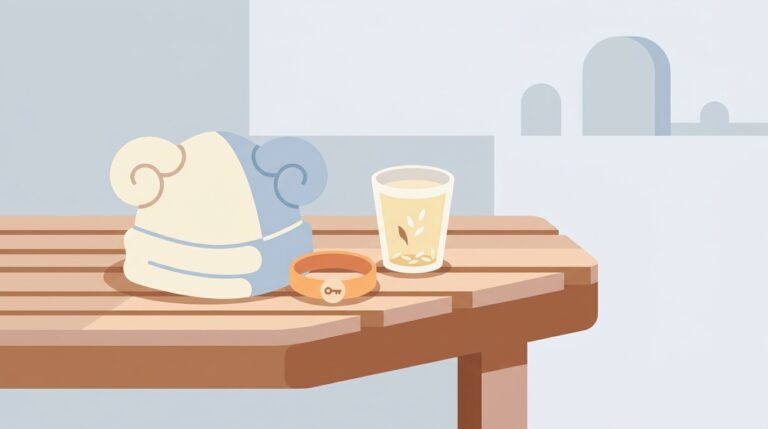
Picture this: You are basking in the serene warmth of an authentic Korean bathhouse, also known as a jjimjilbang (찜질방). You’ve got the iconic towel folded into sheep horns (yangmeori) perched proudly on your head, a chilled cup of sweet rice punch (sikhye) in one hand, and a cracked baked egg in the other. Life feels entirely blissful—until you casually look down at your wrist.
Your wrist is empty. The stretchy plastic band with your locker key is gone.
Suddenly, cold sweat replaces the soothing steam. Your phone, your wallet, your clothes, and your passport are all locked away behind locker #247. And even worse, that electronic key doubles as your payment card inside the facility!
Every year, dozens of our intermediate learners share this exact moment of sheer panic. Losing your key at a Korean sauna isn’t just an inconvenience; it triggers a cascade of awkward conversations, administrative fines, and embarrassment in a towel. But do not worry! In today’s guide, based on real traveler feedback and native insights, you will master the practical Korean phrases and social etiquette required to guard your key like a local and handle mishaps with confidence.
Phase 2: Core Expressions Deep Dive
Here are the three must-know expressions to navigate locker safety like an insider.
1. 열쇠 잃어버리지 않게 조심하세요.
- Pronunciation: [Yeolsoe ileobeoriji anke josimhaseyo.] (Sounds like: ‘Yuhl-seh eel-uh-buh-ree-jee ahn-kay joh-seem-ha-seh-yo’)
- Meaning: “Be careful not to lose the key.”
- K-Culture Moment: You will hear the receptionist repeat this warning right after handing over your sauna uniform (jjimjilbang-bok) at the front desk.
- Editor’s Insight: Notice the grammar pattern -지 않게 조심하다 (-ji anke josimhada), which means “be careful so that [action] doesn’t happen.” Koreans prefer this preventative phrasing over simply saying “Don’t do it!”
- Situation Spectrum: Casual: ⚠️ | Semi-formal: ✅ | Formal: ✅
- 🤔 Think About It: In English, we usually say “Keep it safe,” focusing on possession. Why do you think Korean often frames advice around preventing loss or disruption to the collective order?
2. 팔목에 꼭 차고 계세요.
- Pronunciation: [Palmoge kkok chago gyeseyo.] (Sounds like: ‘Pahl-mohk-eh kohlk chah-goh gyeh-seh-yo’)
- Meaning: “Make sure to keep it worn on your wrist.”
- K-Culture Moment: Staff cleaning the common sleeping areas often gently remind visitors who leave their keys resting on sleeping mats or tables.
- Editor’s Insight: The adverb 꼭 (kkok) adds a warm yet firm emphasis, like “definitely” or “without fail.” 차다 (chada) is the specific verb for wearing bands, watches, or cuffs.
- Situation Spectrum: Casual: ⚠️ | Semi-formal: ✅ | Formal: ✅
- 🤔 Think About It: How many different verbs for “wearing” exist in your native language? In Korean, shoes are sin-da, hats are sseu-da, clothes are ip-da, and wristbands are cha-da!
3. 혹시 사물함 키 보셨어요?
- Pronunciation: [Hoksi samulham ki bosyeosseoyo?] (Sounds like: ‘Hohk-shee sah-mool-hahm kee boh-shyeo-ssuh-yo?’)
- Meaning: “By any chance, have you seen a locker key?”
- K-Culture Moment: A distressed traveler politely asking a neighbor near the cold plunge pool or relaxation floor.
- Editor’s Insight: Starting with 혹시 (hoksi – by any chance) softens your question instantly, turning a stressful inquiry into a polite, respectful prompt that invites helpful responses.
- Situation Spectrum: Casual: ⚠️ | Semi-formal: ✅ | Formal: ⚠️
- 🤔 Think About It: Using honorifics like 보셨어요? (did you see) instead of 봤어요? shows immediate respect to strangers, even when you’re both wearing bathrobes!
Phase 3: Textbook Korean vs. Real Korean
Situation 1: Reminding a friend to keep their locker key on
- 📖 교과서 한국어 (Textbook): 열쇠를 분실하지 않도록 주의하십시오. (Yeolsoereul bunsilhaji antorok ju-uihasipsio. / Please be cautious so as not to misplace the key.)
- 🗣️ 진짜 한국어 (Real Life): 키 잃어버리면 돈 내야 하니까 꼭 차고 다녀요! (Ki ileobeorimyeon don naeya hanikka kkok chago danyeoyo! / If you lose your key you have to pay a fine, so keep it strapped on!)
- 💡 왜 다를까? (Why is it different?): Koreans rarely say “분실” (loss) in casual speech; instead, they borrow “키” (key) and emphasize the practical financial consequence with “돈 내야 하니까” (because you must pay).
Situation 2: Informing the counter clerk you cannot find your key
- 📖 교과서 한국어 (Textbook): 저는 사물함 열쇠를 분실하였습니다. (Jeoneun samulham yeolsoereul bunsilhayeotseumnida. / I have lost my locker key.)
- 🗣️ 진짜 한국어 (Real Life): 저기요, 사물함 키를 잃어버린 것 같은데 어떡하죠? (Jeogiyo, samulham kireul ileobeorin geot gateunde eotteokhajo? / Excuse me, I think I lost my locker key… what should I do?)
- 💡 왜 다를까? (Why is it different?): Native speakers use ~은 것 같다 (it seems like) even when they are certain, as it sounds less aggressive and encourages the listener to assist empathetically.
Phase 4: K-Culture Deep Dive & Non-Verbal Manners
4-1. 눈치 (Nunchi) & Body Language
- The Wrist Tap Gesture: When a bathhouse auntie (Imo) or staff looks at your bare wrist, subtly tap your wrist where a watch would sit. If your key is on your ankle, point down with a polite nod.
- Two-Handed Delivery: When paying for snacks or checking out, never fling your key band onto the counter. Hand it over with both hands or with your right hand supported under your right elbow by your left hand.
- Eye Contact: If you drop your key near someone relaxing in the sleeping cave (togul), avoid lingering stares. Retrieve it quickly with a quiet whisper: “죄송합니다” (Joesonghamnida / I am sorry).
4-2. Cultural Code: The RFID Key as Bathhouse Currency
In contemporary Korean saunas, your key is not just a piece of metal—it is an RFID electronic wallet. Every snack from the kiosk, every massage chair session, and every cold iced Americano is billed to that chip.
When you lose your key, someone else could theoretically purchase goods on your tab before you report it. Furthermore, bathhouses charge a lost key fee (bunsillyo), typically between 20,000 to 50,000 KRW, to replace the high-tech digital lock. Guarding your key is literally guarding your travel budget!
Phase 5: Real-World Role-Play Scenario
Setting: The central hall of a large multi-story sauna in Dongdaemun. Alex realizes his wrist key band slipped off while lounging on the heated jade floor.
Characters: Alex (Intermediate learner) and Sauna Staff Member (A warm but busy Imo).
- Staff: 손님, 발목에 있는 키는 풀리지 않았죠? (Sonnim, balmoge inneun kineun pulliji anatjyo?)
🎭 Checking the floor sweepingly.
“Sir, the key on your ankle didn’t come loose, right?” -
Alex: 네? 아… 제 팔목에 있던 키가 없어요! (Ne? A… je palmoge itdeon kiga eopseoyo!)
🎭 Checking both wrists in sudden disbelief.
“Pardon? Oh… the key that was on my wrist is gone!” -
Staff: 어머, 언제부터 없었어요? 온탕에 두고 왔어요? (Eomeo, eonjebuteo eopseosseoyo? Ontange dugo wasseoyo?)
🎭 Wiping her hands on her apron with concerned eyes.
“Oh dear, since when was it gone? Did you leave it in the hot tub?” -
Alex: 아까 식혜 살 때까지는 있었는데요… (Akka sikhye sal ttaekkajineun isseotneundeyo…)
🎭 Scratching head, retracing his steps mentally.
“I had it up until I bought sikhye earlier…” -
Staff: 매점 바닥 한번 찾아봤어요? (Maejeom badak hanbeon chajabwasseoyo?)
🎭 Pointing a finger toward the snack counter.
“Did you check the floor near the snack bar?” -
Alex: 아직 안 가봤어요. 같이 가 주실 수 있나요? (Ajik an gabwasseoyo. Gachi ga jusil su innayo?)
🎭 Speaking clearly and politely.
“I haven’t checked there yet. Could you come with me?” -
Staff: 내가 카운터에 무전 쳐 놓을 테니까, 매점부터 얼른 가 봐요! (Naega kaunteoe mujeon chyeo noeul tenikka, maejeombuteo eolleun ga bwayo!)
🎭 Reaching for her walkie-talkie.
“I’ll radio the front desk to block the key, so hurry and check the snack bar!” -
Alex: 정말 감사합니다! 바로 다녀올게요. (Jeongmal gamsahamnida! Baro danyeoolgeyo.)
🎭 Bowing slightly at a 30-degree angle before briskly walking.
“Thank you so much! I’ll check right away.”
🔀 Interactive Choice Point
What should Alex do if the key is nowhere to be found near the snack kiosk?
* Choice A (Best): Return immediately to the front reception desk and say: “키를 못 찾겠어요. 다른 사람이 결제 못 하게 분실 처리해 주세요.” (I couldn’t find the key. Please register it as lost so nobody else can charge to it.)
* Feedback: Perfect! This stops fraudulent snack charges instantly and initiates the camera check.
* Choice B (Bad): Pretend nothing happened, walk to the shoe locker, and force the locker open.
* Feedback: Absolute disaster. Alarms will sound, security will intervene, and you may face police involvement for property damage!
* Choice C (Risk): Wait until check-out at night and tell the exit cashier casually: “어, 키가 없어졌네요?” (Oh, looks like my key disappeared?)
* Feedback: Risky! You might be held liable for charges made by someone who found the key between now and check-out, on top of the hefty replacement fine.
Phase 6: 10-Second Emotion Shadowing Drill
Practice these natural rhythm pauses (/) while embodying the emotional cues!
[😰 당황스럽지만 침착하게 / Panicked but attempting calm]
저기요, / 제 사물함 키가 / 없어진 것 같아요.
(Jeogiyo, / je samulham kiga / eopseojin geot gat-ayo. / Excuse me, / I think my locker key / is missing.)-
[💡 다행스러움과 안도 / Relieved and cooperative]
아, / 식혜 테이블 밑에서 / 찾았어요!
(A, / sikhye teibeul mit-eseo / chajatseoyo! / Ah, / under the sikhye table, / I found it!) -
[🙏 깊은 감사와 공손함 / Deeply grateful and humble]
도와주셔서 / 정말 감사합니다. / 조심할게요!
(Dowajusyeoseo / jeongmal gamsahamnida. / Josimhalgeyo! / Thank you so much / for helping me. / I’ll be more careful!)
Phase 7: K-Culture Mini Dictionary
- 키밴드 (Ki-baendeu) | Locker Key Wristband
The coiled or silicone band attached to your electronic sauna key. Often worn on the ankle by experienced bathers during hot tub soaks to prevent wrist slipping. - 정산 (Jeongsan) | Final Billing / Settlement
The mandatory check-out process at the exit counter where all charges tapped onto your key band (meals, scrubs, drinks) are consolidated and paid. - 매점 (Maejeom) | Snack Kiosk
The culinary heart of any jjimjilbang. This is where you purchase cold fermented rice punch (sikhye) and smoked eggs (maekbansuk gyeran). - 분실료 (Bunsillyo) | Lost Property Replacement Fee
The penalty fee imposed on customers who lose RFID bands, usually ranging between 20,000 and 50,000 KRW to cover physical hardware replacement.
Phase 8: Traveler’s Survival Kit
Top 3 Survival Phrases
- 제 키 번호는 154번이에요. (Je ki beonhoneun baeko-sip-sabeon-ieyo.)
Translation: My key number is 154.
Pro Tip: Take a quick mental note or snap a smartphone photo of your locker number when putting your shoes away! - 키 분실료는 얼마인가요? (Ki bunsillyoneun eolmaingayo?)
Translation: How much is the lost key replacement fee?
Pro Tip: Ask this calmly if replacement is unavoidable; bathhouse receipts can sometimes be claimed via travel insurance. - 팔목 대신 발목에 차도 되나요? (Palmok daesin balmoge chado doenayo?)
Translation: Can I wear it on my ankle instead of my wrist?
Pro Tip: In hot pools, wristbands slip off easily with soap or sweat. Wearing it on your ankle is a widely accepted Korean bathhouse hack!
Editor’s Travel Note
Before embarking on your nighttime sauna adventure, verify opening hours and neighborhood amenities by using the 네이버 지도 앱 다운로드 (Naver Map app download). Google Maps often lags with internal bathhouse updates in Korea. Always remember: when exiting the dry heat kiln (bulgama), check the floor around your mat for your key band before walking away!
Phase 9: Going One Step Deeper (Reflection)
Korean bathhouses represent an extraordinary intersection of public vulnerability and profound social trust. In a space where everyone sheds clothes, cosmetics, and social titles, the tiny locker key band is your sole tether to identity and worldly assets. Paradoxically, while visitors leave smartphones unattended on communal tables with little fear of theft, losing a locker key triggers strict organizational accountability. It reflects Korea’s collective harmony: society grants high safety, but expects individuals to conscientiously manage their communal tokens.
💬 Your Turn: Have you ever experienced a moment in another culture where a tiny object represented total security? What would you do if your locker key went missing in a foreign country? Share your stories in the comments below!
Phase 10: FAQ & Avoiding Misunderstandings
Q: Can I wear the locker key band on my ankle?
A: Yes, absolutely! Many Korean regulars prefer wearing it around their ankle, especially while soaking in hot tubs or scrubbing. Ankle placement ensures the band stays snug and won’t slide off over soapy hands.
Q: What happens if someone uses my lost key to buy expensive food at the sauna?
A: As soon as you report your key missing to the front desk (ka-un-teo), staff can freeze the RFID chip in their central billing computer. That is why it is critical to notify them immediately rather than waiting until check-out.
Q: Will they open my locker if I lose my key?
A: Yes. The manager keeps a master physical key or bypass card. However, to prevent theft, they will require you to describe the exact contents of the locker (e.g., wallet color, bag brand, ID card name) before handing over your items.
🚨 흔한 실수 (Common Mistakes) Noticeboard
- Leaving the key on the food tray: Leaving your band sitting on the kiosk tray while carrying drinks.
Correct Action: Keep it on your body at all times; never treat it like a table marker. - Taking off the band inside hot saunas: Removing it because the plastic feels warm.
Correct Action: Tuck the metal or plastic face into the palm of your hand or cover it with your sheep-horn towel rather than setting it on the bench. - Panic-searching without alerting staff: Spending an hour searching silent sleeping rooms alone.
Correct Action: Inform staff within 5 minutes so they can prevent unauthorized billing.
Phase 11: Action Missions
- 🥉 Bronze Mission (Solo Practice): Look into your mirror, tap your wrist, and say out loud three times:
팔목에 꼭 차고 계세요!with natural intonation. - 🥈 Silver Mission (Social Media): Post a photo of your favorite spa or tea spot on Instagram or Threads and write a caption using the grammar structure:
~잃어버리지 않게 조심하세요! - 🥇 Gold Mission (Real Life Action): The next time you visit a Korean bathhouse, locker room, or gym in Korea, politely say to your companion:
키 잃어버리지 않게 조심해! - 🎮 K-Culture Mission: Watch an episode of a classic K-drama set in a sauna (like Secret Garden or Legend of the Blue Sea). Spot where characters wear their locker key—wrist or ankle?
Phase 12: Interactive Quiz Challenge
1. Situation Judgment: You are sitting in the 80°C salt room and the plastic on your key band feels uncomfortably hot against your skin. What is the best action?
* A) Take it off and leave it on the salt crystals next to you.
* B) Shift the band to your ankle or wrap your mini towel around it.
* C) Toss it outside the door into the corridor.
2. Fill in the Blank:
“사물함 키를 ___________ 않게 조심하세요!” (Be careful not to lose your locker key!)
* A) 찾지 (chatji)
* B) 잃어버리지 (ileobeoriji)
* C) 사지 (saji)
3. True or False: In Korean saunas, your key band is solely a mechanical lock and cannot be used to pay for food or drinks.
* (True / False)
👉 Click here to reveal answers & explanations!
- Answer: B
Explanation: Shifting the band to your ankle or wrapping it inside your cotton bath towel prevents skin burns while keeping the key safely attached to your body! - Answer: B (잃어버리지)
Explanation: The full expression is 잃어버리지 않게 조심하세요 (Be careful not to lose it). - Answer: False
Explanation: Most modern Korean jjimjilbangs utilize electronic RFID bands that store tab charges for snacks, drinks, and massages, which you pay upon exiting!







