

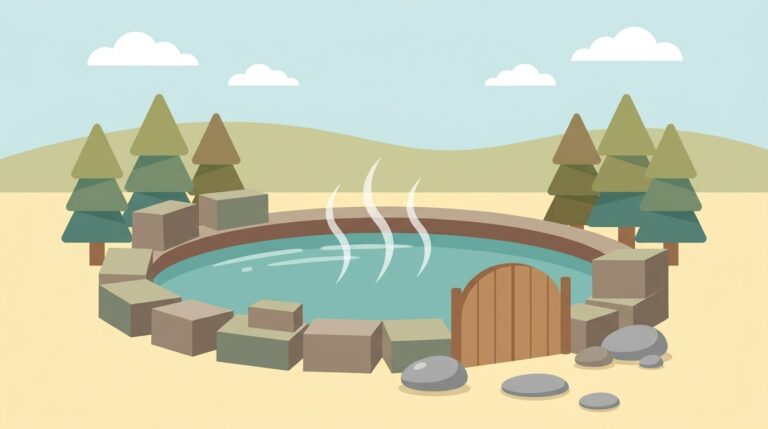
Beyond the Steam: The Connoisseur’s Guide to Korean Hot Springs and Healing Waters
Phase 1: Empathy (Story-Immersive Opening)
안녕하세요! 매일한글 에디터입니다.
Picture this: You find yourself in the serene mountains of Chungcheong-do on a crisp November morning, standing before the frosted glass doors of an authentic Korean oncheon (온천, natural hot spring). You have braved the initial cultural hurdle of the locker room, but as you approach the steaming communal baths, you notice distinct signs above each pool detailing chemical compositions: Alkaline Spring (알칼리성 온천), Sulfur Spring (유황천), and Carbonated Spring (탄산천). Nearby, a group of elderly locals are deeply immersed in conversation, massaging their shoulders and sighing in utter bliss about how the water “clings to the skin” and “melts away ten years of arthritis.”
At this moment, many advanced Korean learners freeze. You might know basic bathhouse vocabulary like ttatteuthada (warm) or sissda (to wash), but describing the nuanced physiological texture of mineral-rich water, deciphering medicinal efficacies, and articulating that deep somatic relief known uniquely in Korea requires a much higher linguistic register.
Learning to navigate Korean thermal bath culture at a C1 level isn’t just about surviving a weekend trip; it is an intimate doorway into Korea’s traditional wellness philosophy (yangsaeng, 養生) and communal vulnerability. Based on years of feedback from advanced students who wanted to sound like authentic cultural insiders rather than wide-eyed tourists, this masterclass will elevate your conversational repertoire from basic bathing to genuine balneotherapy appreciation.
Phase 2: Deep Dive into 3 Core Expressions
1. 몸을 푹 지지다 (Momeul puk jijida)
- Pronunciation: [Momeul puk jijida] (Puk sounds like a deep exhale ‘pook’, and jijida sounds like the sizzle of a griddle ‘jee-jee-da’)
- Meaning: Literal: “To sizzle/scorch one’s body thoroughly.” | Nuanced: To soak or lay one’s body in intense, penetrating therapeutic heat until deep-seated muscular stiffness and systemic chills completely dissolve.
- K-Culture Moment: In healing travel programs like 2 Days & 1 Night or multi-generational K-dramas, exhausted characters collapse into a 43°C medicinal mineral pool and groan with relief: “아, 오늘 제대로 몸 좀 지져야겠다!” (Ah, I need to thoroughly bake my body today!)
- Editor’s Insight: While the textbook term mogyokhada (to bathe) sounds clinical and hygienic, jijida evokes the traditional heated stone floor (ondol) ethos. It denotes medicinal restoration through sustained thermal absorption.
- Situation Spectrum: Casual: ✅ | Semi-formal: ✅ | Formal: ⚠️ (Use 온천욕으로 피로를 풀다 in formal presentations)
- 🤔 Think About It: Why does Korean culture borrow culinary terms for frying or searing (jijida) to describe bodily relaxation? What does this tell us about how thermal energy is perceived in traditional Korean medicine?
2. 수질이 매끄럽다 (Sujiri maekkeureopda)
- Pronunciation: [Sujiri maekkeu-reopda] (Tense double-k sound, popping like the ‘k’ in ‘skate’)
- Meaning: Literal: “The water quality is smooth/slick.” | Nuanced: The natural spring water possesses a rich, silicate or alkaline texture that makes the skin feel instantly silky, conditioned, and soft to the touch without any lotion.
- K-Culture Moment: In luxury Korean travel shows exploring historic hot spring towns like Suanbo or Deokgu, hosts frequently scoop up water with their hands, marveling at how it glides effortlessly over their skin.
- Editor’s Insight: Foreign speakers often default to muri budeureopda (the water is soft). However, seasoned bath connoisseurs specifically use maekkeureopda or maekkeun-maekkeunhada to evaluate high alkaline concentrations that gently dissolve dead skin cells.
- Situation Spectrum: Casual: ✅ | Semi-formal: ✅ | Formal: ✅
- 🤔 Think About It: In your native language, do you evaluate water by its physical texture and tactile friction, or strictly by temperature?
3. 피로가 싹 풀리다 (Piroga ssak pullida)
- Pronunciation: [Piroga ssak pul-lida] (Ssak mimics the quick, sweeping sound of a broom clearing away dust)
- Meaning: Literal: “Fatigue unties/unravels completely.” | Nuanced: Every ounce of chronic physical tension, stress, and mental exhaustion dissipates instantaneously leaving zero residual weight.
- K-Culture Moment: Exhausted salarymen in corporate dramas like Misaeng finally finding an hour of respite in a steaming tub after a brutal quarterly audit, muttering this phrase as their shoulders drop away from their ears.
- Editor’s Insight: The monosyllabic adverb ssak (싹) is the linchpin here. It transforms a mundane statement of resting into a vivid sensory image of complete, unburdened purification.
- Situation Spectrum: Casual: ✅ | Semi-formal: ✅ | Formal: ✅
- 🤔 Think About It: In English, fatigue is often “recharged” like a battery. In Korean, physical strain is conceptualized as a tightly wound knot (pi-ro) that must be unravelled (pul-li-da). How does that change your approach to rest?
Phase 3: Textbook Korean vs. Real Native Korean
Situation 1: Inquiring about the medicinal benefits of a specific mineral spring
- 📖 교과서 한국어 (Textbook Korean):
“이 온천의 수질은 건강에 어떤 효과가 있습니까?”
(I oncheon-ui sujireun geon-gange eotteon hyogwaga isseumnikka?)
“What effect does the water quality of this hot spring have on health?” - 🗣️ 진짜 한국어 (Real Native Korean):
“여기는 유황 성분이 진해서 아토피나 관절염에 직효래요.”
(Yeogineun yuhwang seongbuni jinhaeseo atopina gwanjeoryeome jikhyoraeyo.)
“They say the sulfur concentration here is so potent that it works like magic for eczema and arthritis.” - 💡 왜 다를까? (Why is it different?): Native speakers rarely speak in vague terms like “health benefits.” At a C1 level, natural phrasing identifies the mineral class (e.g., yuhwang / sulfur) and deploys idiomatic nouns like jikhyo (직효, immediate therapeutic efficacy) or the verb phrase jal deutta (잘 듣다, to work wonders/be highly effective).
Situation 2: Expressing relief in intensely hot water
- 📖 교과서 한국어 (Textbook Korean):
“온천수가 아주 따뜻해서 피로가 회복됩니다.”
(Oncheonsuga aju ttatteu-thaeseo piroga hoebokdoemnida.)
“The hot spring water is very warm, so my fatigue is recovered.” - 🗣️ 진짜 한국어 (Real Native Korean):
“어우, 시원하다! 뼈마디까지 뜨끈하게 지져지네요.”
(Eou, siwonhada! Ppyeomadikkaji tteukkeunhage jijyeojineyo.)
“Whew, this is so refreshing! The penetrating heat is soaking right down to my bone joints.” - 💡 왜 다를까? (Why is it different?): Calling boiling water siwonhada is the quintessential hallmark of Korean linguistic intuition. Adding ppyeomadi (bone joints) and the passive thermal verb jijyeojida reveals an authentic understanding of Korean somatic expression.
Phase 4: K-Culture Deep Dive & Non-Verbal Etiquette
4-1. 눈치 (Nunchi) & Sensory Etiquette in the Bath
- The Immaculate Pre-Wash (선샤워의 미학): Submerging yourself into a hot spring pool without first doing a meticulous seated scrub at the wash stations is considered a catastrophic breach of etiquette. Locals observe your thoroughness through the corner of their eyes (nunchi). Take your time soaping, rinsing, and ensuring no residual shampoo clings to you before stepping towards the spring.
- The Towel Balancing Act: You will be handed two small towels upon entry. That towel should never touch the communal hot spring water. The unspoken code is to fold it neatly into quarters and balance it atop your head while soaking, or rest it dryly on the edge of the stone basin. If it slips into the mineral bath, wring it out strictly over the floor drainage channel, never back into the medicinal pool.
- Gaze Demeanor (시선 매너): Eye contact in a state of absolute communal nudity requires subtle grace. Keep your gaze unfocused, oriented toward the rising steam, the scenic outdoor rockery, or slightly above horizon level. Avoid scanning the room or staring at fellow bathers.
4-2. Cultural Code Analysis: The Legacy of Healing Springs
In Korea, hot spring travel is not merely recreation; it is living history. Kings of the Joseon Dynasty, including King Sejong the Great and King Sukjong, maintained temporary royal palaces (haenggung, 행궁) at Onyang Hot Springs (온양온천) to treat persistent skin lesions, diabetes-related eye ailments, and chronic joint inflammation. Natural spring sites are historically vetted not for superficial luxury, but for their specific geochemical properties: carbonated springs (tansancheon) that tingle on the capillaries, and sulfur springs (yuhwangcheon) that treat dermatological afflictions. Understanding these designations transforms your journey from an ordinary spa day into an authentic ritual of Korean preventative balneotherapy.
Phase 5: Real-Life Roleplay Scenario
Setting: An outdoor rock bath (nocheontang) overlooking a misty pine grove at an authentic historic mineral spring resort in Suanbo.
Characters:
* You (민우 / Minwoo): An advanced international wellness enthusiast seeking relief from chronic desk fatigue.
* Mrs. Park (박 여사님): A seasoned 65-year-old regular who treats this natural spring as her personal holistic pharmacy.
박 여사님: 🎭 (탕 구석 바위에 편안히 기대어 이마의 수건을 매만지며)
“총각, 오늘 물 진짜 좋지? 비 오고 난 뒤라 그런가 수질이 유독 매끈매끈하네.”
(Chonggak, oneul mul jinjja joji? Bi ogo nan dwira geureon-ga sujiri yudok maekkeun-maekkeunhane.)
“Young man, isn’t the water phenomenal today? Maybe because it rained, but the water quality is exceptionally silky.”
You: 🎭 (정중하게 눈인사를 건네며 물을 가볍게 끼얹고)
“네, 어르신. 들어오자마자 물이 참 부드럽다는 게 바로 느껴지더라고요. 피로가 싹 풀리는 기분입니다.”
(Ne, eoreusin. Deureo-ojamaja muri cham budeureopdaneun ge baro neukkyeojideoragoyo. Piroga ssak pullineun gibunimnida.)
“Yes, ma’am. The moment I entered, I could immediately feel how smooth the water is. It feels like all my fatigue is melting away.”
박 여사님: 🎭 (뿌듯한 표정으로 탕 벽면의 수질 분석표를 턱짓으로 가리키며)
“여기가 천연 알칼리 온천이라 피부 미용에도 그만이지만, 뼈마디 쑤시는 데는 특효야. 오래 앉아있지 말고 딱 십오 분씩 끊어서 들어가야 탕치(湯治) 효과를 제대로 봐요.”
(Yeogiga cheon-yeon alkalli oncheon-ira pibu miyong-edo geuman-ijiman, ppyeomadi ssusineun deneun teukhyoya. Orae anja-itji malgo ttak sibo-bunsik kkeuneoseo deureogaya tangchi hyogwareul jedaero bwayo.)
“This is a natural alkaline spring, so while it’s superb for skin beauty, it’s an absolute miracle for aching joints. Don’t sit in too long; soak in 15-minute intervals to get the true therapeutic benefit.”
You: 🎭 (호기심 어린 눈빛으로 몸을 깊숙이 담그며)
“아, 탕치 말씀이시군요! 안 그래도 요즘 허리가 뻐근했는데, 뜨끈하게 몸을 지지고 가야겠습니다.”
(A, tangchi malsseumisigunyo! An geuraedo yojeum heoriga ppeogeunhaenneunde, tteukkeunhage momeul jijigo gayagessseumnida.)
“Ah, you mean balneotherapy! My lower back has been quite stiff lately, so I plan to thoroughly bake my body in this warmth before heading home.”
🔀 Interactive Decision Point
Mrs. Park smiles warmly and mentions she feels light-headed and is heading to the cold plunge pool (naengtang). How do you respond to show high-register empathy and cultural fluency?
- Option A: “어르신, 온천욕 하실 땐 급하게 일어나시면 어지러우니까 천천히 나가세요. 수분 보충도 꼭 하시고요!” (Eoreusin, oncheonyok hasil ttaen geuphage ireonasimyeon eojireounikka cheoncheonhi nagaseyo. Subun bochungdo kkok hasigoyo!)
- Option B: “찬물에 들어가면 심장에 나쁘니까 그냥 바깥 공기나 쐬면서 가만히 계세요.” (Chanmure deureogamyeon simjange nappeunikka geunyang bakkat gonggina ssoemyeonseo gamanhi gyeseyo.)
- Option C: “네, 안녕히 가세요. 저도 피곤하니까 여기서 한 시간 동안 잠 좀 자야겠네요.” (Ne, annyeonghi gaseyo. Jeodo pigonhanikka yeogiseo han sigan dong-an jam jom jayagessneyo.)
Detailed Branch Feedback
- Option A (Best): Flawless choice! You respectfully address her as eoreusin (어르신), warn against sudden postural hypotension from thermal soaking, and show concern for hydration. Mrs. Park will be astonished by your native-level linguistic etiquette and social warmth.
- Option B (Risk): While caring in intent, commanding an elder directly (“가만히 계세요”) sounds blunt and condescending. It breaches traditional generational hierarchy.
- Option C (Bad): Not only dismissive, but announcing you will sleep in a 42°C hot spring for an hour poses a genuine medical emergency risk (dehydration and heat exhaustion).
Phase 6: 10-Second Emotional Shadowing Drill
Practice these lines out loud. Pay strict attention to the emotion cues and breathing pauses (/).
[😌 Deep somatic release / Nasal contentment]
“아이고, / 뜨끈한 물에 몸을 푹 지지니까 / 묵은 피로가 싹 풀리네.”
(Aigo, / tteukkeunhan mure momeul puk jijinikka / mugeun piroga ssak pulline.)
“Oh heavens, / soaking deeply in this piping-hot water / makes all my chronic exhaustion melt away.”-
[😮 Genuine sensory marvel / Stroking your forearm]
“물이 어쩜 이렇게 매끄럽죠? / 비누칠도 안 했는데 / 살결이 비단 같아요.”
(Muri eojjeom ireohke maekkeureopjyo? / Binuchildo an haenneunde / salgyeori bidan gat-ayo.)
“How on earth is this water so silky? / I haven’t even used soap, / but my skin feels like sheer silk.” -
[🧐 Confident, discerning recommendation]
“이 온천이 유황 성분이 풍부해서 / 신경통이랑 피부 질환에 / 직효라고 소문이 자자해요.”
(I oncheoni yuhwang seongbuni pungbuhaeseo / sin-gyeongtong-irang pibu jilhwane / jikhyorago somuni jajahaeyo.)
“Because this spring is rich in sulfur minerals, / it is widely reputed / to work absolute wonders for nerve pain and skin ailments.”
Phase 7: K-Culture Mini Dictionary
- 유황천 (Yuhwangcheon) | Sulfur Hot Spring
- Meaning: Thermal springs rich in dissolved hydrogen sulfide. Characterized by a distinctive mineral aroma, it is renowned for soothing chronic eczema, dermatitis, and rheumatic stiffness.
- 노천탕 (Nocheontang) | Open-Air Thermal Bath
- Meaning: A traditional exterior soaking pool where bathers experience cold, crisp mountain or ocean air while keeping their bodies immersed in steaming mineral waters.
- 시원하다 (Siwonhada – Thermal Context) | Profound Somatic Relief
- Meaning: In a thermal setting, it does not mean “cool.” It describes the paradoxically refreshing sensation of intense, pure heat unblocking stagnant bodily tension and clearing sinus passages.
- 세신사 (Sesinsa) | Professional Body Scrub Specialist
- Meaning: Highly trained licensed professionals inside Korean bathhouses who perform therapeutic exfoliating scrubs (ttaemiri) and acupressure body alignments.
Phase 8: Traveler’s Survival Kit
Top 3 Survival Expressions
- “여기 수질 성분이 주로 어떻게 돼요?”
(Yeogi sujil seongbuni juro eotteohke dwaeyo?)- Pro Tip: Ask this at the ticketing counter or information desk to determine whether the waters are alkaline, sulfurous, or carbonated.
- “온천수 온도 몇 도인지 알 수 있을까요?”
(Oncheonsu ondo myeot do-inji al su isseulkkayo?)- Pro Tip: Korean hot spring pools generally range from 38°C (온탕) to over 43°C (열탕). Checking in advance prevents thermal shock.
- “락커키로 내부 부대시설 정산 가능한가요?”
(Rakkeokiro naebu budaesiseol jeongsan ganeunghangayo?)- Pro Tip: Many modern hot spring complexes allow you to charge snacks (like sauna-baked eggs and sikhye) to your electronic RFID wristband locker key.
Editor’s Travel Note
- Navigation: To explore historic spa destinations such as Onyang, Asan, or Suanbo, use the Naver Map app download for local transit route planning rather than foreign mapping apps, which lack updated bus dispatch intervals for regional spa towns.
- Post-Bath Hydration: Never skip the traditional post-bath cold drink. Head to the lounge area and order a chilled glass of sikhye (fermented sweet rice punch) or misugaru (roasted multi-grain shake) to replenish electrolytes.
Phase 9: “One Step Deeper” (Cultural Philosophy)
In Korean society, social hierarchy, strict honorifics, and corporate rank (gyegup) govern almost every public interaction. Yet the moment one crosses the threshold of the oncheon dressing room and sheds all attire, an extraordinary democratic shift occurs. There are no designer logos, tailored suits, or executive badges inside the hot pool. Sharing thermal waters naked—what Koreans colloquially refer to as gyegeupjang ttego mannada (meeting with rank insignia stripped away)—fosters an egalitarian intimacy rarely experienced elsewhere. You are simply two human beings warming fragile bodies against the natural steam of the earth.
💬 Your Turn: Have you ever experienced a Korean public bathhouse or natural hot spring? What felt most surprising about the collective atmosphere? Share your impressions in the comments below!
Phase 10: FAQ & Common Pitfalls
Q: Can I enter Korean natural hot springs if I have visible tattoos?
A: While ultra-traditional public bathhouses (mokyoktang) in non-tourist neighborhoods may occasionally frown upon large, prominent body art, modern thermal hot spring resorts (oncheon) and open-air wellness hubs are increasingly accommodating. However, discreetly covering extensive tattoos with waterproof kinesiology patches or choosing private family baths (gajoktang, 가족탕) remains a polite gesture that avoids unwanted attention from older bathers.
Q: Why do elderly Koreans groan “어우 시원하다” when stepping into boiling water?
A: The word siwonhada extends far beyond ambient temperature. It articulates visceral decongestion: tension unraveling from tight muscles, blood circulating through frozen extremities, and breath flowing unimpeded. To Koreans, profound heat creates an expansive, clean lightness in the chest that feels uniquely “refreshing.”
Q: How long should I stay inside the mineral tubs during a visit?
A: Follow the standard rule of Korean balneotherapy: soak for 10 to 15 minutes at a time, followed by a 5-minute cool-down at the poolside or in the lukewarm bath (ontang). Repeating this cycle 2 to 3 times maximizes mineral absorption without straining your cardiovascular system.
🚨 Common Mistakes (흔한 실수)
- ❌ Mistake 1: Submerging your head completely underwater in the communal mineral tub.
- 👉 Correct Action: Keep your head above water at all times. Use the cold shower stalls or splash your face at the vanity stations if you wish to cool your temples.
- ❌ Mistake 2: Rinsing off vigorously with synthetic soap immediately after soaking in a medicinal spring.
- 👉 Correct Action: Simply pat your skin dry with a towel, or do a quick pure-water rinse. Washing with soap strips away the beneficial mineral coating your skin absorbed.
- ❌ Mistake 3: Walking dripping wet from the bathing area back into the carpeted locker room.
- 👉 Correct Action: Always dry your feet and body thoroughly at the entrance transition zone before stepping onto the locker room floor mats.
Phase 11: Action Missions
- 🥉 Bronze Mission (Self Practice): Stand before a mirror and pronounce “피로가 싹 풀리네요!” three times, perfectly landing the crisp, popping emphasis on the adverb ssak (싹).
- 🥈 Silver Mission (Community Connection): Next time you watch a travel show or K-drama featuring a sauna or bathhouse, listen carefully for the words siwonhada, jijida, or sujil. Tweet or journal the exact timestamp and line context.
- 🥇 Gold Mission (Real-World Execution): Visit a local Korean oncheon or spa. Inquire about the water’s properties using the phrase: “여기는 온천 수질이 어떤 편이에요?” (What kind of mineral profile does this spring have?).
Phase 12: Interactive Quiz Challenge
Test your mastery of advanced Korean thermal bath culture. Select your answers, then expand the toggles below to check your score.
Question 1: Situational Nuance
You want to express that the hot spring water is deeply nourishing and leaves your skin feeling silky and supple without lotion. Which phrase is most natural?
* A) 물이 아주 따뜻해서 깨끗해요.
* B) 수질이 매끄러워서 살결이 보들보들해졌어요.
* C) 물 온도가 높아서 몸이 차가워졌어요.
Click to view Answer & Explanation
- Correct Answer: B
- Explanation: Sujiri maekkeureowoseo specifically evaluates the silky mineral texture of the water, and bodeul-bodeulhaejyeosseoyo captures soft, supple skin. Option A is overly elementary, and Option C is illogical.
Question 2: Fill-in-the-Blank
Complete the sentence using the authentic Korean thermal verb meaning to “thoroughly bake/soak the body in deep heat”:
“날씨도 쌀쌀한데 오늘 온천에서 몸 좀 푹 (_________) 가자.”
* A) 씻기고
* B) 지지고
* C) 얼리고
Click to view Answer & Explanation
- Correct Answer: B (지지고)
- Explanation: Momeul jijida (몸을 지지다) is the authentic idiomatic expression for deeply warming and restorative heat immersion.
Question 3: Cultural True or False
Statement: When soaking in a traditional natural hot spring (oncheon), it is customary to keep your small drying towel submerged underwater with you to scrub your shoulders while soaking.
* [ ] True
* [ ] False
Click to view Answer & Explanation
- Correct Answer: False
- Explanation: Communal water purity is strictly guarded. Towels must never be immersed in the pool; they should be balanced on top of your head or set dryly beside the bath rim.







